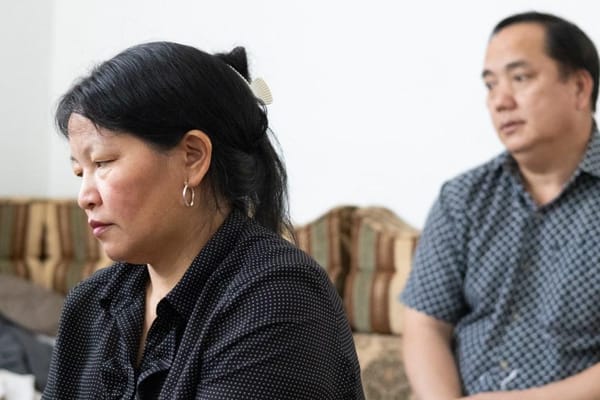
Difficulties in getting FEMA housing assistance after Helene
Tech giants Open AI, Oracle behind $165 billion data center campus near El Paso; New Orleanians are being priced out of the city; NY MTA Locks in $3 Subway Fare to Start in January.


It's Friday, October 3, 2025 and in this morning's issue we're covering: The Fight to Get FEMA Housing Assistance After Helene, Carrboro and Duke Energy in court regarding the utility's liability over climate-related property damage, Lawsuit settlement spells changes for some NC parole reviews, Allegheny County, PA inching toward more peer-led mental health help, Judge rules feds can’t block Illinois’ disaster funding in response to immigration laws, New Orleanians are being priced out of the city. Can the next assessor make a difference?, NY MTA Locks in $3 Subway Fare to Start in January, Tech giants Open AI, Oracle behind $165 billion data center campus near El Paso, Is Charlotte train stabbing suspect mentally fit for trial? Court-ordered evaluation process may take months, House bill would expand FEMA coverage for flooded, moldy Michigan basements, Can grocery stores keep rural Kansas communities vibrant?
Media outlets and others featured: ProPublica and The Assembly, Inside Climate News, Carolina Public Press, Pittsburgh's Public Source, Capitol News Illinois, Pittsburgh's Public Source, Verite News, THE CITY, El Paso Matters, North Carolina Health News, Planet Detroit, The Beacon.

BEFORE YOU START READING...
Journalism and the free flow of trusted news and information continues to be a strong need.
While the articles in Down Ballot are free to read they are not free to produce, edit, write, research, curate, etc.
There are no paywalls on the website so everyone can have some access to information. We do charge a nominal fee to receive newsletters and other information by email.
Help keep all of Down Ballot free for everyone by subscribing.
Arduous and Unequal: The Fight to Get FEMA Housing Assistance After Helene
by Jennifer Berry Hawes, ProPublica, and Ren Larson, The Assembly
ProPublica is a Pulitzer Prize-winning investigative newsroom. Sign up for The Big Story newsletter to receive stories like this one in your inbox.
Reporting Highlights
One Year After Helene: People who lost their homes turned to FEMA for aid. Some are still slogging through red tape.
Wealthier Getting More: We found that in some North Carolina counties, homeowners with the highest incomes received two to three times as much FEMA housing assistance as lower-income ones.
FEMA Cuts: Under the Trump administration, FEMA has lost hundreds of workers, including much of a team trying to improve the online application process, sources said.
These highlights were written by the reporters and editors who worked on this story.
Slogging through a thick slop of mud and rock, Brian Hill passed the roof that Hurricane Helene’s floodwaters had just ripped off someone’s barn and dumped into his yard. Then he peered into the unrecognizable chaos inside what had been his family’s dream home.
The century-old white farmhouse, surrounded by the rugged peaks of western North Carolina, sat less than 15 yards from the normally tranquil Cattail Creek. As Helene’s rainfall barrelled down the Black Mountains last September, the creek swelled into a raging river that encircled the house. Its waves pounded the walls, tore off doors, smashed windows and devoured the front and back porches.
Brian and his wife, Susie, had just bought the house a year earlier. They had a 30-year mortgage — and, now, no house to live in. Because their home didn’t sit in the 100-year floodplain, they had not purchased flood insurance.
Across Helene’s devastating path through the Southeast, people like the Hills turned to the Federal Emergency Management Agency. FEMA doles out financial help after a major disaster for everything from home repairs to rental assistance. Once she could get a cell signal, Susie applied.
It took months of persistence, but eventually the Hills were among the lucky ones. They received close to $40,000, just shy of the maximum amount FEMA provides for rebuilding and repairs.
But farther up Cattail Creek, a man whose wife was killed in floodwaters said he checked his FEMA application one day and noticed it was marked “withdrawn,” a surprise since he’d received no explanation. Elsewhere in Yancey, another man said he realized FEMA had denied him aid because his birthdate was a year off on his application. A third man said his application — which he filled out just days after hiking down a mountain severely injured — seemingly vanished from the system.
FEMA’s application process can be onerous, particularly for people who’ve lost their homes. And it can be especially daunting for those with lower incomes who may have fewer resources.
An analysis by ProPublica and The Assembly found that among the more rural counties hardest hit by Helene, the households that got the most housing assistance tended to have the highest incomes. The income disparity is especially stark in Yancey County, where the Hills live.
A ProPublica investigation earlier this year found that despite dire warnings from the National Weather Service, many people in Yancey were unaware of the enormity of danger Helene posed. The storm killed 11 people there, the highest per-capita loss of life for any county in North Carolina.
The Hills, who are both public school teachers, do not fall in the highest-income brackets FEMA identified. Households in the middle range tended to get about as much FEMA housing assistance money as the lower-income ones, or even a little less. But experts say the Hills did have something in common with the highest-income households: They had the luxury of time to pursue every dollar of federal aid that they were qualified to receive. That’s because they received full pay for seven weeks while schools were closed. That allowed them to navigate FEMA’s bureaucracy during a crucial time when, for many others, pursuing the aid felt insurmountable.
Our analysis looked at counties with the highest per-capita rate of households receiving FEMA aid for housing assistance, an indicator of where Helene hit people the hardest. Housing assistance includes separate buckets of money that cover both rental assistance and home repairs and rebuilding. Apart from Buncombe County — home to Asheville and by far the most urban county in the region — lower- and middle-income households overall got lower amounts of this aid compared to the highest-income earners.
In some counties, the highest-income homeowners received two to three times as much housing assistance as those with lower incomes.
Yet income isn’t supposed to play a role. FEMA aid for home repairs and rebuilding is intended to help begin replacing a primary home or make it safe and habitable again, not restore one to its prior state. In theory, a couple living in a million-dollar home and another in a starter house should be eligible for the same level of assistance. For instance, couples who live alone generally would qualify for aid to cover one bedroom, one bathroom and one refrigerator, even if they had three of each.
FEMA did not respond to ProPublica and The Assembly’s requests for comment. The agency previously told the Government Accountability Office, according to a 2020 report, that it encourages all survivors with property damage to apply, and those with minimal damage are “driving down the average award amount.”
Disparities in who receives FEMA aid have long been known to researchers, including Sarah Labowitz, a senior fellow at the Carnegie Endowment for International Peace who studies and writes about disasters and publishes the Disaster Dollar Database.
“Disasters pull back the curtain on inequity,” Labowitz said. “It’s a vicious combination of things that make it so much harder for people without a lot of money to get what they need from FEMA.” She pointed to FEMA inspectors who undervalue damage to more modest homes, FEMA’s onerous documentation requirements and a “brutal and discouraging” appeals process.
The agency itself has also known about the problems. Several years ago, NPR obtained an internal FEMA analysis showing that the poorest homeowners received about half as much to rebuild their homes compared with higher-income homeowners. The 2020 GAO report noted that homeowners in communities with the most socioeconomic vulnerabilities, like being below the poverty line and not having a high school diploma, received significantly less assistance than those in less vulnerable communities.
The disparity we found in Yancey was equally striking in Haywood County, where water flows down 13 peaks towering above 6,000 feet. Households there making more than $175,000 typically received $11,000 in housing assistance; households below that threshold received about $5,000.
Michelle and Jeff Parker, who live about 70 miles southwest of the Hills, in Haywood, had evacuated during the storm. Like the Hills, they returned to find their house had been filled with water. They too had lost virtually everything, down to their wedding photographs.
But the Parkers had been here before. In 2023, they finished repairing their 936-square-foot home after Tropical Storm Fred’s floodwaters filled it with 4 feet of water in 2021. That time, their house had been rebuilt by a state-run program. They received $50,000 from their flood insurance and just $1,644 from FEMA for rental assistance.
When Helene hit just a year after they got back into their home, they decided the risk of rebuilding was too great. Jeff, a former wastewater treatment plant operator, was on disability. Michelle was working as a medical assistant and could take only a couple of weeks off after Helene. They applied for a hazard mitigation buyout, another program offered through FEMA, instead. It would pay them the property’s appraised value before the storm and turn it into green space.
But that process could take years, and their home was unlivable. They figured they would at least get rental assistance from FEMA in the meantime.
The couples’ situations diverged in important ways, and they applied for different pots of FEMA housing assistance. But their journeys underscore how disaster survivors with varying resources are able to navigate FEMA’s application process.
Susie and Michelle spent hours plodding through FEMA’s online system, uploading documents, deciphering bureaucratic letters and making myriad phone calls to the agency.
After weeks of pestering FEMA, the Hills received just under the maximum $42,500 for home repair and rebuild assistance for damage to things like the home’s walls, windows and doors, plus about $9,000 from other FEMA aid programs. The money played a critical role in helping them start rebuilding.
The Parkers received $2,210 for the first two months of rental assistance to help pay for temporary housing. Michelle continued to nag FEMA for months seeking longer-term help; the agency will pay rental assistance for up to 18 months, which could translate to an additional $7,500.
Then Jeff died from cardiac arrest in June at age 56. Michelle felt like she was operating in a fog. She couldn’t handle another stressor.
So when FEMA’s call wait times soared to two to three hours after the deadly Texas floods on July 4, she gave up on pursuing additional rental assistance from FEMA.
“I got tired of calling,” she said.
The Daunting Process
After disasters strike, households with lower incomes can face major challenges, beginning with the early steps of the rebuilding process, which include finding temporary housing and transportation. Some residents lack reliable internet access or cell service. They have less money to pay professionals for estimates or attorneys for advice. Throw in the added hurdles of rugged topography, and western North Carolina posed particular challenges to those faced with rebuilding after Helene.
Alicia Edwards, who directs the Disaster Relief Project for Legal Aid of North Carolina, said she wasn’t surprised by our analysis, which found that in six of the 10 counties most impacted by Helene, the lowest-income households got less in FEMA’s housing assistance than those at the highest income level.
“People with lower incomes are at a huge disadvantage,” Edwards said.
The application process can be onerous and overwhelming, particularly for people who just survived raging floodwaters and the destruction of their homes and communities. And it can feel downright impossible to navigate for those with less money or other resources.
In Buncombe County, our analysis found the opposite trend. The lowest-income families there typically received more housing assistance than those with higher incomes. It’s also where residents tend to have better access to resources, as many regional nonprofits are based there. Pisgah Legal Services has had an office in Asheville for decades.
Several of the counties with pronounced income disparities are among the most rural counties heavily impacted by Helene. Yancey, Mitchell and Polk all have populations under 21,000.
The region also is home to both higher-income retirees, who can have more free time and more experience navigating complicated finances, and lower-income multigenerational families. In more rural areas, many of the latter tend to distrust the federal government and are reluctant to pursue assistance, said Morgan Monshaugen, disaster recovery program director with the Housing Assistance Corp., a nonprofit that serves Henderson, Polk and Transylvania counties.
The month before Helene struck, Tulane University researchers released a literature review of 25 years of research on barriers to equitable disaster recovery. They noted common themes, including the confusing aid process and challenges navigating bureaucracies. They also pointed to research that shows inspectors’ biases and time pressures can play a role.
Before 2020, inspectors would go through a long checklist of items that could qualify for repair or replacement money. Someone with more things could therefore get more aid.
After FEMA changed that system, inspectors now record notes about standardized factors such as roof damage and the height of flood marks inside. The amount of damage puts a household into one of several levels, each of which determines how much and what type of repair and rebuild assistance it can get. Some households get additional money for things like heating, venting and air conditioning or septic systems.
“It shouldn’t have to do with anything other than what was damaged and what was repaired,” Edwards said. But she worries biases can still creep in. “If they feel you are a credible person, they could give you a little more assistance, even subconsciously,” she said.
The agency’s decisions come in the form of mailed letters, each regarding a different pot of money. Some letters might have a dollar amount granted. Others might announce denials. It isn’t always obvious that survivors can appeal — an even more arduous process for many.
“It makes it impossibly hard for people to navigate,” Edwards said.
Hills of Challenge
Susie Hill knew her family would need every dollar they could get to rebuild. So she filled out a FEMA application online and talked to someone at the agency by phone.
Slowly, aid from FEMA started arriving in their bank account — $3,514 first, a set amount for people displaced, then an initial $13,687 for home repair. In October, it reached about $22,000, roughly half of the $42,500 maximum in 2024 for home repair and replacement.
Then the money stopped.
As hope for more aid began to fizzle, Susie pestered FEMA. “I was anxious about getting lost in the mix of so many people across the region in need,” she said. The Hills’ application was one of nearly 1.5 million that FEMA received across the six-state region devastated by Helene.
The Hills got more estimates, uploaded more documents. They set up a GoFundMe campaign that raised more than $53,000. And finally, in late November, they came close to reaching the maximum $42,500 payout from FEMA for home repairs, along with smaller amounts from the agency’s other aid buckets.
“Unfortunately,” Susie said, “I think it is a bit of a socioeconomic situation where we have jobs, where we know people that know people, that maybe have money or that are able to help us, or that have the skills to help us, where other people are just trying to make it day to day.”
Yancey is home to the most families per capita — about 175, or roughly 1 in 36 homeowners — who got the top amount of FEMA home rebuild and repair assistance. Our analysis of more than 75,000 North Carolina homeowners who applied for the assistance in the counties hardest hit by Helene found roughly 1,300 homeowners, or just 1.7%, received the maximum payout.
The Hills had decided to relocate their historic house to a spot on their property farther back from the creek. The FEMA money would cover most of that cost, a critical first step toward gutting it and rebuilding.
On an icy cold day in mid-January, house movers put I-beams underneath the water-damaged structure and used hydraulic lifts to raise it. Then, they hauled it to safer ground.
A family in Tennessee donated a camper for the Hills to live in. After three months of bouncing around, they parked it near the shell of their house. Standing at the front door, to the right, they could see the vast destruction along Cattail Creek. To the left, they could watch their home slowly come back to life.
Susie had to wash their clothes at the elementary school where she works. For other things, they used water carried from a neighbor’s well. Brian had to haul the contents of the toilet to the septic tank. But it was a home.
An hour’s drive away, the Parkers had sought refuge during the storm at Michelle’s mother’s house. Jeff had fractured his ankle two months before the storm and used a wheelchair. They weren’t taking chances after fleeing their home under darkness — Michelle carrying their two Chihuahuas, one under each arm — when Tropical Storm Fred hit three years earlier.
When they returned home after Helene, their shed was gone. Instead, other people’s structures lay in their yard. Inside, the contents looked like everything had been spun around. Their refrigerator lay on its side. The washing machine sat wedged on top of the dryer.
“It ruined everything — everything,” Michelle said. “I was ready to just die right there. I was like, I can’t go through this again.”
A friend set up a GoFundMe, which raised $1,875. The Parkers’ flood insurance paid out $80,000, far below the $209,000 the home had been appraised for a year before. Michelle remembers FEMA offering a free hotel, more than 60 miles away in Tennessee, a distance made farther as Helene’s waters took out parts of Interstate 40. Michelle and Jeff were grateful to receive a donated camper to live in. But their property still had no water or electricity, and they had to rent a place to park it.
The rent for that gravel parking space is $900 a month. Donors paid half, but Michelle has to come up with the rest.
Michelle turned to FEMA. She requested more rental assistance and uploaded an employer letter, a rental agreement, utility bills and a rent receipt. She called FEMA repeatedly.
“They Are All Gone”
FEMA has faced years of criticism from people applying for assistance. Chief among their complaints: inconsistent payouts, the onerous application process, incomprehensible communication and confusing rules.
Jeremiah Isom lost his home and work tools in the Yancey County floodwaters and has since been living here and there. He’s struggled to find a job and has grappled with a FEMA application, complicated by deaths in his family and property ownership issues. It doesn’t help that he’s reluctant to ask for help, much less aggressively seek it from the federal government. Just plowing through each day is hard enough.
“Everyone is so eaten up with PTSD,” Isom said. “It’s got your head so scrambled.”
FEMA has been working on improving its application process. From 2021 to 2024, it announced changes aimed at improving access and equity, including making home repair money available to underinsured households. Another change cut an onerous rule requiring applicants to first apply for a U.S. Small Business Administration loan, which approved less than 4% of all applicants from 2016 to 2018.
Before President Donald Trump took office in January, FEMA also had spent more than a year hiring a team of engineers, designers and product managers to help modernize the online application process. They faced a key challenge: The back-end system that runs much of the process at disasterassistance.gov is 27 years old.
A key problem is that when survivors check their application status, they often see simply that it’s pending. They get no indication of where the application is in the process or why. The FEMA team was working to change that.
Michael Coen, the agency’s chief of staff when the team was formed, noted that people are used to going on Amazon and getting updates about when their order is out for delivery and when it’s about to arrive. Coen said survivors wonder, “Why can’t FEMA do that?”
Yet since the Trump administration began slashing the agency’s workforce, the team focusing on improvements to the online application process has disintegrated. In January, the team had at least 10 people. Now, it’s down to two. The rest took the deferred resignation offer or were pushed from their posts, current and former FEMA employees told ProPublica and The Assembly.
“They all are gone,” said Alexandra Ferčak, who until May was chief of service delivery enhancement, part of a relatively new office at FEMA. Her team worked closely with the digital team. “We had so much knowledge and expertise, it was unprecedented,” she said.
Without that in-house expertise, major changes are “not going to be effective,” said a FEMA employee who worked with the team but asked not to be named out of fear of retribution.
FEMA did not respond to questions about the team. But in late August, more than 180 current and former FEMA employees signed a public letter to Congress warning that cuts to the agency’s full-time staff risk kneecapping its disaster response capabilities.
In response, Kristi Noem, secretary of the Department of Homeland Security, which includes FEMA, said she is working hard to “streamline this bloated organization into a tool that actually benefits Americans in crisis.” The agency then suspended most who had signed their names to the letter.
One Year Later
The Hills had their house moved back from Cattail Creek and temporarily propped up until they could get a new foundation laid. But the foundation work depended on the weather, which was varying degrees of terrible all winter.
Heavy rain triggered flashbacks to Helene, and in February it poured. But one Sunday morning, the Hills turned on the gas fireplace in their camper as the temperatures plummeted and the gray rain turned to snowflakes. Despite the gloom outside, they were gleeful.
A retired contractor from Texas volunteering his skills had become the guiding force in their rebuilding. Volunteers from other states also showed up to help. A group from a church in Georgia who work in construction had just visited. They asked what the Hills wanted in their house.
The Hills mostly wanted to add a bathroom so that their daughter, Lucy, who was 9 at the time, would have her own. The men would try to add one. When they left, the Hills went out to dinner using a gift card and declared it the best day ever, or at least something that had been hard to come by since the storm: a great day.
A few months later, a feeling of hope spread across western North Carolina as the dogwoods and redbuds bloomed in puffs of purple and white. Dandelions dotted patches of grass amid the persistent brown muck of mud and fallen trees. Friends and volunteers became fixtures at the Hills’ house. They depended on so much kindness from people. Brian spent every spare minute working on repairs as well.
Without that initial FEMA money, the Hills’ wrecked house might still be sitting in the moonscape of mud and destruction that persists along Cattail Creek. Instead, as summer waned, the house had electricity, siding, floors, insulation, drywall — and a bathroom for Lucy.
On this one-year anniversary of Helene’s destruction, the Hills expect to move back in any day. Thousands of others aren’t even close.
Michelle now lives alone in the camper. For the past year, donors have been paying half the rent for the lot where she parks the camper. In November, that assistance will come to an end. Michelle has a job working with autistic children but cannot afford the $900 a month on her own.
“It’s just a gravel spot,” she said.
Like the Hills, Michelle credits friends and nonprofits for getting her through the last year. “They just swarmed in and started helping — and lots of them,” she said.
In the spring, Mountain Projects, a local nonprofit that provided the camper, offered her a discounted modular home and a plot of land. Other nonprofits like United Way and Salvation Army have offered to help cover some of the home’s expenses, but Michelle still must come up with $81,000 not yet covered by her insurance or donations.
The buyout program she applied for would pay her the fair market value of her home before the storm, minus her insurance payout. But if she is approved, it could be years before she sees that money. “I’m worried,” she said.
She and Jeff were preapproved for a mortgage loan, but without his income, she isn’t sure she will still qualify. Michelle is thankful for so much help. But a year after Helene, moving into a permanent home feels more unreachable than ever.
Correction
Sept. 27, 2025: A video with this story originally misidentified the subject Brian Hill teaches. Hill teaches high school math, not history.
Mollie Simon contributed research, and Nadia Sussman and Cassandra Garibay contributed reporting.
Is Duke Energy Liable for Climate-Related Property Damage After Funding Denialist Campaigns?
Attorneys for the town of Carrboro and Duke Energy sparred in court for hours over this question before a judge, who asked them for more information. Carrboro says it sustained $20 million in property damage from Tropical Depression Chantal in July.
By Lisa Sorg
September 26, 2025
This article originally appeared on Inside Climate News, a nonprofit, non-partisan news organization that covers climate, energy and the environment. Sign up for their newsletter here.
RALEIGH, N.C.—The state’s first climate deception case unfurled Thursday in North Carolina Business Court, where attorneys for the town of Carrboro and Duke Energy spent six hours sparring over legal arcana to answer a single question: Should a jury hear a case alleging that Duke Energy is responsible for lying about the link between climate change and extreme weather that has inflicted millions of dollars of property damage on the town?
The case began in December 2024, when Carrboro sued Duke Energy, alleging the utility has funded and promoted a decades-long deception campaign to dismiss the connection between fossil fuels and climate change.
The long-term effects of the alleged deception reinforced the public’s reliance on coal and natural gas, town attorneys argue, which led to increased greenhouse gas emissions and accelerated climate change in the form of heat waves, greater precipitation, intensified storms and more flooding.
Carrboro has incurred millions of dollars in damages to 47 miles of roads and other town-owned property, allegedly because of more frequent and extreme weather that resulted from a warming planet.
“Each step—boom, boom, boom—is a natural sequence,” said Matthew Quinn, a private attorney representing Carrboro.
The town sustained at least $20 million in damages to its buildings, equipment and vehicles in July from Tropical Depression Chantal. Carrboro is seeking financial damages for the past harms, as well as future ones.
Quinn likened the case to tobacco litigation. “Our theory is that Duke’s massive deception got everybody hooked on fossil fuels, like Philip Morris” and cigarettes, he told the court.
Duke Energy argued the complaint is baseless and should be dismissed. “There are other emissions sources. There is no way to trace a statement by Duke to a pothole in Carrboro,” Hunter Bruton, an attorney for the utility, said in court. “These are novel claims.”
If the case goes to trial, Quinn said the town would present climate attribution scientists—experts who study the link between extreme weather events and climate change—to prove causality to a jury.
The alleged deception began in earnest in the 1990s, Carrboro says in its complaint, when several energy front groups, in part funded by Duke Energy, knew fossil fuel emissions were warming the planet but launched a public relations campaign rebutting that climate change was real.
The Global Climate Coalition, of which Duke was an influential member, falsely claimed in a 1994 edition of Climate Watch Bulletin that “new scientific evidence” showed fossil fuels might help maintain “an essential atmospheric balance” and that “cutbacks in fossil fuel use may actually enhance the greenhouse effect,” the complaint says.
Duke was also an “active participant” in a trade association, the Edison Electric Institute, which knew as early as 1968 that fossil fuels were altering the planet’s atmosphere, according to the complaint.
Yet in 1991, the Edison institute ran ads in magazines disputing climate change, including messages like, “How much are you willing to pay to solve a problem that may not exist?” and, “If the earth is getting warmer, why is Kentucky getting colder?”
Judge Mark A. Davis asked the attorneys if the case was about damages or “an end run for policy change” about permissible levels of emissions.
“The only way to get exacerbated climate change is to have exacerbated emissions,” the Duke Energy attorneys responded. “They have to prove the campaign caused someone to increase emissions.”
Duke’s greenhouse gas emissions will likely increase, at least in the near future. Earlier this year, the state legislature passed a bill, which became law over the governor’s veto, that allowed Duke Energy to postpone meeting a key carbon reduction benchmark in state law. Just four years ago, state lawmakers had required the utility to reduce its greenhouse gas emissions by 70 percent by 2030.
Duke said it could not achieve those reductions because of increased energy demand by data centers and other large industries; it plans to build several new natural gas plants—major sources of methane, a powerful greenhouse gas—to serve those customers.
Now state law requires the utility only to meet its ultimate goal of net-zero emissions by 2050.
Carrboro is alleging that Duke Energy’s harms constitute a public and private nuisance because the town no longer has the “use and enjoyment of its property.” The utility’s actions also constitute “trespass,” the attorneys argue, because the floods, wind, heat waves and storms from climate change “enter and damage” town property.
Attorneys for Duke Energy seemed exasperated at the claim. “We don’t control the weather or the rain or the heat, which they’re alleging is the trespass,” Duke Energy attorney Sterling Marchand said.
Duke Energy must be held responsible for the consequence of their deception, Quinn concluded. “Their position is there are no legal consequences and they can say anything about their business model and parties like Carrboro can’t pursue damages. There is legal redress,” Quinn argued. “Causation should not be misunderstood, and Carrboro’s extreme damages should not be minimized.”
Davis did not rule on the case Thursday; he has asked the town and the utility to submit by Oct. 25 supplemental briefs on the issue of “traceability,” whether the climatic effects on Carrboro can be linked to the alleged deception campaign.
Correction: This story was updated Oct. 1, 2025, to correct the spelling of Sterling Marchand’s name.
Lawsuit settlement spells changes for some NC parole reviews
by Lucas Thomae, Carolina Public Press
September 30, 2025
As part of a recent lawsuit settlement, the North Carolina Parole Commission has agreed to make changes to its review process for people incarcerated for crimes they committed as minors.
Brett Abrams sued the commission in 2023 for not giving him a “meaningful opportunity” to be granted parole after being denied after each review since 1993. The U.S. courts have held that juvenile offenders serving life sentences must be given a real chance to earn parole.
Depositions from Abrams’ lawsuit revealed that crucial information in his past parole review files was omitted or inaccurate, which a federal judge called “worrying” in his decision not to dismiss the case.
[Subscribe for FREE to Carolina Public Press’ alerts and weekend roundup newsletters]
At 14 years old, Adams was tried and convicted as an adult for killing his neighbor. He’s been serving a life sentence since 1984, these days at a minimum security prison in Hillsborough where he’s granted work release to work at a nearby meat-packing plant. When he filed the lawsuit, he hadn’t had an infraction in nearly two decades.
The settlement between the commission and Abrams, who was represented by the Southern Coalition for Social Justice, specifies that case analysts may not make recommendations for parole decisions and that they must cite their sources of information provided in case summaries.
Case analysts are Department of Adult Corrections employees who play an important part in the parole review process, putting together case summaries for the four-person commission that votes on more than 100 cases per day.
According to his lawsuit, the analyst for Abrams’ case ahead of his 2020 parole review inaccurately wrote in her summary that Abrams had locked his little brother in a burning camper van a year before murdering his neighbor. That assertion appears to have stemmed from an unfounded rumor about the 1982 death of Abrams' brother, which local law enforcement ruled an accident.
“The litigation had established there was misinformation being included, helpful information not being included, assertions in the records that mixed fact with fiction or incredible speculation,” Jake Sussman, Abrams’ attorney, told Carolina Public Press.
“Some of these changes, one might think, are pretty basic in that we're saying we need to be clear whether this is a fact from a court record or triple hearsay being offered by somebody who has a real bias in (Abrams’) case.
“That seems pretty fair and pretty straightforward.”
The case analyst’s summary also omitted a potentially important development: Abrams has sought psychological counseling and treatment based on recommendations given to him after his previous parole review.
As part of the settlement, the commission agreed to give notice to people up for parole review stating that they should provide any medical or mental health records relevant to their case.
CPP reached out to the Department of Adult Corrections for a comment on the settlement but did not hear back before the publication of this article.
To be clear, the settlement doesn’t guarantee that Abrams will be paroled. Courts do not have that power, but they can address problems with the system itself.
Additionally, the changes to the parole review process brought about by the settlement affect only a small portion of the incarcerated population of North Carolina: those serving life sentences for crimes they committed as juveniles.
That’s 171 people to be exact, said Ben Finholt, who directs the Just Sentencing Project at the Duke University School of Law.
“The changes that will result from the settlement are positive,” Finholt told CPP in an email.
However, he added a caveat. “The takeaway for me is that these are important steps but will only result in change if they are implemented correctly,” he said.
“In addition, there are still barriers to incarcerated people, their loved ones, and their advocates in fully understanding the Commission’s decision-making processes and what factors each Commissioner values.”
Likewise, Sussman called the changes agreed to in the settlement “necessary but not sufficient.” He’s advocated for a more objective method of making decisions, such as a rubric-based method, that would apply to all prisoners subject to parole reviews.
“There are many more people in prison right now who went to prison after becoming the age of majority, adults who are going through the process who don't have these agreements in place,” Sussman said.
“That only applies to the subset of people like Mr. Abrams, and so I think a policy change for adults who are in the parole process needs to be looked at.”
This article first appeared on Carolina Public Press and is republished here under a Creative Commons Attribution-NoDerivatives 4.0 International License.

Allegheny County inching toward more peer-led mental health help
by Venuri Siriwardane, Pittsburgh's Public Source
September 22, 2025
Content warning: This story includes descriptions of suicidal thoughts and behavior.
Adam H. said he had “all the clinical help in the world” when he was sleeping in a hallway in his family home, surrounded by trash bags full of his belongings. He’d been living this way for months after he was released last year from a state-run psychiatric hospital on Long Island, New York.
Adam’s family members had taken over his room while he spent the summer at the facility. They tossed his mattress and things into that hallway, where he stayed because he was too depressed to figure out a solution.
“I came home to the most traumatic thing I’ve ever experienced,” said Adam, 33, who is neurodivergent and has multiple mental health conditions. To talk about sensitive psychiatric and family issues, he asked to be identified by his first name and last initial. Adam described being abused by his parents, witnessing his father’s suicide at 21, his own suicidality and nightmarish involuntary hospitalizations. Being displaced from his room seemed even worse, he said from his native Suffolk County.
Once a top-performing financial advisor for a national bank, he now had no income, no independent living arrangement and no car. Medication and weekly therapy didn’t keep him from feeling “like a dog in a cage” as trash piled up around him and his depression and isolation worsened.
Adam is now enrolled in New York state’s pilot for a non-clinical, peer-led engagement program. Called Intensive and Sustained Engagement Teams [INSET], it’s designed to support the recoveries of people with serious mental illness who’ve been underserved by the traditional mental health system. It’s completely voluntary.
INSET is one of several peer-led models — including peer respites and Clubhouses — that advocates have held up in recent years as ways to help those who are distrustful of the behavioral health system due to negative experiences. They argue that peer support is more likely than coercion to engage those who are hardest to reach.

Some local policymakers are listening. After a July research paper found that some involuntary hospitalizations in Allegheny County nearly double a person’s risk of facing violent crime charges or dying by suicide or overdose, the county announced a list of policies and programs it’s implementing or considering to reduce the harm. One is peer-led, overnight respite for people in mental health crisis.
For Adam, INSET has involved twice-weekly visits from certified peer specialist James Mileto, who helped him clear out the trash and set up a bedroom in the basement. Mileto drives him to a grocery store and food pantry. And the two “spend a lot of time talking,” which Adam said is a balm for his loneliness.
“I allowed my peer advocate to do his job and to actually help me,” Adam said, noting the program is voluntary and he trusts Mileto. “If I’m forced [to receive services], it’s just not happening.”
While Allegheny County aims to bring peer respite services for those like Adam here, progress is slow.
The county awarded a contract to Unity Recovery, a Philadelphia-based, peer-led recovery community organization, to open and operate two respite houses for people experiencing mental health crises. It was executed in February 2024, but the program has yet to get off the ground.
“That’s a long time to open a peer respite,” said Cherene Caraco, the CEO and chief global strategist of Promise Resource Network, a peer-run agency that operates respites in North Carolina. It would ideally take a year, she said.
“The program launch has taken much longer than anticipated,” wrote a spokesperson for the county’s Department of Human Services, attributing the delay to contract negotiations between Unity and Community Care Behavioral Health Organization [CCBH] — a managed care organization that’s part of the UPMC Insurance Services Division. The deal would unlock funding for buying the properties, they said, noting the delay will likely be “resolved in the near future.”
A CCBH spokesperson said the organization is committed to finalizing the complex, ongoing negotiations “and implementing the plan to benefit eligible county residents.”
Experts said a contract with an insurer is an uncommon way to finance respites — typically funded by state dollars or private foundations — and speaks to the challenging funding environment.
Peer respites to open in Allegheny County
Peer respites support people through their mental health crises with the goal of avoiding hospitalization. They don’t provide medical treatment, but rather a home-like environment staffed by trained peers who draw on their lived experience to support others. Respites are voluntary and can include recovery planning, warmlines, support groups and connections to health care providers.
Research shows they can deliver equal or better outcomes than hospitals at a lower cost.
“They are a viable alternative to going to the ER or going to the psychiatric hospital and they have tremendous results,” said Travis Atkinson, the chief experience officer at TBD Solutions, a Michigan-based crisis services research group.
There are more than 80 peer respites across the country, but Atkinson said the model is relatively new in Pennsylvania. The two respites in development will be the first in Allegheny County. The county’s Department of Human Services invited him in 2023 to review proposals for the program, including Unity’s successful one. His involvement ended after the group was selected to run the program.
Officials at both Unity and the county’s Department of Human Services declined to be interviewed about the program. They collaborated to answer detailed questions about its progress.
Unity hasn’t identified locations for respites. Once contract negotiations are over, Unity will receive funds to buy two properties with three to five bedrooms.
Unity will also become a contracted provider in the CCBH network, allowing it to bill Medicaid for its services. Atkinson said most respites don’t do this because it could introduce clinical requirements that aren’t in sync with peer respite values. CCBH officials acknowledged the program would need to “follow Medicaid requirements and billing rules,” but that “shouldn’t be a barrier to implementation.”
Long-term funding stability is the “biggest financial challenge” for peer respites, with 70% reporting they didn’t know how long their current funding would last or expected it for fewer than five years, according to a 2024 study. The department spokesperson said Allegheny County hopes to expand peer-led services, but “there are tough funding decisions in our future.”
"We still have not evolved where we need to be when it comes to humane forms of treatment."
Travis atkinson
Caraco pointed out that Unity is known for serving people recovering from substance use disorders, not mental health crises, though the two often co-occur. It provides services at a drop-in community center on the South Side and receives referrals from the county jail as people test positive for opioids during booking. It’s never operated a peer respite.
A department spokesperson wrote that the peer respite model focuses on “emotional distress causing interruptions to a person’s life,” and the county is “confident that Unity Recovery has a wealth of experience” in that space.
Caraco said respite spaces should foster guests’ sense of safety and trust. “Think water features. Think plants and flowers. Think fire pits” instead of “locked doors, hard surfaces, plastic, plexiglass, seclusion and restraint.”
Unity Recovery didn’t provide many details about the environment it will create. Executive Director Robert Ashford wrote that it will “not resemble an institution or traditional crisis setting” and be “home-like, inviting” and “therapeutic.”
Respites can face neighborhood resistance. Unity’s proposal to the county promised town halls and community listening sessions about the program, which Ashford said will start after locations are identified.
‘Divergent philosophies’ in the county’s approach
As the county develops a peer respite program, it’s also considering assisted outpatient treatment [AOT].
AOT is a controversial legal mechanism for involuntary mental health treatment in the community, instead of a hospital. The county told the state last year that it would implement Pennsylvania’s AOT statute by Sept. 1, though it hasn’t done so yet. The county’s top human services official, Erin Dalton, has since told Pittsburgh’s Public Source that the decision to implement hasn’t been made. If the county successfully develops an AOT program, it would be the first in Pennsylvania to do so since the tool became state law in 2018.
Atkinson pointed out that AOT and peer respite are “divergent philosophies.” The former, he said, takes away people’s agency and choices and is part of a system where “we still have not evolved where we need to be when it comes to humane forms of treatment.”
“Why would you go down both roads?” Caraco asked, speculating that the county wants to use “as many tools” as possible to help people in crisis. While she agrees that “we need to have a buffet,” she worries that “the bias toward clinical and forced spaces is very, very real” — especially “in this political climate.”
The Trump administration, in a July executive order, threw its weight behind involuntary mental health care for “individuals with mental illness who pose risks to themselves or the public or are living on the streets.” It's also scrutinizing funding to mental health programs.
“I don’t know … anybody on AOT right now who’s really happy, … living a life of purpose and having supportive relationships,” said Melissa Wettengel, the CEO of Hands Across Long Island, one of four peer-led agencies that received funding from New York state to pilot INSET. Adam is enrolled in the agency’s program.

Clubhouses as ‘places of refuge’
Some other peer-led models — such as Clubhouses — have already been established here. An advocate described them as “places of refuge” from the isolation and social stigma people with mental illness often experience.
The one Clubhouse in Allegheny County is the Sally and Howard Levin Clubhouse. It’s a program of The Branch, a nonprofit formerly known as Jewish Residential Services.
It has about 140 members who actively participate in Clubhouse activities. About 35 of them spend time each day at its Squirrel Hill community center, which offers computers for member use, a communal kitchen and a free thrift shop stocked with donated clothes and shoes for job interviews. Membership is free.

On a recent afternoon, about 10 members gathered for a discussion with this reporter about their experiences in the county’s public mental system. Several described negative experiences during crisis responses and involuntary hospitalization, including at UPMC Western Psychiatric Hospital.
One said she was standing outside a restaurant about five days after she was evicted this year when police officers arrived and took her to the facility in handcuffs under a 302 commitment. “I lost some rights right there and then,” she said, noting she believes she was targeted for involuntary hospitalization and treated poorly by hospital staff because she is Black. Others discussed how a 302 can permanently impact the lives of people who’ve experienced a mental health crisis, preventing them from legally owning a gun and limiting their choices in the job market.
The Clubhouse movement was founded in the 1940s by psychiatric patients who began meeting on the steps of the New York Public Library’s main branch in Manhattan to help each other find work, housing and social belonging after being institutionalized. They exist all over the world and are governed by international standards.
The Sally and Howard Levin Clubhouse receives referrals from Western Psych and other clinical facilities, but membership is voluntary. The model involves members and staff working side by side to run the Clubhouse and make decisions. Research shows this helps members believe they matter and perceive themselves as more capable and less stigmatized. “I like to challenge people to tell me who the staff are and who the members are,” said Program Director Chrissy Whiting-Madison said. “They’re almost always wrong, and I love that.”
The Clubhouse also offers transitional employment, placing members in short-term jobs through its partnerships with local employers. It even has a scholarship fund for education opportunities members want to pursue — from singing lessons to college degrees.

Caraco has worked with Clubhouses and said “they can be very powerful if done well.” But she believes the model has strayed from its mutual aid roots and become part of the system, noting many Clubhouses have participation requirements for being an active member. “I love that members run the Clubhouse [with staff] — except they’re the ones that aren’t being paid,” she added, noting many can't afford housing and live in group homes and other institutional settings. “To just expect that you would be a volunteer is problematic to me.”
Despite being the only one left in the county, Whiting-Madison said the Sally and Howard Levin Clubhouse isn’t financially at risk. It’s largely funded by Medicaid payments, but “wealthy benefactors” are willing to step up.
‘The most validating’ experience of my life
INSET was borne out of years of advocacy in New York to curb the institutionalization of people with serious mental illness. The program helps participants work toward their life goals and connect with their community.
An enrollee with agoraphobia hoped to fix up their RV to move out of state, said Alex Frisina, senior director of empowerment services at Hands Across Long Island. Working with the agency’s INSET team, they realized they’d need to manage their anxiety to feel comfortable stopping at rest areas and being around crowds.
“And that was all through them self-identifying what they would need to reach their goal, not us coming in and saying, ‘Well, I think you need to look at this’” Frisina added.
That kind of “self-directed motivation” is often undermined by involuntary treatment, said Nev Jones, an associate professor in the School of Social Work at the University of Pittsburgh who was awarded a contract by New York state to co-lead an evaluation of AOT there. Jones advocates “doing everything possible to build supportive, trusting relationships, because that’s where deeper change is going to come from.”

INSET agency Baltic Street Wellness Solutions builds trust with those it engages over time through specialized and sensitive support, sometimes meeting needs for food, clean clothes, a place to relax and more, according to Modupe Mujota, the Brooklyn agency’s chief strategy officer. The Hands Across Long Island team even refers people who use its mobile shower units to the program, winning them over by offering people without stable housing a service they need.
“We tend to hang around people until they fall in love with us,” Wettengel said.
Adam was recently under an AOT order as a condition of his plea deal for the felony DWI he was charged with the week he experienced his worst mental health crisis — an example of how civil AOT can be intertwined with the criminal legal system. The court order “crushed [his] sense of self-worth” because he had always adhered to treatment and felt he was being told he “didn’t do a good-enough job.”
He identifies as “a deeply mistrusting person” due to the abuse he’s experienced at home and in care settings, and didn’t initially trust his peer advocate, Mileto. But Adam opened up to Mileto after learning about his own recovery story.
It was “the most validating and amazing experience of my life. To have somebody who understood — and not just in theory [but] somebody who had lived it — was deeply rewarding and encouraging,” Adam said. “Because this guy is doing it, so maybe I can, too.”
Venuri Siriwardane is the health and mental health reporter at Pittsburgh’s Public Source. She can be reached at venuri@publicsource.org or on Bluesky @venuri.bsky.social.
This story was fact-checked by Ayla Saeed.
The Jewish Healthcare Foundation has contributed funding to Public Source’s health care reporting.
This article first appeared on Pittsburgh's Public Source and is republished here under a Creative Commons Attribution-NoDerivatives 4.0 International License.

Judge rules feds can’t block Illinois’ disaster funding in response to immigration laws
by Ben Szalinski, Capitol News Illinois
September 25, 2025
Article Summary
- Illinois Attorney General Kwame Raoul won a court order barring the Trump administration from withholding federal emergency funding for Illinois because it is a “sanctuary state.”
- A judge ruled Congress controls spending and federal agencies cannot block funding because a state’s laws differ from federal laws.
- Raoul and other attorneys general also filed a motion to block a provision in the “One Big Beautiful Bill” that prevents Medicaid funding from going to abortion providers.
- The motion comes as Planned Parenthood of Wisconsin stopped scheduling abortions because of the law.
This summary was written by the reporters and editors who worked on this story.
The Trump administration cannot withhold federal emergency funding from Illinois because the state refuses to participate in federal immigration enforcement, a Rhode Island federal judge ruled on Wednesday.
President Donald Trump signed an executive order in January requiring the Department of Homeland Security and agencies under its command, such as the Federal Emergency Management Agency, to stop providing federal funds to states that don’t cooperate with federal immigration enforcement.
The move was designed to force states like Illinois to abandon laws that prohibit law enforcement from participating in civil immigration enforcement. Trump’s order could have applied to hundreds of millions of dollars of federal funding Illinois receives for natural disaster responses and other emergencies. But a judge ruled it unconstitutional after Illinois and other states sued.
“I appreciate the court’s conclusion that DHS’ decision-making process was ‘wholly under-reasoned and arbitrary,’” Attorney General Kwame Raoul said in a statement. “The court’s ruling will ensure vital dollars that states rely on to prepare for and respond to emergencies are not withheld simply for political purposes.”
The 2017 TRUST Act, signed by Republican Gov. Bruce Rauner, prohibits Illinois law enforcement from arresting a person based solely on their immigration status. In most cases, law enforcement cannot assist immigration officials with detaining people based solely on immigration status, according to Raoul’s office.
The judge ruled that the order violates the Constitution because Congress controls spending. The attorneys general filed the suit in the U.S. District Court of Rhode Island.
“Sweeping immigration-related conditions imposed on every DHS-administered grant, regardless of statutory purpose, lack the necessary tailoring,” U.S. District Judge William E. Smith wrote. “The Spending Clause requires that conditions be “reasonably calculated” to advance the purposes for which funds are expended ... and DHS has failed to demonstrate any such connection outside of a few programs.”
Abortion funding
Raoul also filed a new motion on Wednesday alongside 21 other states and Washington, D.C., that seeks to stop a new federal law from blocking funding to Planned Parenthood and other health care facilities that provide abortion services.
The attorneys general originally filed the lawsuit at the end of July to challenge a provision in congressional Republicans’ “One Big Beautiful Bill” that prohibits abortion clinics from using Medicaid funding for reproductive health services for one year.
The attorneys general argue the timeline of the law and details about which providers are included is too vague.
“We are urging the court to halt enforcement of the Defund Provision, which is clearly intended to shutter Planned Parenthood,” Raoul said in a statement. “Planned Parenthood facilities play a key role in our nation’s health and wellness by providing preventative care to more than 1 million Americans.”
The motion comes as Planned Parenthood of Wisconsin announced Wednesday that it will pause scheduling abortions because of the bill, causing fears for Illinois abortion providers about a surge in demand. Wisconsin Attorney General Joshua Kaul is also part of the lawsuit.
Capitol News Illinois is a nonprofit, nonpartisan news service that distributes state government coverage to hundreds of news outlets statewide. It is funded primarily by the Illinois Press Foundation and the Robert R. McCormick Foundation.
This article first appeared on Capitol News Illinois and is republished here under a Creative Commons Attribution-NoDerivatives 4.0 International License.

New Orleanians are being priced out of the city. Can the next assessor make a difference?
by Katie Jane Fernelius, Verite News New Orleans
September 26, 2025
New Orleans is at an inflection point. The city is losing businesses and residents, with many saying they simply cannot afford to live here anymore. They point to a wide array of culprits: not enough good jobs, not enough affordable places to live. Utility bills are high. Interest rates and inflation, too. And as fallout from major hurricanes and floods has driven major property insurers out of the local market, premiums have seemed to climb with every passing year.
Even as real estate prices have softened somewhat, rents continue to be high. And according to prominent affordable housing advocates, the majority of those leaving are renters.
Since 2020, about 20,000 people have left Orleans Parish. And with population loss comes a shrinking tax base, which could, in turn, lead to lower revenues for the city, limiting its ability to fund everything from schools to trash pick-up. It’s textbook “urban doom loop” and, absent intervention, could spell the rapid decline of New Orleans.
As the October 11 municipal primary election approaches, there’s been a lot of well-deserved attention on what the mayoral candidates will do to address population loss, but some local affordable housing advocates say that more attention should be paid down ballot on another race: the Orleans Parish assessor’s race, a race that they emphasize impacts renters just as much as homeowners.
“We often overlook that renters pay property taxes,” said Maxwell Ciardullo, a local housing advocate and co-chair of the New Orleans Housing Trust Fund Advisory Committee. “We – and I say, we, because I’m a renter – pay property taxes through our rent. Data suggests that about two months of every year’s worth of rent that you pay is due to the cost of property taxes. … The assessor has a lot of say in whether those property taxes are fair and affordable.”
But what role can an assessor actually play in making New Orleans more affordable?
Assessors are not in the business of setting and collecting taxes - though that’s a common misconception. (In 2021, one candidate for assessor legally changed his middle name to “Low Tax.”) The New Orleans City Council, along with a handful of public boards and agencies, largely determines property tax rates. And typically, the collection of property taxes is done by the city’s Treasury Bureau. (Outside of New Orleans, tax collection typically falls to sheriffs.)
The assessor’s job, in contrast, can seem deceptively simple: They determine property values, taking into consideration the value of both the land and the buildings on that land, and they make sure that those assessments are accurate and uniform, meaning that properties are fairly valued in relation to each other. This matters because the tax burden is distributed proportionally, with higher assessed properties picking up a larger share.
In New Orleans, accurate and uniform assessments haven’t always been a given. For decades, property values were determined by a district-specific assessor and their office. These positions were often held by generations of the same families, passed down like heirlooms, and were found to foster patronage and corruption, with political donors and wealthy influencers frequently benefiting from blatant under-assessments of their properties. A campaign launched in the aftermath of Hurricane Katrina managed to finally consolidate these assessment districts into one office, slaying one of the “two sacred cows of Louisiana politics,” in the words of The Times-Picayune. (The other “sacred cow” was the state’s then-fractured levee board system.)
In 2010, Erroll Williams — a former district assessor himself, who had overseen a district that encompassed Gentilly, New Orleans East and the Lower Ninth Ward — became the first elected citywide assessor in New Orleans history. To this day, he is the only person to have ever held the office.
Williams has some victories he can point to from his 14-year tenure as sole assessor: He oversaw the consolidation of the office, which was no easy feat considering how entrenched the district system was. He had to bring together staff, paperwork and processes from six different offices and incorporate them into one system. Following that consolidation, perhaps his most notable achievement was bringing the office into the 21st century, building out a robust website with comprehensive information about each property and its assessment.
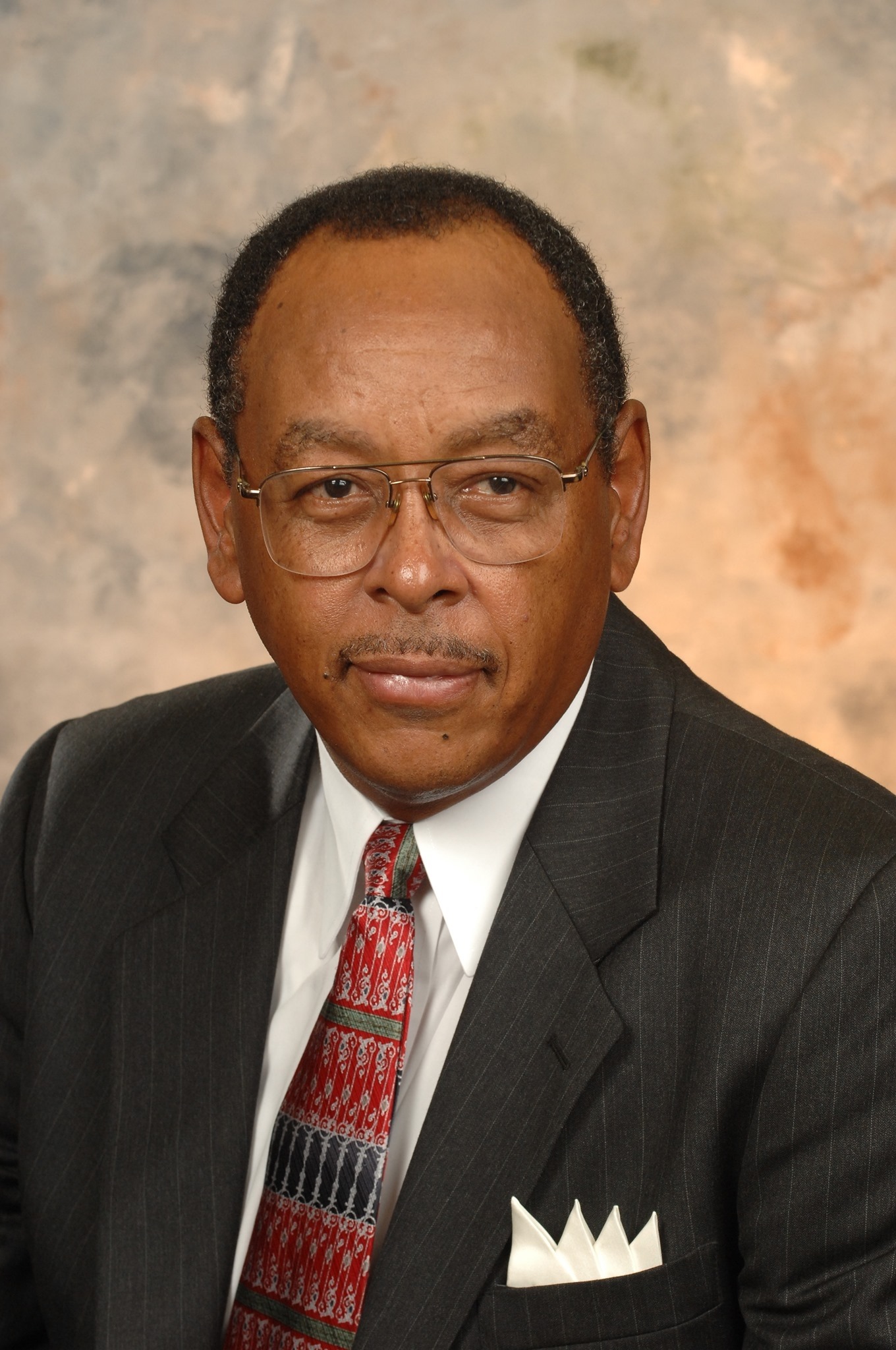
“He probably has one of the top-tier websites in the country, just for all the information that's crammed in there,” said Dr. Carolyn Kolb, a former Tulane professor and realtor, who has worked with Williams in the past.
But there have also been persistent criticisms of Williams, both by progressive organizations and by nonpartisan government watchdog groups. He’s been accused of “sales-chasing,” a disallowed practice where assessments closely match recent sales prices. Williams has repeatedly denied that his office engages in the practice, including in recent comments to Verite News.
In the past, Williams has also been in hot water over alleged leniency on corporate-owned properties, from honoring expired industrial tax exemptions to cutting property values for hotels during the COVID-19 pandemic – a decision that Williams stood by. Today, Williams has changed his practices when it comes to industrial tax exemptions. He told Verite News that all contracts are now reviewed annually and entered with five-year terms — and that a change order was processed for the tax exemptions in question, with all due taxes collected in full.
As the election approaches, some affordable housing advocates say that Williams is not doing enough to meaningfully address the crisis facing New Orleans.
“[The assessor] is supposed to be a harbinger of ill wind and a reflection of what’s going on in the market,” Andreanecia Morris, president of the Greater New Orleans Housing Alliance, told Verite News. “The assessor is critical to the healthy regulation of the real estate market. And if valuations are such that they are disconnected from what the community can afford … the assessor’s job is to call those things out.”

However, this year, a challenger is running against the long-time incumbent, and not just to promote affordability, but also to promote the very idea that the assessor’s race should be competitive. Enter: Casius Pealer.
A United cab driver turned architect turned attorney, Pealer has spent most of the past decade working on sustainable real estate development with both Tulane University and a DC-based nonprofit. After Donald Trump won the White House, Pealer, like many Americans, asked himself what was within his power to change, both professionally and personally. That is when he landed on the idea of running for assessor, a race that he knew rarely got much coverage in New Orleans — in part because the position had been held by the same guy for the entirety of its existence.
“I don't think this is the tip of the spear in saving democracy, but I do think we can't have elections where nobody runs,” Pealer said. “Part of why I wanted to do it was getting attention on this office.”
Pealer isn’t the only candidate running to unseat Williams – Coreygerard Down (No Party) and Earl “Jay” Schmitt (Republican) have also thrown their hats into the ring – but Pealer is the only challenger that appears even remotely viable. He has the support of several small-dollar donors, giving him a modest campaign war chest of just over $20,000, compared to Williams’ $70,000. And he’s got the backing of some of the city’s most prominent affordable housing advocates.
“In a functional democracy, you need real choices, and we have someone who has been in office for 40 years and has taken a significant amount of criticism for the job he’s done,” Ciardullo said. “I think it’s incredibly important that we have a qualified alternative.”
Pealer said that, if elected, he wants to run an office based on transparency and equity, and he has a plan to put those values into practice.
First, Pealer wants to collect and publish data on local tax incentives, so that residents can know how that impacts their own tax burden. Pealer is quick to note that not all incentives are bad — he would like to see more incentives utilized to promote affordable housing, for example — but he believes that taxpayers deserve to know who is getting relief and how much.
Second, Pealer said he wants to provide more transparency into the assessment process itself, a process that can often feel shrouded in indiscernible algorithms.
The assessor’s office uses a computer-assisted mass appraisal system, also referred to as CAMA, which incorporates various data, like real estate valuations and satellite images, to assist with property assessments. According to Williams, the CAMA system that the office uses is a market-based valuation system as opposed to a cost-based one, meaning that it derives assessments based on the sales price of comparable properties, not on the cost to replace the building.
But some CAMA systems have been shown to exacerbate inequities.
“[Assessors] want to suggest that they make no choices, that it’s just an apolitical computer model and there’s nothing they can do about it, but the fact is that research has shown that in most major cities, including New Orleans, the current assessment technology that they use tends to under-assess homes in wealthy neighborhoods and over-assess homes in working class and middle income neighborhoods,” Ciardullo said.
This largely has to do with the data that the system collects. Where there is more property turnover – as there tends to be in working-class neighborhoods – there is more data, which can lead to increases in assessments. Wealthier neighborhoods tend to have less turnover, creating less data. Over time, this creates disparities between the two.
“Because Black people are systematically denied homeownership opportunities and the chance to build wealth for decades in this country … in many white neighborhoods, residents are paying less than their fair share of property taxes, and in many Black neighborhoods, residents are paying more than their fair share,” Ciardullo added. “And that's not necessarily intentional, but it's a huge problem, and there are cities and assessors that have acknowledged that problem and work to correct it.”
Pealer said that those disparities are created by the software, not by Williams, but that Williams could be doing more to address them.
“Other assessors have acknowledged that flaw in the software and are trying to understand and mitigate the impact of it in their communities,” Pealer said. “Our current assessor does not acknowledge that.”
But Williams contested this, telling Verite News that a recent Louisiana Legislative Auditor report said that price-related bias was at “zero,” meaning that New Orleans property tax bills are fairly distributed.
“As a person who grew up in public housing, I’m very familiar with what unfair treatment looks like and have made it a priority to provide fair and equitable assessments to all property owners in Orleans Parish,” Williams said.
But there are other complicated questions that have to do with the data fed into the CAMA system. For example, how should short-term rentals be factored into assessments: Should they be removed from the mass appraisal system because they could artificially inflate neighborhood assessments, or should they be included when considering property values in a neighborhood because they are a real source of income for some property owners?
These are difficult questions, ones that Pealer says are key to answering transparently and fairly when thinking about how an assessor can best serve the complex needs of New Orleanians. Pealer personally believes that short-term rentals should be removed from the data.
Williams doesn’t necessarily disagree with Pealer. He said that, in the past, his office had been in touch with city councilmembers and the Louisiana Fair Housing Action Center as to how to deal with short-term rentals; they ultimately determined that it was untenable to treat them any differently due to the lack of reliable and accurate data. But with recent legal victories resulting in the removal of unpermitted short-term rentals from platforms like Airbnb, Williams said that there may be a path forward to reconsider that question.
The statewide influence of assessors
Assessors have profoundly local jobs. Property taxes, unlike sales taxes, are collected and spent exclusively at the local level. But despite this, according to Steven Procopio, the president of the Public Affairs Research Council of Louisiana, some of the most important work that an assessor can do is as a statehouse influencer.
“They have these informal political soapboxes to stand on to talk about the things that are affecting them and affecting the parishes that they are working for,” Procopio told Verite News, noting that assessors are often called upon to provide their opinions on legislation, especially relating to taxes.
Williams has touted his advocacy to the state legislature, supporting a bill that could nearly double the homestead exemption as a tool to fight displacement and gentrification, mentioning it in his answers to the Verite News election guide. But some critics have said that those efforts, while well-intentioned, may have the effect of further displacing renters, who make up the bulk of those displaced from the city.
“The downside to having a homestead exemption is that even though it helps the individual property owners, it doesn’t really lower taxes, because those will get shifted to other places, like commercial and rental properties,” Procopio said.
And it’s this shift in tax burden from those who live in the home they own to those who don’t that most concerns some affordable housing advocates – and Pealer.
“I think it’s hugely important that people appreciate that one of the differences in this race is there’s a Democratic candidate who is proposing to lower taxes on high-income homeowners and get the money to pay for that from low-income renters,” Pealer said. “There’s no other way to describe that policy.”
Williams’ attempt to raise the homestead exemption ultimately did not pass. But he did defend the practice to Verite News while also acknowledging it wasn’t a silver bullet.
“I don’t think increasing the Homestead Exemption is the best way to deal with rising costs, no,” he said. “I do think it’s a very good and necessary step though. The Homestead Exemption hasn’t increased since 1980. Surrounding states have doubled theirs in recent years. We’re due for a change.”
He also added that there are provisions in law that do not allow tax recipient agencies to increase taxes to offset losses from additional exemptions.
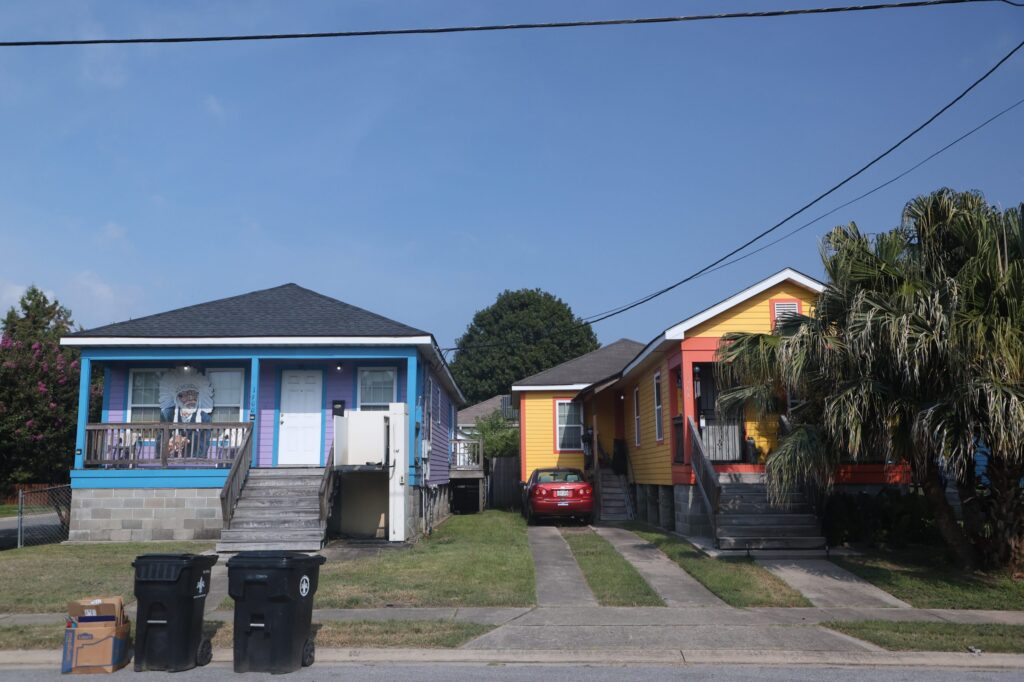
“Increasing the Homestead Exemption will not place a higher tax burden on landlords or their tenants,” Williams said.
Still, Pealer has an alternative proposal. He wants to institute a property tax “circuit breaker,” which is a tax refund for low-income people whose property taxes make up a large portion of their income. Unlike a homestead exemption, which is a blanket tax break for all homeowners living on their property, this program can target those who are specifically struggling to afford their property tax liability. Some version of a property tax circuit breaker is available in 29 states.
Ciardullo said such a program could provide key relief to New Orleanians struggling to afford to stay in the city.
“This is exactly the kind of program for these sorts of homeowners,” Ciardullo said. “And there are states that have included renters in that as well, where they offer a renter tax credit to help renters with a portion of their rent that is going to pay those properties' increasing property taxes.”
However, even with their influence in the state legislature, assessors face tremendous challenges in changing property tax law, since it often requires amending the state constitution, a drawn-out process that requires signoff from two-thirds of state legislators, then a statewide election.
“Here’s one of the issues: Anything that deals with property taxes is written into the constitution. So anytime someone wants to make a change to property taxes, whether it’s the assessment rate or whatever it is, like putting in something like this breaker system, that requires a constitutional amendment,” Procopio said.
Both Williams and Pealer, though, see an opportunity in the state constitution, which allows the legislature to provide tax relief to residential lessees “similar to that granted to homeowners through homestead exemptions.”
Pealer hopes to advocate for the legislature to use that provision to provide some relief to renters: “It doesn’t require a statewide referendum. It doesn’t require a two-thirds majority, and it would be cheaper [than increasing the homestead exemption.]”
Williams agreed.
“This is something I fully support even though the tax credits provided for rents from programs in other states are income tax credits since they don’t directly pay for property taxes,” Williams said. “We will happily work with any legislator on this and advocate for passage of this kind of rental relief.”
If Pealer does manage to unseat Williams, he will have a long time to prepare. Due to the fact that the assessor’s office is a parochial appointment, Pealer wouldn’t even be inaugurated until the very end of 2026 — effectively starting his term on January 1, 2027.
For now, his biggest challenge is getting enough people to care about this race. Few organizations have chosen to do questionnaires or endorsements for the race (to hear from all of the four candidates in the assessor's race, check out our election guide). Social media is alight with the drama and intrigue of top-of-the-ballot candidates for mayor, sheriff, and council. It can be hard to drum up enthusiasm for what ultimately is seen as an office that deals exclusively with numbers.
Still, for those who do care about this race, they hope that they can help New Orleanians understand its importance — especially as the city stares down climate change, population loss and the potential collapse of its real estate market.
“The chickens are coming home to roost,” Morris said.
This article first appeared on Verite News New Orleans and is republished here under a Creative Commons Attribution-NoDerivatives 4.0 International License.

MTA Locks in $3 Subway Fare to Start in January
The 2% price hike stands in contrast to double-digit increases in other public transit systems.
by Jose Martinez Sept. 30, 2025, 3:09 p.m.

The cost of a single subway, bus or paratransit ride will hit $3 for the first time come January, after the MTA board on Tuesday approved the latest in a series of every-other-year increases.
The MTA had avoided hitting the 3-buck milestone in recent years, despite previous proposals to reach the mark that stretched back nearly a decade.
MTA Chairperson and Chief Executive Janno Lieber acknowledged that any bump in fares is “always painful,” while contrasting what amounts to a 2% annual increase with double-digit fare hikes elsewhere in the country.
“As we always say, transit is one of the things that makes NY affordable,” Lieber said. “Let’s start talking about housing and childcare and the other things that are clearly the center of that affordability crisis.”
Lieber pointed to a double-digit fare increase last year at New Jersey Transit and at the Southeastern Pennsylvania Transportation Authority, where a 21.5% fare hike kicked in Sept. 14.
Officials also noted how transportation costs are lower in New York City than in almost all major U.S. cities — and flagged how the fare increase could have sent the cost of a single ride surging to $3.14.
“If we had actually followed the rate of inflation over the last two years, we would be asking you for a 24-cent increase to the base fare today,” Jessie Lazaruz, the agency’s deputy chief for commercial ventures, told the board prior to the 11-0 approval, with two members abstaining.
Instead, the MTA stuck to a pattern of what agency officials call “small and predictable” fare increases every other year.
Accompanying bumps will come for reduced-fare bus, subway and Access-A-Ride service, with the cost per ride going up 5 cents to $1.50 and the cost of express bus service that links the boroughs with Manhattan going from $7 to $7.25. The last fare increase came in 2023, when it went from $2.75 to the current $2.90 mark.
The vote also locked in a fare cap under the tap-and-go OMNY fare-payment system, ensuring that riders will pay no more than $35 for rides within a seven-day period, while reduced-fare riders will be capped at $17.50. That will permanently replace the unlimited-ride options available under the 7-Day and 30-Day MetroCard, as well unlimited passes for express buses.
The MTA earlier this week dropped the seven-day fare cap a buck from an earlier proposal of $36, citing the response of riders during the six-week public comment period that followed the July unveiling of the fare proposal.
“That feedback has helped us modify our proposals,” Lazarus said.
Transit officials said the increases — which will also kick in on Metro-North and Long Island Rail Road — are essential for the agency’s bottom line, with two-thirds of the MTA's operating expenses going to labor costs associated with its 70,000 employees.
“It’s real simple, 70% of the MTA’s operating budget goes to pay their workers their medical coverage, their benefits and their pensions,” Lieber said. “Their wages increase, on average, between 3% and 4% a year, it varies a little bit — we now have a 2% per year fare increase.”
The Citizens Budget Commission noted that labor also has a part to play in the MTA’s financial well-being.
Adam Schmidt, a senior research associate with the non-partisan think tank, cited ongoing labor talks with Long Island Rail Road workers and a looming labor showdown next spring with the Transport Workers Union.
“Both sides should pursue work role changes that increase productivity and operational flexibility so the MTA can continue to provide reliable service and fair wage increases,” he said.
Lieber also acknowledged that the ‘pizza principle’ — a theory that the cost of a subway ride and the slice of pizza should be about the same — no longer holds.
“I don’t know what the pizza principle would dictate at this point because folks have told me that we’re less than a slice in many cases,” he said. “Certainly at Totonno’s or some of the other great Brooklyn pizzerias that I favor, the slice has gone north of $3.”
Tech giants Open AI, Oracle behind $165 billion data center campus near El Paso
by Diego Mendoza-Moyers, El Paso Matters
September 25, 2025
OpenAI and Oracle are partnering to build the $165 billion Project Jupiter data center in Santa Teresa, New Mexico, near El Paso as part of OpenAI’s massive Stargate Project – aiming to spend half a trillion dollars this decade on infrastructure that enables artificial intelligence technology.
OpenAI’s announcement this week confirmed the two technology giants are behind the massive project, which was initially proposed by lesser-known BorderPlex Digital Assets out of Austin and its development partner Stack Infrastructure, which is based in Colorado.
“AI can only fulfill its promise if we build the compute to power it,” Sam Altman, OpenAI’s chief executive, said in a statement. Compute refers to the hardware and software needed to run artificial intelligence models.
“That compute is the key to ensuring everyone can benefit from AI and to unlocking future breakthroughs. We’re already making historic progress toward that goal through Stargate and moving quickly not just to meet its initial commitment, but to lay the foundation for what comes next,” Altman said.
President Donald Trump announced the Stargate joint investment initiative in January on his first day in office alongside Altman, Oracle co-founder Larry Ellison and SoftBank Chairman Masayoshi Son. Hours after that announcement, Trump’s then-adviser Elon Musk suggested OpenAI and SoftBank didn’t have the money to accomplish Stargate.
The Doña Ana County Board of Commissioners approved an incentive deal for Project Jupiter by a 4-1 vote last week. That was the last hurdle before the project could proceed.

The incoming data center campus in Doña Ana County is one of five sites where OpenAI said it’s building Stargate data centers. Other sites are located in Shackelford County, Texas, near Abilene, and an undisclosed site in the Midwest. OpenAI and the investment firm SoftBank are separately developing two other data centers in Ohio and in Milam County, Texas, near Austin.
“Together with Oracle, SoftBank, and our other partners,” OpenAI said, “we’re turning a $500 billion, 10-gigawatt commitment into large-scale physical infrastructure, jobs in communities across the country, and compute that will unlock the next generation of AI breakthroughs.”
Oracle will lease the AI-training data centers from BorderPlex Digital, and OpenAI will be the facility’s ultimate customer.
OpenAI and Oracle didn’t respond to requests for comment.

The five sites picked to host Stargate data center facilities – including Santa Teresa – were “chosen through a rigorous nationwide process launched in January,” OpenAI said in the statement it issued this week. “OpenAI, Oracle, and SoftBank reviewed over 300 proposals from more than 30 states.”
Project Jupiter will be a collection of four data centers meant for artificial intelligence training, and it would be among the biggest private investments ever made that could reshape the regional economy around El Paso and Las Cruces.
In Santa Teresa, Project Jupiter’s developers plan to invest $50 billion over the next five years, and the companies will invest up to $165 billion over the 30 years. The deal between the developers and Doña Ana County requires the project to employ 2,500 construction workers and then 750 full-time workers once the facility is operational.
The majority of the $165 billion investment will go toward paying for computer equipment such as graphics processing units. And that investment cost factors in three refreshes of the computer equipment every five to seven years, according to Nicholas Minor, director of public affairs for Stack.
In exchange for not having to pay property taxes on the 1,400-acre campus or gross receipts taxes, BorderPlex Digital said it will pay the county $360 million over 30 years – $12 million annually.
Stack also made a binding commitment to give the county $50 million to fund badly needed water and wastewater infrastructure upgrades throughout Doña Ana County. That’s significant because of the legacy of poor drinking water in Sunland Park and Santa Teresa, and the potential impact that funding could have to improve water and sewer systems.
Stack will also give $6.9 million for various community investments in the county, such as new Boys and Girls Club facilities.
Project Jupiter’s water, electricity usage
The data center campus in Santa Teresa will feature a “closed-loop” system of pipes to cool the computer servers inside the data center buildings, which developers say would require a one-time fill-up before the water is recycled over and over.
Filling up the four data centers would require about 10 million gallons of water over two years.
Once it’s operating, the project would use a daily average of 20,000 gallons, with a maximum consumption capped at 60,000 gallons in a day, according to figures provided by the developers.
The Camino Real Regional Utility Authority will supply drinking water for the campus’ “ongoing operations” according to documents that detail the agreement between Doña Ana County and Project Jupiter’s developers.

CRRUA, the New Mexico water utility that serves Sunland Park and Santa Teresa, said it produced an average of 2.6 million gallons of water daily from its wells in March.
Earlier this year, Sunland Park announced it would develop its own municipal water utility while Doña Ana County officials said they would take over CRRUA’s assets outside of Sunland Park and create a new water provider for the area.
It’s not clear how splitting CRRUA will impact Project Jupiter, but since the project is located outside of Sunland Park, the new entity the county is setting up will likely take over as the campus’ water provider.
In order to power the campus, the project’s developers said they’ll build a microgrid that will not connect to El Paso Electric’s broader electricity grid.
Project Jupiter’s microgrid will rely on simple-cycle natural gas-fired turbines with a capacity between 700 and 900 megawatts to generate electricity. That’s enough to power several hundred thousand homes, depending on the temperature and time of day.
Simple-cycle natural gas turbines typically use far less water than the water-intensive combined-cycle gas turbines El Paso Electric relies on. Napier said the gas-fired generation facility will use around the same amount of water every day – 20,000 gallons – as the data centers.

“Water use for the microgrid is similar to the water use for data center,” Napier told Doña Ana county commissioners.
A rough, back-of-the-envelope estimate would suggest a 700 megawatt natural gas power plant that uses an average of 20,000 gallons of water per day would consume about 1.2 gallons of water per megawatt-hour of electricity generated.
By comparison, El Paso Electric as a whole consumed 478 gallons of water per megawatt-hour of electricity produced last year. The utility is El Paso Water’s biggest customer and bought an average of about 19 million gallons of water per day last year from the city-owned water provider, according to El Paso Water.
Representatives for BorderPlex Digital have also said the data center campus will feature one of the world’s largest battery storage projects so that, by 2045, the facilities can rely entirely on clean energy likely sourced from solar panels and stored in the batteries for use when the sun isn’t shining.
But the companies behind Project Jupiter have some time to get there. The New Mexico Legislature passed a bill earlier this year that allows for the creation of microgrids separate from the main grid that serves most homes and businesses.
The bill – House Bill 93 – includes a carve-out introduced by State Sen. Michael Padilla that allows microgrid operators to skirt the state’s Energy Transition Act.
That law requires the big electric utilities in New Mexico to ensure half of the electricity they sell to customers comes from renewable, zero-carbon energy sources by 2035, and they have to reach 100% clean energy sales by 2045. As of this year, 40% of the electricity New Mexico utilities sell to customers has to come from zero-carbon sources.

By 2045, microgrids have to produce 100% carbon-free carbon energy.
Another legislator, District 33 state Rep. Micaela Lara Cadena, who represents Mesilla, called the passage of the amendment that enables Project Jupiter’s microgrid the result of “dirty backroom dealing in Santa Fe.”
“Doña Ana deserved to know about this for more than a month,” Lara Cadena told county commissioners during the meeting in Las Cruces.
“The enabling mechanisms that allow for microgrids, those were not debated in our House,” she said. “They were a last hour amendment – March 20 of a 60-day session – less than 48 hours left, when a shady ass floor amendment was made by Senator Padilla.”
When District 4 County Commissioner Susana Chaparro was the only commissioner to vote against Project Jupiter, she argued state officials and the developers negotiated at the state capitol rather than with locals in Doña Ana County.
“All of these things were done in Santa Fe months before we became aware of it: negotiations, deals, money promised,” Chaparro said before the commissioners’ final vote Sept. 19.

In an interview with El Paso Matters, Padilla pointed out that New Mexico Gov. Michelle Lujan Grisham announced in February that the project would come to Doña Ana County, although she shared few details about Project Jupiter at the time.
Padilla, who has represented a portion of Bernalillo County since 2013, said he pushed the microgrid-related legislation as its own bill but it failed to pass. So, he included the microgrid-related amendment into a bill at the end of the session to ensure it would become law.
“We worked this bill pretty much the entire session, but it did not quite get done. So, we found a piece of legislation that was very similar,” Padilla said. “That’s the legislative process. You have to be very creative to get your work done.”
Padilla, who said he respects Rep. Lara Cadena, added that the law enabled Project Jupiter, which he called “phenomenal” and said the microgrid legislation would also attract other employers to New Mexico in the future.
“If you want to stand up a project like Jupiter, you should also be able to demonstrate that you can generate the power needed for Project Jupiter. So, this particular piece of legislation makes that permissible now,” Padilla told a crowd gathered at a standing-room-only public meeting BorderPlex Digital held Sept. 9 in Sunland Park to share details about Project Jupiter.
“Whereas before, you had to jump through any number of hoops – on fire – and you had to wait around for any number of months or years to get your project approved,” Padilla said. Project Jupiter’s developers are “going to be able to bring the power that they need for their project so it does not affect the local community at all,” he added.
Community involvement
In addition to hosting five community meetings throughout Doña Ana County between Aug. 26 and Sept. 19, Napier said his group conducted outreach by calling 120,000 residents in Doña Ana County for “one-on-one conversations.” He said 83% of residents who answered supported Project Jupiter, but didn’t provide details on the methodology, raising questions from area residents. The county has a population of 229,000 residents, according to the U.S. Census Bureau.
“I received two calls, one in English y uno en español, and they were pretty basically the same message: ‘Hello, I’m representing Project Jupiter. We want more jobs in our community, will you support us?” Chaparro said.
“It was such a generic message, and, so, numbers can be shifted any way,” she said. “If somebody told me, ‘jobs,’ I’d say, ‘sure, I want more jobs in this county.’ So, I don’t know if I agree with the numbers.”
Still, county staffers said the commitments the company has announced became binding after county commissioners approved the incentive deal with BorderPlex Digital. If the developers don’t complete the project, or don’t fulfill other commitments such as hiring enough employees, county commissioners could undo the incentive deal they approved, according to Chris Muirhead, an attorney who serves as bond counsel for Doña Ana County.
Meta, the parent of Facebook and Instagram, is also developing an $800 million data center in Northeast El Paso that could eventually become a multi-billion dollar investment. The El Paso City Council recently approved an incentive package worth $875,000 to get a company called Ferveret, which makes data center cooling technology, to set up shop in the city and hire 30 workers.
This article first appeared on El Paso Matters and is republished here under a Creative Commons Attribution-NoDerivatives 4.0 International License.

Is Charlotte train stabbing suspect mentally fit for trial? Court-ordered evaluation process may take months.
by Rachel Crumpler, North Carolina Health News
October 2, 2025
By Rachel Crumpler
After Decarlos Brown Jr. was arrested in late August and accused in the fatal stabbing of a Ukrainian refugee aboard a Charlotte light rail train — a killing that has drawn statewide and national attention — a capacity evaluation was quickly ordered by the court. The evaluation is the first step in a process that could determine whether Brown is mentally competent to stand trial. The result will begin to inform how the case moves forward.
Brown, 35, reportedly has schizophrenia and was homeless at the time of the killing. In a recorded jail phone call with his sister, obtained by ABC News after his arrest, he tells her that “material in his body” was controlling him at the time of the attack on 23-year-old Iryna Zarutska.
Seven months earlier, during a January encounter with law enforcement — when he was charged with a low-level misdemeanor for repeatedly calling 911 — Brown similarly told officers that “he believed someone gave him a ‘man-made’ material that controlled when he ate, walked, talked, etc.”
A previous psychiatric evaluation had been court ordered in July for Brown to appear at Alliance Health for the local forensic evaluators to assess his “capacity to proceed” to trial on the charge of misusing 911.
That evaluation never happened, court records show.
This time, Central Regional Hospital in Butner, the only state facility that conducts capacity to proceed evaluations, is performing the assessment. The forensic evaluation includes interviewing Brown and reviewing relevant records such as school, medical and criminal files.
Having the capacity to assist in one’s defense is fundamental to the U.S. justice system, said Charlotte defense attorney Jason St. Aubin. North Carolina statute prohibits anyone from being “tried, convicted, sentenced, or punished” if he or she is incapable of proceeding.
When someone is deemed incapable of proceeding, that indicates the person is so mentally impaired that they can neither comprehend the court proceeding before them nor rationally work with an attorney to help in their defense. The determination also halts legal proceedings, which puts the case at a standstill until the defendant’s capacity is restored.
“Our courts don’t want to punish people or hold people accountable if during that process, they’re basically unable to understand the nature of those proceedings,” said St. Aubin, who has represented clients who have been deemed incapable to proceed. “At that point, they would be unable to assist in their own defense, and any judgment obtained against them, or any defense they may have had could be impacted by their lack of understanding.”
The number of people being referred by the courts for capacity evaluation has been ballooning in North Carolina, taxing a system that is straining to keep up.
Last year, more than 2,600 capacity evaluations were completed, according to N.C. Department of Health and Human Services data provided to NC Health News. It’s a 33 percent increase in evaluations over the past five years — without an increase in resources to make those assessments.
Approximately 60 percent of individuals evaluated in 2024 — over 1,500 people — were deemed incapable of proceeding to trial and needed capacity restoration services.
“That’s one of the biggest problems in the system — demand has gone up significantly,” said Robert Cochrane, DHHS’ statewide director of forensic services.
Brown’s capacity status will be determined
Brown is being held without bond at the Mecklenburg County Detention Center. He faces a first-degree murder charge in state court, and federal prosecutors have charged Brown with causing death on a mass transportation system. Both charges could carry the death penalty.
Brown’s competency status has not yet been determined. Brown’s public defender did not respond to NC Health News’ request for an update. A spokesperson for the Mecklenburg County District Attorney’s Office said he could not provide information beyond the public court filings.
The results of Brown’s initial evaluation could be many weeks away. During the most recent fiscal quarter, the average time for a forensic evaluation to be completed at Central Regional Hospital was 69 days from the time of request, according to DHHS data provided to NC Health News. Cochrane said this timeframe is mostly driven by staffing limitations. The hospital has eight to ten people conducting evaluations Monday through Friday, he said, and they struggle to keep up with the “overwhelming number of referrals.”
Once the forensic evaluation report is completed with the evaluator’s findings, a capacity hearing will be held for the court to determine whether Brown is competent to proceed. If Brown is deemed capable of proceeding to trial, the case will move forward. However, if Brown is found to be incapable of proceeding, he then must undergo court-ordered treatment, which involves a combination of medication, individual therapy and legal education. These services aim to stabilize a person’s psychiatric symptoms and boost their understanding of the legal system so that trial proceedings can continue.
Restoring a person’s capacity can be a slow process.
“If a person is found to be incapable during any of the initial evaluations, then you’re basically guaranteed, in a case like this or any serious felony that even doesn’t result in death, that it will last a period of several years,” St. Aubin said. He explained that he is still working on a case from 2020 in which a client with schizophrenia and autism has had capacity issues.
More criminal defendants are being declared incapable to proceed in North Carolina. They wait an average of 165 days — more than five months — before being admitted to one of three state-run psychiatric hospitals for capacity restoration treatment, according to DHHS.
A DHHS spokesperson told NC Health News on Sept. 23 that 165 patients are receiving capacity restoration services at one of North Carolina’s state-run psychiatric hospitals — occupying about 27 percent of the approximately 600 staffed beds. Another 130 people have been deemed incapable to proceed and are waiting for admission to a state psychiatric hospital to begin capacity restoration treatment.
“Some of the sickest people that you’ll find when they come through the criminal justice system are found incapable to proceed,” Cochrane said. “Our hospitals are dealing with some very challenging cases with these individuals and trying to help them. So it’s no surprise that it takes months (to restore a person’s capacity). ... I do feel for the people who have to wait for treatment, but I don’t think the treatment that we provide in North Carolina is a day longer than anybody needs. It gets them to the place where they can go back and have their day in court and resolve their criminal situation.”
What does it mean to be ‘incapable to proceed’?
A person’s capacity to proceed can be questioned at any time during a criminal case — by the defense, judge or prosecutor. Most people deemed incapable of proceeding have a psychotic illness, such as schizophrenia, Cochrane said. However, having a diagnosed mental illness alone is not sufficient to be deemed incapable to stand trial.
“Plenty of individuals with schizophrenia are found or deemed capable to proceed,” Cochrane said. “It’s just those who are particularly acutely ill or experiencing acute symptoms are the ones that oftentimes are deemed incapable.”
For example, he said active hallucinations and delusional beliefs that interfere with someone’s ability to communicate effectively or think clearly enough to work with an attorney could lead one to be deemed incapable to proceed. Other conditions, such as intellectual disabilities or a traumatic brain injury, that lead a person to struggle with retaining information and comprehension could also affect their capacity to proceed.
When a person is deemed incapable of proceeding, that sets off a process of trying to restore their capacity — something that needs to happen for their case to move forward.
“I think one of the complexities is people think this is a way to, like get out of their trial, or they conflate it with insanity — and that’s not it,” said Apryl Alexander, director of UNC Charlotte’s Violence Prevention Center who previously conducted capacity evaluations and ran an outpatient capacity restoration program in Colorado. “This process is really to ensure a person’s due process rights and making sure that they understand what’s going on in trial, because we don’t want things like a mistrial happening.”
“A majority of people who are found incompetent to stand trial are restored to competency,” she added. “They eventually go back to trial, back to their court case and proceedings continue.”
Increased demand for capacity restoration
Historically, capacity restoration has only been provided in state psychiatric hospitals in North Carolina, which has led to a growing share of these facilities' limited bed space to be occupied by people involved in the criminal justice system who have been deemed incapable of proceeding. In fiscal 2016, these patients made up 10 percent of the total annual admissions to the state’s psychiatric hospitals. In fiscal 2024, it was 28 percent.
!function(){"use strict";window.addEventListener("message",function(a){if(void 0!==a.data["datawrapper-height"]){var e=document.querySelectorAll("iframe");for(var t in a.data["datawrapper-height"])for(var r,i=0;r=e[i];i++)if(r.contentWindow===a.source){var d=a.data["datawrapper-height"][t]+"px";r.style.height=d}}})}();
This is as hundreds of community members in mental health crises wait weeks or even months in emergency rooms for an opening in a state facility.
North Carolina’s three state-run psychiatric hospitals — Cherry, Central Regional and Broughton — have a total bed capacity of 910. However, chronic staff shortages limit the beds in operation to about 600 despite widespread need, according to DHHS.
As of Sept. 23, just over one-quarter of the patient population in state psychiatric hospitals are people deemed incapable of proceeding to trial, with many more waiting months in jail for a bed to start receiving capacity restoration treatment. During this limbo period, criminal defendants often deteriorate because jails are ill-equipped to address serious mental health needs — even as they have increasingly become de facto mental health institutions.
“If we had [more staff] in place, then we would be able to take in a lot more of the folks on the wait list, so people would be getting care a lot faster than they currently are,” Cochrane said.
These psychiatric beds generally do not turn over quickly because capacity restoration can be a slow process. On average, a person receives capacity restoration services for approximately 120 days in a state hospital before they are deemed restored or non-restorable, according to DHHS.
When someone’s competency has been restored, the court is notified and the legal process resumes. However, there are infrequent cases when someone is deemed non-restorable. In these cases, evaluators determine that someone is not getting better despite treatment and believe there is not a path for them to improve enough to gain the needed capacity. Generally, such cases involve a traumatic brain injury or intellectual disability, Cochrane said.
Expanding capacity restoration beyond state hospitals
The state’s strained psychiatric hospitals can’t meet all the demand for capacity restoration services. Even if they could, Cochrane said, many people don’t need the level of care offered in a hospital setting. That’s why state health officials have recently expanded capacity restoration services outside state hospitals, allocating just over $9 million to stand up and support three jail-based and three community-based capacity restoration pilots.
The new settings are aimed at serving people more quickly and more economically. According to DHHS, hospitalization is the most expensive way to provide capacity restoration, costing about $1,200 a day, compared to $400 in jail.
Cochrane said all the capacity restoration settings deliver the same array of treatment, including individual therapy, group therapy, education sessions on the legal system and medication management.

So far, Cochrane said, jail-based and community-based capacity restoration options are not used enough. He said he’s working to change that, because he thinks these settings can help make North Carolina’s restoration process more efficient — and, importantly, ease some of the burden on state psychiatric hospitals.
“We’re really trying to plug these alternatives, so that we can have an impact on the wait times, waitlists and get people in the right level of care,” Cochrane said.
As of Sept. 23, 14 people are receiving capacity restoration services inside one of the three jails with RISE (Restoring Individuals Safely and Effectively) capacity restoration programs. However, 45 total slots are available — meaning two-thirds of the beds are unfilled.

The Mecklenburg County Detention Center became the first jail to launch a capacity restoration program in December 2022 in partnership with the state health department. Earlier this year, sheriffs in Pitt and Wake counties followed suit — motivated in part by their frustration of seeing people’s mental health deteriorating in their jails while waiting for a hospital bed. The Mecklenburg and Pitt program beds are also available to people deemed incapable to proceed housed in other jails who can be transported to one of the programs — a point that Cochrane is working to stress to sheriffs across the state.
The average time spent receiving jail-based capacity restoration services is 55 days, according to DHHS.
A ‘competency crisis’
Demand outpacing available space for court-ordered capacity restoration is happening across the country, contributing to what experts have deemed a national “competency crisis.”
Cochrane said the way North Carolina’s capacity restoration system functions has cascading effects across the justice and health care systems.
“It impacts not just our state hospitals,” Cochrane said. “It impacts the courts. It impacts the jails and the sheriffs and the work they have to do with these severely mentally ill people who have to sit there and wait months to get to a hospital. It impacts emergency departments too — people in EDs who need IVC [involuntary commitment for forced psychiatric treatment] to one of our state hospitals. There aren’t any other choices. They have to wait.”
In response to the killing on the Charlotte light rail, Republican state lawmakers on Sept. 23 passed a bill dubbed “Iryna’s Law.” The legislation includes provisions to toughen pre-trial release and require judges to order more mandatory mental health evaluations. However, the legislation did not provide more funding to bolster mental health services. Gov. Josh Stein has not yet taken action on the bill.
Some critics argue that if it becomes law, it will not address the root issues that lead people with mental illnesses to cycle between the community and the criminal justice system and could worsen the strain already on the state’s overburdened mental health system.
“If you don’t have adequate treatment in the community, guess where they go?” Cochrane said. “They get arrested and they go to jail and they go to the state hospital. We need to divert on the front end and get people that primary care, so we’re not having to deal with tertiary care.”
Alexander, director of UNC Charlotte’s Violence Prevention Center, agrees.
“I think part of the competency crisis is that we just don’t have adequate mental health treatment — period — in communities,” Alexander said.
This article first appeared on North Carolina Health News and is republished here under a Creative Commons Attribution-NoDerivatives 4.0 International License.

House bill would expand FEMA coverage for flooded, moldy Michigan basements: ‘There needs to be some equity’
by Ethan Bakuli, Planet Detroit
September 29, 2025
As a queen mattress surfed past her house, Barb Matney struggled to keep her composure. In a matter of hours, nearly 6 inches of rain had fallen across Metro Detroit, filling her basement with stormwater and forcing neighbors to discard their waterlogged furniture and belongings onto the curb.
“I stood in my kitchen window and I was so afraid,” recalled Matney, who lives in the Warrendale neighborhood on Detroit’s west side. “You could hear it in my voice, I was almost getting ready to burst out into tears.”
In the aftermath of the August 2014 storm, Matney said, her family lost “$52,000 worth of stuff,” including her furnace, water heater, washer, and dryer.

One of the most upsetting aspects of the storm, she says, was the loss of her college-age son’s clothes, furniture, and belongings. Until the flood, he stored his keepsakes in their basement.
When it comes to basement flooding, households across the United States have limited reimbursement opportunities for belongings and structures damaged by stormwater. That’s because disaster aid and insurance administered by the Federal Emergency Management Agency, or FEMA, does not cover personal property kept in basements.
For Matney and thousands of other Southeast Michigan residents, that means they're excluded from receiving additional dollars to completely address the flood damage inside of their homes.
HUD estimates there was $142 million of unmet need following the 2021 flood. The city received $57 million from a Congressional appropriation after the flood, according to a 2022 city report.
An estimated 32,000 to 47,000 households, 82% which were low-to-moderate income, were directly impacted by the 2021 disaster, majority of those located in City Council Districts 4, 6, and 7.
A bill introduced in the U.S. House of Representatives this summer aims to address the ongoing issue while targeting the lingering health impacts of flooding.
In July, U.S. Rep. Rashida Tlaib, a Detroit Democrat, introduced H.R. 4774, the Fix Our Flooded Basements Act, to expand federal disaster aid coverage for repair and replacement costs due to basement flooding damage, and provide funds for mold and mildew remediation.
“I really want to ensure the maximum amount of federal disaster assistance for our families for immediate recovery,” Tlaib told Planet Detroit. “The goal is to cover the whole house and make sure basements are covered.”
FEMA's work must reflect Midwest climate risk, Tlaib says
Tlaib introduced the bill because of the number of residents in her district who have reached out to her in search of help for the hazards in their basement, she said.
Two years out from the August 2023 flood, the last federally declared emergency in Southeast Michigan, Tlaib said she's still receiving calls about toxic mold.
“It is so bizarre as a member of Congress, finding out that FEMA will come and cover getting a new furnace or water heater, but won't actually cover the actual mitigation and cleaning up of the sewage and the water in people's basements,” Tlaib said at an Aug. 19 news conference about the bill.
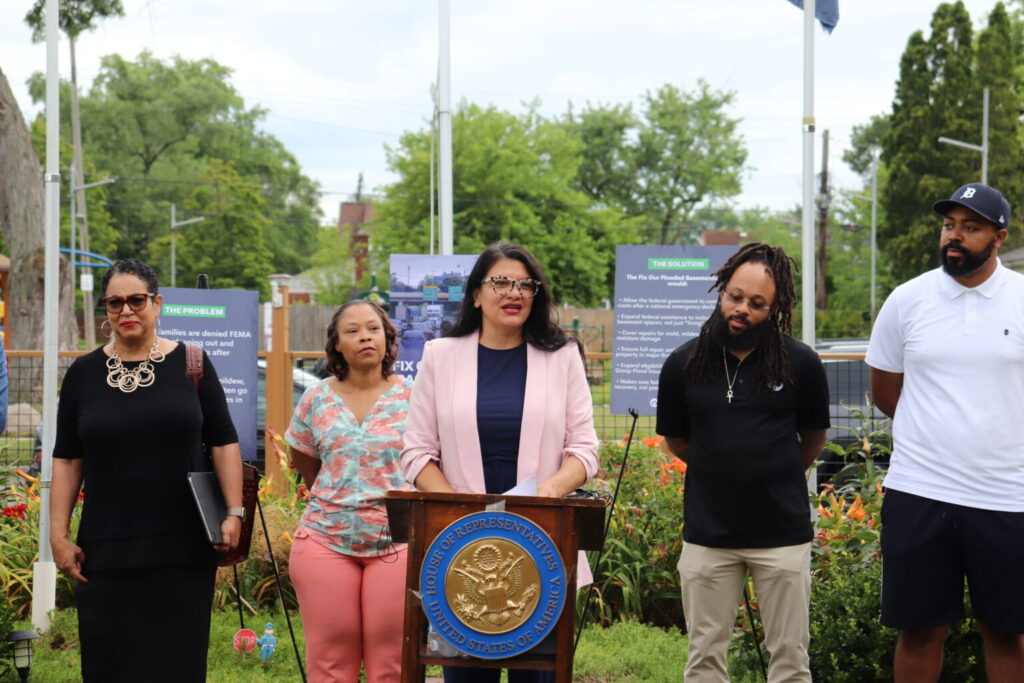
Federal policy offers limited coverage for basement damage, she added, ignoring the prevalence and importance of basements in regions outside of traditional natural disaster areas.
“FEMA was created, for many reasons, for coastal communities, but now the Midwest is directly impacted by those doing nothing about the climate crisis, and so we have to make sure that all these federal agencies are adapting to that and not leaving communities like ours behind.”
The Fix Our Flooded Basements bill would change language in the Stafford Act, a federal law that oversees FEMA disaster relief, to expand eligibility and coverage under the agency’s insurance policies and assistance funds and for mold remediation and flooding damage to basement appliances, carpet flooring, and personal property.
At the moment, there is no action on Tlaib’s bill. Since introduction, it's been referred to the House Committees on Financial Services and Transportation and Infrastructure.
If the bill becomes law, homeowners with flooded basement damage would be able to utilize FEMA's Individuals and Households Program, which provides up to $43,600 for temporary housing, home repairs, and hazard mitigation. The Fix Our Flooded Basements Bill would also expand eligibility for FEMA’s Group Flood Insurance Policy.
'There needs to be some equity'
An amendment to the Stafford Act, which was last updated in 2018, would reflect the ever-changing climate reality for communities such as Metro Detroit, said Kristin Taylor, a political science professor at Wayne State University, who studies the politics of natural disasters and disaster recovery efforts.
“There needs to be some equity in terms of what FEMA will pay for,” said Taylor. “If everything that FEMA is doing is geared towards reimbursing costs for people who live in hurricane prone areas, then it's definitely an inequity compared to people who don't.”
Severe rainstorms compound on the region’s histories of redlining as well as the ongoing stormwater infrastructure problems, she added.
The Fix Our Flooded Basements Bill so far has received endorsements from nearly a dozen local community organizations, as well as sponsorships from 22 U.S. representatives, including U.S. Rep. Shri Thanedar (D-Detroit).
“Flooding is one of the top concerns I hear about from my constituents,” Thanedar said in a statement. “Just 1 inch of water can cause up to $25,000 in damage and leave families with long-term health risks from black mold.”
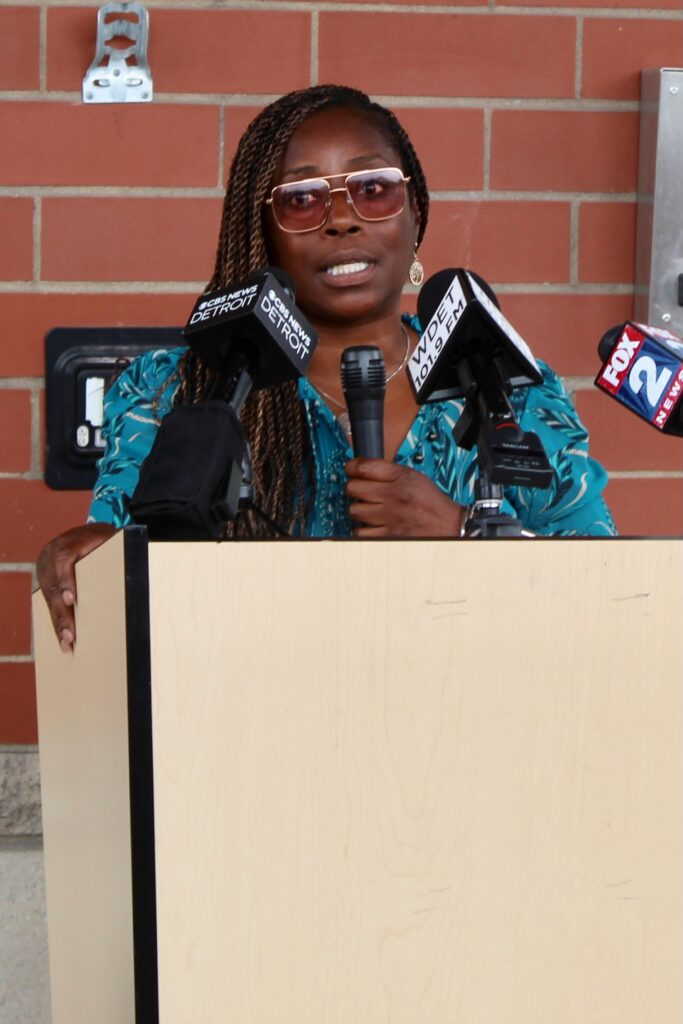
LeJuan Council, founder and director of Detroit Area Disaster Recovery Group, has witnessed it firsthand. She’s spent the last decade addressing environmental and public health issues such as groundwater flooding, sewer backups, and mold exposure throughout the city.
Many city residents not only store their belongings in their basements, but use them as a living space, Council said. The Stafford Act doesn’t account for this, nor does it directly assist with the mold and mildew problems that residents experience long after the storm.
"When you see that visual of everybody’s belongings curb to curb, with their things piled up 4 feet tall and 10 feet wide, that stuff will never get paid for and that's hard because (that’s) $30,000, $40,000, $50,000 worth of stuff,” she said.
The ripple effects of basement flooding
The fact that FEMA assistance has not fully covered basement repairs and replacements has only compounded the frustration residents feel, said Council, who adds that her advocacy work involves educating “residents on what FEMA can and can't do” and encouraging people to re-apply to the agency with more information when their original application is denied.
In Matney’s case, her family received $8,000 from FEMA to replace major appliances and repair her basement drywall after the August 2014 floods. While the aid didn't cover the estimated $52,000 of expenses the family accrued, she said they “were lucky that FEMA helped take care of us.
“Some people got less than others, which I never did understand,” said Matney. “It was just very weird to me. We did OK, but then the neighbor next door only got $500.”
Matney and her husband purchased a sump pump, and handled the majority of their basement repairs by themselves.
“We didn't have the money to hire anybody, so we ended up doing the cleanup all ourselves,” she said.
“We ended up cutting all the drywall, pulling it all out. It was a lot of bleach, a lot of mildew cleaner. I just did a lot of reading to find out what we needed to do and then after that, it was time for the rebuild.”
A decade removed from the August 2014 floods, local nonprofits say the challenges still linger for residents trying to repair and replace their damaged basements after each storm.
“It’s not as cheap as it used to be to be able to go, ‘Oh, I can just replace this drywall and change out this and fix that,’” said Chris Hicks, interim executive director of community development at Wayne Metro Community Action Agency.
During the June 2021 flood, when the agency teamed up with other area nonprofits to clean up basements and handle mold remediation, Hicks said he saw repair costs ranging from $5,000 to $40,000.
“Those expenses have climbed significantly … it's hard to mitigate a lot of those risks,” he said.
The limited federal assistance for basement flooding damage has ripple effects, Hicks said. If structural damage is improperly or slowly addressed, a repair can balloon to “a bigger problem, and it becomes health issues.
“Some of the damage is so extensive that it sometimes disqualifies people from being able to get weatherization services, because it comes to a point that some of the things that need to be replaced and repaired have gotten so worse that they're now capital improvements to a home,” he said.
Like Matney, east side resident Meghan Richards received FEMA assistance after the 2021 flood. While she was able to pay for a new HVAC system, it hasn’t stopped her from worrying about the next storm or what other fixes she needs.
“I was able to get it replaced through a program that provides you with high efficiency HVAC appliances, but the actual damage probably was more … my basement probably still needs repairs,” said Richards, who is an assistant director of climate equity at Eastside Community Network.
If passed, Hicks said he believes the Fix Our Flooded Basements Bill could “support some of the people that are living in those basements, or still aren't able to go into their basements because of how expensive that damage is.
“I know a lot of people that haven't been able to either be back in their homes, or are still actively avoiding their basement,” he said.
Warrendale couple takes community-minded approach to flooding
Since the August 2014 storm, Warrendale's Matney said one of the hardest things she’s dealt with is “recovering from the fear of it happening again.”
In the immediate days after the water receded, she could see how many of her neighbors were struggling from the emotional and physical toll of the flood.
“We drove around after the street flooding went down, and the people that were sitting on their porches, you could tell that they were depleted,” she said.
In the decade since that storm, Matney and her husband have taken on a multipronged project to foster more connection and neighborhood pride. Since 2015, the couple has turned vacant lot space around their home into a community garden, a park, and an in-development multicultural center.
One core aspect of the project: ensuring rain gardens are strategically placed in the park, “so all the water off of the pavilion goes down under the gym equipment and feeds the rain garden,” Matney said.
“During some of the floods that we have had, the water was so high in the street that it actually flooded the rain garden,” she said. “But the rain garden did what it was supposed to do. Within 48 hours, the water was gone out of that area.”
While the rain garden itself isn’t a fix to the region’s stormwater infrastructure problems, it offers peace of mind for Matney and some of her neighbors.
🗳️ Civic next steps: How you can get involved
Why it matters
⚡ A U.S. House bill introduced by Rep. Rashida Tlaib seeks to expand FEMA assistance eligibility and coverage, including full basement damage and mold mitigation. If passed and signed into law, the bill could provide additional financial aid to Southeast Michigan residents in the direct aftermath of floods.
Who’s making civic decisions
🏛️ The Fix Our Flooded Basements Bill was introduced to the U.S. House of Representatives July 25. It needs to be passed by the House, U.S. Senate, and signed by President Donald Trump to become law.
How to take civic action now
- ✏️ Sign up up to volunteer with After the Storm, a long-term disaster recovery group, to help with carpentry, construction, and remediation in the aftermath of a flood.
- 📩 Email Detroit Area Disaster Recovery Group to learn more about their long-term recovery efforts.
- ☎️ Call Detroit Water and Sewage Department’s customer service and emergency line at 313-267-8000 and file a claim if you experience a sewer backup or flooding. You can also find flood safety information on the DWSD website.
- 🔎 Find your local U.S. representative via ZIP code and contact them by phone, email or snail mail to share your thoughts on the bill.
What to watch for next
🗓️ At the moment, there has been no action on the Fix Our Flooded Basements Bill. On the same day it was introduced into the U.S. House, it was referred to the House Committees on Financial Services and Transportation and Infrastructure. You can follow along with any action on the bill via Congress.gov.
⭐ Please let us know what action you took or if you have any additional questions. Please send a quick email to connect@planetdetroit.org.
This article first appeared on Planet Detroit and is republished here under a Creative Commons Attribution-NonCommercial 4.0 International License.

Can grocery stores keep rural Kansas communities vibrant?
by Meg Cunningham and Blaise Mesa, Beacon: Kansas
September 26, 2025
AXTELL, KANSAS — When visiting his wife’s hometown of 400 in northern Kansas, Bob Lozier would joke with the owners of the grocery store that when they were ready to retire, he’d take over.
Takeaways
- More than 100 rural grocery stores in Kansas closed their doors from 2008 to 2018, as supermarkets and dollar stores became more popular, data show.
- The Kansas Healthy Foods Initiative launched in 2018 to offer financial support to small grocers across Kansas to help them stay competitive.
- Since 2018, the Kansas Healthy Foods Initiative provided more than $5 million in funding to projects across Kansas.
He didn’t really expect to actually take over the store — but he did.
In 2022, the owner of the only grocery store in Axtell decided to sell. The space had served as the town’s store since 1905. Suddenly, the residents of Axtell were facing a future without one.
About 40 investors, including Lozier’s wife, came together to raise nearly $500,000 to demolish and rebuild the store. They found more funding through the Kansas Healthy Food Initiative, which provides financial assistance to rural grocers. And Axtell residents donated their labor and skills to finish the project in under a year.
For Lozier, the timing worked out. His father-in-law was getting older. And leaving Tacoma, Washington, for a close-knit rural community in Kansas seemed like a great idea.

His relationship with the community has made the store a success. From the record-setting Axtell High School football team, to breakfasts for the American Legion and firefighters, Lozier makes feeding the community a priority.
“It’s more than just a little town,” Lozier said. “Everybody is family here.”
That’s just the type of community investment program the Kansas Healthy Food Initiative looks to foster across Kansas. The program is part of Kansas State University’s Rural Grocery Initiative, which aims to increase access to healthy food statewide.
Axtell Community Grocery serves as a crucial — and increasingly rare — link in the rural food chain, and community buy-in is key to its sustainability.

“That’s one piece of what we do, just to ensure that the projects we are supporting are embedded in the community and not a one-size-fits-all approach,” said Rial Carver, the rural grocery initiative’s program director.
“We’ve seen that every community varies,” Carver said. “And for a rural grocery store to be successful, it has to harness those local characteristics and local strengths.”
Kansas lost 105 rural grocery stores from 2008 to 2018, when the healthy food initiative launched. Since then, the program has awarded $5.3 million in land and grants for 75 projects in 45 counties aimed at keeping local stores open and addressing food insecurity in Kansas.
In 2023, Kansas had a food insecurity rate of 11.4%, lower than the national rate of about 14%, according to an Associated Press analysis of U.S. Census Bureau and Feeding America data. In Axtell’s Marshall County, an estimated 12.5% of county residents reported food insecurity in their household, the Associated Press analysis found.
Recently, the U.S. Department of Agriculture announced it will stop collecting and releasing statistics on food insecurity after October 2025, saying the numbers had become "overly politicized." The decision comes in the wake of federal funding cuts for food and nutrition safety net programs nationwide.
If not for Axtell Community Grocery, the town’s residents would have a nearly 30-minute drive to get to the next closest store, which would be a major challenge for keeping and attracting young people.


“They want the young families to keep coming. They want to get bigger,” Lozier said. “This town was booming years and years ago: three grocery stores, an ice cream parlor and a movie theatre. It was big.”
Grocery stores as community anchors
U.S. Department of Agriculture research found that the median number of grocery stores per capita decreased by 40% for rural and small urban counties from 1990 to 2015, the most recent data available, while dollar stores and supercenters became more popular.
It’s a story that Blue Rapids, Kansas, knows all too well.
After a Dollar General opened down the street from the supermarket in the town of less than 1,000, the store’s owner had a warning for the community.
“Three years after Dollar General opened, the supermarket closed, which he predicted,” said Jan Bergkamp, who owns Riverside Market, a Kansas Healthy Food Initiative project in Blue Rapids.
“He warned everyone that would happen,” Bergkamp said. “And little by little, it did. Of course, we were without anything.”
At the time, Bergkamp was running a floral business with her daughter. She was approached about opening a grocery store, but had never been in the business before.
The program helped her hire a grocery consultant to run a survey of the community and help her to design the store. She also has a small deli where she serves coffee, sandwiches and baked goods, and a freezer full of premade meals.
“We try to keep our profit margin as low as possible, just to compete.”
Jan Bergkamp, co-owner of Riverside Market
Competition from large retailers isn’t the only thing that makes being a small grocer difficult in 2025. Other factors like affordability and proximity to customers play a large role in their success — and their impact on food insecurity in the communities they serve.
“Grocery stores have razor-thin profit margins,” said Carmen Byker Shanks, the principal research scientist at the Center for Nutrition and Health Impact. “There’s not a lot of room to sell food and make money and stay in business.”
Bergkamp’s revenue is balanced among florals, grocery and the deli counter. The store sources a few aisles of shelf-stable goods and some local products like dairy, meat and produce.
Some local products are more expensive, Bergkamp said. But her customers are willing to pay more if they know where the food is coming from.
“The items aren’t cheap, but people like them, and like where they are made,” she said.
The same is true in McCune in the southeast corner of Kansas.
Kaynee Everman stopped by McCune Farm to Market around lunchtime with her baby. She lives in town and said Walmart — about 30 minutes away — is her only other grocery option.
McCune Farm to Market includes a small grocery section on one side of the building and a restaurant on the other. Head back behind the kitchen and you’ll find a bakery.
Other grocery stores just started delivering to McCune, and Everman does use that option. But she prefers shopping locally. She’s a working mother who doesn’t have time to spend an hour driving to and from the grocery store.
“For us to be able to drive down the road is a really big deal for locals,” Everman said. “It's fresh and it's better quality.”
Cherie Schenker, the store’s owner, was able to at least triple produce sales because of the Kansas Healthy Food Initiative grant.
Schenker buys produce locally. There’s one pecan farmer who doesn’t have space to store all the pecans he grows, but now they sit at McCune Farm to Market. She said the massive increase in cold storage is only possible because of the KHFI grant.
“I have a friendly banker, but he’s not quite that friendly,” Schenker said.
What other resources are needed to tackle food insecurity in rural Kansas?
A grocery store is only one piece of the puzzle when it comes to addressing America’s struggle to put food on the table.
“Rural food insecurity is really driven by a lot of things,” said Byker Shanks, the nutrition researcher. “It’s a web of overlapping factors like low wages, limited job opportunities, long travel distances, aging and lack of access to social services.”
And even when small towns have a grocery store, that doesn’t always mean that families have the ability to buy fresh food.
The Kansas Healthy Food Initiative surveyed its grocers in 2021. At the time, only 4% of grocers reported that produce sales made up 15% or more of their sales. For 46% of the grocers, produce sales were anywhere between 6% to 10%, on par with industrywide averages in the Southeast and Midwest.
“I’ve visited a lot of rural grocery stores, and can say that sometimes when fresh produce is available, it’s either not affordable or it’s not something that someone would want to purchase because it’s been sitting on the shelf for so long,” Byker Shanks said.
Families and grocers push up against affordability frequently. Assistance like the Supplemental Nutrition Assistance Program (SNAP) is designed to help low-income Americans afford nutritious foods, but there’s not always a lot of uptake in rural communities because of social stigma.
“People say all of the time that it’s hard to be on SNAP in rural communities, because everyone knows our business,” Byker Shanks said.
Another common problem is many families make too much to qualify for assistance, but not enough to live comfortably.
“You watch a family and a parent work really hard to do well at their job and succeed and move up,” said April Todd, the executive director of the Pony Express Partnership for Children. “And when they do, it’s actually harmful to their family.”
Brian Walker, the president and CEO of the Kansas Food Bank, said the number of families it serves has not returned to pre-pandemic levels and they try to make their dollars stretch farther.
“What we are noticing are a lot more seniors,” Walker said. “Their fixed incomes aren’t enough to keep up with the cost of goods.”
Some community-driven solutions are underway to help families deal with food inflation. Prices for food and beverages are 25.7% higher than in 2020, according to the U.S. Bureau of Labor Statistics.
In Marshall County, a partnership between the Farm Bureau and the Pony Express Partnership for Kids resulted in four donated cows annually and anywhere from 1,200 to 2,000 pounds of ground beef that can be given away for free in the community.
Ultimately, community relationships are keeping rural grocers afloat. The question is how to scale them.
“It’s not just a business, it’s a way of life,” Lozier said. “I hear people say, ‘I could get this cheaper elsewhere,’ and I said, ‘You probably can, but remember, we’re five minutes away.’”
Associated Press data reporter Kasturi Pananjady contributed to this report. This reporting is part of a series called Sowing Resilience, a collaboration between the Institute for Nonprofit News’ Rural News Network and The Associated Press. Nine nonprofit newsrooms were involved: The Beacon, Capital B, Enlace Latino NC, Investigate Midwest, The Jefferson County Beacon, KOSU, Louisville Public Media, The Maine Monitor and MinnPost. The Rural News Network is funded by Google News Initiative and Knight Foundation, among others.
This article first appeared on Beacon: Kansas and is republished here under a Creative Commons Attribution-NoDerivatives 4.0 International License.