Federal Rural Health Funding Could Trigger Service Cuts
Mardi Gras clean-up workers paid late once again; Housing program in Massachusetts helps break generational poverty by promoting self-sufficiency; Clean water was a top issue for McDowell County, WV voters in 2024. They’re still waiting for help.


It's Friday, April 3, 2026 and in this morning's issue we're covering: Federal Rural Health Funding Could Trigger Service Cuts, Worcester’s ‘A Better Life’ housing program helps break generational poverty by promoting self-sufficiency, He won a landmark birthright citizenship case at the US Supreme Court. El Paso tried to deport him anyway, Lawmakers revive ice storm relief after governor’s veto, Who will care for Arivaca when its only doctor retires?, A Driftless area church becomes a multigenerational community hub, Clean water was a top issue for McDowell County voters in 2024. They’re still waiting for elected officials to help, Study finds public water utilities face mounting financial strain.
Media outlets and others featured: KFF Health News, CommonWealth Beacon, El Paso Matters, Mississippi Today, Cronkite News, Wisconsin Watch, Mountain State Spotlight, North Carolina Health News.
Give and Take: Federal Rural Health Funding Could Trigger Service Cuts
Aaron Bolton, MTPR and Arielle Zionts March 27, 2026
BIG SANDY, Mont. — The emergency department at Big Sandy Medical Center is one room with a single curtain between two beds.
It’s one of the many parts of the 25-bed rural hospital that need updating, former CEO Ron Wiens said.
He said the hospital, an essential service in its namesake town of nearly 800 residents in the state’s sprawling north-central high plains, needs at least $1 million for deferred maintenance, including a failing HVAC system. But the facility has struggled to make payroll each month and can’t afford to make all the fixes, Wiens said.
Built by farmers and ranchers in 1965, Big Sandy Medical Center began with nine beds. Today, a similar community effort — donations and grants to plug financial holes each year — keeps it afloat.
Wiens, who recently left his position at the hospital, said he wishes Big Sandy could get funding from Montana’s share of the $50 billion federal Rural Health Transformation Program to renovate the hospital and direct payments to help secure its future. The state received more than $233 million in its first-year award.
But the hospital may not get the kind of help he sought.
That’s because the five-year program focuses on new, creative ways to improve access to rural health care, not on directly funding services and renovations. And Montana is one of at least 10 states whose leaders say projects launched under the federal program could lead rural hospitals to cut services so they can continue to afford to offer emergency and other essential care.
Congressional Republicans created the fund as a last-minute sweetener to their One Big Beautiful Bill Act, signed into law last summer. The funding was intended to offset disproportionate fallout anticipated in rural communities from the law, which is expected to slash Medicaid spending by nearly $1 trillion over 10 years.
Montana’s application includes programs to make it easier for rural residents to get medical care and live a healthy lifestyle. For example, it says funding can be used to start community gardens, train paramedics to make home visits, open school-based clinics, or bring mobile clinics to rural areas.
The application also says rural Montana hospitals can receive payments for implementing recommendations, “including right-sizing select inpatient services” to match demand. In some cases, it says, right-sizing might mean “downsizing.” The state says hospitals will have input and recommendations will be specific to each facility.
“That’s what has all the hospitals on pins and needles, words like restructuring, reducing inpatient beds. Everybody is going, ‘What is this going to look like?’” Wiens said.
The Montana Department of Public Health and Human Services declined to answer questions about how it will carry out its right-sizing efforts.
A Lifeline of Care
Big Sandy cattle rancher Shane Chauvet doesn’t want any services cut.
He credits Big Sandy Medical Center with saving his life after a flying piece of metal nearly cut off his arm during a windstorm a few years back.
“I looked over, saw it coming, and whack!” Chauvet recalled.
His wife drove him to the hospital, where they frantically pounded on the ER door while Chauvet’s blood pooled on the ground.
Because of the storm, staffers worked on Chauvet with no power and no ability to summon a helicopter. He was then taken by ambulance 80 miles through intense rain and hail to a larger hospital.
Chauvet understands the state’s plan doesn’t call for eliminating emergency care, but he worries that reducing other services would set off a downward spiral for the hospital and his town.

In Oklahoma, realigning clinical services could mean “shutting down service lines,” according to its application to the federal program. And in Wyoming, any facility that receives funding must agree to “reduce unprofitable, duplicative or nonessential service lines,” according to its rural health law.
Monique McBride, business operations administrator at the Wyoming Department of Health, said the department interprets right-sizing as helping rural hospitals provide essential services — such as emergency departments, ambulance services, and labor and delivery units — while maintaining long-term, financial stability.
“This might involve limiting some elective procedures that could be done at lower cost in higher-volume facilities. The main distinction here is time-sensitive emergencies vs. ‘shoppable’ services,” she said.
A New Lease on Life?
Seven of the 10 states — Nebraska, North Dakota, Tennessee, Kansas, Nevada, South Carolina, and Washington — where rural hospital service cuts are on the table say they’ll help pay for hospitals to convert to Rural Emergency Hospitals. The recently created federal designation requires hospitals to halt inpatient services and offers enhanced payments to help them maintain emergency and outpatient care.
At least 15 additional states wrote that they’ll use the federal funding to right-size, evaluate, or adjust services — which could mean adding or taking away services, or transitioning them to a telehealth or outpatient setting.
Brock Slabach, chief operations officer of the National Rural Health Association, said, “There’s a proper concern from rural hospital administrators that this funding is not going to where it was intended.”
He said cutting services that lose money could backfire in the long run. For example, he said, halting labor and delivery care might drive more people out of small towns, further reducing hospitals’ patient numbers and revenue.
The type of hospital services that states will assess matters, said Tony Shih, a senior adviser at the Commonwealth Fund, a nonprofit focused on making health care more equitable.
“If the end result is that high-margin services are taken away from local hospitals with nothing given back in return, it can be financially harmful,” he said.
Shih noted that states’ plans to add more outpatient care could prove beneficial for patients. It’ll take time to know which states help stabilize rural hospitals, he said.
Rural hospital leaders say they know which changes would keep their facilities open and that states shouldn’t suggest or mandate service cuts and other changes on their behalf.

Josh Hannes, who oversees rural health policy at the Colorado Hospital Association, said “top-down” directives won’t work.
He said the association’s members believe they can find efficiencies and are eager to collaborate. But “a state agency shouldn’t be making those determinations,” he said.
Hannes said members are worried Colorado’s plan to classify rural health facilities as a “hub, spoke, or telehealth node” will compel service reductions. The classification will help determine “which services are sustainable locally and which are best provided regionally or through telehealth,” according to its program application.
Spokespeople for the Colorado and Oklahoma health departments said no facility will be forced to end services. But Oklahoma spokesperson Rachel Klein said some facilities might choose to do so as part of a broader effort to make sure they’re meeting community needs while remaining financially stable.
“A hospital might shift certain services to a nearby regional provider with higher patient volume and specialized staff while expanding other local services,” such as primary, outpatient, or community-based care, she said.
Wiens and Darrell Messersmith, CEO of Dahl Memorial Hospital in the southeastern Montana town of Ekalaka, said they worry the only way hospitals will get their share of funding is to cut services or become Rural Emergency Hospitals that don’t offer inpatient services.
“I would hate to see things shift toward a pack-and-ship facility,” Messersmith said. “Right now, we function quite well as an inpatient facility.”
Not all Montana health leaders are worried.
Ed Buttrey, president and CEO of the Montana Hospital Association, said he thinks his state’s plan could help rural hospitals become financially sustainable and survive Medicaid cuts. Buttrey is also a Republican state lawmaker.
Chauvet, the Big Sandy rancher, said his perspective on whether remote towns like his should have a hospital is forever changed because of his accident.
“I always would say, ‘Oh, they’re nice to have,’ but now I look at the hospital and say, ‘That’s essential to our community,’” he said.
USE OUR CONTENT
This story can be republished for free (details).
KFF Health News is a national newsroom that produces in-depth journalism about health issues and is one of the core operating programs at KFF—an independent source of health policy research, polling, and journalism. Learn more about KFF.
Subscribe to KFF Health News' free Morning Briefing.
This article first appeared on KFF Health News and is republished here under a Creative Commons Attribution-NoDerivatives 4.0 International License.

Worcester’s ‘A Better Life’ housing program helps break generational poverty by promoting self-sufficiency
by Hallie Claflin, CommonWealth Beacon
March 31, 2026
WHEN MELISSA SANTIAGO lost her apartment and became homeless in 2020, she was a 22-year-old single mom to a five-year-old and a newborn. She and her daughters moved into a shelter in Holyoke where they stayed for nearly two years.
Santiago grew up with a single mom in an unstable household and helped raise her other siblings. When she became homeless, she felt as though history was repeating itself.
“It took a big toll on me, because I felt like I was following in my mom's footsteps, and my kids are going to feel the way I felt having to be the head of the household,” she said. “I felt horrible.”
It’s a far cry from where the 28-year-old is today.
No longer homeless, Santiago is in her third semester of college working toward a degree in early education. She recently made the dean's list. On top of being a full-time student and working 14 hours a week, she is just a few steps away from being licensed to operate her own in-home daycare. She now has thousands tucked away in a savings account and has boosted her credit score to 744. Her next goal is to buy a home for her family.
She says it’s all thanks to a Worcester Housing Authority (WHA) program that has allowed her to live “a better life.”
The A Better Life (ABL) program launched in 2015 for families in state-subsidized public housing. The unique program requires residents to work, attend school, or participate in community service for 30 hours each week. The roughly 250 participating families receive intensive case management services and are required to complete life skills, job training, and financial literacy classes. Each participant must raise their credit score to a minimum of 650 to graduate.
Each ABL participant is also incentivized to save up to $15,000 through an escrow account – an interest-bearing account established by the WHA on behalf of the resident. Deposits are tied to each family’s rent payment and increase when a resident’s income goes up. The head of the household cannot touch the funds and will only receive the savings when they have graduated from the ABL program.
The intention is to motivate residents to reach independence as quickly as possible while freeing up housing slots for other families who remain on extensive wait lists amid a severe shortage of affordable housing units. But there is no time limit for residents completing the ABL program.
“We measure our success by how many families are able to move out,” Worcester Housing Authority CEO Alex Corrales said.
For over a decade, the program has been widely successful in helping residents reach self-sufficiency. Now, it has piqued the interest of Trump administration officials who are reshaping public housing policy across the nation.
Corrales takes what he considers to be a fairly unique approach to public housing: tough love. Since his appointment to the second largest housing authority in New England in 2016, he has championed the agency’s self-sufficiency initiatives. An immigrant from Costa Rica, Corrales grew up in public housing.
“One of my biggest pet peeves is when I see good people pity our residents, so then they don't challenge them. When you pity someone, I almost feel like you're saying, ‘I don't think they have what it takes to overcome that,’” he said. “There's a different element that I bring to the job because I've seen both sides of the coin.”
Massachusetts is one of only four states that operates its own state-funded public housing system, separate from federal programs administered by the US Department of Housing and Urban Development (HUD). Local housing authorities like the WHA administer both state and federal housing programs.
During a January visit to the WHA, Corrales’ tough-love approach caught the attention of Michael Banks, HUD’s New England regional administrator. Soon after, Corrales was asked to meet with Benjamin Hobbs, the assistant secretary for Public and Indian Housing, to discuss the ABL program ahead of HUD’s proposed shifts in federal housing policy.
“He wanted to learn more about the ABL program, success stories, and how we implemented the work-school requirements,” Corrales said.
At the end of February, HUD Secretary Scott Turner announced a long-awaited proposed rule that encourages, but does not require, all public housing authorities and private property owners who rent to people using a Section 8 housing voucher to implement a work requirement of up to 40 hours per week and time limits of at least two years for non-disabled, non-elderly adults in federally-funded housing. The decision to impose the new restrictions will be up to local housing authorities and property owners. If they do implement the policies, they will be required to provide supportive services, although HUD did not state that it will provide funding for those services.
“Work, not a welfare check, is the pathway to opportunity, stability, and the achievement of the American Dream,” Hobbs said in a February press release. “Today’s proposed rule will change lives, empower families, and set generations on a new upward trajectory.”
Corrales said HUD’s decision to make the time limits and work requirements optional instead of mandatory could have been influenced by what officials like Hobbs heard from him and other housing authorities.
“That leads me to believe they’ve taken into account some of the information they're getting from the industry regarding what works and what maybe is not working,” he said. “The discretionary option to implement this work requirement I think was a big step in that regard. It gives local control to the housing authorities.”
In a statement provided to CommonWealth Beacon, Hobbs said ABL "has had remarkable results and demonstrates how work requirements can put residents on a path to self-sufficiency."
"These successes are exactly what Secretary Turner and I hope to see expanded to federal public housing residents with HUD’s recently proposed rule giving all public housing authorities – for the first time ever – the ability to implement reasonable work requirements or time limits," he said.
Since the start of his second term, the Trump administration has sought to make significant changes to federal rental assistance programs like Section 8, calling the current system "dysfunctional.” In last year’s White House budget plan, Trump proposed cutting rental aid by 40 percent and sending those funds to each state "to design their own rental assistance programs based on their unique needs and preferences.” He also proposed imposing a two-year time limit on rental assistance for able-bodied adults. The proposal was ultimately rejected by Congress.
Last year, Secretary Turner and other members of the Trump administration wrote a New York Times opinion piece calling on Congress to impose work requirements across multiple safety net programs, stating that federal spending dedicated to able-bodied, working-age adults “distracts from what should be the focus of these programs: the truly needy.”
Public housing authorities across the country have rarely adopted work requirements and time limits for their federal housing programs, in part due to a lack of capacity to administer or enforce them.
Around half of Section 8 and public housing households across the United States were work-able in 2024, according to a research brief published in 2025 by the Housing Solutions Lab, a housing policy research group affiliated with New York University. Of those work-able households, over half earned wage income in 2024, suggesting many would already satisfy work requirements if they were imposed. Approximately two-thirds of work-able households across those programs were families with children, and work-able households that did not earn wage income were mostly people with children.
Nearly 70 percent of Section 8 and public housing households that were work-able and received HUD assistance at the end of 2024 had been in the program for longer than two years. Imposing a two-year time limit would likely generate a significant administrative burden for housing authorities who would have to evict these residents and select new ones to take their place.
“It is challenging to design and implement time limits in a way that supports economic mobility and gives public housing authorities confidence they are not discharging households only for them to again face unsustainable rent burdens and housing instability,” the 2025 research brief notes.
When it comes to public housing, Corrales is not a fan of time limits.
“I want to do what I think is best to help our residents reach self-sufficiency. But I don't believe forcing people to do something and then having an expiration date on it is the answer,” he said. “Yes, with the ABL program we have the work-school requirement, but there is a heavy, heavy, heavy dose of resources attached to that. That's what I want to see on the federal side.”
Since the start of ABL, Corrales said they have seen a significant increase in the number of families that are able to leave public housing, either to go into the private rental market or to buy their own home. Before the ABL program, the WHA saw an average of just one resident that would buy a home each year after exiting public housing. The program has helped increase that number to around nine new homeowners every year.
According to Corrales, 93 percent of all WHA households are led by single moms. Some families don’t speak English, others start the program with little job experience to add to their resume, and some, like Santiago, experience health setbacks.
“Our families are very unique. They're very different, and some will complete the program in two or three years. Others may take longer, but they all see success in some shape or form,” Corrales said.
Santiago, who entered the program in 2022 and has yet to graduate from ABL, recently had surgery after receiving a thyroid cancer diagnosis. Because she had housing to fall back on, she was able to manage the appointments, procedures, and recovery without losing her apartment.
“If there was a time limit, I would probably be homeless again right now,” Santiago said. “I neglected my health for so long, and I needed time to get myself in check. … Of course I want to leave. If I could leave right now, I would, but I know I'm not there yet.”
When ABL first started, the average length of time WHA residents spent in housing across all of the authority’s programs was close to 17 years. That number has been reduced to an average of 11 years for those in ABL.
“We know some families may never be able to move out, but since our focus is on the entire family, we want to ensure that the children receive the best education possible so they can break the cycle and not reside in public housing once they are adults,” Corrales said.
Leika Cherubin, a 30-year-old graduate of the ABL program who has since purchased her own home in Southbridge, said a time limit would have made her feel like a number, not an individual.
“My biggest fear was being a stereotype. ‘Oh, she's a young minority who is just trying to take advantage of the government and just wants handouts,’” she said. “No. I wanted to work hard. I wanted to be self-sufficient. I just needed help.”
Public housing has never been particularly popular, and has long faced fierce political attacks, local opposition, and limited federal funding.
“A lot of people in public housing get the bad rep,” Santiago said, adding that she often avoids giving out her address because of it.
In addition to the 250 families that are currently participating in the ABL program, another 250 are part of WHA’s other self-sufficiency program available to residents of federal public housing and Section 8 voucher holders. The wait list for ABL is years.
“We're barely scratching the surface. There are 36,000 people on my waitlist, and it's moving very slowly. I only have 3,000 public housing units, so I'd have to move everybody out 12 times before I get to my 36,000 folks,” Corrales said.
Nevaeha Vazquez entered the ABL program in 2021 as an 18-year-old single mother. Prior to the program, she had been couch-surfing and living in a shelter with her infant daughter. During her time in ABL, she enrolled in school and successfully earned her practical nursing degree. She recently graduated from the program and transitioned to the private rental market.
“I can't even imagine having to pay market rent while being in school and worrying about my child,” Vazquez said.
Through financial literacy classes, program coaching, and debt management guidance, the now 23-year-old increased her credit score from 514 to 651, significantly reduced her loan debt, and reached the program’s maximum escrow savings of $15,000. ABL also offers domestic violence classes and workshops to residents like Vazquez who was previously in an abusive relationship. While residents attend their required classes and workshops, ABL staff offer child supervision and meals.
Without the ABL program, Santiago said she probably would have chosen work over school in order to pay rent.
“This program is great because it lights a fire under you,” Santiago said. “I didn't have anyone to guide me. I had to help my mom raise my siblings, so I had to grow up too fast. What my mom didn't teach me, I'm getting taught here – credit, the importance of saving, and the good stuff that sets you up for success.”
But that doesn’t mean she is eager to stay.
“There are people who need help, and that's why I want to leave this program,” she said. “Just like I needed it, there's somebody else that needs it too.”
During her time in the program, Cherubin, a Haitian immigrant, founded a nonprofit organization supporting the local Haitian community. The ABL program helped her build up a savings account, raise her credit score to 737, and pay off her car loan. She also attended Anna Maria College where she earned her bachelor’s degree in nursing.
“There is no way I would have been able to complete my bachelor's if I didn't have the support of ABL,” she said.
Prior to joining the program in 2021, Cherubin was a single mom who was couch-surfing with her young daughter while working as a certified nursing assistant.
“It was one of the worst feelings ever. This is the life that I'm going to give my kid? This is it?” Cherubin said. “ABL is helping us break those generational barriers.”
When she received the keys to her first apartment at the start of the program, Cherubin said she cried. Now, she is a homeowner.
“For a lot of us, our dream is to have this backyard and have our babies play in it while we wash the dishes or something. To have a home where they feel safe,” Cherubin said. “Without ABL, I probably would have given up on that dream.”
Update, April 1: This story has been updated to include a statement from Benjamin Hobbs, the US Department of Housing and Urban Development's assistant secretary for Public and Indian Housing.
This article first appeared on CommonWealth Beacon and is republished here under a Creative Commons Attribution-NoDerivatives 4.0 International License.

He won a landmark birthright citizenship case at the US Supreme Court. El Paso tried to deport him anyway
by Robert Moore, El Paso Matters
July 4, 2022
In 1901, a cook named Wong Kim Ark crossed from Juárez to El Paso with a unique distinction. He was perhaps the only person in the world who had a U.S. Supreme Court ruling declaring him by name to be a citizen of the United States.
That didn’t prevent an El Paso immigration official from arresting him and beginning deportation proceedings.
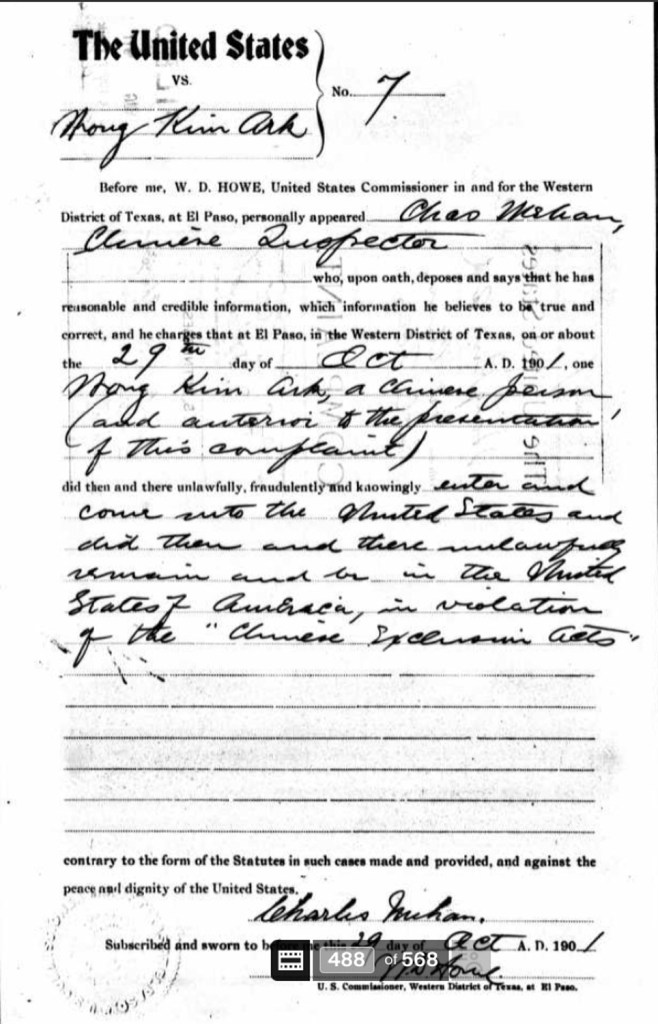
On Oct. 29, 1901, Charles Mehan, a “Chinese inspector” in El Paso, arrested Wong on the grounds that he was in the United States in violation of an 1882 law called the Chinese Exclusion Act.
It took four months for Wong to win a ruling – again – that he was a U.S. citizen and couldn’t be deported. That verdict in El Paso came almost four years after the U.S. Supreme Court, in a landmark case, had settled the issue of citizenship for Wong and other children born to immigrants in the United States.
Wong’s landmark legal case is well known among legal scholars, but his run-in with El Paso immigration authorities after the Supreme Court ruling was lost to history until scholar Amanda Frost discovered the records in the National Archives and wrote about it in 2021.

Frost, a law professor at American University in Washington, D.C., said the immigration enforcement system that targeted Wong more than 120 years ago was a precursor to what the United States has today.
“The Chinese Exclusion Act created a bureaucracy that then needed to justify itself, and that grew exponentially. Once the government started excluding people, it needed to decide who was eligible. That meant it needed to interview witnesses, review documents, etc. That required translators, officials, commissioners, etc. And in turn it required building detention facilities to hold all the immigrants waiting to enter,” she said.
“All that bureaucracy generated more paperwork, more scrutiny of immigrants, and the need for more and more officials and more government funds to pay for it all.”
In El Paso, Wong would be a target of that policy.
Keep up with the latest El Paso news. Click here to subscribe to our free weekly newsletter.
A historic case
The 1898 Supreme Court ruling in United States v. Wong Kim Ark established that the 14th Amendment to the U.S. Constitution granted “birthright citizenship” to most people who were born in the United States. As president, Donald Trump occasionally threatened to revoke birthright citizenship, but legal scholars said the Wong ruling prevented that.
The 14th Amendment was passed after the Civil War in 1868 to clarify that the country’s formerly enslaved people were citizens and had legal protections. It said: “All persons born or naturalized in the United States and subject to the jurisdiction thereof, are citizens of the United States and of the State wherein they reside.”
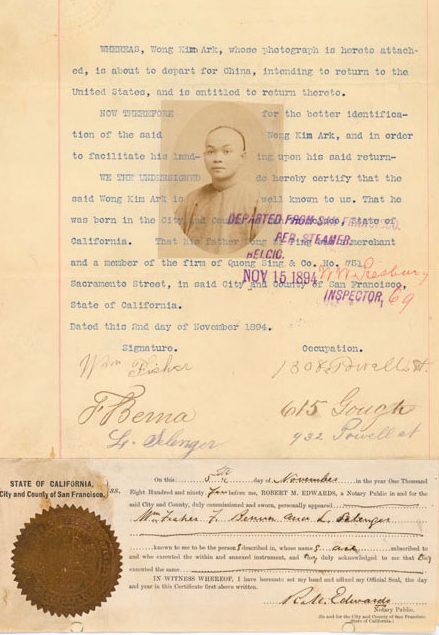
In 1882, Congress passed the Chinese Exclusion Act, the first significant federal law restricting immigration into the United States. The law, which remained largely in effect until 1943, barred most Chinese people from coming to the United States, and prohibited them from becoming naturalized citizens.
“The Chinese Exclusion Act was really the birth of our modern-day immigration system,” said Frost, the author of a 2021 book, “You Are Not American: Citizenship Stripping from Dred Scott to the Dreamers.”
Wong Kim Ark was born in San Francisco around 1870 to parents who had emigrated from China. Like many children of immigrants, he maintained contact with his ancestral land while trying to make a life in the United States, a country that was often hostile to his existence. During his working life, he sent part of his earnings back to relatives in China.
Wong traveled several times to China during his life. Biographers have found that his parents took him back to China when he was about 8, and they never returned. He came back to the United States with an uncle around age 11 and immediately went to work as a cook in California.
U.S. laws and customs forbid Wong from marrying women not of Chinese descent. He returned to his parents’ village of Ong Sing in 1889 and married a woman named Yee Shee and they conceived their first child. He returned to San Francisco in July 1890, leaving his family behind in China.
Wong also returned to San Francisco from a nine-month trip to China in August 1895, again leaving his family behind. Although he had been allowed to return to the United States twice previously, this time he was detained by U.S. immigration agents looking for a court test of whether the 14th Amendment granted birthright citizenship.
The case made its way to the Supreme Court, which ruled 6-2 in March 1898 that Wong and other children born to immigrant parents in the United States were citizens. It is one of the most impactful Supreme Court opinions in history.
Our reporting is made possible by donations from readers. Click here to support El Paso Matters' work today.
Wong Kim Ark in El Paso
In October 1901, three years after having his citizenship confirmed by the Supreme Court, Wong Kim Ark came to the El Paso border through Juárez. It’s not clear why he went to Mexico, but both sides of the border relied on Chinese labor and merchants as former frontier communities grew rapidly after the arrival of railroads in the late 19th century.

The 1900 census listed 336 people of Chinese descent among El Paso’s population of 24,886. Almost all were men, mostly in service occupations such as laundry and restaurant work, though some were listed as physicians. Most of the people of Chinese descent in the 1900 census in El Paso listed their date of arrival in the United States before the 1882 Chinese Exclusion Act.
El Paso had begun to boom after the arrival of railroads in 1881, when the city had about 2,000 residents. Frost said Chinese laborers performed jobs such as cooking and laundry that were traditionally done by women, who were often rare in frontier towns.
Northern Mexico also had a sizable Chinese immigrant population at the turn of the 20th century. Wong’s plans to cross from Juárez to El Paso – and his role in a historic Supreme Court case – were noted by the El Paso Times on Oct. 29, 1901.
“Wong Kim Ark, the Celestial who the United States supreme court decreed was a citizen of the United States and not a subject of the Boxer land, and who has been temporarily residing in Juárez awaiting an opportunity to enter the country again legally, will doubtless have his case adjusted in a few days,” the paper said in a story on Page 3. (The Celestial Empire and Boxers were terms used by American media to refer to China and its people in the late 19th and early 20th centuries.)
Wong was initially rejected in his efforts to return from Mexico, the Times report said. “Evidence has arrived, however, to show that the Celestial in Juárez and Wong Kim Ark whose citizenship was passed upon in (1898) are one and the same. In that event, and the federal decision being still in force, his admittance will be beyond question.”
The same day the Times story was published, Wong was arrested by Charles Mehan, the man responsible for enforcing the Chinese Exclusion Act in El Paso.
Winning his freedom – again
The Times story indicates that Wong’s status as a U.S. citizen was known in El Paso at the time of his arrest by Mehan. But the charging document doesn’t mention the Supreme Court case, and refers to Wong as “a Chinese person.”
Many people arrested by Chinese inspectors were locked up until being deported. Records in the National Archive show that Wong was freed on a $300 bond – the equivalent of more than $10,000 today.
The bond was guaranteed by Mar Chew, who is listed as a restaurant owner in city directories, and R.F. Campbell, El Paso’s mayor from 1895-97 who was then serving as the city’s postmaster, a powerful political position, records show. The connection of the two men to Wong isn’t stated in the records maintained in the National Archives.
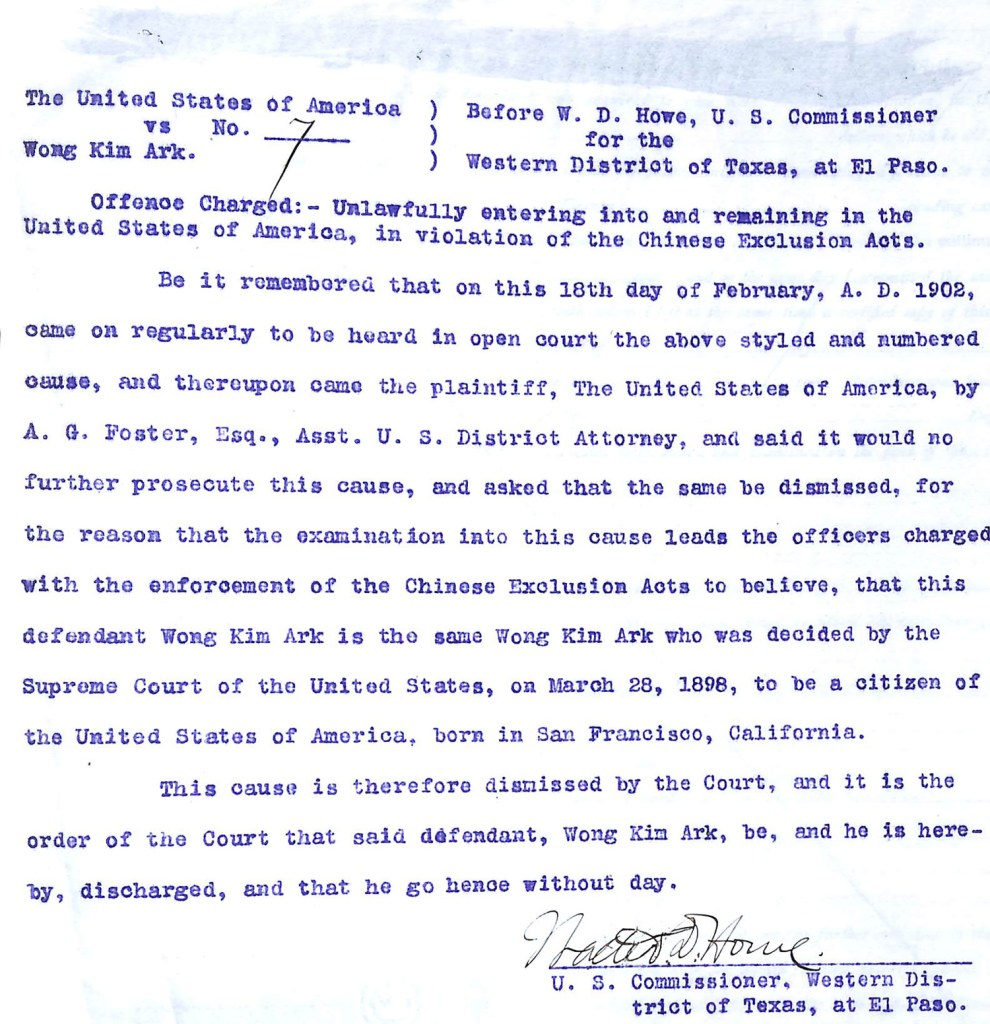
On Feb. 18, 1902, Wong’s potential deportation was dismissed by W.D. Howe, a federal commissioner for the Western District of Texas, at the request of federal prosecutors.
Howe wrote that “examination into this cause leads the officers charged with the enforcement of the Chinese Exclusion Acts to believe that this defendant Wong Kim Ark is the same Wong Kim Ark who was decided by the Supreme Court of the United States, on March 28, 1898, to be a citizen of the United States of America, born in San Francisco, California.”
Life after El Paso
It’s unknown how long Wong stayed in El Paso. A person named Wong Kim Ark is listed in a 1903 city directory living in a boarding house at 225 S. Oregon St. His occupation is given as a cook, the same occupation for Wong in the Supreme Court ruling and other documents.
South Oregon Street at the turn of the 20th century was the heart of El Paso’s small Chinatown, full of boarding houses, restaurants and other businesses catering primarily to Chinese immigrant workers.
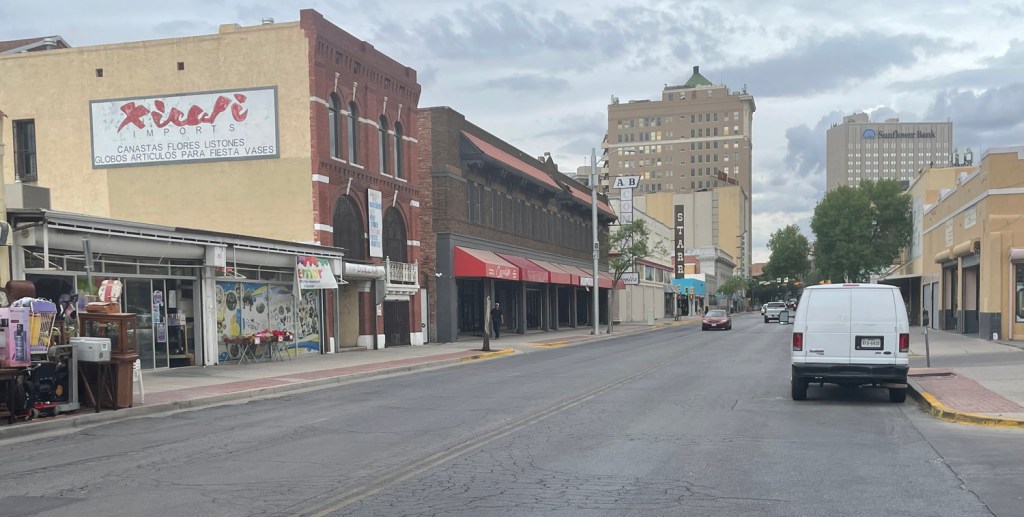
In October 1905, Wong returned to San Francisco from another trip to China, his first since the Supreme Court case seven years earlier, records show.
Frost, the American University law professor, found records that Wong later attempted to bring several of his sons from China to the United States.
His eldest son, Wong Yook Fun, arrived in San Francisco in 1910, but was soon departed when immigration officials ruled that they hadn’t proved they were related. Frost said the records indicate they actually were father and son. The eldest son never returned to the United States.
Wong Yook Sue arrived in the United States in 1924, stating that he was the third son of Wong Kim Ark, a U.S. citizen, and entitled to admission. He was initially denied entry but successfully appealed and was allowed to stay. Two other sons were admitted to the United States in the next two years.
In her research, Frost discovered that Wong Yook Sue admitted in 1960 that he had falsely claimed to be the son of Wong Kim Ark so he could enter the United States. He was among the thousands of “paper sons,” Chinese immigrants who falsely claimed to be the child of U.S. citizens in order to enter the country.
Wong Yook Sue made the admission through the Chinese Confession Program, which the United States conducted in the 1950s and ’60s to normalize the immigration status of Chinese people who entered the country fraudulently. The program was created from a fear that China’s Communist government might try to plant spies in the United States.
The “paper sons” program was an example of fraud that has long plagued a racist and often corrupt U.S. immigration system, Frost said.
“Our immigration system seems to be its own worst enemy because it creates this enormous bureaucracy that is self-defeating,” she said.
Lessons for today
Wong Kim Ark returned to China in 1931, filing a document indicating that he would come back to the United States. He never did. It’s not clear when he died.

His legacy lives on. Wong Kim Ark’s legal battle ensured that all children born in the United States to immigrants would be citizens. That birthright citizenship protection has paved the future for tens of millions of people born to immigrant parents.
But attempts continue to reverse more than 120 years of settled law.
The Texas Republican Party 2022 platform approved June 16 calls for a constitutional amendment to “support a change to the 14th Amendment to eliminate ‘birth tourism’ or anchor babies by granting citizenship only to those with at least one biological parent who is a US citizen.”
Frost said the alarmist and racist language used to describe Chinese immigrants in the 19th and 20th centuries is similar to language used today concerning immigrants from Latin America, Africa and other areas. She said the impact of Chinese immigrants and their descendants should give pause to denunciations of those seeking to immigrate today.
“Does the U.S. regret the presence of Chinese immigrants today, even the fraudulent ‘paper sons?’ Of course not – they are the ‘model minority’ who worked hard and succeeded,” she said. “And in doing so helped build the United States. We should view would-be immigrants today as an asset for our country, not people to be feared and barred.”
This article first appeared on El Paso Matters and is republished here under a Creative Commons Attribution-NoDerivatives 4.0 International License.

Lawmakers revive ice storm relief after governor’s veto
by Taylor Vance, Mississippi Today
March 26, 2026
After Gov. Tate Reeves vetoed a bill that attempted to provide low-interest loans to local governments impacted by Winter Storm Fern, lawmakers on Wednesday night revived the program in another piece of legislation.
House and Senate leaders introduced the loan program in a compromise plan, called a “conference report,” in a separate bill. The House and Senate unanimously approved the plan on Thursday morning, and it will head back to Reeves for consideration.
Sen. Scott DeLano, a Republican from Gulfport, said on the Senate floor that the new plan is a compromise with Reeves and addresses the concerns the governor had with the prior proposal that was vetoed.
“Our neighbors in North Mississippi have suffered too much devastation, and we must provide financial relief as quickly as possible,” Lt. Gov. Delbert Hosemann said in a statement. “This conference report is a second attempt to support our cities and counties. We will pass it out of the Senate.”
Under the plan Reeves vetoed, local governments would have been able to borrow money from the state at a 1% a year interest rate that would kick in after the federal government sends relief money. Under the new plan introduced Wednesday, lawmakers changed it to a 3% annual interest rate after reimbursement from the federal government arrives.
It’s unclear why legislative leaders raised the annual interest rate from their initial 1% proposal to 3%. But it may be an attempt to avoid Reeves vetoing the program a second time.
In his veto message on the first proposal, the governor claimed he had negotiated a 1% monthly loan rate with legislators, which would have totaled 12% annually. But legislative leaders last week said including the word “monthly” in the plan was a mistake and agreed to remove it.
Reeves also falsely accused Senate staffers of removing language in an unconstitutional and potentially criminal fashion. Senate leaders on Wednesday rejected those allegations and said it was reckless for the governor to have done so.
Sen. Tyler McCaughn, a Republican from Newton, told Mississippi Today on Wednesday evening that lawmakers were exploring different ways to revive the loan program after the governor vetoed it.
McCaughn said he favored reviving the program in another bill because it would be the quickest and most efficient way to get relief money to cities and counties that desperately need it.
This article first appeared on Mississippi Today and is republished here under a Creative Commons Attribution-NoDerivatives 4.0 International License.

Mardi Gras clean-up workers paid late once again, in violation of state and federal law
by Madhri Yehiya, Verite News New Orleans
March 26, 2026
Edwin Rivera slept on the street for days to make it to his early-morning shifts on time.
Rivera, who is unhoused and recently arrived in New Orleans, worked 60 hours for the city as a clean-up worker during last month’s Mardi Gras parades. The temporary positions are first-come, first-serve, forcing hired workers to arrive early and wait in line for hours each day for a chance to work.
“I slept out on the street. I slept at a bus stop and I slept at the Winn Dixie plaza at the end of Tchoupitoulas,” he said. “I woke up early just to get in line.”
Weeks after the clean-up, however, Rivera still had not received his paycheck for nearly $1000. He said it was hard to take care of himself — especially because many shelters have limited weekend hours — so he relied on charity while waiting for the money.
“I never experienced working for a place and getting paid 30 days later,” he told Verite News. “But I can fast for three days, so I don't have to eat. As long as I get water or something, I'll be good.”
Every carnival season, the city of New Orleans contracts hundreds of short-term workers to clean-up the streets following each major parade. Workers pick up thousands of pounds of throws, food, drinks and other trash. Some workers are full-time staff at the Department of Sanitation, but most work as contractors through the city’s workforce development office JOB1, which is responsible for payment.
In a letter to JOB1, the New Orleans Workers’ Center for Racial Justice, a labor rights and economic empowerment organization that has been advocating for better work conditions for workers who clean up after Mardi Gras parades, claimed that the city did not give definitive pay dates to its temporary employees. The Workers’ Center also claimed that JOB1 staff told workers they would be paid as early as the first week of March and as late as the first week of April.

Federal law under the Fair Labor Standards Act requires timely payment of wages. Under Louisiana state law, employers must tell employees when and how much they will be paid at the time of hiring, and employees must be paid within 15 days of their last day or before their next regular payday, whichever comes first.
Clean-up workers checks were finally made available for pick-up on March 10, three weeks after Mardi Gras. For workers who only participated in clean-up efforts earlier in carnival season, such as in the first week of February, payment was received nearly five weeks after their last day of work.
The Mayor’s office, JOB1 and the Department of Sanitation did not respond to questions about why clean-up workers were paid late, why they were not informed of a concrete pay date and how many years the workers have been paid late.
Jordan Bridges is the organizing director at the Workers’ Center, which launched a campaign titled “We Are Not Disposable” this year to recruit volunteers to hand out food, water and safety supplies to the clean-up crews.
Bridges and Ortiz said that in a March 4 meeting with JOB1 leadership — the day workers should have been paid under the 15-day legal requirement — they were told it was “unreasonable” for workers to expect payment within two weeks of Mardi Gras, despite it being mandated by state law. JOB1 did not respond to questions from Verite News about this comment.
The Workers’ Center held focus groups in late February and early March to hear about the experiences of clean-up workers during the 2026 carnival season. Bridges said inconsistent information from JOB1 about when payment would be received caused additional stress for workers worried about paying their March bills.
“I can tell you firsthand that workers were owed thousands of dollars,” he said. “You feel treated as disposable when you're going to JOB1 to inquire and you don't have the best interaction, and you get turned away or forwarded to another person, or you're hearing misinformation about being paid last week of March or first week of April.”
Verite News previously reported on the alleged lack of food and safety supplies provided by the city to Mardi Gras clean-up workers. Workers typically received a plastic water bottle, a snack pack and non-waterproof gloves for 10-hour shifts, often days in a row.
Magali Ortiz, a community organizer at the Workers’ Center, said she and Bridges were able to confirm that JOB1 receives payroll information from the Department of Sanitation within a few days of Mardi Gras in order to begin processing paychecks.
The Mayor's office confirmed that the Department of Sanitation provided final worker hours information to JOB1 two days after Mardi Gras, in a statement to Verite News.
The Workers’ Center plans to advocate for a system that allows workers to submit formal notice of the last day they intend to work so that the city can be held accountable for timely payment even in cases where a worker’s last day is several days before Fat Tuesday.
Workers were allegedly given many different answers on when they would be paid, including some estimates up to a month after Mardi Gras. Ortiz said that JOB1 leadership claimed this is how clean-up worker payment has been handled for years and were hesitant to commit to a specific date.
“Workers weren’t always told exactly what day they were going to get paid, which is, again, a violation of federal law,” she said. “Just because [JOB1] is used to doing it that way doesn't mean that it's not in violation of the law.”
Since tasks are assigned on a first-come, first-serve basis, workers often arrive hours before the call-time in hopes of being assigned for the day’s clean-up. This time is uncompensated. Clean-up workers were also not paid for a 1-hour orientation session, plus additional hours for the paperwork process, despite the Workers’ Center advocating for payment in discussions with city officials.
Workers’ Center organizers said no back-pay was offered last year for the unpaid orientation session. Workers did, however, receive overtime pay at a rate of 1.5 times the hourly rate for working more than 40 hours in a week this year, despite being told at orientation that they would not be eligible because the clean-up is temporary work.
Ortiz added that it’s difficult for workers to organize for labor rights because of the nature of clean-up work.
“Since they're not necessarily seeing each other on the regular, they can't organize as easily as in a more standard, traditional workplace,” she said. “So it's very, very easy for both the city in terms of city contracts, but also the state, to get away with a lot of things that should be protected under federal and state labor laws.”
Ortiz said she believes that JOB1 didn’t pay workers any later due to the many calls made by clean-up workers and a demand letter sent by the Workers’ Center citing the legal violations.
The hourly pay this year was $16.01 — in line with the city’s living wage ordinance, but low based on inflation measured by the national Consumer Price Index (CPI), which recorded a 2.4% increase in the year leading up to January 2026. Ortiz said the city could not provide the Workers’ Center with a specific reason for why the living wage is not increased every January following the release of new CPI inflation data, leaving Mardi Gras clean-up workers and all other hourly city contract workers often being paid a wage that does not match the increasing cost of living.
Bridges added that sometimes workers have a change of address, cell phone number or housing status in the time between the clean-up and payment, causing issues in receiving their pay. He also noted that an hourly rate that does not keep pace with inflation each year per adds up to a significant amount not going into the pockets of clean-up workers who need it.
Ortiz said one of the Workers’ Center’s main goals for the upcoming year is to pressure the city to update the living wage ordinance in accordance with new CPI data once it comes out in January.
Corey Mays, a lifelong New Orleanian, worked over 120 hours in clean-up shifts during the 10 days leading up to Fat Tuesday. In addition to being paid late, Mays said he lost $500 in state and federal taxes, despite filing to be tax-exempt because the clean-up work was temporary.
Mays said the payment delay made it difficult to cover the cost of his rent, cell phone and internet bills, as well as buy groceries and supplies for himself and his mother.
“Bills don’t stop for no one,” he said. “I was looking forward to getting my money early to take care of my personal things and whatever else.”
This year was the second time that Mays has worked the clean-up, but he says he likely won’t participate next year.
“I just don’t like how they operate with us. They show that they don’t care about us,” he said. “They don’t give us the proper PPE. We’re grown men and women out there and they give us a kid bag of some chips, cookies and a blow pop. … Give us some nutrition.”
“It was nothing of any sustenance,” Rivera added. “You're doing a lot of physical work, and eating sugary stuff and snacks and just nothing with any nutritional value was tough.”
Both Mays and Rivera said they experienced black and gray-colored nasal discharge for days after the clean-up, despite wearing protective masks provided by the Workers’ Center.
Rivera said he would like to stay in New Orleans and would participate in the parade clean-up again if the city can make the process more organized, pay workers on-time and provide adequate food and water or electrolyte drinks.
Still, Rivera said he met a lot of good people along the clean-up route and felt seen by the city’s residents, if not the city’s leadership.
“We got fed from the people that own restaurants as we walked down the street. Everyone was coming out, just saying, ‘Hey we appreciate what you guys are doing,’” he said. “The people of the city of New Orleans, they really supported us, which was really cool to see.”
UPDATE: This story was updated with information from the Mayor's office on when the Department of Sanitation provided worker hour information to JOB1.
This article first appeared on Verite News New Orleans and is republished here under a Creative Commons Attribution-NoDerivatives 4.0 International License.

End of an era: Who will care for Arivaca when its only doctor retires?
by Abigail Beck, Cronkite News
March 23, 2026
(Audio by Abigail Beck/Cronkite News)
ARIVACA, Ariz. – Here, they call him Don or Doc. Sometimes he’s “otro abuelo” or his coveted and tie-dyed alter ego, “Dr. Feel Good.”
In Arivaca, a quiet, unincorporated community about 10 miles north of the U.S.-Mexico border, he is the only doctor for miles, and has been for the past three decades.
Dr. Donald Smith, 67, has been trying to retire for just over a year, with a hard deadline set for Aug. 1. He had hoped to be retired by now. However, the search for his replacement at the Arivaca clinic has been far from easy. United Community Health Center is its parent organization and operates several clinics in southern Arizona.
“It's harder to find people who have that broad knowledge to go out into rural areas. And fewer doctors wanting to do it,” Smith said.
It’s the same story across the country.
The National Center for Health Workforce Analysis estimates an accelerating shortage of 70,610 primary care physicians across the country in 2038, with a particularly urgent need in rural communities.
Arizona has 852 health care professional shortage areas – the sixth most in the nation, according to the Health Resources and Services Administration. This is a federal designation that illustrates critical shortages of primary care, dental and mental health providers.
Inside ‘Casa Monongye’
The paved road narrows to a bumpy dirt path on the approach to Smith’s green-roofed Arivaca home, down the street from the local Baptist church, where the pastor is his lone neighbor. Poppies are just starting to bloom.
In the smaller of his two gardens, Smith is growing garlic and onions. In the summertime, it’s chiles and tomatoes.
The interior of his house is decorated with lizards — metal, plastic and a few live ones he lets in from outside, crawling on the walls. “They keep the bugs down,” he said, looking up at one that had settled on the blinds.
“Monongye” is the nickname Smith has carried with him since he worked on Hopi land during the first five years of his career, straight out of his residency in Ogden, Utah.

“We delivered lots of babies there. But it was very scary because we couldn't do C-sections there – and you're two hours from either Tuba City or Chinle, where they could,” he said.
During this time, one of his Hopi mentors looked at him while he was working bedside at a hospital on the reservation.
“He said, ‘I will pronounce you Monongye because you are like one of those changing lizards,’” Smith said. “So, that was my name.”
He’s even tried to fit the phrase on the license plate of his truck, which reads “MNONGY” for short, next to an “I heart Arivaca” bumper sticker.
Working on the Hopi reservation was nothing short of demanding, Smith said. “When you first start in practice, you don’t even know how to treat colic in babies because nobody teaches you such things in medical school. It’s just you and your colleagues out there, a couple hours away from any help,” he described, emphasizing the experience prepared him for somewhere like Arivaca.
His pathway to rural medicine was intentional, but unconventional.
Out of high school, he went to the University of Arizona, where he studied range management – the science of grasslands, grazing and sustainability. He stayed for medical school. Deep down, he said he always wanted to be a doctor in rural Arizona.
“I’m actually one of the rare people born here, in Arizona. My dad was born in Arizona. His parents came across a wood plank road across the sand dunes to move to Phoenix in 1924,” he said.
He’s also in charge of planning his 50-year high school reunion this year at his alma mater, Washington High School, located in the heart of Phoenix.
He didn’t mean to stay in Tucson or Arivaca, both in southern Arizona, over an hour apart. But, when the time came for his predecessor to retire, Smith was looked to as the next in line. He had been filling in across rural southern Arizona and had worked at the Arivaca clinic on a variety of occasions. “In 1995, I became a permanent employee and the medical director for United Community Health Center,” Smith said. “I've been here over 30 years now.”
A portrait of Arivaca
When Smith became Arivaca’s doctor, the town had around 1,000 full-time residents. Now, the number living in the community year-round is halved.
Back then, it was “old Hispanic families, ranchers, a few miners, artists,” he said. It remains a “mixture of single-wide trailers falling apart and million-dollar houses.”
The only health care facility used to be a little trailer downtown, run by a paramedic.
Now, Smith sees Arivacans at a one-story stucco with a small lobby and a few private examination rooms. The renovated clinic used to be “surrounded by a rusty chain link fence, the cows would come and go,” Smith said.

What was once dead grass and tall weeds is now a manicured landscape, where Smith calls himself the gardener-in-residence.
The waiting room has a picture book celebrating 30 years of Smith. The hallway has a joke board, filled with cartoons and comics. “It’s still this comfortable country home where people don’t feel like they’re going into a sterile, corporate environment,” Smith said. “This building’s part of the community.”
Over the years, he’s done less and less prenatal and pediatric care as the community’s population aged.
His next patient was Margie Tangye, who came into the clinic to address issues she’s been having with her heart – its “crazy beat,” as she called it. Her cardiologist is over an hour away.
“He wanted me to come in every time my heartbeat changed. I said, ‘You’re in Tucson, and I live in Arivaca,’” Tangye said. Without Smith and his clinic, she’d likely have to commute at least to nearby Green Valley, 45 minutes away, to see a doctor.
Tangye worked the front desk and referrals for the clinic for 20 years before she retired. She bookended the appointment with hugs from Smith.
“I have to have my hug,” she said. “I could not survive if I didn’t get my hug.”
An uncertain change
The search for Smith’s replacement is weighed down with an uncertainty that blankets Arivaca’s community.
Smith attributes the difficulties to generational discrepancies. He’s seen a trend where younger doctors don’t want to commit long-term to a life in rural Arizona.
But Smith is firm in his belief that there is someone out there – he just doesn’t know who that is quite yet.

“You know, I always say, I'm not the only one like me. There's lots of docs like me. I'm just an example of what's happening with this aging boomer doctor population,” he said, referring to the growing trend of aging physicians that are ready to retire, but can’t.
Smith’s Aug. 1 retirement deadline looms.
“I can't extend it forever. It’s a movable goal post, but at this point, not that far,” Smith said, adding that United Community Health Center might need to lean on existing providers in the area for care.
Jon Reardon, the CEO of the organization, said the network is actively looking for Smith’s replacement: “We have yet to find a replacement, so he’s continued on with us for at least half a year, at least through summer.”
“I am not confident at all. I’m scared, I’m anxious that I won’t find a replacement,” Smith said. “It’s not because I don’t like the job. I love this place, I love Arivaca. This has been the best job that I could have had, I think, in my life.”
‘It's a crisis, actually’
Smith isn’t alone in experiencing this bittersweet, prolonged passing of the torch.
Peggy and Jon Rowley live on a 23,000-acre ranch in Arivaca, with parts of their home built with adobe bricks around 200 years ago. Jon has Parkinson’s disease and has difficulty getting in and out of the car, so Smith stops by the house on his journey out of town and back toward his home in Tucson as needed.

Already, they’ve had to abandon some appointments and specialists that are just too inconvenient to get to.
“As he gets less mobile, it's like, well, we don't really need to go see that doctor. We don't really need to go take care of that. And that's what you start to do. You start not to go. And that's bad for him,” Peggy added.
These home visits have been invaluable for the Rowleys, Peggy said. But the concern of working with a new doctor as Jon’s disease progresses weighs on her.
“What if it's somebody that doesn't like it down here? What if we just keep rotating people? You know, it's hard to even find rural vets, let alone rural doctors. So it's a crisis, actually. So we're nervous, but we're hopeful,” she said.
Three decades of this intimate and unique patient-doctor dynamic rooted itself around the table as Smith stuck to his routine, checking Jon’s blood pressure and asking questions about his health.
Smith knows the next doctor won’t be the same. That they’ll likely be able to navigate computers better. But they will still need “a heart for the community.”
Dale Williams is a resident of Arivaca, and like so many, also a patient of Smith’s.
“If you go to a big city, you're just a number to most people. They don't care about you. But he does. He cares about his patients and it's going to be sad when he leaves. I'll be sad,” Williams said.
Turning to Smith, he added, “You don't need to leave.”
There is a huge shortage of rural health care providers. Arizona recently received money from the federal government to help with the shortage but is it enough? WE spend time with a doctor who's treated a small southern Arizona community for the last 30 years
(Video by Edward Nieman/Cronkite News)
This article first appeared on Cronkite News and is republished here under a Creative Commons Attribution-NoDerivatives 4.0 International License.

From empty pews to packed programs: A Driftless area church becomes a multigenerational community hub
by Joe Timmerman / Wisconsin Watch, Wisconsin Watch
March 26, 2026

Aside from about 15 people who faithfully attend each Sunday morning service, Dodgeville’s Plymouth Congregational United Church of Christ used to sit empty most of the week.
No one filled the rows of wooden pews, gazed at the ornate stained glass windows or found community in the basement fellowship hall and kitchen.
All that empty space reflected a common set of challenges facing communities across America, particularly in rural areas: shrinking church membership, growing loneliness and isolation, and a lack of third spaces to gather.
But in summer 2023, the congregation joined local residents to open Merrimac and Main, a nonprofit community center aiming to directly address those issues.
How Merrimac and Main began
Rachel Peller and her wife Rebecca Krausert Sykalski had just moved into a housing cooperative east of Dodgeville and were looking for a place with internet access to work remotely. Peller is the director of Wisconsin Partners, a coalition of local and statewide groups collaborating across sectors, perspectives and communities.
She soon met Shirley Barnes, a longtime Dodgeville resident who chaired Plymouth Congregational’s board of trustees. Barnes had been racking her brain on what to do with her church’s history-rich but mostly vacant building, built in 1907, as its congregation aged and dwindled.
Within a month, Peller and Barnes joined about two dozen people in the church basement to brainstorm ways to use the space to serve the community.
“The timing was incredible,” Peller said.
One person suggested a makerspace to foster innovation. Another suggested a program for older adults. After a few more conversations that summer, the group decided on a catchall that enveloped many ideas for the space: a community center.
“There isn’t one in Dodgeville or anywhere nearby where people can come and just be, come and just exist,” Peller said.



By fall 2023, Merrimac and Main’s organizers held an open house to publicly seek feedback and share their vision — maybe a yoga room, a gallery space with art classes, a lecture hall and live music.
Aided by a grant in 2024, Merrimac and Main, an independent nonprofit that rents the church’s space, launched a four-lecture series and pop-up youth classes.
A space for just about everything
Merrimac and Main has since tried a bit of everything: sewing classes, cooking classes, a workshop on starting your own cottage food business.
“Since then, it’s just grown,” Peller said. “It’s been such an amazing project. So many people just show up and they have an idea and they make it happen.”
One of the center’s most successful recurring events, an international potluck, drew a crowd of 75 people who brought dishes representing about 20 countries.
In addition to one-off events open to anyone, the community center hosts a weekly senior program, a youth program and a recovery meeting, alongside a monthly Spanish conversation group.



Independent of the community center, Plymouth Congregational still holds service every Sunday, but the community center is more frequently in the building, Peller said.
“Basically our church was empty except on Sundays,” said Jan Helmich, a longtime congregation member and active participant in Merrimac and Main’s senior program. “There weren’t many places in town where people could rent space for a party or something, so we decided to see what we could do about it.”
Retirees find connection
While the church’s doors have always remained open to anyone on Sundays, Merrimac and Main’s programming has kept people coming through the building throughout the week.
On a Tuesday morning in January, Helmich sat at a table in the church’s basement rec room joined by nearly a dozen fellow retirees.
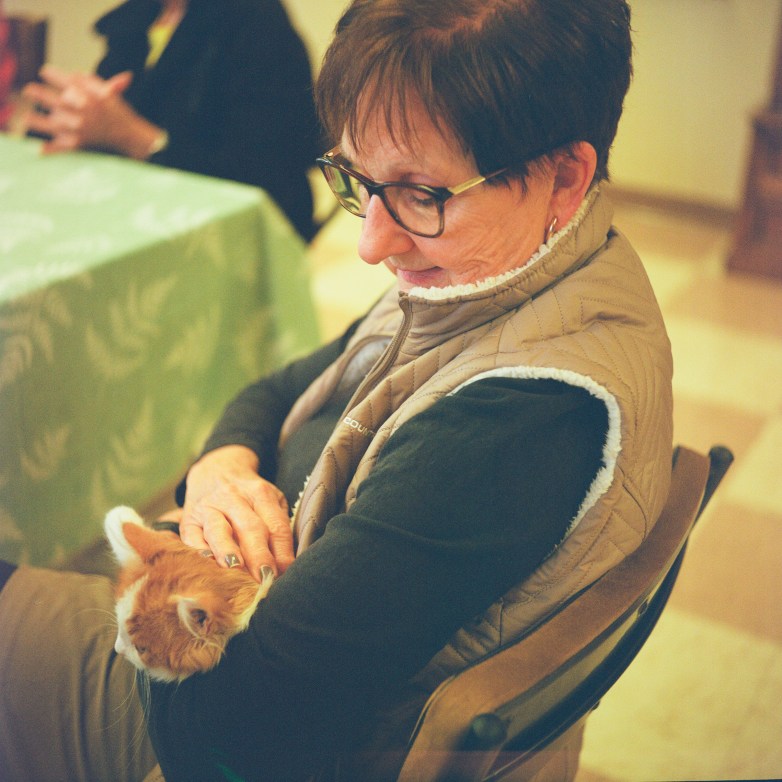
The day’s event featured a visit from the Iowa County Humane Society, whose volunteers brought in two kittens.


Tom DeVoss, who previously served as Iowa County sheriff, was on a walk around the neighborhood when he dropped in and found his wife, Kathy, conversing with the group. It’s good to see what’s going on in the community, to stop in and chitchat, Tom DeVoss said. “It’s kind of a come and go place.”
Kathy DeVoss, who has lived in Dodgeville for 21 years but still considers herself a newcomer, mentioned a Merrimac and Main event she attended last April where she learned to graft fruit trees. “It was so much fun,” she said.
Many of the attendees said they enjoyed the new opportunities for socialization.
“I’m not one to sit home,” said Lenore White, a first-time visitor who learned about Merrimac and Main at a local morning exercise class. “I want to get out and meet people.”
After school, a different kind of space

On a Tuesday afternoon in February, excited screams from children in an after-school program filled a room that on other days hosts the more reserved senior program.
Fifth graders Arlo Lockard and Henry Wepking shared a chair in a connecting room playing games on a smartphone. Arlo’s sister and another middle school girl sat at a table in the main room talking to one another.
Krausert Sykalski, Merrimac and Main’s building coordinator and Peller’s wife, rallied the day’s four children to make blankets for the humane society out of donated materials. Eight children usually attend each week, but half that day were instead participating in a school play, Krausert Sykalski said.
Sitting on the checkered floor, Arlo and Henry got to work. They took turns wielding a measuring tape and scissors, deftly cutting a blanket down to size. The friends began attending Merrimac and Main last September as soon as they were old enough for the program. They learned about it at Dodgeville Middle School from a cafeteria television that displays announcements.

On a typical day after school, the boys would play video games, participate in seasonal team sports, go fishing, ride their bikes or do chores. Now, they can walk a few blocks from the school to the church for the Tuesday programs.
“We’re not from here and we don’t have the social network that people who grew up here and went to school here, and either left or never did,” Halee Wepking, Henry’s mother, said while picking him up at the end of the program. “It’s really nice to have things like this for our kids.”
Originally from Arizona, Wepking and her husband, who is from southwest Wisconsin, moved to Ridgeway in 2016. There, they founded Meadowlark Organics, a farm and flour mill. Wepking said she learned about Merrimac and Main through her friendship with Peller and Sykalski.
Wepking said while there are traditional channels for socialization like sports that her kids participate in, “to have things that are community-oriented and creative and stuff is a real gift, especially for middle school aged kids.” The Wepkings noticed a gap in activities for middle schoolers in Dodgeville, making Merrimac and Main all the more meaningful.
“I’ve been trying to convince my friends to come, because it would be more fun, and I bet they would enjoy it,” Henry said.
‘It wasn’t just our church’
Helmich, who was working on another volunteer-based project at the nonprofit while the middle schoolers made blankets, reflected on conversations predating Merrimac and Main about selling the church. After some hesitation initially, Helmich said, the congregation acknowledged the community center as good for everybody.
“We got the community involved, it wasn’t just our church,” Helmich said.
Merrimac and Main has only grown since opening its doors. The same Tuesday Wisconsin Watch visited its youth program the nonprofit received a United Fund of Iowa County grant to support the free fruits and vegetables it offers during programs.
Peller and Krausert Sykalski continue to handle center operations, but they attribute much of Merrimac and Main’s success to engaging so many people to contribute in their own way.
How to get involved
Find Merrimac and Main’s calendar of events on its website, and learn more about how to volunteer to lead an activity, host a pop-up event, get the word out or donate.

Merrimac and Main organizers shared this advice for others looking to start community centers:
- Don’t just send an open invitation; personalize your message by directly asking people for what you need.
- Don’t get stuck trying to make everything perfect; treat early, low-risk events as opportunities to gather information and feedback.
- Engage people by helping bring their ideas to life.
- Lean on partnerships with other community organizations.
This story is part of Public Square, an occasional photography series highlighting how Wisconsin residents connect with their communities. To suggest someone in your community for us to feature, email Joe Timmerman at jtimmerman@wisconsinwatch.org.
This article first appeared on Wisconsin Watch and is republished here under a Creative Commons Attribution-NoDerivatives 4.0 International License.

Clean water was a top issue for McDowell County voters in 2024. They’re still waiting for elected officials to help.
by Henry Culvyhouse, Mountain State Spotlight
March 29, 2026
Steve Brock sprays mud off his driveway with a pressure washer on a blue-sky, sunny March afternoon.
Brock, a retired iron worker originally from Michigan, has been busy digging out a French drain around his home in Thorpe, a community in the town of Gary in McDowell County. He said a water leak from the town’s pipes has caused flooding in his basement, so the drain prevents more damage.

Since moving to his home in 2023, Brock said water has been an issue. Sometimes it comes out of the faucet clear. Other times, it’s rusty or even brown.
“It's like a box of chocolate in Forrest Gump,” Brock said, holding up his jar of brown water. “You don't know what you're gonna get.”
Brock isn’t alone.
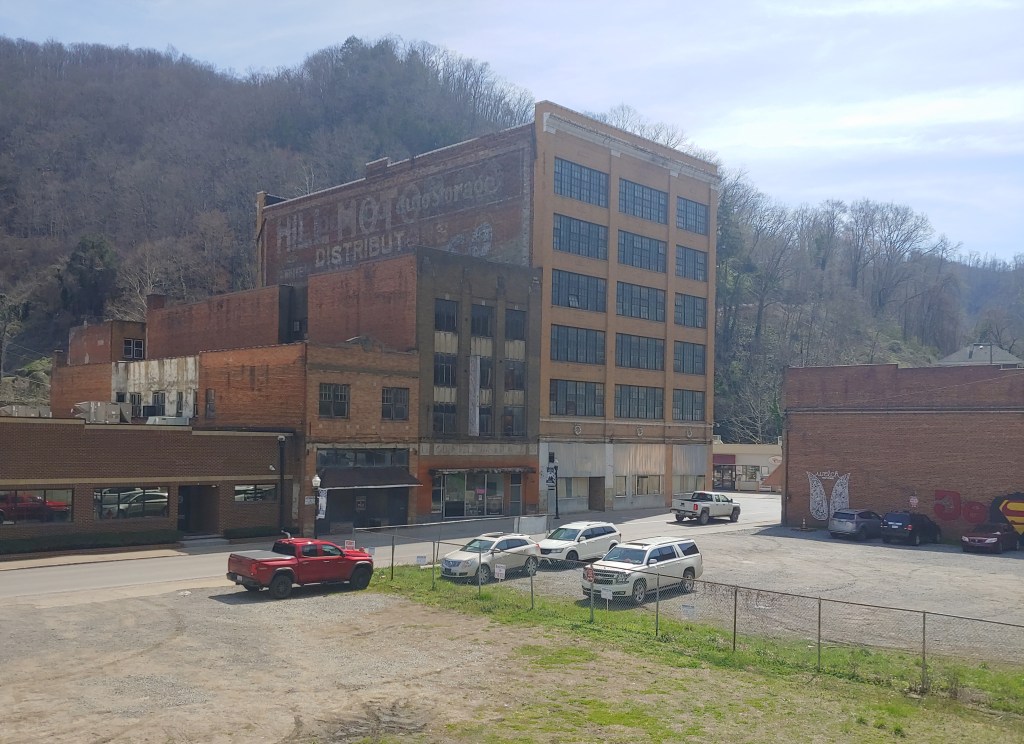
During the 2024 election, Mountain State Spotlight went to McDowell County to ask people what they wanted to hear candidates for offices talking about. From front porches to a community center meeting over pizza, the message was the same: water.
And two years later, it’s still a problem.
The West Virginia Department of Environmental Protection reported it would cost $287 million to fund high-priority projects in just four of the state’s southern coalfield counties, including McDowell.
Matthew Fullen, a mine engineer, lives up Gary No. 9, a hollow that once hosted a coal mine. He said he can’t own white clothing because every time he washes it, he runs the risk of staining.
When asked if he drank the water, Fullen smiled and shook his head.
“I wouldn’t even let my dog drink it,” he said.
Water issues in McDowell County and across southern West Virginia became front and center during the 2026 Legislative Session. Delegates from the coalfields, namely Del. David Green, R-McDowell, and Delegate Adam Vance, R-Wyoming, worked on several bills to get more money to their districts for water.
Green initially agreed to work on a $250 million proposal for southern counties, but reduced that to just $10 million after finding he couldn’t get any support among his Republican colleagues. Vance separately tried multiple times to get another $10 million for water projects, but Republicans voted it down.
For 19-year-old Katelynn Jordan, a college student from McDowell County, water is a primary reason she decided to run for the House of Delegates as a Democrat. She said if she were elected, she’d shed more light on the issue to get more funding from the Legislature.
“I think that if we get their stories out there and really try to get across how severe of a problem this is, then we'll be able to get clean water bills passed,” Jordan said.
The problems with McDowell County’s decaying infrastructure stretch back decades and are well-documented.

No one probably knows that more than Mavis Brewster, the director of the McDowell County Public Service District. When the district was created in 1990, it served fewer than 600 customers. But as small systems — set up by the coal companies, then left to communities when they pulled out — failed, the district took them on.
Today, they serve 3,500 customers, Brewster said.
“When they (coal companies) turned those systems over at that time, they might have been 20 years old,” Brewster said. “Well, now look at the age of them. So the systems are totally failing now, and there's no money.”
Money is the root of the problem.
Many water customers in McDowell County live in poverty or are retired and live on a fixed income, so raising rates is difficult. Help comes from state and federal government dollars. But the whole state applies for the same pot of money. McDowell doesn’t always get it.
And now, Brewster said her district might be taking on another failing system, the Gary Water Department. While a deal is in the works for the city to retain ownership of the system, the district would assume operations.
Brewster said one bill she tracked during the session could’ve helped her district in this very situation. Submitted by Green, the bill would’ve opened up funding and support for a utility taking over another that is struggling.
Lawmakers killed it.
“It would’ve helped,” Brewster said.
Green said, in an email statement, that the water crisis is a multi-layer problem. Not only is money needed, but there needs to be qualified personnel to run systems, expedited processes to intervene with failing utilities, more coordination between state and local agencies and better access to state and federal funds that already exist.
With the session now over, Green said he’s putting work in ahead of the next one to get legislative fixes underway.
“What I'd do differently is actually what I'm doing right now — building consensus with the House, the Senate, and state agencies. This problem is bigger than just a bill, bigger than what 60 days can put together,” he wrote in an email.
Even in Welch, where the water is usually better than other areas of the county, people don’t trust the water. At Latin Appalachian, a restaurant in downtown, waitress Rayvn Walker asks customers if they want it bottled or in a cup.
Owner Robert Diaz said he filters the water he serves in glasses and keeps it in a jug cooler.
“I'm not gonna let someone drink water that I wouldn't let me or my kids drink,” Diaz said.
Diaz, who lives in the town of Kimball, calls drinking from bottled water “a way of life here.” And he doesn’t find it acceptable.
“Third World countries are getting better treatment of projects and funding to get fresh water,” Diaz said. “This is a dying county. It really is.”
Like the last time Mountain State Spotlight visited McDowell, distrust of Charleston runs deep.
“The state just ends at Charleston,” Fullen said, referring to the death of bills for clean water in the last session. “Nothing ever comes to the southern part.”
Sherman Pat McKinney, a police officer and chair of the McDowell County Republican Executive Committee, is running against Green in the GOP Primary. He said addressing the water situation is going to take more than just a few bills in the Legislature getting passed.
“It's just a wide-scale thing that a quick fix of a couple million dollars is not going to fix,” McKinney said. “A lot of this is going to be getting the West Virginia Legislature to come together as a body to put political pressure on the federal congressional delegation to do something, because it's going to take federal money.”

Earlier this month, Charleston came to McDowell in the form of the Public Service Commission. They hosted a hearing on the Gary water situation. Brock brought his brown jar of water to the meeting.
“That meeting down there, I'm going to call it a pacifier,” he said. “This has been going on for years.”
This article first appeared on Mountain State Spotlight and is republished here under a Creative Commons Attribution-NoDerivatives 4.0 International License.

Study finds public water utilities face mounting financial strain
by Will Atwater, North Carolina Health News
April 2, 2026
By Will Atwater
Delivering safe, reliable drinking water to customers’ homes is getting more expensive for water utilities that face aging pipes, needed treatment plant upgrades and mounting new pollution threats.
A recent national analysis from the American Water Works Association and a 2025 report from the NC Chamber Foundation warn that maintaining safe, reliable drinking water infrastructure will take massive investment in pipes and treatment plants, even as utilities and their customers are grappling with the costs of removing PFAS contamination from systems like those drawing on the Cape Fear River.
“Drinking water infrastructure underpins the health and economic vitality of our communities, but the cost of sustaining it is rising rapidly,” Heather Collins, the association’s president, said in a release.
Dana Magliola, senior director of infrastructure competitiveness for the NC Chamber Foundation, echoed Collins’ sentiment: “A unified, forward-looking approach is key to ensuring North Carolina’s water systems remain reliable, resilient, and ready for the state’s next phase of economic growth.”
Magliola said the national analysis, “reinforces what we are seeing in North Carolina: water infrastructure challenges are no longer just about replacing aging systems, but managing a new era.”
What’s at stake for North Carolinians
In North Carolina, those costs are already visible.
In mountainous Haywood County, the Town of Canton, with fewer than 5,000 residents, is relying on state and federal aid to replace wastewater infrastructure that once depended on a shuttered paper mill. Canton’s Mayor Zeb Smathers told NC Health News that the town’s water system serves fewer than 10,000 customers when town and county ratepayers are counted together.
At the other end of the state, Cape Fear Public Utility Authority and other public water systems have spent millions on infrastructure and operations to remove PFAS from drinking water in the years since the so-called “forever chemicals” were found to be prevalent in Cape Fear River waters.

“As a reminder for North Carolina, prior to this report, the best information we had was we were looking at about $20 billion over the next 20 years for water and about $21 billion over the next 20 years for wastewater improvements — to simply replace the infrastructure we have,” said CFPUA’s Executive Director Kenneth Waldroup.
He added that once additional water quality regulations are considered, such as meeting new federal maximum contaminant levels for PFAS, the costs to municipal water systems can soar.
“Cape Fear Public Utility Authority is a living example of that,” he said. “We’ve invested more than $80 million to date in infrastructure and operational costs to remove per- and polyfluoroalkyl substances (PFAS).”
Under a national rule finalized by the Biden administration’s EPA, public water systems now have three years to test for a suite of PFAS chemicals and report the results, and five years to bring levels into line with new federal limits if contamination is found. That means utilities across the country must quickly decide whether to install pricey technologies that can keep PFAS out of customers’ taps, such as granular activated carbon filters, ion exchange systems, membrane treatment or other, newer, techniques.
Utilities also need to figure out how to pay for it.
“Many utilities, particularly smaller and rural systems, lack the financial flexibility to absorb these costs without impacting ratepayers,” Magliola wrote. “Meeting this challenge will require a more coordinated approach, including sustained federal and state investment, stronger regional collaboration, and better data to support long-term planning because water infrastructure is foundational to North Carolina’s economic competitiveness and future growth.”
The rule sets enforceable limits for six individual PFAS: 4 parts per trillion for PFOA and PFOS, 10 parts per trillion for PFNA, PFHxS and GenX chemicals, and a separate “hazard index” standard that applies when mixtures of several PFAS, including PFBS, are found together.
For residents along the Cape Fear River, those regulations are aimed at a contamination problem they have lived with for years. GenX and other PFAS from the Chemours facility outside of Fayetteville have been detected in the river and in CFPUA’s drinking water system, prompting large blood‑testing studies that found people in the Cape Fear basin carry higher levels of these chemicals than the typical U.S. resident.
Since PFAS contamination in the Cape Fear River first drew public attention, similar chemicals have been detected in drinking water supplies across North Carolina, including in several rural fire stations that rely on well water. In those communities, contamination is likely tied to years of training and emergency response with older firefighting foams that contained PFAS, adding another layer of cost and concern for small systems that have far fewer resources than a utility serving hundreds of thousands of customers, like CFPUA.
Scientists have linked long‑term exposure to certain PFAS in drinking water to increased risks of kidney and testicular cancers, higher cholesterol, signs of liver and thyroid problems, immune system effects including reduced response to vaccines, and pregnancy‑related complications like hypertension and preeclampsia.
Small water systems
More than 5,000 regulated public water utilities serve millions of North Carolinians. The majority of those customers get their drinking water from small systems that primarily serve towns and rural areas, according to state environmental data.
Canton illustrates what can happen when a community’s water system is closely tied to a single major industry. For decades, the paper mill owned by Pactiv Evergreen — a major employer and the town’s primary water ratepayer — helped anchor the system. When the mill, which had operated in Canton for more than a century, closed in 2023, the community lost about 900 jobs and millions of dollars in labor income for western North Carolina, according to a Dogwood Health Trust impact study.
To help the town recover, Canton has received nearly $100 million in federal and state support, including funding to purchase the mill property and build a new wastewater treatment plant, Mayor Smathers said. Even so, customer fees have increased to cover the roughly $140,000 a month the town now pays for treatment that was once paid for largely by Pactiv Evergreen.
This cost was referenced in a letter that Town Manager Lisa Stinnett posted in 2025 to explain water rate increases.
“For decades, the mill treated our wastewater at no cost,” Stinnett wrote. “When it closed and the agreement expired, the town suddenly had to start covering the full costs of treatment — chemicals, power, personnel, and more. The initial quote for this was over $250,000 per month. Thanks to persistent negotiations, your board was able to reduce this cost to $140,000 per month. Still, these expenses are not covered by grants — they must come directly from the water and sewer fund.”
The financial burden faced by the town of Canton as it continues to recover from Tropical Storm Fred in 2021 and the remnants of Hurricane Helene, on top of the closing of the paper mill, reflects pressures felt by the nation’s small water systems.
A North Carolina Department of Environmental Quality spokesperson told NC Health News in an email that every water and sewer system in North Carolina is wrestling with aging infrastructure, but small-town utilities like Canton feel it most because they have fewer customers to spread costs to.
“The State Water Infrastructure Authority and the Local Government Commission have designated 160 local government water and sewer systems as distressed,” the spokesperson said. They added that the majority of them are small systems, which qualifies them for extra technical help and grants through the Division of Water Infrastructure’s Viable Utilities and other programs.
“The need for small utilities is disproportionate to the infrastructure funding they [require],” said Jane Clements, chief executive officer of One Water Econ, a consulting firm who contributed to the American Water Works Association report. “So that burden is going to fall on fewer people.”
Update: This story has been updated with additional comments from Dana Magliola, senior director of infrastructure competitiveness for the NC Chamber Foundation.
This article first appeared on North Carolina Health News and is republished here under a Creative Commons Attribution-NoDerivatives 4.0 International License.