
Feds conclude first week of immigration raids in Crescent City
South Carolina’s Measles Outbreak Shows Chilling Effect of Vaccine Misinformation; Stein restores Medicaid rates in NC amid budget shortfall


It's Friday, December 12, 2025 and in this morning's issue we're covering: Federal immigration enforcement ends its first week in New Orleans, Bluesky social media app restores access for adult Mississippians, The Stats on Abortion Access in Rural America, South Carolina’s Measles Outbreak Shows Chilling Effect of Vaccine Misinformation, Stein restores Medicaid rates amid budget shortfall, urges legislature to act, Scientists Say the Forever Chemical TFA Could Cause Irreversible Harm. In Eastern North Carolina, It’s Everywhere, Legal aid groups feel pinch of NC legislature freezing millions of dollars.
Media outlets and others featured: Verite News, Mississippi Today, The Daily Yonder, KFF Health News, North Carolina Health News, Inside Climate News, Carolina Public Press.
‘Many people are terrified to come out’: Catahoula Crunch closes out its first week
by Bobbi-Jeanne Misick, Verite News New Orleans
December 10, 2025
As the first week of an intensified immigration enforcement crackdown in southeast Louisiana came to an end, U.S. Department of Homeland Security officials remain tight-lipped about how many apprehensions federal agents have made to achieve their goal of 5,000 arrests, based on plans reviewed by the Associated Press in November, during the operation.
While offering little information about the overall operation, which began last Wednesday (Dec. 3) with a series of raids at major home improvement stores, the DHS press office in a Monday press release praised federal agents for apprehending “rapists, thieves, gang members, human smugglers, and abusers” in the operation, dubbed “Catahoula Crunch.” The department highlighted eight immigrants originating from Latin America, most of whom were from Honduras, that it said had serious or violent criminal records ranging including domestic battery and domestic abuse.
However, less than a third of the 38 people who were arrested in the first two days of the operation appeared to have criminal records, according to records that the AP reviewed, which also showed operation leaders are monitoring social media accounts for threats to agents and indications of public sentiment.
The Times Picayune reported last week that immigrants arrested in the operation are first being taken to a newly opened U.S. Immigration and Customs Enforcement facility in St. Rose — a town in St. Charles Parish where ICE contractor BI Inc. conducts its immigrant surveillance program — before being transferred across state lines to a jail in Hancock County, Mississippi — which has an intergovernmental service agreement with DHS to house federal detainees, and then on to one of Louisiana’s nine immigration detention centers.
When asked for information on the first week of the operation, a spokesperson for U.S. Customs and Border Protection, the agency that Border Patrol falls under, referred Verite News to the Dec. 8 DHS press release.
“Catahoula Crunch” is the third operation of its kind in a major U.S. city in recent months, following operation “Midway Blitz” in Chicago and operation “Charlotte’s Web” in Charlotte, North Carolina.
In Chicago, federal agents focused on heavily Hispanic suburban neighborhoods near the city’s northwest side, sparking allegations of racial profiling — including of U.S. citizens of color caught up in the sweeps — and excessive use of force.
The New Orleans operation appears to be following a similar strategy, with community groups reporting heavy immigration enforcement activity in suburban areas such as Kenner which has the highest concentration of Hispanic residents in the state. Immigrants rights organizations have taken to Facebook and other social media sites to alert impacted community members of Border Patrol and U.S. Immigration and Customs Enforcement activity in their areas. Area news organizations have reported allegations of U.S. citizens being apprehended or targeted by federal agents.
Members of local immigrant rights groups, such as Unión Migrante, have been monitoring immigration enforcement activity and posting sightings — at medical clinics, street corners and businesses — to social media. The group also posts advice on what to do in the event of an encounter with agents. On Tuesday, for example, the group posted a potential sighting of federal agents, along with Kenner Police Department cars, at Ochsner Medical Center in Kenner. The post said two cars had individuals in the back seats. A spokesperson for Ochsner Health, however, said the Kenner Police cars were there investigating a fender bender.
Rachel Taber, a Unión Migrante member, said she witnessed federal agents briefly at Ochsner’s main campus on Monday. The Ochsner spokesperson said they were not aware of any instances of federal immigration agents conducting immigration enforcement operations at any of Ochsner Health's locations since the beginning of the Catahoula Crunch operation. DHS did not immediately respond to questions about immigration agents allegedly operating in or near medical campuses.
“It’s a life or death decision either way for immigrants. Many people are terrified to come out of their homes because they will be killed if deported to Honduras,” Taber told Verite News. “But there are people who will also die if they don’t get their cancer treatment or dialysis. So Border Patrol’s targeting hospitals now two days in a row is particularly cruel and unusual.”
Kenner Police Chief Keith Conley was not available for an interview or comment before this article was published.
In an interview last month, Conley said the department would assist federal agents in whatever way it is called to do so. The Kenner Police Department is formally partnered with ICE under a 287(g) agreement, which deputizes local and state officials to investigate civil immigration violations and begin deportation proceedings. Earlier this year, Kenner PD saw a spike in immigration detainers — requests to hold people suspected of breaking civil immigration laws in custody beyond their release dates so that they can be taken into ICE custody — a Verite News and Gulf States Newsroom investigation found.
The Louisiana State Police has also been assisting with the “Catahoula Crunch” operation. In a statement sent via email from Sgt. Kate Stegall, a public affairs officer from the agency’s Region NOLA, which encompasses Orleans and surrounding parishes, acknowledged that troopers have been providing “operational support.”
“Our Troopers have been in uniform and operating marked LSP vehicles to ensure a visible and coordinated presence,” Stegall said.

A number of businesses in areas with large Hispanic populations were shuttered throughout the region. Among them, Taqueria Guerrero, a Mexican restaurant in Mid-City, announced a temporary closure before the operation began. Nearby, a popular taco truck usually stationed at the corner of Broad and Canal Streets has not been seen in recent days.
In the days leading up to and in the initial days of the operation, Broad Street — a popular corridor for Hispanic businesses and customers — appeared abnormally quiet. One business owner told Verite News that she is unable to find essential workers, many of whom are Hispanic and fear being targeted in immigration raids.
A New York Times story found that the city’s restaurants, which rely heavily on immigrant labor, are already feeling the ripple effects of the enforcement operation. Prep cooks, line cooks and dishwashers are not showing up to work and some menu items are not being served because employees don’t want to risk being arrested while at a grocery store or market.
The operation also appears to be having an impact on school attendance.
On Tuesday, the Times Picayune reported that in Jefferson Parish, which has a higher population of students learning English than Orleans Parish, school absenteeism in the first two days of last week (before the operation officially began) was double the normal rate. Schools with large populations of English language learners had particularly high absenteeism rates. Aubri Juhasz, education reporter at NPR member station WWNO, told Verite News the numbers from Jefferson Parish schools will become clearer in the second week of the operation.
One local parent — who asked to remain anonymous because she fears she could be targeted by immigration enforcement authorities — said she brought her children to their school Jefferson Parish on the first day of the operation. But since then she and the kids have been staying home. She said she received a letter from the school assuring her the children would be safe at school.
“The problem is not when they’re in school. The problem is when someone would have to pick up the kids at the stop outside,” she said, speaking through an interpreter.
As a single mother who provides for her family by selling Central American food, she said her biggest fear is being evicted with her children because she can’t leave home and earn money to pay rent.
But she said, “I’m not leaving until they leave,” referring to Border Patrol.
Over the past week protesters have taken to City Hall and also to city streets. Carrying signs that read “No collaboration with ICE/CBP” protesters interrupted a New Orleans City Council meeting on Thursday, causing a pause in the day’s agenda and a suspension of public comment, which drew outrage. On Friday, New Orleans Mayor-elect Helena Moreno, City Council President J.P. Morrell, U.S. Congressman Troy Carter and other local leaders held a press conference demanding more transparency in tactics used during “Catahoula Crunch” Over the weekend, groups of people holding posters denouncing immigration enforcement chanted in Metairie, New Orleans and Kenner.
This story was updated to include comments from an Ochsner Health spokesperson, who said they were not aware of immigration enforcement operations taking place at any Ochsner properties since the beginning of Catahoula Crunch.
This article first appeared on Verite News New Orleans and is republished here under a Creative Commons Attribution-NoDerivatives 4.0 International License.

Bluesky social media app restores access for adult Mississippians
by Michael Goldberg, Mississippi Today
December 10, 2025
The social media app Bluesky restored access to its platform this week to Mississippians over the age of 18, partially reversing an August decision to block access for all users in the state in response to a state age-verification law.
Applying a new policy update Bluesky also implemented in Australia, the decentralized social media platform said it would allow legal adults in Mississippi to access its app, while keeping the service unavailable for minors. Bluesky made the change after altering its "Age Assurance system," despite its ongoing concerns over a 2024 Mississippi state law that requires users of websites and other digital services to verify their age.
"We continue to believe that Mississippi law limits free speech and disproportionately harms smaller platforms," the company said in a statement. "As a result, we will not follow the law’s requirements to track children’s online conduct in detail, and we will not devote our limited resources to build the verification systems, parental consent workflows, and compliance infrastructure the law requires. However, because we have the technical means to offer a choice for older users, we want to let them decide for themselves if they are comfortable confirming that they are at least 18 years old."
In August, Bluesky announced that it would go dark in Mississippi after the U.S. Supreme Court declined to block a Mississippi age-verification law, which the company said limits free expression, invades people’s privacy and unfairly targets smaller social media companies.
Bluesky grew after the 2024 presidential election. Many users of X, which is owned by Elon Musk, retreated from the platform in response to the billionaire’s strong support of President Donald Trump.
Mississippi Attorney General Lynn Fitch, a Republican whose office defended the law, told the justices that age verification could help protect young people from “sexual abuse, trafficking, physical violence, sextortion and more,” activities that the First Amendment does not protect.
The age verification law added Mississippi to a list of Republican-led states where similar legal challenges are playing out.
NetChoice is challenging laws passed in Mississippi and other states that require social media users to verify their ages, and asked the Supreme Court to keep the measure on hold while a lawsuit plays out.
That came after a federal judge prevented the 2024 law from taking effect. But a three-judge panel of the 5th Circuit U.S. Court of Appeals ruled in July that the law could be enforced while the lawsuit proceeds.
On Aug. 14, the Supreme Court rejected an emergency appeal from a tech industry group representing major platforms such as Facebook, X and YouTube.
Bluesky made the policy update in Mississippi this week in conjunction with a similar change in Australia, where a new online age assurance law takes effect on Dec. 10.
This article first appeared on Mississippi Today and is republished here under a Creative Commons Attribution-NoDerivatives 4.0 International License.

The Stats on Abortion Access in Rural America
by Sarah Melotte, The Daily Yonder
December 10, 2025
Editor’s Note: This post is from our data newsletter, the Rural Index, headed by Sarah Melotte, the Daily Yonder’s data reporter. We will be taking the next edition off as we head into Christmas. Subscribe to stay in touch with us during the New Year.
Compared to their urban and suburban counterparts, a greater share of the rural population lives in states with the most restrictive abortion legislation, according to my analysis of data from the Guttmacher Institute, a research organization that focuses on reproductive rights. After the Supreme Court overturned Roe v. Wade in June of 2022, it became harder for women to access reproductive care, but the burden often disproportionately hurt rural women.
About 46% of nonmetropolitan, or rural, Americans live in states with either ‘most restrictive’ or ‘very restrictive’ abortion legislation, representing 21.3 million people. Approximately 35% of metro Americans live in these states, representing roughly 99.1 million people.
State-level abortion legislation is complex; it’s rarely as simple as an outright ban or permit. Abortion policies can include stipulations like waiting periods, ultrasound requirements, gestational duration bans, insurance coverage bans, telehealth bans, and more. To deal with some of this complexity, the Guttmacher dataset groups states into one of seven categories that broadly captures the state’s access to abortion:
- Most Restrictive
- Very Restrictive
- Restrictive
- Some restrictions/protections
- Protective
- Very Protective
- Most Protective

Click here for the interactive map.
Seventeen states make up the ‘Most Restrictive’ category, and 13 of those states have enacted full bans with few exceptions. Those states include Alabama, Arkansas, Idaho, Indiana, Kentucky, Louisiana, Mississippi, Oklahoma, South Dakota, North Dakota, Tennessee, Texas, and West Virginia. The rural population in those states equals about 15.8 million people.
Rurality Exacerbates Access Challenges
In the Post-Roe landscape, pre-existing rural challenges are exacerbated by restrictive abortion legislation, a change that has led to increased maternal mortality, particularly for women of color. The new state of abortion in America means people often have to travel much further to get the care they need, often out of state.
An ABC special that featured women who had to travel for abortions highlighted the story of Idaho resident Jennifer Adkins, who was excited when she found out she was pregnant with her first baby. But a 12-week ultrasound showed that continuing her pregnancy would put her life in danger. With financial help from family and friends, Adkins had to travel to the nearest clinic in Oregon to receive the care she needed.
My previous analysis of abortion data showed that rural travel to abortion clinics increased from 103 miles on average in 2021 to 159 miles on average after Roe v. Wade was overturned. But travel distance varies by state, with women in parts of rural South Texas having to travel up to almost 800 miles to receive care.
In rural Louisiana, where all the bordering states have also issued abortion bans, the distance to a clinic has increased by almost 400 miles since Roe was overturned. The average rural Louisianan is about 492 miles away from the nearest abortion clinic. The data for that analysis came from the Myers Abortion Facility Database.
In 2024, approximately 12,000 Texans traveled to New Mexico to receive an abortion, according to the Guttmacher Institute data. Nearly 7,000 Texans traveled to Kansas, and another 4,000 traveled to Colorado. Texas enacted a near total ban on abortions in July of 2022.
In Idaho, which enacted an abortion ban in August of 2022, 440 people travel to Washington and 140 travel to Oregon for abortions in 2024. (Visit the Guttmacher’s interactive map of abortion travel by state to explore the topic in more detail.)
Abortion and Rural Voters: More Complex Than You Might Think
Every time I write something about how rural people suffer from GOP policies, I get comments and emails from readers saying some version of, “They voted for this.” I take issue with this response for many reasons. It’s unkind, and it erases the thousands of rural voters who don’t support these policies. While some people are going to say you get what you deserve, here’s another way to look at it.
In a previous analysis of voting data from the nine states that had abortion on a ballot measure in 2024, I found that support for Trump didn’t always line up with support for abortion restriction. In 2024, approximately 73% of rural voters supported Trump, but only 61% voted to restrict abortion access.
While 61% is still a majority vote, the 12-point gap between support for Trump and support for abortion restriction demonstrates that abortion access is a complicated issue for many Americans across the geographic spectrum. This data shows a rural voting base that is willing to split with the broader Republican platform on key issues.
“All voters are complex,” said Nicholas Jacobs, rural sociologist. “People voted for [Trump], even if they wanted more access to reproductive care or were disappointed that a national standard was lifted by the courts.”
This article first appeared on The Daily Yonder and is republished here under a Creative Commons Attribution-NoDerivatives 4.0 International License.

South Carolina’s Measles Outbreak Shows Chilling Effect of Vaccine Misinformation
Lauren Sausser November 26, 2025
BOILING SPRINGS, S.C. — Near the back corner of the local library’s parking lot, largely out of view from the main road, the South Carolina Department of Public Health opened a pop-up clinic in early November, offering free measles vaccines to adults and children.
Spartanburg County, in South Carolina’s Upstate region, has been fighting a measles outbreak since early October, with more than 50 cases identified. Health officials have encouraged people who are unvaccinated to get a shot by visiting its mobile vaccine clinic at any of its several stops throughout the county.
But on a Monday afternoon in Boiling Springs, only one person showed up.
“It’s progress. That progress is slow,” Linda Bell, the state epidemiologist with the Department of Public Health, said during a recent press briefing. “We had hoped to see a more robust uptake than that in our mobile health units.”
As South Carolina tries to contain its measles outbreak, public health officials across the nation are concerned that the highly contagious virus is making a major comeback. The Centers for Disease Control and Prevention has tallied more than 1,700 measles cases and 45 outbreaks in 2025. The largest started in Texas, where hundreds of people were infected and two children died.
For the first time in more than two decades, the United States is poised to lose its measles elimination status, a designation indicating that outbreaks are rare and rapidly contained.
South Carolina’s measles outbreak isn’t yet as large as those in other states, such as New Mexico, Arizona, and Kansas. But it shows how a confluence of larger national trends — including historically low vaccination rates, skepticism fueled by the pandemic, misinformation, and “health freedom” ideologies proliferated by conservative politicians — have put some communities at risk for the reemergence of a preventable, potentially deadly virus.
“Everyone talks about it being the canary in the coal mine because it’s the most contagious infectious disease out there,” said Josh Michaud, associate director for global and public health policy at KFF, a health information nonprofit that includes KFF Health News. “The logic is indisputable that we’re likely to see more outbreaks.”
Schools and ‘Small Brush Fires’
Spartanburg’s vaccination rate is among the lowest of South Carolina’s 46 counties. And that was true “even before covid,” said Chris Lombardozzi, a senior vice president with the Spartanburg Regional Healthcare System.
Nearly 6,000 children in Spartanburg County schools last year — 10% of the total enrollment — either received an exemption allowing them to forgo required vaccinations or did not meet vaccine requirements, according to data published by the state.
Lombardozzi said the county’s low vaccination rate is tied to misinformation not only published on social media but also spread by “a variety of nonmedical leaders over the years.”
The pandemic made things worse. Michaud said that fear and misinformation surrounding covid vaccines “threw gasoline on the fire of people’s vaccine skepticism.” In some cases, that skepticism transferred to childhood vaccines, which historically have been less controversial, he said.
This made communities like Spartanburg County with low vaccination rates more vulnerable. “Which is why we’re seeing constant, small brush fires of measles outbreaks,” Michaud said.
In Spartanburg, the overall percentage of students with required immunizations fell from 95.1% to 90% between the 2020-21 and 2024-25 academic years. Public health officials say a minimum of 95% is required to prevent significant spread of measles.
Children who attend public and private schools in South Carolina are required to show that they’ve received some vaccinations, including the measles, mumps, and rubella vaccine, but religious exemptions are relatively easy to obtain. The exemption form must be notarized, but it does not require a doctor’s note or any disclosure about the family’s religious beliefs.
The number of students in South Carolina who have been granted religious exemptions has increased dramatically over the past decade. That’s particularly true in the Upstate region, where religious exemptions have increased sixfold from a decade ago. During the 2013-14 school year, 2,044 students in the Upstate were granted a religious exemption to the vaccine requirements, according to data published by The Post and Courier. By fall 2024, that number had jumped to more than 13,000.
Some schools are more exposed than others. The beginning of the South Carolina outbreak was largely linked to one public charter school, Global Academy of South Carolina, where only 17% of the 605 students enrolled during the 2024-25 school year provided documentation showing they had received their required vaccinations, according to data published by the Department of Public Health.
No one from Global Academy responded to interview requests.
‘Health Freedom’
In April, after visiting a Texas family whose daughter had died from measles, Health and Human Services Secretary Robert F. Kennedy Jr. wrote on social media that the “most effective way to prevent the spread of measles is the MMR vaccine.” He made a similar statement during an interview on “Dr. Phil” later that month.
But these endorsements stand at odds with other statements Kennedy has made that cast doubt on vaccine safety and have falsely linked vaccines with autism. The CDC, under his authority, now claims such links “have been ignored by health authorities.”
“What would I do if I could go back in time and I could avoid giving my children the vaccines that I gave them?” he said on a podcast in 2020. “I would do anything for that. I would pay anything to be able to do that.”
Throughout 2025, he has made other misleading or unsupported statements. During a congressional hearing in September, Kennedy defended his past claims that he was not anti-vaccine but affirmed his stated position that no vaccines are safe or effective.
Emily Hilliard, a spokesperson for the Department of Health and Human Services, told KFF Health News that Kennedy is “pro-safety, pro-transparency, and pro-accountability.” Hilliard said HHS is working with “state and local partners in South Carolina” and in other states to provide support during the measles outbreaks.
Meanwhile, Kennedy has frequently championed the idea of health freedom, or freedom of choice, regarding vaccines, a talking point that has taken root among Republicans.
That has had a “chilling effect all the way down through state and local lawmakers,” Michaud said, making some leaders hesitant to talk about the threat that the ongoing measles outbreaks poses or the effectiveness and safety of the MMR vaccine.
Brandon Charochak, a spokesperson for South Carolina Gov. Henry McMaster, said the governor was not available to be interviewed for this article but referenced McMaster’s comment from October that measles “is a dangerous disease, but in terms of diseases, it’s not one that we should panic about.”
On a separate occasion that month, the Republican governor said he does not support vaccine mandates. “We’re not going to have mandates,” he said, “and I think we are responding properly.”
Even though the South Carolina Department of Public Health has repeatedly encouraged measles vaccines, the push has been notably quieter than the agency’s covid vaccine outreach efforts.
In 2021, for example, the agency partnered with breweries throughout the state for a campaign called “Shot and a Chaser,” which rewarded people who got a covid vaccine with a free beer or soda. By contrast, the pop-up measles vaccine clinic at the Boiling Springs Library featured no flashy signage, no freebies, and wasn’t visible from the library’s main entrance.
Edward Simmer, interim director of the Department of Public Health, would not speak to KFF Health News about the measles outbreak. During a legislative hearing in April, Republican state lawmakers voted against his permanent confirmation because of his past support for covid vaccines and masking. One lawmaker specifically criticized the agency during that hearing for the Shot and a Chaser campaign.
Public health officials in other states also have been blocked from new roles because of their covid response. In Missouri, where MMR vaccine rates have declined among kindergartners since 2020 and measles cases have been reported this year, Republican lawmakers rejected a public health director in 2022 after vaccine opponents protested his appointment.
In South Carolina, Simmer, lacking lawmakers’ confirmation, leads the public health agency in an interim capacity.
South Carolina Sen. Tom Davis of Beaufort was the only Republican on the Senate Medical Affairs Committee who voted to confirm Simmer in April. He told KFF Health News that his Republican colleagues raised valid questions about Simmer’s past support for covid vaccines.
But, Davis said, it would be “tremendously unfortunate and not beneficial from a public health perspective” if the Republican Party just took a stance against vaccines “as a matter of policy.”
The Department of Public Health had administered 44 doses of the MMR vaccine through its mobile health unit from October to mid-November. The last mobile vaccine clinic was scheduled for Nov. 24. But health officials are encouraged that patients are seeking vaccines elsewhere. The agency’s tracking system shows that providers across Spartanburg County administered more than twice as many measles vaccines in October as they did a year ago.
As of mid-November, more than 130 people remained in quarantine, most of them students at local elementary and middle schools. Cases have also been linked to a church and Greenville-Spartanburg International Airport.
“We’re reminding people that travel for the upcoming holidays increases the risk of exposures greatly,” said Bell, the state epidemiologist. “Due to that risk, we’re encouraging people to consider getting vaccinated now.”
KFF Health News correspondent Amy Maxmen contributed to this report.
KFF Health News is a national newsroom that produces in-depth journalism about health issues and is one of the core operating programs at KFF—an independent source of health policy research, polling, and journalism. Learn more about KFF.
Subscribe to KFF Health News' free Morning Briefing.
This article first appeared on KFF Health News and is republished here under a Creative Commons Attribution-NoDerivatives 4.0 International License.

Stein restores Medicaid rates amid budget shortfall, urges legislature to act
by Jaymie Baxley and Ashley Fredde, North Carolina Health News
December 11, 2025
By Jaymie Baxley and Ashley Fredde
Gov. Josh Stein put an end to North Carolina’s Medicaid brinkmanship Wednesday, restoring funding and abandoning efforts to reduce payments to health care providers brought about by the legislature’s falling hundreds of millions of dollars short of the state health and human services department’s request for the annual Medicaid budget.
The situation had become something of a showdown between the governor, who has limited power under the North Carolina constitution, and the legislature, which has aggressively wielded the power of the purse. The governor’s retreat on the cuts implemented by his administration underscored the limits of executive leverage in the state’s budget stalemate.
The restoration comes after several legal challenges were filed challenging the Department of Health and Human Service’s decision to cut rates, with recent court decisions making it “untenable to continue with rate reductions,” according to a news release by Stein.
The decision restores Medicaid reimbursement rates to their Sept. 30 level, providing access to care for vulnerable patients. Now it’s up to lawmakers to resolve the budget impasse to keep that care available.
“North Carolinians who rely on Medicaid are suffering because the General Assembly has failed to fully fund the program,” Stein said in a news conference. “NC DHHS is restoring rates because the courts have required doing so, but the $319 million funding gap remains. The General Assembly must act to fully fund Medicaid and protect health care for more than 3 million North Carolinians.”
The Republican-controlled chambers of the state legislature are also at an impasse and have failed to agree on a two-year spending plan, instead passing a mini-budget stopgap measure in July. The bare-bones “mini-budget” only allocated agencies the same level of funding they had the previous year, and it doesn’t include any nonrecurring funding.
The mini-budget appropriated $600 million for Medicaid, while NC DHHS requested an additional $319 million to adjust the Medicaid budget for the current fiscal year, which began on July 1. The shortfall prompted department Sec. Devdutta Sangvai to warn legislative leaders in August that without additional funding, reimbursement cuts would begin Oct. 1.
Legislative members failed to reach a budget agreement despite advancing proposals from each the Senate and the House of Representatives to add $174 million to the Medicaid base funding, an amount everyone agreed would stretch the program until the end of the fiscal year on June 30. DHHS said the failure to reach an agreement forced reimbursement reductions of between 3 percent and 10 percent to go into effect for providers.
That move resulted in significant backlash from all sides.
Public outcry
The first show of public pushback began on Oct. 22 in the gallery of the General Assembly’s House chamber, which was in the process of discussing the newly drawn congressional maps. Two attendees began chanting "we need health care, not racist maps" and were ejected from the gallery shortly before the entire area was cleared by security.
Another plea was made again shortly after to the General Assembly through several protests attended by medically fragile Medicaid beneficiaries and health care advocates. One of the largest demonstrations occurred on Oct. 28, when more than 200 people with disabilities crowded into the state legislature in an effort to persuade lawmakers to undo the reductions.

During the event, advocates circulated findings from a survey conducted earlier that month by the North Carolina Council on Developmental Disabilities. Nearly all of the survey’s 345 respondents said Medicaid was “essential to their survival and quality of life.”
“The Medicaid cuts in North Carolina are already having a profound impact on individuals with disabilities, their families and the professionals who support them,” the council wrote in a summary of the survey. “While some respondents have not yet experienced direct effects, the overwhelming majority report reduced wages, disrupted services and emotional distress.”
Soon after this “Medicaid Day of Action,” a vigil was held by Progress NC, a local grassroots group, on Oct. 30. The event was attended by half a dozen community members recognizing those who have lost family members due to lack of health care coverage or access.
'The writing on the wall’
Where attempts at persuasion seemed to fail, litigation took over. With the door seemingly shut on both the General Assembly’s and NC DHHS’ end, providers and patients resorted to the courts with a string of lawsuits.
Last month, a Superior Court judge in Wake County sided with a group of more than 20 parents of children with autism in a case that alleged NC DHHS had discriminated against people with disabilities by slashing reimbursement for providers of applied behavior analysis therapy.
Rates for the service, designed to help children with autism build communication and daily living skills through intensive one-on-one behavioral interventions, had been reduced by 10 percent.
Michael Easley Jr., attorney for the parents, said that children receiving ABA were at “risk of institutionalization and segregation” if the reduced rates remained in place. NC DHHS, he argued, had “committed facial discrimination” by including the treatment of a protected class of patients on the short list of services that received the steepest cuts — an allegation that an attorney for the state denied.
“If everybody across the board was treated the same in Medicaid, we wouldn’t be here right now,” Easley said in his closing argument. “If there were a mathematical equation that applied equally to everybody, we wouldn’t be here right now.”
Another lawsuit, filed Nov. 6 on behalf of adult care home operators, alleged that the 8 percent cut applied to the Medicaid reimbursement for personal care services was untenable. Those services, known as activities of daily living (ADLs), include bathing, dressing, mobility, toileting and eating.
The lawsuit argued that the adult care homes were under significant financial strain, prompting furloughing or reduction of staff, cross-training other staff members whose roles fall outside of facilitating ADLs, reduction of amenities and elective activities for residents, increased burnout among staff members and delaying necessary maintenance for the facilities, as well as the “imminent risk of closing their doors.”
“My fear is that if we are forced to close, our residents may not find a comparable residential arrangement and will be forced to be relocated from the home they have come to know,” wrote Heritage Care and Carolina Rest Home owner Guy Pierce in an affidavit. “Because the state requires certain staffing ratios, I am seriously considering discharging residents so the facility can lower its staffing requirements.”
Other operators noted that due to the cuts, they had suspended taking admissions of residents who arrived as emergency placements from prior living arrangements where they allegedly were abused or neglected.
Administrative Law Judge John C. Evans issued a temporary restraining order on Nov. 14, restoring the operator’s previous rates. The order expired on Nov. 23, with both parties returning to court on Dec. 2 to determine whether an injunction would be issued while the case proceeded.
“An insolvent NC Medicaid … would imperil the health and welfare of millions of North Carolinians who rely on NC Medicaid,” the department wrote in its response to the suit. “Additionally, an insolvent NC Medicaid would be unable to pay providers for the services they rendered, leading to increased financial challenges for Petitioners and other providers. Such an insolvency would impact access to care for the more than 3.1 million North Carolinians that receive coverage under NC Medicaid. This is an unacceptable risk for the Department in the interest of the public.”
During Wednesday’s news conference, Stein noted that three other lawsuits have been filed in connection with the rate cuts, with “even more waiting in the wings.”
“DHHS can see the writing on the wall,” he said.
Ball’s in the NCGA’s court
Lisa Poteat, CEO of The Arc of North Carolina, said her organization, which provides housing and other services for people with intellectual and developmental disabilities, was “feeling celebratory” in light of Wednesday’s announcement.
“It’s something that we've been pushing for for months to get these rates corrected, and it’s a sigh of relief for now,” she said in an interview with NC Health News. “Of course, we know we’ve got a lot of work to do with the legislature. I’m confident they will come back and fund Medicaid, and I hope it’s enough dollars and that they do it soon enough, but this is a big step in the right direction today that we’ve been really pushing for for quite a long time.”
The cuts, she said, stirred “a lot of fear” among direct support professionals who work with disabled patients. While The Arc was able to avoid layoffs, Poteat said some smaller providers were forced to let staff members go.
“We already have a direct support staff workforce crisis in this state and in this country, and these rate reductions were just going to make that worse and have already for some people,” she said. “If we’d gone too much longer with this, without a correction today by the governor, I think we would have lost a lot more staff. We would have lost a lot more ground everywhere — not just direct support professionals, but all across the Medicaid world.”
Providers received notice of the reversal Wednesday morning in an email from NC Tracks, the state’s claims processing system for Medicaid. The email, a copy of which was shared with NC Health News, noted that the “restoration of rates does not mean the problem has been resolved.”
It went on to warn providers that the “financial risk to Medicaid is greater now than before,” and that any “decisions about future funding are solely in the hands of the General Assembly.”
Looking ahead
The legislature is set to reconvene on Monday, but it remains to be seen if the chambers will overcome their impasse on the state budget.
Stein previously called on lawmakers to return for a special session on Nov. 17 to break the impasse, but his directive was rejected by House Speaker Destin Hall (R-Granite Falls) and Senate leader Phil Berger (R-Eden). In a joint letter sent on Nov. 13, they described the situation as a “trumped-up ‘crisis’” and claimed Stein’s proclamation ordering the extra session was “unconstitutional.”
North Carolina is the only state in the U.S. without a full budget as a deadlock driven by disputes between the leaders of the chambers drags on over funds earmarked for a new state children’s hospital and over the size and timing of tax cuts.
During a Nov. 10 hearing for the lawsuit brought by the parents of children receiving ABA therapy, Adam Dellinger, attorney for DHHS, estimated that the agency has enough money to operate until May if the stalemate drags on.
State Sen. Sydney Batch, the chamber’s top Democrat, issued a statement Wednesday applauding Stein for reversing the cuts.
“For more than 160 days, Republicans have refused to do their job, leaving our health care system in chaos,” Batch said. “The recent court rulings made it clear these cuts couldn’t move forward, but Republicans were warned long before that. They knew this would happen and still, they chose not to act.”
But even amid the partisan recriminations, Wednesday’s decision brought a measure of relief across the aisle.
“I am glad we have a final resolution after months of pointing fingers and providers caught in the middle. I am pleased with the outcome so families and providers can enjoy this time of year a little better and not worry," Rep. Donny Lambeth (R-Winston-Salem), a senior House member who co-chairs the Joint Legislative Oversight Committee on Medicaid, said in a text message to NC Health News.
Lawmakers will return sometime in early 2026 for their biennial “short session” usually reserved for adjustments to the state’s two-year budget. But given how the chambers have been unable to agree on a budget to date, it’s not clear how or when the state’s funding issues will get resolved.
This article first appeared on North Carolina Health News and is republished here under a Creative Commons Attribution-NoDerivatives 4.0 International License.

Scientists Say the Forever Chemical TFA Could Cause Irreversible Harm. In Eastern North Carolina, It’s Everywhere.
The discovery of TFA in blood and water samples raises questions about Chemours’ role in adding to the pollution burden.
By Lisa Sorg
December 10, 2025
This article originally appeared on Inside Climate News, a nonprofit, non-partisan news organization that covers climate, energy and the environment. Sign up for their newsletter here.
Forever War, Part 2: This story is published in partnership with WHQR, a nonprofit radio station and NPR affiliate in Wilmington. It is the second in a series of stories about the PFAS crisis in North Carolina.
The shipment arrived by FedEx, packed in dry ice. Inside were 119 plastic vials, each containing three drops of blood that had been stored at minus 112 degrees Fahrenheit for as long as a decade.
Jane Hoppin, an environmental epidemiologist at N.C. State University had ordered the blood. From 2010 to 2016, Wilmington residents had donated their serum to a biobank run by the University of North Carolina at Chapel Hill to help scientists better understand how the body works. Now Hoppin wanted to learn if high concentrations of PFAS in the city’s drinking water were also present in the donors’ blood.
However, Hoppin and her fellow scientists didn’t anticipate finding one type of PFAS compound: TFA. The chemical industry has touted its toxicity as being “of lower concern,” because it breaks down quickly in the body.
Yet there it was, TFA, in five-year-old water and blood.
“We were surprised,” Hoppin said. “No one expected this.”
Hoppin was born in northern California and grew up in Cincinnati, about 200 miles west of a DuPont factory that discharged PFOA, a chemical used in non-stick cookware, into the Ohio River.
Even as a very young child she was interested in chemicals and their effects on human health.
When Hoppin was 4, her mother took her to a school psychologist to determine whether she could enter kindergarten a year early. The psychologist asked Hoppin to draw a person. When she finished, the psychologist seemed alarmed and recommended she stay home another year.
The people in her drawings had no nose or mouth.
“My mom said, ‘Why didn’t you draw a nose or a mouth?’” Hoppin recalled.
It was 1968, two years before Congress established the Clean Air Act, and Hoppin had recently seen television footage of smoggy Los Angeles.
She remembers telling her mom, ‘Well, I didn’t want them to breathe the air.’”
Now Hoppin feels the same way about people drinking water from the Cape Fear River.

Because many labs were closed during the pandemic, the Wilmington study took five years, but in October Hoppin and her colleagues at N.C. State and UNC released the results. All of the blood samples contained at least one of 34 toxic chemicals known as PFAS, including some used in fluorochemical manufacturing at Chemours, 80 miles upstream in Fayetteville.
More than three-quarters of the Wilmington blood samples contained elevated levels of TFA, whose health and environmental effects aren’t fully understood.
The study included archived samples of the Cape Fear River and Wilmington’s drinking water. They also contained elevated levels of more than two dozen PFAS, or per- and polyfluoroalkyl substances, including TFA.
There are no federal or state drinking water standards for TFA.
Hoppin knew that It would not be unusual to find certain types of PFAS in the water and blood samples. In particular, PFOA and PFOS, known as “long-chains” because of their molecular structure, are notoriously persistent and linger in the environment for hundreds of years. In the human body, it can take more than a decade to eliminate them.
But TFA is an ultra-short chain compound. That the blood still contained such high levels of TFA suggested that the donors were being exposed to the compound, not just from Chemours, but by a variety of sources that scientists are only becoming aware of.
The troubling results opened a new front in a decades-long battle North Carolina environmentalists have been waging against PFAS in the state’s drinking water and air, soil and food.
PFAS Are Everywhere
There are tens of thousands of types of PFAS, which are found in many consumer products,as well as water-resistant clothing, furniture and personal care products. The compounds are ubiquitous, contaminating air, drinking water, fish, soil, crops, eggs and milk worldwide. PFAS even contribute to climate change by disrupting the ocean cycle and increasing the emissions of greenhouse gases.
PFAS exposure can lead to myriad serious health conditions, including kidney and testicular cancer, thyroid disorders, reproductive problems, high cholesterol and a depressed immune system.
In 2024, they celebrated when the Environmental Protection Agency under former President Joe Biden finally enacted the first drinking water standards for PFOA, PFOS, GenX and three other related compounds.
But their victory was short-lived. During President Donald Trump’s second term, the EPA has weakened or gutted its few PFAS regulations. The agency has delayed implementation of drinking water standards for PFOA and PFOS by two years, until 2031.
In September it also petitioned the U.S. Court of Appeals in the District of Columbia to rescind drinking water standards for several compounds, including GenX, which Chemours uses to produce non-stick cookware, food packaging and firefighting foam.
The government shutdown earlier this fall delayed the court case. Lawyers for the agency and opponents of the rollback are scheduled to file additional legal briefs this month.
As the chemical industry applauds the rollbacks, Chemours is planning to expand its Fayetteville Works plant, the source of GenX and dozens of similar compounds, including TFA.
The company doesn’t make TFA in Fayetteville, but its presence in the river and the air illustrates a stubborn aspect of the ubiquitous compounds: PFAS precursors.
There are thousands of such precursors, substances that, under certain conditions, transform and break down into a different PFAS compound. Like wood is a precursor to ash, and iron to rust, the compound PAF degrades and becomes TFA.
Chemours told state regulators in February that “based on risk assessment modelling and available toxicological data for similar compounds, TFA is not believed to be harmful to human health or the environment.”
The N.C. State study and other research calls into question Chemours’ assertions that TFA is benign. The compound is widespread in the environment, and even though it breaks down relatively quickly in the body, people rapidly absorb it from their food, drinking water and air.
Hoppin and Duke University scientists found in a separate study released earlier this year that the compound was present in house dust.
When TFA and other ultra-shortchain compounds accumulate in the body, according to the N.C. State study, they “can reach very high levels,” potentially harming human health.
Earlier this year the German government proposed classifying TFA as toxic to reproduction, including impaired fertility and harm to the fetus.
“We’re piecing together the past,” Hoppin said. “But the real concern is that we continue to measure exposure in people today.”
High Levels of TFA
N.C. State scientist Detlef Knappe was failing at taking his sabbatical. This fall, between globetrotting trips to Australia, Singapore and beyond, he was proofreading and finalizing the Wilmington blood and drinking water study.
Knappe had played an outsized role in the protests that led to the EPA’s drinking water standards for several types of PFAS. He was among the scientists who, in 2015, discovered GenX in the Cape Fear River and Wilmington’s drinking water. Those findings launched an environmental movement, with thousands of North Carolinians urging the EPA to regulate GenX and other PFAS in drinking water.
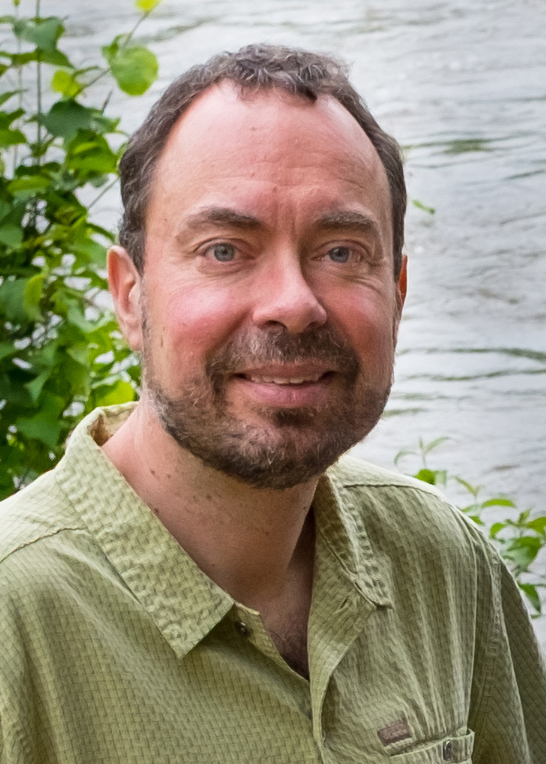
As part of that research, Knappe had stored samples of river water and drinking water in case he wanted to reanalyze them in the future.
In 2024, that time came.
The collection date of the water and blood samples was critical. To fully understand the extent of residents’ PFAS exposure, Hoppin and Knappe needed samples taken before June 2017, when state regulators forced Chemours to stop discharging the compounds into the river.
Knappe retrieved samples from one day in late May 2017, when he and his colleagues had collected water from 10 spots in the river: upstream and downstream of Chemours, in Wilmington and at the Cape Fear Public Utility Authority, which provides drinking water for nearly 200,000 people.
The study found that concentrations of TFA in the Cape Fear River immediately downstream of Chemours reached 6 million parts per trillion, “orders of magnitude” higher than in upstream samples. This suggested Chemours was a significant source of the compound at these locations.
By the time the TFA reached Wilmington and passed through the utility’s water treatment plant, the levels were still extremely high: 108,000 parts per trillion.
That’s equal to 50 times the health guidance level of 2,200 ppt set by the Dutch National Institute for Public Health and the Environment. It is also above the German Federal Health Agency’s advisory of 60,000 ppt; Germany considers TFA to be toxic to reproduction.
“The overwhelming evidence is that these compounds are of concern,” Knappe said. “I’m very concerned that we’re not going to get TFA under control in the time that is needed to prevent adverse health outcomes.”
A “Regrettable Substitute”
TFA is what scientists refer to as a “regrettable substitute,” because in trying to solve one environmental problem, it creates another.
In 1985, the problem was an enormous hole that researchers had discovered in the Earth’s ozone layer, which shields the planet from the sun’s harmful ultraviolet radiation. The culprits were chlorofluorocarbons, also known as CFCs, used in refrigerants in common appliances, such as air conditioners.
Not only were CFCs exfoliating the Earth’s protective skin, they were also contributing to climate change. Two years later, companies began phasing out CFCs under an international treaty, the Montreal Protocol, and replaced them with other substances that in the atmosphere can transform into TFA.
Since then, TFA has become baked into modern life. When Prozac, the antidepressant taken by 5.7 million people in the U.S., breaks down in water, it forms TFA.
At data centers, the AI that drafts emails, mines cryptocurrency and analyzes medical scans requires enormous computing power. To prevent the computers from overheating, data centers use cooling fluids, some of which emit chemicals that become TFA. Chemours makes such a product at its plant in Corpus Christi, Texas.
Dozens of pesticides also contain TFA, including one recently approved by the EPA to kill insects on corn, soybeans, wheat and citrus. The pesticide, called isocycloseram, is also approved for home lawns and to kill cockroaches, termites and bedbugs.
The planet is so bombarded with TFA that, since 2010, global levels have increased as much as 17 times compared with previous decades, according to Scandinavian scientists. They warned that TFA could cause “potential irreversible, disruptive impacts on vital earth system processes.”
“We went from compounds that destroyed the ozone layer,” Knappe said, “to compounds that break down and pollute the earth with TFA.”
What’s Coming Out of Chemours Now?
One day in late September, Cape Fear Riverkeeper Kemp Burdette paddled his aluminum rowboat toward the Chemours Fayetteville Works plant. The N.C. State scientists were finalizing their study, but their findings would show only a snapshot of Chemours’ past discharges. Burdette wanted to know how much TFA and other ultra-short chain compounds Chemours was currently sending into the river.
He dipped a sampler into the water near Outfall 2, where the company discharges treated wastewater unrelated to its manufacturing. He continued downstream to the boat ramp below the Huske Dam. There, he collected water entering the Cape Fear via a seep, then rowed to Outfall 3, to grab more water leaving the southern edge of the plant.
Burdette returned to Wilmington, where he collected drinking water from a tap, and then a second one in nearby Brunswick County.
The results were disturbing: Water leaving Outfall 2 had concentrations of 14,950 ppt of TFA; discharge from Outfall 3 contained 21,900 ppt.
Near the dam, TFA concentrations reached 148,513 ppt. There were high levels of other ultra-short chain compounds, as well.
Downstream, TFA was penetrating the $80 million advanced filtration system the Cape Fear Public Utility Authority had installed to remove GenX. The drinking water Burdette collected at a Wilmington tap contained TFA at concentrations of 1,900 ppt; levels at the Brunswick County tap were 1,400.
Both results are below the Dutch health guidance level of 2,200 ppt in drinking water.
“It is unfortunate, though unsurprising, that we continue to see the impacts from Chemours’ decades of PFAS releases from their chemical manufacturing plant on the Cape Fear River,” said utility spokesman Vaughn Hagerty. “Chemours continues to shift the ever-growing, multimillion-dollar burden for addressing its PFAS contamination to downstream water users.”
Burdette’s findings bolstered concerns raised by Southern Environmental Law Center about the plant’s TFA discharges, especially in light of the planned expansion.
SELC is urging the N.C. Department of Environmental Quality to require Chemours, as part of its pending wastewater discharge permit, to sample for TFA and other ultra-short chains in Outfall 3. DEQ should then limit the amount of TFA that enters the river, SELC wrote.
Legally, if the DEQ doesn’t implement limits for TFA and other ultra-short chains, then Chemours could try to argue that those pollutants are permitted, SELC attorney Jean Zhuang told Inside Climate News. “That risks shielding them from liability for releasing them. It is really important that the state acts on these pollutants.”
The recent findings also raise questions about whether TFA is in private drinking water wells. A 2019 consent order among Chemours, Cape Fear River Watch and DEQ requires the company to test wells near the site for more than a dozen types of PFAS. However, TFA is not on the list.
“We don’t know if it’s in wells,” Hoppin said. “They need to be re-analyzed the samples for TFA.”
The program is voluntary. So far, 22,000 private wells have been sampled, and of those nearly 7,500 households have qualified for alternate water supplies as stipulated in the consent order.
A DEQ spokesperson said that the agency is weighing options to add TFA to its environmental monitoring. That would require a separate laboratory method outside those established by the EPA.
Since there is no regulatory drinking water standard for TFA, the spokesperson said, DEQ “does not have an alternative water recommendation to offer at this time.“
Chemours’ Expansion
The Chemours plant fans out over 2,100 acres flanked by N.C. Highway 87 and the Cape Fear River in northern Bladen County, about 15 miles from Fayetteville. A dozen straight roads and a railroad spur run through the property and impose order on the cacophony of tanks and pipes and smokestacks.
Those smokestacks emitted 267 pounds of TFA in 2021, according to documents accompanying the company’s air permit application. Once released, TFA floats through the air, falls to the ground and contaminates all that it touches.
A Chemours spokesperson told Inside Climate News even though the company would increase production of PFAS after the expansion, fluorinated organic compound emissions, which include TFA, to the air are still “projected to decrease by an average of 9 percent compared to the 2021 baseline.”
In its 2024 permit application, Chemours says indoor, outdoor and process emissions—those released directly from manufacturing and waste management—would decrease by 1,765 pounds per year.
But Zhuang of SELC said that claim is misleading. Accounting for maximum potential PFAS emissions from different product lines, the 2024 permit application shows a potential increase of 20 percent, or 2,500 pounds per year.
However, Chemours’ 2025 application shows significant decreases in PFAS air emissions, although those don’t account for the maximum possible.
The company has based some of its air emissions estimates on the demand for Chemours products. State records show DEQ, in reviewing the air permit application, recently asked Chemours for additional information over concerns about the use of “market conditions” as a basis for calculating potential emissions, as well as other inconsistencies.
“That’s not a reliable estimate of their actual potential emissions,” Zhuang said.
The Chemours spokesperson said that due to the “operational limitations of Vinyl Ether manufacturing units, the emissions potential hinges on how much of each product the company manufactures, which can vary.”
Chemours has also set a goal of reducing PFAS emissions and discharges by 99 percent globally by 2030, according to the company’s sustainability report released last year. Since 2018, Chemours says it has cut global PFAS emissions and discharges by three-quarters.
Ralph Mead, a professor of Earth and Ocean Sciences at UNC Wilmington, is an affable man who dresses casually, like a lot of people who live in beach towns. He specializes in understanding how contaminants travel through the air and where they land, a phenomenon known as atmospheric deposition.
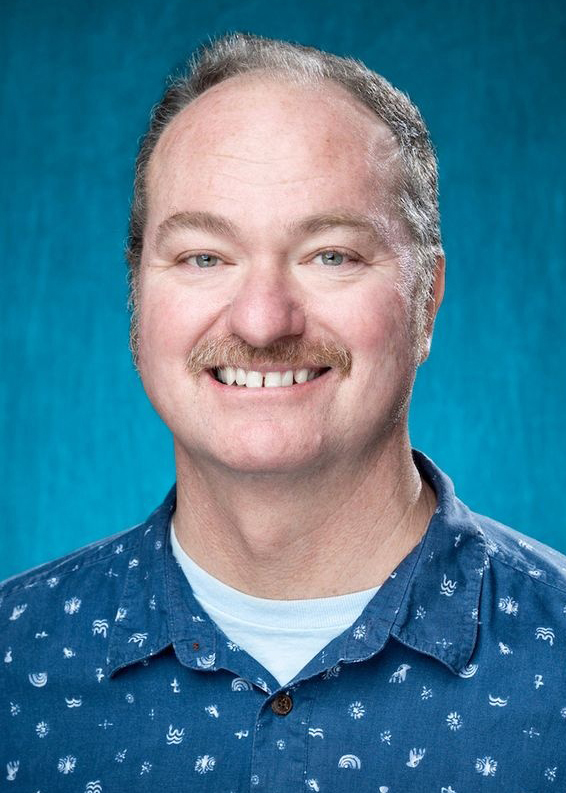
On a humid and breezy September day, outside Mead’s lab between a parking lot and a marsh, he and a graduate student, Justin Parker, peered into a white bucket to see if it had collected rain overnight.
Similar to other PFAS compounds, when TFA is emitted into the air—from a refrigerator, a heat pump, a smokestack—it can travel hundreds of miles in different directions before it falls to the ground—or into a bucket.
If it had rained, Parker would inject the water through a labyrinth of instrumentation to analyze it for dozens of types of PFAS. The bucket was empty. But previous rainwater sampling had found very high levels of TFA, its origins likely varied, but unknown.
In Mead’s view, that’s the issue with Chemours’ air permit application: It doesn’t fully account for the long-range dispersion of the compounds, including TFA.
DEQ required Chemours as part of its application to show that increased PFAS production at Fayetteville Works would not increase the atmospheric deposition of the compounds coming from the facility.
State regulators wanted to avoid a repeat of what had happened with GenX: For more than a decade, Chemours emitted tons of the contaminant from its smokestacks. It fell to the ground and contaminated the soil, river and drinking water wells at least 28 miles away.
Chemours hired a contractor to study how PFAS would behave in the air. The analysis separated the compounds into “depositable”—meaning they can chemically transform and land nearby—and “non-depositable”—which would linger in the atmosphere for years and float far away.
The contractor’s report concluded that depositable emissions, including TFA, would total 1,700 pounds, an 11 percent reduction from 2021 estimates.
Non-depositable emissions would decrease by 15 percent, to 9,300 pounds.
Mead read the contractor’s study and said he still has questions about the fate of the non-depositable compounds. “We need to account for those,” he said. “It’s important for human exposure aspects, as well as contamination of the surface of the Earth away from the facility.”
Mead and scientists from four other public universities in North Carolina will soon launch a three-year study on the behavior of PFAS in air leaving the Chemours plant. The research, paid for by the N.C. Collaboratory, which funds academic research in the state, will include analysis of how the compounds transform in the atmosphere and their deposition patterns when they fall to the Earth’s surface.
“This information may allow for better enforcement and regulation of these compounds from the facility,” Mead said.
Environmental advocates say the air permit application is yet another example of the company’s lack of transparency about its operations, transgressions documented in state and federal records.
In 2023, with EPA approval, the company imported GenX from its plant in Dordrecht, the Netherlands, but never informed state regulators.
Three years earlier, DEQ cited the company for dumping soil and tree roots likely contaminated with PFAS into an unlined landfill. In 2017, Chemours failed to report a chemical spill at the plant.
And in the early 2000s, state records show when Chemours’ parent company, DuPont, told DEQ it was manufacturing GenX, it didn’t disclose that it was discharging the compound into the river.
Since Chemours has failed to clean up its existing and widespread contamination from Fayetteville Works, Zhuang told Inside Climate News, the facility “is absolutely not a place where the company should even be contemplating expanding its manufacturing operations.”
More recently, Chemours has kept under seal thousands of pages of information about the compounds, including health effects, as part of a federal lawsuit filed against the company by the Cape Fear Public Utility Authority, Brunswick County and the Town of Wrightsville Beach.
Lawyers with SELC filed a motion with the U.S. District Court for the Eastern District in North Carolina, to intervene in the case, arguing the public has a First Amendment right to the information.
“After contaminating the drinking water, air, soil, and food for more than half-a-million North Carolinians for decades,” SELC’S motion reads, “the companies have no right to conceal essential documents related to their own pollution, including information on sampling data, air and wastewater treatment options, toxicology, and the public’s exposure to their toxic chemicals.”
The Southern Coalition for Social Justice filed a similar motion as well.
The company previously argued in court documents that the sealed material contains confidential, proprietary information. On Dec. 3, U.S. District Court Judge James Dever, who was appointed by President George W. Bush, ruled against Chemours. Dever wrote that the company’s “move to seal a broad class of documents they deem commercially sensitive or confidential do not provide specific evidence to support their motion.”
Warnings in an Empty Room
On the evening of Nov. 5, nearly every metal chair was empty at the Wilmington City Council meeting. Burdette, dressed in a slate gray button-up shirt and olive pants, his eyeglasses perched on his head, urged the council to pass a resolution opposing Chemours’ expansion.
Burdette noted that his two children drank the water for years before they knew it was contaminated, and that his father died of kidney cancer, which is linked to PFAS exposure, especially GenX.
“This resolution is our City Council saying it won’t tolerate the continued contamination of our air and water,” Burdette told the six-member council and mayor. “It tells DEQ that our leadership expects the state to do its job and protect the people and the environment. The expansion is a slap in the face to Wilmingtonians.”
The City Council unanimously passed the resolution. The next week, on Nov. 12, the Cape Fear Public Utility Authority board did the same, followed by the New Hanover County and Brunswick County Commissioners.
A Chemours spokesperson said the company “respects Wilmington City Council’s and Cape Fear Public Utility Authority’s right to express their opinions, though it seems counterintuitive to oppose a permit application that would ultimately reduce Fayetteville Works’ site-wide PFAS air emissions even further beyond the significant reductions already achieved in recent years, despite an increase in production.”
The company’s significant reductions in air emissions were required by DEQ as part of the consent order.
As Hoppin reflected on the study results, she sounded dismayed. PFAS contamination in the Cape Fear River Basin appears to be worse than scientists had surmised in 2017, when the public became aware of GenX in the drinking water. “It’s unfortunate that eight years later we’re getting a broad picture of what’s been happening.”
Chemours has not announced a timeline for its expansion. DEQ is reviewing the company’s permit applications, and after the agency releases the draft permits, it will hold public hearings and a public comment period.
Two weeks after the study was published, on Nov. 6, Chemours announced its latest financial results to investors and the public. The company’s net sales of $1.5 billion were flat compared with the third quarter of the previous year. But one product showed an 80 percent year-over-year growth: Opteon, a refrigerant used at data centers. It emits TFA.
Upcoming in Forever War: Residents of the Lower Cape Fear River Basin are opposing a plan by the U.S. Army Corps of Engineers plans to deepen and widen parts of the Lower Cape Fear River at the Wilmington Port. The $1 billion project would stir up PFAS in sediment in the shipping channel—sediment that the Corps would need to dispose of—potentially harming the health of people and wildlife. PFAS and GenX are found in the Robeson County landfill, which accepts waste from Chemours.
Legal aid groups feel pinch of NC legislature freezing millions of dollars
by Lucas Thomae, Carolina Public Press
December 5, 2025
Civil legal aid organizations, which provide tens of thousands of North Carolinians with free legal services each year, have been forced to close offices and reduce client intake after the state legislature froze millions of dollars in grant funding to them earlier this year.
A small provision in a public safety bill passed in July stopped the North Carolina Interest on Lawyers’ Trust Accounts (NC IOLTA) from awarding grants through June 30, 2026.
IOLTA is a pooled fund administered by the North Carolina State Bar which is composed of client funds such as retainers or settlement money. The interest earned on that money is typically used for charitable purposes, the vast majority of it going to civil legal aid organizations in the form of grants.
[Subscribe for FREE to Carolina Public Press’ daily, weekly and Election 2026 newsletters.]
The money in the IOLTA fund isn’t taxpayer dollars, but the state House of Representatives still took issue with some of the grantees who received that money, which some lawmakers accused of inappropriate political activity.
“We've heard from a number of folks that IOLTA does good work, and we have seen evidence of that,” said Rep. Harry Warren, R-Rowan, during a House oversight committee meeting on Oct. 22.
“But IOLTA has also gone somewhat rogue, awarding grants to leftist groups with leftist ideologies,” he added.
Other Republican lawmakers brought up examples of IOLTA grantees which they claimed opposed state laws requiring local law enforcement to cooperate with ICE and quoted statements from organizations’ websites which denounced systemic racism.
Many but not all IOLTA grantees are legally prohibited from engaging in political activities as 501(c)(3) nonprofits.
Despite an attempt at compromise from the state bar, the legislature still hasn’t acted to unfreeze those grants. Another oversight hearing on the matter is scheduled for later this month.
Legal aid groups react
Leaders at several civil legal aid organizations who spoke with Carolina Public Press variously called state lawmakers’ actions “short-sighted,” “weird” and “beyond devastating.” They say the ongoing freeze of IOLTA funds is not just a temporary frustration but a potentially catastrophic problem, particularly for the poor and rural communities.
Ashley Campbell, CEO of Legal Aid of North Carolina, said thousands of North Carolinians will be worse off as a result of less accessible legal services.
According to the UNC School of Law, 45 out of 100 North Carolina counties are legal deserts, meaning they have fewer than one attorney per 1,000 residents. A primary goal of IOLTA grants was to bridge that gap, she said.
Legal Aid of NC, the largest civil legal services provider in the state which handled more than 20,000 cases last year in all 100 counties, closed nine offices in mostly rural areas earlier this year because of the loss of IOLTA funds.
The organization is by far the largest recipient of IOLTA grants and faces a $6.5 million loss in funding. So far, it has laid off 50 employees, Campbell said.
Legal aid organizations across the state were already grappling with budget shortfalls from previously reliable government funds.
Several health insurance enrollment programs (a major function of many legal services organizations) were slashed this year, and the federal government didn’t provide money for disaster-related legal services following Tropical Storm Helene, as it typically does following a major storm.
“The impact on legal aid in North Carolina is much larger than the IOLTA problem,” Campbell said.
“But the IOLTA problem really pushed it from a hard situation into a complete crisis.”
Jackie Kiger, executive director at Pisgah Legal Services, said the funding freeze couldn’t have come at a worse time for the organization, which had to lay off 13 employees earlier this year.
She said the IOLTA funding freeze was "beyond devastating,” particularly because Pisgah Legal Services, which operates out of 18 counties in Western North Carolina, is still seeing increased demand for civil legal services from Helene survivors.
Not only are residents seeking help with FEMA decision appeals or private insurance matters, but knock-on economic effects of the flood have also meant more people are dealing with possible evictions or navigating social safety net programs for the first time.
“What we should be doing right now is hiring more staff to be able to meet those needs, but because of the freeze, we can't,” Kiger said.
“So we're in this limbo. We are stuck trying to figure out how we are trying to find different funding now for this disaster recovery work at a time when we were hopeful that there would be another opportunity for that with IOLTA.”
In some cases, the loss of IOLTA funds has crippled organizations uniquely dedicated to serving the most vulnerable individuals.
The Council for Children’s Rights, which represented thousands of Mecklenburg County juveniles in the areas of mental health, special education, juvenile justice and child welfare, shuttered this summer after suffering several losses of funding including its IOLTA grant.
Meanwhile, Disability Rights NC, a nonprofit law firm which provides free legal services to people with disabilities, laid off staff, reduced working hours and temporarily halted legal intake as a result of the loss of funds.
Corye Dunn, director of public policy at Disability Rights NC, said changes at the federal level have required more demand for the organization’s services, and it doesn't have the resources to meet the moment.
“We had an interruption in the flow of SNAP funds, (and) we've had some significant changes in federal programs that our communities rely on, including the elimination of the office at the U. S. Department of Education that administers or that enforces the rights of students with disabilities,” she said.
“So, in the midst of us having funding constraints and uncertainty, our clients actually need more from us.”
On top of all of it, the other legal aid organizations that Disability Rights NC might ordinarily refer clients out to if they had limited capacity are facing the same staffing and funding issues.
The Charlotte Center for Legal Advocacy is one of those organizations that maintains partnerships with several legal aid groups. They absorbed the Council for Children’s Rights’ education law program after it dissolved earlier this year.
CEO Larissa Mañón Mervin told CPP that they are leaning on their established partner networks to get through the funding freeze. IOLTA funds were about 15% of Charlotte Legal Advocacy’s annual budget, she said.
Charlotte Legal Advocacy provides a wide range of civil legal services, including representing clients in immigration court and providing aid to undocumented victims of violent crimes and unaccompanied minors.
Mervin said the state lawmakers who supported the funding freeze because of IOLTA grantees who provided legal services to undocumented immigrants were misinformed about the scope of their work.
“Sometimes the problem is just lack of understanding and awareness and having the truthful, factual information behind the programs we provide and the services we provide,” she said.
“Some people talk about the immigration work that our program does, and what they fail to realize is that we actually have pretty close partnerships with law enforcement and other partners that are actually referring us to those cases because a lot of those cases are survivors of trafficking or abuse.”

Campbell of Legal Aid of NC echoed the point that state lawmakers have failed to recognize the value IOLTA-funded organizations provide the state. North Carolina is one of very few state legislatures in the country which doesn’t have an annual allocation to civil legal aid, and now it has further pinched the money flowing to those efforts.
She invited state lawmakers to ask her any questions they may have about Legal Aid’s services.
“If a member ever has a concern about anything that we do at Legal Aid of North Carolina, I have always asked them to reach out directly to me and for us to have a conversation about it, and I have not had anyone do that,” Campbell said.
“It’s just weird here in North Carolina,” she added, “because it's not like this in other red states.”
This article first appeared on Carolina Public Press and is republished here under a Creative Commons Attribution-NoDerivatives 4.0 International License.