Gov. Stein announces funding for housing in Western NC
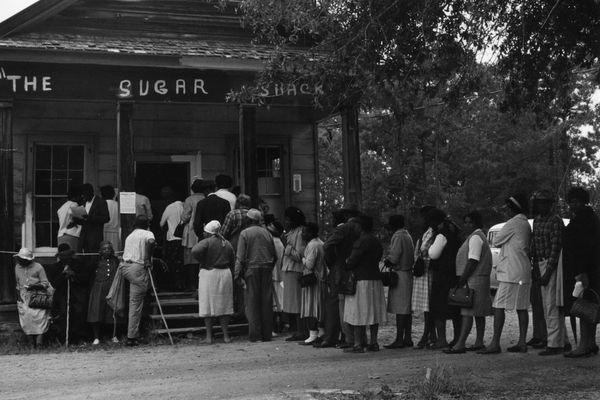
ICE facility coming to Hertford County, NC; End of Rankin County, MS schools desegregation order worries Black residents


It's Friday August 28, 2026 and in this morning's issue we're covering: Gov. Stein announces funding for housing in Western NC, An ICE facility could change this small town in Eastern North Carolina, Davie County ends water fluoridation after supply chain problems, Did Iowa’s largest beginning farmer tax credit create more farms?, Asheville terminates Flock contract in heated council meeting, Non-Profit Pharmaceutical Manufacturer Delivers Drug Access to Rural Hospitals, City Planning Commission defers data center recommendations again, citing new concerns with water, End of Rankin County schools desegregation order worries Black residents.
Media outlets and others featured: NC Newsline, NC Local, North Carolina Health News, Investigate Midwest, Carolina Public Press, The Daily Yonder, Verite News, Mississippi Today.
Gov. Stein announces funding for housing in Western NC
By Greg Childress (North Carolina Newsline) Published: August 26, 2026
This week, Gov. Josh Stein announced federal awards of more than $69 million to bring affordable rental housing to Western North Carolina. In 2024, the region lost thousands of rentals in the wake of Hurricane Helene.
Stein also announced the availability of $53.4 million in competitive federal grants to develop workforce housing units for homeownership across Western North Carolina, bringing total housing investments announced this week to more than $120 million.
The awards for rental units will go to 10 developers in 10 counties to provide more than 828 affordable units. The awards range from $1.7 million to $13.5 million. The money will help fund projects in Ashe, Buncombe, Burke, Caldwell, Cleveland, Haywood, Henderson, Rutherford, Transylvania, and Watauga counties.
“Getting families back into safe housing that they can afford is critical to the recovery from Hurricane Helene,” Stein said in a press release. “This program will ensure these 828 apartments remain financially accessible to people living in the 828 area code for the next 30 years.”
The money comes from more than $69 million in Community Development Block Grant Disaster Recovery funds administered and monitored by the state Department of Commerce and the N.C. Housing Finance Agency.
Award recipients must comply with income limits, rent restrictions, and other program requirements for a minimum 30-year affordability period. The state Department of Commerce will monitor projects throughout the affordability period to ensure compliance with federal requirements and confirm that units serve eligible low- and moderate-income households.
Margaret Fenton Lebeck, CEO of the Housing Assistance Corporation (HAC) in Hendersonville, told NC Newsline that the federal dollars will go a long way toward providing rentals in areas devastated by Hurricane Helene.
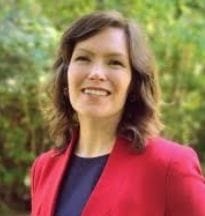
“We had an immense housing crunch before in the counties that our organization works in,” Fenton Lebeck said. “We were at 99.3% occupancy before the hurricane, and so to lose any housing at all just made finding housing that people could afford so much harder.”
Meanwhile, funding for the competitive workforce housing grants will come from the U.S. Department of Housing and Urban Development (HUD) and be administered by the Renew NC Workforce Housing for Ownership (WHFO) Program to provide homeowner opportunities in areas most “impacted and distressed” by Hurricane Helene. Workforce housing refers to households earning up to 80% of the area median income.
Eligible counties include Ashe, Avery, Buncombe, Burke, Caldwell, Cleveland, Haywood, Henderson, Madison, McDowell, Mitchell, Polk, Rutherford, Transylvania, Watauga, and Yancey counties.
“This $53 million investment will expand access to affordable housing across western North Carolina as the region continues to recover from Hurricane Helene,” Gov. Josh Stein said in a statement. “It’s a critical step toward helping our neighbors rebuild in the places they call home.”
Eligible applicants include for-profit housing developers, non-profit housing developers, Community Land Trusts (CLTs) and public housing authorities and counties and municipalities among others.
Award amounts will range from $2 million to $5 million per project.
“Retaining a strong workforce depends on access to affordable housing,” said N.C. Commerce Secretary Lee Lilley. “Through the Workforce Housing for Ownership Program, we will help increase the supply of housing available to working families and foster more resilient local economies as communities recover from Helene.”
The application window opened Tuesday and closes at 5:00 p.m. on December 13, 2026. The eligibility criteria, scoring details, and application materials can be found at commercerecovery.nc.gov.
An ICE facility could change this small town in Eastern North Carolina
by Ryan Oehrli, NCLocal
August 25, 2026
Winton, North Carolina, looks like many small towns in the eastern part of the state. Main Street is just a few businesses, some churches, a town hall and a post office. Already small, the town has shrunken even more over the last few decades.
Main Street is mostly empty with a car, truck or golf cart breaking the silence with a slow roll down the road that leads to the Chowan River.
About two miles from downtown, a huge, gray complex sits empty. A few construction workers mill about in front of the dormant Rivers Correctional Institution, a private prison with a history of problems before it closed in 2021. The 1,320-bed facility is set to open again soon, this time to house detainees for the White House’s mass deportation campaign.
Rumors swirled for months that Immigration and Customs Enforcement (ICE) would open a detention center in Winton, near the Virginia border. In late July, the New York Times confirmed those rumors. When it reopens, Rivers is expected to be one of the largest ICE facilities on the East Coast.
Its owner, GEO Group, said in a news release that a contract with the federal government could “generate approximately $80 million in annual revenues in the first full year of operations.” The company declined to comment for this story.
Some of Winton’s 600 or so residents, as well as others in rural Hertford County, doubt that economic prosperity will reach them, too.
“It’s a money thing. It ain’t about helping the area or people.”
Hertford County resident Dwayne Jones
“It’s a money thing. It ain’t about helping the area or people,” Hertford County resident Dwayne Jones said of the facility on a sweltering day outside the Winton Duck Thru, Main Street’s busiest spot, a gas station that also sells hot food.
Jones said he would prefer something zeroed in on more systemic problems in the region — “something real usable.”
Many locals are worried that Hertford County will be overshadowed soon — in a bad way. ICE could distract from solving real problems in the area, some said.
Winton Mayor Emy Winstead said residents have told her that they are afraid to go outside at night because, they believe, “ICE will be after them.”
“We’ve heard all kind of things here,” Winstead said, adding that the mere mention of ICE frightens some.
Supporters, meanwhile, hope the detention center will bring new jobs and spending to the area.
Region has long had economic troubles
Winstead described Winton as an “older, retired community” that would benefit from more young people moving in.
Hertford County as a whole is struggling to keep people. The persistent population decline it has seen is a familiar story across the region, NC Rural Center Research and Data Manager Dalton Bailey said in an email.
“Barring some unforeseen, big happening in Eastern North Carolina, I think it will probably always be one of our more economically challenged regions,” he said.
With about 5,000 people, Ahoskie is Hertford County’s largest town.
Downtown, business after business permanently closed: a candy store, a department store, a salon and more. So little is left that the few businesses remaining stand out.
One reason for downtown's deserted state, some of the local shop owners and workers still there said, was simply that people died. Their children did not continue the family business.
The social fabric has thinned since Rosa Sessoms grew up in the area decades ago, she explained in her downtown salon, Styles Unlimited.
“Every spot on this strip, down this street, was taken when I was growing up,” she said.
Past as prologue
For about 20 years, Rivers held inmates from the Washington, D.C., area. With plans for ICE to take over the building, some are looking back to that time.
Mayor Winstead said the prison was never particularly controversial in Winton.
“In the very beginning, when they were building it, it was,” she said. “But once it got here, it was no problem whatsoever. They had more prisoners than they originally told us they would, and they sent sewage to our sewage plant. Prisoners flush weird things sometimes. We had some problems with that, but nothing we couldn’t deal with.”
With the federal government, Rivers developed a more troubled reputation.
An August 2016 report by the U.S. Department of Justice Office of the Inspector General found high rates of contraband, inmate assaults on staff, uses of force, inmate grievances, drug use, sexual misconduct and other problems.
In 2021, the federal government stopped working with private prisons under then-President Joe Biden. An executive order he signed pointed to issues with “profit-based incentives.”
When the prison closed its doors that March, more than 300 employees clocked out for the last time, the Roanoke-Chowan News-Herald reported.
The loss of hundreds of jobs at once was felt, Winton Town Council Member Blake Blythe said.
“There was a lot of jobs out there,” he said. “People had been there a long time, and it hurt. It hurt real bad. It hurt the county, and it hurt the town.”
Another 300 or so jobs returning with the re-opening of Rivers would probably not be “transformative,” Bailey with the NC Rural Center said. But the impact would be noticeable, especially if the jobs offered relatively high pay, he said.
“I imagine it would show up in the economic data as well as employment gains,” he said.
It is unclear how many people will work in the facility or what all their jobs will entail, though some listings have started to appear on GEO Group’s website. The job postings call for applicants in nursing, dentistry, administration and maintenance.
ICE spokesperson Lindsay Williams declined to answer questions from NC Local about the facility.
Local officials have distanced themselves, saying they know little about what is planned and reminding the public that Rivers is privately owned.
Speaking through County Manager William Shanahan, all five Hertford County commissioners declined to discuss with NC Local the facility or how their constituents felt about its return.
“We respectfully ask that the public understand the distinction between federal actions and local government responsibilities,” a statement issued by the commissioners said. “While we value open communication and welcome constructive dialogue, it is important that misinformation does not lead to the misconception that the Hertford County Board of Commissioners is responsible for decisions that are beyond our legal jurisdiction.”
While Winstead shared what she heard from residents, she also did not want to weigh in on the facility.
Some fear more enforcement, ‘drama’
Some locals are thinking about more than the economics of reopening Rivers.
In August, nonprofit advocacy group Siembra NC met with Latinos and others living in Hertford County for a “Know Your Rights” workshop. Many were afraid that the facility will lead to more ICE presence in the county itself, not just at the facility, organizer Andreina Malki said.
With so little information from the federal government, it’s hard to know exactly what it will mean for the county, Malki said.
Immigration and Customs Enforcement and U.S. Border Patrol agents have carried out major, large-scale operations in other parts of North Carolina during the second Trump administration. Their focus has largely been on Charlotte — the state’s biggest and most diverse city — and the Triangle.
During a five-day operation in Charlotte last year and in other major operations, federal agents took detainees to Stewart Detention Center in Lumpkin, Georgia. Conditions there have drawn heavy scrutiny, including from federal lawmakers. Family members often struggle to locate detained loved ones. ICE refused to disclose basic information about the more than 400 people detained in the Charlotte operation, prompting a lawsuit by NC Local.
Federal officials have not disclosed which detainees might be held at Rivers, which will reportedly open by the end of 2026. Records obtained by the ACLU and published earlier this year suggest that the facility could hold detainees from Virginia.
“This location provides direct highway access and is within a two-hour surface commute of the ICE Richmond sub-office and approximately 60 miles from the Norfolk sub-office,” GEO Group told ICE in a pitch later published by the ACLU. “Its rural setting offers a secure operational environment with minimal community disruption while ensuring proximity to key transportation networks and regional support services.”
In another recent document signed by ICE staff that NC Local reviewed, the agency said it needs “a turnkey facility within 150 miles of Richmond International Airport” as its Washington Field Office expands operations.
“Rivers is an existing facility within the required geographical area with an efficient surface commute time in relation to Richmond International Airport,” according to the document. “It can be operational within three months of contract award date.”
Hertford County resident Niecy Lynch did not welcome the idea of increased attention on the area, particularly if it is negative.
“It’s just going to start more trouble,” she said of the facility, adding that there was no need for “drama” and “problems.”
Politicians and activists in North Carolina have expressed concerns about the town becoming a focal point in Trump’s mass deportation efforts.
Gov. Josh Stein, the North Carolina ACLU and immigrant rights group Carolina Migrant Network criticized the plans. People from places like Chapel Hill and Norfolk, Virginia, have shown up to local government meetings and warned against ICE “creating chaos” for the area and behaving like a “terrorist organization.” Protesters have marched outside GEO Group’s Charlotte office.
Immigration is not front and center for local officials who are focused on more immediate, pragmatic issues that might affect community members. At an Aug. 3 town council meeting, Blythe brought up GEO Group’s sewage bill with the town.
“I think we need to dive in on that, and let’s get some realistic figures so we can be prepared, because they’re definitely coming,” he said.
This article first appeared on NCLocal and is republished here under a Creative Commons Attribution-NonCommercial 4.0 International License.

Davie County ends water fluoridation after supply chain problems
by Anne Blythe, North Carolina Health News
August 27, 2026
Key Takeaways:
- Davie County is ending water supply fluoridation.
- Middle East fluoride supply chain issues hamper counties and municipalities.
- Traditional fluoride debate also factors into Davie County’s decision.
On the first of September, Davie County will join the list of North Carolina community drinking water systems no longer adding fluoride to their supplies.
Unlike the handful of other counties that considered ending system fluoridation, the decision in Davie County had a new twist. Pragmatic decisions about international supply chain problems played as large a role as the more typical fluoride debate — new concerns over potential health risks versus established dental science that shows the process to be a successful public health measure for preventing tooth decay.
The board of commissioners of the rural-suburban central Piedmont county unanimously adopted a resolution Aug. 3 to suspend the use of fluoride additives after learning about Middle East supply chain issues that made it more difficult to safely get the chemicals.
Brian Barnett, Davie county manager, told NC Health News in a phone interview this week that its chemical vendor relied heavily on Israel for inventory.
Johnny Lambert, Davie public utilities director, shared a letter with NC Health News this week from Coyne Chemicals that went into greater detail about the supply challenges.
Coyne’s supplier, ICL, or the Israel Chemicals Limited Group, told the company on Feb. 16 of its intent “to abruptly exit” the U.S. market.
“As you may know, our supplier of this product is located in Israel,” the letter states. “They have advised us that they have been severely impacted by the war in the Middle East and have lost a large part of their workforce as a result of those individuals being called into active military service.”
That resulted in production problems over the past year, according to the letter. The staffing problems resulted in a decision “to forego operations that allow them to provide us this product in the United States.”
Thomas Coyne Sr., president and CEO of the chemical company headquartered in Croydon, Pennsylvania, said his organization had made “diligent attempts” but was unable to find other suppliers of hydrofluorosilicic acid, the liquid chemical added to municipal water supplies.
The company declared a force majeure, a legal safety net clause that excuses a business or party from liability issues due to extraordinary, unforeseen and uncontrollable circumstances such as a natural disaster or war.
Not unique to NC
Supply chain issues have affected other water systems across the country.
In April, the City of Baltimore cut its fluoride levels nearly in half, according to NPR, after its supplier reduced deliveries.
Several Louisiana cities recently halted their water fluoridation because of supply chain issues, according to local TV news reports.
Milwaukee reported halving the amount of fluoride it added to its drinking water earlier this month.
Many of these decisions across the country have called for temporarily altering fluoridation processes until the supply chain issues can be resolved.
Beyond the Middle East conflict
Davie County’s decision also takes into account public health concerns that prompted Union and Lincoln counties to ban fluoride in their public water systems.
Fluoride skeptics — including Robert F. Kennedy Jr., the U.S. Secretary of Health and Human Services — have relied on a study published in JAMA Pediatrics finding that fluoride exposure can have a detrimental impact on the cognitive function of children. Community fluoridation advocates point out, though, that the study looked at countries with much higher levels of fluoride than is used to treat water in the United States.
Furthermore, research has shown that drinking fluoridated water reduces cavities by about 25 percent in children and adults, according to the Centers for Disease Control and Prevention, an effect that benefits low-income residents in particular.
Lambert, the public utilities director, said community members have expressed concerns about health effects. Also, he said, employees at the water treatment plant worried about the safety of handling fluoridation chemicals.
The commissioners also considered the ability of county residents to make individual choices about fluoride consumption, since the additive is available in toothpaste, mouth rinses and professional treatments applied at dental offices. Lambert said his department heard a range of opinions.
“I would say it was about 50/50, people for and against it,” Lambert said.
Andrew Rivers, a dentist in Davie County for 14 years, urged commissioners at their Aug. 3 meeting to continue adding fluoride to the water system. Rivers has cared for patients, he said, that grew up without consistent access to preventable dental care and seen “children with severe tooth decay, adults who have lost teeth far too early, pain, and in some cases even hospital visits and life-threatening infections.”
“This all can be prevented,” Rivers told the commissioners. “Community water fluoridation is one of the most thoroughly studied public health measures for our country. For decades, the overwhelming body of scientific evidence has supported its safety and effectiveness when used in recommended levels.”
For many families, Rivers added, community water fluoridation is “a safe and affordable way to help protect oral health. In my experience, the greatest benefits are often seen in those who have the fewest resources.”
Ultimately, the board decided “that discontinuing the addition of fluoride to the public water supply is in the best interests of Davie County and its residents,” according to the resolution forwarded to the state Department of Health and Human Services and the state Department of Environmental Quality.
When asked whether the decision could be reversed at some point, Barnett, the county manager responded: “The beauty of county commissions is anything they do can be undone, but they have to do it with a vote. In all theory, a board could one day reverse it.”
For now, though, Davie County is the third North Carolina county to officially eschew fluoridation of its community water system.
This article first appeared on North Carolina Health News and is republished here under a Creative Commons Attribution-NoDerivatives 4.0 International License.

Did Iowa’s largest beginning farmer tax credit create more farms?
by Mónica Cordero, Investigate Midwest, Investigate Midwest
August 26, 2026
Key takeaways
- Iowa’s Beginning Farmer Tax Credit increased farmland leasing, but researchers found little evidence that it created more farms or lowered the average age of emerging farmers.
- Researchers found limits to what the tax credit has accomplished, while state officials say challenges, such as farm consolidation and an aging farm population, extend beyond any single program.
- New farmers struggle to make a living from farming, often relying on off-farm jobs even when they have access to land.
As a boy growing up in Spencer, Iowa, Trent Walker spent summers helping on his grandfather’s farm, picturing that he someday would follow in his grandfather’s footsteps and become a farmer himself.
During harvest season, he trick-or-treated at his grandpa’s grain bin site as trucks came in from the fields. He was particularly drawn to the changing seasons and how no two days were quite the same.
“I would never be able to work in a factory,” said Walker, 30. “I would just get so bored.”
With the passing years, Walker learned that access to land is one of the biggest obstacles for aspiring farmers like him. Buying land was largely out of reach. At $15,000 an acre, he calculated, an 80-acre parcel could cost $1.2 million.
Renting was more realistic so he waited for a window of opportunity.
That window opened when a relative of his wife, Jessika, retired and offered them land to rent in Dickens, not far from where he grew up in northwest Iowa. Walker said beginning farmers often need an established farmer stepping aside and choosing to give someone younger a start.
“The biggest bridge, I think, is the guy retiring willing to give the young guy the opportunity,” Walker said.

For nearly two decades, Iowa has offered a financial incentive for farm owners to do just that.
The state's Beginning Farmer Tax Credit rewards farm owners for leasing farmland and equipment to qualified beginning farmers. Created in 2007, the program places no limit on years of farming experience, unlike the U.S. Department of Agriculture, which defines a beginning farmer as someone who has operated a farm for 10 years or less.
To qualify, applicants must reside in Iowa, be at least 18 years old, have knowledge of farm operations and have a net worth of $901,000 or less. Researchers, who studied the program, describe Iowa’s as the biggest beginning farmer tax credit program in the country, awarding thousands of lease contracts and spending more on the incentive than any other state with a similar program.
But nearly two decades later, researchers found little evidence that leasing, as the program intended, helped create more farms or younger farmers into Iowa agriculture, raising questions about whether the program changes trends or simply subsidizes deals that were already likely to happen.
Do Tax Incentives for Farmland Leases Increase Farm Supply Evidence From Iowa
Researchers’ data analysis concluded that the tax credit increased the number of farm owners leasing land about 17% and the amount of farmland acres about 49%, compared with what likely would have happened without the program, according to researchers from Indiana University, Loyola University Chicago and American Farmland Trust, a nonprofit focused on farmland conservation and helping farmers thrive.
In spite of the findings, researchers stop short of calling the program a failure. But they admitted that it is difficult to separate the tax program from other agricultural policies and their outcomes, if any.
Julia Valliant, who co-authored the study published earlier this year in Applied Economic Perspectives and Policy, a peer-reviewed journal, said one of the biggest takeaways from the study is that more investment in emerging farmers is needed.
“Iowa gives the most money in the country to anything like this,” Valliant said. “ You know, $6 million per year, $9 million per year. And that's a very small amount of money in the big picture for agriculture.”
New farmers can’t make ends meet
To conduct the study, researchers used federal tax forms farmers file to report farm income and expenses. They found the program increased the number of Iowa farm operators reporting farm income by 0.7% compared with what would have been expected without the tax credit. Iowa spent $58.3 million during the study period.
The program spent slightly more than $100,000 for each additional farm operator associated with the tax credit.
The state's farm population remains considerably older, at 57 years old on average, than its beginning farmers at 44 on average, according to 2017 agriculture data used in the study. The study found little evidence that the tax credit lowered the average age of Iowa farm operators. Age was another measure researchers used to assess whether the program was changing demographic shifts among farmers in the state.
Starting a farm, however, does not necessarily mean making a living from it. Nationally, nearly three-quarters of emerging farmers reported that something other than farming was their primary occupation in 2022, compared with 58% of all U.S. farm producers, according to the most recent data.
Walker and Jessika, 29, followed a similar path. They started their own row-crop operation three years ago with two small fields, growing corn and soybeans. To avoid the cost of buying equipment, they help with her family's farming operation in exchange for using its machinery.
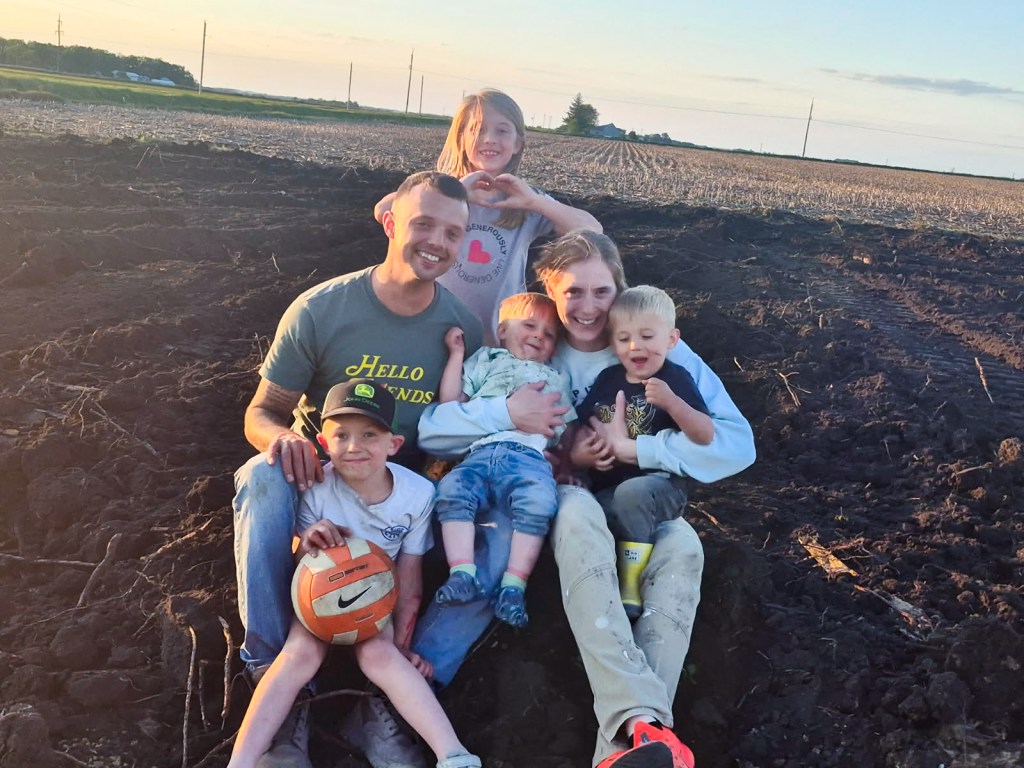
Both still work off the farm. Walker serves in the Iowa National Guard and works 35 to 40 hours a week tending hogs in barns owned by his father-in-law and has a seed dealership on the side. Jessika works at a medical office as a clerk. Their off-farm income supports the couple and their four children, ages 9 to 2.
Walker said it took about three years for the farm to reach the point where it no longer needed money from their other jobs to sustain itself.
The Iowa Finance Authority, which administers the program, said the study findings reflect the limits of what any single policy can accomplish.
In an email, Ashley Jared, communications director of the Iowa Finance Authority, said: “IFA appreciates research that helps inform policy and will continue evaluating the program and stakeholder feedback to ensure it is as effective as possible in supporting beginning farmers.”
The agency added that they “recognize that broader trends such as farm consolidation and the aging farm population are complex, long-term challenges influenced by many factors beyond any single program, including farmland values, financing, succession planning and changing farm economics.”
Even as researchers question the program's statewide impact, the tax credit remains one of several Iowa initiatives intended to support new farmers.
The limits of tax credits
Across the nation, states have introduced beginning farmer tax credits to make it easier for people to enter farming and for older landowners to transfer their operations to the next generation.
Valliant has been studying such state and national policies for several years, describing them as “experimental, “pioneering,” and ‘innovative.”
“We need them… it's so expensive and difficult to get into farming and to help farm owners pass along the farm to a young person,” she said.
Between 2015 and 2025, Colorado, Minnesota, Nebraska, Ohio, Pennsylvania and Wisconsin offered tax credits or deductions intended to encourage landowners to lease farmland or other agricultural assets to beginning farmers.
Martha McFarland, who works with beginning farmers at Practical Farmers of Iowa, said land access is “consistently identified as the number one barrier.”
The challenge can be especially acute for smaller producers, she said, including vegetable growers who may need only five or 10 acres rather than hundreds. Because such leases generate relatively little income for landowners, she wishes the program did more to support smaller-acre operations.
“All land access is local,” McFarland said.
Walker knows these challenges too well. Around Dickens, farmland that is already rented tends to stay with the same operator until the landowner decides to make a change, often when someone retires. That leaves few openings for farmers trying to get started, making relationships with landowners especially important.
“Farming is built on relationships and years of hard work,” Walker said. “It’s not something that you can just get into day one or year one or year two … It takes years of good relationships and financial preparedness.”
Chris Anderson has something Walker and many other beginning farmers are trying to build: a family connection to farmland.
After serving in the U.S. Army and working as a civilian police officer, Anderson began farming in northwest Iowa in 2019, becoming a fifth-generation farmer. He rents 95 acres from his 93-year-old grandmother. “It’s a blessing to have any farm ground,” he said.
The family already has a succession plan. Anderson’s father plans to buy the farm from her estate, compensating his siblings, and Anderson would continue as a tenant, this time renting from his father.
But even with access to family land, making a living from farming has been difficult.
Anderson, 30, works as an agricultural insurance adjuster, and his wife is a teacher. Anderson and his wife have relied on off-farm income while getting the farm established and have not taken any income from the operation during their first four years of farming.
“The farm has to be profitable before it can pay for anything,” he said.
Though Anderson knows about Iowa’s Beginning Farmer Tax Credit, he has not spent much time learning about it or applying because his schedule keeps him busy. If his family decided to participate, the tax credit would go to his grandmother as she’s the landowner, not to Anderson.
Existing relationships between farmers and landowners do not disqualify them from participating.
Iowa allows family members to lease land to one another through the program and permits participants to have a higher net worth than some neighboring states.
The survey, conducted by Indiana University in consultation with American Farmland Trust, found that 44% of participants had already been renting farmland to or from the person they later enrolled within the tax credit program. About half of the beginning farmers and landowners surveyed may have enrolled in the tax credit to do what they would have done anyway.
iowa-state-summary-beginning-farmer-tax-credit-particpants
“Policymakers can decide who literally collects the check, but they can’t determine who is actually going to benefit from the program,” said Justin Ross, a professor of economics and public finance at Indiana University’s Paul H. O’Neill School of Public and Environmental Affairs and one of the study’s authors.

Ross said some of the subsidized arrangements may simply have formalized relationships that were already in place.
“So many of these deals just might have been made anyway,” he said. “A question can be whether or not the tax credit is generous enough to actually induce people to do this more than they otherwise would.”
The program’s broader eligibility rules may reinforce that pattern, Ross said.
“The more relaxed [the eligibility rules] are, the less likely it truly is an actual new farmer who wouldn’t be doing this anyway,” he said.
The result, according to Ross, is a program that appears to encourage more leasing without producing a corresponding increase in successful new farm operations statewide.
Jared said the agency believes there are opportunities to strengthen the program as agriculture evolves.
During the last legislative session, she explained in an email, legislation was introduced to enhance the program, including increasing the cash rent tax credit from 5% to 10%, providing additional incentives for below-market rental agreements and longer-term leases, and establishing a tax credit for qualifying sales to beginning farmers.
While the legislation did not move forward, Jared said the proposed changes reflect the types of improvements that could encourage additional land-access opportunities while supporting longer-term farm transitions.
What comes next
The study evaluated Iowa's Beginning Farmer Tax Credit only through 2017. Since then, lawmakers have continued to modify the program, even as participation has dropped.
The Iowa Finance Authority, which administers the tax credit, reported assisting 153 beginning farmers in fiscal year 2025, well below its annual target of 278.
A separate 2025 evaluation by the Iowa Department of Revenue identified one reason participation may have slowed.
Beginning in the 2023 tax year, Iowa's retirement tax changes created a new option for retired farmers, allowing them to either exclude eligible farm rental income or deduct certain capital gains from farm asset sales. Making that election means a retired farmer can no longer participate in the Beginning Farmer Tax Credit program.
The evaluation said the lease-income exclusion often provides a larger tax benefit than the Beginning Farmer Tax Credit.
Jared said participation in the program has declined since Iowa's tax code changed in 2023. Many retired landowners who choose the Farm Tenancy Income Exclusion can no longer benefit from the Beginning Farmer Tax Credit, which has reduced participation in the program, she explained.
She also said the agency is reviewing its performance targets to better reflect the current policy environment.
The evaluation also noted that several neighboring states have adopted different approaches to helping beginning farmers gain access to land.
Minnesota, Ohio and Pennsylvania, for example, offer tax incentives for selling agricultural land and other assets — such as machinery, buildings and livestock — to beginning farmers. Nebraska offers qualified emerging farmers a one-time state income tax credit of up to $500 for participating in an approved financial management class. It also requires a written succession plan when farmland is rented between family members.
Those differences raise a question the study poses — whether helping beginning farmers ultimately requires more than encouraging landowners to sign leases.
Brooks Lamb, special adviser for strategic communications at American Farmland Trust, said the access-to-land challenge facing beginning farmers is really part of a larger national problem in how American farmland transitions from one generation to the next.

“A tremendous amount of land owned by those aging and elder farmers is going to change hands in the next decade or two, simply because those older farmers are going to retire, or they are going to die,” he said.
Lamb said no single policy is likely to fix land access for beginning farmers and urged policymakers to look at a variety of tools used in other states, from tax credits to conservation easements.
The future of agriculture in the United States will be determined on how and to whom land transitions and that’s how our food systems and rural communities will take shape in the future, he said.
This article first appeared on Investigate Midwest and is republished here under a Creative Commons Attribution-NoDerivatives 4.0 International License.

Asheville terminates Flock contract in heated council meeting
by Walker Livingston, Carolina Public Press
August 25, 2026
After a long and tense meeting with more than an hour of heated public comment, the Asheville City Council voted 5-2 Tuesday night to terminate the city’s contract with Flock Safety. It’s a move that comes during a statewide reckoning with the technology company, which has come under fire for perceived potential Fourth Amendment violations.
The resolution came after Asheville Mayor Esther Manheimer called on the City Council to end the area’s Flock contract in a video statement posted on social media last week. Prior to Tuesday’s vote, the city of Asheville was operating 11 Flock cameras. Eighty-six cameras are operated by other entities across Buncombe County, including homeowners associations and the public school system, inside the city limits. Those other cameras were not affected by the council vote.
The votes against the resolution came from council members S. Anntanette Mosley and Sheneika Smith, however some other members expressed reservations before ultimately backing the measure.
[Subscribe for FREE to Carolina Public Press’ Daily, Weekend and Election 2026 newsletters.]
The city manager will now review the Flock contract. Flock Safety manufactures ALPRs, or automatic license plate readers, which capture images of license plates at a singular point in time and enter them into a database where artificial intelligence catalogs vehicle characteristics, like a vehicle’s make, model and color. APD has had a contract with Flock since 2025, which was originally set to run through 2027.
Atlanta-based Flock has a network of data on every car it has detected, which allows law enforcement agencies across the country to search for a specific vehicle’s location history across thousands of camera feeds. The council’s resolution made it a point to specify that Asheville has not been using facial recognition technology, nor has it shared its Flock data with any facial recognition database.
Other communities in North Carolina, like the towns of Hillsborough and Pittsboro and Davidson County, have each ended their contract with Flock. Others are reviewing their policies as the company has become increasingly controversial. In Western North Carolina, Macon County also recently ended its contract with the technology company.
Not the only license plate readers
Flock’s ALPRs are the only such technology in Asheville right now, but other companies also provide the service — the city just doesn’t have it from them so far.
Asheville does have a contract with one such company, Axon, but only for police department body cameras and ALPRs mounted on police vehicles, not the standstill ALPRs similar to the widely recognizable Flock devices.
APD currently operates 137 Axon plate readers mounted to police vehicles, according to the transparency portal.
City Council members approved the Axon contract in May, along with a Real-Time Intelligence Center, which will synchronize license plate readers, public and private surveillance cameras in the city and police dash cameras. Council member Kim Roney was the only dissenting vote at that time.
“The question that we have to address is whether or not we want to allow Axon to do that, and whether or not it just feels like we're replacing the Flock system with something similar,” Manheimer told CPP earlier Tuesday.
Council member Kim Roney, who is running for mayor against Manheimer, said in a social media post that the council’s resolution on the Flock contract adopted Tuesday night reads more like a pause than taking a stance on Flock. During the meeting, Roney introduced a motion to see a new moratorium on ALPRs, which failed.
APD will now engage with a policy reviewer from the American Civil Liberties Union while continuing discussions about ALPRs and surveillance technology.
Data from the Axon ALPRs is not shared with third-party networks, according to the company’s transparency portal for Asheville. These cameras retain data for 90 days. Flock cameras now retain data for seven days unless they are involved in an active criminal investigation.
The resolution that the council passed Tuesday said information relating to immigration enforcement, reproductive healthcare and First Amendment-protected activity will be protected in regards to the contracts. In other states, law enforcement agencies have used Flock to track those who seek reproductive healthcare outside of state lines. Local law enforcement agencies across the country have also used ALPR data when cooperating with Immigration and Customs Enforcement.
Now that the Flock contract has been canceled, the council is at a fragmented pause, as members disagree about the need for license-plate reader technology. Meanwhile, there will still be Flock ALPRs in Asheville, they just won’t be operated by the city.
It is also unclear whether Flock license plate readers will be covered before they are removed. Roney asked the city manager whether covering the cameras has been considered and was told that it had not yet been considered.
Reaction to Flock contract debate
Many Asheville community members spoke at the meeting against both Flock and Axon contracts.
Some also brought up frustration with the lack of public comment at the earlier meeting where the council voted on the 24-hour Real-Time Intelligence Center and Axon. Some also expressed frustration that Manheimer brought up such an issue that she previously had a different opinion on before a contentious mayoral race.
“This is something that the majority of Asheville from across the political spectrum wants,” Sean Snyder, an Asheville resident who spoke during the meeting’s public comment period, said. He, like tens of others like him, urged the council to consider ending its contract with Axon, not just the Flock contract.
Toward the end of the meeting, council members went back and forth about the city’s future with Axon, and whether they would pursue fixed ALPR infrastructure from Axon to replace the Flock cameras.
This article first appeared on Carolina Public Press and is republished here under a Creative Commons Attribution-NoDerivatives 4.0 International License.

Non-Profit Pharmaceutical Manufacturer Delivers Drug Access to Rural Hospitals
by Liz Carey, The Daily Yonder
August 20, 2026
A new program from the nation’s only non-profit pharmaceutical company aims to help rural hospitals keep some drugs in stock.
A collaboration between Civica Rx, a non-profit generic pharmaceutical company, and the Leona M. and Harry B. Helmsley Charitable Trust, wants to ensure rural hospitals can have access to generic drugs during shortages and to access those drugs at a fair price.
One under-appreciated challenge rural hospitals face is access to generic drugs, leaders with Civica said. Small hospitals are often on the bottom rung when it comes to getting drugs, and they are sometimes left out of the loop when generic drugs are in short supply.
Drug shortages impact nearly 90% of primary care physicians nationwide, according to the American Society of Health-System Pharmacists. At any given time, the organization reported, there are typically between 200 and 300 active drug shortages in the country. Those disruptions to the drug supply chain can impact the healthcare system, causing treatment delays, medication rationing and extra labor, the organization claimed.
A broad array of medications often are in short supply. The most common drug shortage is sterile injectable medications and widely prescribed generics, according to the U.S. Food and Drug Administration. Those include medications to treat ADHD, essential antibiotics like amoxicillin and penicillin, chemotherapy drugs, sterile saline, electrolyte injectables, and injectable pain medications and endocrine therapies.
In rural communities, the effects of drug shortages are felt a little more acutely, said Mike Laffin, vice president of member accounts for Civica RX. A drug shortage may mean the hospital’s one pharmacy technician has to figure out another source for the medication, or a substitute medication. That’s time spent on the phone tracking down a drug that could be spent on other tasks.
“Civica as a group was initially created to tackle essential generic drug shortages,” Laffin said. “We work with hospitals to ensure that they have the inexpensive generics that they need every day.”
To address that need, Civica RX recently launched the Civica Rural Hospital program to ensure those facilities have reliable access to critical generic drugs that are often in short supply or subject to supply chain issues. Funded by a $3.2 million grant from the Leona M. and Harry B. Helmsley Charitable Trust, the program is live in nine states — Hawaii, Iowa, Minnesota, Montana, Nebraska, Nevada, North Dakota, South Dakota, and Wyoming. It will allow eligible hospitals to have access to the company’s drug access program.
As an organization, Civica provides hospitals with a membership. Those member hospitals guarantee that they will purchase a certain amount of the medications, and should a shortage occur, they have access to Civica’s supply. The Helmsley Foundation grant covers each rural hospital’s membership fees, and Civica provides them with access to their stocks if a shortage occurs, without requiring them to guarantee they’ll purchase a minimum drug quantity.
“Since Memorial Day, I've had 24 meetings, mostly with individual rural hospitals, as well as rural state health associations or rural hospital networks,” Laffin said. “Nobody has said no. We already have six new members… I almost feel like we haven't begun to scratch the surface on creating awareness.”
The goal of the pilot program is giving rural hospitals more access at consistent prices, said Wayne Booze, program director for the Helmsley Charitable Trust's Rural Healthcare Program.
“There's approximately 330-plus hospitals in our catchment area that could qualify for this program,” Booze said in an interview with the Daily Yonder. “The goal of the pilot project is to try to target about two thirds of them to enter in, and that'll give enough volume of generic drug need and demand for Civica to figure out how to de-risk across that population of smaller hospitals. … This pilot allows for getting access to a consistent supply of drugs without a cost spike and without also being held at risk for not using all the drugs that they think they're going to need.”
That means about 225 rural hospitals and 6,750 beds across the nine states in the program will have access to drugs if a shortage occurs.
And that means a cost savings for the hospital, said Walter Panzirer, a trustee with the Helmsley Charitable Trust who directs philanthropic investments in rural healthcare, telehealth, and other charitable initiatives.
“We hope that the rural hospitals that are choosing to participate in this project will actually see their costs go down, and that's a big thing,” Panzirer said in an interview with the Daily Yonder. “If we can see their costs go down, that’s saying this program is a success, because we're saving money on those line items, so that the hospital can deploy their savings somewhere else.”
“These are life-saving drugs that should be available at every hospital, not just the large ones, not just the ones that have access to large buying groups,” he said.
The program will also reduce labor costs by preventing pharmacy technicians from having to spend time looking for medications, the organizations said.
Right now, the program is only in states the Helmsley Foundation works in — ones they’ve identified as needing more philanthropy than others. But the intention is to roll it out nationwide.
“If this works in nine states, I don't see any reason why it can't work in 50,” Civica’s Laffin said. “Is there a possibility the grant ends? Sure, it's a three-year grant. But we're all working towards getting to a place where that gets extended and expanded.”
This article first appeared on The Daily Yonder and is republished here under a Creative Commons Attribution-NoDerivatives 4.0 International License.

City Planning Commission defers data center recommendations again, citing new concerns with water
by Diego Perdomo, Verite News New Orleans
August 26, 2026
After a rally opposing the construction of new data centers and a spirited public comment period, the New Orleans City Planning Commission voted again at a Tuesday (Aug. 25) meeting to defer adopting zoning recommendations in favor of more regulation.
Before the commission met, the local branch for the Party of Socialism and Liberation (PSL) organized a rally outside of City Hall to protest increased energy costs and burdens as a result of large-scale projects such as the Hyperion facility being built in Richland. PSL organizer Devorah Lea said the construction of data centers like the one in Richland has brought up utility rates across the board amidst an affordability crisis.
“Under this current system, we do not have real democratic control over the resources we need to survive, over what is good for our environment,’ Lea told Verite News. “We should have democratic people's control determining how our grid is used. A basic utility, like our electricity, should be a human right.”
At the meeting, the commission shared their updated recommendations — like spacing data centers 500 feet away from residential zones, limiting one data center per building and specifying criteria to divide data centers into three categories: small, medium and large/hyperscale.

During public comment, the commission heard nearly two dozen commenters share a wide array of opinions against the creation of new data centers in New Orleans. Some speakers supported current recommendations for city policy, while others shared their concerns with the centers and existing recommendations.
“The Sewerage and Water Board is not in a state to support data centers at any scale. ... It'd be very important to actually include a definition for water usage in that [previous] definition so that we don't overextend ourselves,” said Eian Bailey, a student researcher at Louisiana State University New Orleans. “At the end of the day, water is the most vital thing that we're given from the earth.”
Before voting to defer their recommendations, commissioners pointed to their interest in banning larger data centers, implementing specific water use thresholds for facilities by size and initial interests to defer adopting the recommendations.
In January, the New Orleans City Commission installed a yearlong ban, or moratorium, on the approval of data center construction following community backlash to a proposal to build a data center in New Orleans East. While the planning committee has met to discuss recommendations for the implementation of these centers, they have been deferred since March.
Other public commenters, such as representatives from organizations in New Orleans East and the Louisiana branch of the Party for Socialism and Liberation, stated their concerns that historically Black areas of the city, like parts of New Orleans East, would be targeted by data centers while other sites across the city weren’t considered.
“A majority of the East is all highlighted, " said public commenter Tay Giarnellla in reference to a recommended zoning map. “Everybody showed up in January and February to shut down that request for a data center in the east for a reason.”

Alliance for Energy New Orleans Policy Director Jesse George, who was in support of the recommendations proposed by the city planning committee, later said he was not opposed to deferring recommendations to factor in new considerations like water.
“They've come up with a pretty good solution to the issue, which is a complete prohibition on hyperscale data centers, which is really the big threat in terms of energy and water usage and environmental effects … leaving open the possibility of economic development for smaller data centers that are used for routine computational and telecommunications purposes.” George told Verite News before the meeting.
New Orleans’ actions contrast with state interest in data centers. In July, Gov. Jeff Landry announced further investment from Meta into a $50 billion proposed hyperscale data center in Richland Parish. The Meta project later drew scrutiny due to non-disclosure agreements signed by the Landry and many of his staffers, as well as a state senator's legislative support that saved the technology giant billions in taxes. Once built, it is expected to consume seven times the amount of electricity as New Orleans consumes every day.
“If you know the wrong with the data center, why are we even considering it?,” said Ronald Marshall, senior policy strategist for the Voice of the Experienced. “People will be harmed, families will be destroyed. It's an attack on Black communities around this country. None of these billionaires will ever consider a data center in their own neighborhood. Never.”
This article first appeared on Verite News New Orleans and is republished here under a Creative Commons Attribution-NoDerivatives 4.0 International License.

‘We paid the price’: End of Rankin County schools desegregation order worries Black residents
by Leonardo Bevilacqua, Mississippi Today
August 24, 2026
BRANDON — Before her kids’ first day of second grade in the mid-1980s, Janie McLaurin sat them down in the living room to tell them about hers. She recalled what her history teacher called her: “negress.” She recounted her classmates’ welcome on the morning bus: slaps and shoves.
She shared these memories, not because they’d face the same obstacles, but to impress upon them what she fought against to ensure they could attend Rankin County schools. McLaurin said it was why she joined a suit in 1967 to ensure Black students and teachers were treated fairly.
The lawsuit led to federal oversight and called for regular check ups by a judge. The desegregation order lasted from 1970 until last month, when U.S. District Judge Kristi Johnson ended court oversight when she found school leaders were fair enough to Black students and staff.
In a statement, the school district leadership said the judge's decision reflects years of work — an effort that won't end with the desegregation order.
"The district will continue building on the progress it has made with all stakeholders," the statement said, "not because it is required by a court, but because providing every student with an excellent education and every employee with a fair and supportive workplace is at the heart of its mission."
McLaurin, along with six Black Rankin County schools alumni who spoke to Mississippi Today, believe the decision was premature.
“Rankin County schools just took a step backwards,” she said.
Johnson acknowledged that racial disparities exist in the school district’s hiring, enrollment, student discipline and course selection, but found those issues result from socioeconomics, where people chose to live and other race-neutral factors.

The district isn’t held to a standard of perfect racial balance, Johnson said. The legal standard is whether the district policy is a holdover of segregation. And other school districts that are less racially integrated have been released from desegregation orders, she found.
In September, attorney Katrina Feldkamp, counsel with the Legal Defense Fund, argued against letting the district out from its consent decree. Black Rankin County schools students and staff still encounter discriminatory school policies, particularly related to discipline, she argued. She also contended that district leaders have exacerbated resegregation through intradistrict transfers and staff assignments.
“My sisters and I were some of the trailblazers in desegregating Rankin County schools. So what I've seen is almost post-traumatic shock,” Angela English, branch president of the Rankin County NAACP, said of the decision to clear the district of discriminatory practices. “It's very personal for me. And I don't intend to see any child have to suffer wrongdoing.”
Are Rankin County schools resegregating?
Rankin County schools have resegregated since court ordered integration in 1970, and they’re not alone. More U.S. schools are either majority white or majority minority than in the past decade.
In Rankin County, white families are moving their students from schools where Black enrollment has increased, such as Brandon and Flowood. During the September hearing to determine if Rankin County should be free from its consent decree, the plaintiff’s attorneys held up Pisgah-area schools as a prime example of such resegregation.
In the 2022-23 school year, 24 white students transferred to Pisgah High School. Three of the students came from Brandon and Flowood, where Black enrollment has increased, according to an analysis by education equity researcher Erica Frankenberg, who was an expert witness for the plaintiffs.

Johnson also flagged Pisgah schools for being disproportionately whiter than the district.
Complaints from within Pisgah schools weren’t limited to resegregation or hiring.
Ma’Kesha Adams, a former Rankin County School District employee and daughter of Kenneth Adams, lead plaintiff of the lawsuit, said she was put on an improvement plan after a white student accused her of racism. Despite being the highest rated English teacher in the school, she said, her principal denied her request to see the complaint or other documentation. The move was disappointing because her tenure at the school was mostly positive, she said. She feels conflicted because her tenure as assistant principal at Brandon Middle School was positive, too.
Because of her past experiences, and those of her parents and grandparents, Adams said she believes continued oversight is important. She got into education because she believed in its power to provide opportunity to students regardless of background.
“Now that the case goes away, how likely are we to stay on top of ensuring that things like what I just mentioned at Pisgah get rectified,” she said. “You have to commit to fostering diversity for the benefit of students and staff.”
'It was a very traumatic experience'
Jeuan Brown, who attended McLaurin Elementary in the early 2000s, said he felt the brunt of policies that attorneys say disproportionately impacted Black students.
“I would get punished and I didn’t do it, and nobody believed me,” he recalled of his time at McLaurin Elementary.
Read more: Rankin County schools released from desegregation order
Black students, who comprised 25.7% of the enrollment in 2023-24 in Rankin County schools, were suspended twice as much as white students.
Brown said school leadership ignored racist bullying when he was a student. He remembers when white classmates who taunted him with racial epithets faced no consequences. Instead, he said, school leaders transferred him to the alternative school, without due process, for defending himself in a fight.
“Since you’re in alternative school, you’re stigmatized because everybody thinks you're a bad child,” he said.
“It was a very traumatic experience,” Brown said of his time in Rankin County schools. “The depression that I have today as a young adult stems directly from those events that occurred starting in elementary school.”

Expert testimony at the September hearing backs up Brown’s observations on discriminatory discipline practices. District data showed “a clear pattern of racial bias,” according to behavioral health researcher Jamilia Blake, who analyzed district discipline data in preparation for the hearing. She found Black students were most likely to be suspended multiple times, and school policies did not reduce that occurrence.
However, Johnson, the judge, was persuaded by district leadership testimony that referred to new behavior intervention plans despite the absence of proof of their implementation or of their success in reducing punishments.
Adams, who oversaw discipline at Brandon Middle School when she was the assistant principal, said she was surprised to see racial disparities in data for other district schools.
“We always made an effort to ensure that what we were doing was consistent and fair,” she recalled of her time in Brandon. “As an administrator, you have to make a conscious effort.”
Johnson also found that Black students didn’t face discrimination when participating in extracurriculars. But some Rankin County alumni and parents disagree. At least 10% of student clubs and activities lacked any Black participation, Adams’ family attorneys noted at the September hearing.
For Tagira Bush, being Black on the cheer squad at Northwest Rankin High School was isolating, she testified at the September hearing.

The squad’s participation fees were too steep for her mother, and district staff would not grant a waiver. Bush said she felt they didn’t care. She later joined a cheer group outside of school and no longer felt the same distress, she told the court at the September hearing.
“I don't want any other Black children to have to go through what I had to go through,” she said in September. “I was so discouraged that I just wanted to give up on everything.”
District leadership alluded to implementing “supportive measures” to make some clubs more inclusive. The court found that Bush’s testimony and related data weren’t evidence of systemic harm on account of race.
The steps forward
Black parents in the county schools said they worry now that the court isn’t watching out for their children.
Deidra Moore said she was concerned by the way a district expert witness in the September desegregation hearing explained away high suspension rates for Black students as a socioeconomic fact. She learned new details about the case at a forum hosted Thursday by Mt. Sinai MB Church in Richland. She worries her son could be denied the high quality education she envisioned for him.
“Some of their rationale doesn’t make sense,” Moore said of the expert witness’s testimony.

Moore was also alarmed to hear from organizers that Black students are underrepresented in the district’s gifted and talented program.
Moore and her husband moved to Richland for a small-town feel with bigger-city comforts and because they heard Rankin County had top-rated schools.
She said she hopes district leaders continue to see her son the way she does: capable of success and of greatness.
“We don’t have any major issues right now,” Moore told Mississippi Today. “It’s just scary what the possibility can be now for all kids.”
English, the Rankin County NAACP leader, recalled the discrimination she faced integrating Florence Elementary in the late 1960s. Students put frogs and snakes under her desk to spook her. White boys tried to run her off the road in their pickup trucks while she walked to school.
Those childhood experiences at the tail end of the Jim Crow Era motivate her to fight for other marginalized groups. Her organization has fielded several complaints in the last year about Hispanic children experiencing discrimination because of their parents’ immigration status.
Although court oversight of Rankin County schools has ended, English plans to continue asking for district data and records as well as monitoring attendance-zone redistricting.
“And we're not going to let up,” she said. “We don't intend for our children or anybody else's children or grandchildren to have to suffer the way we did. We paid the price so that they wouldn't have to.”
Updated 8/27/26: This story was updated to include a statement from Rankin County School District about the end of the desegregation order.
This article first appeared on Mississippi Today and is republished here under a Creative Commons Attribution-NoDerivatives 4.0 International License.