
Hmong refugee stranded in Texas after release from ICE detention
NC prisons face ‘dire’ staffing crisis, Elon University working to bring legal education back to Charlotte, In Iowa, many rivers and lakes improve briefly, then fall back into impairment, NOLA residents work to make Mardi Gras more sustainable

It's Friday, February 6, 2026 and in this morning's issue we're covering: Hmong refugee stranded in Texas after release from ICE detention, 2 doctors fled Ukraine for Wisconsin. They’re still trying to get their careers back. Services, workers at risk from second year of developmental disabilities budget cuts, Despite improvement, Mass. unemployment system remains one of the worst in the country by some measures, NC prisons face ‘dire’ staffing crisis, Studying law in the Queen City. How Elon’s efforts are restoring legal education in Charlotte, The New Orleans residents trying to make Mardi Gras more sustainable, How unsheltered New Yorkers face down the cold, In Iowa, many rivers and lakes improve briefly, then fall back into impairment.
Media outlets and others featured: Sahan Journal, Wisconsin Watch, Maryland Matters, CommonWealth Beacon, North Carolina Health News, Carolina Public Press, Verite News, THE CITY, Investigate Midwest.
‘I felt hopeless’: Hmong refugee stranded in Texas after release from ICE detention
Thi Dua Vang is one of a growing number of Minnesota refugees targeted in a federal operation and rapidly transferred to immigration holding facilities out of state.
Katelyn Vue and Andrew Hazzard (Sahan Journal)
February 5, 2026
 Katelyn Vue, Andrew Hazzard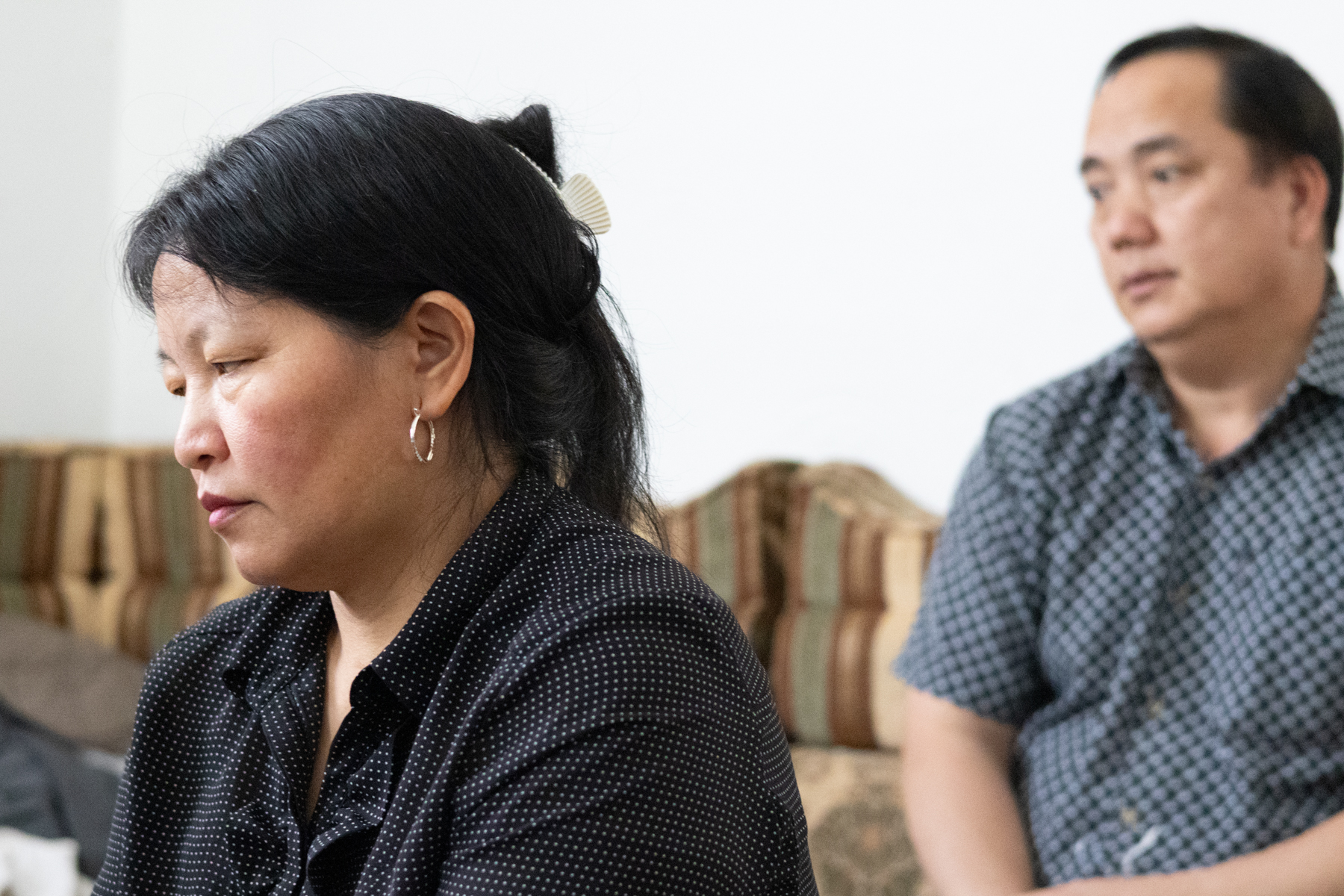
Thi Dua Vang had just heard from federal officials that she was going to be released after two weeks of immigration detention in Texas.
“Are you going home by car or plane?” a Hmong interpreter asked the St. Paul woman, who speaks little English, over the phone. Vang didn’t have an answer.
Alone in Houston, Vang said she asked if she could wait inside the Immigration and Customs Enforcement (ICE) processing center for a relative to pick her up.
But Vang said federal agents refused. “They forced me outside and told me they didn’t care if I lived or died,” she told Sahan Journal through a Hmong interpreter.
Vang isn’t the only Minnesotan released from immigration detention with no way home. In the last two months, hundreds of Minnesota residents have been swept up in an operation that brought as many as 3,000 ICE and Border Patrol agents to Minnesota.
The operation, which began Dec. 1 with a focus on undocumented immigrants, took on an additional target in January with Operation PARRIS, which called for additional scrutiny of 5,600 Minnesota refugees already in the pipeline to legal permanent residency. Many of those detained were rapidly shipped to out-of-state facilities in Texas or Louisiana after their arrest.
On Jan. 28, a federal judge in Minnesota ordered ICE to release and return all refugees arrested in Operation PARRIS.
In recent weeks, lawyers have filed a flurry of successful court challenges compelling the government to release their clients, but that has left an increasing number of Minnesotans stranded outside detention facilities far from home. In some cases, ICE has refused to return identification cards or work permits to those released from detention, attorneys say.
“I was happy that I was released, but scared that I was thrown out there when I didn’t have my brother and husband there,” Vang said. “It was so late and I’m scared there might be bad people out there and there’s no one to help me.”
ICE and the Department of Homeland Security (DHS) did not respond to requests for comment on this story.
A frantic pickup
Wa Chi Minh Vang, Thi Dua’s brother, said he drove with her husband, A Pao Giang, from Minnesota to Houston because she couldn’t fly back since ICE had not returned important documents, like her Social Security card or state ID.
An immigration judge granted her bond on Jan. 20. The two men started driving that day to meet Thi Dua so they could help her back home. The next day, Wa Chi Minh said he received an email in the afternoon saying that Thi Dua was scheduled for release. The email had no details on how to pick her up or whether ICE would return her on a plane home.
The men arrived in Houston that night and drove all over the city to find Thi Dua Vang. With her phone, she took a photo of the outside of the ICE detention processing center to show her location.
“We were so happy when we saw her,” Wa Chi Minh told the Sahan Journal. Thi Dua had waited there for nearly three hours outside the ICE facility.
Thi Dua Vang was arrested on the morning of Jan. 8. She was held for a day in the Bishop Henry Whipple Federal Building at Fort Snelling, which houses ICE offices and a processing center for detainees, before she was transferred to Texas. She stayed in the El Paso Service Processing Center for a couple of days and then transferred to the Joe Corley Processing Center in Houston, Texas. She was detained for nearly two weeks.
Since her release, Thi Dua Vang said she still feels unsafe. Federal agents have visited her St. Paul home three times and she’s not sure why, she said.
“It traumatized me, and it reminded me of what I went through in Vietnam,” she said. “It’s going to be a couple of long years because of the president and his policies, and I’m waiting for the time to feel free again.”
No recourse after ICE release
When someone is arrested by immigration agents, a first step for family members is to check the ICE detainee locator. But 10 immigration attorneys who spoke with Sahan Journal said it’s taking longer for that site to update.
Some detainees are transferred out of state within hours of their arrest, before they can contact an attorney.
“There’s a part of me that wonders, given the speed of the transportation to Texas, I’m not even sure that they know who that person is before they put them on a plane,” said Linus Chan, an immigration attorney and director of the Detainee Rights Clinic at the University of Minnesota Law School.
Minnesota immigration attorney Nico Ratkowski has won multiple habeas cases this month for clients held out-of-state. Habeas corpus cases force officials to justify the legal basis of a person’s detainment or imprisonment.
While the filings often lead to the client’s release from immigration holding centers, they also create tension, he told Sahan Journal.
“Do we want them released because it’s a terrible situation? Or is it better to sit for two days and be shackled on a plane ride home?” he said. “There’s a different answer for every person.”
A few members of a local church drove to Texas in January to pick up one client who had a pending refugee application, Ratkowski said. Another client decided to spend a few more days behind bars to get a free ride back. When ICE releases someone after a judicial order, there’s no apology or funding to get back home.
“As far as recourse goes, there’s none,” Ratkowski said.
Tracking people arrested by ICE isn’t easy. Detainees are often shipped out of Minnesota to detention centers in Louisiana or Texas within 48 hours. Immigration lawyers and family members rely on the ICE detainee locator system, but it can be unreliable.
“ICE and their attorneys have been unable to answer for the number of people they are arresting, or follow through the logistics,” said St. Paul immigration attorney Graham Ojala-Barbour said.
Fleeing religious persecution in Vietnam
Thi Dua Vang came to the United States in 2023 as a refugee after her brother, Wa Chi Minh Vang, sponsored her. As Christians, she and her brother fled religious persecution from her home country of Vietnam.
She has a pending application for permanent residency status, also known as a green card. She doesn’t speak English well, so after her arrest, she constantly worried about where federal agents were taking her, she said.
“I was very sad that I couldn’t call my family to tell them where I was going, and I was afraid they couldn’t find me,” she said. “I was crying hard and I felt hopeless.”
At least 150 Minnesota refugees, including Thi Dua Vang, were arrested in January as part of Operation PARRIS spearheaded by U.S. Citizenship and Immigration Services (USCIS) and the Department of Homeland Security. Most of them were transferred to Texas, and some have been released and left to find their own way home.
Detainees lost in the system
When an attorney wins a habeas petition case and their client is released, that’s not the end of the battle. Next they have to find them. Ojala-Barbour said sometimes even the U.S. attorney working the case doesn’t know where someone is being held, and has to call ICE to track them down.
His client, Juan Tobay Robles, didn’t make it home to Minnesota until Jan. 31, more than two weeks after Chief U.S. District Court Judge Patrick Schiltz ordered his release.
Tobay Robles, originally from Ecuador, was detained by ICE agents on Jan. 6. A dozen or so agents hauled him to the Whipple Building near the Minneapolis-St. Paul International Airport. Within 48 hours he was in Texas.
On Jan. 14, Schiltz granted a habeas petition releasing Tobay Robles. But a week later he remained in custody, prompting his attorney, Ojala-Barbour, to ask the court for his immediate release. The case drew national headlines when Schiltz ordered Acting ICE Director Todd Lyons to either appear in court to explain himself or be held in contempt.
Tobay Robles wanted to be brought back to Minnesota, where he has lived for more than two decades. But after an additional week in a detention center where he was suffering from insufficient treatment to a medical condition, according to Ojala-Barbour, he just wanted to get out.
ICE released Tobay Robles from the El Valle Detention Center in southeast Texas on Jan. 27. A relative drove from the Twin Cities to a town on the border to pick him up.
Tobay Robles may have had one of the better outcomes, after his arrest. Some clients are not showing up on the ICE website for days, while others have not shown up since the beginning of Operation Metro Surge on Dec. 1, according to local attorneys.
“There is no uniformity or consistency as to why Minnesotans are disappearing in the government’s system, nor is there a justifiable basis for that either,” said Irina Vaynerman, CEO of Groundwork Legal, a statewide legal nonprofit working on immigration cases.
The post ‘I felt hopeless’: Hmong refugee stranded in Texas after release from ICE detention appeared first on Sahan Journal.
This story is being shared with permission by the Sahan Journal, a local newsroom in St. Paul, MN. To learn more, please visit https://sahanjournal.com/.
The transplants: 2 doctors fled Ukraine for Wisconsin. They’re still trying to get their careers back.
by Natalie Yahr / Wisconsin Watch and Joe Timmerman / Wisconsin Watch, Wisconsin Watch
January 29, 2026
Click here to read highlights from the story
- Anna Mykhailova and Sasha Druzhyna fled Ukraine after Russia invaded, leaving behind careers as physicians.
- Wisconsin needs more medical professionals, including physicians. But those with foreign training face hurdles that can keep them from filling that gap.
- State officials recently eased requirements for foreign-trained doctors, but Mykhailova isn’t sure what the change means for her.
- Anna works as a sonographer at a Madison hospital, while Sasha is studying for a master’s degree in medical perfusion at the Milwaukee School of Engineering.
- The family is among 100,000 Ukrainians with Temporary Protected Status, allowing them to live and work in the United States for renewable 18-month stretches.
Sasha Druzhyna knows all about transplants.
As an anesthesiologist and perfusionist in Kyiv, Ukraine, Sasha used specialized equipment to keep patients’ blood pumping during heart transplants and keep donor organs alive until they reached their recipients.
Now, after fleeing Russia’s full-scale invasion, the 52-year-old is learning his profession all over again as a student in Milwaukee School of Engineering’s medical perfusion program.
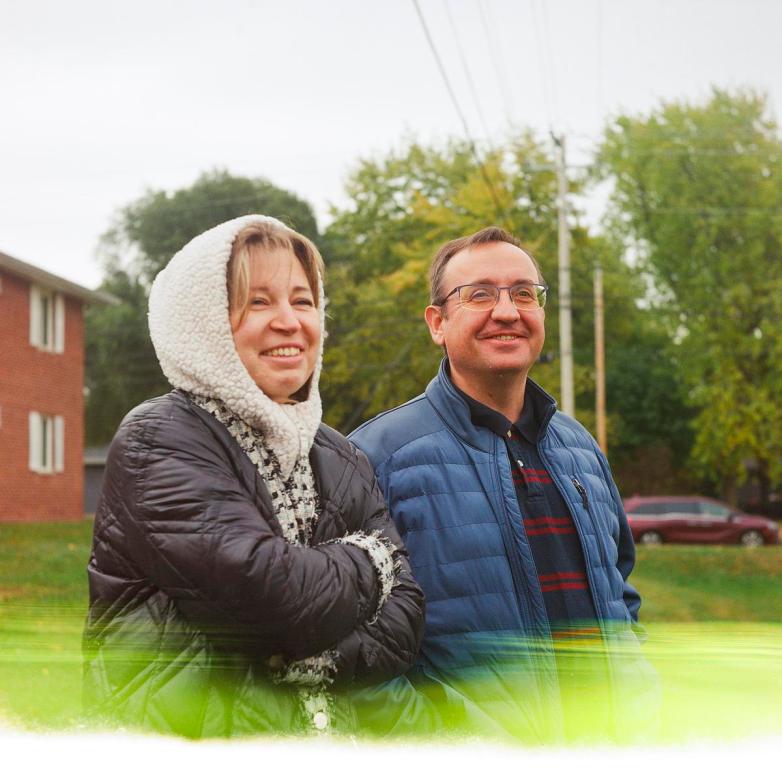
Eighty miles away, his wife Anna Mykhailova, 42, is starting over, too. In 2024, she started a job as a cardiac sonographer at a Madison hospital, using skills she refined as a cardiologist in one of Ukraine’s top heart hospitals. She’s also studying for the medical board exams in hopes of one day practicing medicine in the United States.
But as they work to rebuild their careers, they still don’t know if they’ll be allowed to stay.
“It’s so stressful because of this immigration process. I will do these really hard exams and they (might) say, ‘Oh, you have to leave this country,’” Anna said of the family’s immigration limbo.
Wisconsin needs more medical professionals, including physicians. But as the couple’s experience shows, those who arrive in the country with foreign training face hurdles that can keep them from filling that gap.


A new life begins
Had the couple fled to Europe instead, their career paths might have been simpler. Sasha might be the teacher instead of the student. Anna might still be a doctor.
But the invasion left no time to deliberate. Anna and her colleagues moved their patients to the hospital’s basement, then brought their own families to shelter there, too. Anna and Sasha brought their daughter, Varya, who was 6 years old at the time.
They listened to the news as Russian troops occupied the suburbs around Kyiv.
“When they showed civilian kids killed by Russians … I realized that nobody will protect us and (we) just have to go,” Anna said.
A friend with military connections warned that Ukrainian forces would soon blow up Ukraine’s own bridges to stop Russian troops from taking more ground.
“They told us, if you want to leave, you have to leave right now,” Anna said. Sasha drove his wife and daughter west, past sirens and explosions, toward the border with Poland.
A week later, Anna and Varya were on a plane to Boston, where Anna had a friend from medical school. Arriving with tourist visas, she thought they’d be away for just a few weeks. Sasha, who didn’t speak English, opted to stay.
“Coming here, starting from zero, no money, no nothing, no job — he didn't want to come and wash floors in a supermarket … It's really difficult to immigrate when you already had something in your home country,” Anna said.



He kept working in the hospital, caring for his usual patients and the war-wounded. They figured the fighting would end soon.
But about a year later, Sasha joined his family in Madison, where friends helped them get settled.
“We realized that this war is going to be forever,” Anna said. “I don’t believe that they will stop it.”
The three are among more than 100,000 Ukrainians who’ve been granted Temporary Protected Status, or TPS, because the federal government deems it unsafe to return. The status allows them to live and work in the United States for renewable 18-month stretches.
Almost four years later, they’re still here — and hoping to stay. The war rages on, and they’ve embraced their new home. Varya, 10, now speaks mostly English.
“She doesn’t want to speak Ukrainian anymore,” Anna said in an interview at her Madison apartment building in September. “So for her to go back to school in Ukraine … it’s possible, but it’s going to be really difficult.”
But staying isn’t easy either. Restarting their careers has come with significant personal and financial costs, and there’s no guarantee their efforts will pay off.
Covert cardiologist
Until recently, all foreign-trained physicians seeking to practice medicine in Wisconsin had to pass three licensing board exams — offered only in English — then compete against recent medical school graduates for a three-year residency at a U.S. hospital.
To Anna, the process seemed daunting. The tests cost around $1,000 each — not counting textbooks and study materials — and she was still taking classes to improve her English. She heard that hospitals preferred recent graduates, and she feared they’d be particularly reluctant to accept someone whose immigration status expires every 18 months.
Meanwhile, she and her husband struggled to find a place to live. The prestige they commanded back home was irrelevant to U.S. landlords running background checks.
“Could you imagine? I'm in my 40s. I don’t have any credit score … I just got my work permit. I couldn’t find a job,” Anna said. “Nobody wants me. They don’t know who I am (or) what is our culture; everybody’s afraid of us.”
She began applying for research jobs at the University of Wisconsin-Madison.
“I don't know how many interviews I had,” Anna said. “Everybody was so nice, but (they said), ‘You are overqualified for this job.’”
Then the mom of one of her daughter’s soccer teammates mentioned that her employer, SSM Health St. Mary’s Hospital, was hiring student sonographers. She encouraged Anna to apply.
The roles are designed for people currently studying medical sonography, but Anna already had the relevant training: Ukrainian doctors regularly do their own sonography. She applied for the job with help from teachers at the Madison nonprofit Literacy Network, where she’d been taking classes to improve her English and prepare for next steps in school or work.
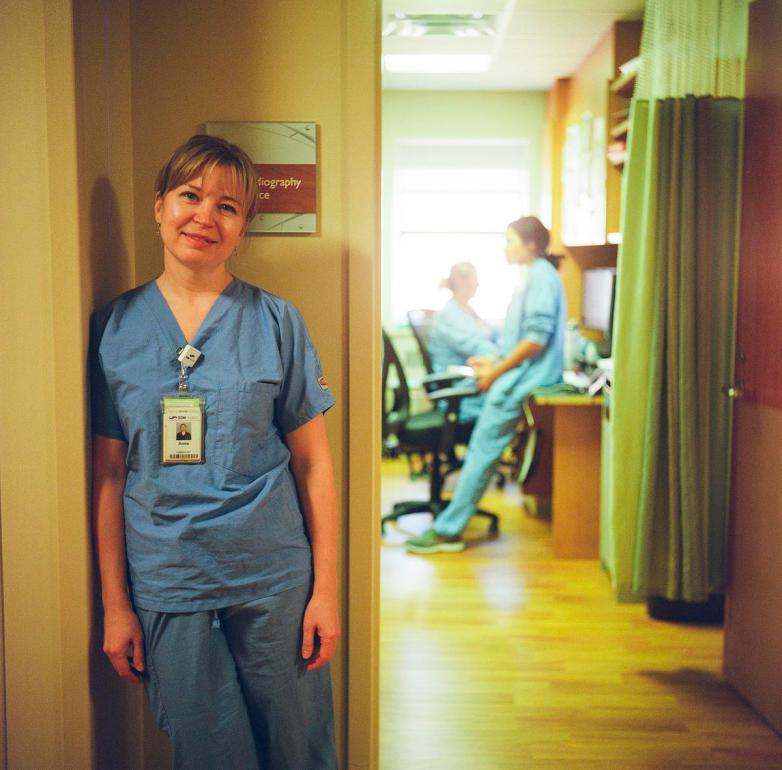
She started the job in 2024, running ultrasounds to aid in medical procedures and to diagnose things like heart attacks, heart murmurs, strokes and birth defects. She was promoted to a full-time position soon after.
On a typical day, she might see half a dozen patients. She doesn’t tell them she’s a doctor.
“Nobody knows,” Anna said.
Some patients get rude when they hear her accent. “I had a couple patients, they told me, ‘Don’t touch me. Call somebody else. I don’t trust you,’” she said.
Once a hospital security officer heard the way a patient spoke to her and urged her to file a report. The hospital sent a letter threatening to deny care if the patient acted that way again.
“I have a really good experience working here,” Anna said. “I really like my job right now.”

In October, Wisconsin eased requirements for foreign-trained doctors, joining several other physician-strapped states that have recently made such changes, but Anna isn’t sure what the change means for her.
Under the new rules, qualifying foreign-trained physicians can work under the supervision of another physician without repeating residency training if they’ve passed U.S. board exams and have a Wisconsin job offer.
Anna heard the news from a friend and asked about it at work.
“I showed this bill to people in the medical field here, and they were just like, ‘Oh, we don’t know,’” Anna said. “So I don’t know how does it work here, or where to go and who to ask.”
It’s also not clear she’d qualify. The new rules require applicants to have practiced medicine in their home country for at least one year in the last five years. She left her job nearly four years ago, and she figures it will likely be a couple years before she passes the board exams.
Lately, she’s been reading up on the licensing rules in other states and contemplating a move after her husband finishes school.
She wonders if things might have been easier if the family had immigrated to Poland, say, or Italy, instead of the United States. Back in Ukraine, her husband ran a perfusion school certified by the European Board of Cardiovascular Perfusion, and he received his own training in Europe. But she doesn’t think it’s worth emigrating again.
“It doesn’t matter where you go, everything is going to be different,” Anna said. “If I go to Europe, I have to start over. I have to study a new language, and then all of the education and activities for our daughter, and she also has to study a new language. So I just don’t want to do it a second time. I don’t have the energy to do it.”
From professor to pupil
Sasha, meanwhile, decided not to try to become a doctor again. His top priority was perfusion, the field to which he dedicated two doctoral dissertations and decades of work. In the United States, perfusionists don’t need to be doctors, but they do need specialized training.
“The perfusion specialty board, they do not recognize European diplomas,” Anna said. “They want them to go back to school here. But he’s happy to do it. He was so happy that they admitted him.”
Last fall, he started the two-year master’s degree program at MSOE.
“This wasn’t about choosing an easier path. Perfusion is a highly specialized and demanding field … This is where my experience is most relevant,” Sasha said, “and it’s work I genuinely value.”
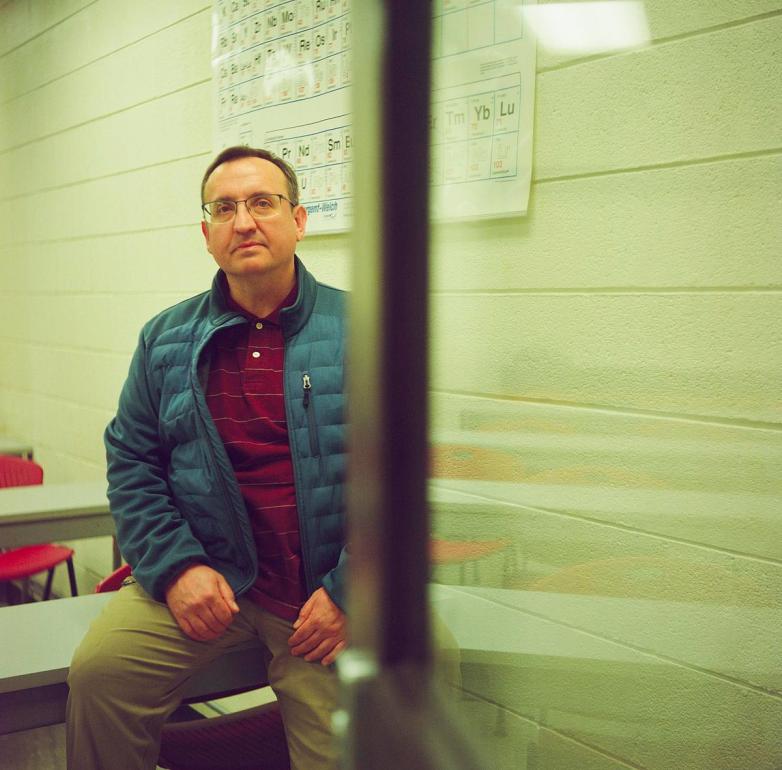
Anna teases him about being so much older than the other students in the program.
“He’s like a father for all his classmates,” Anna said. “The first day, he brought actual paper, a notebook with different colored pens. His classmates brought just iPads. They were like, ‘What is that? Are you a dinosaur?’”
Paying for tuition for the first semester took most of the couple’s savings, Anna said. Their immigration status makes them ineligible for federal student loans.
She’s not sure how they’ll cover the remaining costs.
Sasha was also accepted to the perfusion school at State University of New York Upstate Medical University, which offered him a job that would have offset his tuition costs, but he didn’t want to uproot his family again.
“My daughter would need to change her school, leave her friends,” Sasha said. “You know how important it is for a girl of 10 years, your friends? It’s the most important thing in your life.”
But being in school has meant far less time with her. Since September, Sasha has spent his weekdays in Milwaukee, attending classes and shadowing other perfusionists during surgery. When he’s not in the operating room, he spends the night in a spare room he rents from a friend.

Back in Madison, Anna is “basically a single mom” five days a week. On Fridays, Sasha drives home to see his family and work on a transplant team at UW Health, where he uses perfusion techniques to keep donated organs alive and healthy until they’re transplanted.
With luck, he’ll move back to Madison after he finishes his coursework in May. He’s hoping to do his second-year rotations at Madison hospitals.
Status: Pending
Back in Kyiv, the couple’s condo stands vacant, full of the things Anna left behind when she packed hurriedly for a few weeks away.
The high-rise penthouse, located beside the many bridges on Kyiv’s east side, boasts an impressive view of the city and the river — and Russian missile strikes. The couple can’t sell it, or go back, until the war ends.
“Nobody wants to live on the 27th floor when you don’t have electricity, elevator or water, and you can see rockets and jets in front of your eyes,” Anna said.
Meanwhile, despite the time and money the two doctors have invested in their new lives, their future in the United States is uncertain.
The family’s Temporary Protected Status expired in April, and they still haven’t received an answer on the renewal application they submitted a year ago.
“The Homeland Security office said that our work permits are still valid (while) we are waiting for their decision,” Anna said. “We’re just waiting to see.”
If their application is approved, they could be on the hook for thousands of dollars. The Department of Homeland Security announced in October that Ukrainians’ applications, including those already waiting to be processed, will be subject to a new fee of $1,000 per person.
Anna has been looking into other visa options, too. Many foreign doctors practice in the United States on H1-B visas, an employer-sponsored visa for workers with specialized skills. If Sasha can eventually get one of those visas as a perfusionist, Anna will get a work permit, too. But in September, the Trump administration announced a $100,000 fee on most new H1-B visas, raising concerns that employers — including hospitals — will cut back on those visas.

Even if the family is able to renew their status, it will end in October unless the Department of Homeland Security extends Ukraine’s TPS designation. Since President Donald Trump took office last year, his administration ended TPS for immigrants from 10 countries, revoking legal status for more than 1.6 million immigrants, NPR found.
Anna worries that she and her family could become targets for deportation before they ever get a decision on their application.
“I don’t feel safe,” Anna said. “When you are waiting, you are legally in the United States, but this new administration and ICE police, they think that you are illegal here.”
Still, she said, she and Sasha try to stay positive.
“My husband says this is a good opportunity. He feels so young because he is studying as a student, and he says it’s just an adventure,” Anna said.
She looks for the bright side, too. She points to the support and kindness Americans have shown her and the fact that she’s learned she can survive “without anything.”
“I feel like a homeless person. I feel like Ukraine is not my home anymore, and the United States is not my home yet,” Anna said, “but people are trying to make it feel like home.”
This story is part of Public Square, an occasional photography series highlighting how Wisconsin residents connect with their communities. To suggest someone in your community for us to feature, email Joe Timmerman at jtimmerman@wisconsinwatch.org.
Natalie Yahr reports on pathways to success statewide for Wisconsin Watch, working in partnership with Open Campus. Email her at nyahr@wisconsinwatch.org.
This article first appeared on Wisconsin Watch and is republished here under a Creative Commons Attribution-NoDerivatives 4.0 International License.

Advocates: Services, workers at risk from second year of developmental disabilities budget cuts
by Danielle J. Brown, Maryland Matters
February 2, 2026
Baltimore County resident Tracie Feron is the mother of 30-year-old Connor Feron, who has autism and other medical conditions that require round-the-clock care.
She said residential facilities in the area have rejected Connor, because they cannot provide the care he needs. He uses a Medicaid waiver that lets him and his family hire support personnel instead to assist him in his home.
But a recent proposal to cut funding from the state agency that oversees Conner’s services may put those supports at risk. Gov. Wes Moore’s fiscal 2027 budget proposal, released this month, calls for $150 million in “cost containment” measures in the budget for the Developmental Disabilities Administration.
Reductions in spending on provider wages is just one of the proposed cuts. Feron and her son both worry about what will happen if wages drop too low to attract qualified candidates.
“It takes a village to support him,” she said. “What happens when that village is gone?”
It’s a concern shared by thousands of people with developmental disabilities and their families as they eye the DDA cuts in Moore’s budget. The administration includes a series of “cost containment” measures it says are needed to help curtail what officials call “unsustainable” spending from the agency.
The DDA administers Medicaid waivers that let Marylanders with developmental disabilities receive a wide variety of services, from live-in caregiver support to transportation, respite care, employment services and more.
Moore’s fourth budget uses cuts, fund shifts to close $1.5 billion budget gap
Through reductions in spending on wages for specific service personnel and a cap on how much the state will provide for each personal budget, the governor hopes to reduce $150 million in state spending from the DDA.
But advocates note that the Medicaid waivers primarily are split between state and federal funding, meaning a state cut triggers a similar reduction in federal dollars, so that a $150 million cut in general funds is closer to a $300 million cut overall when factoring in federal match dollars.
“These proposals will have severe consequences,” said Alicia Wopat, president of the Self-Directed Advocacy Network of Maryland.
It’s the second year state officials have looked at cuts to the DDA for potential savings.
Last year, Moore’s initial budget slashed DDA funding as the state looked to close a $3 billion budget gap, prompting an outcry from advocates. Hundreds of people with developmental disabilities, their families and caretakers rallied in Annapolis on a cold January evening, with additional advocacy efforts throughout the session.
After significant discussion, lawmakers and the administration restored much of the proposed reduction – though there was still a $164 million cut to the agency for fiscal 2026.
Now, the administration is looking to tap DDA funds again.
Laura Howell, CEO of the Maryland Association of Community Services, says that communications with the health department about the budget challenges at the DDA have improved since last year, but she is concerned about how the current budget proposal could impact access to services.
“They’ve (state officials) been very engaged with members of the DD coalition,” she said. “We’ve had multiple meetings, they very much want to continue discussions during session on a routine basis. They are very open to questions, feedback, alternative proposals.”
From left, Maryland Association of Community Services CEO : Laura Howell, The Arc of Maryland Executive Director Ande Kolp and People on the Go of Maryland Executive Direcor Mat Rice, testify in 2025. (Photo by Danielle J. Brown/Maryland Matters)
Announcing the budget proposal earlier this month, acting Budget Secretary Yaakov “Jake” Weissmann said the administration was taking a “balanced approach” to the DDA cut, but was not “wedded to it as the only solution.”
“This is a tough issue, but it’s one that we must tackle in a collaborative and a bipartisan manner,” he said. “Making this program more sustainable, so families in the future can rely on this, is essential.”
There are two ways to receive services from the DDA. According to 2024 data, about 16,800 people received services from a community provider, an established organization that provides disability care, while another 3,600 people chose the self-directed model, where the waiver recipient or their family hires individual employees for services.
State officials say the DDA has struggled to keep up with spending at the agency due to “unsustainable” program growth in recent years, an issue that has now spanned two health secretaries.
The Department of Health said that cuts are necessary to protect “the future existence of the … program.”
“Maryland’s goal is to have a sustainable, accessible, equitable, and effective program of meaningful services that promote community living through both self-directed and community provider delivery models,” the department said in a statement Friday. “We continue to be mindful of our mission to serve Marylanders with intellectual and developmental disabilities while meeting federal requirements, preserving the future of the program, and mitigating affordability challenges.
But with more than 20,000 people on waivers, advocates for the developmental disability community say that some of the state’s largest budget cuts come down on the backs of the highest-need people.
“It’s almost 20,000 people, a small group of Marylanders, targeted for the second year for substantial reductions,” Wopat said. “Every individual person with a developmental and intellectual disability is different from the other ones … The impact on these people will be huge.”
Self-directed personnel wages
Last year, officials blamed part of the unsustainable program growth on higher enrollment in self-directed services, which grew over 30% in both 2023 and 2024.
How did we get here?: Analysts, officials unsure how disability agency overspent
Howell said that officials want to reduce the wages that self-directed service providers, who are currently allowed higher pay than those who work in community provider settings. The rate reduction would bring the self-directed and community providers wages closer to parity, officials say, saving the state around $62 million in the fiscal 2027.
Wopat argues that self-directed personnel need additional funds to do the same work because they are not get the benefits that a community provider may be able to offer its employees.
“Self-directed staff have already left, over cuts made to wages last year,” Wopat said.
Feron from Baltimore County can attest. She said a special educator who had worked with her son for more than 20 years decided to resign, due to the cuts last session. Many people also argue that costs to the state for self-directed individuals may actually be lower than those of community providers.
“We are supporting our loved ones in the homes, providing brick and mortar and all of the supplies and all of the meals, etc., at no cost to the state,” Feron said. “Why do they keep coming after the most vulnerable?”
Dedicated hours for community providers
At the budget announcement, Weissman said that the state is taking another look at a proposal from last year to ensure “better enforcement of the dedicated hours policies,” which refers to community provider staff who provide one-on-one support due to an individual’s high medical or behavioral needs.
Howell says the state believes it can save some $54 million through the “better enforcement” of dedicated hours policies, which will likely result in fewer people qualifying for those additional supports.
“It’s has become increasingly difficult to get dedicated hours approved in the last two years. We’ve seen people losing approval of dedicated hours who absolutely need them,” Howell said.
“This affects people with more significant disabilities, higher-intensity support needs,” she said. “That’s a real concern, because if people need dedicated hours to be safe and they can’t access them, then what happens?”
Limits on personal budgets
The last cost containment strategy would place a $500,000 cap on how much in state funds each person with a DDA waiver can receive for their “personal budget,” which varies greatly depending on need. The state would need to provide a process for granting an exception for those who need additional funds.
“That’s clearly a big budget,” Howell said, but warned that the cap would again hit those with higher support needs.
Hundreds of developmental disability advocates rally against DDA budget cuts
“Some people might cost $20,000, some people might cost $700,000. It depends on what level of what supports they need,” she said.
Howell said that 824 people currently cost the state more than $500,000.
“People in the self-direction model or the provider model, generally, do not spend all of what is budgeted,” she added, noting having a higher budget gives flexibility to families and individuals that already face significant challenges.
Meanwhile, Howell argues that some of the rising costs in DDA services is simply because more people with developmental disabilities are living longer, which is “a great thing.”
“It’s largely due to no longer living in institutions, but living in the community has correlated with better health care, better life quality and longer lives,” Howell said. “That is fantastic, but it does mean that it costs more.”With over 70 days left in the 2026 session, both advocates for both self-directed and community services plan to be very engaged with budget conversations as the days go on.
“We’ve had some really wonderful supporters in the legislature and I don’t expect that to be different this year, although I think we all need to acknowledge the state’s financial woes,” Wopat said. “But the fact that there’s such a small number of people with such a great need — I am hoping legislators will be able to figure out the budget.”
She said it is hard to express “the level of concern and stress that participants and their support teams are feeling now.”
“Their jobs are being threatened. Their services are being threatened,” Wopat said. “I think it’s pretty – I mean, I think I’m going to say a simple word – it’s pretty awful.”
— Maryland Matters reporter Christine Condon contributed to this story. This story was updated on Feb. 2 to correct Connor Feron’s age.
Maryland Matters is part of States Newsroom, a nonprofit news network supported by grants and a coalition of donors as a 501c(3) public charity. Maryland Matters maintains editorial independence. Contact Editor Steve Crane for questions: editor@marylandmatters.org.
Despite improvement, Mass. unemployment system remains one of the worst in the country by some measures
by Jordan Wolman and Chris Lisinski, CommonWealth Beacon
February 4, 2026
NEW DATA FROM the Massachusetts unemployment insurance system shows how far the agency’s performance came in the final two months of 2025 — and how far it still has to go to climb out of its place near the bottom of the national rankings.
The state’s Department of Unemployment Assistance (DUA) issued nearly 74 percent of initial payments to eligible claimants within 35 days in December, up from just 49 percent in October, according to new data that CommonWealth Beacon obtained via public records request.
That’s an improvement of 25 percentage points within two months, but it still ranks among the slowest in the country in distributing the benefits and remains far below federal benchmarks.
In the meantime, the leadership on Beacon Hill has remained largely silent on the months-long upheaval that pushed Massachusetts to become the worst performer in the nation for much of 2025.
While rank-and-file lawmakers report a surge in calls from constituents who waited weeks or months for jobless aid, legislative leaders have either declined to comment about the situation or sent one-line statements, and the heads of the House and Senate oversight committees did not respond to requests for comment.
The latest data provides a more complete picture of how the Massachusetts unemployment insurance system fared in 2025. After a major overhaul in May that sought to improve accessibility to the platform on phones and in multiple languages and boost fraud prevention tools, an initiative that won Gov. Maura Healey’s praises for promising to turn Massachusetts into a “top performing state” for the delivery of jobless benefits, the system cratered to an all-time low.
“We did notice that there were significant challenges that we had to address head on, which is exactly what we have been doing, and we will continue to punch through to ensure that eligible claimants are able to receive their benefits and receive their benefits timely,” Labor and Workforce Development Secretary Lauren Jones, who oversees the state’s unemployment system, said in an interview. “We're trying to think creatively. The governor calls for us to think efficiently as well, and we're doing exactly that, and we're continuing to stay focused on it and will continue as we move forward in this year, knowing how important improving customer service is.”
In each month between June and October, immediately after the system overhaul in May, at least 4 in 10 new unemployment claims filed in Massachusetts by eligible workers went unpaid for 35 days or longer, according to federal data.
By that measure, Massachusetts posted some of its worst-performing months in state history and was the slowest state in the nation in issuing benefits over that span. A tax on Bay State businesses funds the jobless benefits, which are some of the most generous in the country.
Payments began moving more quickly in November, the newly released data show. That month, Massachusetts distributed aid to about 65 percent of initial claimants within 35 days.
In December, that rate rose again to 74 percent, the highest that metric has been since April, which was prior to the launch of the new system. However, it’s still about 20 points shy of the national average and a federal performance benchmark that calls on states to administer 93 percent of initial payments within 35 days.
Jones said that the new system replaced an “archaic, broken” one and is a modernized platform that is in fact working. But she acknowledged that there’s been a “learning curve” for agency staff. Questions that staff need to sort through on a claimant’s application to determine eligibility look differently under the new system compared with the old one, for instance.
“Did that cause some challenges? Yes, it did,” Jones said. “And did we work through those? Absolutely.”
DUA is also hiring additional adjudicators and seasonal staff to help process claims and manage the call center and extended a pilot program the agency credits for helping workers move through claims.
Healey, when asked about the situation last month, said that Jones “has done a great job with reforms and staffing new systems.”
“As you might remember when I began as governor, there was a system where they did things that ended up costing the state billions of dollars,” Healey said, referencing a blunder under former Gov. Charlie Baker where the state erroneously used federal pandemic funds to cover unemployment benefits that should have been paid with state dollars. “And we worked hard immediately under Secretary Jones's leadership to fix that.”
CommonWealth Beacon requested data about how timely the system made payments in November and December because it’s still missing from a public federal database. As of Wednesday morning, Massachusetts is the only state without November data posted there, and one of three without December data.
The state’s Department of Unemployment Assistance maintains that it submitted its data to the US Department of Labor and doesn’t know why it isn’t yet posted. US Labor officials didn’t return multiple requests for comment.
Other metrics show the state’s system is continuing to struggle in areas crucial for administering benefits and resolving issues quickly.
The state’s already-dismal recent record on resolving issues pertaining to an employee’s separation from their employer actually got worse in December. Roughly 11 percent of these decisions were made within 21 days after that number had improved slightly in both October and November.
The federal performance benchmarks call for 80 percent of these issues, once they’re detected, to be resolved within 21 days. Of the separation determinations made in December, just 44 percent were resolved within 70 days, according to DUA’s data provided to CommonWealth Beacon.
Even those numbers obscure mounting issues that transcend the typical increase in claims in winter months.
There are more than 70,000 issues pending as of Jan. 13, according to a second data request reviewed by CommonWealth Beacon. That’s a substantial jump from the fewer than 40,000 outstanding issues in April before the new system launched in May.
There were also more than 12,000 appeals pending a hearing decision this past December, nearly 9 times as many appeals pending decisions in December 2024.
That’s despite initial unemployment insurance claims in Massachusetts in 2025 falling to their lowest since 2019, according to federal data.
Hannah Tanabe, a senior attorney at Greater Boston Legal Services, said in a statement that she’s “heartened” to see improvement in the timeliness of initial payments for November and December, but that overall, DUA “continues to lag far behind expected levels of performance.”
“These ongoing challenges — and the hardship they are causing claimants — show the need for DUA to identify and systemically address the underlying causes of these delays,” Tanabe said.
Ironically, a pair of newcomers to the State House have mounted the most robust response under the Golden Dome so far.
First-term Reps. Hadley Luddy and Josh Tarsky filed a bill on Jan. 20 — six days after CommonWealth Beacon’s initial story — that would create a special commission tasked with recommending how to fix “timeliness and equity issues in the processing of claims for unemployment insurance.”
“We’re just not convinced that the changes that have been made [at DUA] are substantial enough to really move the needle in the ways that we want it to be,” Tarsky, who represents Needham, Dover, and parts of Medfield, said in an interview. “That’s why we thought the commission was a good idea, to just look into it in a deeper way.”
Both representatives said they began to feel that something was amiss last year. New representatives and their aides typically work in a shared space known as “the bullpen” while awaiting office assignments, and they noticed they all were receiving an unexpectedly high volume of calls from constituents struggling to access unemployment benefits.
Most of the time, Luddy and Tarsky or their aides are able to help laid-off workers cut through the bureaucratic thicket. The lawmakers’ offices can contact liaisons at DUA, which often results in a case that’s been stalled for weeks or months suddenly moving.
They worry, however, about the impact of what Tarsky aide Kyle McGrath described as “survivorship bias.”
“I’m getting phone calls from people that know that they can reach out to their state rep. It gets handled within two weeks because I’m able to reach out to my liaison, and there's a process for it,” McGrath said. “But who are we missing? Who are those people that don’t know to reach out to us, that don’t know that they can reach out to their senator, whoever it might be? Because that’s who we're missing, and ideally, having the study, having a commission to look into this is going to find those gaps.”
The delays could also carry economic consequences, according to Luddy, who represents a Cape Cod district that traditionally relies on a surge in seasonal employment.
“If we can’t count on folks being able to receive their unemployment insurance in these off months, it has a huge impact on our businesses,” she said.
It’s not clear what path the bill will take or if it will earn enough support from legislative leaders — who have remained quiet on the issue — to advance.
CommonWealth Beacon asked aides to both House Speaker Ron Mariano and Senate President Karen Spilka when they became aware of the problems paying claims in a timely fashion, if they are satisfied with how the Healey administration has responded to the upheaval, and if they believe the Legislature should be involved.
Mariano did not comment, and Spilka’s office responded with a one-sentence statement.
“Massachusetts has a strong commitment to supporting workers during periods of unemployment, and Senate President Spilka knows the administration is working to ensure the unemployment system serves residents effectively and with care,” a spokesperson said.
Occasionally, lawmakers will convene oversight hearings to probe a headline-grabbing problem in the executive branch, such as the safety problems at the MBTA that prompted federal intervention.
The House and Senate each have their own Post Audit and Oversight Committee, which at times host public sessions to probe an administration’s work. In the past year, the Senate panel led by Sen. Mark Montigny has questioned the T about service disruptions on the new South Coast Rail commuter rail extension, scheduled hearings to examine the highway service plaza kerfuffle that erupted when a losing bidder complained, and hosted a nearly two-hour session about commercial sea scallop fishing.
Neither Montigny nor his House counterpart, Rep. John Mahoney, responded to multiple inquiries about whether they feel the UI delays warrant attention by their committees.
Correction: An earlier version of this story misidentified the region that Rep. Hadley Luddy represents. Her district covers parts of Cape Cod.
This article first appeared on CommonWealth Beacon and is republished here under a Creative Commons Attribution-NoDerivatives 4.0 International License.

NC prisons face ‘dire’ staffing crisis
by Rachel Crumpler, North Carolina Health News
February 5, 2026
By Rachel Crumpler
Five prison employees were killed in North Carolina in 2017 — four from a failed escape attempt at Pasquotank Correctional Institution and another in an attack at Bertie Correctional Institution.
It was the deadliest year for prison staff in state history.
Investigations that followed pointed to understaffing as a central factor. At the time of the incidents, correctional officer vacancy rates at the two prisons ranged from roughly 20 percent to 28 percent, according to reporting by The Charlotte Observer.
Eight years later, that worst-case scenario is looming large for corrections leaders. Staffing levels across most of North Carolina’s prisons are as bad — or worse — than they were in 2017. Prison officials and advocates say the shortages have reached a dangerous tipping point, heightening the risk of another catastrophic incident.
“The way those prisons were staffed when those murders happened is the average way prisons are staffed now,” said Ardis Watkins, executive director of the State Employees Association of North Carolina, which advocates for state employees, including those working in prisons. “What we thought were terrible vacancy rates eight years ago are pretty average right now.”
About one in four state prisons — 14 facilities — have half or more of their correctional officer positions vacant, according to December 2025 staffing data from the Department of Adult Correction provided to NC Health News. Vacancy rates by facility range from a low of about 5 percent to as high as nearly 69 percent.
N.C. Department of Adult Correction Secretary Leslie Cooley Dismukes described staffing at North Carolina’s 55 state prisons in stark terms during a recent meeting of the Joint Legislative Oversight Committee on Justice and Public Safety.
Dismukes told lawmakers on Jan. 15 that the department employs 4,979 correctional officers statewide. However, to fully staff all posts across North Carolina’s prisons, she said, the department needs 9,682 officers — a shortfall of 4,703 people, or an overall vacancy rate of nearly 49 percent.

That wide gap is pushing prisons to the brink. Dismukes said the department has determined that the absolute minimum number of officers needed to staff only “critical” posts is 4,651. Current staffing exceeds that bare-bones threshold by only 328 officers — a precarious margin as mandatory overtime, rising workloads and low pay continue to fuel burnout and departures.
“Our staffing situation is dire, and it is dangerous — dangerous to my staff, dangerous to the people in my custody and dangerous to the people of North Carolina,” Dismukes told lawmakers.
“Our vacancy rates have grown higher and remain at unsustainable levels, leaving us with fewer staff to run safe prisons,” she continued. “This problem has compounded year over year, as salaries of our employees have not kept up with the cost of living — much less the market rate.”
North Carolina’s starting salary for correctional officers is $37,621 — second-lowest in the nation and thousands of dollars below the average starting salary of $45,594 among neighboring Southeastern states, according to Department of Adult Correction data. Dismukes said low pay is the primary barrier to hiring and retention, and she urged lawmakers to allocate funding for raises.
“We need your help, and we need it now,” Dismukes said, noting that she was before lawmakers to “sound the alarm” on the agency’s staffing crisis.
“If we do not address these issues immediately, something bad will happen,” she said. “It is not a question of if. It is a question of when.”
Fewer staff, high turnover
Wendell Powell has worked for the North Carolina prison system for more than 20 years, starting as a correctional officer. Now a captain at Harnett Correctional Institution in Lillington, he helps manage staffing at a facility grappling with shortages typical across the state’s prisons.
Powell, who also serves as president of the State Employees Association of North Carolina’s executive committee, said he has seen shifts that once had 40 people working a decade ago plummet to 15.
“The least you had in a building was four people — that was considered short,” he said. “Now you have one or two.
“Back in the day, we would have thought that was the skeleton crew.”
Now, Powell said, it’s the norm.
The work hasn’t changed, but with fewer people to oversee the state’s prison population of about 32,000, workloads have intensified. Shifts are longer with more tasks to complete, breaks are fewer and days off are harder to come by.
Staffing has long been a challenge in prisons because of the nature of the job and work environment, Dismukes said, but the COVID-19 pandemic pushed staffing to new lows as the coronavirus swept through facilities and added another layer of risk to the job.
Staffing levels have not rebounded and appear to be far from doing so.
In 2025, the Department of Adult Correction hired 2,647 employees across all job classes, according to data shared with NC Health News. That’s a ramp up in hiring from previous years, Dismukes said. But nearly as many people — 2,483 — left during the same time period.
Turnover is particularly high among correctional officers. The department recorded a 24 percent turnover rate for those positions last year. Despite hiring 1,530 correctional officers in 2025, the Department of Adult Correction ended the year with 38 fewer filled positions than in 2024. Nearly half of the state’s correctional officers have been on the job less than five years, according to department data provided to NC Health News.
“The bottom line is that unless I can pay them the raises that they deserve, I will not keep them my employee,” Dismukes said. “We cannot provide adequate staffing levels needed for our current population.”
In addition to custody staff, prison health care positions are also experiencing high vacancies, with the highest rate among nurses. As a result, shortages have forced some prison medical units to close, pushing more care to community providers — at a higher cost.
To help fill staffing gaps, the Department of Adult Correction has about 760 private security contractors working at 34 prisons, a spokesperson told NC Health News. Those contractors provide perimeter security, freeing up state correctional officers for other duties inside the prisons. Additionally, about 65 percent of the Department of Adult Correction’s nursing and medical providers are contract workers who are more expensive than employees.
Most staff are also working mandatory overtime to keep prison operations going. In 2025, prison staff logged between 150,000 to 225,000 overtime hours per month, according to Department of Adult Correction data provided to NC Health News — a tab of roughly $6 million to $8 million monthly. Over 12 months, the department spent $73.5 million on overtime.
“That overtime is for people who are already working a 12-hour shift and who are sometimes driving an hour to an hour and a half to and from work each day,” Dismukes told lawmakers. “That is a really long day, and it’s a really long month, and it is a very dangerous environment when people get tired in prison.”
Powell has seen the toll firsthand. He and other prison management staff routinely step in to help complete the day-to-day tasks of line-duty correctional officers, such as supervising meals, showers and medical and transfer trips. As a result, Powell said that can put him behind on his administrative work, including completing investigations, safety reports and ordering supplies.
Staff shortages exacerbate an already demanding work environment, fueling a cycle that drives even more people away. Powell said burnout is a top concern, but options to delegate the workload are limited.
“In our profession, fatigue and bad decisions can lead to someone getting hurt or killed,” Powell said. “If we see that a person’s working more, we try to schedule them off or put them on an assignment that’s easier.”
Shortages disrupt prison operations
Amid worsening staff shortages, North Carolina’s prison population has ticked up. In 2025, Dismukes said admissions outpaced releases by more than 50 people per month on average.
At the same time, the Department of Adult Correction has fewer beds available to house them. Insufficient staffing has forced the temporary closure of 4,281 beds across 19 prisons. For example, Bertie Correctional Institution in Windsor — the state’s newest and one of its largest prisons — has a capacity to house 1,504 men. But it is operating at roughly half that level due to lack of staffing, Dismukes said.

Staff shortages affect nearly every aspect of daily prison life. Correctional officers are responsible not only for security, but also for distributing meals, transporting people to medical care, supervising education and rehabilitation programs and more.
Some days, the staffing just doesn’t add up, Powell said, forcing tough operational decisions that directly affect those in custody.
“Sometimes facilities have to just lock it down,” Powell said, referring to days when some activities and programs are suspended for safety, leaving people confined in their cells for longer periods.
Those cancellations may solve an immediate staffing problem, but they come with ramifications.
“If you cut out programs and school, a lot of offenders look forward to that,” Powell said. “When they’re stuck in the building all day, tension rises. Tempers flare. It does have a short-term fix, but long term it’s not a good situation.”

With staffing margins already razor-thin, unexpected emergencies can be precarious to manage. Powell recalled a recent day when multiple medical transports — each requiring two officers — depleted staff working inside the prison. He made it work by calling in other officers, but Powell said sustaining operations with a smaller workforce is increasingly tough.
“Sometimes you just pray and take a deep breath, and you try to put your most advanced staff where you may have the most issues,” Powell said.
Years ago, Powell said, he didn’t have to worry as much. There were more staff on hand each shift — and many were seasoned officers — to step in if problems arose. Today’s less-experienced workforce adds another layer of concern, he said.
And with thousands of prison beds offline, staff have less flexibility to move people between housing units, custody levels or facilities.
“We cannot move them out of restrictive housing or into restrictive housing if we need to,” Dismukes told lawmakers. “We cannot move them into maximum custody if we need to, because we don’t have the staff to run those beds.”
Staffing shortages also hurt the prison system’s ability to support people as they near release and to reduce recidivism — a key priority as North Carolina works to improve outcomes for formerly incarcerated people by 2030.
“We cannot assign them to programming,” Dismukes said, noting that prisons often only have enough staff for primary security functions. “We are warehousing people if we cannot use programming for them, and we are not releasing them any better than when they came into our custody.”
Need to pay more
Dismukes described the staffing situation as a “crisis” — one she said is not sustainable. She knew staffing would be her biggest challenge when she took the job. More than a year into the role, it still is.
Low pay, she said, is one of the biggest barriers to recruiting and keeping staff.
“The police pay more. The sheriffs pay more, and often, even fast food restaurants pay more,” Dismukes told lawmakers as she urged them to approve raises.
Powell said the compensation doesn’t match the demands of the job, which he described as physically and mentally taxing.
“In some areas, you have prisons competing with Burger King and Subway,” Powell said. “That says a lot — that someone can go work fast food or work in the supermarket and make more than at a prison securing and keeping offenders safe and keeping the state safe.”
For many, the math doesn’t add up — particularly given the risks of the work. Studies show that correctional officers across the country have higher rates of post-traumatic stress disorder and are at greater risk of suicide compared with the general population. The average life expectancy of a correctional officer in the United States is about 59 years — substantially shorter than the national average of 75 years, according to a national 2024 study.
“The idea that you would risk your safety in that way for no more pay than you could get working in a fast food restaurant is simply not adding up,” said Watkins, executive director of the State Employees Association of North Carolina. “The mental, the emotional, the stress and the toll it takes on you is something that literally changes and shortens your life, but you’re not paid as though you’re making that kind of sacrifice.”
Powell said he has stayed at the Department of Adult Correction because he believes it’s a good career, but he maintains that it needs to be compensated as such. He plans to retire with the department, but he’s watched others head for the door.
Dismukes said she wants 2026 to be the “year of retention,” but she needs lawmakers' financial backing to help make that happen.
Gov. Josh Stein, as well as lawmakers in the state House and Senate, supported raises for correctional officers in their proposed budgets last year. But last year’s salaries are unchanged because the Republican leaders of the House and Senate are locked in a budget stalemate that has left the state without a new budget more than halfway through the fiscal year.
“No one’s gotten pay raises,” Powell said. “Your insurance is going up … your cost of living is going up. But your pay is not moved. It’s very frustrating.”
Powell said raises could be one of the most effective ways to stabilize the prison workforce and give people a reason to stay, but it’s not clear if or when that will happen.
“Right now there’s not a relief in sight,” Powell said.
The stakes of understaffing are high, Watkins said, and prison staff are increasingly voicing concerns.
“If we don’t [solve staff shortages], someone will die again in a prison because of understaffing,” Watkins said. “People know when they take the job it’s dangerous, but they don’t need to die because of understaffing.”
That’s what Dismukes wants to avoid.
“We are doing everything we can,” she told lawmakers. “But these conditions are unsustainable.”
In addition to the staffing crisis, Dismukes told lawmakers, the Department of Adult Correction is facing several other challenges:
- Fire safety system failures: Many prison fire safety systems are not functioning and need major upgrades or full replacement. The department needs $23.6 million to fix systems at 13 prisons that are under intermittent or constant “fire watch,” which requires a worker to be assigned to patrol the prison and look for smoke because alarms aren’t working.
- Widespread deferred maintenance: A facility condition assessment conducted in late 2024 identified an estimated $1.7 billion in deferred maintenance across the state prison system. No prisons evaluated were rated in “good” condition.
- Rising medical costs: Prison medical costs continue to climb. The department’s health services budget for fiscal year 2024-25 was $362.2 million, but costs exceeded that by $82.5 million. The department entered the current fiscal year with $52.5 million in unpaid medical bills, and projects a similar — if not larger — shortfall this year.
This article first appeared on North Carolina Health News and is republished here under a Creative Commons Attribution-NoDerivatives 4.0 International License.

Studying law in the Queen City. How Elon’s efforts are restoring legal education in Charlotte.
by Kate Denning, Carolina Public Press
February 4, 2026
Elon University is filling a longtime gap in the Charlotte market with the announcement of its new law school program that will accept applications this fall and begin operating in the city in the fall of 2027. The part-time flex program and full-time Juris Doctor program options will both be based at the Queens University campus, shedding further light on the merger announced between the two universities in 2025.
Elon has made no secret of its desire to establish roots in Charlotte over the years. The university launched its part-time law flex program in the Queen City in 2024, recognizing the “unmet demand” in the area and offering specialized courses pertaining to Charlotte’s biggest industries like banking, health care and sports and entertainment. Then the 2025 merger with Charlotte-based Queens University sent shockwaves through higher education as Elon made its biggest swing yet toward the state’s largest city.
The new program is sure to shake up the legal education scene, seeing as all six of North Carolina's law schools are currently concentrated in the closeby Triangle and Triad regions of the state.
[Subscribe for FREE to Carolina Public Press’ Daily, Weekend and Election 2026 newsletters.]
John Lassiter, president of Carolina Legal Staffing and former president of the Mecklenburg Bar Association, said Charlotte has benefited from the North Carolina law schools as well as University of South Carolina School of Law as far as hiring new graduates. The real detriment has been to law students who might be interested in a summer internship in Charlotte but find it difficult to accomplish due to the distance.
Elon Law is a respected, nationally recognized program with an already growing footprint in Charlotte, Lassiter said. The flex model, which Elon has been running in Charlotte’s South End since 2024, has also been successful in other urban markets like Boston and Chicago in opening up opportunities for those who want to transition into law from another field.
“When people are at different life stages or different places in their career, the ability to access a legal education without having to, in the case of Elon’s Charlotte flex program, potentially, uproot from your family and from your job for up to three years to move to the Triad or the Triangle,” said President of the Mecklenburg Bar Association Sarah Motley Stone.
“It’s a tremendous way to give people access to legal education in a way that fits with where they are.”
The flex program has already seen steady growth. Even so, while the part-time, night classes are desirable for many, that’s not what every prospective law student is looking for, Elon Law dean Zak Kramer said.
The Juris Doctor path will appeal to the other sect who are looking for a full-time experience. It’s also designed to be completed in two and a half years rather than the standard three. This gets students to graduate earlier and therefore become licensed faster, Kramer said. It also lowers costs by effectively requiring one semester less of tuition.
Elon Law’s Greensboro program is intended to fully immerse its students in the local community. That’s led to a lot of success in its 20 years, so Kramer hopes to apply those lessons as they put roots down in Charlotte.
“Because of the success we’ve had and what we’ve learned in the process to really make it a special program, we think that’s a plus that we can expand and grow our network and really enjoy the relationships we’ve created in Charlotte over the years,” he said.
“Because although we’ve been in Greensboro for 20 years, we’ve always been in Charlotte in some sense because we’ve always had graduates who are going to Charlotte, we’ve had students who are doing internships in Charlotte. So we have strong relationships, and this is an opportunity to create more relationships, enjoy and strengthen the relationships we have and bring what I think is a very special form of legal education to a city that otherwise isn’t educating lawyers.”
Past law school education in Charlotte
Prior to the flex program opening in 2024, Charlotte was the largest city in the country without a law school. But Charlotte wasn’t always a law school desert. The state’s largest city once also boasted the largest law school in the Charlotte School of Law, founded in 2005 by the now defunct InfiLaw System.
Charlotte Law operated for about 10 years until the American Bar Association placed it on probation in 2016 and ordered the school to inform students of “failings of its admissions policies and curriculum.” The government subsequently revoked its access to federal student loans.
Students then filed a class action lawsuit in late 2016 against the school for misleading students and applicants when it did not abide by the ABA’s order. The school was unable to requalify for its license once it expired in 2017, leading to its immediate closure.
Lassiter recalled when InfiLaw first expressed interest in opening a law school in the city. Once the school opened, it was clear the for-profit, venture capital-backed company was going in a different direction than what was initially conveyed, Lassiter said.
“They did not stay small. They didn’t stay focused. They got kind of caught up in trying to grow as fast as they could to generate revenue and not necessarily maintain the integrity of the program,” he said.
National law school rankings are partially determined by bar passage rates and employment outcomes for graduates. While open, Charlotte Law sustained a number of low-performing stats in these areas that garnered criticism from the legal community, particularly because of its exorbitant price tag.
WFAE reported in 2016 only 45% of Charlotte Law graduates passed the bar on their first attempt, a stark difference from the state average of about 65% at the time. And in 2014, just 34% of graduates found full-time jobs that required passing the bar. Of the school’s last crew of graduates to take the bar in February 2018, zero out of 11 passed.
Restoring legal education in Mecklenburg
Bringing a law school back to the Charlotte area, especially one as established as Elon, creates opportunities to grow networks and engagement in a new place seeing as students are likely to practice in the area they attended school, Kramer said.
“It makes a huge difference to kind of do your education in the place where you’re going to be,” he said. “I think that really matters, and the law school is excited to be doing its part. I mean, more generally, Elon is eager to provide educational opportunities that will benefit Charlotte.”
Elon isn’t the only higher education institution eyeing Charlotte for graduate programs. Wake Forest University welcomed its first class of medical students to its Charlotte campus in 2025, making it the first four-year medical school in the city. UNC-Chapel Hill’s prestigious business school also began offering an MBA program based in Charlotte in 2022, the university’s first expansion beyond Chapel Hill.
Stone said Elon’s decision and the expansion of other institutions’ educational programs speaks to Charlotte’s rapid growth and identity as a young, vibrant city.
“You look at the population growth we’ve had over time, you look at the number of companies that have moved to the region and, in many cases, relocating headquarters,” she said.
“It’s a booming city. And with that comes people who are looking to further their education and have additional job opportunities. So naturally, you’re going to see an interest in MBA programs, in law programs and in medical school.”
The Mecklenburg Bar Association looks for ways to support legal aid and advocacy programs, and groups like Legal Aid of North Carolina and the Charlotte Center for Legal Advocacy are experiencing somewhat of a funding crunch at the moment, Stone said.
The local legal scene has been looking for ways to support those organizations and others geared toward increasing access to justice regardless of people’s ability to pay. Part of that is ensuring there is an abundance of well-trained attorneys available to them, so Stone views Elon’s new venture as a piece of that puzzle.
“From the vantage point I have on serving at the bar, I see adding a high-quality law school to the community is only going to make the city and county a better, stronger place, and I look forward to finding ways to collaborate with them and in doing that,” Stone said.
This article first appeared on Carolina Public Press and is republished here under a Creative Commons Attribution-NoDerivatives 4.0 International License.

Balancing joy and responsibility: The New Orleans residents trying to make Mardi Gras more sustainable
by Jasmine Robinson, Verite News New Orleans
February 4, 2026
Brett Davis has been going to Mardi Gras parades since he was a young boy in the 1980s. He said parades looked a lot different back then than they do today.
“When I went to parades, everything that was thrown off of a float was scrambled to, fought over and kept by the people out at the parades,” Davis said.
The snap-on beads, plastic cigars and doubloons of the time were treasured by parade-goers. Any trash left on the streets afterwards was mostly beer cans, as he remembers it.
In 2016, Davis realized that the Mardi Gras parades of his early years had changed dramatically. That year, he attended a parade after being away from New Orleans for some years. He was stunned by the amount of waste that accumulated in the streets from unwanted throws, like abandoned toys and countless plastic beads. He described the sight as a river of glowing, light-up plastic.
“People aren't keeping it for a reason, because there's too much of it and it's just cheap crap,” he said.
Millions of pounds of waste are produced during dozens of Mardi Gras parades. This drove Davis to start his nonprofit organization Grounds Krewe, which sells sustainable throws to krewes that are functional, locally-made and plastic-free.
Grounds Krewe is leading a growing effort in New Orleans to make Mardi Gras more sustainable. Those efforts are targeting cheap parade throws — many of which are thrown away, caught and dropped, or land on the ground and stay there. (It’s considered bad luck to pick up beads off the ground.)
Advocates want to shift toward throws that parade-goers want to catch, keep and reuse. But because cheap throws are a significant source of funding for parades, there’s a steep economic cost to sustainable alternatives. And there’s a push and pull with maintaining the spirit of Mardi Gras.
“This whole thing is a dance between joy and responsibility. You can't let joy overwhelm responsibility, because then we won't be able to have joy in the future. And you can't let responsibility completely tamp it down because then people will just disengage entirely.” said Suzannah Powell, a musician known by her stage name Boyfriend.

Turning glass into beads
Another of the leaders in the push to make Mardi Gras more sustainable is Franziska Trautmann, founder of Glass Half Full. The glass recycling organization is best known for its efforts in coastal restoration. They also partner with Recycle Dat!, a Mardi Gras recycling program first piloted in 2023.
This year, Trutmann took on a new task: using recycled glass to create glass beads. Using only glass bottles that Trautmann considers the prettiest – usually blue ones – the glass gets melted down and formed into long, thin rods. Those rods get chopped to tiny bits, which are then shaped into beads one-by-one by glass artist Andrew Barrows.
“For us, it's never about ‘Stop doing Mardi Gras, stop doing parades.’ I love Mardi Gras. It's my favorite. It's more like, ‘How can we implement systems into our already functioning Mardi Gras programs?’” Trautmann said.

She strung together 75 necklaces. To get from recycled glass to a beaded necklace is an expensive and timely process. She said it’s so costly that it’d be hard to sell them to krewes for what they’re worth, who would want to sell them to riders for a profit. To her, it made more sense to just throw them for free. That’s what she did at Saturday’s (Jan. 31) Krewe du Vieux parade, in which she was crowned a monarch.
Cheap plastic beads dominate the throws market and are an iconic symbol of Mardi Gras.
The beads, most of which are manufactured in China, are made of post-consumer, industrial-grade waste that are harmful to humans and the environment.
A 2013 study that tested Mardi Gras beads found that a majority of beads have dangerously high concentrations of lead and other toxic chemicals. The colorful coating of beads is just as toxic as the plastic inside.
These beads and other low quality throws are inexpensive, and they’re bought and thrown at a high volume.
“When the system is built on importing and selling these throws, it's hard to disrupt that cycle,” Trautmann said.

Taking on the ‘throw economy’
Davis’ organization Grounds Krewe is working to disrupt this system, which he calls the “throw economy.” He said that krewes are driving a culture of “the more you throw, the better.”
Krewes that parade generate revenue largely in two ways: membership dues and selling throws to their riders, who purchase them and throw them at parades. He said that for larger krewes, selling throws to riders can make up up to 60 percent of a krewe’s revenue. Smaller krewes usually have a smaller share of its revenue coming from throws.
Krewes purchase throws from throw distribution companies, who get their supply from manufacturers overseas. Davis said that locally, the market is dominated by two distributors: Plush Appeal and Beads by the Dozen.
Davis estimates that some large krewes need to sell millions of throws to riders to make a profit.
“The throws are literally funding the show in the absence of ticket sales and corporate sponsors,” Davis said.
Years ago it became clear to Davis that making Mardi Gras sustainable meant targeting this excess of cheap throws that end up in landfills.
In 2023, 2.5 million pounds of waste were sent to a landfill over an 11-day period of Mardi Gras.
“Our task is to figure out how to unwind the economics of this huge celebration from being dependent on high volumes of throw sales, and it is tough,” Davis said.


Grounds Krewe is reducing waste by offering sustainable throw alternatives that they hope people will want to keep and use. Their inventory includes food products such as red beans and jambalaya mixes in miniature sacks, eco-friendly hygiene products, and items traditionally associated with Mardi Gras such as reused glass beads and biodegradable glitter.
They partner with local small and medium-sized businesses for his supply. Volunteers and paid workers assemble the throws.
The organization produced 200,000 throws this year, all of which are sold out beside their t-shirts. Davis said it’s the most successful year so far. But it’s only a small dent in the market: he estimates that there are 25 million throws each year.
He said he recognizes it’s hard to compete cost-wise with Chinese manufacturing, even if the scale of Grounds Krewe was expanded significantly. But he’s seeing a growing demand for sustainable throws from krewes and riders alike.
“Everyone is now talking about creating a more sustainable Mardi Gras, and everyone agrees that the era of plastic beads is on the decline,” Davis said.
Sustainability is costly. But Davis doesn’t want higher costs to result in the commercialization of parades for financial support.
“We don't want to [pay for] tickets to go to Mardi Gras. We don't want corporate sponsorship … the Morris Bart float, the Exxon float, the Bank of America float. We don't want that,” he said.
The rider experience
Powell is in charge of deciding throw packages for the Krewe of Freret. The krewe has three tiers of packages ranging up to $1,000. The more expensive packages contain more big ticket items like the krewe’s sought after hats and ferret plushies.
She’s called the sustainability adviser. In this role, she’s able to try to make decisions for the krewe to make its environmental footprint smaller.
“A lot of krewes are in this position where it's like, if [riders] don't have the money for the throws, they can't afford to put on the parade. Whereas [for] ours, we're excited to break even anyways, so we might as well be making strides and leading the change,” Powell said.
Powell’s focus is on offering throws that are functional and reusable, and throwing at a lower volume. But efforts to be sustainable are at odds with keeping the experience affordable for riders. They still sell plastic throws to riders because they’re cheap, but she tries to ensure the items are at least useful.
In 2024, Freret made a splash when it announced that riders would no longer throw plastic beads. But it impacted the cost-per-throw greatly. Whereas a single plastic beaded necklace could cost under 10 cents, she said that now the average throw costs Freret riders $1.10.
And in strategizing toward sustainability, the experience for riders goes beyond what they can and can’t afford.

She likened the rider experience to “playing catch with the whole city.” Each small interaction with a parade-goer is a moment of joyful connection for riders, she said. By shifting to more sustainable throws and reducing the number of throws, she recognizes that there are going to be fewer opportunities for that connection.
“That is such a privileged group of people, myself included, that get to experience that side of things. We as riders and what our experience is, is actually a huge aspect of how this can change,” she said.
Powell envisions a sustainable Mardi Gras of the future as one that includes more handmade throws and more locally sourced items. She said Grounds Krewe — which she’s a board member of — is setting the bar for sustainable throws. Having locally sourced items takes sustainability to another level by decreasing the carbon footprint and keeping the money circulating in the region, as opposed to paying manufacturers overseas.
“And so the difference between catching something that comes from an entirely different place and then catching something that someone who lives here spent time making and decorating and pouring their creativity and their energy into it, that really feels like the epitome of Mardi Gras to me,” she said.
Recycling initiatives for Mardi Gras
Recycle Dat! has eight initiatives this Mardi Gras season including a recycling program at select bars on parade routes, beads recycling at select hotels and more. Last year, Recycle Dat! diverted more than 70,000 pounds of cans, bottles and beads that would have gone to the landfill.
Recycle Dat! was initially supported by the city of New Orleans. But the city’s funding for the program was cut due to cost-cutting measures at the Office of Resilience and Sustainability.
Davis’ Grounds Krewe organization helps run Recycle Dat! Initiatives. He said the city is no longer involved in any efforts with Mardi Gras sustainability.
“Whenever a budget deficit comes around, the first thing that's going to go out the window is environmental initiatives,” Davis said.
Isis Casanova, communications director for Mayor Helena Moreno, said that despite not providing direct financial support, the city is actively coordinating sustainability efforts for Carnival.
“This includes working with the Department of Sanitation, Parks and Parkways, and NOPD on logistics tied to this year’s Recycle Dat recycling operations,” Casanova wrote in a statement emailed to Verite News. “These efforts are part of the City’s broader commitment to reducing waste and keeping public spaces clean during and after Mardi Gras celebrations.”
This article first appeared on Verite News New Orleans and is republished here under a Creative Commons Attribution-NoDerivatives 4.0 International License.

How Unsheltered New Yorkers Face Down the Cold: ‘It’s Survive or Die’
Some unsheltered New Yorkers say they prefer the freedom of the streets. Others say they have not been asked in.
by Haidee Chu Jan. 30, 2026, 5:00 a.m.Updated Jan. 30, 2026, 8:43 a.m.

William Galarza awoke to chills that felt like 10 degrees in Union Square Park Tuesday morning, his corner of the public space still cordoned off by the foot of snow that descended Sunday — the most New York City has seen in five years.
“I didn’t know the snow was coming that day, so I got stuck here,” Galaraza, 40, said.
A blanket of snow swallowed his surroundings, and a single pair of footprints — Galarza’s own — marked the way to his camp. None of the city’s 400-plus homeless outreach specialists, he said, had come to visit so far during the cold spell.
“Nobody even shoveled anything over here,” he added, pointing to a small clear patch in front of his fort, assembled with cardboards and folded tables and covered overhead with tarps held down by cinder blocks.
“Look at all this snow, I was pushing all of this,” he said. “But someone took my shovel.”

Homeless outreach specialists have placed 170 unhoused New Yorkers into shelters and transitional housing since Jan. 19 as the agency began to prepare for record snowfall, Mayor Zohran Mamdani said in a briefing Monday.
The Department of Homeless Services could not immediately provide an update to that figure Thursday, but spokesperson Neha Sharma said outreach workers have made 620 referrals to its facilities from Jan. 19 through Wednesday afternoon — a number that counts an individual for each night they’re placed into a shelter. Most of those referrals, Sharma added, involved people who’d previously resisted offers to move into shelters.
Those numbers account for a fraction of the more than 4,500 New Yorkers who live on the street, according to the city’s latest point-in-time estimate, tallied last winter.
Many, like Galarza, have remained unsheltered throughout the frigid stretch, sleeping between interruptions on street corners, above heat vents, inside parks, subway stations, fast food restaurants and bank vestibules.
Some unsheltered New Yorkers who have remained outside told THE CITY this week that they do so by choice, preferring the freedoms of the streets to the curfews and restrictions of the shelter system. Others say they’ve simply fallen through the gaps.
The consequences of being unsheltered in the cold can be dire, however. Since Saturday, 10 New Yorkers have been found outside in the extreme weather and pronounced dead. Six of them, Mayor Zohran Mamdani said on Wednesday, were people known to the shelter system.
‘I Got No Home’
During “Enhanced Code Blue” events — a city designation for special protocols that take place during snowfalls and long stretches of below-freezing days — outreach workers pay special focus to the approximately 350 unsheltered individuals on their priority lists, with a goal of visiting them once every two hours from 8 p.m. to 8 a.m. These lists broadly cover individuals who live with medical, mental health or substance use conditions, who are older, or who appear to be chronically underdressed.
Some agencies step in to help cover the rest of the city’s unhoused population during the weather emergency. Homeless assistance requests to 311, the city’s service line, for one, are rerouted through 911 to police officers and emergency medical technicians to speed up response times. Parks Department officers, too, canvass more than 100 parks where unhoused people gather, beginning patrols at around 6 a.m. through midnight, said Parks Enforcement Patrol Inspector Cynthia Thompson.

Mamdani on Tuesday also announced additional emergency outreach protocols on the heels of the 10 deaths, including requests to shelter providers and faith-based organizations to have staff “canvass nearby blocks and engage anyone who needs assistance” every few hours. City Hall spokesperson Sam Raskin told THE CITY Thursday that several of DHS’s usual partner agencies are also involved in carrying out the new measure, including the Parks Department, the Department of Health and Mental Hygiene, the Emergency Management Department and the city’s public hospital system.
Since then, no deaths of people found outside in the extreme cold have been reported, a police spokesperson said Thursday evening, even as temperatures have remained frigid.
While Galarza said Tuesday that he had not been contacted by any of the city’s contracted outreach specialists during the cold spell, he noted that Parks Department officers had twice connected him with a room within the city’s shelter system over the summer.
“But they took me out of the place,” he said, referring to shelter staff.
Galarza, who makes some income guarding chess players’ tables and pieces in Union Square, said he suspected it was because he had violated curfews while working.
“I don’t know what’s the problem,” he said. “Why I’m outside on the streets, why the police be harassing me everywhere I go.”
He said he hasn’t thought much about returning to the shelter system since, mostly because of his new companion: Casi, a tabby cat who had found her way to Galarza from the Union Square Holiday Market. (Pets are generally not allowed in shelters, with some exceptions.)
Galarza said he wished outreach specialists would help find an accommodation for him and Casi.
“I just want to have a home. That’s why I come here to work,” said Galarza, stationed not far away from the park’s chess players. “But I got no home.”
‘Nothing You Could Really Do’
Several feet underneath the park, a man who asked to be identified as John Lancaster sat along a staircase ledge inside the Union Square subway station. Lancaster, 32, said he had just returned to the city from working a 13-hour shift at a warehouse in New Jersey.
He became homeless shortly after his mother died two years ago, he said, and has been working a seasonal job at the warehouse since October. He had been staying with friends at the time, though that changed two months later.

“People — when they know you need them, they become predators, so I had to leave,” said Lancaster.
One of DHS’s drop-in centers had connected him to a Brooklyn hotel shelter then, he said, where he was granted an exception to the curfew because of his night shifts at the warehouse. But by the time he returned from work in the daytime, shelter staff had already given his bed away to someone else.
He tried walking into shelters on a freezing day two weeks ago too, with hopes of making use of the open-door policy during Code Blue events, which circumvent normal intake procedures while they’re in effect from 4 p.m. to 8 a.m. the next morning.
“But they tell me it’s only at night,” he said. “And I work at night.”
Sharma, however, said the open-door policy extends to the daytime during “Enhanced Code Blue” events, when freezing conditions stretch for days at a time, as has been the case since Jan. 23.
Other times, Lancaster said, he’s sent on a runaround from one shelter to another.
“They say the same thing. They’ll say, ‘We don’t have room,” and then they’ll say, ‘Go talk to that shelter too.’ And then you talk to that shelter and they tell you to talk to that other shelter,” Lancaster recalled. “There’s nothing you could really do.”
In the meantime, he’s been sleeping on bus rides provided by his company to and from his job — two hours on the way there, and two hours on the way back. The rest of the time, he said, he tends to stay underground, bouncing from one subway station to another to keep warm.
“Right now, it’s survive or die,” Lancaster said. “And I’m just not the type to sit and die.”
‘Puzzles and Survival’
Jojo was rolling up a cigarette in a corner of the main hall of Grand Central station as noon approached on Tuesday. The 54-year-old, who asked only to be identified by his nickname, said he’d spent the night earlier sleeping in a vestibule.
He doesn’t carry around blankets, and said he tends to sleep in just his clothes — a black puffer and several sweaters underneath — at night.

“I basically wander around ‘til I’m tired, and I fall asleep,” he said. “And then I do this,” he continued, gesturing to how he’d tuck his hands into his puffer sleeves at night.
Jojo said he prefers to sleep on the streets because of the surveillance at shelters.
“I was in prison for 10 years, and the shelter system gets very complicated with the police — and it should, because it’s got so many people and they want to get into each other’s things,” he said. “But I can’t be around any police.”
Some of his personal belongings, he added, are also prohibited in shelters.
He pulled out a small round case from his puffer pocket, unfolding a nail clipper that he keeps in it along with pendants collected from the ground. One resembles a heart, another a ribbon, a third a skull with wings, and the last the Ankh — the ancient Egyptian symbol of life, sometimes used as a protective amulet in everyday life.
Jojo pointed to the nail file attached to the clipper. “This is considered a knife, and they break it off,” he said. “But I use it to clean my nails.”
His clipper is an especially essential part of his personal hygiene routine, he continued, recalling a time when he’d avoided a job interview because of his nails.
“I cleaned up to go to a business interview that was put together, but my nails weren’t good enough for me to go see these people,” he said. “And I didn’t go anywhere because my nails were a mess.”
These days, Jojo mostly spends his days in Midtown Manhattan — charging his phone on a LinkNYC tower while playing his favorite video game on his phone: “Puzzles and Survival.”
He likes to stop at a church near Grand Central to sip on a hot cup of coffee, too, he said.
“It’s usually open, warm, but [Monday] it was closed. And the other places were closed, so I figured they were snowed in,” he added.
Jojo said he’d spent the rest of the Sunday at Grand Central and the Bryant Park subway station. But for the past six months, he said, he's been thinking about leaving New York to get out of the cold for good.
“I want to get to Nevada, get some ID, apply for services, and be in the shelter again,” Jojo said. “In Nevada, I can begin all again.”
‘The Devil You Know’
Outside the Columbus Circle subway station, Alex, 42, organized his shopping cart as he prepared to duck underground.
The former theater teacher said he became unhoused about three years ago, after his job was eliminated amid the post-pandemic theater slump.
“COVID happened, and the loss of theater came, and it seemed like it hasn’t really picked up the same way,” Alex, who asked to be identified only by his first name. “I guess I’ve just been discouraged.”
He makes money these days by collecting recyclables and selling abandoned furniture and electronics online. And once in a while, he said, his friends would invite him to spend the night in their apartments — as they’ve done twice during this cold snap, including during Sunday’s snowstorm. Alex, in exchange, would do chores around the house to help out.

“When I don’t want to impose on them, I go to the subway stations,” he added. “Because when I’m on the train overnight I feel like I’m imposing on the other passengers and whatnot.”
Many of his unsheltered peers, he added, would gather in the cavernous 181th and 168th Street 1 train stations because they’re deep underground and provide better insulation from the cold.
“Unfortunately the police have been bothering us which is really odd because it’s Code Blue,” Alex said, noting how officers have been evicting them from those stations “hard core.” Still, he continued, he turns to those stations for warmth: “I’ll spend the day there, choosing to be warm over being frozen.”
Outreach specialists, he noted, reach out to him “all the time,” with offers to get him placed into one of DHS’s facilities. He’s once taken up their offer to shelter in a single-room occupancy building, but quickly decided it was not for him.
“Upon arrival, I was told, ‘Oh, your room doesn’t have a lock, but don’t worry, it’s cool,’ and it’s just like an instinct. Something just doesn’t seem right. It’s just a big red flag right away,” said Alex, who finds the curfews and visitation rules at shelters restrictive. “There just isn’t a good place to go to, where you actually have your own space. So sleeping on the street is like the devil you know.”
The mid-afternoon sun was now tucked behind the clouds. The numbing wind whipped through Columbus Circle as Alex contemplated his plans for the evening.
“Honestly, right now, I’m just about to go to the bathroom, just to wash up. Stay there for an hour or so, go to the next spot. It really is like moment to moment,” he said, his voice trembling from cold as he spoke. “When you’re homeless you just kind of want to get through the day. You try to make enough money so you can have some food.”
He pushed his shopping cart towards the subway station elevator.
“Being homeless, I’m not sitting around at home watching the Weather Channel,” Alex continued before stepping into the elevator. “The cold sneaks up on you. First it’s uncomfortable, then painful, before you’re like ‘This is dangerous.’ Frostbite is no joke."
Then in swift seconds the door closed, and the elevator carried Alex underground.
In Iowa, many rivers and lakes improve briefly, then fall back into impairment
by Mónica Cordero, Investigate Midwest, Investigate Midwest
February 2, 2026
When Kim Hagemann moved to Iowa in the late 1980s, the state’s lakes and parks were among the first places she explored.
She had come from Wisconsin to attend graduate school at Iowa State University, newly married and short on money. For recreation, Hagemann and her husband drove to public lakes and parks across the state, places that, on paper, defined Iowa’s natural landscape.
But the outings quickly became discouraging. “After you’ve gone to your third park and it’s smelly and there’s nobody on the beaches, you start to get discouraged,” she recalled.
Nearly four decades later, Hagemann, now retired and living in rural Polk County, said her view of Iowa’s water has not improved. “Here we are in 2025, and the water is actually worse,” she said during an interview last month.
Hagemann’s experience mirrors what state data shows.
An analysis by Investigate Midwest, based on the Iowa Department of Natural Resources’ biennial impaired and delisted waters lists, shows that progress in removing river segments from the impaired waters list has been limited over the past eight years.
While 2018 marked a high point, when 12% of impaired river segments were delisted, subsequent cycles saw far smaller shares, with about 2% delisted in 2020 and roughly 7% in 2022.
Lake segments showed a different pattern. Beginning in 2020, a higher proportion of impaired lake segments were reported as partially or fully recovered, with 32% delisted in 2020 and 35% in 2022.
However, being removed from the impaired waters list does not necessarily mean a river or lake has fully recovered.
Of the 17 rivers and lakes removed from the 2016 impaired water report, seven showed only partial improvement, continuing to struggle with certain uses or pollutants even as conditions improved elsewhere. A similar pattern emerged in 2022. Of the 54 river and lake segments removed after meeting water-quality standards, 22 had not fully recovered.
In those cases, impairments persisted across multiple designated uses, within a single use affected by more than one pollutant, or across multiple uses affected by multiple pollutants.
The analysis excluded fish kill events, which are considered isolated incidents rather than indicators of long-term water-quality conditions.
Michael Schmidt, general counsel at the Iowa Environmental Council (IEC), said the pattern reflects how water pollution is — and is not — regulated.
Under the federal Clean Water Act, most farm field runoff is treated as nonpoint-source pollution and is generally exempt from the permit requirements that govern industrial and municipal “point source” discharges. As a result, Schmidt said, improvements tied to regulated point sources tend to persist, while pollution from agriculture can fluctuate with weather and farming practices.
Polluted runoff occurs when rain or melting snow flows across the land instead of soaking into the soil, carrying fertilizers, manure and other contaminants along the way. Those pollutants are eventually washed into rivers, lakes, wetlands and other waterways, and in some cases into underground sources of drinking water. According to the Environmental Protection Agency, runoff from agricultural land is the leading cause of impairments in rivers and lakes.
“You might have water that is cleaner in dry years, so it gets delisted, and then is more polluted in wet years and gets relisted,” Schmidt said.
One lake, Schmidt said, illustrates how those wins can crumble.
At Lake Darling in southeast Iowa, the state undertook a major restoration project funded by federal, state and local sources, investing about $13 million, including almost $7.3 million for watershed and in-lake improvements.
A 2024 study by Drake University, commissioned by the Iowa Department of Natural Resources, found that conditions within the lake, including low oxygen levels and elevated phosphorus near the bottom during summer months, may be contributing to recurring algal blooms.
“The growth of cyanobacteria in the lake and E. coli in beach sands is likely being driven by nutrient loading from the watershed,” the report said, adding that the implementation of best management practices would help ensure long-term water-quality improvements.
The problem, Schmidt said, was not the work done within the lake itself, but what remained upstream.
“We just addressed what was in the lake,” he said, but “we didn’t clean up the pollution sources upstream.”
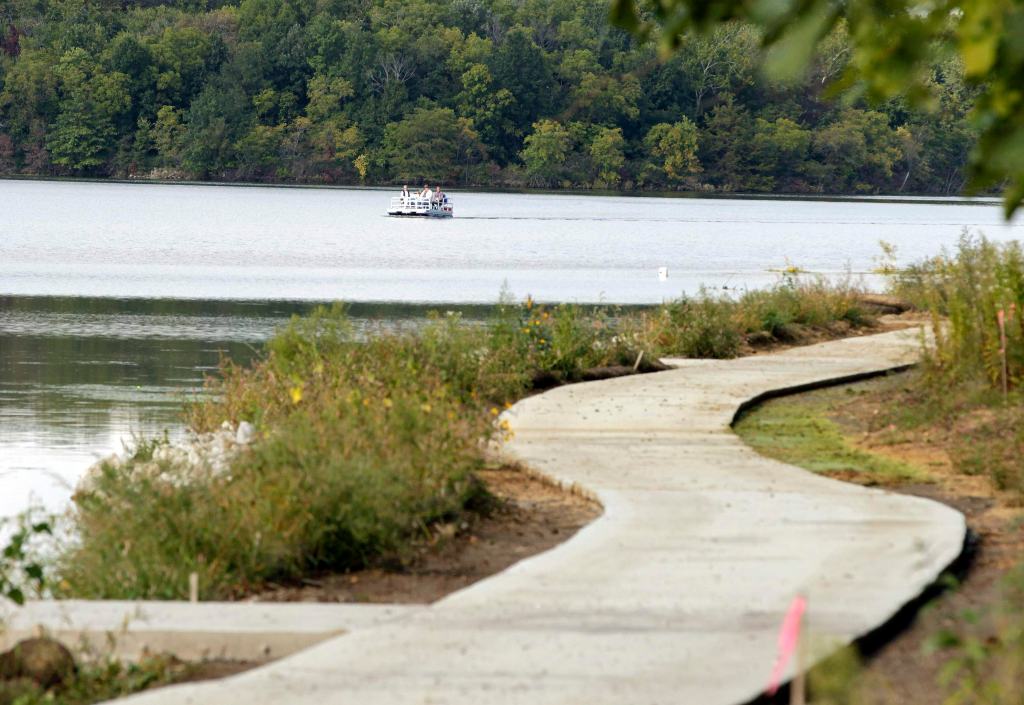
Last year, Investigative Midwest reported that nearly eight out of 10 river segments in Iowa have remained continuously impaired for at least a decade, according to an analysis of state reports. During the same period, 43% of lake segments experienced similar long-term impairment.
In fact, 65 river segments (15%) and six lake segments (11%) have fallen short of a key water quality standard for a specific use and impairment for at least 20 years.
Taken together, the data suggest that while some Iowa waters show signs of improvement, lasting recovery remains elusive, and that for many rivers and lakes, coming off the impaired list is not the end of the story.
State monitoring captures only part of what is happening in Iowa’s waterways.
The Iowa DNR assesses slightly more than half of the state’s designated water bodies. In 2024, 27% of these segments were classified as healthy waters, while just over half were categorized as impaired. Meanwhile, slightly more than one-fifth require further investigation, as they are identified as “potentially impaired.”
Heather Wilson, the Midwest Save Our Streams coordinator at the Izaak Walton League of America, a nonprofit focused on the conservation and sustainable use of natural resources, said Iowa’s water pollution crisis is not new, but that last year feels different.
She said the issue has drawn an unusual level of public engagement.
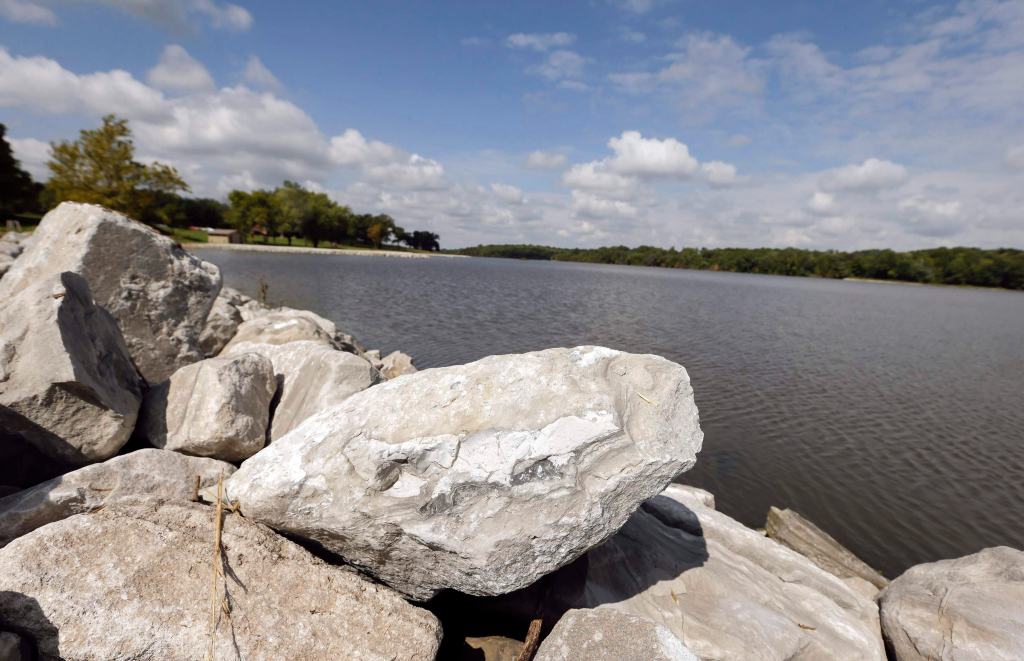
“More than any year [2025], citizens and people who are part of these grassroots organizations should feel more empowered than ever,” Wilson said. “More and more people are becoming engaged.”
Wilson pointed to a surge in public participation following a series of high-profile events, including the lawn-watering ban in central Iowa, the release of the Central Iowa Source Water Research Assessment, and the fish kills in the Nishnabotna River in southwestern Iowa. Through the league’s Nitrate Watch program, she said, the number of volunteers requesting test kits and reporting data has increased significantly.
“What that represents is people who are becoming more informed,” she said. “They’re learning about their local water quality and the impacts that that might have on their health.”
Lawmaker changes strategy in pushing for new regulations to improve Iowa lakes and rivers
Despite years of analysis and repeated findings, Schmidt said, many of the policy debates around water quality have gone unresolved.
“The legislature has not been interested in doing more, at least the legislative leadership, or the majority of the legislature, has not taken action,” Schmidt said.
Schmidt said the state has long known what would reduce nutrient pollution. Iowa’s Nutrient Reduction Strategy, adopted in 2013, outlined a path forward, but progress has been limited and legislative action has not followed.
The strategy aims to cut annual nitrogen and phosphorus losses by 45%. For agriculture, which is considered a nonpoint source of pollution, the strategy relies on the voluntary adoption of conservation practices intended to reduce the amount of nutrients that leave farm fields into nearby waterways. For point sources, including certain municipalities and industrial facilities, the strategy calls for evaluations of existing nutrient controls and, where feasible, upgrades to treatment capacity.
“We identified what we should do to reduce nutrients in 2013,” Schmidt said. “We are not making great progress, so we need to be doing more.”
That lack of movement has been visible in recent legislative sessions. Last February, Sen. Art Staed, a Democrat from Cedar Rapids, again introduced the Clean Water for Iowa Act, a bill he had previously proposed that would require large animal feeding operations to obtain water pollution permits and conduct effluent monitoring. As in prior years, the proposals did not advance.
For 2026, Staed said he is trying a different strategy after repeated legislative setbacks. Instead of reintroducing a single water-quality bill, he said he is breaking the proposal into at least a dozen narrower measures, focused on better monitoring of the water-quality system, stricter enforcement, giving the Department of Natural Resources more authority and improved field practices, including buffers between row-crop farmland and waterways.
Staed said the bills are still being drafted and that the volume of legislation this year has slowed the process, but expects most to be ready to file next week. The goal, he said, is to move individual provisions that could attract bipartisan support, as broader reforms have continued to stall.

“It is my fundamental belief that all Iowans deserve access to clean water. If there’s one bit of silver lining to come from our state’s current predicament, it’s that water quality is now front of mind for far more Iowans than in recent memory,” he said.
“The question now to lawmakers in 2026 is whether or not we can meet the moment.”
Concerns about water quality have increasingly intersected with broader public-health anxieties in Iowa. The state has the second-highest age-adjusted rate of new cancers diagnosed and is one of only two states with a rising age-adjusted rate of new cancers. While advances in treatment have increased the number of cancer survivors, researchers and physicians have warned that the trend also brings rising costs and renewed urgency to better understand potential environmental risk factors.
Those concerns gained momentum in 2025 among community groups, researchers, advocates and lawmakers, as questions mounted about how pollution could affect long-term health outcomes. This month, at the opening meeting of the Iowa Senate Natural Resources and Environment Committee, water quality dominated lawmakers’ remarks.
Staed, a member of the committee, said the heightened attention reflects growing political awareness but no meaningful change. “They’ve done a lot,” he said, referring to state leaders’ water-quality initiatives. “But it’s not enough to change the trajectory of nitrates in the water, the quality of water, and of course, rare cancer rates, and so on, that might be part of it.”
Looking ahead to the 2026 legislative session, which began Jan. 12, advocacy groups including the IEC have outlined a short list of priorities they say could shape the debate over water-quality policy.
At the top of the list is restoring funding for Iowa’s water monitoring network, the Iowa Water Quality Information System. The network, led by the University of Iowa with support from federal agencies, uses real-time sensors to track nitrates, phosphorus and other pollutants at about 60 sites statewide.
State funding for the system ended in 2023, forcing the network to rely on temporary private and local support. Sensor coverage has since declined, and university officials have warned the system could be shut down by mid-2026 without new funding.
The council is urging lawmakers to restore funding for the Iowa water monitoring network. About $600,000 a year is needed to support the system. The original appropriation was $500,000, which would not be sufficient to fully reinstate the network’s previous capacity of 70 sensors; the IEC cited inflation as the reason the higher annual amount is now required.
Kerri Johannsen, senior director of policy and programs at the IEC, said restoring funding for water monitoring network is the group’s top priority this year.
“It’s common sense,” Johannsen said. “[It’s] essential to even have a benchmark ... know where we’re going and if what we're doing is working.”
Johannsen said the council is also pushing for expanded monitoring tied to pollution sources, including closer oversight of large animal feeding operations to detect whether waste is leaking into groundwater. Without consistent monitoring, she said, it is difficult to identify problems early or stop pollution where it is occurring.
Another priority is protecting Iowa’s waterways from coal-plant pollution, including proposals to restrict or prohibit coal-ash discharges into state waters.
Staed said public pressure on water quality issues is unlikely to fade.
“This issue isn’t going away,” he said. “Our farmers want to be good stewards of the land, and their voluntary efforts have helped, but the state needs to do more. More and more Iowans are speaking up on this issue and I’m hopeful that their voices can finally lead to a shift at the Capitol; that we can finally begin to address the problem and bring clean water to Iowans in every corner of the state.”
This article first appeared on Investigate Midwest and is republished here under a Creative Commons Attribution-NoDerivatives 4.0 International License.