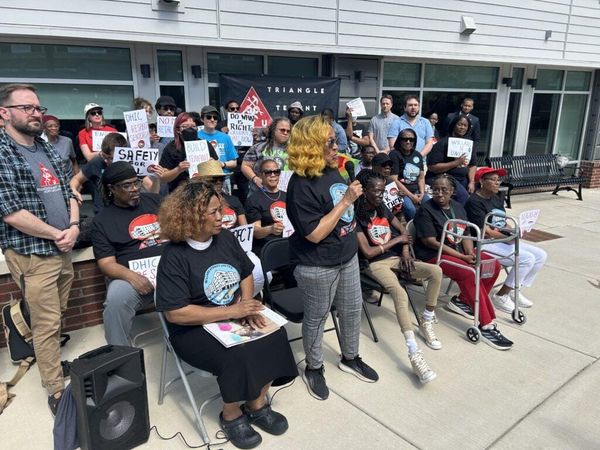
Labor shortage expected for construction season after immigration enforcement in Minnesota
ECU Health’s plan to reopen hospital offers hope to an eastern NC county; Arizona universities quietly altered DEI offerings after the current U.S. president threatened funding cuts; After four patients died, Idaho governor approves restoring cut Medicaid mental health programs.

It's Friday, April 10, 2026 and in this morning's issue we're covering: Labor shortage expected for spring, summer construction season after immigration enforcement, ECU Health’s plan to reopen hospital offers hope to Martin County, Schumer Thanks Mamdani as Deliverista Hub Finally Opens, Virginia Republicans Want Tax Relief to Ease Gas Costs. There’s Also Electric Vehicles, She fled persecution in South America and was granted humanitarian protection. Now the government wants to deport her to Congo, After four patients died, Idaho governor approves restoring cut Medicaid mental health programs, Arizona universities quietly altered DEI offerings after the current U.S. president threatened funding cuts.
Media outlets and others featured: Sahan Journal, North Carolina Health News, THE CITY, Inside Climate News, Verite News, Idaho Capital Sun, Arizona Center for Investigative Reporting.
Bolts has a guide to 40 state and local elections to watch during April 2026:
 Daniel Nichanian
Labor shortage expected for spring, summer construction season after immigration enforcement
By Katelyn Vue (Sahan Journal) Published: March 23, 2026
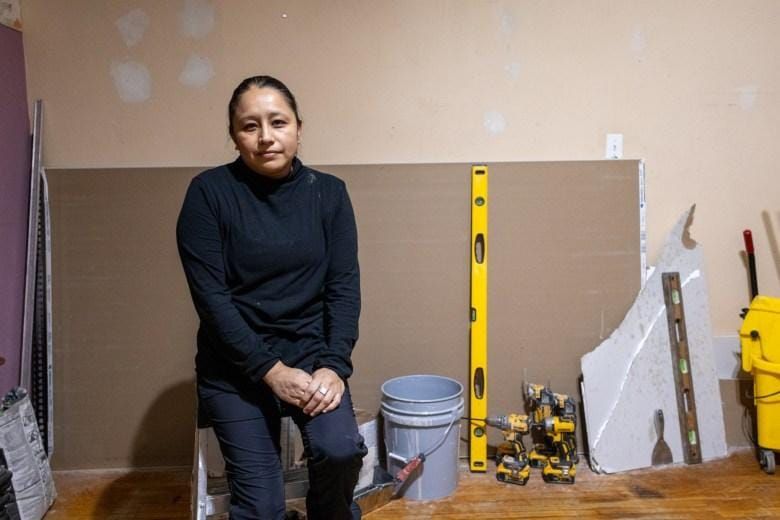
Esmeralda Rosas’ family has been struggling financially the last three months after her supervisor paused her work on a roofing project when federal immigration agents were spotted at the construction site. She and her husband sold their work truck to make ends meet, and she hasn’t returned to work since mid-December.
“Ever since ICE has been here, we get sick easier, we have less confidence,” said Rosas, who doesn’t know when she’ll go back to work. “It just really affected the entire family.”
Many builders were afraid to go to work during Operation Metro Surge as federal agents targeted construction sites, delaying projects across the Twin Cities, according to contractors and labor union representatives. While winter is usually a slow season for construction, some contractors and union representatives say they’re worried immigration arrests and subsequent fear among workers will cause a labor shortage and delays on projects this spring and summer.
“I do feel that immigrants and people of color are a backbone to the strength of the construction industry, and they have very important positions as laborers and professionals – union or not – in how the Twin Cities are being built, so there are absolutely ripple effects,” said Cathryn Camacho, president of Camacho Contractors in Minneapolis.
There are 12,000 immigrants in construction in Minnesota, making up 6% of all workers in that industry, according to the Minnesota Budget Project, a research and advocacy organization. The project does not have a breakdown of immigration status.
Some construction projects this winter were delayed a few days to a few months because of immigration enforcement activity, according to labor union representatives and contractors.
Richard Knapp, a general contractor and co-owner of Tusk Builders in Minneapolis, said he knows three construction workers who were arrested and deported during Operation Metro Surge. Federal agents also detained one of his friends who works in construction, and held him in custody for about two months before releasing him.
“I wish it didn’t happen at all,” he said, adding that he wants the federal government to look into immigration reform that would allow more legal pathways for people to work and live in the country.
Knapp said his friend who was detained had a specialized skill that was difficult to replace, creating a two-month delay on a construction project. Knapp plans to work on six to 10 construction projects this spring and summer. As long as federal immigration enforcement stays calm, he expects to have enough builders to complete the projects.
While construction labor is expected to decrease dramatically this year, permit data in the greater 13-county region collected by Housing First Minnesota show that homebuilding activity in the first two months of this year is broadly in line with historical trends. At least 870 new residential construction permits were issued this January and February in over 50 cities in the area that voluntarily reported to the trade association.
In Minneapolis, however, only nine new residential construction permits have been filed in January and February. That’s 40% lower than the average number of permits from the same time period in the previous three years. St. Paul’s permit database shows that 18 new construction permits were filed as of March 17 this year, which is static compared to the same time period in 2025.
Grecia Palomar, a drywall and safety instructor, said she has been answering calls from families reporting that their relatives went missing after working on construction sites. Palomar is the president of the Twin Cities chapter of the Labor Council for Latin American Advancement, an advocacy group for Latino workers and union members.
She worked alongside the Minneapolis Regional Labor Federation to support families with rent relief, food and legal fees.
“Not having the workers there… it’s a financial burden for some contractors,” Palomar said.
A higher percentage of Latino workers are in construction trades such as drywall, roofing and painting, which were hit the hardest during Operation Metro Surge, she added.
Labor union representatives, contractors and Palomar said they received calls from builders reporting federal agents following them home or questioning them on construction sites.
“I’ve heard of probably a dozen times our members are either afraid to drive and been questioned,” said Jeff Heimerl, business manager of International Brotherhood of Electrical Workers Local Union 292.
About 400 students signed up this past winter for an apprenticeship program in Ham Lake to learn about roofing and waterproofing buildings, but more than 100 of them dropped out because they were afraid to leave their homes, said Tyler Krogen, a representative for the Roofers & Waterproofers Local Union 96.
“I think the membership feels frightened,” he said. “I know everyone’s talking about it, and there’s nothing good coming out of those conversations other than people are talking about it and trying to get through this time.”
He told students that their apprenticeship agreements would not be cancelled if they were afraid to attend class, and instead offered to enroll them in the upcoming training later in the year.
“My concern is that the work that’s out there — are we going to have the man and woman power to do them?’” Krogen said.
He knows of three union members who were detained by federal agents.
There have been at least nine reported sightings since December of federal immigration agents at construction sites, according to Centro de Trabajadores Unidos en la Lucha (CTUL), a Minneapolis nonprofit advocating for fair wages and safe working conditions for immigrants and people of color. Agents were spotted on construction sites in Shakopee, Chanhassen, Plymouth, Monticello, Wayzata and Cottage Grove, among other locations.
“There’s been, for sure, way more instances that have gone unreported,” said Patricio Cambias, CTUL’s lead construction campaign organizer.
Between late-December and early January, ICE raided and harassed construction workers three times at a single-family home in Shakopee developed by D.R. Horton, the largest homebuilder in the country by volume. CTUL organized a protest and visited D.R. Horton’s office in Lakeville, demanding that the company keep federal agents off its construction sites. D.R. Horton’s office did not respond to their demand or Sahan’s request for comment.
In another incident from mid-December, federal agents tried to arrest two construction workers, Edgar Chicaiza Dutan and Marco Chicaiza Dutan, while they worked on the roof of a new home in Chanhassen. More than 80 activists and community members showed up to confront the ICE officers. Both men were perched on the roof for approximately four hours in subzero windchills.
Edgar eventually descended from the roof and ICE officers took him to the hospital before detaining him. He later sued to be released from federal custody; his attorney declined to comment about his whereabouts. Marco was transported to the hospital after ICE left; his current location is unclear.
The Chanhassen case was one of the first signs of federal immigration enforcement affecting the construction industry, Rosas said.
“It was sad and painful, and more than anything, that’s when I started realizing that we would need to hide because we were being treated as criminals, even though we’re not criminals,” she said. “I feel like our lives are not going to be the same, and in a lot of ways, we’re starting from zero. The future feels daunting.”
Advocates and contractors say they’ve learned how to protect vulnerable workers at job sites: fences are being erected to tighten up security, houses under construction are being locked up and signs are being posted to let federal agents know they aren’t welcome.
“I think this really brought us together,” Palomar said, “and it showed us that we can’t always get too comfortable.”
Data reporter Cynthia Tu contributed to this report.
CORRECTION: The story has been updated with the correct job title for Grecia Palomar.
The post Labor shortage expected for spring, summer construction season after immigration enforcement appeared first on Sahan Journal.
This story is being shared with permission by the Sahan Journal, a local newsroom in St. Paul, MN. To learn more, please visit https://sahanjournal.com/.
ECU Health’s plan to reopen hospital offers hope to Martin County
by Jaymie Baxley, North Carolina Health News
April 6, 2026
By Jaymie Baxley
Dexter “Drew” Batts, the government manager for Martin County in eastern North Carolina, often thinks about the night his close childhood friend suffered a heart attack in 2025.
The friend, a 39-year-old woman who was a member of Batts’ high school graduating class, lived just nine miles away from Martin General Hospital. Generations of local families in this rural, economically distressed community had relied on the hospital for emergency care since its founding in 1950.
But Martin General wasn’t an option that evening. The 43-bed facility had closed in August 2023. Owner Quorum Health blamed the shutdown on “financial challenges related to declining population and utilization trends.”
Batts’ friend was instead transported to an emergency department about a half-hour northeast in neighboring Bertie County. When the doctors there couldn’t help her, she was taken about 40 miles southwest to ECU Health Medical Center in Pitt County.
She died there after spending three days on life support.
“Who’s to say whether that 30- to 40-minute transport, as opposed to a nine-minute transport, would have made a world of difference,” Batts said during a recent event organized by the NC Rural Center, an organization that advocates for rural communities across the state. “We don’t know, but we would’ve liked to have found out.”
Such grim “what ifs” have become increasingly common among residents of Martin County, which will soon mark its third full year without a local hospital.
However, county officials say they’re optimistic about a long-gestating plan to resurrect the shuttered facility as North Carolina’s first Rural Emergency Hospital.
Reviving Martin General
The Rural Emergency Hospital, or REH, designation was created by Congress through the Consolidated Appropriations Act of 2021 as a lifeline for small, financially struggling facilities in rural areas.
Hospitals that convert to REH status are required to provide 24/7 emergency care and outpatient services, but they are prohibited from offering inpatient services and must have agreements in place with area trauma centers to accept patients once they’ve stabilized. In exchange, they receive a 5 percent boost to Medicare payments for covered outpatient services, plus monthly payments of about $285,625 from the federal government.
The program launched in January 2023, and more than 40 facilities across the country have converted. Unlike Martin General, however, all of those hospitals were still operating when they made the switch.
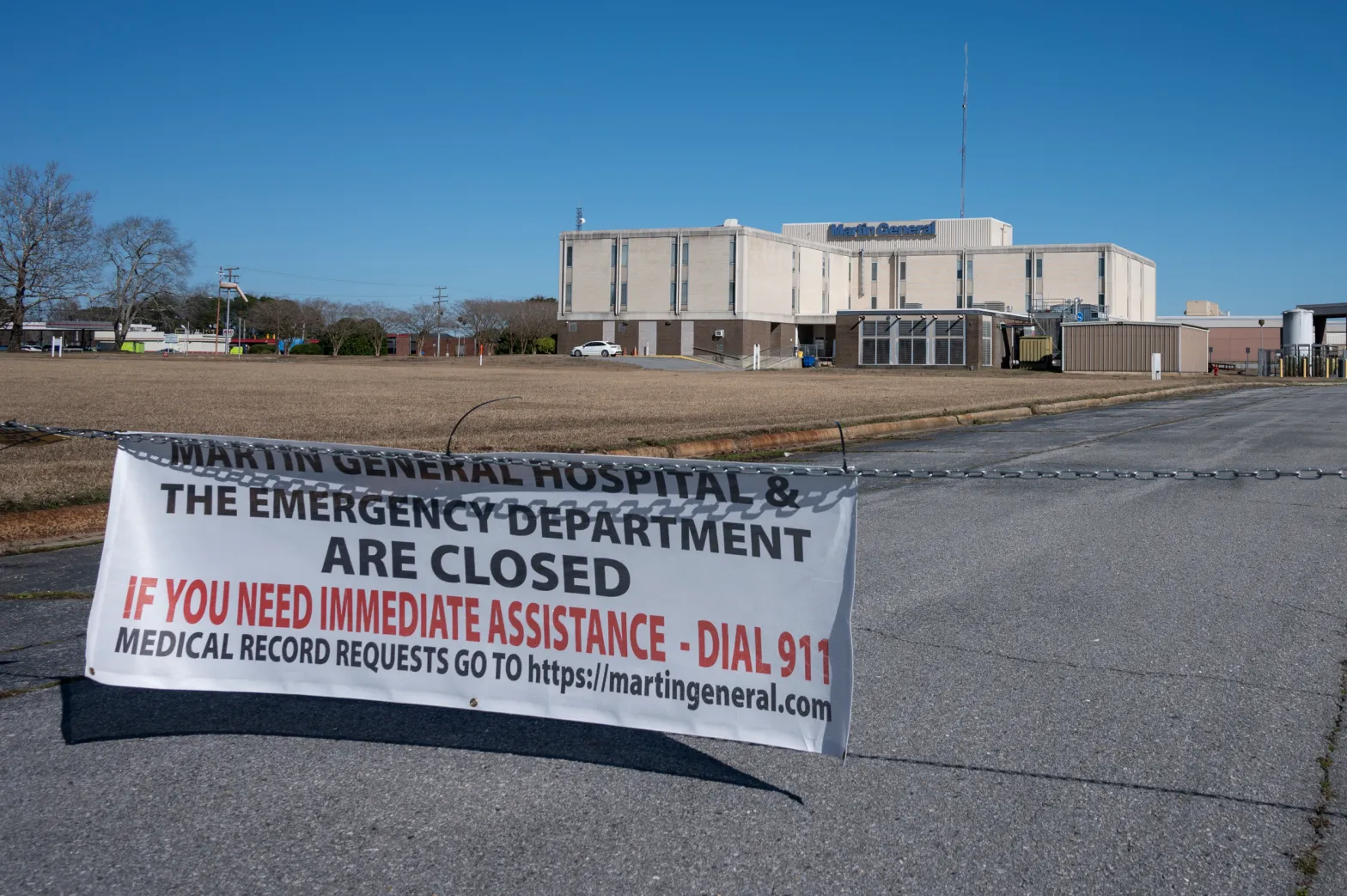
Martin General, which closed before the program was fully available to North Carolina hospitals (the state budget authorizing participation wasn’t signed until months after Quorum shut the doors), represents something different: the first attempt anywhere in the nation to reopen a completely shuttered hospital under the REH model.
County officials spent months working through regulatory questions about whether a closed hospital could qualify, and in early 2024, the Centers for Medicare and Medicaid Services confirmed that Martin General could indeed reopen as a Rural Emergency Hospital. By early 2025, the county had sent out requests for proposals from potential operators and was working to update and repair the aging building to meet CMS’ requirements.
Then a solution appeared in the county’s back yard.
Waiting for funding
In May 2025, ECU Health, a state-affiliated hospital system based in nearby Greenville, announced a plan to take over and convert Martin General.
The system's proposal carries a steep price tag: ECU Health, which is connected to East Carolina University’s Brody School of Medicine, is asking state lawmakers to appropriate $220 million toward the project.
Roughly $70 million of that would go toward building the site for the Rural Emergency Hospital on the campus of Martin General, with the remainder financing a new inpatient bed tower at ECU Beaufort Hospital in neighboring Beaufort County. The expansion to that facility is needed to absorb patients from Martin County who require inpatient care.
Brian Floyd, chief operating officer for ECU Health, gave a brief overview of the plan during the NC Rural Center’s annual summit in Raleigh on March 26.
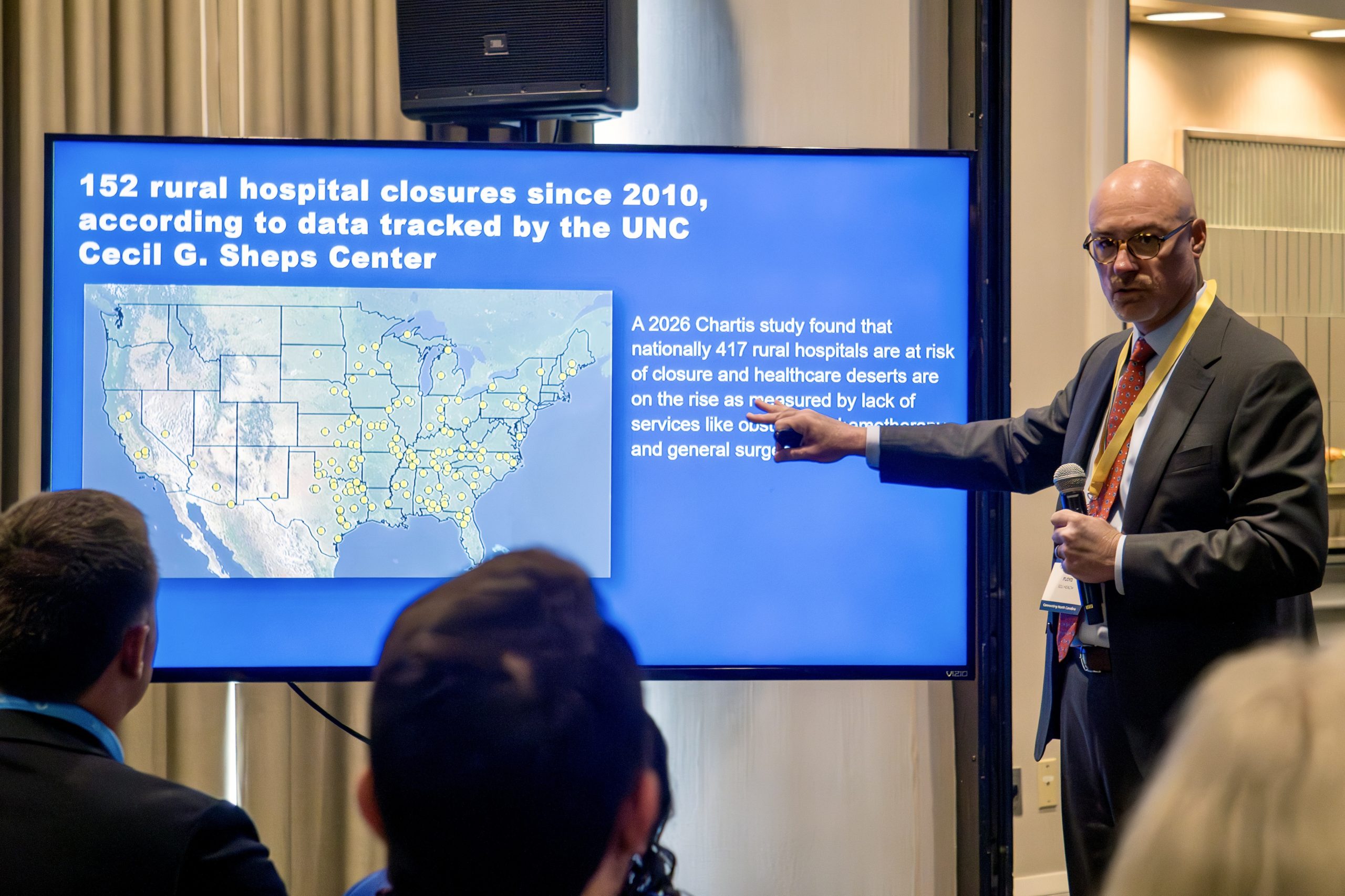
Addressing an audience of about 100 people, Floyd said Martin General’s history illustrated a pattern that has played out repeatedly in rural communities: A hospital starts under county ownership, gets acquired by a private company and then gets sold off again before eventually going under.
“Private companies get in there and realize they can’t make it work,” he said. “They flip it, and then eventually it bankrupts. That’s the story of rural closure if you look at the way that typically works in rural markets. We’re not just trying to recreate that.”
Floyd acknowledged that ECU Health’s vision might take years to fully implement. It would also require investments beyond the physical buildings.
“I know we’re going to raise other operating cost structures to deal with this,” he said. “That’s why we’ve asked the state to help with the capital to put this in place.”
That funding request has stalled amid a prolonged standoff between the state Senate and House of Representatives over the state budget, which is now nine months late.
North Carolina is the only state in the nation that has yet to adopt a spending plan, and lawmakers are not scheduled to reconvene until April 21.
Study tests model’s promise
As ECU Health’s plan takes shape, a study published last month in the Annals of Emergency Medicine offers the first systematic — albeit somewhat inconclusive — look at whether the Rural Emergency Hospital program is working as intended.
Conducted by researchers at UNC Chapel Hill, the study used financial data to examine hospitals that closed, that converted to REH status or that remained open without converting.
It found that hospitals that converted to the REH designation and hospitals that ultimately closed had similarly poor financial health before 2023, including low profit margins and high financial distress risk. Both types of hospitals ended up financially worse off than hospitals that stayed open without converting.
Researchers were careful to flag the limits of their analysis. The REH program is in its early stages and the sample of converting hospitals remains small.
“Rural Emergency Hospitals could be a viable option for financially struggling hospitals in rural communities to maintain local delivery of emergency care services while lowering closure risk,” the authors wrote, adding that their findings “should be viewed as exploratory.”
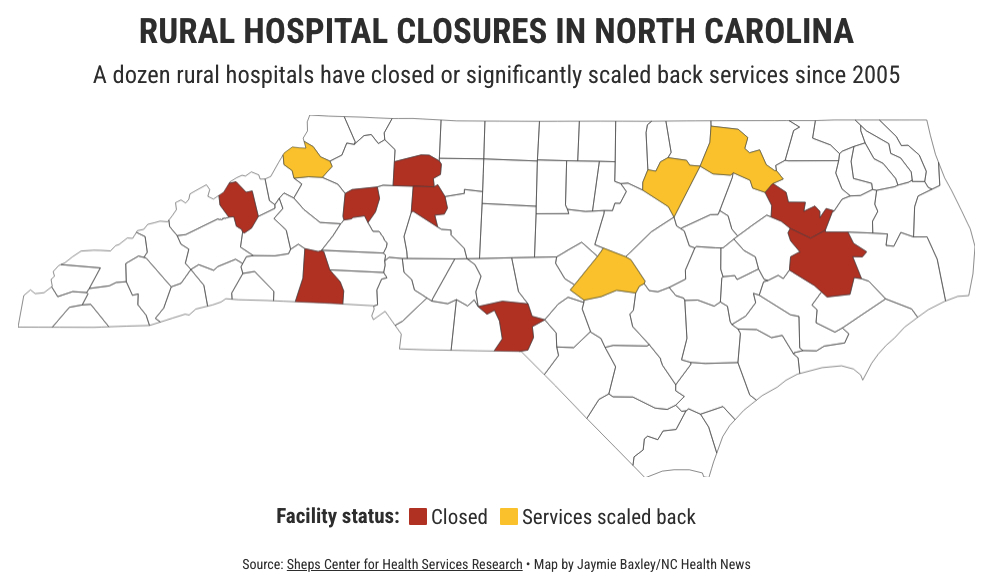
At least a dozen rural hospitals in North Carolina have closed or significantly scaled back services since 2005, according to data from the Sheps Center for Health Services Research at UNC Chapel Hill. Martin General is the most recent closure recorded by the center.
Cost of closure
Batts, who became manager of Martin County in May 2025, said the closure of Martin General had a “halo effect” on the county’s already struggling economy.
He noted that Martin, which has a population of about 21,500, is categorized by the N.C. Department of Commerce as a “Tier 1” county — a designation reserved for the state’s most economically distressed areas. About 20 percent of residents live in poverty, significantly higher than the statewide average of 13.6 percent.
More than 8,400 residents, or about 39 percent of the county’s population, rely on Medicaid. Nearly 4,900 residents, or 22 percent, are enrolled in SNAP.
“Losing that hospital had a big impact from a health standpoint, but it was a huge impact from an economic development standpoint,” Batts said during the summit, adding that the loss of “labor income alone” dealt a $12 million blow to the community, with a “total economic activity loss” of $33.1 million.
That’s in line with other research showing that rural counties lose jobs and revenue when a local hospital closes, causing local families to lose income across the board and driving population loss.

Martin General’s closure was personal for Batts. His wife, a nursing manager at the facility, was among the employees displaced when the hospital shuttered. She eventually landed a job at ECU Health Chowan Hospital in Edenton — a 90-minute drive from the couple’s home in Martin County.
The closure also reverberated through the county budget. With local ambulances forced to make longer runs to neighboring counties, Martin County’s annual contribution to emergency medical services ballooned almost overnight from $550,000 to $1.4 million.
“Our budget is so limited that we can barely scrape by in a normal year,” Batts said. “It has so many downstream effects.”
Before it closed, Martin General recorded more than 10,000 emergency department visits a year. It also provided annual access to 100,000 diagnostic and outpatient procedures.
Residents now travel across county lines to receive those crucial services, which adds strain to surrounding communities’ health care infrastructure.
For Floyd and others who are pushing to bring Martin General back, the numbers underscore what’s ultimately at stake.
“These issues are not just economic,” Floyd said. “They are real, and these people matter. Their lives matter.”
This article first appeared on North Carolina Health News and is republished here under a Creative Commons Attribution-NoDerivatives 4.0 International License.

Schumer Thanks Mamdani as Deliverista Hub Finally Opens
The long-awaited rest and e-bike charging base at City Hall Park opened its doors on Tuesday, nearly five years after officials first promised to build it.
by Claudia Irizarry Aponte April 7, 2026

The idea came to Sergio Gustavo Ajche in the darkest days of the pandemic, when food delivery was in high demand and rest stops for delivery workers were scarce. Ajche, who lives in Bensonhurst, Brooklyn, was working in Lower Manhattan when he spotted an abandoned newsstand just outside City Hall.
“I saw this one and thought, it would be great to just get a cup of coffee,” he told THE CITY in 2022. “Then we started to talk about it some more amongst ourselves, and the idea for charging ports emerged, and how powerful it would be for us to have a presence all over the city. The idea took off from there.”
On Tuesday, Ajche’s idea finally came to life. Nearly five years after U.S. Sen. Chuck Schumer (D-NY) pledged to use funds from a $1 trillion infrastructure bill to build rest stops for delivery workers, the city inaugurated its first Deliverista Hub near City Hall Park. One of the exterior charging ports is named after Ajche.

“We hope this is just the beginning, and one day soon we can have many more all across the city,” Ajche said on Tuesday, standing outside of the repurposed former newsstand. “I’m proud that, as workers, when we stand together and we fight for things and we’re creative and persistent, we can achieve wonderful things.”
The hub, on Broadway near Murray Street, was first announced by Schumer and then-Mayor Eric Adams in October 2022. Workers will be able to charge their e-bikes and the phones they use to receive and track orders. They will also be able to repair their bikes there and take shelter from the heat or cold.
The hub is staffed by a representative from Workers Justice Project, the parent organization behind delivery worker group Los Deliveristas Unidos, and will help delivery workers learn about their rights on the job and how to submit complaints.

Ajche, members of Los Deliveristas Unidos, Schumer, and other city officials cut the ribbon on the highly-anticipated site, which city officials expect to be fully operational within days.
“I want to say to the great Deliveristas: You asked, and today, we are the ones delivering,” Schumer said.
Overcoming 'inertia'
The hub includes two exterior charging cabinets, each with 19 charging cubbies, with 24-hour public access. E-bike riders can drop off their battery and track its progress via a mobile app, which will also unlock the cubby once the battery is ready for pickup. The converted newsstand was designed by Fantástica, a Brooklyn-based urban design firm.
After securing $1 million in federal funds from Schumer’s office, advocates had hoped to move quickly to build the hub, which sits on Parks Department land. As months turned to years, delivery workers — and the Senate minority leader — became frustrated with the slow pace of movement from the Adams administration. Mayor Zohran Mamdani’s City Hall moved quickly to build the space: the actual demo and construction took about two months.
“For years my office pushed and prodded the previous administration, overcoming bureaucratic hurdles, overcoming inertia. People didn’t understand,” said Schumer. “I want to congratulate the new administration, Mayor Mamdani. They moved quickly to expedite the process.”

Initially, the Workers Justice Project had identified two additional newsstands to repurpose as hubs on the Upper West Side and on Fordham Road in The Bronx; plans for the latter fell apart because the newsstand wasn’t actually vacant.
In 2024, Manhattan Community Board 1 rejected the City Hall plan over concerns about crowds and the hub’s modern design, which they said was out of step with the neighborhood. The vote was an advisory move that could not legally stop the project.
Parks Commissioner Tricia Shimamura declined to comment on the status of the Upper West Side newsstand or to identify other locations the city is considering for additional hubs.
The hubs faced sharp pushback from residents and lawmakers after a spate of deadly fires across the city caused by malfunctioning lithium-ion e-bike batteries.
But workers and advocates said the fire safety issues underscored why the hubs are necessary — after all, workers have said, they don’t want to bring the potential hazards to their own homes, either.
In tandem with its push for safe, public charging ports, Workers Justice Project has in recent years stepped up its efforts to educate members on proper e-bike and battery maintenance, including by pushing them to ensure their equipment is manufactured to federal standards, and hosting forums with the Fire Department and other city agencies.

Meanwhile, the city Department of Transportation has also stepped in, hosting events where workers can trade-in illegal e-bikes and mopeds for safer equipment.
The charging and rest hubs are a signature project of Los Deliveristas Unidos, which formed during the 2020 pandemic as a WhatsApp group. Scores of undocumented workers — out of a job and locked out of public assistance — turned to delivery work to make ends meet in one of the few industries not only hiring but thriving as the rest of the world stayed home.
In those early days, workers earned far below the minimum wage, accused the companies of withholding tips, and shared stories of restaurants refusing entry to workers looking to relieve themselves or wash up as they picked up orders.
Other issues, such as on-the-job violence and street safety, still persist. But on Tuesday, workers celebrated the hub as the latest in a long string of victories, including a first-in-the-nation minimum pay rate.
Virginia Republicans Want Tax Relief to Ease Gas Costs. There’s Also Electric Vehicles.
Years of debate on electric vehicles in Virginia have slowed the transition, now under full Democratic control.
By Charles Paullin
April 3, 2026
This article originally appeared on Inside Climate News, a nonprofit, non-partisan news organization that covers climate, energy and the environment. Sign up for their newsletter here.
Republican state lawmakers want a temporary pause on Virginia’s 32 cent per gallon gas tax to help offset rising prices at the pump resulting from President Donald Trump’s ill-defined and unpopular war in Iran.
They remained cool to, and to some extent critical of, electric vehicles as a means of liberating Virginia motorists from rising gasoline prices and the broader choke point on global oil supplies, as Iran continues to shut down the Strait of Hormuz.
“We need immediate relief since oil prices have spiked due to this Strait [of Hormuz] being blocked,” said Del. Scott Wyatt (R-Mechanicsville), who appeared last week at a press call on Zoom with Del. Terry Kilgore, the state House minority leader from southwest Virginia, and other GOP colleagues.
“We’ll continue to work on the long-term need for additional infrastructure, to fund those charging stations,” Wyatt said.
As a result of the war in Iran, average gasoline prices in Virginia have now surged past $4 a gallon, according to AAA, up from $2.93 a month ago. The war in Iran began Feb. 28.
Wyatt and the other Republicans are now asking to pause the state’s gas tax for 90 days. The relief could come through separate legislation, which lawmakers could pass when they reconvene in Richmond on April 22, or in the budget bill, which could be sent from the legislature to Gov. Abigail Spanberger for signature on April 23.
If gas stations stopped levying the gasoline tax, the state would lose about $125 million a month in revenue for road maintenance and more, Republicans said, proposing that the state’s surplus could make up the difference.
But Democrats in Virginia, who now control both houses of the legislature and the governor’s office, have thus far indicated no interest in suspending the gas tax.
“Let’s be 100 percent clear about why gas prices are skyrocketing: It’s because President Trump unilaterally launched a war with no thought to the direct impact on families in Virginia and across the country,” Spanberger, who took office in January, said in a statement. “Right now, Virginians are feeling the brunt of the President’s actions at the pump and grocery store. As gas and diesel prices soar, I am working to create long-term solutions to address rising costs in energy, housing, and healthcare.”
Beyond suspending the gas tax, the affordability debate over skyrocketing pump prices centers on the transition to electric vehicles, which the Republicans have criticized as too costly and lacking in charging infrastructure. Democrats, meanwhile, have tried to speed up the transition, but have left some options awaiting funding or enabling legislation.
Virginia’s Transition
In 2021, Virginia Democrats passed a law to tie the state to California’s escalating tailpipe emission standards, which would fully ban the sale of new gasoline-powered cars in 2035. Former Republican Gov. Glenn Youngkin announced in 2024 that Virginia would no longer follow California’s rules and instead follow the federal ones for model years 2027 through 2032, which are less aggressive than California’s.
The Trump administration is moving to end California’s waiver to the Clean Air Act that allows the state to have stricter tailpipe emissions standards. The administration is also seeking to reverse the Biden-era federal tailpipe rules, which were intended to spur adoption of electric vehicles.
With those actions pending, Democrats in Virginia have as yet taken no action to challenge Youngkin’s decision to have Virginia follow the federal rules. Jay Jones, the state’s newly elected Democratic attorney general, did not respond to a request for comment. Jones is challenging the EPA’s actions to weaken the federal tailpipe rules.
At their press event, the GOP lawmakers echoed Youngkin’s earlier call to let consumers choose what kind of car they want to buy, without endorsements of tax breaks or other incentives encouraging them to go electric.
Del. Michael Webert (R-Warrenton) said the average Virginian driving a 2014 Chevy Malibu can’t afford a new Tesla. Kilgore, the House minority leader, critiqued charging times for electric cars, but added “I’m all for whatever the consumer wants to buy.”
The EV Transition
Democrats in Virginia set up an electric vehicle purchasing program in 2021, offering Virginians a $2,500 rebate. But it went unfunded in anticipation of incentives in the Biden-era Inflation Reduction Act, which Trump ended in September.
Democrats have not shared any plans to fund the state rebate program as part of ongoing budget negotiations. Neither Spanberger nor House Speaker Don Scott (D-Portsmouth) chose to address how an electric vehicle transition could help with affordability in statements issued in response to the Republicans’ gas tax suspension request.
On the Senate side, Majority Leader Scott Surovell (D-Fairfax) told Inside Climate News by text message that the transition would help prevent the pain of international conflict, without mentioning the state’s lack of funding for the rebate program.
“Transportation is the largest carbon producing segment of the American economy and the sooner we can revert to electrical vehicles the less exposed we are to foreign policy quagmires like this,” Surrovell said.
Deploying Charging Stations
As for charging stations, Virginia is moving along with its plans for charging networks developed through the National Electric Vehicle Infrastructure program. But built in America requirements will likely stifle any actual rollout of the chargers since the manufacturing industry for those components, set to take off under the Biden administration, has been halted by Trump.
On the state level, the Democratic legislature last year passed a bill to cover some costs to build rural electric vehicle charging stations, but Youngkin vetoed it. This year, with a much larger Democratic majority in the House, the bill died in the House Appropriations Committee, which killed several other bills amid budget woes that leaders blamed on the Trump administration.
Spanberger this week did sign a bill that would direct the State Corporation Commission, which regulates Virginia’s utilities, to determine what distance would be appropriate for a utility-owned charging station to be from a charger at a gas station. The bill aims to limit competition between the two. In planning documents, Dominion Energy, Virginia’s largest electricity utility, assumed last year that about 822,500 electric vehicles could be in its service territory by 2038.
Mike O’Conner, president and CEO of the Virginia Petroleum & Convenience Marketers Association, which represents gas stations, said there are over 5,700 locations in Virginia selling gas. The rates of adopting electric vehicles show how relevant those stations are.
“Stopping” the war in Iran, O’Conner said, would help ease gas prices, and putting chargers at gas stations could help ease electric vehicle drivers who have “range anxiety” over how long a battery charge may last. Kelly Blue Book, a widely respected car appraisal outlet, said fast chargers can put an electric vehicle at 80 percent capacity in about 30 minutes. The range of an electric vehicle can be anywhere from as low as 125 miles up to more than 400.
O’Conner said money the state received from a settlement with Volkswagen put chargers at strip malls, but not enough at his members’ locations.
“They weren’t put in, as other states have done, at convenience stores, travel centers, travel stops, where people could stop, recharge their phone, recharge their battery, (have) their lunch,” O’Conner said, noting that Virginia made the decision to install stand-alone chargers at smaller sites.
Alleyn Harned is the executive director of Virginia Clean Cities, a fuel-agnostic organization working to achieve net-zero carbon emissions by 2050. He said there are more than 5,300 EV charging ports at 1,800 different locations throughout Virginia.
And charging an electric vehicle is cheaper than paying for gas, Harned added. Filling up a gas car averaging 30 miles per gallon at $3.98 per gallon, less than the latest average Virginia rate, would cost about $143.28 after filling up three times in a month, compared to $58.98 to charge at home, according to Kelly Blue Book.
If the gas tax is suspended, Harned said, so should a highway use fee the hybrids and electric vehicles pay because they don’t use gas but still use roads. The fee ranges from from $6.86 for a 25-mile-per-gallon vehicle to about $132 for an electric vehicle, according to the Virginia Department of Motor Vehicles. Since its creation in 2020 through June 30, 2025, the fee has generated over $324 million in revenue.
And home chargers, Harned said, also offer opportunities to use electricity generated in Virginia instead of gasoline made in out-of-state refineries.
“This kind of price shock will happen continually until we have wider adoption of options in Virginia for fuels that we can make locally that are not instantly globally traded,” said Harned. “The legislative session had a lot of talk about electric vehicles. I think there can be some acknowledgement [that] those priorities are front and center.”
The Status of the Transition
There were about 7.8 million cars registered in Virginia in 2024, according to the latest available data from the U.S. Department of Energy. As of June 30, 2025, The Virginia Department of Motor Vehicles said 123,672 registrations were electric and 265,680 were plug-in hybrids and traditional hybrids.
Kelly Blue Book reported in September that the lowest price for a new electric vehicle in August was $29,280. Amid the state and policy changes on purchasing new electric vehicles, sales in Virginia, according to information from the Virginia Automobile Dealers Association, fell from about 27,000 in 2023 to about 25,300 last year.
The sale of plug-in hybrid electric vehicles, which can drive about 25-40 miles on a single charge, rose from about 4,500 to 6,217 over the same time period. Sales of traditional hybrids, which use a combination of a gas engine and a battery to increase a car’s miles per gallon, went from about 62,700 to 86,543.
Across all gas, electric and hybrid vehicles, sales in Virginia are slowing, based on sales that were about 5.4 percent lower in January than a year ago. Specifically, sales of Tesla, and electric vehicles and hybrids, over the same time period dropped by about 2 percent and 8 percent, respectively. Gas car sales grew from about 74 percent of sales to 82 percent of sales.
She fled persecution in South America and was granted humanitarian protection. Now the government wants to deport her to Congo.
by Robert Stewart and Bobbi-Jeanne Misick, Verite News New Orleans
April 2, 2026
In June 2025, an immigration judge ordered that the U.S. government could not deport a 23-year-old South American woman — who had been detained for months in a North Louisiana immigration lockup — back to her home country, where she said she had been violently attacked because of her queer identity.
When the order came down, the woman’s older sister, Yackeline, thought her younger sibling would finally be safe. (The woman asked that her name and home country not be published out of fear of retaliation for speaking to the media. Yackeline, who shares her sister’s last name, asked that only her first name be published.)
“When the judge said that she would be giving her the opportunity to start over from zero, that nobody was going to harm her, we thought at that point that she would be freed,” Yackeline said.
By that time, the woman had spent about five months inside Richwood Correctional Center in Monroe, a former jail that now serves as a federal immigration detention center. LaSalle Corrections, a private prison company that operates correctional centers and immigration detention centers across the south and has faced repeated allegations of neglect and abuses from civil rights groups, runs the Richwood Correctional Center. Lasalle did not respond to a request for comment.
At Richwood, according to Yackeline, the woman had undergone physical and psychological decline, due to alleged medical neglect and anxiety and depression brought on from prolonged detention.
Nearly a year after the judge’s ruling came down, the woman has yet to be released. Unable to deport her to her home country, the federal government has kept her locked up as it seeks to send her to the Democratic Republic of Congo, a country where she has never been and has a record of political instability, massive internal displacement, health risks and attacks against members of the LGBTQIA2S+ community.
“[Congo] is a place where my sister knowns no one, does not speak the language and would face a high probability of suffering, persecution and torture again,” Yackeline said.
The 23-year-old woman has received protection from removal to her country of origin under the United Nations Convention Against Torture, an international human rights treaty that prohibits parties to the convention, including the United States, from sending people back to countries where they could be in danger of being subjected to torture.

But the Trump administration has attempted to get around such withholding orders by finding third countries to accept immigrants it seeks to deport.
That approach could have serious consequences for people, such as Yackeline’s sister, languishing in immigration detention centers.
According to immigration and civil rights attorneys interviewed by Verite News, this practice often results in immigrants facing lengthy detentions and expensive legal battles while the government tries to identify a willing third-party country.
Nora Ahmed, legal director at the ACLU of Louisiana, said in cases in which immigrants challenge the lawfulness of their lengthy detentions, the federal government, "has now been somewhat successfully arguing that 'since we are engaged in third country removals, we really need more time’ " as a tactic to keep someone detained while they continue to search for third-party countries to receive them.
In some cases, immigrants deported to third-party countries, including those with humanitarian protections, have eventually been sent to their home countries anyway.
In November, 2025, the Trump administration deported 58-year-old Sierra Leonean woman Rabbiatu Kuyateh — who had been living in the Maryland suburbs for 30 years — to Ghana. Despite a U.S. judge having granted Kuyateh a withholding from removal for fear of torture, she was detained in Ghana then returned to Sierra Leone, according to a report by Reuters.
‘I really don't know what I would do’
Yackeline’s sister fled South America after she participated in an LGBTQIA2S+ march against discrimination in 2024. According to a court filing in her immigration case, police officers who had been dispatched to the march to maintain order instead attacked the protesters, deploying tear gas and throwing objects at them.
“I decided to leave the march, but as I was leaving, I was attacked with stones that hit my jaw, causing bleeding and a bruise,” the woman wrote in a declaration last year.
After she filed a police report about the incident, the declaration said, she was subjected to repeated harassment and death threats. In late 2024, she wrote, she was briefly kidnapped and sexually assaulted, after which her assailant told her she would continue to face such treatment “if I didn’t leave the LGBT community.” She fled the country the following month, headed for the U.S.
The woman arrived at the U.S. southern border in January 2025 near Calexico, California, where U.S. Border Patrol agents took her into federal custody, placing her in expedited removal proceedings — a process that allows federal immigration authorities to deport recently arrived migrants without a hearing before a judge. Immigrants placed into expedited removal can assert their right to seek asylum in the U.S. if they fear returning to their home countries, which the South American woman did in April 2025.
In June 2025, immigration judge Jennifer Piateski denied the asylum claim, but at the same time, Piateski granted her protection from being returned home under the Convention Against Torture.
She remained at Richwood, however, and last month, U.S. Immigration and Customs Enforcement issued the woman a notice informing her that the government intended to deport her to Congo.
The Democratic Republic of Congo is a country that has witnessed a lot of upheaval in the past decade. In 2024, over 7 million people were considered displaced due to the threat of violence. As war waged in parts of the country the United Nations issued a report detailing possible war crimes. A few months ago the World Health Organization announced the end of a months-long ebola outbreak, and LGBTQ+ people have been targets of harassment and attacks.

“If that were to come to pass to my sister, I really don't know what I would do,” Yackeline said.
Unlike asylum, protection under the Convention Against Torture does not confer legal status, and the U.S. has long had the option to deport people with CAT to third countries. But historically, someone like Yackeline’s sister — who was granted CAT and does not have a criminal record — might have been released under an order of supervision, allowing her to live and work in the U.S. while checking in with ICE, explained Ahmed.
“It used to be that when someone had withholding or CAT, the United States government was not going to spend the millions of dollars that [the Trump administration has] been spending to get third countries to take individuals who have no ties to their country," Ahmed said in a phone interview last week. "The decision was made that the juice wasn't worth the squeeze."
But that has changed under the Trump administration, which has increasingly turned to third countries to take the deportees who can’t be sent back home.
The administration has spent millions of dollars on agreements with countries as near as Mexico and El Salvador and as far away as Eswatini to accept migrants that cannot be returned to their home countries, either because they have humanitarian protections or because their home countries simply refuse to accept them. One of the most high-profile examples of third country removals came in March, 2025 when President Trump sent more than 200 Venezuelan migrants accused of being gang members to a notorious maximum security prison in El Salvador until Venezuela finally agreed to accept them as part of a prisoner swap.
According to a recent report by Democratic members of the U.S. Senate Committee on Foreign Relations, as of January, the Trump administration had used at least $32 million of U.S. taxpayer funds to incentivize five third-party countries to accept roughly 300 people deported from the U.S. The report also estimated that the cost to fly people to third-party countries at more than $7 million. By that time, the administration had agreements with 25 countries that had received third-party nationals. The report said many of those countries have a track record of public corruption, human rights abuses and human trafficking.
Most recently, the administration has reportedly made third-country removal deals with Cameroon and Costa Rica.
‘It's a system of torture’
Media reports, along with civil rights groups and government watchdogs have previously alleged that living conditions at Richwood Correctional Center, which is owned and operated by private prison company LaSalle Corrections, are substandard.
A USA Today report on the food at Richwood Correctional Center described poor-quality low-cost meals and accounts from detained people describing unhygienic conditions. A 2024 report published by the ACLU highlighted a suicide of an immigrant after being allegedly held in solitary confinement. The report also contained allegations of poor food and environmental conditions, medical neglect and retaliation against detainees. And in 2023 the Department of Homeland Security’s Office of Inspector General found violations at Richwood that “compromised the health, safety, and rights of detainees, including facility areas that were not consistently clean or sanitary.”
More recently, the 19th reported in January that a pregnant woman with two American children was bleeding for weeks and suffering cramps but unable to see a doctor there.
At the Richwood Correctional Center, Yackeline said her sister, whom she is in regular communication with, began suffering physical and psychological decline, including experiencing painful coughs, pain in her lungs, days where she was bedridden, sores on her skin and weight loss. Yackeline said besides the prolonged illness, one of the worst periods for her sister came in January when the correction center did not have basic services. She said the water was not working, so the toilets weren’t running and detained people were taking care of their bodily needs with no way of washing up after themselves.
“I just can't understand to this day why they're doing this to people, especially people who have never harmed anyone,” Yackeline said.
Medical documents available in the woman’s court records do not document any of the physical conditions that Yackeline reported, but they show she was being treated for anxiety, was displaying symptoms of post-traumatic stress disorder (PTSD), and that she reported depression, significant lack of sleep and frequent nightmares. Yackeline also provided text messages showing that her sister claimed she had been denied medicine at times and suffered prolonged periods of illness. She said her sister only expressed feeling relief from painful periods of illness in instances after she was able to take medication that put her to sleep.
“It’s only when I’m sleeping that I don’t feel pain,” Yackeline’s sister texted in one message describing incessant coughing and sneezing.
Yackeline’s sister spoke to Verite News about the conditions in the facility, complaining of low-quality food and poor treatment. She said she suffered from bad health and anxiety attacks during her time in detention, saying it is like a nightmare that she doesn’t know when it is going to end.
“The hours drag on for an eternity,” she said.
The woman also spoke about the alleged interruption in water service. Neither ICE nor Lasalle responded to questions about the conditions of the facility, including the water problem. But New Orleans-based Spanish news outlet, Jambalaya News Louisiana, published audio recordings in late January that it said were from people detained at the facility. In the audio, a woman can be heard saying there’s no food, no water and no means to flush the toilets or wash themselves.
“I’ve raised my sister like a daughter, and the pain [I feel] to see her in these conditions is terrible,” Yackeline said.
In December Yackeline’s sister filed a petition for habeas corpus — an attempt to seek legal relief from detention — in federal court. While she is in the process of seeking relief, she remains under the looming threat that any day she could be sent to the Democratic Republic of Congo. However, according to court documents, the central African nation has not yet agreed to accept her.
For her habeas case, the South American woman is leaning on a Supreme Court case in which the justices determined that the federal government cannot keep people in detention indefinitely while it searches for ways to remove them. They also concluded that six months should be sufficient time to deport a person in detention. After that, if a person in immigration detention provides good reason to believe that they won’t be removed in the foreseeable future, the government needs to prove otherwise in order to keep them behind bars.
According to court records, attorneys for ICE requested an extension to respond to the woman’s petition for habeas relief and missed multiple deadlines to respond to the courts. Zachary Keller, the U.S. Attorney for the Western District of Louisiana, finally argued in March that Yackeline’s sister’s continued detention was actually lawful and that she did not successfully show her continued detention was unreasonable.
Legal precedent, he said, puts the burden of proof on the detained person to prove there’s “no significant likelihood of removal in the reasonably foreseeable future.” He further argued that courts have found that nine and a half months of detention is not unreasonable and that ICE is working to remove her as soon as possible.
“Basically, it’s the same as always,” Yackeline said after reading Keller’s arguments. “They claim they are trying to deport her, but in reality they have not presented anything concrete. There is no country that has agreed to accept her, no removal date, no travel documents and no clear plan.”

Ahmed, of the ACLU of Louisiana, described the legal processes facing people who are filing habeas petitions to be released from detention as an uphill battle under the Trump administration’s deportation goals. One legal victory, such as winning a habeas petition does not mean freedom. ICE can redetain the person at any time. A person can also get denied a habeas petition, but if they remain in detention they can file a motion for reconsideration. And if they get out, ICE can redetain the person released from detention, which can start another legal battle.
“It's a system of torture. It's about making people feel helpless and hopeless,” Ahmed said.
Knowing a legal battle is possible, Yackeline, who lives in Washington, said that whatever happens to her sister, she feels she needs to be strong. Her biggest fear is that she’ll get sudden news that her sister has been sent to Congo, a country that has a recent history of armed conflict, mass internal displacement and attacks on LGBTQ+ people. One source of strength is a virtual prayer group of people in similar circumstances — those who have loved ones detained. According to her, the group prays together several times a week in the middle of the night.
“We ask God to have mercy,” she said, “and to give us the opportunity that our families might be able to reunite and be together.”
This article first appeared on Verite News New Orleans and is republished here under a Creative Commons Attribution-NoDerivatives 4.0 International License.

After four patients died, Idaho governor approves restoring cut Medicaid mental health programs
By Kyle Pfannenstiel (Idaho Capital Sun) Published: April 3, 2026
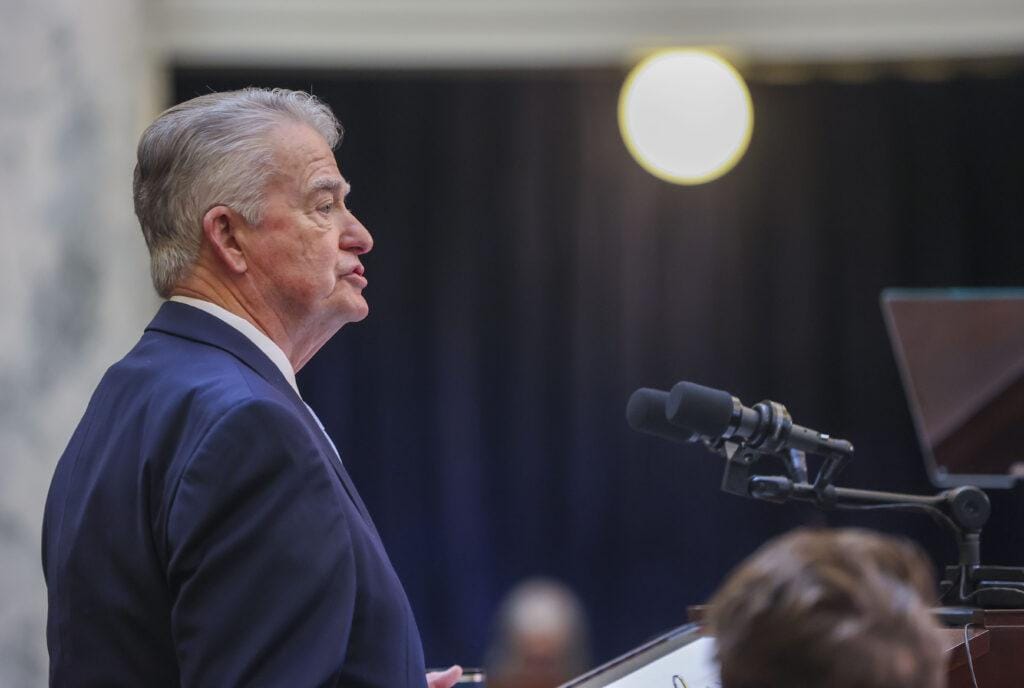
Idaho Gov. Brad Little on Thursday signed into law a bill to restore Medicaid mental health treatment programs that the state cut to comply with the governor’s order for budget cuts.
In less than three months since an Idaho Medicaid contractor cut a mobile treatment program for people with severe mental illness, four patients died, the Idaho Capital Sun reported. In the 18 months before the cut, providers say just one patient died. The program was designed for people who have struggled in routine treatment settings.
Fourth patient dies after Idaho cut Medicaid mental health service
Senate Bill 1446 would spend one-time legal settlement funds to reinstate the mobile treatment program, called the Assertive Community Treatment program, and peer support services, which help people navigate mental health treatment.
As the 2026 legislative session was defined by deep spending cuts across state government to avoid a budget shortfall and make room for One Big Beautiful Bill Act tax cuts, the move to reinstate the cut mental health programs stands out as an exception to the hawkish fiscal attitudes in the Statehouse. Medicaid disability providers took nearly $22 million in pay cuts this year. And the Legislature didn’t consider bills to reinstate other cut health care programs, including for kids with disabilities.
The mental health programs’ reinstatement follows warnings by health providers and sheriffs, two lawsuits, admissions that the cuts likely won’t save the state money long-term, and denials by state officials that services for people with severe mental illness were cut.
“We acknowledge the State’s budget challenges which are self-inflicted by an overly aggressive tax reduction stance of the Legislative Branch and a complicit Executive Branch continuing to reduce tax revenue creating a budget shortage,” Bonneville County Sheriff Samuel Hulse, the president of the Idaho Sheriffs’ Association, wrote to legislative leaders and the governor in December. He warned the cuts “represent a significant public-safety concern.”
SUBSCRIBE: GET THE MORNING HEADLINES DELIVERED TO YOUR INBOX
Cuts can be directly tied to the deaths, Republican senator says
Soon after the cuts were announced by an Idaho Medicaid contractor, providers and the Idaho Sheriffs’ Association warned the cuts would risk public safety, and providers said the cuts would drive up other costs even more. Eastern Idaho crisis centers saw demand spike after the cuts.
Since then, providers have pushed for the programs to be reinstated — and several state lawmakers have talked about the deaths as the Legislature mulled other budget cuts.
The budget bill appropriates funding for the cut programs for next fiscal year, which starts in July. The programs are also on track to be reinstated this fiscal year if the Idaho Department of Health and Welfare transfers enough funding internally, which the agency has said is possible.
Idaho Falls Republican Sen. Kevin Cook cited the patient deaths in his pitch for bringing the programs back.
Since the programs were cut, “we have had four deaths that you can pinpoint directly back to these programs that were done away with,” Cook told senators. “Our sheriffs, our ERs and our courts are dealing with the same individuals over and over again. These are frequent flyers … because this system designed to stabilize them was taken away.”
A bill to reinstate the program in state law, introduced in February by Shelley Republican Rep. Ben Fuhirman, never got a committee hearing. But, he said the funding through the budget bill will help Idaho communities.
“Because of this funding, people who truly need this level of support will continue to receive it, and our communities will be safer and stronger because of it,” Fuhriman said in a statement. “But the work is not done. We still have major mental health challenges across Idaho, and we need to keep finding ways to properly fund and protect these programs so we never end up in this position again.”
Ric Boyce, who was among a group of clinic owners and providers that pushed for the programs to be brought back, said Cook and Fuhriman “worked tirelessly” to bring the Assertive Community Treatment program back.
In February, when a reporter asked the governor whether he would’ve handled his cuts differently after the first two patient deaths were reported, the governor said “hindsight’s a great thing.”
At the time, Little told reporters it’s tough to anticipate the “unintended consequences.”
For next fiscal year, the bill allocates $4.6 million in tobacco settlement funds and $5.8 million in opioid settlement funds for the programs. The federal government will pay most of the costs to reinstate the programs — an estimated $20.5 million out of the total nearly $31 million in costs.
Idaho Department of Health and Welfare spokesperson AJ McWhorter previously told the Sun that the agency has enough one-time savings to restore the services this fiscal year if JFAC’s bill becomes law.
Three of the deaths were men in their 40s
At least three of the deaths were men in their 40s, providers told the Idaho Capital Sun.
The provider for the fourth patient who died, Meredith Sievers, found out he had died after he missed an appointment. He had gone down to once-a-week visits after the cuts.
“He was actually doing really well,” Sievers told the Sun. “Had achieved sobriety in the last couple of years. Was starting to go back to work. And was working toward becoming a recovery coach for people with other substance use disorders.”
After the third death, the owner of the clinic that treated him, Laura Scuri, told the Sun it was preventable. And she said she worried the cuts could spur a violent critical incident as people with severe mental health issues lose accessible treatment.
“I’m worried it’s gonna be a child. Some innocent kid that was in the wrong place at the wrong time is going to cross paths with someone who’s actively psychotic and get hurt,” Scuri said.
The first death was also preventable, Boyce, the owner of Chubbuck-based clinic Mental Health Specialists, wrote in a federal court declaration. The patient, he wrote, died after complications following a minor surgical procedure — after declining follow-up care or sticking to a treatment plan.
If the ACT program was still in place, Boyce wrote his staff would “have identified the increased risk associated with the post-surgical complications” and involve “appropriate medical staff as needed.”
Instead, one of his clinicians visited the patient’s house and saw their funeral, Boyce wrote.
Then that same clinician went to visit the home of another former patient on the ACT program to find them “experiencing an acute psychiatric emergency, requiring immediate transport to a hospital for evaluation and stabilization,” he wrote.
Why a state contractor cut the Medicaid programs
State health officials have denied the entire Assertive Community Treatment program was cut, saying services are still available. But some providers say the services that are still available aren’t what the evidence-based program was like, because providers aren’t paid to staff mobile treatment teams.
The contractor, Magellan, had its pay rate reduced by the Department of Health and Welfare as part of Medicaid provider pay cuts last year, after Gov. Brad Little ordered state budget cuts. Magellan cut the services in December.
The governor’s budget chief, Lori Wolff, told the Sun in February that preventive services are often the first to go when the state faces a budget crunch — because they are one of few options the state has.
In December, the state’s Medicaid director told lawmakers that health officials aren’t sure the cuts will save the state money long-term.
About 200 people in Idaho are on the ACT program, Magellan Healthcare’s Idaho Executive Director David Welsh wrote in a December declaration in response to a federal lawsuit by patients.
SUPPORT: YOU MAKE OUR WORK POSSIBLE
Arizona universities quietly altered DEI offerings after Trump threatened funding cuts. They won’t disclose how
by Molly Bohannon, Arizona Center for Investigative Reporting
April 9, 2026
Arizona’s three public universities have quietly dismantled diversity, equity and inclusion offerings over the past year, renaming programs, consolidating resource centers and scrubbing websites—all while failing to detail the changes to students, faculty or the public.
The moves came after the U.S. Department of Education sent universities a letter in February 2025 threatening to cut federal funding if they continued to promote what President Donald Trump has called “radical” DEI programs. It advised schools they could not consider race in decisions about administrative support, housing and “all other aspects of student, academic, and campus life.”
In Arizona, university leadership has not publicly disclosed how or to what extent they’ve complied, shielding the public from understanding the impact of their decisions or how the changes might affect three of the state’s largest campus communities. It’s also unclear what changes, if any, have been reversed since a federal judge deemed the Trump administration’s guidance illegal last August.
Officials at Arizona State University, Northern Arizona University and the University of Arizona, which serve over 241,000 students and receive hundreds of millions in taxpayer dollars annually, declined repeated requests for interviews and did not answer detailed questions from the Arizona Center for Investigative Reporting over several months. Public records requests were either denied on claims of attorney-client or work-product privilege, deemed too burdensome to fulfill or closed citing a lack of responsive records.
AZCIR identified a number of changes through a review of university websites, course listings, past media coverage and communication with state officials. All three schools have been accused of burying resources for minority groups, and UA and NAU have also removed or renamed multiple webpages and references to diversity and inclusion—despite still claiming inclusivity as a core value. The largest known shift occurred at UA, which consolidated its cultural resource centers into one central hub.
Higher education experts say the lack of transparency is likely tied to a “chilling effect” from the Trump administration’s broader assault on higher education, prompting attempts by officials to avoid further scrutiny.
Emelyn dela Peña, president and CEO of the National Association of Diversity Officers in Higher Education, told AZCIR that transparency is crucial now “because when institutions feel like they can't talk openly about how they support students, it becomes harder for the public to understand the role that these efforts have.”
DEI initiatives in higher education generally serve a range of groups beyond those more commonly considered vulnerable, including first-generation students and veterans, among others. Programming is often designed to emphasize things like belongingness, critical thinking and community engagement, according to the USC Race and Equity Center. The result, experts say, can be increased student retention and graduation rates.
Nolan Cabrera, an expert in racism and anti-racism in higher education and a professor at UA, said decisions made behind closed doors sends a negative signal to students and faculty.
“This isn't your university anymore,” he said. “This isn't a community.”
As those tied to universities and the public at large attempt to understand the impact of DEI changes to campus life, Arizona’s Republican lawmakers are advancing a ballot initiative that would pose the question of DEI’s place in schools to voters directly. The move would bypass Gov. Katie Hobbs’ veto power and amend the state constitution to restrict DEI initiatives further.
The potential of losing federal dollars—the single largest funding source for university research and development nationwide—prompted a number of schools to proactively comply with the guidance over the past year. Even as legal challenges to the February Dear Colleague letter and executive orders seeking similar restrictions on DEI made their way through the courts, some universities opted to publicly disclose their changes.
The University of Cincinnati, for example, issued a statement saying the institution had “little choice but to follow” the guidance and admitted to “removing references to DEI principles” and evaluating programming. The University of North Carolina Chapel Hill’s leadership released a statement detailing changes to offerings for students after its university system suspended DEI course requirements. Similar statements were made by universities from Alaska to Colorado.
Megan Gilbertson, a spokesperson for the Arizona Board of Regents, which oversees Arizona’s public universities, declined an interview and did not say whether it advised schools on federal compliance. ABOR shifted 10 of its own policies last summer, removing references to “affirmative action,” and replacing “diversity” with “differentiation,” among other changes.
Presidents at NAU and ASU did not address the federal guidance in public statements, and campus community members said they had not received internal communication, either.
At UA, President Suresh Garimella began shifting diversity efforts shortly after Trump’s January 2025 executive order, which alleged higher education institutions have adopted "dangerous, demeaning and immoral" DEI practices and called for their end.
In a Feb. 17, 2025, email obtained by AZCIR from Garimella to Arizona Senate President Warren Petersen, who had called on the state’s public universities to eliminate DEI a week earlier, the university president said “we intend to fully comply with the order.”
The next day, Garimella announced the creation of a federal updates page that now states UA was “mandated to discontinue certain activities and programming,” but provides no details. He also said they would take “a proactive approach” to compliance, including creating an inventory of DEI-related activities.
AZCIR requested that inventory in September 2025, but was told the document was “protected under the attorney-client/work-product privilege.”
On Feb. 19, 2025, a spokesperson confirmed to the Arizona Daily Star that the school removed websites for its Office of Diversity, Equity and Inclusion and Cultural and Resource Centers, but did not answer questions about what other changes were coming.
Vanessa Perry, a former professor at UA, said she only got more information after Petersen posted another letter from Garimella to social media updating him on actions the school had taken as of April 1, 2025.
The letter described a sweeping compliance effort—discontinued programming, internal “DEIA reviews,” instructions to college deans, changes to job postings—that the university has yet to detail publicly.
“It really told me that no matter what we could do as organizers, that Garimella would not be moved,” said Perry, who was also part of UA Resist, a collective against DEI changes on campus. “That he had that little valor in doing the right thing and standing up for us.”
AZCIR requested the information detailed in the letter, including communications sent to deans, the internal reviews and the action plans for change. The university withheld the records, again citing attorney-client or work-product privilege, and has not responded to repeated attempts to clarify the denial or provided further comment about changes made throughout its system.
UA also announced last May it was consolidating six of its seven cultural resource centers, which served LGBTQ+ students, disabled and gender-based groups, along with several racial and ethnic minorities. The Native American student center was moved into the Office of Native American Initiatives.
UA officials did not say at the time whether the decision was tied to the federal directives and did not answer AZCIR’s questions about the consolidation. UA spokesperson Mitch Zak shared two messages sent to campus about the consolidation, one of which clarified that “activities, physical spaces, and embedded counselors” would also make the transfer, and student workers would remain in place “to ensure continuity of support.”
Zak said in the emailed statement that the school is focused on ensuring all students can access the same opportunities and resources for success, does not “engage in preferential treatment in employment or programming” and is compliant with federal and state nondiscrimination requirements.
“These (centers) were not just benevolently bequeathed from the institution. They were years of struggle, community activism, fundraising to create these spaces … that can just be eliminated by the whim of a president who has no idea what he's doing,” Cabrera, the current UA professor, said.
“That is devastating to the community, because we've been struggling for these minor amounts of inclusivity.”
NAU’s spokesperson Kim Ott told AZCIR she was “not able to find anyone” who could speak to campus changes despite repeated outreach. She responded only that the school is focused on “ensuring that all students have the support and resources they need.”
The university denied AZCIR’s public records request for documentation of changes to DEI programs, positions or offerings, calling it “unduly burdensome” with more than 300,000 potentially responsive records.
An AZCIR review of NAU course plans showed that, as of last school year, some were described as meeting a “diversity” requirement. Plans for the current year show some of the same requirements now described as “inclusive perspectives.”
Websites for NAU’s “diversity strategic plan,” which was announced in 2020 and sought to make the school a “true diversity university,” as well as its Center For University Access And Inclusion, are no longer active. Some program specific pages, such as the Institute for Public and Professional Ethics in Leadership and the clinical psychology department, however, still note a commitment to diversity.
Sarina Cutuli, a third-year student at NAU and member of the Arizona Students’ Association, said that while the changes are subtle, they perpetuate fear among students and “it feels like this slow chipping away until there's nothing left.”
Cutuli said she believes administrators are acting in good faith, but that not communicating changes to the campus community is eroding trust.
“Saying nothing feels like [leadership saying] ‘I don't care, I come first. I'm protecting myself first. I'm protecting my funding first. Your security as a student does not matter as much as money does,’” Cutuli said.
Have you been impacted by changes to DEI offerings at ASU, NAU, UA or another institution in Arizona? If so, we want to hear from you.
Your information or experience will not be shared or published without your consent. An AZCIR reporter may reach out to learn more. You can also contact reporter Molly Bohannon securely via Signal, at molboha.75 .
The largest known change on NAU’s campus was the sunsetting of five diversity commissions covering Indigenous communities, disability, ethnic diversity, women and LGBTQIA issues, some dating back to at least 2006. The commissions previously hosted speakers and discussions for students, faculty and staff, and gave awards for diversity work.
According to minutes from a November 2025 faculty senate meeting, University President José Luis Cruz Rivera said the commissions were “not sustainable” in their current form but that he wanted to reorganize them. Documents indicate the university sought to create an “Inclusive Excellence Advisory Board,” but officials did not say how it has progressed or how offerings have changed.
ASU officials also declined to make anyone available for an interview and claimed “no responsive records” to an AZCIR records request from February seeking documentation for changes made over the past year. Spokesperson Nikki Ripley instead emailed a statement saying ASU fully complies with federal and state laws, noting that the school’s charter “commits to an inclusive approach welcoming every learner who is qualified.”
Ripley also pointed to a March 2025 interview in which President Michael Crow said the university never had “ethnic diversity goals” to begin with.
“Other people built that three word phrase, ‘diversity, equity and inclusion,’ and then built a rhetoric around that, and that's what's being attacked. We were past that,” Crow said at the time.
Hypatia Meraviglia, an ASU graduate student and member of United Campus Workers of Arizona, which represents staff at the three universities, said Crow’s response was left wanting.
“We're stuck in a situation where the workers at ASU, the students and the faculty and the staff are getting the worst end of the deal, which is, there are no university resources, or very few university resources for minoritized workers of any kind. And the resources we have are pulled,” Meraviglia said.
ASU previously said it had not removed student support, though there were allegations last spring that online resources for LGBTQIA students were removed from public-facing websites. The university also renamed graduation events for minority students in May and was one of 31 schools spotlighted by the Education Department for ending participation with the PhD Project, an organization that supports underrepresented doctoral students and was being investigated by the administration for discriminating based on race.
Education Secretary Linda McMahon celebrated the program closures, saying it was “the Trump effect in action.” Ripley told AZCIR the university had already decided to end its partnership with the PhD Project before the federal government began investigating.
When the Education Department dropped its appeal in January of a federal ruling that found its guidance was largely illegal, some saw it as a “major victory” for diversity efforts in public education.
Shortly after, however, the Trump administration introduced a new plan requiring federal funding recipients, including universities, to certify that they do not have diversity programs before they’re eligible for federal dollars.
Arizona Attorney General Kris Mayes was one of 23 attorneys general who signed a letter urging the federal government to abandon its proposal, noting it was unlawful, would “undoubtedly” create confusion and may “chill legitimate activities of funding recipients who fear punitive actions.”
Trump issued another executive order on March 26 saying federal contractors must agree to not engage in “racially discriminatory DEI activities,” and that their contracts may be terminated if compliance documentation isn’t provided.
In Arizona, Republican lawmakers are again trying to ban DEI from schools. Last year, Hobbs vetoed Senate Bill 1694, which would have cut public funds from universities offering DEI courses.
Speaker of the House Steve Montenegro, R-Goodyear, introduced House Concurrent Resolution 2044 this year, which would send the issue directly to voters—bypassing the governor's veto. The measure would ask Arizonans to determine whether the state’s Constitution should prohibit public entities from “preferential treatment” based on race or ethnicity, and would bar public funding for diversity offices or training. As of April 8, the resolution passed the House and was progressing through the Senate.
At its most recent regular meeting in February, ABOR’s legislative update did not include the potential ballot measure, and it wasn’t discussed by members. When asked why it wasn’t introduced, Gilbertson said the board doesn’t take an official stance on every bill, but is working with the governor’s office and lawmakers on related legislation.
She did not specify how.
This article first appeared on Arizona Center for Investigative Reporting and is republished here under a Creative Commons Attribution-NoDerivatives 4.0 International License.