
Lawmakers seeking answers following FAA restrictions in El Paso, Texas region
NOLA group works to improve conditions for Mardi Gras clean-up workers, MS senators call for improved disaster response after winter storm, Tribal court hearing for former Swain, NC sheriff delayed


It's Friday, February 20, 2026 and in this morning's issue we're covering: Lawmakers demand answers after unprecedented FAA flight restrictions disrupt El Paso region, ‘We as a state failed them’: Senators call for improved disaster response after winter storm, Pesticide use and cancer risk rise together across America’s heartland, Costco withdraws application for highly anticipated Asheville location, Virginia Supreme Court: April 21 redistricting referendum can move forward, Tribal court hearing for former Swain sheriff delayed, Local group works to improve conditions for Mardi Gras clean-up workers.
Media outlets and others featured: El Paso Matters, CommonWealth Beacon, Mississippi Today, Investigate Midwest, Asheville Watchdog, Cardinal News, The Beacon: Kansas City, Carolina Public Press, Verite News.
Lawmakers demand answers after unprecedented FAA flight restrictions disrupt El Paso region
by Robert Moore, El Paso Matters
February 12, 2026
U.S. Rep. Veronica Escobar of El Paso and three members of the New Mexico congressional delegation are asking the Trump administration for a classified briefing on this week’s airspace restrictions that they say “created widespread fear, uncertainty and chaos in the region while disrupting commercial, medical, private, and military aviation activities.”
The letter was sent Thursday to Defense Secretary Pete Hegseth, Homeland Security Secretary Kristi Noem and Transportation Secretary Sean Duffy from Escobar and Rep. Gabe Vasquez and Sens. Martin Heinrich and Ben Ray Lujan of New Mexico. All four members of Congress are Democrats.
Late Tuesday, the Federal Aviation Administration issued temporary flight restrictions over El Paso and a broad area of southern New Mexico west of Santa Teresa that would have barred all flights – including military, medical and public safety missions – for 10 days.
The sweeping restrictions were unprecedented in U.S. aviation history, and were issued without notice to local or state governments, and without any public explanation.
The El Paso restrictions were lifted seven hours after they were issued, and following intense criticism from Escobar and widespread anxiety and fear in El Paso. The New Mexico restrictions remain in effect.
“We are urgently requesting a classified briefing on what occurred, with representatives from your agencies made available to speak to the roles they played, acknowledge where the failed communication occurred, and share the steps you are taking to ensure a future crisis of this nature will not reoccur,” the letter from the four members of Congress said. “Events like this are inexcusable and cause lasting degradation of trust among communities with their local and national leaders.”
A spokesperson for the Department of Defense, which the Trump administration calls the Department of War, told El Paso Matters the Pentagon will respond directly to the authors of the letter.
Spokespersons for Noem and Duffy didn’t immediately respond to a request for comment from El Paso Matters.
The Trump administration provided El Paso Matters a statement that said FAA Administrator Bryan Bedford “decided to close the airspace without alerting White House, Pentagon, or Homeland Security officials.”
The statement said the Pentagon and Department of Transportation, which oversees the FAA, have been “working together for months regarding drone incursion operations.” The statement made no mention of the Department of Homeland Security, which multiple media reports have said was involved in high-energy laser testing that preceded the FAA airspace restrictions.
SEE ALSO: El Paso airport closures spur fear, confusion – and questions
Federal officials have not explained the reasons for the airspace restrictions, other than a comment from Duffy that they were issued after a drone crossing from Mexico was taken down. Escobar, Vasquez and other members of Congress said that was untrue.
Vasquez said he learned from federal and local officials that restrictions were a “disproportionate response” by the FAA after the aviation safety agency “was tracking the DOD’s counter drone tests for multiple days.”
Multiple media outlets have reported that Customs and Border Protection officials were also involved in the tests with a high-energy laser and shot down a party balloon that was mistaken for a drone entering from Mexico.
Officials have not explained why the air restrictions remain in place over a southern New Mexico area stretching from the Mexican border on the south to Organ Mountains-Desert Peak National Monument on the north. The area covers more than 2,000 square miles, more than twice the size of El Paso County.
The Border Patrol is active in the southern part of the restricted area. The border in the restricted area is part of a National Defense Area established last year by the Trump administration.
This article first appeared on El Paso Matters and is republished here under a Creative Commons Attribution-NoDerivatives 4.0 International License.

It’s anyone’s guess when Beacon Hill will agree on an immigration response
by Chris Lisinski, CommonWealth Beacon
February 19, 2026
THE DEMOCRATIC MAJORITY was quick to act on legislation prohibiting cooperation agreements between local police and the US Immigration and Customs Enforcement agency, and the governor signed it into law less than a week later in a clear rebuke of the Trump administration.
That wasn’t Massachusetts, however, but Maryland, where state lawmakers voted last week to establish a clearer firewall between local law enforcement and federal immigration authorities. On Tuesday, Gov. Wes Moore signed the measure, declaring that his state would not allow its law enforcement “to be deputized by agencies that do not hold the same standards.”
Bay State leaders are responding to the same current of growing national outrage about ICE actions in Minnesota and elsewhere, but exactly what they plan to do and when they’ll do it is still taking shape. The lack of cohesion has left some activists and insiders impatient.
“There are so many states that have already taken some type of action, and we hope that Massachusetts passes something quickly, especially now that we have a lot of solid proposals on the table,” said Elizabeth Sweet, executive director of the Massachusetts Immigrant and Refugee Advocacy coalition.
On January 28, the Black and Latino Legislative Caucus rolled out a sweeping proposal that would reshape how police work intersects with immigration status in Massachusetts, including a ban on civil immigration arrests in and around courthouses, new limits on sharing some information with federal authorities in civil immigration cases, and a prohibition on agencies entering into so-called 287(g) agreements with ICE, deals that allow local law enforcement to investigate and in some cases make arrests over civil immigration violations.
A day later, Gov. Maura Healey offered her own plan. She signed an executive order that bans agencies under her purview from striking new 287(g) agreements and bars the use of state property for immigration enforcement staging activities. Healey separately filed legislation that would bar ICE from “sensitive locations” like courthouses, schools, and churches and allow parents to designate guardians for their children in case they are deported.
But three weeks later, it’s still not clear how the Democrats who wield supermajority margins in the House and Senate intend to stitch all the varying pieces together or on what timeline they intend to act, other than with vague promises of “urgency.”
Asked last week whether his chamber planned to take up immigration legislation or a long-awaited energy cost bill first, House Ways and Means Committee chair Aaron Michlewitz said he did not “want to put a definitive timetable on anything.”
Although he hopes to see action on both topics before the House launches its annual state budget debate in April, Michlewitz cautioned about “complexities” that cloud the picture.
Top Senate Democrats added another variable last week, when they floated another legislative measure dealing with legal action against federal officers.
The new bill, authored by Sen. Will Brownsberger of Belmont, would allow residents to sue for deprivations of constitutional rights by any official acting under the authority of federal or state law, closing what he described as a gap that currently limits redress only to cases involving officials acting with state authority.
Sweet said the proposal tackles an important issue. MIRA regularly hosts presentations to educate immigrants and others about their rights if they’re stopped by federal officials.
“One of the questions that we get again and again is, ‘Telling us our rights is well and good, but we’re seeing regularly that ICE is violating those rights, and what do we really do about that?’” she said. “So we appreciate legislation that attempts to address that very real situation that we’re hearing play out in the day-to-day.”
Sen. Cindy Friedman of Arlington, who chairs a Senate panel tasked with forging a response to the Trump administration, said her hope is for the new bill to be added to the conversation as lawmakers figure out their bigger-picture plan.
“We’re getting our pieces together. We’re vetting, we’re making sure that they can hold muster in terms of what our abilities are as a state,” said Friedman, alluding to the complicated interplay of state and federal powers that the immigration debate has raised.
The so-called PROTECT Act championed by the Black and Latino Legislative Caucus, which drew co-sponsorship from 86 of the Legislature’s 198 current members, is the most wide-reaching of the three major bills in play.
Representatives held a series of closed-door meetings earlier this month to discuss the proposal. House Minority Leader Brad Jones called the discussion “frank and honest,” according to State House News Service.
Other Republicans have been more critical of the push to more forcefully limit cooperation with ICE. Gubernatorial candidate Mike Kennealy said Healey’s executive order and legislation “definitively make Massachusetts a sanctuary state,” invoking the term many immigration opponents use to describe states that have restricted local law enforcement from aiding ICE operations.
Sweet said MIRA and its allies in the Protecting Massachusetts Communities Coalition have three primary priorities: banning 287(g) agreements, prohibiting “informal collaboration” between local law enforcement and ICE, and securing state funding for immigration legal services.
The group does not have a preference on which bill Beacon Hill chooses as the means to advance reforms, but is simply “appreciative that there are now multiple vehicles on the table,” Sweet said.
Only one Massachusetts entity still has a 287(g) agreement in place with ICE: the state Department of Correction.
Under the terms of that deal, which Healey has defended, the department can notify the feds about people being released from DOC custody who do not have lawful immigration status. Corrections officers can also execute some of the duties typically performed by ICE agents, such as serving arrest warrants over immigration violations and write charging documents.
DOC turned over 164 people to ICE in 2023 and 2024, most of whom had been convicted of drug or violent offenses, according to The Boston Globe.
While the bill filed by the Black and Latino Legislative Caucus and Healey’s executive order both prohibit new 287(g) agreements, neither proposal would end the existing DOC deal, and the legislative caucus’s bill explicitly excludes the state correction department from its ban on executing or renewing such arrangement.
“When you’re incarcerated under the care, the custody of the Department of Correction, that means you’ve done something pretty bad. This is prison,” Healey said at the January 29 press conference where she rolled out her order and bill. “At the end of that sentence, I think it is appropriate for our Department of Correction to notify ICE ... and to give ICE the opportunity to take into custody and deport that individual.”
According to Bolts, a nonprofit publication covering democracy and the criminal justice system, Massachusetts is the only state that voted against Donald Trump in 2024 and has a Democratic governor that still has a 287(g) agreement in place after newly elected Virginia Gov. Abigail Spanberger ordered her state’s Department of Corrections to terminate its ICE deal earlier this month.
Questions about parliamentary process further cloud the outlook for action under the Golden Dome.
Healey attached her immigration enforcement reforms to a $411 million spending bill that would address funding shortfalls at the Group Insurance Commission, Department of Transitional Assistance, Department of Correction, and more.
The House could surface the bill at any point, and lawmakers typically eschew formal public hearings on supplemental budgets submitted by governors. Top representatives might rewrite Healey’s immigration language along the way to incorporate other ideas, or leave it as is.
Meanwhile, on February 2, the House moved to send the PROTECT Act to the Public Safety and Homeland Security Committee for additional review. However, the Senate has not followed suit, leaving the measure in legislative limbo, unable to formally reach the panel that ostensibly could convene a public hearing on the topic.
A spokesperson for Senate President Karen Spilka declined to comment on the bill’s committee status.
In the past, one branch’s sluggishness on the normally routine decision of which committee should review a bill has at times signaled broader House-Senate disagreement that slows down action.
It’s unclear in this case whether there is real conflict between the branches over how to deal with the immigration enforcement debate that’s swallowed national attention, or if it’s simply another big topic caught in the slowly turning wheels of Beacon Hill policymaking.
“This is a complex issue. Obviously, we’re in complex times related to that particular issue on immigration,” Michlewitz said. “So, you know, we’ve got some work to do.”
This article first appeared on CommonWealth Beacon and is republished here under a Creative Commons Attribution-NoDerivatives 4.0 International License.

‘We as a state failed them’: Senators call for improved disaster response after winter storm
by Alex Rozier, Mississippi Today
February 13, 2026
North Mississippi senators pleaded for an improved disaster response from the state Thursday as thousands of their constituents still lacked power nearly three weeks after the January winter storm.
Sen. Rita Potts Parks, a Republican from Corinth, repeatedly told her colleagues "we have work to do" to better prepare for future disasters. Her district includes Alcorn and Tippah counties, two of the hardest-hit areas in Mississippi.
"I hope you remember how my people were cold, and we as a state, we failed them," she said during an emotional speech on the Senate floor. "I'm included."
In her district, hospitals and nursing homes went more than four days without power or water, Parks said.
"Can you imagine what those smells were like, what those cries were like by that second day?" she said. "And those people being placed with more and more blankets on them just to keep them warm."
Parks and her colleague Sen. Neil Whaley, a Republican from Potts Camp, mentioned the response times of specific agencies as areas for improvement.
"Us getting resources from (the Mississippi Emergency Management Agency) took days," she later told Mississippi Today. "I'm not throwing darts, I'm just saying it was a fact we didn't see supplies coming to us until Tuesday. That's water, MREs, cots. This event happened on Saturday, Sunday. You're Tuesday night, Wednesday getting us what we needed."
She said about five or six counties went over two days without any power transmission because Tennessee Valley Authority lines were down. "That's historical, that's never supposed to happen," Parks said.

She and other senators spoke during discussion of Senate Bill 2632, which passed in the chamber. The bill, which now heads to the House for discussion, would create a "disaster recovery emergency loan program" to aid counties included in the recent federal disaster declaration.
Sen. Scott DeLano, a Republican from Biloxi who introduced the bill, said the state's damages from Winter Storm Fern will likely reach $400 million. He described the proposed program as a "revolving loan fund," meant to get public assistance money to counties and cities on the front end as they await reimbursements from the Federal Emergency Management Agency.
Parks said FEMA payments to local entities could take anywhere from 18 months to two years. DeLano said Tennessee did something similar in response to Hurricane Helene in 2024.
While the bill doesn't include a dollar amount, DeLano said the plan is to request $50 million in appropriations later in the session. Counties would have five years to repay the loans, and would also have to pledge a source of revenue in the event FEMA didn't reimburse the funding. For any projects that FEMA rejects for reimbursement, local entities would have two years to repay the loan.
Sen. Sollie Norwood, a Democrat from Jackson, expressed concern that counties in those situations would be left on the hook for recovery spending. DeLano responded that lawmakers could use the two-year period to address any such shortfall. The state couldn't offer the funding as a grant because it could be seen as a duplication of benefits, he added.
Whaley, who spoke after Parks, expressed a similar sentiment.
"I live in an area where the district lines of the Mississippi Department of Transportation meet, and for some reason that plow truck blade just would not stay on the ground when it got to that district line," Whaley said.

The senator added that "a lot of things have to be answered," and that he intends to bring "a lot of this out to light."
Delano said later: "We are going to have a lot of discussion over the next year about how we better prepare for these types of events."
About 1,700 Mississippians still didn't have power as of Thursday afternoon nearly three weeks after the storm, according to poweroutage.us. That number, though, doesn't include all electric utilities in the state. Northern District Public Service Commissioner Chris Brown said municipal systems, such as the beleaguered Holly Springs Utility Department, aren't included. As of Thursday that system still had about 500 outages.
Another measure, House Bill 1645, would create state versions of FEMA programs as Mississippi officials prepare for reduced federal disaster support. That bill passed the House on Thursday and moves onto the Senate.
Other federal aid kicks in for recovering Mississippians
On Wednesday, the U.S. Small Business Administration announced low interest loans were available for certain private nonprofits in Alcorn, Bolivar, Calhoun, Carroll, Grenada, Holmes, Humphreys, Issaquena, Leflore, Montgomery, Sharkey, Sunflower, Warren, Washington, Webster and Yazoo counties as well as the Mississippi Band of Choctaw Indians. Eligible organizations include, but are not limited to, food
kitchens, homeless shelters, museums, libraries, community centers, schools and colleges.
Then on Thursday, the U.S. Department of Housing and Urban Development announced a number of assistance measures for Mississippians, including a 90-day foreclosure pause for mortgages insured by the Federal Housing Administration. Click here for a full list of those measures.
Taylor Vance contributed to this report.
This article first appeared on Mississippi Today and is republished here under a Creative Commons Attribution-NoDerivatives 4.0 International License.

Pesticide use and cancer risk rise together across America’s heartland
by Ben Felder, Investigate Midwest
February 18, 2026
Lisa Lawler wasn’t surprised when diagnosed with breast cancer in 2025. Her mother had breast cancer and died in 2016. It seemed like cancer had become a common diagnosis for many of her neighbors and friends.
“With how many people seem to get cancer in our community, you just assume you will get it,” said Lawler, who lives in rural Hardin County, Iowa. “But no one really talks about what’s causing it.”
After 10 rounds of radiation and a surgery to remove the tumor, Lawler’s cancer was in remission. Last year, she took a test to determine if her cancer was likely genetic, meaning a high chance of recurrence, which could lead her to have her entire breast removed.
She was surprised by the results.
“The genetic test they ran for me was one that covered 81 genes that are typically related to breast cancer,” Lawler said. “After the test, they told me my cancer is likely not genetic, but likely environmental, based on these 81 genes.
“Your next thought is, then what’s in the environment that caused my cancer?”
Increasingly, pesticides are being blamed for rising cancer rates across America’s agricultural communities.
Hardin County, home to around 800 farms, has a pesticide use rate more than four times the national average and a cancer rate among the highest in the state.
Most of the 500 counties with the highest pesticide use per square mile are located in the Midwest. Sixty percent of those counties also had cancer rates higher than the national average of 460 cases per 100,000 people, according to an analysis of data from both the U.S. Geological Survey and the National Cancer Institute.
Last year, Investigate Midwest, in partnership with the University of Missouri, investigated the link between agrichemicals and cancer in Missouri, finding that many were rural communities that already lacked access to healthcare.

Investigate Midwest expanded on that coverage by analyzing data across the country, along with interviewing more than 100 farmers, environmentalists, lawmakers and scientists as part of a partnership with the Pulitzer Center’s StoryReach U.S. Fellowship. The result was the picture of a nation at a crossroads in dealing with this public health crisis that has not just been ignored by state and federal health officials, but aided.
This story was also supported by the Fund for Investigative Journalism.
“Cancer is everywhere and it's an experience that is unfortunately all too common,” said Kerri Johannsen, senior director of policy and programs at the Iowa Environmental Council, a Des Moines-based nonprofit that has been studying the state’s growing cancer rate.
Agrichemicals have helped America become a crop-producing power, increasing yields of commodity crops — such as corn and soybeans — used for food, fuel and animal feed.
Sprayed from airplanes, drones, tractors and handheld devices, these chemicals can drift through the air or run off into nearby rivers and streams.
And for decades, some farmers and pesticide users have developed neurological and respiratory issues. Thousands of lawsuits have alleged that pesticides and the companies that make them were to blame.

Pesticide manufacturers often rejected those claims while sometimes concealing research by their own employees that raised similar concerns. These companies — such as Bayer, Syngenta, Corteva and BASF — have also spent millions to lobby federal and state lawmakers for laws that would limit their legal liability and continue to allow them to sell agrichemicals.
“This is one of the most transparently reviewed products ever,” said Jessica Christiansen, the head of crop science communications for Bayer, speaking about her company’s production of Roundup, a glyphosate-based pesticide. “This product is so well studied … been on the market for over 50 years with thousands and thousands of studies. There is no linkage to cancer, there just isn’t.”
Under the Trump administration, the Environmental Protection Agency and U.S. Department of Agriculture have also hired dozens of former pesticide executives and lobbyists, some of whom have already pushed for deregulation of their industry. The Department of Health and Human Services has also altered its own reports to downplay the harm of pesticides.
Two states — North Dakota and Georgia — recently passed laws limiting their residents' ability to sue pesticide companies, and at least a dozen other states will consider similar laws in the coming months.
“We’ve gotten to a point in the U.S. … where we’ve stopped treating pesticides as if they are dangerous tools,” said Rob Faux, who manages a small Iowa farm and has advocated against pesticide liability shield laws. “Instead, these companies tell these stories that these pesticides are completely safe and we are encouraged to use them anytime. We’ve been convinced that we must use them or we are not going to have enough food to eat.”
In Iowa, a state with heavy pesticide use — 53 million pounds last year — and the nation’s second-highest cancer rate, doctors and health officials have been sounding an alarm for years.
The state has become ground zero in the fight to limit the impact of pesticides on health and the environment. Farmers have gathered at the state Capitol to advocate for increased laws and funding to address the rising cancer rate. That advocacy likely helped defeat a bill last year that would have protected pesticide makers from some lawsuits.
I call myself a Republican, but this is not about politics; this is about money, about the almighty dollar."
Bill Billings, a resident of Red Oak, Iowa, who was diagnosed with cancer in 2024
“I believe the groups wanting this (bill) to go through didn't expect any substantial resistance, but there was enough resistance,” said Faux, who also works for the Pesticide Action and Agroecology Network, a nonprofit advocating for less agrichemical use.
The Iowa bill was strongly opposed by environmental and health organizations, which have traditionally been left-leaning. But there was also strong opposition from many conservative residents and farmers.
“I call myself a Republican, but this is not about politics; this is about money, about the almighty dollar,” said Bill Billings, a resident of Red Oak, Iowa, who was diagnosed with cancer in 2024.
Initially, doctors told Billings, then 61, he would likely be dead in a matter of months after discovering lymphoma in his lungs. A health enthusiast and hospital administrator, Billings had been a regular user of Roundup, the popular Bayer pesticide used on farms and residential properties.
“The cancer specialist said, very directly, (my) cancer is a result of being exposed to chemicals,” Billings said. “In my records, it literally says that I have cancer as a result of exposure to Roundup and agrochemicals.”
Billings was prescribed a five-drug regimen, along with chemotherapy. In September, he was declared cancer-free.
Last year, he hired a lawyer to file a lawsuit against Bayer.
“The irony is … Bayer Pharmaceuticals makes one of the drugs that treated my cancer,” Billings said. “It's disturbing to find out you are in this financial circle — not only as a consumer, but as a patient.”


Bill Billings, his home, and surrounding neighborhood in Red Oak, Iowa, photographed Jan. 21, 2026. photos by Geoff Johnson, for Investigate Midwest
Research increasingly links pesticides to growing cancer risk
Cancer is a complex disease and can be caused by numerous environmental and genetic factors. Some links have been clear — such as smoking and lung cancer — while other forms can be impossible to trace back to an original cause.
But scientific research linking pesticides with certain types of cancers has been growing.
“Our findings show that the impact of pesticide use on cancer incidence may rival that of smoking,” scientists wrote in a 2024 study, which was published in Frontiers in Cancer Control and Society.
The study linked pesticides to prostate, lung, pancreas and colon cancers. Pesticides have also been associated with lymphoma and Parkinson’s disease, the study claimed.
Many doctors in agricultural communities say the link with pesticides is hard to deny.
“Iowa has a super high rate (of cancer) and when you look at all of our modifiable risk factors … tobacco, obesity, too many calories, highly processed foods, lack of physical activity, alcohol consumption, getting vaccinated for HPV, sun exposure, and so on, Iowa doesn’t really stand out dramatically at any of those,” said Dr. Richard Deming, medical director at MercyOne Cancer Center in Des Moines. “But one thing that distinguishes Iowa from other states is our environmental exposure to agricultural chemicals.”
Deming and other health experts also point to Iowa’s high radon levels, a naturally occurring radioactive gas produced by uranium and radium.
The state also has high levels of fertilizer-derived nitrate in its water, which has been associated with increased cancer risk.
“But we use tons of ag chemicals that make it quite likely that the volume of these chemicals is contributing to what we're seeing in Iowa in terms of the increased incidence of cancer,” Deming said.
A direct correlation can be difficult to determine, as cancer development times can range from months to decades. Overlaying cancer rates onto a map, however, highlights the nation’s top crop and vegetable growing regions, where pesticide use is highest.
The Midwestern states of Iowa, Illinois, Nebraska and Missouri — leading corn-growing states — had the highest rates, while rates were also high in California and Florida, high fruit-growing states.
Lawler, who developed breast cancer in Hardin County, grew up on her family’s 400-acre farm, where her father grew corn and used 2,4-D, a pesticide made by Dow Chemicals. She and her siblings moved out of state after high school, but Lawler returned in 2010.
Pesticides have become indispensable in farming, Lawler acknowledged, but she wishes more people would ask questions about the risks.
“We change products all the time when we learn about the health impacts,” Lawler said.


These family photos show Lisa Lawler with her mother and siblings over the years. Lawler was recently diagnosed with breast cancer; her mother later died after a cancer diagnosis. The family believes years of farm pesticide and herbicide exposure may have contributed. All photo provided by Lisa Lawler.
As lawsuits mount, Bayer pushes state laws to limit liability
In early 2022, Rodrigo Santos had just been promoted to the head of Bayer’s crop sciences division, a prestigious position within the German-based chemical company. But a global pandemic, climate change and a pending war in Ukraine were disrupting the global production and sale of crops — a direct hit to the company’s pesticide sales.
“The global food system is in crisis,” Santos wrote in a column for the World Economic Forum, going on to say that the world needed to grow more food without a significant increase in the amount of land devoted to crops.
But beyond the pandemic and war, another crisis presented an existential threat to one of the company’s top-selling products. Roundup, the glyphosate-based weed killer produced by Monsanto, which Bayer bought in 2018, had been blamed for causing cancer in thousands of lawsuits.
In 2019, a California jury ordered Bayer to pay $2 billion in one lawsuit (the amount was later reduced). Since then, more than 65,000 lawsuits have been filed against the company, according to Bayer, and the company has agreed to pay more than $12 billion in settlements.
Since purchasing Missouri-based Monsanto, Bayer's stock price has dropped more than 90% over five years.

Become a member for $5/month and help fund more investigations like this.
This investigation looks at the relationship between pesticide use and rising cancer rates across the heartland. It’s the first in a series and part of a larger reporting effort that takes time, data, and sustained work.
In recent years, Bayer executives, including Santos, openly discussed discontinuing glyphosate production. We are “evaluating all the alternatives that we have for the business,” Santos told investors last year when asked about a possible sale of its Roundup division.
But while Bayer publicly said it was reconsidering its glyphosate business, a review of lobbying disclosure statements, campaign finance records, state legislative records and other documents reveals the world’s largest pesticide company remains committed to expanding its sales.
Under the Federal Insecticide, Fungicide, and Rodenticide Act, the EPA regulates the warning labels on pesticide products. While state-level lawsuits have claimed that federal labeling is insufficient, pesticide companies, including Bayer, have argued that federal regulations should trump state laws.
Bayer, along with other corporate agriculture groups, has pushed for bills in more than a dozen states that would codify the view that federal labeling regulations are sufficient warning, effectively voiding state-level lawsuits.
Christiansen, the head of crop science communications for Bayer, disputed that these laws will stop lawsuits and said courts have yet to begin interpreting those that have passed.
“Folks can still sue a company, and they should if there's a problem,” Christiansen said. “But the litigation industry has a lot to lose with these (bills) that are out there.”
Founded by Bayer, the Modern Ag Alliance has lobbied for these bills and promoted opinion articles downplaying the health impacts of pesticides.
“If farmers lose access to crop protection products because of misguided ideological agendas, U.S. agriculture would be upended, potentially forcing many family farms to shut down and driving up food costs for every American,” said Elizabeth Burns-Thompson, executive director of the Modern Ag Alliance.
The Modern Ag Alliance has spent more than a quarter of a million dollars on state lobbying since 2024.
In Idaho, the organization spent one in four lobbyist dollars last year. In Iowa, Bayer has spent $209,750 on lobbying since 2023, double what the company spent in the previous decade.
Most of the bills came up short in 2025, but Georgia and North Dakota passed liability shields that will complicate local lawsuits.
Georgia’s Senate Bill 144, which took effect Jan. 1, received some bipartisan support but was mostly approved by the Republican majority and opposed by Democrats.
Similar bills have been filed in at least 10 states for this year's legislative sessions.
In 2024, the Iowa bill was passed by the state Senate with a 30-to-19 vote. Ahead of a vote in the House last year, farmer and environmental groups lobbied against the bill.
The session ended without the House taking up a vote. The bill could return in 2026, but Faux, the Iowa farmer, said he also worries about it being “snuck into” another bill or budget agreement.
“I don’t think we can just assume this fight is over,” Faux said.
In other states, backlash seemed to stop liability shield bills before they got started.
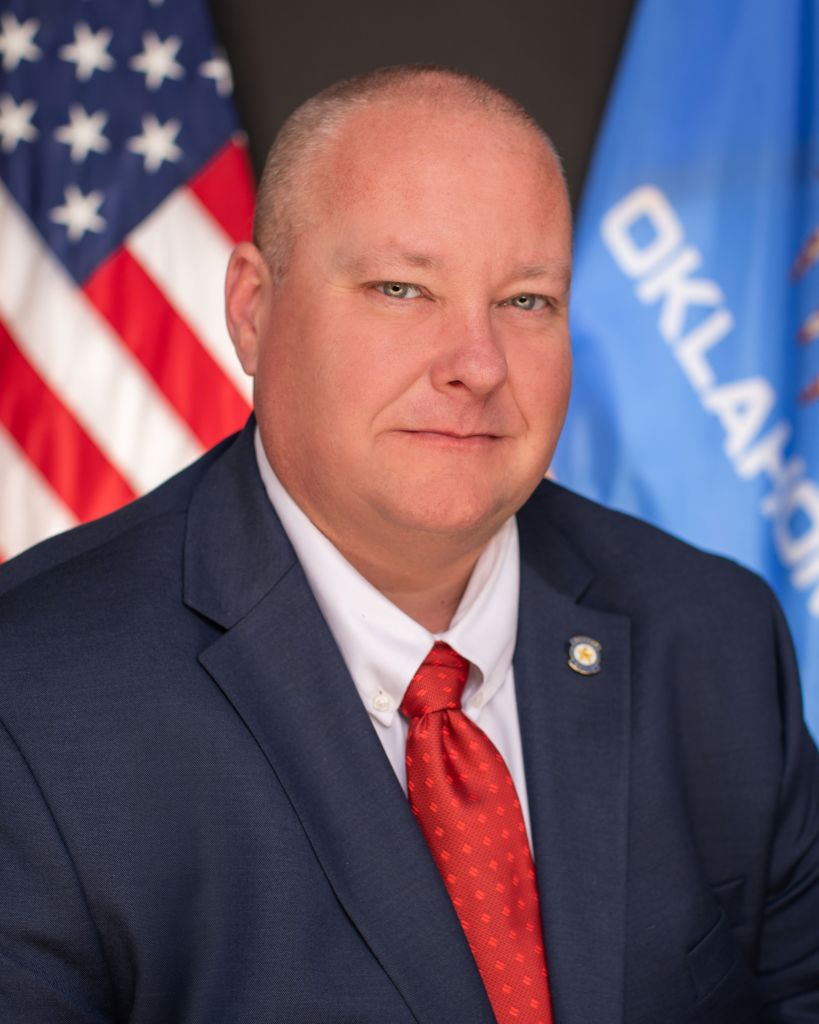
In Oklahoma, Rep. Dell Kerbs, a Shawnee Republican, authored a pesticide liability shield bill he said was meant to end “frivolous” lawsuits against pesticide makers.
“What’s happened in our country is we have … judges that have decided they need to be in the labeling business,” Kerbs said when introducing his bill at a Feb. 11, 2025, hearing of the House agriculture committee.
State Rep. Ty Burns, another Republican, asked Kerbs why he chose to author the bill.
“I was first approached by Bayer,” Kerbs responded.
“But this is a labeling bill; it is not an immunity bill. It is just clarifying on EPA labeling regulations,” Kerbs added. “There is nothing that prevents a lawsuit from any single person. This is not giving a free pass to kill people. This simply is saying that a frivolous lawsuit to potentially pad the pocket of somebody who was not reading the label is not a justification to add that to a label through a state district court.”
But when Burns asked Kerbs about opposition to the bill, especially from many farmers, Kerbs denied receiving any complaints.
“That is hard to believe,” Burns told Kerbs, “because I have been bombarded.”
The bill was never presented to the House for a vote.
After early promises, MAHA walks back pesticide oversight
While liability shield laws have been largely advanced by Republican lawmakers, the push to further regulate pesticides has transcended partisan lines.
Both left-leaning environmental groups and conservative health movements, which have targeted agrichemicals and some vaccines, have called for reducing or eliminating the use of pesticides.
Health and Human Services Secretary Robert F. Kennedy, Jr. has been a longtime critic of pesticides. In a May 2025 report, his Make America Healthy Again commission linked pesticide overuse to children’s health issues, which drew praise from both political camps.

George Kimbrell, co-executive director of the Center for Food Safety, which has advocated for stronger pesticide regulations, called the initial report a “baby step” forward and said he was encouraged after decades of inaction by the federal government.
“Going back my entire career, 20-plus years now of doing this work, it doesn’t matter if it’s a Democratic administration or a Republican administration, they have been beholden to and done the wishes of the pesticide industry,” Kimbrell told Investigate Midwest last year. “So, this is a unique moment where … there’s a chance that there could be some positive change in terms of responsible oversight for these toxins.”
Corporate agriculture groups heavily criticized the report, including the American Farm Bureau Federation and CropLife America, a national organization representing many large agrichemical companies, including Bayer, Corteva Agriscience and Syngenta.
Many of those groups and companies had been large financial backers of Trump. But Kennedy downplayed any concerns that the president would avoid taking a hard position against pesticide companies because of that support.
“I’ve met every president since my uncle was president, and I’ve never seen a president (like Trump), Democrat or Republican, that is willing to stand up to industry when it’s the right thing to do,” Kennedy said at a May 22, 2025, MAHA commission meeting as the president sat smiling to his right.
Three months later, Kennedy’s MAHA commission published its final report, which contained no calls to further regulate pesticides. In fact, it called for the federal government to work with large agrichemical companies to ensure public “awareness and confidence” in the EPA’s current pesticide regulations.
The U.S. Department of Health and Human Services did not respond to a request for comment from Kennedy.
Many of the groups that expressed optimism over the initial report were outraged over the change.
“This report is … a clear sign that Big Ag, Bayer, and the pesticide industry are firmly embedded in the White House,” said David Murphy, the founder of United We Eat and a former finance director for Kennedy’s presidential campaign.
The Trump administration has employed several pesticide executives, researchers and lobbyists at the EPA and the U.S. Department of Agriculture.
Kyle Kunker, who was a registered lobbyist for the American Soybean Association, an organization that has advocated for the legal liability shield laws at the state level, was hired last year to oversee pesticide policy at the EPA.
Three weeks later, the EPA recommended expanded use of dicamba-based herbicides, which federal courts had previously restricted. The EPA proposal was closely aligned with the position of the American Soybean Association.
In 2025, the EPA also hired Nancy Beck and Lynn Ann Dekleva, both of whom worked with the American Chemistry Council.
Last month, a coalition of MAHA supporters called for the removal of Lee Zeldin, administrator of the EPA.

Recent EPA decisions around pesticides “will inevitably lead to higher rates of chronic disease, greater medical costs, and tremendous strain on our healthcare system,” the group stated in a petition circulating online.
Several prominent MAHA influencers have joined the petition, posting anti-pesticide messages on social media under handles such as The Glyphosate Girl and the Food Babe. “The EPA is acting like the Everyone Poisoned Agency,” wrote Kelly Ryerson, on her Glyphosate Girl Instagram feed.
As the EPA advances pesticide use, the Trump administration has also asked the U.S. Supreme Court to rule that federal labeling laws invalidate state-level lawsuits.
“After careful scientific review and an assessment of hundreds of thousands of public comments, EPA has repeatedly determined that glyphosate is not likely to be carcinogenic in humans, and the agency has repeatedly approved Roundup labels that did not contain cancer warnings,” Trump’s solicitor general wrote in an amicus brief with the Supreme Court.
However, one of the studies the EPA has often cited in claiming pesticides are safe was recently retracted due to concerns about its authorship and potential conflicts of interest.
The report, published in 2000 by the scientific journal Regulatory Toxicology and Pharmacology, claimed Roundup “does not pose a health risk to humans.” The report has been the foundation for numerous other studies, court cases and policy decisions.
The journal retracted the study last year, noting that court cases had revealed that Monsanto employees had contributed to the study. “This lack of transparency raises serious ethical concerns regarding the independence and accountability of the authors of this article and the academic integrity of the carcinogenicity studies presented,” the retraction stated.
“This is just one example of how the current process of certifying these chemicals is broken in the U.S.,” said Colleen Fowle, water program director at the Iowa Environmental Council. “At the very least, we're hoping that this (retraction) eliminates this specific research article from being cited in the future and concentrates more on independent peer-reviewed research as our basis to determine the safety of glyphosate.”
This article first appeared on Investigate Midwest and is republished here under a Creative Commons Attribution-NoDerivatives 4.0 International License.

 JOHN BOYLE
Costco withdraws application for highly anticipated Asheville location
by JOHN BOYLE February 19, 2026
Retailer had been searching for Buncombe location for decades; mayor calls withdrawal ‘a tragedy’
Costco, the wholesale retail giant that planned to bring a store to Asheville after decades of searching for a site, has withdrawn its application for the new location.
In a Thursday email to City Council members obtained by Asheville Watchdog, City Manager DK Wesley said, “The applicant indicated that required on-site and off-site improvements have increased the project’s overall scope, timeline and anticipated costs.”
Wesley said the city was notified Wednesday of the withdrawal for the proposed store in the Enka Commerce Park site.
“As is not uncommon in large or complex projects, development applications are occasionally withdrawn for business reasons, including those unrelated to the city’s review process,” Wesley wrote.
Asheville Mayor Esther Manheimer called the withdrawal a serious blow to the city.
“It is a tragedy, and I’m very disappointed,” Manheimer said. “I’m learning more about what the challenges are, and I’ll work to try to address any of them that I can.”
Councilmember Sage Turner said Thursday morning that the withdrawal is “disappointing news for our residents and the greater region.”
“The community was incredibly vocal in their support and desire for this new option,” Turner said. “I’ll be following up with their [Costco’s] team to learn more.”
Costco has been searching for a Buncombe location for decades, and locals often drive about 70 miles to Spartanburg, the nearest Costco location, or Greenville, South Carolina, to shop at the retailer’s nearest store. Last year the company submitted an application to the city for a store with 839 parking spaces on 25 acres within Enka Commerce Park, a request that would have required the city to approve a conditional zoning amendment.
The letter of withdrawal came from the BL Companies, an architecture, engineering and environmental land surveying company that was working for Costco on the project. Nettie Boyle, project manager for BL Companies, requested the application be withdrawn “from the current review process before the Planning & Zoning Commission and City Council.”
“Since submitting the application, additional requirements from reviewing agencies related to both on-site and off-site improvements have increased the project’s overall scope, timeline, and anticipated costs,” Boyle wrote. “As a result, the applicant has elected to withdraw the current submittal from the review process at this time.”
At a community meeting in August near the site, neighbors expressed enthusiasm about Costco coming but also concerns about increased traffic on Sardis and Sand Hill roads, as well as Smokey Park Highway.
At the meeting, Renee Rutherford, director of real estate with Costco, said the company’s stores, which are open seven days a week, can draw about 600 vehicles an hour, although she stressed that occurs at peak shopping times.
The Biltmore Lake neighborhood, consisting of more than 800 homes, sits just across Sand Hill Road from the proposed site. A busy Ingles grocery store is nearby, as well as several other industrial and warehousing operations in Enka Commerce park or nearby.
At the August meeting, Costco officials said they were working on a traffic study, and that the approval process for a store could take 12 months and actual construction another year after that.
The Watchdog reached out to Rutherford and Boyle, Enka Commerce Park owner Martin Lewis and the North Carolina Department of Transportation for comment.
In October, the Economic Development Coalition for Asheville-Buncombe County came out in opposition to locating Costco in the Enka Commerce Park, citing wage concerns, diminished property taxes and the potential loss of the city’s last remaining industrial development site to retail.
The site, the former location of the American Enka rayon plant that dates to the 1920s, received more than $15 million in tax dollars for improvements to roads, bridges, sidewalks, and greenway design, all in support of potential industrial employment. The funding came from Buncombe County (more than $10 million), NCDOT ($2.5 million) and the Appalachian Regional Commission ($3.1 million)
While industrial jobs typically pay more than retail, Costco is something of an outlier when it comes to wages. Costco did not comment last year on the Economic Development Commission’s position, but it did provide a fact sheet on its employment benefits and wages, as well as store performance.
Average annual sales per store/warehouse worldwide are $260 million, according to the sheet, and Costco “pays among the highest wages in the industry.”
U.S. hourly wages run as follows:
- Service assistant: $20 to $30.20 per hour
- Service clerk: $21 to $31.90 per hour
- Meat cutters $21.50 to $33.40 per hour
That would put annual salaries, based on a 40-hour workweek, in the low-to-mid $40,000s to a top rate of nearly $70,000.
The Costco store proposed for the Enka Commerce Park would have required “conditional zoning” approval from Asheville. While Costco had submitted plans, held a community meeting and completed its initial Technical Review Committee hearing, it still had a lot of hoops to jump through before it could start building.
The retailer was going to have to revise plans before the application would go to the Planning and Zoning Commission and ultimately to the City Council, Clay Mitchell, an urban planner with the city, said in December.
[Editor’s note: This story was updated at 11:44 a.m., Feb. 19, to include additional background.]
Asheville Watchdog welcomes thoughtful reader comments about this story, which has been republished on our Facebook page. Please submit your comments there.
Asheville Watchdog is a nonprofit news team producing stories that matter to Asheville and Buncombe County. John Boyle has been covering Asheville and surrounding communities since the 20th century. You can reach him at (828) 337-0941, or via email at jboyle@avlwatchdog.org. To show your support for this vital public service go to avlwatchdog.org/support-our-publication/.
 Elizabeth Beyer
Virginia Supreme Court: April 21 redistricting referendum can move forward
The state’s highest court is expected to hear Democratic lawmaker’s appeal of the Tazewell County Circuit Court’s decision to halt the redistricting effort after the referendum.
by Elizabeth Beyer February 13, 2026
The Supreme Court of Virginia on Friday said that the April 21 redistricting referendum can move forward.
The state supreme court is expected to hear an appeal of the Tazewell County Circuit Court’s January ruling — which sought to halt the redistricting effort — after the referendum is scheduled to take place. The date for oral arguments has not yet been set.
General Assembly Republicans filed a complaint in Tazewell County Circuit Court in October, seeking a judgment on the constitutionality of the attempt to redraw the state’s congressional maps. Chief Judge Jack Hurley Jr. sided with the Republican lawmakers, in what Democratic House Speaker Don Scott called an “overreach.” That ruling was appealed by Democratic lawmakers to the Virginia Supreme Court.
“I think the Virginia Supreme Court made the right choice, made the right decision,” Scott, of Portsmouth, said during an impromptu press conference on Friday. “Virginia voters will have the final say on redistricting in Virginia, as they should.”
Scott said that the high court’s decision will allow for the ballots to be printed with the referendum language and for the process to move forward.
House Minority Leader Terry Kilgore, R-Scott County, was among the plaintiffs who filed a complaint against the redistricting effort in the Tazewell County Circuit Court.
“That just shows that we’ve got to win the referendum and we’ve got to win in court,” he said, in response to the Virginia Supreme Court decision on Friday. “I think we can do both.”
Both Scott and Kilgore expressed confidence that the court will rule in their favor, though that ruling is not expected until after the April 21 voter referendum has concluded. Early voting for the referendum is expected to start on March 6.
“Today’s order is a huge win for Virginia voters,” said Dan Gottlieb in a statement. Gottlieb is a spokesperson for Virginians for Fair Elections, a group in favor of the redistricting effort. “The Court made it clear that nothing in this case stops the April 21 referendum from moving forward and that Virginians will have the final say.”
Jason Miyares and Eric Cantor, co-chairs of Virginians for Fair Maps, called the referendum “illegal,” while acquiescing that the state’s highest court has allowed the effort to move forward before final judgment. Virginians for Fair Maps is an organization against the mid-decade redistricting process.
“All across Virginia, voters are speaking out against this brazen political power grab that allows politicians in Richmond to choose their own voters. It’s wrong, it’s illegal, and it will fail,” Cantor and Miyares said in a joint statement.
General Assembly leadership released a map for their mid-decade redistricting effort in early February, with 10 districts that Democratic lawmakers said they feel confident their party can win in November.
The map is available on the General Assembly’s Legislative Information Service website under HB 29. That bill has passed the House of Delegates and is expected to be voted on by the Democratic-controlled state Senate on Monday. Then it will head to the desk of Democratic Gov. Abigail Spanberger, who could sign the legislation, line-item veto or opt not to sign it, in which case the bill will automatically become law after a period of time.
Spanberger declined to comment on the Virginia Supreme Court decision. Instead, she said she is focused on the importance of clarity for Virginia voters regarding when and if the referendum would take place.
Virginia Democrats have called the redistricting effort necessary, after Republican President Donald Trump called on conservative-led states to change their congressional maps in favor of GOP candidates ahead of the 2026 midterm elections.
To redraw congressional maps outside of the normal 10-year cycle, Democrats proposed and passed a constitutional amendment that would suspend Virginia’s bipartisan redistricting commission. The General Assembly would go back to the redistricting commission after the 2030 Census to again redraw the commonwealth’s congressional map. The constitutional amendment must go before the voters in a referendum before it is enacted.
If voters approve the effort in a referendum, the new maps will exist for the 2026, 2028 and 2030 midterm elections.
Working homelessness: When ‘getting a job’ isn’t enough in KC
by Thomas White, Beacon: Kansas City
February 5, 2026
Five mornings a week for the past few months, Jalisa Bennett runs through the halls of a Kansas City homeless shelter with a singular mission — find someone with car keys willing to drive her to work.
“I go up and down, running around this whole building. Everybody who comes past with car keys (I’m asking), ‘Hey, you want to make $10?’” Bennett said. “I’m going to work, and I’m going to make it there on time.”
Takeaways
- About half of people in homeless shelters work at least part time, challenging the assumption that employment prevents homelessness.
- The minimum wage is $15 an hour in Missouri, but the living wage in KC requires $22.75 an hour — a gap that makes working families more susceptible to slipping into homelessness.
- An estimated 80% of people experiencing homelessness are “hidden” — couch surfing, doubled up or living in cars — making them hard to count and harder to help..
Bennett, a single mother of two young boys, arrived in town nearly two years ago after leaving an unsafe domestic situation. Money was tight, but at first she found a way to get by. Since then she’s navigated a sequence of setbacks that led her to living in a shelter. Through it all, though, she kept working.
“I’m very determined,” Bennett said. “I have to provide for my kids, because I am the only provider they have.”
Bennett is not alone. She’s part of a widely unacknowledged community of working homeless people.
Brooke VanHecke is chief development officer for reStart, one of the city's most prominent nonprofits serving the homeless population — including the shelter where Bennett has been getting back on her feet. VanHecke estimates that “roughly half, if not a little more than half” of the people in their shelters are working at least part time.
“I still get those looks,” Bennett said. “It doesn’t matter how many times I tell a person I have a job. If they have a preconceived notion in their mind about you, that’s how they treat you.”
The numbers behind working homelessness
Stephanie Boyer, CEO of reStart, says the organization has seen an increase in working families needing assistance. She sees the trend as an indicator of underlying weakness in the economy.
“We’ve definitely seen an uptick, particularly in our families who, yes, absolutely are working,” Boyer said. “I think we should be concerned. This isn’t about people making poor choices or decisions, it’s about economics.”
As the costs of basic needs like housing and child care rise faster than wages, roughly four in 10 people in Kansas and Missouri aren’t making enough to live comfortably.
“Working a job while being homeless is tough, because a lot of people, even in the workforce, never talk about it,” Bennett said. “You’ll never know who’s dealing with housing issues at work.”
“Working a job while being homeless is tough, because a lot of people, even in the workforce, never talk about it. You’ll never know who’s dealing with housing issues at work.”
Jalisa Bennett
This gap can also be measured by the United Way’s ALICE (Asset Limited, Income Constrained, Employed) metric. The ALICE metric tracks households that earn more than the federal poverty line but less than what’s actually needed to afford housing, child care, food, and health care.
When the ALICE metric is combined with traditional poverty figures, that number is called the ALICE threshold. In 2023, an estimated 38% of Kansas households lived below this threshold. In Missouri, it was 40%.
These are the families falling through the cracks in the economy. In Missouri and Kansas, there were just less than 1 million households that made too much to qualify for assistance, but too little to afford their basic needs.
“Your job isn’t keeping up with your housing, which is the biggest issue,” said Kansas City Houseless Prevention Coordinator Josh Henges. “We’ve seen over the last five years that wages are not even coming close to matching the cost of housing.”
In Kansas City, that math is stark.
According to the MIT living wage calculator, a single adult with no children needs to make $22.75 an hour working full time to pay for typical expenses. A single parent with two children needs to earn $49.92 an hour. While the minimum wage rose this year in Missouri to $15 an hour, it’s only $7.25 in Kansas.
The ‘hidden homeless’ are hard to count
The annual Point-in-Time Count was conducted locally the night of Jan. 28-29. The survey provides a snapshot of homelessness — counting people staying in shelters, transitional housing or places not meant for human habitation on a single night.
While people living in shelters like Bennett or in known street encampments are counted, many of the working homeless are hard to reach and count because they are often not visibly unhoused.
“Homelessness is a spectrum,” Henges told The Beacon. “The overwhelming majority of people who are homeless are folks who are housing unstable but you don’t see them.”
Henges, who helped write the city’s Zero KC plan to end homelessness, explains that there are roughly four types of homelessness.
- Chronic homelessness is what most think of and see. This group is made up of people who’ve been on the street the longest — at least a year. Very few in this group have formal employment and a higher than average number have a serious mental illness or substance use disorder.
- Episodic homelessness is when someone is cycling in and out of homelessness, often with many of the same characteristics of people experiencing chronic homelessness. Henges says chronic and episodic homelessness account for roughly 20% of people experiencing homelessness.
- Transitional homelessness is when someone goes through a shorter period of homelessness of a few months often due to a crisis, like losing a job.
- Hidden/invisible homelessness is the most common. This is when a person or family is staying with friends, couch surfing or temporarily doubling up. According to Henges, they make up nearly 80% of the city’s homeless population and heavily overlap with the transitional homelessness category.
The most recent HUD Annual Homelessness Assessment Report to Congress found 771,480 people were experiencing homelessness in the 2024 Point-in-Time Count. That was the highest recorded number nationally since it began being counted in 2007.
Journalist and anthropologist Brian Goldstone wrote in his 2025 book “There is No Place For Us” that a true measure of homelessness would likely be far higher than official figures. When accounting for the hidden homelessness population — those omitted from official statistics who are staying in cars or extended-stay hotels or are doubled up with family — Goldstone estimates the full number would be more than 4 million homeless people in the U.S.
Research from the University of Chicago in 2021 estimated that nationally 53% of people living in homeless shelters and 40.4% of the unsheltered population were employed during the time they experienced homelessness. The U.S. Interagency Council on Homelessness puts the figure of working homelessness between 40% and 60%.
Henges said local statistics on working homelessness are largely anecdotal because data systems and federal funding are both focused on helping the chronically homeless population.
Challenges of working homelessness
For Bennett, the biggest obstacles have been child care and transportation.
To get to her full-time job as a production operator at a construction site in the Northland of Kansas City, after sending kids off to school Bennett starts looking around the shelter for anyone willing to give her a ride to work.
She doesn’t have a car and the bus doesn’t get very close to her workplace. If she took the bus, it would require a 35-minute walk from the last stop to her job site. So each week she sets aside $50 from her paycheck for car rides.
That lesson was learned from when she first moved to Kansas City.
Bennett connected with Avenue of Life, which helped get her and her two children settled into her own place after a temporary stay with her mother. She took a job as a housekeeper and had an arrangement with her mother to help pick up and drop off her kids from the school bus.
Not long after moving in, her car was stolen. Bennett then needed to take a three-hour bus ride each way to work. The six-hour daily commute plus work hours meant her mother was watching her kids much more than planned, and before long it became burdensome.
Child care for two children costs an average of $24,131 a year in Kansas City, according to the MIT living wage calculator.

Bennett didn’t realize how much she was relying on her mother until she said she couldn’t watch the kids anymore. Now she had to rearrange her life again, and had a tough talk with her manager.
“I would hate to lose this job, but I would also hate to lose my kids,” Bennett recalled. “At this point, I have to make an extremely important decision, and I’m gonna choose my children.”
Bennett is a licensed cosmetologist, so she did hair, sold art, did graphic design projects and did anything she could to make ends meet while still being able to watch her kids. But she wasn’t making enough money and fell behind. After a few months she was evicted and bounced between shelters before being placed in reStart’s program.
Boyer and VanHecke said the biggest issues they see contributing to homelessness among working people are housing costs, low wages and high child care costs with limited options.
“You have to think of three things: housing, transportation and child care,” said Henges. “If you have those three things covered, you will reduce or eliminate a huge portion of folks who fall into homelessness.”
Possible solutions
Restart recently purchased the former Quality Inn in Midtown with plans to add support for 44 more suites for transitional housing by April.
Although this expansion means reStart can serve more people, Boyer said the organization doesn’t have the capacity to solve the issue alone. She says reStart had to turn away 414 families in 2024 and 600 in 2025.
“We’re making a dent, but that doesn’t touch the 600 that called,” said VanHecke. “This is a great step for our city but with continued prices, with the current economic situation … we’re just going to see that number continue to rise.”

The metropolitan area has a shortage of 64,000 affordable housing units, according to 2023 research from the Mid-America Regional Council.
While a myriad of possible remedies exist, increasing the amount of affordable housing is widely considered a key action to help stave off rising homelessness.
Henges notes that housing prices will not likely come down without applying an external force to the market.
He pointed to successful models used in other cities like Houston, which went “all-in” on a housing-first approach in 2012. Since then, CBS news reported in 2024 that homelessness in Houston is down 63% and more than 30,000 people have been housed. The city used roughly $100 million in COVID aid to help pay for rentals, buying apartments so they could move people from encampments to permanent housing quickly.
Boyer said she’d like to see more accessory dwelling units, which are small lower-cost housing units that can be built “by right” — meaning without a special-use permit — in the city on an owner’s existing property. She’d also like to see by-right duplex or multiplex conversions of large older houses in the urban core.
Kansas City’s Housing Trust Fund, Henges said, is a promising start but still relatively small compared with places like Boston. He’s “really glad” it exists but stresses that “we’ve got a while to go” before it’s fully built out. He argues the fund should be used not just to finance new construction, but to create affordable housing quickly with tools like master leasing existing apartments or creating a municipal voucher program.
“If you care about crime, if you care about education or you care about the workforce, then you need to care about housing, because homes are where all those people live,” Boyer said. “Once communities decide to heavily invest in housing, everything changes.”
Henges said from a cost perspective, prevention is much preferable to intervention. He suggests a city flex fund as a homelessness prevention tool to catch issues at the earliest moment possible. He said that unless wages increase or housing becomes more affordable, Kansas City will see more working people slip into homelessness due to only being a crisis away from it.
“These folks are working extraordinarily hard. There’s just very little reward for their work in the ability to live their lives,” Henges said. “We’re not even talking about taking a vacation or buying boats. We’re talking about the ability to buy name brand cereal. That’s not asking too much.”
‘I’m optimistic for the future’
The path forward is coming into focus for Bennett.
After months of saving while at reStart, she’s found a 24-hour day care that accepts state assistance, has landed a better job with room for advancement, and has several apartment viewings lined up.
“I’m positive, I’m optimistic for the future,” said Bennett. “I really think that people who are going through a hardship or trial like this, it boils down to mindset.”
But she is quick to note that mindset alone isn’t enough. She says the shelter’s services like meals, case management and a stable address helped her get back on her feet.
“Most of the people who are working while homeless … they’re working for a reason,” said Bennett. “They’re working to get out of the situation that they’re in, so given the adequate resources, people will be able to make a positive transition.”
This article first appeared on Beacon: Kansas City and is republished here under a Creative Commons Attribution-NoDerivatives 4.0 International License.

Tribal court hearing for former Swain sheriff delayed
by Lucas Thomae, Carolina Public Press
February 18, 2026
A jury trial for the Eastern Band of Cherokee Indians’ prosecution of former Swain County sheriff Curtis Cochran won’t be scheduled until at least this summer, according to the latest tribal court filings.
Cochran, 73, had been set to appear in tribal court in Cherokee on Tuesday, Feb. 17. However, the judge presiding over the case, the tribal prosecutor and Cochran’s attorney agreed over email to continue the pre-trial hearing to June 8, assistant clerk Keanu Crowe told Carolina Public Press.
In the motion for continuation filed Tuesday morning, defense attorney Jack Stewart cited Cochran’s “age and poor health” as reasoning for him not to appear Tuesday.
[Subscribe for FREE to Carolina Public Press’ Daily, Weekend and Election 2026 newsletters.]
Cochran was arrested by Cherokee, state and federal authorities last year for sex crimes he’s alleged to have committed against multiple women in his police vehicle. District Attorney Ashley Hornsby Welch filed a legal petition to remove him as sheriff, a position he had held since 2005, but Cochran abruptly announced his retirement before a judge could rule on the matter.
Notably, Cochran is facing concurrent prosecutions by the state of North Carolina and the Eastern Band of Cherokee Indians, which is considered its own sovereign entity and has the legal authority to prosecute non-Indians for certain violent crimes committed on native lands.
Double jeopardy isn’t an issue in this situation because the criminal charges originate from two different sovereigns.
Cochran has pled not guilty to four violations of the Cherokee Code and five state criminal charges, including second degree forcible rape. Pre-trial proceedings in both cases are ongoing. Cochran had hearings in Swain Superior Court pushed back twice already, and his next scheduled appearance there is April 29.
It’s not unsurprising for a case with this level of novelty and jurisdictional complexity to undergo a long wait before going to trial — or, in this case, trials.
Until now, the little information available about the legal battle facing Cochran has come from Welch’s petition for removal, the arrest warrants and arraignment documents. However, Stewart’s references to Cochran’s advanced age and potential health issues in his most recent motion for continuance could offer a first glimpse into the defense’s strategy for the tribal charges.
As for the state criminal charges, Cochran appeared in person at Swain County Superior Court in September and December, where his case was continued to a later date both times.
The reason for the most recent rescheduling was “receipt of new information,” the Smoky Mountain Times reported. No public records with more detail of those continuances exist because they were granted in open court and not through a court filing, the Swain clerk of court said.
Both Welch and Michael McConnell, attorney general of the Eastern Band, declined to comment on their respective prosecutions of Cochran.
Pressure on sheriffs in NC's far west
Cochran isn’t the only sheriff in the 43rd prosecutorial district to have lost his job, at least in part, because of actions of the district attorney’s office.
On Jan. 29, Welch filed a petition for the removal of Graham County Sheriff Brad Hoxit for improper involvement in a criminal investigation to which the sheriff had a conflict of interest.
According to the petition for removal, Hoxit sought search warrants for Graham County Commissioner Jacob Nelms and asked for the help of Department of Insurance special investigators all while having a secret romantic relationship with Nelms’ now ex-wife.
Hoxit failed to disclose that relationship to the district attorney’s office when seeking Welch’s help in prosecuting Nelms, the petition stated. One of Hoxit’s deputies had previously obtained warrants in Buncombe County to place trackers on Nelms’ car.
It wasn’t until after that meeting that Welch became aware of the affair between Hoxit and Nelms’ ex-wife.
He continued to have future meetings with Welch to talk about the criminal investigation into Nelms, making several “concerning” statements, despite being told repeatedly not to involve himself, the petition said.
“Defendant's never ceasing obsession surrounding Jacob Nelms, failure to stay out of the investigation, attempting to influence state law enforcement agencies, being dishonest about what the undersigned District Attorney said, obtaining search warrants for car trackers and cell phones of Jacob Nelms without disclosing the romantic conflict, is inherently unfair and appears to be targeted,” Welch wrote in the petition.
Superior court judge Tessa Sellers temporarily suspended Hoxit from office until a hearing and final determination could be made on the petition for his removal.
Hoxit seems poised to fight the removal proceedings. He secured a continuance on the final hearing, originally scheduled for Friday, Feb. 20, so that he could have more time to prepare a defense.
The sheriff’s office in neighboring Cherokee County has been similarly upended.
Just a day before Welch filed the petition to remove Hoxit from office, she sent a letter to Cherokee County Sheriff Dustin Smith requesting his resignation because of “continuous negligence.”
That letter said that for years her office had received complaints from citizens about Smith’s administration of the sheriff’s office. Specific incidents Welch cited were the 2022 shooting of an unarmed man who later sued the department, as well as the fatal shooting of a Cherokee County detention officer by a federal inmate in 2025.
“The continuous negligence has resulted in the loss of confidence, trust, and respect for the office of Sheriff by a significant number of the residents of Cherokee County and the district,” Welch wrote.
“My hope is that you will recognize the harm that is being done and that you will make the decision to resign,” she continued.
Welch ended the letter by implying that if Smith didn’t resign, she would file a petition for his removal from office, bringing “all the evidence and proof into the public record.”
Smith heeded the warning, announcing on his re-election campaign’s Facebook page that he was suspending his campaign and retiring effective Feb. 6.
UNC School of Government professor James Markham said a situation like this, where multiple sheriffs in the same prosecutorial district have had removal proceedings or threats of removal brought against them by the district attorney, is rare.
“That said, each case stands on its own facts, and from what has been reported publicly, these appear to involve separate and unrelated circumstances that happened within a similar timeframe,” he added in an email to CPP.
“Under North Carolina law, a district attorney has statutory authority to initiate removal proceedings against a sheriff for misconduct in office. That authority serves as an important accountability mechanism, particularly given the scope of a sheriff’s responsibilities, which include law enforcement, management of the county jail, and courthouse security.”
The future of all three of those sheriff’s offices is up in the air with elections later this year. Voters will soon head to the polls to vote in the primary elections where candidates have lined up to replace the embattled predecessors.
Editor's note: This article has been updated after initial publication to include new information that became available.
This article first appeared on Carolina Public Press and is republished here under a Creative Commons Attribution-NoDerivatives 4.0 International License.

Local group works to improve conditions for Mardi Gras clean-up workers
by Madhri Yehiya, Verite News New Orleans
February 13, 2026
Every year, hundreds of clean-up workers take to the streets following the largest Mardi Gras parades, cleaning up thousands of pounds of throws, wrappers, food, drinks and other trash.
Residents and visitors who’ve attended parades the night before are often awestruck at how clean the parade routes are the next day.
But after speaking with several workers on-the-ground during last year’s parade season, the New Orleans Worker’s Center for Racial Justice (NOWCRJ) — a labor rights and economic empowerment organization — heard that the workers who get the routes in pristine condition do not receive adequate personal protection equipment (PPE) and food and water to get them through clean-up shifts that last several hours. In order to draw attention to and improve conditions for the workers, the organization launched a campaign this year called “We Are Not Disposable” to recruit volunteers to hand out food, water and PPE to the clean-up crews.
Volunteers with NOWCRJ will be offering supplies to clean-up workers at two stations along the route during parades such as Muses and Iris — at Harmony Circle and outside of Fresh Market at the intersection of Louisiana Ave. and St. Charles Ave — in addition to at the start of the route where clean-up workers meet.
Some workers are employed by the Department of Sanitation, but most are hired on a short-term contract basis through the city’s workforce platform JOB1 and through Ramelli Janitorial Services. Workers use a combination of rakes, shovels, roll carts and debris blowers.
In a written statement emailed to Verite News, Isis Casanova, communications director for Mayor Helena Moreno and the city of New Orleans, said workers are provided with safety glasses, face masks and rain ponchos as requested, in addition to food and water.
“Clean-up workers are provided with water and snack pack (chips, cookies, fruit snacks, granola bar, blow pop) daily,” the statement read. “On parade days where clean-up workers report in the morning, a sandwich is provided.”

A Ramelli representative refuted claims that workers don’t receive adequate gear, telling Verite News the company provides gloves, reflective gear and goggles as needed and that workers are “well-taken care of,” often only working about 4 to 5 hours after the parade ends.
Volunteers have been conducting street interviews with workers throughout Carnival season and will continue to do so to understand how workers are being treated. The organization said the items that are being provided are based on information gathered from more than 40 interviews since early 2025.
NOWCRJ organizers said sandwiches often aren’t provided, water is limited, workers are not made aware that they can ask for extra PPE and the PPE offered is inadequate for the type of work they are doing.
The Mayor’s Office and the Department of Sanitation did not respond to questions from Verite News about the alleged lack of food, first aid and high-quality supplies necessary to protect the health and safety of clean-up workers.
Safety concerns
Clean-up workers are assigned to a parade route on a first-come, first-serve basis. Shifts can be between 10 to 20 hours long, according to a statement from the Mayor’s Office, with many workers arriving back at home past midnight, sometimes only to wake up early for another shift the next day.
Jordan Bridges, organizing director of NOWCRJ, started contacting workers to learn about their working conditions in 2025 because of his interest in labor rights within Black and Brown communities. He also participated in clean-up efforts in 2025 and 2026 because, in his eyes, “you can’t organize for people [who] you have no idea what they’re going through.”
Bridges said for weeks after his clean-up shifts in 2025, he dealt with severe nasal congestion that turned into a sinus infection. His eyes were red for days, and dirt and other particulate matter he had breathed in during the clean-up kept coming out of his nose.
This year, Bridges said he wore a mask during the clean-up efforts after the Oshun and Cleopatra parades last Friday (Feb. 6), but has still been dealing with congestion for days.
Magali Ortiz, a community organizer at NOWCRJ, ran public training sessions in January and February to invite volunteers to learn more about what carnival season clean-up workers face and how to engage them in conversation.
She said although the city claims to offer many kinds of protective equipment, workers are rarely made aware of the option to request more PPE, most of which is too low quality for the task at hand.
“People are mostly raking, but from time to time they have to actually put their hands in a lot of this trash … [The gloves] are not waterproof, they’re not resistant to things like glass or other trash that might be in there,” Ortiz said.
“Imagine you're next to somebody with a massive leaf blower,” she added. “There's all this particulate matter that's just getting thrown around and getting in your eyes.”
The clean-up shift often begins hours after workers receive their food and drink. Bridges received only a snack pack, a vest, gloves and a bottle of water for a 10-hour shift on Feb. 6. He said he did not pre-pack extra food in order to get the full experience of relying solely on the city’s provisions.
The Mayor’s Office said that “clean-up workers take periodic breaks along the route as the water truck refills and in between clean-up segments” but did not respond to questions from Verite News about how often breaks are allowed.
“It’s not a break,” Bridges said. “Anybody that’s ever been on-call knows that if I'm on-call I'm basically working. … We have to move away from devaluing people's time.”
He added that many of the “breaks” involve workers standing around waiting for work to be done. There are also very limited opportunities to find and use a bathroom.
Bridges said while he loved being a part of the camaraderie that builds over working alongside the same people for several hours, the clean-up is especially exhausting for those who sign-up for double shifts — 10-hour shifts two days in a row.
“Workers I've seen sleep in cars, I've seen just wander for a few hours. I've seen people sleep on the sidewalk next to Fresh Market, exhausted from either the previous shifts they've done or just trying to catch a nap,” he said.
Bridges said clean-up routes are randomly assigned. If assigned to Route B or C, workers can watch the parade and begin cleaning up once it passes. If assigned to Route A, workers must follow the parade, right behind the debris blowers, and do not get to participate in the festivities of the day. The Mayor’s Office said between 200 to 500 clean-up workers are deployed each parade day.
Bridges added that JOB1 recruiters make the clean-up seem like easy work and easy money because of how much standing around there is, instead of disclosing how the work can be physically taxing. JOB1 did not respond to a request for comment in time for publication.
“Even if you're standing for 10 hours, it takes a reasonable amount of vitality and dexterity to do that,” he said. “Even if you have a rake, you still have to have a moderate amount of fitness to walk that distance and work that distance.”
Although workers provide an emergency contact prior to the clean-up, Bridges said there is no first aid available on site in case of an injury. He added that the Red Cross tent packs up and leaves once parades end because their focus is to care for parade-goers. The Red Cross did not respond to a request for comment in time for publication.

Lack of city support
NOWCRJ’s new campaign should not be interpreted as “antagonistic” by city leadership and JOB1, according to Ortiz. However, she added that talks with JOB1 regarding the clean-up workers’ rights have been disappointing at times.
“I think nobody in the city seems to be wanting to take responsibility for how to determine what protective equipment is actually needed, based on the conditions on the ground,” she said. “If the Department of Sanitation is saying that they’re not the ones in charge, and JOB1 is saying that they’re not the ones in charge, then you know they’re constantly passing the buck.”
Ortiz added that the city and JOB1 seemed more concerned about the cost of providing PPE than the health concerns of failing to do so.
“They were like, ‘Well, you should really just get equipment that’s as disposable as possible, because the workers are going to lose them, or it’s not really worth it to really invest in that kind of stuff, because some of the workers don’t bring it back.”
The Department of Sanitation and JOB1 did not respond to a request for comment in time for publication.
Reforming clean-up efforts
City-funded clean-ups began last Friday, following the Krewe of Cleopatra. NOWCRJ organizers said that larger krewes are provided with clean-up services for free, while smaller ones have to pay for their own clean-up efforts.
Parades on the West Bank, such as NOMTOC on Feb. 14 (Saturday), do not get a city-funded clean-up. Bridges said he’s seen trash blow into people’s yards for days after a parade.
“I think it just brings in a bit of a question of who deserves to have their neighborhood cleaned up, and why are we doing that cleanup?” Ortiz said. “And when is that being done for tourists, as opposed to the people who are actually living in the neighborhoods that are being impacted?”
Bridges also pointed out the city’s racial disparities that are on display during the clean-up efforts. He said he has seen wealthy college students laughing and recording clean-up workers, many of whom are Black and are tasked with cleaning up high-income Uptown neighborhoods.
“I've watched people bring trash out of their houses and throw it right on the ground when they see us coming,” he said. “People throw pizza — take a bite of it, don't want it no more, and just throw it into the trash pile.”
With greater effort and cooperation on the city’s part, Bridges said he believes better pay and working conditions for clean-up workers is possible.
“At the end of the day, are the workers that are doing the Mardi Gras clean-up and staying up and sacrificing their bodies and time and lungs and health and don't get to enjoy Carnival — are they being taken care of?” he asked. “The answer is, we can do a lot better.”
This article first appeared on Verite News New Orleans and is republished here under a Creative Commons Attribution-NoDerivatives 4.0 International License.