
N.C. Senate to have new majority leader
California leaders lionized César Chávez. Now, they face a reckoning with his past; El Paso jail scheduled unauthorized mental health tests for Walmart gunman, records show


It's Friday, March 27, 2026 and in this morning's issue we're covering: NC Sen. leader Phil Berger concedes to primary rival Sam Page, Some NC lawmakers want more psychiatric beds. Advocates say that won’t solve the state’s mental health needs, California leaders lionized César Chávez. Now, they face a reckoning with his past, ‘Wandering officers’ widespread across NC police agencies, El Paso jail scheduled unauthorized mental health tests for Walmart gunman, records show, Mass. bottle deposit system continues nosedive, hitting new low last year, At this St. Paul restaurant, the front door is no longer locked, but the fear isn’t gone either.
Media outlets and others featured: NC Newsline, North Carolina Health News, CalMatters, Carolina Public Press, El Paso Matters, CommonWealth Beacon, MinnPost.
‘The voters have spoken’: NC Sen. leader Phil Berger concedes to primary rival Sam Page
By Laura Leslie and Clayton Henkel (NC Newsline)
More than three weeks after North Carolina’s primary election, Senate President Phil Berger (R-Rockingham) has conceded the race to his primary rival, Rockingham County Sheriff Sam Page, who led Berger by 23 votes after two recounts.
Berger, who’s led the Republican majority in the state Senate since 2011 and is arguably the state’s most powerful politician, congratulated Page Tuesday afternoon in a statement: “While this was a close race, the voters have spoken.”
“I appreciate Senator Berger’s call earlier today and his concession,” said Rockingham Sheriff Sam Page.
Berger called Page around 4:00pm Tuesday to officially concede the hotly contested race.
“He wished me best of luck in the future as we move forward to November,” Page told reporters at a hastily-called news conference late Tuesday afternoon. “Likewise, I thank him for his contributions that he’s done as our senator representing us here in Rockingham County and in Guilford County.”
Page said that Berger told him all legal protests that were scheduled in Guilford and Rockingham County would be dropped.
Berger and groups supporting him spent more than $10 million on this campaign. Berger also had the benefit of President Donald Trump’s endorsement.
Page said none of that mattered in the end.
“What I said was this race will not be won on money raised. It will be won on relationships that we’ve established and the trust we built over the past 28 years with the citizens,” said Page. “It truly rang true today.”
Page said he is now focused on November. He is also encouraging the legislature to pass a comprehensive state budget.
“There a lot of people who work for the state and do important things to help run state government, looking after our citizens,” said Page. “Let go ahead and make sure we get that budget set, and from this point forward shoot for July 1.”
North Carolina is the only state that failed to pass a budget last year.
No change in second recount
A sample hand-eye recount conducted Tuesday morning in Guilford and Rockingham counties did not find any additional votes for Berger, who continues to trail Page by 23 votes.
The votes were already recounted using voting tabulators with no change to the margin. As allowed by law, Berger requested a sample hand-eye recount to double-check the machine results.
Under state law, the North Carolina Board of Elections randomly selects 3% of precincts in a contested race. It selected two precincts in Guilford and one in Rockingham, totaling about 1,300 votes out of the more than 26,000 cast in the primary.
Guilford’s recount found no errors. Neither did Rockingham’s.
By law, a full hand-eye recount isn’t conducted unless the sample recount finds a large enough deviation from the machine recount to change the outcome of the race if extrapolated across the rest of the precincts in the district. In this case, Berger needed to pick up two votes to proceed to a full recount.
Berger had filed protests amounting to 13 votes, saying some voters were given incorrect ballots and others were either improperly allowed to vote or prevented from casting a vote. Both county boards were scheduled to hear evidence in those protests in the coming days.
Berger had also asked the State Board of Elections to order a full hand-eye recount of 217 ballots that voting tabulators rejected as undervotes or overvotes.
An undervote is when a voter appears not to have voted in a race. The voter may not have fully marked the ballot, or may simply have opted not to vote in that race. An overvote is when there are marks besides both candidates. Sometimes, voters can vote for more candidates than allowed, or start marking one name, then change their mind.
“These overvotes and undervotes could very likely determine the outcome of this race,” Berger wrote in his request.
The state board declined to consider Berger’s request. State elections director Sam Hayes said there’s no provision in state voting that specifically allows it. Berger argued the board has the authority to order such a recount, anyway, but Page said that would amount to special treatment.
Berger had also filed an election complaint against the Page campaign, alleging voter intimidation. Page has denied any wrongdoing.
This story is developing and will be updated.
Some NC lawmakers want more psychiatric beds. Advocates say that won’t solve the state’s mental health needs.
by Taylor Knopf, North Carolina Health News
March 26, 2026
By Taylor Knopf
Every Saturday, Linda McDonough picks up her 26-year-old daughter in Raleigh so they can spend the weekend together at her home in Chapel Hill. Typically, they go thrift shopping, visit family and friends and take in a church service before she takes her daughter back.
There was a point at which this routine — so ordinary and unremarkable — seemed almost unimaginable.
McDonough started fostering her daughter at seven weeks old and later adopted her. She had a challenging childhood. She has a genetic disorder that has resulted in developmental disabilities and a serious mental illness. She cycled in and out of what McDonough calls “a circuit of hospitals.”
After nearly a year in a state-operated psychiatric hospital, McDonough recalled sitting in a conference room with her daughter’s care coordinators as they scrolled through a list of possible places for her to live after discharge.
One coordinator would suggest a name, the other would shoot it down. The answer was always the same: The mental health programs wouldn't accept her with a developmental disability, and disability programs wouldn't take her with a mental illness.
“I just sat there and cried because there was no place for her,” McDonough said. “But they shoehorned her into this home, and she's done fairly well there.”
For more than a decade, her daughter has lived in an alternate family living home with two other people with disabilities and an older married couple who are their caregivers. McDonough obtained legal guardianship over her daughter when she became an adult, which allows her to make decisions about where she lives and what health interventions she receives.
McDonough has always been a fierce advocate for her daughter and others with disabilities. She founded — and still teaches at — a school in Durham for children with complex behavioral health issues. It was a long, hard-fought journey, but McDonough’s daughter eventually graduated from an occupational high school program. She’s found a community at her church and has a best friend she likes to visit.

McDonough said her daughter is able to live a halfway normal life with her housing arrangement, the services she receives through the NC Innovations Waiver — funded by Medicaid — and finding the right combination of psychiatric medication. Without these things in place, McDonough said, she has no doubt that her daughter would be on the street asking for money.
“It's always precarious,” she said. “I know everything could come crashing down any minute.”
McDonough has fought to keep her daughter out of the revolving door situation where so many with severe mental illness end up — jail cells, emergency rooms and psychiatric hospitals. This problem is getting worse in North Carolina and has drawn the attention of state legislators, who are now debating what to do about it during meetings of a special House committee formed to examine the involuntary commitment process and public safety.
But there’s been tension around what are the best solutions. Some lawmakers on the committee want to build more psychiatric hospitals, saying that some people with severe mental illness would be better served living in institutions and off the streets. Meanwhile, people who work closely with this population say community-based supports work, but North Carolina has never fully funded and built an effective system.
Committee weighs institutions vs. community care
Since November, lawmakers from the state House of Representatives have been meeting monthly to hear about the issues plaguing the state’s intertwined mental health and criminal justice systems. The House Select Committee on Involuntary Commitment and Public Safety is expected to release a report in April with its policy recommendations.
When Kelly Crosbie, director of mental health at the N.C. Department of Health and Human Services, addressed the committee in December, she talked about the work her department is doing to expand clinical services and other recovery supports in the community.
“We've been working very hard on not just clinical models of care … but people with severe mental illness need safe and stable places to live, which we do not have enough of,” Crosbie said. “They also need communities. They need things like clubhouses and peer support specialists so they actually have buddies that know and love them and aren't just trying to hospitalize them.
“We're actually trying to build a community infrastructure that actually supports these individuals,” Crosbie continued. ”Medication alone is not going to help the fact that they don't have housing, or they don't have stable communities that understand their illness and actually help them maintain their recovery.”
Rep. Carson Smith (R-Hampstead) told Crosbie that based on his experience as the former sheriff of Pender County, he’s concerned about the people who refuse to take their psychiatric medications and are continually picked up by officers and taken to jail or the hospital.
“I don't have a problem with the community-based model. I just think there are some folks that it's not meant for,” he said. “[...] for these persistent ones, it's a revolving door. And you say, build clubhouses or whatever, the government can't do that, but we can build hospitals. We can build places where they can stay and be safe.”
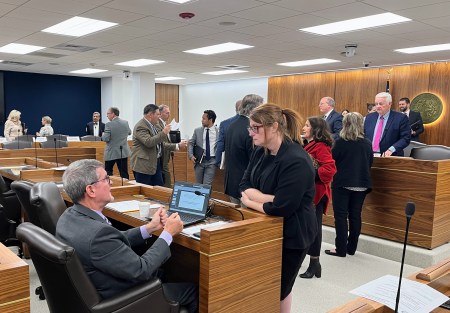
Rep. Donna White (R-Clayton) has echoed Smith’s sentiments. White previously worked as a nurse at John Umstead Hospital, a state-operated psychiatric facility that is now closed, and she remembers clients who she said needed a strict routine and constant supervision from trusted caregivers to maintain stability.
“We know that everybody cannot live outside of an institution,” White said during the January meeting. “We need to have qualified people in those hospitals that were designed to keep people in a safe environment where they are much happier and they're not out there wreaking havoc among the general population.”
Rep. Tim Reeder (R-Ayden) co-chair of the committee and an emergency department physician, told NC Health News that the committee hasn’t had deep conversations about re-institutionalizing people outside of the public meetings. He said he thinks there could be some middle ground for supportive housing that may be more appropriate, such as group homes, in the same way medically complex patients live in skilled nursing facilities.
Need for more supportive housing
Though some lawmakers may want people with serious mental illness to live — removed from society — in psychiatric facilities, legally, that’s not an option.
Over the past 30 years, there has been a shift toward recognizing the rights of people with disabilities, including mental illness, to have more autonomy. The 1990 Americans with Disabilities Act dictates that they cannot be discriminated against because of their disability, and they must be included in community life. The 1999 Supreme Court decision Olmstead v. L.C. went a step further, mandating that people with disabilities live in the least restrictive settings possible. The main plaintiffs in that case were two women with severe mental health disabilities who had been confined to a psychiatric facility in Georgia. The case was initiated after they petitioned for their release and they were denied.
In 2012, North Carolina entered a settlement agreement with the U.S. Department of Justice over its lack of compliance with the Olmstead decision. The state began a process of moving people with disabilities out of institutions — often ones that lacked the resources to provide them with appropriate services — and into independent living as part of the Transition to Community Living initiative.
So the question remains: What do people with severe mental illness need to safely live in the community?
Marti Knisley, the independent reviewer of that settlement agreement who documented the state’s compliance progress for more than a decade, said effective outpatient services paired with supportive housing works. Over the past 11 years, she said only 5 percent of the people discharged from state psychiatric hospitals who moved into supportive housing were readmitted to those hospitals.
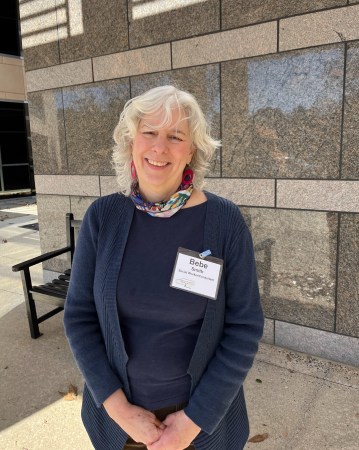
North Carolina used to have more housing options for people with severe mental illness, but those largely disappeared with the privatization of the mental health system in the early 2000s, said Bebe Smith, a social worker and longtime advocate for people with mental illness.
She remembers when there were different levels of mental health group homes, ranging from more independent living options to high-management settings, where residents received supervision and medication management. Now, she said, there are some scattered sites of independent housing for people with mental illness as part of the Olmstead settlement, but many of those people are left without the services and case management that they need.
Additionally, people with severe mental illness sometimes need help managing their rent or dealing with home repairs or an adverse event like a bedbug infestation, explained Elizabeth Barber, executive director of Threshold Clubhouse. Clubhouses are a place for adults with serious mental illness to learn life skills, receive vocational training and find community among their peers.
The role of community in recovery
People with severe mental illness want and need to live a meaningful life in the community, but to do that they need things like socialization and vocational support, Barber said. Providing those opportunities doesn’t always fall under the state’s clinical service criteria.
The clubhouse model exists to fill those gaps, Barber said.
And the model pays off. In 2025, only 8 percent of active Threshold members were admitted to a hospital, Barber said. Clubhouse care runs about $100 a day per member, while a psychiatric hospitalization can cost thousands. Barber said there are seven clubhouses like Threshold around North Carolina and that the state plans to open a handful more in the coming years.
Ali Swiller, associate director of Threshold, said that people getting basic psychiatric services may only see their psychiatrist every three to six months to check in.
A lot can happen between those appointments.
“At the clubhouse, because we see people often and know them probably the best out of any treatment that they're engaged with, we're able to advocate for that outpatient treatment much more quickly when something arises before it gets to a crisis level,” Swiller said. “And we're able to provide collateral information to that practitioner to get them an appointment much more quickly and to avoid that hospitalization.”

Sometimes Threshold staff even go with a participant to an appointment.
But a state Medicaid policy is limiting how many people can access Clubhouse support. Since 2006, a service exclusion has prevented people enrolled in Assertive Community Treatment (ACT) — an intensive outpatient clinical service meant for people with serious mental illness — from also receiving clubhouse services at the same time. Nonetheless, Threshold has continued serving some clients receiving ACT services at no charge.
“We have a couple of folks that come here almost every day that are receiving ACT,” Barber said. “From our perspective, it's pretty clear that that is a complementary service that would really produce much better results for folks on ACT if they could also receive Clubhouse services.”
Another issue is that as people qualify for Medicare at age 65, that federal payer of health services for older adults doesn’t cover the Clubhouse model — or a host of other intensive outpatient mental health services. Those who work closely with people who have severe mental illness say the system needs to be structured to care for individuals across their entire lifespan.
Effective services across the lifespan
For people living with serious mental illness, the need for support doesn't end after a hospitalization or a crisis. The state needs to think in terms of decades, advocates say, not just solving today’s crisis and moving on.
“Managed care goes for short-term episodes of care,” said Smith, the longtime social worker. “A lot of the more enhanced services have very strict eligibility criteria, and you have to have Medicaid to get them.”
“The way that I think about something like schizophrenia is that you really have to take a life course perspective,” she added, noting that the need for care can stretch for years, even a lifetime.
Smith said that means early intervention when symptoms first appear, ongoing psychiatric care and medication management, meaningful case management that helps people stay engaged in treatment and navigate benefits, and stable housing with the right level of support. She said there should also be more engagement of and education for supportive family members of people with severe mental illness.
Another issue is that many of the intensive community mental health services exist on paper, but fall short in practice. Knisley, the independent reviewer of North Carolina’s Olmstead settlement agreement, said the state's ACT teams are a prime example. They are supposed to function like hospitals without walls, bringing rigorous services to people where they are.
But of the state's 87 teams, her review found that only about six are truly effective.
Knisley said North Carolina’s ACT payment model doesn’t incentivize intensive services. She said teams are paid the same regardless of how often or how long they see patients or whether all the positions on the team are filled. ACT teams also lack a tiered structure to match the level of services to patient needs, Knisley said, adding that these factors lead to inconsistent and sometimes poor practices.
She said many of the folks she talks with at the state’s mental health managed care organizations who run the ACT teams want to improve them but often lack the guidance and tools to do so. Knisley said meaningful performance improvement is far more complex than ticking boxes on a checklist.
Compounding the problem, Knisley said, state dollars for mental health services have dwindled over time, and policymakers shifted to a reliance on Medicaid to fill the gaps. She notes that Medicaid doesn't always cover the most effective services, meaning overall spending can appear stable even as the quality of care declines.
This could be exacerbated over the coming decade as Medicaid cuts mandated by the One Big Beautiful Bill Act go into effect.
The only way to stop the revolving door of jails and hospitals for people with severe mental illness, these advocates say, is for the state to truly commit to an intensive outpatient system with the right housing and social support.
This article first appeared on North Carolina Health News and is republished here under a Creative Commons Attribution-NoDerivatives 4.0 International License.

California leaders lionized César Chávez. Now, they face a reckoning with his past
By Ryan Sabalow, Jeanne Kuang, Nadia Lathan and Yue Stella Yu, CalMatters
This story was originally published by CalMatters. Sign up for their newsletters.
César Chávez, the legendary California farm-labor activist and Mexican-American civil rights icon, has for decades been a figure intertwined with state and national Democratic politics.
Former President Joe Biden had a bust of Chávez inside the White House. Gov. Gavin Newsom told reporters a black-and-white photo of Chávez and his close ally Sen. Robert Kennedy is the first picture he sees in his house every morning.
And, in California, Chávez’s name is intertwined with day-to-day life. Dozens, if not hundreds, of public schools, boulevards, community centers and city plazas bear his name. He’s even part of California schools’ official curriculum.
Now, less than two weeks before California was to celebrate the state holiday honoring the late labor leader’s birthday, state and national Democrats are grappling with the shocking revelation that multiple women have come forward alleging that Chávez raped them. One of those women was his partner in the movement, Dolores Huerta.
On Wednesday, The New York Times published an investigation naming three women who accused Chávez of using his position of power to sexually assault them. Two were the daughters of union leaders. They told the Times they were abused as girls.
The other was Huerta, herself a labor icon, who co-founded the farmworker union with Chávez, popularized the rallying cry of “Sí, se puede” and who remains a towering figure in Democratic politics. Huerta said in the Times story that Chávez had raped her, and that she had given birth to two children after encounters with him.
“Unfortunately, he used some of his great leadership to abuse women and children — it’s really awful,” Huerta, 95, told the Times.

The fallout from the revelations was immediate as Democratic politicians and labor activists scrambled to react to one of their heroes being forever tarnished.
“How many days I’ve marched, how many times I’ve been with students, talking about the movement, how many photographs I have in my house of Bobby Kennedy and César Chávez,” Newsom told reporters at a press conference. “It’s been hard to absorb this.”
His wife Jennifer Siebel Newsom, a sexual assault survivor and director of several films about gender equality, told reporters in tears that she was “shaking a little about Dolores and these young women.”
“The women are in our hearts,” she said in Spanish.
The United Farm Workers, the union that Chávez founded, called the accusations “indefensible” and cancelled its César Chávez Day events. Just four years ago, the union recreated his iconic March to Sacramento as it pushed Newsom to sign a law meant to make it easier for it to sign up members.
California starts scrubbing Chávez’s name
Other state political leaders, members of Congress and Democratic candidates for governor, meanwhile, put out statements condemning the allegations and showing support for the women who spoke out.
“For survivors and their families, the weight of their pain is real and ongoing,” Democratic Assembly Speaker Robert Rivas said in a statement that didn’t name Chávez. “The farmworker movement has never been about one man; it is bigger than any one person, and its values of dignity and justice are more important now than ever. To those who have found the courage to come forward, my heart is with you.”
Rivas, like many California Democrats serving in the Legislature, has close ties to the labor movement and is a former union member.
Rivas grew up in farmworker housing and has long made Chávez part of his political story. In 2024, he was honored at the César Chávez Foundation alongside Jane Fonda.
Rivas’ office didn’t respond to CalMatters when asked whether the Legislature will fast-track legislation to rename the state holiday in time for March 31. The Legislature made it an official holiday in 2000. To change the name, the Legislature would have to pass a bill that Newsom would have to sign into law.
Newsom told reporters he was open to the idea, but leaders need some time to absorb the shock.
“We have to unpack all of this, dive a little deeper first to understand, before we jump to the next steps,” he said. “There’s a sense of urgency on that in the context of this being the month we celebrate the life and times of a figure we’ve long embraced and revered.”
The Legislature’s Latino Caucus also is discussing what to do, said Los Angeles Democratic Assemblymember Mark González.
“All options are being thoughtfully considered in response to the allegations of sexual violence involving César Chávez, including the possibility of renaming the state holiday,” he said in a statement. “This is a moment that calls for care, accountability, and a commitment to supporting survivors of sexual violence.”
At the same time, local leaders were also considering removing Chávez’s name from their landmarks.
Cities review park, street names
San Diego officials may rename César Chávez Parkway, according to spokesperson Dave Rolland.
“The allegations of abuse involving César Chávez are shocking and disturbing,” Mayor Todd Gloria, a Democrat, said in a statement. “Our first concern must be with the survivors who have come forward and those who were unable to do so.”
The city, which is the second most-populous in the state, has a park and avenue named after the civil rights leader.
In Sacramento, where César Chávez Plaza sits just a few blocks from the Capitol, leaders also are taking steps to rename the landmark.

Mayor Kevin McCarty, a former Democratic lawmaker who says he participated in UFW and Chávez Day marches for 30 years, was convening a subcommittee to work on changing the name.
“We take these allegations seriously and will ensure the naming of our city facilities aligns with our values,” he said in a statement.
Chávez a towering figure in Democratic politics
For many Democrats, Chávez was more than just a historical figure — he embodied the party’s ideals about labor, justice and social change. He was also a revered leader within the Latino communities, many of whom remembered him for his decades-long fight for farmworker rights.
“Certainly no one can deny that César Chávez has been an incredibly influential figure in not just California’s landscape, but really nationally,” said Mindy Romero, founder and director of the Center for Inclusive Democracy who studies Latino politics.
From rallies to protests to floor speeches, California Democrats frequently invoke his name. Lawmakers have referenced Chávez at least 278 times in hearings since 2023, according to the CalMatters Digital Democracy database.
“We will often see invoking of César Chávez … as almost proof that they are in solidarity with the labor movement and Latino community,” Romero said.
Last year’s legislative floor sessions commemorating César Chávez Day featured one lawmaker after the other extolling Chávez and what he represented.

“There are so many communities in California that have schools and health clinics and major boulevards and thoroughfares named for César Chávez and for all of this legacy, and they are a recognition of that past. Those roads are the roads to somewhere,” West Sacramento Democratic Sen. Christopher Cabaldon told his colleagues at the time. “They are the roads for us to continue to press, to fight, especially now, to make real that dream. Because not every farm worker in California has achieved the dreams that Cesar and everyone else that's been mentioned on this floor has aspired to.”
The significance of Chavez’s legacy, however, is exactly why the allegations are tough to swallow for Democrats and labor organizers, said Christian Dyogi Phillips, former political director at a Service Employees International Union chapter in Texas and now associate professor of political science and international relations at the University of Southern California.
“As organizers, we are always trying to understand power and figure out how we can distribute it more fairly and ensure that people have a voice,” she said. “And all of those dynamics are wrapped up in this story that’s unfolding, and how power has been abused, how people do not have a voice. As organizers, I think there’s nothing worse than that.”
Few Latino leaders received recognition as widespread as Chavez: Then-President Bill Clinton awarded him the Presidential Medal of Freedom in 1994.
“You have a loss of a hero, but you also just have recognition for our community that is going to be questioned,” Romero said.
“Now people will struggle with reconciling this new, horrible element of his history,” she added. “Do people continue to celebrate him? How do they recognize his impact with this new history?”
For some Democrats, the allegations were shocking beyond what Chávez represented to their movement.
Personal connections to Chávez
Some had personal connections to Chávez’s alleged victims.
California Democratic Sen. Eloise Gómez Reyes of San Bernardino called Huerta “a dear friend.” In a statement, she said she felt a mix of “rage, sorrow, and disappointment” after learning what Huerta and the other women told The Times.
“These revelations are deeply painful,” Reyes said. “They demand that we pursue accountability through due process under the law — and that we confront a deeply uncomfortable truth: We must never place any individual above reproach.”
Huerta has addressed lawmakers at least five times since 2024, according to Digital Democracy.
But the allegations also provide politicians with an opportunity to lift up women who were subject to the power dynamics and recognize other Latino leaders who have contributed to the labor movement for decades, political scientists say. Scraping Chavez’s name from schools and road signs, Phillips said, is “the basic and obvious.”
“To really honor the movement that this person’s name was such an important symbol of, our elected officials have to do so much more,” she said. “There’s also work to be done for our public leaders … to reach beyond the loudest, most charismatic man in the room into communities and figure out who is really doing the work.”
Digital Democracy’s Foaad Khosmood, Forbes professor of computer engineering at Cal Poly San Luis Obispo, contributed to this story.
Editor's note: This story has been updated to clarify that Christian Dyogi Phillips worked at a local chapter of SEIU; it was also updated to clarify what Mindy Romero meant regarding Chavez's influence among Latinos.
This article was originally published on CalMatters and was republished under the Creative Commons Attribution-NonCommercial-NoDerivatives license.
‘Wandering officers’ widespread across NC police agencies
by Lucas Thomae, Carolina Public Press
March 23, 2026
In 2015, Mark Oakley, then an officer with the Roanoke Rapids Police Department, slammed a detainee at the Halifax County jail to the ground, then “tased him” while the man was “in handcuffs and posed no threat,” according to a civil lawsuit later filed against Oakley.
An officer who is found to have used excessive force against an unarmed person risks losing his career in law enforcement. That didn’t happen in this case.
The incident sparked an internal investigation, and the Roanoke Rapids police chief at the time would later tell attorneys that he was prepared to terminate Oakley for misconduct. However, Oakley resigned before that investigation concluded.
[Subscribe for FREE to Carolina Public Press’ Daily, Weekend and Election 2026 newsletters.]
He would go on to work at three more law enforcement agencies over the next eight years, until eventually he landed in nearby Warren County at the Warrenton Police Department, which fired him in March 2024 following an SBI investigation into multiple complaints of Oakley unnecessarily deploying his Taser on civilians.
Before Oakley used the stun gun on them, all three individuals named in the lawsuit were “detained and immobilized.” One woman was pinned to the front seat of her car and another was handcuffed in a patrol car. A third man was pinned against the back of a car with his hands visible.
Even the investigation into Oakley and his dismissal didn’t mean the end of his career. He continued to work his part-time gig as an officer back in Halifax County with the Littleton Police Department, another small agency just 15 miles from Warrenton. Federal agents arrested him more than a year later for depriving the stun gun victims of their rights “under the color of law,” according to the indictment.
Even then, the Littleton police never actually terminated Oakley. Instead, he handed in his resignation five days after being criminally charged.
Oakley was a prime example of what criminal justice experts call a “wandering officer.”
While no agreed upon definition of a wandering officer exists, the one used by the late scholar Dorothy Moses Schulz is helpful: “a police officer who leaves one department after being terminated for misconduct or under a disciplinary cloud, and secures employment in another law-enforcement agency.”
This article, the first in the three-part investigative series Stray Cops by Carolina Public Press, explores the extent of the wandering officer problem in North Carolina. The second and third articles in the series examine the systemic reasons for this phenomenon in North Carolina and potential solutions to increase transparency and accountability in law enforcement hiring.
NC data limits wandering officer count
CPP identified nearly 700 wandering officers in North Carolina as of the most recent data available, although several issues make producing a precise count of wandering officers across the state extremely difficult.
For one, the most recent statewide employment data kept by the NC Department of Justice is inadequate for the task. Since switching to a new database system in 2022, publicly available law enforcement employment data no longer gives a reason for why an officer separated from an agency.
That makes it impossible to distinguish between officers who leave their departments because they retired versus officers whom agencies terminated because of misconduct.
The second problem is identified in Schulz’s definition of a wandering officer. An officer who resigns from one job “under a disciplinary cloud,” as Oakley did in Roanoke Rapids in 2015, is much harder to track compared to an officer whom an agency fired outright.
Keisha James, an attorney with the National Police Accountability Project, a nonprofit that litigates instances of police misconduct across the county, including North Carolina, said the public often has difficulty getting detailed information about what happened at a previous agency if an officer resigned.
“Even in situations where an officer was engaged in misconduct at a previous employer, you might not be able to get any information about what actually happened, because the investigation essentially closed before it can really begin,” she said. “What would have been a termination ends up in a resignation.”
So, the total number of wandering officers CPP identified likely undercounts the total cases because it doesn’t include anyone without a dismissal on their record, even if they resigned due to accusations of misconduct. It also wouldn’t include officers who were fired from an agency in another state or those dismissed for misconduct while working for a federal agency, such as the Immigration and Customs Enforcement.
Even so, this problem persists throughout North Carolina and can still be quantified in a few valuable ways.
Known wandering officers cases across NC
CPP’s analysis showed that as of 2022, at least 679 active law enforcement officers whose previous agencies had dismissed them were working again at 327 agencies in North Carolina.
That means that a previous agency had fired about 2%, or one out of every 50, of the 31,898 active North Carolina officers in the 2022 DOJ employment dataset.
Of those wandering officers, agencies had dismissed 69 of them at least twice during their careers. The most egregious of them had been fired at least five times from five different agencies and still managed to find work carrying a badge and a gun.
Wandering officers are located in all regions of the state, from the Blue Ridge Mountains to the Piedmont to the Coastal Plain.
The harm they cause is difficult to measure, but lawsuits, administrative court filings and archival media reports reveal the potentially devastating consequences of allowing them to remain in law enforcement.
Mark Anthony Russell currently works as a Transylvania County sheriff’s deputy. The Henderson County Sheriff’s Office fired Russell in 2011 after he was charged with violating a domestic violence protection order. The Brevard Police Department dismissed Russell again in 2014, DOJ data shows.
Douglas Strader joined the Graham Police Department in 2021, after the Greensboro Police Department had previously fired him for discharging his firearm at a fleeing vehicle. Strader was also one of eight Greensboro officers involved in the 2018 death of Marcus Smith, who died in police custody after officers used a "hogtie" restraint to subdue him.

In the case of Jeffrey Edwards, the State Highway Patrol fired him in 2010 for misconduct, only for Edwards to end up as a deputy at the Washington County Sheriff’s Office.
Washington County later fired him in 2022 after he made a violent arrest, dragging a handcuffed detainee down the stairs of the courthouse.
The detainee in that case, who received treatment at a hospital for injuries sustained during the arrest and later had his charges dropped by the district attorney, sued Edwards in 2024 with the help of the National Police Accountability Project and eventually settled out of court.
Edwards still works in law enforcement today as a deputy with the Tyrrell County Sheriff's Office.
Some who wander become boss
In some cases, wandering officers failed upwards into leadership positions, often at small departments. Such was the case with both of Oakley’s bosses in Warrenton and Littleton, who hired him after he resigned from Roanoke Rapids.
Former Warrenton Police Chief Goble Lane lost his job with the Franklinton Police Department in Franklin County in 2005, then went on to work at three more agencies over the next five years before settling in Warrenton.
A 2025 civil lawsuit accuses Lane of protecting Oakley despite persistent complaints from civilians and fellow officers. According to the lawsuit, Lane once instructed another police officer to alter paperwork related to a separate incident to make it appear that Oakley was not at fault.
The lawsuit, which brought legal claims against not just Oakley and Goble but the Town of Warrenton itself, accused Goble of retaliating against other officers who reported Oakley's misconduct.
“There's many instances where there's a ‘rogue officer,’ or someone who acts alone and the supervisors have a very good case to make that they really didn't know what was happening,” said Abraham Rubert-Schewel, the attorney representing the plaintiffs who claimed Oakley used excessive force against them.
“But here, the facts really show something different.”
Certification records indicate that Lane currently works at the Middlesex Police Department in Nash County and in Henderson with the Vance-Granville Community College Police Department.
Meanwhile, Oakley’s other boss, Phillip Trivette, who isn’t named in the civil lawsuit, had been dismissed from three departments before becoming chief of police in Littleton.

In 2016, an administrative law judge affirmed a decision by the NC Sheriff’s Standards Division to deny Trivette’s application for certification with the Halifax County Sheriff’s Office, based on four prior misdemeanor convictions for worthless checks. He was later hired in Littleton.
In an interview with the News & Observer, Trivette defended his decision to retain Oakley after he’d been fired from Warrenton, claiming that he’d never had any problems with Oakley at his department.
Trivette announced his retirement as chief in 2025, several months before Oakley was arrested. Littleton’s website shows that Trivette still works there as a police officer.
In another case, Orlando Rosario Jr., an officer who had been dismissed from three different agencies in his career, became the police chief in the tiny town of Stantonsburg in Wilson County.
The Goldsboro Police Department hired Rosario in 2008, after four short stints at other police departments, one of which fired him. In 2009, the Goldsboro News-Argus reported that Rosario caught heat from the local NAACP chapter for telling a trainee during an arrest at an apartment complex to “shoot (anyone in the crowd of onlookers) in the f—ing head if he gets any closer.”
Goldsboro later dismissed Rosario in 2011. The Black Creek Police Department then fired him from his next job in 2015. But he managed to stick with Stantonsburg, where he worked for 10 years before resigning as chief in 2025.
Employment records indicate that Rosario currently works as an officer with the Knightdale Police Department, his eighth agency in 25 years.
None of the departments where Rosario, Trivette or Lane currently work responded to CPP’s request for comment before the publication of this story.

Public and private, rural and urban, large and small
The data shows that all types of law enforcement agencies hire wandering officers, including sheriff’s offices, municipalities, state agencies and specialized departments within college campuses, hospitals and airports.
Of the 327 agencies in North Carolina that employed wandering officers in 2022, Allied Universal Company Police, which is operated by a private security company based in Pennsylvania, had the most with 23 previously dismissed cops.
Under state law, private companies like Allied Universal are permitted to form company police departments with sworn officers certified by the Criminal Justice Standards Division. Those officers have the same ability to arrest and charge perpetrators with crimes as any other sworn officer in the state.
North State Security Group employed at least eight wandering officers in 2022. Southeastern Company Police and On Point Company Police each employed two, according to the data.
College campuses and hospitals are also common places to find wandering officers.
The Wake Medical Center, which employed 41 full-time police officers in 2022, had six previously dismissed officers working for them. Vidant Company Police, the law enforcement arm for what is now ECU Health, employed eight previously dismissed officers.
The campus police department for North Carolina Central University employed five. The campus departments at Shaw, Elon and North Carolina A&T each employed three.
Sheriff’s offices accounted for 322 of the 679 identified wandering officers — or about 47%. Municipal police departments employed 280 of them.
More than half of those wandering officers, 383, were employed in rural counties as classified by the NC Rural Center. Agencies in urban counties only accounted for 96 of them.
But the most important factor affecting where wandering officers work probably isn’t agency type or urban-rural classifications. It’s more likely that department size and resources matter most.
Specifically, small departments — which have less money for things like competitive salaries and thorough background investigations — are overrepresented in the data.
For example, both the Tabor City Police Department in Columbus County and the State Highway Patrol employed five previously dismissed officers in 2022. But considering that Tabor City only had nine full-time officers on its payroll, while the Highway Patrol employed 1,550, those are two vastly different data points.
Warrenton, where Oakley worked, employed 10 sworn police officers in 2022, some full-time and others part-time.
Of those 10 officers, four including Lane had been dismissed from previous jobs. That count doesn’t even include Oakley, who had resigned under investigation at Roanoke Rapids before he could be fired. In all, at least half of Warrenton’s cops at that time were wandering officers.
The civil lawsuit against Oakley, Lane and the Town of Warrenton indicates that not only did Lane know about the complaints about Oakley, but so did at least one Town Council member who chose not to investigate further.
That’s an institutional failure, not just the work of one person, Rubert-Schewel said.
“In cases like (Oakley’s), clearly the buck doesn’t stop just with the officer. Here, we have direct evidence that his supervisors and an elected official knew what was happening and failed to intervene and discipline or remove Oakley as they should have.”
This article first appeared on Carolina Public Press and is republished here under a Creative Commons Attribution-NoDerivatives 4.0 International License.

El Paso jail scheduled unauthorized mental health tests for Walmart gunman, records show
by Robert Moore, El Paso Matters
March 19, 2026
In the spring of 2023, a nurse practitioner at the El Paso County jail made four appointments to take Walmart gunman Patrick Crusius out of the jail for mental health testing, without seeking permission of defense attorneys.
The effort was stopped after defense lawyers alerted federal and state judges of the plan, according to records recently made public at the request of El Paso Matters.
The appointments were scheduled by Jamie Wyman, a psychiatric nurse practitioner who works at the El Paso County Detention Facility, according to a motion filed May 1, 2023, by Crusius' defense team. The motion was unsealed this month by U.S. District Judge David Guaderrama in response to an El Paso Matters request to make public federal court records that had been sealed during the prosecution of the Walmart mass shooter.
Joe Spencer, one of Crusius’ defense attorneys, said health providers at the jail should have consulted with them before scheduling any mental health appointments.
Otherwise, he said, unscrupulous prosecutors could use jail medical personnel to gain access to psychiatric information about a defendant that they weren’t legally entitled to. He stressed that he doesn’t believe that was what happened in this case.
“It's very important (to contact an inmate’s attorney), because the client, especially one that has mental health issues, is at a disadvantage in the sense that he is not all there, and he just is going to go along with whatever anybody tells him to do,” Spencer said.
Bill Hicks, who was district attorney in 2023, said his office didn’t request any tests, and was never informed of the jail’s plans to conduct medical tests on Crusius.
“We did not make any requests for medical or mental health examinations during my tenure. We did file motions with the court which would have authorized psychological examinations in preparation for sentencing, but those motions had not been heard nor ruled on. So, the orders could not have been as a result of any request by us, during my term,” Hicks said.
Assistant County Attorney Carlos Madrid said referrals for specialized treatment of jail inmates are made by medical and mental health professionals who are contracted through University Medical Center and Emergence Health Network.
He said the Texas Commission on Jail Standards requires that “(a)ll medical instructions of designated physicians shall be followed.”
“In this case, any referrals for outside evaluation or treatment would have been initiated by medical or mental health professionals, not by Sheriff’s Office personnel. The underlying reasons for those referrals involve protected health information, which we are not authorized to disclose,” Madrid said.
Wyman scheduled four appointments outside the jail for Crusius, according to the federal court filing: a psychiatric evaluation April 21, a CT scan of the head in Northeast El Paso on April 26, a “3-hour sleep deprived video monitored EEG” on May 2 at a West El Paso sleep clinic, and a neurological exam May 26 in Central El Paso.
Spencer said each of those appointments would have required massive security for moving Crusius.
“At one point we did have Patrick leave the jail to do a testing that we wanted to have done, and the amount of security and detail that was involved in that movement was incredible, because the sheriff was very concerned about safety and by a lot of other issues, and that that took great effort to do that,” he said.
The defense lawyers said they discovered the appointments through records the jail was required to regularly provide them.
The federal court motion said 409th District Judge Sam Medrano, who was overseeing the parallel state prosecution of Crusius, issued an order April 18 canceling the appointments and requiring that medical providers consult with defense attorneys before ordering medical tests of evaluations of Crusius.
The defense asked Guaderrama, the federal judge, to issue an order barring the U.S. Marshals Service from transporting Crusius to the medical appointments. In the spring of 2023, Crusius was held in the county jail under federal custody. Guaderrama ruled on May 2 that the request was moot because the appointments had been canceled by Medrano.
The federal court motion said that because Crusius hadn’t filed a notice of intent to pursue an insanity defense, the state had no right of access to perform medical or mental exams.
“By ordering these examinations and diagnostic studies, the state is gaining unauthorized access to the mental state of the defendant, which actions stampede into protected defensive strategies,” the motion said.
Crusius pleaded guilty in February 2023 to federal hate crimes and weapons charges in the Aug. 3, 2019, shooting at the Cielo Vista Walmart that killed 23 people and wounded 22 others. He wrote in an online post shortly before the shooting that he was acting to stop “the Hispanic invasion of Texas.”
In July 2023, Crusius was sentenced to 90 consecutive life terms in federal prison.
He pleaded guilty in April 2025 to state charges of capital murder and aggravated assault with a deadly weapon, and received 23 life terms without possibility of parole.
Crusius pleaded guilty after federal and state prosecutors separately decided not to seek the death penalty. He is serving his sentence at a state prison in Palestine, Texas.
This article first appeared on El Paso Matters and is republished here under a Creative Commons Attribution-NoDerivatives 4.0 International License.

Mass. bottle deposit system continues nosedive, hitting new low last year
by Jordan Wolman, CommonWealth Beacon
March 25, 2026
A STAPLE FEEL-GOOD win that served as a hallmark of Massachusetts’s commitment to environmental causes has suffered from a decades-long slow but decisive downward spiral.
The state’s bottle deposit program, which has handed out a nickel for each eligible bottle and can that consumers redeem since it started in 1983, has been hailed as a game-changer in reducing litter and incentivizing recycling.
But the program’s success has deteriorated steadily over time.
In fiscal year 1995, 87 percent of eligible bottles and cans bought in the Bay State were redeemed. Ten years later, the redemption rate dropped to two-thirds. Last fiscal year, just one-third of the bottles and cans sold in Massachusetts that could be returned were brought back for redemption, according to data from the state Department of Environmental Protection.
Out of the 10 states that have a “bottle bill,” including neighboring New York, Vermont, and Connecticut, Massachusetts has the lowest redemption rate.
“It’s a distinction with dishonor,” said Janet Domenitz, executive director of MASSPIRG, a public interest group and longtime proponent of the program. “And it’s so obvious how we could improve instantly.”
For advocates, it’s a clear sign of the obvious: A nickel just isn’t what it used to be more than 40 years ago, leading more people to forego the chore of redeeming containers. They are making a push for legislative reforms that would double the refund rate from 5 to 10 cents and expand the list of bottles and cans that can be redeemed.
Past efforts have stalled — clearing the Senate as recently as 2024, only to peter out in the House — but this time, advocates are taking a new tack: targeting Polar Beverages, the popular Worcester-based company that opposes bottle bill expansion.
Just Zero, a national nonprofit environmental advocacy group based in Sturbridge, contends that Polar has wielded particular influence in the Legislature to kill past efforts to expand to the bottle bill.
“We're trying to force a divorce between Polar Beverages and the Legislature,” said Kirstie Pecci, the group’s executive director. “They have an outsized voice.”
Just Zero is launching a lobbying blitz targeting lawmakers on Beacon Hill and organizing a pressure campaign against Polar. Pecci maintains that the proposed reforms would only minimally impact the company’s bottom line in Massachusetts.
Chris Crowley, Polar’s executive vice president, doesn’t dispute that the company has no interest in seeing the bottle bill expanded in Massachusetts. Perceptions of undue influence, however, are flat wrong, he said, though he conceded that the company enjoyed a close relationship with former House speaker Robert DeLeo.
“The all-powerful Oz,” Crowley said in jest of the way Polar’s clout is being characterized. “I wish we had that kind of power.”
In Massachusetts, consumers pay a 5-cent deposit for glass, plastic, aluminum, and metal containers of beer, carbonated soft beverages, and mineral waters. They can then bring those eligible containers to redemption centers — oftentimes, grocery stores and other similar establishments — for a 5-cent refund per can. Those containers are then returned to the beverage company and recycled. States with bottle bills generally boast substantially higher recycling rates than those without.
The system flips the way trash and recycling costs are typically financed in the US by shifting more of the burden onto beverage companies. Under the bottle bill, the producer pays a handling fee of either 2.25 cents or 3.25 cents per container to the redemption center, reducing the burden on municipalities that often pay for recycling on a per-ton basis.
Bottle bill reforms would not only lead to a spike in the redemption rate and an 85 percent litter reduction of containers with deposits, according to a 2022 report, but they would also save Massachusetts cities and towns at least $26 million per year.
The Massachusetts Municipal Association is supporting the bottle bill expansion for exactly that reason. Adam Chapdelaine, the head of the organization, wrote to lawmakers last year that “the era where recycling was profitable to cities and towns has unfortunately come and gone.” There has been an 18 percent increase in municipal solid waste disposal and recycling processing costs between 2021 and 2024, according to the state Department of Environmental Protection.
Still, the growth of curbside recycling, broader affordability concerns, and decline of the bottle deposit system itself is arguably making it harder for the reforms to gain momentum.
Beverage manufacturers and the waste collection industry argue that doubling down on a program in tatters — and charging consumers 5 cents more up front — is illogical, while supporters of the program contend that the system’s decline is all the more reason for a makeover after remaining largely unchanged for 40-plus years.
The opposition from business groups has made enacting the reforms, many of which have been on the table for more than a decade, an uphill battle. Crowley, for one, called the bottle bill an “incredibly inefficient way to recycle” compared to curbside programs and something that is expensive for companies like Polar to operate.
The waste industry is also fighting expansion. Lewis Dubuque, vice president of chapter management for the Northeast states at the National Waste and Recycling Association, disputed that an expanded bottle bill could save municipalities money because beverage containers often represent some of the most valuable materials in the recycling stream that haulers then sell.
“You are going to increase the price of recycling for municipalities. That’s just a fact,” he said. “The price of the bottle is also going to go up at the store by 5 cents. It basically is acting as a regressive grocery tax.”
A glaring hole in the program’s ability to drive redemption is the lack of accessibility for consumers to return their containers. Only one-quarter of the retailers required to accept back bottles and cans are doing so in the Bay State, according to a 2022 report from the Container Recycling Institute, pointing to a significant enforcement lapse.
One reason for the legislative reluctance to embrace expansion is a 2014 ballot measure that saw voters decisively reject a bottle bill expansion by a roughly 73-27 margin.
“That's a pretty clear mandate to us,” said Stephen Boksanski, executive director of the Massachusetts Beverage Association. “You just don't see those types of numbers if there's not a good reason behind it.”
That failed ballot initiative, which would have doubled the refund rate, increased the handling fee, and expanded the system to essentially include all beverage containers, still looms large over the expansion efforts underway today.
The measure attracted the opposition of big players — and their dollars to back it up.
The American Beverage Association, the national organization affiliated with Boksanski’s group that represents brands like Dr. Pepper and Dasani, bankrolled the bulk of the opposition campaign that poured in a total of roughly $9.5 million to defeat the measure. (Ralph Crowley, Jr., Polar’s president and CEO, serves as treasurer of the American Beverage Association’s board of directors.)
Other large companies like Coca-Cola, Stop & Shop, and Nestle also pitched in, according to records from the state Office of Campaign and Political Finance.
“We're agnostic to some degree as to how people recycle,” Boksanski said. “We want those bottles back. If that means going to your transfer station, if that means putting it at your curb, if that means going to your redemption center, we want people to do all of the above. But why would we invest more money in a system that's not going to get us where we want to go?” he said of expanding the deposit program. “It’s an expensive system to run, and when you're not getting the returns, it's disappointing and frustrating.”
Campaign ads opposing the 2014 ballot question ripped it for promoting "forced deposits" and argued that "yesterday's solutions will not meet today's challenges." The lopsided defeat of the question came despite support for expanding the bottle bill from lots of leading officials, including then-Gov. Deval Patrick.
Advocates don’t sugarcoat the 2014 outcome, but are still bitter about the role that heavy corporate spending played.
“It was a lashing,” said Domenitz, the MASSPIRG leader. “But we got outspent by $10 million. They did an excellent job of befuddling everybody.”
In addition to raising the deposit to 10 cents and expanding eligibility to most beverage containers, a bill now pending at the State House would require a regular review of the handling fee and set targets so that 95 percent of bottles and cans are redeemed by 2033.
The irony of the steadily declining redemption rate is that it has infused state coffers with tens of millions of dollars in unredeemed deposit money. That money is now left in the General Fund, but the proposed legislation would direct some of it toward a dedicated environmental fund.
“The federal government doesn't seem to have the same commitment to the environment that we have,” said Sen. Cynthia Creem, who is leading the bottle bill expansion effort in the Legislature. “So if we don't have all the funding coming in, this is a very small thing that we can do to keep our greenhouse gas emissions down,” since increased recycling displaces the need to produce new materials.
Other states with bottle deposit programs have enacted similar reforms in recent years. In 2021, Connecticut raised the deposit level from 5 cents to 10, increased the handling fee paid by beverage companies, and included more containers as eligible. The redemption rate there jumped from 44 percent in 2020 to nearly 65 percent in 2024. California also added deposits on more types of beverage containers in 2024.
Yet all the jockeying now underway after years of attempted fixes to the country’s worst-performing bottle bill may be more of a dress rehearsal for what will likely be another round in this battle next year. Beacon Hill will be loath to tack on anything resembling a new consumer charge with an election looming, so the battle seems likely to spill over to the new legislative session that begins next January, when advocates are bound to mount another push.
This article first appeared on CommonWealth Beacon and is republished here under a Creative Commons Attribution-NoDerivatives 4.0 International License.

At this St. Paul restaurant, the front door is no longer locked, but the fear isn’t gone either
by Shadi Bushra, MinnPost
March 18, 2026
Since the first full weekend of March, customers can walk into Homi Mexican restaurant in St. Paul without waiting for an employee to unlock the front door.
For much of the winter, customers had to sit in idling cars or stand outside a freezing entryway before being granted temporary, provisional access, like a Cold War safe house, with the door being locked behind them on the way in and the way out.
Now, this novel concept of just walking up, opening the door and entering the restaurant can seem suspiciously easy and carefree.
“We’re open for business in a way we haven’t been since November,” Miguel Lopez, Homi’s owner, said.
At Homi and scores of other immigrant-run restaurants in the Twin Cities, a security-first mentality created a disquieting environment for hospitality, suggesting that customers should look over their own shoulder to make sure a plainsclothes immigration agent wasn’t tailing them into the building.
An unlocked front door may be a milestone, but at Homi, the numbers don’t yet reflect a return to normalcy. Lopez has been able to fill seven of the nine full-time positions he had on payroll prior to Operation Metro Surge. While it’s an improvement, he is apprehensive about returning to pre-surge staffing before customers fully return.
“It’s a slow process,” he said. “People knew we were closed, but getting the word out that we’re back open is hard.”
The large, high-profile immigration raids may have slowed, but the anxiety they’ve left behind remains. For many workers, returning to the job still means accepting a level of risk.
“People are still fearful for their safety, but they need to provide for their families. And the need is more powerful than the fear,” Lopez said following a recent lunch rush.
Restaurants that shut down or scaled back operations during the enforcement surge are gradually reopening, but owners say the recovery is slow and uneven. Staffing remains thin, customers are returning cautiously, and the psychological impact of the crackdown still hangs over the immigrant workforce that keeps much of the hospitality industry running.
Some restaurants closed temporarily during the height of the disruption. Others switched to takeout-only service as employees stayed home and customers avoided dining out.
Related: The people who run some of your favorite Twin Cities restaurants are scared and exhausted – but determined to survive the ICE crackdown
Homi closed down for its employees’ safety during the first week of December, when immigration agents first came to Minnesota and began making highly public arrests, sometimes based only on an individual’s skin color, accent, or location of work or residence.
Lopez found himself struggling under the weight of the building’s rent and other fixed costs. Even with no payroll and minimal utilities, he still had bills to pay, including his family’s own mortgage. And without the restaurant, he was earning nothing.
Homi eventually reopened with a skeleton crew in January, but with one important caveat: The doors would remain locked from the inside, and customers could only order food for takeaway.
“We never stopped being afraid. But we did learn how they worked and figured out how to work defensively and protect ourselves,” Lopez said.
That was only ever supposed to be a temporary fix. Restaurant owners know that customers are more likely to spend more, recommend their food, and return again if they are able to sit down and eat in the restaurant. That’s why every one of Homi’s 38 seats is precious to Lopez.
Customers who once packed the dining room during lunch and dinner hours are returning gradually, he said, but many remain cautious about going out.
“People are still worried, so they’re not going out as much as they did before,” he said.
On a typical weekday before the federal surge, Lopez said he would be swamped with back-to-back orders from open through around one in the afternoon. During a few hours of downtime, they would prepare and restock for the dinner rush, from four until close.
Related: Want to support democracy? Visit your local Twin Cities art gallery, restaurant or coffee shop
Those rhythms haven’t fully returned yet, though Lopez is confident that it’s only a matter of time. He is prepared to limp through the whole season, if he has to.
“We might not return to normal business until May," he said, when the weather generally gives his industry a boost anyway.
Normal business is something that can be achieved, Lopez said. But the opportunity for a return to normalcy in general may be beyond reach for business owners, workers, and customers, all of whom carry the memories of this winter with them.
While business is slowly returning, Lopez said the experience has permanently changed how many restaurant workers see their jobs and their safety, with consequences for the economic sectors and neighborhoods that rely on immigrant labor and spending.
“We've been traumatized,” he said of immigrants and people of color in particular. “Nothing's gonna go back to being the same, but we'll try to make the best of it. And hopefully we’ll get to a point that we can be outside freely and go out to the streets and not be fearful of being snatched on the way home or on the way back.”
“That's what normal would be for us. When they let us work in peace and make money, spend money, and make this state profitable again.”
This article first appeared on MinnPost and is republished here under a Creative Commons Attribution-NoDerivatives 4.0 International License.