NC announces more funding in storm recovery areas
Kentucky writer, farmer and advocate Wendell Berry dies at 92, U.S. Forest Service declines public meeting on Wilson Creek ICE operation; Advocates call response ‘a shell game’, Women on parole face higher rates of mental health, housing challenges


It's Friday September 4, 2026 and in this morning's issue we're covering: NC announces $20 million to expand childcare in storm recovery areas, Rival Helene recovery narratives compete as Asheville hosts G20 summit, He spent 27 years on death row as a wrongfully convicted man. What comes next?, Kentucky writer, farmer and advocate Wendell Berry dies at 92, Forest Service declines public meeting on Wilson Creek ICE operation; Advocates call response ‘a shell game’, Redistricting hearing turns tense in US Rep. Bennie Thompson’s backyard, Women on parole face higher rates of mental health, housing challenges.
Media outlets and others featured: NC Newsline, Carolina Public Press, Verite News, Kentucky Lantern, NC Local, Mississippi Today, Stateline.
NC announces $20 million to expand childcare in storm recovery areas
Trevon Spencer (North Carolina Newsline) Published: September 3, 2026
North Carolina is making $20 million available to expand childcare on community college and university campuses in counties affected by Hurricane Helene and Tropical Storm Debby, Gov. Josh Stein announced.
The funding is part of a $75 million federal grant awarded to the state for childcare recovery in disaster-affected areas. Applications for the $20 million program will open Sept. 14 and close Nov. 2.
“Today marks a step forward in creating opportunity for children and restoring stability for families in areas hit the hardest by these devastating storms,” Stein said.
More than 230 childcare centers were affected by Helene, and more than 100 in central and eastern parts of the state were affected by Tropical Storm Debby in 2024, according to state officials.
The money can be used to build new centers and renovate older centers. The North Carolina Department of Health and Human Services says projects must address community needs. State leaders see North Carolina’s higher education campuses as ideal locations to expand childcare options on public land.
State officials from NCDHHS say only 16 of North Carolina’s 58 community colleges currently have childcare on campus. About 10 of the 17 UNC System campuses have some form of on-site childcare.
“This investment to expand on-site child care to college campuses will reduce barriers for students, faculty, and the surrounding communities, allowing them to learn and work knowing their children are safe and receiving high-quality education and care,” said NCDHHS Secretary Dev Sangvai.
NC budget offers rural childcare businesses financial help they’ve sought for years
Last year, NCDHHS said that as many as 55 childcare centers in western North Carolina damaged by Helene were expected to remain closed for the foreseeable future. By March 2025, at least 10 remained closed or were operating from temporary locations.
The remaining $55 million in federal funding is expected to support recovery payments to eligible providers, salary supplements for early-childhood educators, disaster preparedness efforts and mental health resources.
“Childcare is essential economic infrastructure,” said Matt Calabria, director of the Governor’s Recovery Office for Western North Carolina. “When a center closes, parents can’t get back to work, employers can’t staff up, and a community’s recovery slows.”
Rival Helene recovery narratives compete as Asheville hosts G20 summit
by Walker Livingston, Carolina Public Press
September 1, 2026
Asheville is buzzing with finance officials, central bank governors and journalists from across the globe this week. The city is hosting a G20 summit — specifically the G20 Finance Track. G20 stands for the Group of 20, which is a conglomerate of 20 countries with the largest economies in the world, including 19 individual nations, the European Union and the African Union.
The US Treasury Department says it chose Asheville because of the region’s recovery from Tropical Storm Helene, which occurred nearly two years ago. The Trump administration has framed the G20 in Asheville as a celebration of a supposedly completed recovery. Kush Desai, the president’s senior deputy press secretary, likened Asheville to a phoenix rising from the ashes in conversation with Carolina Public Press. US Treasury Secretary Scott Bessent recognized Asheville’s “comeback story” while delivering remarks at the summit.
But Asheville is just one city in Western North Carolina’s span of 18 counties and the Qualla Boundary, and even parts of Asheville, like the River Arts District and Biltmore Village, have not been fully rebuilt.
[Subscribe for FREE to Carolina Public Press’ Daily, Weekend and Election 2026 newsletters.]
Rural parts of the region that are still in the thick of recovery have seldom been a topic of discussion at the international event. Lagging federal funding for the $60 billion disaster hasn’t been either.
“The selection of historic Asheville reflects the Trump Administration's commitment to the revitalization and resilience of western North Carolina, which continues to rebuild after the devastating impact of Helene,” Secretary Bessent said in an August press release. Bessent owns a home in Cashiers, in Jackson County, a wealthy rural mountain community about an hour southwest of Asheville. Damage from Helene in Cashiers was minimal.
Other rural communities were both hit harder and facing a more difficult recovery. The Hickory Nut Gorge, which includes the communities of Lake Lure, Chimney Rock, Bat Cave and Gerton, in Rutherford, Henderson and Buncombe counties, is still experiencing repairs on the main road that connects them to one another and larger communities like Asheville and Hendersonville.
US Sen. Ted Budd, R-Advance, attended the G20 on Tuesday, but told Carolina Public Press that after the event he would be traveling around Bat Cave and surveying lingering damage to the community.
Secretary Bessent began his remarks on Monday by saying Asheville was chosen for its physical beauty and the community's resilience — before noting that economic growth and “America First” were the foremost priorities of the economic summit. The Treasury Department secured the entire property of the landmark Omni Grove Park Inn for the conference. Other G20 meetings are also occurring simultaneously in the Triangle this week.
Is WNC really a beacon of recovery?
When Tropical Storm Helene initially hit Western North Carolina nearly two years ago, Congress went home instead of authorizing federal funding for the disaster. It was an election year, which politicized the storm on a national level.
Helene’s damages amount to roughly $60 billion. Only 16% of recovery has been funded thus far, according to the Governor’s Recovery Office from Western North Carolina.
In June, NC Gov. Josh Stein, a Democrat, requested $10 billion more from Congress for Helene recovery, which has yet to be addressed. North Carolina has funded roughly $5.3 billion in recovery, while the federal government has supposedly funded $9.5 billion, with a large amount of those federal dollars yet to be disbursed.
Budd told CPP that he will not support disaster relief packages that do not include Western North Carolina. Earlier this summer, he stated that he would vote against a supplemental relief request from the Office of Management and Budget that would provide aid to farmers in Florida, but not North Carolina.
The senator also said he and Stein have continual conversations about Helene recovery and “what that number needs to be.” At the same time, Budd praised FEMA under Trump.
Immediately after Helene initially hit Western North Carolina in September 2024, then-presidential candidate Trump claimed that FEMA was only distributing $750 to those affected by the disaster. The $750 was what is called Serious Needs Assistance, which was an initial direct payment for people affected by the storm for things like food, water and other basics. He also claimed that FEMA money was spent on undocumented migrants instead of disaster aid and that helicopters were not allowed into disaster zones after the storm.
Each of those assertions was shown to be false prior to the November election in which Trump was elected, winning both North Carolina and most of its heavily Republican mountain counties where the impact of Helene was hardest.
Trump canceled a $7.7 million grant this year for rural parts of the state that would fund broadband and veterans’ affairs as a way to shrink federal expenditures. His administration also denied the state’s request for cost sharing at the federal level that Biden had approved.
At G20, Treasury officials remarked on the $5 billion that the Trump administration has secured for Helene in a call to the press before the G20. They brought up the billions of dollars that the whole state of North Carolina has seen since 2025, not just the western part of the state. FEMA and the delay for disbursements from the federal agency were not mentioned during the call.
Budd called FEMA a “calcified” agency because of how long it takes for communities to get relief. The agency requires municipalities to pay for repairs before reimbursing them, which can take years. It also requires an extensive documentation process to be reimbursed for these costs — governments have to take pictures of trucks loading up debris and report where the debris ends up, and so on.

“The fastest response is from neighbors helping neighbors, communities helping communities, volunteers flying in doing the initial recovery,” Budd said. “You cannot have a calcified organization responding to urgent needs.”
He also told CPP that the G20 pertains to Helene recovery because the war in Iran and increasing energy prices are making it more expensive for those in still-struggling communities. He did not comment on how climate change may cause future storms like Helene and instead said the region needs lower energy prices to make rebuilding affordable.
‘We’re not on our feet’
Banners reading, “Planet over Profits” and “Workers over Billionaires,” lined parts of Asheville this weekend. The city is the one Democratic bastion in otherwise conservative Western North Carolina, and messaging about Helene recovery displayed the $60 billion figure. Demonstrations lined downtown, as well as Merrimon Avenue in North Asheville. Folks sang and chanted, and in a very Asheville fashion, there was a puppet show.
Community members, including organizers from the NC Poor People’s Campaign, held protests across Asheville the week before the G20. Some organizers were frustrated with the Trump administration’s claims about Helene recovery; others were displeased with the amount of wealth on display at the event.
Leslie Boyd, a chair with the Poor People’s Campaign, said folks in Western North Carolina just want enough money to finish the job of recovery, and seeing government officials come into town and talk about billion-dollar investments abroad is frustrating. One of the hot-button topics at the G-20 is the war with Iran.
“We’ve only struggled to our knees; we’re not on our feet,” she said of Western North Carolina.
There was a community vigil in Pack Square Park on Sunday that was in part a protest against the summit and also in remembrance of the approaching two-year anniversary of Helene. Activists like Boyd echoed the sentiment that nonprofits and community groups acted as first responders after the initial disaster.
Members of Asheville Food and Beverage United, the local union for service workers, tabled at the vigil, along with other local organizations like Sunrise Movement and Firestorm Books. Bobby Skelton, a member of the union, said that the bulk of Helene recovery has been community members looking out for each other.
Western North Carolina nonprofits and disaster relief organizations received millions of donations after the storm but suffered extensive damage to their physical structures as well as staffing cuts from the federal level in 2025, according to a report authored by Dogwood Health Trust.
Money is still coming in, but not at the rate that many locals would like.
“The narrative right now from the G20 is that Asheville is so proud of its full recovery and the government helped,” Boyd said. “That’s all a lie.”
G20 Hallmark Growth and WNC
Though the event is largely self-contained to the Grove Park Inn, Explore Asheville CEO Vic Isley said she expects it to bring Asheville and greater Buncombe County $2 million in local spending. Treasury officials also said in a call to the press on Aug. 27 that the G20 will also bring additional millions in earned media coverage, which is the publicity that the city will receive from coverage.
“In some cases, organizations seek us out, as Secretary Bessent did with bringing the G20 Finance Track to Asheville and being part of our economic comeback,” Isley said.
Tourism in Asheville and the larger Buncombe County has been stronger this year than last. Prior to Helene, tourism accounted for about 20% of the county’s GDP, and Isley said spending is slowly returning to normal. She compared recovery to a continuum — different parts of Western North Carolina are recovering drastically differently, with places like the community of Swannanoa in Buncombe County that are still undergoing repairs on their infrastructure. Carolina Public Press previously reported on lasting food deserts in the region, after Helene flooded grocery stores.
While minimal statistics are available about tourism’s rebound throughout the region, places that were hard-hit by Helene are facing unprecedented job losses, as well as unmet housing needs, according to the NC Budget and Tax Center. Boyd said she worries that the money brought to Asheville during the G20 won’t go to small businesses that still need disaster relief. Small businesses cannot receive aid from FEMA, but the Small Business Administration offers low-interest loans for businesses after natural disasters. Still, it’s been difficult for small businesses to bounce back after Helene.
Chris Pilkerton, the assistant secretary for the Treasury and former acting administrator of the Small Business Administration, told CPP that the SBA usually comes in after FEMA and that folks can still take advantage of these loans after Helene.
“These are very long-term loans with very low interest rates and the idea of these is to help small businesses build back up,” he said.
Who attended G20? What did they discuss?
Every year, a different member country hosts the G20 presidency, which means it hosts a series of summits for the G20, and this year, it’s the United States’ turn. Meetings are taking place across the country, with one in Miami that the president will attend.
Its theme is growth, and hot topics of conversation include the war in Iran, financial regulation worldwide and bond markets, as well as the United States’ $40 trillion national debt.
Asheville is hosting the yearly G20 Finance Track, which includes finance ministers, central bank governors and senior officials meeting together to coordinate economic and monetary policy among member countries. Chapel Hill is also hosting a G20 Innovation Ministerial, which will bring tech leaders like OpenAI’s Sam Altman to the Carolina Inn this week. Elon Musk will be joining the event virtually.
President Trump specifically barred South Africa, which hosted last year’s G20 events, from attending the summit in Asheville because of the alleged persecution of White Afrikaners in the nation. Russia’s finance minister also joined this year's summit, which shocked other attending countries, according to reporting from national news outlets like Reuters and the New York Times.
This is the first time a public-private partnership has been at this meeting, which has historically consisted only of government officials. Several Fortune 500 executives are in attendance at the finance track, including representatives from Goldman Sachs, JPMorgan and Chase and pharmaceutical company Eli Lilly, according to reporting from Axios. Roughly 1,000 people were expected to attend, including 200 journalists from across the globe, according to Explore Asheville.
Some journalists from the New York Times, Bloomberg and the Wall Street Journal were barred from attending the event. The Asheville Watchdog, a local investigative outlet, was also denied credentials for the event.
While G20 is wrapping up, Helene recovery conversations will stay in the minds of communities in Western North Carolina and their leaders for the foreseeable future. In North Carolina’s 11th Congressional District, which encompasses a large amount of Western North Carolina, Democrat Jamie Ager and Republican State Rep. Jennifer Balkcom, R-Hendersonville, are running a race largely on who will better deliver recovery funds to the region.
This article first appeared on Carolina Public Press and is republished here under a Creative Commons Attribution-NoDerivatives 4.0 International License.

He spent 27 years on death row as a wrongfully convicted man. What comes next?
by Richard A. Webster and Kathleen Flynn for ProPublica, Verite News New Orleans
August 31, 2026
This article was produced for ProPublica’s Local Reporting Network in partnership with Verite News. Sign up for Dispatches to get stories like this one as soon as they are published.
Jimmie “Chris” Duncan wiped the sweat off his forehead as he assessed his temporary home from the parking lot of a rundown motel in central Louisiana. Sure, there’s drug dealing and prostitution, he said on a recent summer afternoon. And he suspected his neighbors were cooking meth on a floor below the room he paid $350 a week to rent.
But, he said, “I feel safe here. I mean, I’ve been on death row. I feel safe anywhere.”
Duncan had spent the last three decades trying to prove his innocence after a jury convicted him of killing his former girlfriend’s toddler. An investigation by Verite News and ProPublica last year showed that prosecutors had relied on key evidence that appeared to be fabricated by a pair of forensics experts whose use of bite mark analysis has since been widely discredited as junk science.
Nevertheless, Louisiana prosecutors continued to argue that Duncan should be put to death. The threat became ever more real as Gov. Jeff Landry began expediting executions, despite the state’s track record of convicting and sentencing to death people later found to be innocent. It wasn’t until June that the Louisiana Supreme Court threw out Duncan’s murder conviction, ruling that the bite marks found on the child’s body, the only physical proof tying Duncan to the alleged crime, could not have been made by a human.
Chief Justice John Weimer was so outraged by the prosecution of Duncan that he compared it to 17th-century witch trials. “We now look back at those practices as asinine and absurd” with “no basis whatsoever in logic,” he wrote. Some of the evidence against Duncan, he said, was “similarly specious.”
The trauma that the state imposed on Duncan as a result of his wrongful conviction continues today. Although Louisiana’s top jurist tore apart the state’s case against Duncan, the 57-year-old West Monroe native still isn’t truly free. Steve Tew, district attorney for Ouachita Parish, where the crime allegedly took place, had warned the justices during an April hearing that he would retry Duncan if the court vacated his conviction. Tew, who did not respond to requests for comment, has said in court that he still believes that Duncan is not only guilty but deserves to be executed. Tew has until next June to decide on a retrial, though his term ends in January and he is not running for reelection.
Until then, Duncan said, he is trapped in limbo, both mentally and financially. He came out of Angola with nothing in the bank and now makes $17 an hour working the night shift at Walmart unloading and stocking freight. While he enjoys the job — he was named employee of the month in June — Duncan said he is barely scraping by.
There is a state restitution program designed to compensate exonerees up to $480,000 over a decade for wrongful convictions, but he is not eligible until either the district attorney decides not to retry him or he is acquitted in another trial, which can take years. And even then, there is no guarantee he will ever be awarded any money. Attorney General Liz Murrill has opposed nearly all applications for compensation, telling lawmakers last year that defending the state against such claims consumes an enormous amount of time and resources and that the fund should be abolished altogether.
“The foreseeable future for me is the year between now and when they can’t prosecute me no more. That’s the only future I get to play with,” Duncan said. “I’m 100% factually innocent, but not 100% free from prosecution.”


Surviving his first decade in Angola
Over the course of more than six hours of interviews with Verite News and ProPublica, Duncan described in harrowing detail the nightmare he lived since police arrested him on Dec. 18, 1993. By far the worst of it all, he said, was thinking that his neighbors, friends and even relatives could believe he had committed such an unspeakable crime against a child.
It felt as if everything he was as a person was “being torn out of you, violently, in an emotionally painful way,” Duncan said. “Just having your identity eviscerated.”
Duncan was babysitting Haley Oliveaux in the home he shared with the girl’s mother, Allison Layton Statham, in West Monroe when the 23-month-old died. Duncan told law enforcement he had put the child in the bath, then went to wash dishes. When he heard a noise coming from the bathroom, he rushed to check on her and found Haley floating face down in the water. She was pronounced dead a few hours later.
Police initially arrested Duncan for negligent homicide, but prosecutors upped the charge to first-degree murder after pathologist Steven Hayne and dentist Michael West conducted Haley’s medical exam and claimed they discovered evidence, including the purported bite marks, that she had been sexually assaulted and intentionally drowned. Following two weeks of testimony during the trial in 1998, the jury found Duncan guilty; months later, the 30-year-old was sentenced to death.
His first decade at the Louisiana State Penitentiary at Angola was the hardest, Duncan said. Not only did he lose his initial appeal in 2002, and with it the dream he could convince the courts of his innocence, but he was forced to watch helplessly as his family gradually fell to pieces.
His mother, Barbara Oren, used to visit him every Thursday, and then in 2004, she stopped coming without explanation. Duncan would stare out the window across the hall from his cell, “almost obsessing, like my mom’s gonna show up any time now,” he said.
Three years later, Oren died of complications from excessive drinking, her sister, Elaine Whiteside, said. But in truth, Whiteside said, grief killed her.
“She fought for Chris for so long, and she turned to alcohol,” Whiteside said. “It’s been very traumatizing for everybody. For the last 32 years, how do you tell someone your nephew’s on death row for the rape and murder of a baby?”
Fourteen years after his mother passed, Duncan’s brother, David, died of an overdose. During the first several years of his incarceration, Duncan said he spoke with his brother often, but those calls grew less frequent as David’s addictions took hold.
“My brother ended up going from being the region’s No. 1 car salesman to being addicted to drugs to eventually dying of overdose,” he said. “He just couldn’t take it. He couldn’t escape being my brother.”
Duncan wasn’t allowed to attend either of their funerals.
https://www.youtube.com/watch?v=HWN_WFDlGTE“There was nobody who was immune from it,” Duncan said. Credit: Kathleen Flynn for ProPublica
Daily life on death row nearly robbed him of his sanity, Duncan said. Like all inmates awaiting execution, Duncan remained in solitary confinement for 23 hours a day. This lasted almost 20 years. And there was never a set schedule for that one hour he would be let out and allowed to use the phone. Some days, it would be 2 a.m. Who could he call at that hour? (Death row inmates were eventually allowed to spend at least four hours outside their cells following a 2017 class-action lawsuit.)
The concept of time gradually disappeared. Duncan tried to keep a strict routine: wake up, drink coffee, watch the news, exercise and read books, mainly about other cultures and religions. He learned Hebrew so he could better understand the Bible. He became a tutor and helped other inmates earn their GEDs.
But the years of confinement began to take their toll physically. After about four years, Duncan started experiencing severe heart pain caused by a bacterial infection. “By the time I was 34 years old, my health had went all the way downhill,” he said. “A lot of nights, I went to sleep, said my prayers and really didn’t think I was going to wake up the next day.”
During the summer months, when the heat inside could rise to 115 degrees, Duncan said he experienced seizures. “I’m pretty sure I got brain damage as a result of it,” he said. “There were times when I got out of bed and I didn’t even know if I was left-handed or right-handed. There were a few times when I got up, I didn’t even know my name.”
In 2013, three death row inmates sued the Louisiana Department of Public Safety and Corrections for “appalling and extreme conditions” as a result of the high temperatures. Their experiences described in the lawsuit closely matched Duncan’s. For 85 straight days in 2012, the heat index in one section of death row exceeded 126 degrees, according to the suit. A judge ordered the state to provide air conditioning throughout death row, but a federal appeals court overturned the order. The corrections department did not respond to questions about conditions within the prison.
Instead of breaking him, Duncan said the brutal conditions hardened his resolve to keep fighting. But it didn’t seem as if anyone was listening.
“Sometimes the louder you scream, the more people look at you and laugh, like, ‘There’s another one claiming he’s innocent,’” Duncan said. “I was suicidal at one point because I was hopeless.”

Signs of hope
Duncan had been on death row for about a decade when he learned from his lawyers and the news that there were others like him — people convicted based on inaccurate evidence, including discredited bite mark science, presented by Hayne or West. Four of them had been exonerated by 2008, and five more would follow.
In 2009 journalist Radley Balko wrote about Duncan’s case in Reason, a libertarian magazine, and how it was part of a larger pattern of “forensics fraud” perpetrated by Hayne and West. At the time, Duncan’s attorneys with a New Orleans nonprofit had filed a post-conviction appeal but did not have the resources to conduct a fuller investigation and uncover new evidence required to win. That left his case largely dormant.
Then in 2016, Duncan’s attorneys contacted the American Bar Association, which put him in touch with an Atlanta firm that took Duncan on as a client pro bono. (The Innocence Project in New York signed on six years later.) They filed a series of discovery requests that unearthed a trove of evidence pointing to Duncan’s innocence. This included expert witnesses who said the child’s death was an accidental drowning brought on by a seizure and a jailhouse informant who recanted his trial testimony that Duncan had confessed to the crime.
Most important was a recording of West’s 1993 examination of Haley. In that grainy black-and-white video, West can be seen taking a mold of Duncan’s teeth and grinding it into and across the girl’s body, seemingly creating bite marks where none previously existed — the marks later used to secure a death sentence against Duncan. The trial judge had not allowed the jury to see the video on the grounds that it was not an indication of Duncan’s innocence.
West, who has not responded to multiple earlier requests for comment, had previously said he was simply using what he called a “direct comparison” technique — in which he presses a mold of a person’s teeth directly onto the location of suspected bite marks. He admitted in a 2011 deposition in another case that he no longer believed in bite mark analysis. Hayne died in 2020.
Atlanta attorney Christian Bromley, who had joined the case, recalled the first time he was shown the recording in 2016 and being “horrified and surprised that the video had been available at that point for over 20 years and just essentially ignored and deemed not relevant.” The video would provide the foundation for Duncan’s latest bid for freedom.
https://www.youtube.com/watch?v=BWjJHwui8aUDuncan describes his feelings about how calls for the death penalty impacted his case. Credit: Kathleen Flynn for ProPublica
Filmmaker Catherine Legge, who spent more than three years creating a documentary about his case, also played a pivotal role. Duncan said he’s indebted to her for tracking down Statham, Haley’s mother, and convincing her of his innocence. He knows it wasn’t easy.
“Allison spent 30 years being accused of being a partner to her baby’s killer,” Duncan said.
In April of last year, then-Ouachita Parish Judge Alvin Sharp overturned Duncan’s conviction, criticizing the “questionable” work of Hayne and West. Tew appealed, claiming that bite mark evidence was an accepted science at the time of Duncan’s trial and that some experts still consider it to be a useful forensic methodology.
At Duncan’s bail hearing last July, Statham told the court that the district attorney’s office had lied about her daughter’s death to make it look like murder and continues to perpetuate the lie. She said Duncan deserved to be free. He wept as he listened to his former girlfriend come to his defense.
“Just seeing her on the stand and hearing her voice engaged in the same struggle that I’ve been fighting for 30 years, knowing that what mattered to her was the truth,” he said, “That was the only thing that mattered to me.”

Four months later, Sharp granted Duncan bail. He was released into the embrace of his family the day before Thanksgiving. Then, this June, the state Supreme Court rejected the district attorney’s appeal and threw out Duncan’s conviction. Of the four people sentenced to death based in part on the work of Hayne or West, Duncan was the last to be freed.
Rebuilding a life from scratch
Since his release from prison, Duncan has been trying to piece together some semblance of a normal existence. There were the everyday logistics of finding permanent housing and a job. And then the deeper work of addressing the decades of pain that he — and his family — experienced.
At first, he slept on his aunt’s living room couch in Pineville in central Louisiana. But she broke her leg in June, which required twice-weekly visits from nurses and physical therapists, leaving little room for Duncan. That’s how Duncan ended up at the motel across the Red River in Alexandria, with half of his belongings packed into the back of a truck. In August, he moved into his own apartment, the first place he has ever lived by himself.
“I never really had a place to just be comfortable and relax,” he said.


Duncan’s main focus now is doing the best job he can at work. On most nights, he said he puts his earbuds in, listens to music, unloads the trucks and lets the world drift away. “Ain’t got to think about nothing else,” he said. But Duncan has his eye on the future and enrolled in a Walmart management training program that will bring additional responsibilities.
One day soon, though, he knows that he will need to shift his attention back to the flawed criminal justice system in Monroe and the conditions in Angola prison. He wants to make sure the horrors he experienced don’t happen to anyone else, including the guys on death row, men who were convicted of terrible crimes but with whom he still formed true friendships.
“I was under the same roof with those people twice as long as I was under the same roof with my own family,” he said.
He’s also rekindled a relationship from long ago. Recently, he was going through Facebook friend requests and saw a familiar face, but one he couldn’t quite place. He accepted, and the woman texted him a photo of herself when she was just a kid. It was his childhood sweetheart.
The last time he saw her was at a skating rink just after Christmas in the early 1980s. He had given her a pair of earrings. A short time later, her family moved out of town.
“She just disappeared,” Duncan said. “She’s one of the only people I remember from my past. I still missed her just the same as I always did.”
That part of his life seems at times to be more of a dream than reality, Duncan said. He lived a simple, country life. He hunted and fished. He drank beer, rode motorcycles and worked on hot rods. And he planned to become a firefighter like his dad.
But then Haley died.
“I can’t be a simple person anymore,” Duncan said. “I try to find ways to be happy, but nothing is simple anymore.”

This article first appeared on Verite News New Orleans and is republished here under a Creative Commons Attribution-NoDerivatives 4.0 International License.

Kentucky writer, farmer and advocate Wendell Berry dies at 92
Sarah Ladd (Kentucky Lantern) Published: September 1, 2026
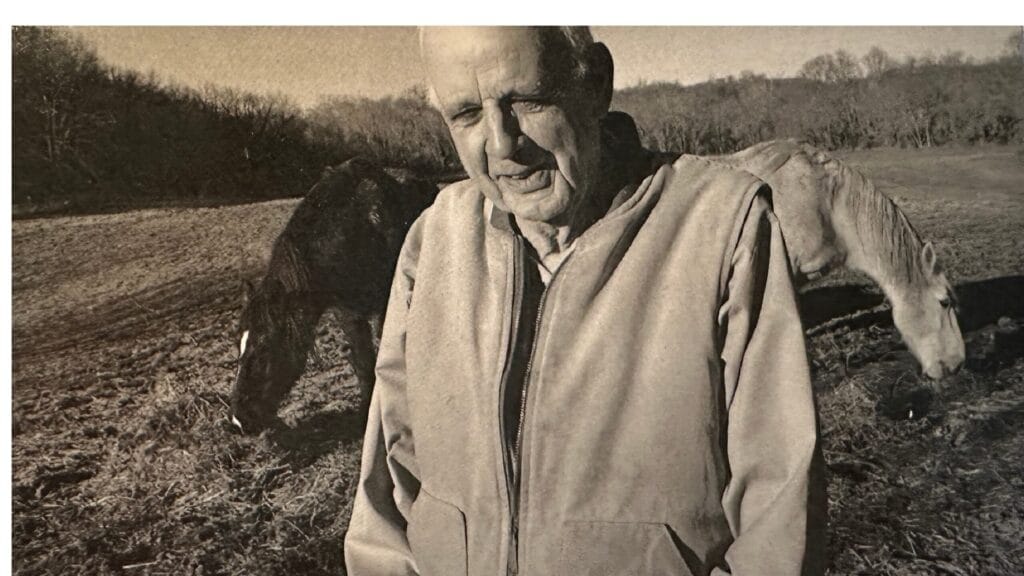
Kentucky writer and conservationist Wendell Berry once wrote: “Beware the machinery of longevity. When a man’s life is over the decent thing is for him to die. The forest does not withhold itself from death.”
A lover of forests, the farmer, author and former English professor died on Monday at his home in Port Royal, according to the New York Times and other media reports. He was 92.
Born in 1934 to Virginia Erdman and attorney John Marshall Berry, Wendell Berry was a prolific writer of nonfiction, poetry and fiction from Henry County, Kentucky.
In dozens of books he wrote of the need to protect — and ethically use — land, of God as a part of nature and of modernity as a force to be rebelled against.
Berry was a member of a group of Kentucky writers called the “Fab Five,” which included Bobbie Ann Mason and the late Gurney Norman, James Baker Hall and Ed McClanahan.
He leaves behind a sprawling legacy of advocacy, conservationism, literary pursuit and protest that inspired people from the hills of Kentucky to Hollywood and beyond.
His death leaves a vacancy of voice that was not always without controversy throughout his life but was decisive and steady throughout a long career.
Tobacco and love of land
Berry came from a long line of tobacco producers. John M. Berry, Wendell Berry’s father, co-founded the Burley Tobacco Growers Co-Op in the 1920s, which stabilized the price of tobacco and helped farmers who’d been subject to the pricing impulses of the monopoly American Tobacco Company, according to a Bitter Southerner article.
“The brilliance of the program was that it successfully matched supply and demand, preventing farmers from falling victim to overproduction,” the Bitter Southerner article says. “Within this equilibrium, farmers in the co-op were guaranteed parity prices, which meant a price that compensated them for all of their inputs.”
That article also quoted Mary Berry, daughter of Wendell Berry, as saying the co-op “was the only farm program that I know of that served the people it was supposed to serve, and that was small farmers. It was never a subsidy, it was a price support. It cost the government nothing.”
His family farmed in Henry County for generations. In a 1987 interview with the Kentucky Historical Society, Berry’s father said his great-grandfather bought 500 acres of land in the county after serving in the Army in the War of 1812.
When Berry left New York City and returned home to Kentucky for good in the 1960s, he did so with “some fear and trembling, but also a sense of doing the right thing,” he told The New Yorker in 2019.
When he started the trek home, with all his belongings in a Volkswagen Beetle, he told the New Yorker: “I felt a great, deep relief — as if I was following, at last, my true path.”
‘Cheerful in dissent.’
Berry was a man of many lanes.
He protested the Vietnam War, saying in 1968 that “peace is more important than victory,” according to a Messenger Inquirer article from Feb. 11 of that year.
Berry was arrested in 1979 for trespassing as he protested the Marble Hill Nuclear Power Plant in Madison, Indiana. In a 2010 CounterPunch conversation, he said of that day: “People asked if I wanted to be arrested and I said, ‘Hell No’ but I was willing to be.”
In 2009, Berry joined thousands of people who marched in protest of the Capitol Power Plant in Washington, D.C., Inside Climate News reported at the time, in an effort to fight for cleaner emissions.
He echoed the same trepidation and resolve about the prospect of arrest: “Somebody asked me if I wanted to get arrested. The answer is very brief: No. But I’m willing to get arrested. Nothing else is working.”
The farmer fought to preserve a controversial piece of University of Kentucky art condemned as racist for many years and pushed back against mountaintop removal by joining a sit-in at former Gov. Steve Beshear’s office in 2011.
The National Endowment for the Humanities described him in 2012 as “cheerful in dissent” and a person who “writes to document and defend what is being lost to the forces of modernization, and to explain how he lives and what he thinks.”
The Berry Center was established in 2011 to put “Wendell Berry’s writings to work by advocating for farmers, land-conserving communities and healthy regional economies.”
The nonprofit works to bring “focus, knowledge and cohesion to the work of changing our ruinous industrial agricultural system into a system and culture that uses nature as the standard, accepts no permanent damage to the ecosphere, and takes into consideration human health in local communities.”
The center educates farmers “in agrarian thought and practice,” runs a bookstore, has a cooperative to help farmers sell to markets and more.
The work is in line with Berry’s legacy of advocacy for land preservation and agrarian life.
Berry and the University of Kentucky
Berry had a complicated relationship with his alma mater, the University of Kentucky.
He earned his bachelor and master’s degrees in English from UK, according to the Kentucky Historical Society. He then taught at the University of Kentucky from 1964-1977 and again from 1987-1993. (His teaching roster also includes Stanford University, Georgetown College, New York University, the University of Cincinnati and Bucknell University).
In late 2009, Berry withdrew papers he’d loaned UK, a quiet protest against the university’s acceptance of $7 million from coal producer and philanthropist Joe Craft to rename a residence hall the “Wildcat Coal Lodge.”
The Kentucky Kernel, the independent student newspaper at UK, reported that Berry could not abide what he considered an indignity as an advocate for the land and water polluted by mining.
“I was taught that taking care of land was one of the primary human responsibilities,” the Kernel quoted Berry as saying. “In the long run, the top soil, the forests and the woodland of this state will be more valuable than the coal deposits.”
Berry felt the university’s move was a split from his values and those held by other farmers.
“When the university accepted the gift from (the) coal industry in return for naming the basketball dormitory ‘Wildcat Coal Lodge,’ the university had sold an advertisement,” Berry said, according to the Kernel.
That wasn’t the only time Berry and UK clashed.
In July 2020, Berry joined a lawsuit against the University of Kentucky seeking to preserve a controversial 1934 fresco mural many criticised for its depictions of slavery in America and of Indigenous people.
Ann Rice O’Hanlon painted the fresco as part of the Public Works of Art Project and President Franklin D. Roosevelt’s New Deal.
It was a site for protests on campus and requests to have it removed for years. According to court documents, complaints began in the 1970s.
University of Kentucky President Eli Capilouto agreed to cover the mural in 2019 following a sit-in protest on campus that included the Black Student Advisory Council and others. In June 2020, seemingly moved by the racial justice movement sweeping through the country, he announced the university would remove it.
The next month, Berry stepped in and asked a court to halt the removal. In court documents from the time, Berry argued the art needed to be conserved because of its historical significance, difficulty to create and rarity, being one of around 42 frescos from the time.
“The O’Hanlon Mural is a figurative representation of the history of Lexington and Central Kentucky,” Berry’s petition read.
He wrote of her “artistic choices that abstract the essential truths of the art as opposed to mere representation,” which he said “is part of what makes the O’Hanlon Mural unique and a valuable piece of the cultural assets of Kentucky held in trust by the University.”
The Lexington Herald-Leader reported in January 2026 that the mural remains in its place on campus.
‘Radical and eclectic’
The late bell hooks, a renowned Kentucky author known for her many writings on feminist theory, racism and love, among other topics, wrote fondly of Berry in “belonging: a culture of place,” one of some 40 books she published throughout her career.
She praised him for the “wide range of issues in his essays that were fundamentally radical and eclectic.” She taught at Berea College from his book about race, “The Hidden Wound.”
Berry also inspired actor and writer Nick Offerman of Parks and Recreation fame. Offerman, himself an outdoorsman, has narrated several of Berry’s books for audiobook format, including his magnum opus, “The Unsettling of America.”
In a 2020 interview with Literary Hub, Offerman said in Berry he “unexpectedly found a chronicler of the nobility found in good, honest work, and thrift, and affection for one’s family and neighbors and animals and the land that supports and nourishes all of the above.”
“I have often asserted that if my job were simply to broadcast the works of Wendell Berry to the world, I’d die a happy man,” Offerman said in that interview.
Honors
Former President Barack Obama awarded Berry with the 2010 National Humanities Medal for his work as a poet, novelist, farmer and conservationist.
He also earned other notable honors, including the T.S. Eliot Prize, the Aiken Taylor Award for poetry, the John Hay Award of the Orion Society and the Richard C. Holbrooke Distinguished Achievement Award of the Dayton Literary Peace Prize, according to the Poetry Foundation.
In 1961, he traveled in France and Italy as part of a Guggenheim Fellowship, a prestigious honor for “exceptional individuals in pursuit of scholarship in any field of knowledge and creation in any art form under the freest possible conditions.” The Fellowship has gone to other notable writers including Ada Limón, Roxane Gay, Carmen Maria Machado and Sigrid Nunez.
His slew of other honors include the Kentucky Libraries Award’ for Intellectual Excellence, the Thomas Merton Award, The Cleanth Brooks Medal for Lifetime Achievement from the Fellowship of Southern Writers, the Martin E. Marty Award for the Public Understanding of Religion from The American Academy of Religion, the Poets’ Prize and others.
For a list of Berry’s books, visit this site.
Funeral arrangements are incomplete at this time. The Berry Center has asked that in lieu of flowers people donate to The Berry Center “or a like-missioned organization doing the good work in your home place in Wendell’s memory.”
SUBSCRIBE: GET THE MORNING HEADLINES DELIVERED TO YOUR INBOX.
Forest Service declines public meeting on Wilson Creek ICE operation; Advocates call response ‘a shell game’
by Lilly Knoepp, NCLocal
September 3, 2026
The U.S. Forest Service declined a call for a public meeting following the June immigration operation where 13 people were arrested in the Pisgah National Forest, angering local environmental advocates.
Advocacy groups, including the Southern Environmental Law Center, MountainTrue, American Whitewater, Friends of Big Ivy, Forest Keeper, Latinos Aventureros, the North Carolina Chapter of the Sierra Club, and the Southern Off-Road Bicycle Association condemned the June Immigrations and Customs Enforcement (ICE) action at Wilson Creek.
In August, they sent a letter requesting a public meeting to North Carolina National Forest Supervisor James Melonas and Grandfather District Ranger Nicholas Larson.
A USDA spokesperson told NC Local the Forest Service has no plans for a public meeting at this time. Instead, Melonas, who manages the national forests in the state, sent a letter in response to the call.
SELC Senior Attorney Sam Evans said a public meeting would be a first step in rebuilding community trust.
“It's about the community that the Forest Service betrayed here. And that's who they owe,” Evans said.
In the letter, shared with NC Local by Evans, Melonas thanked the groups for their partnership. He explained that the resource management side of the Forest Service is separate from law enforcement.
“As you are likely aware, Forest Service law enforcement is managed independently from local and regional leadership, including myself as the Forest Supervisor and the seven District Rangers,” Melonas wrote. “While this structure is necessary to protect the integrity of criminal investigations occurring on National Forest System lands, it also means local leaders are not always involved in law enforcement operations and planning. As such, neither District Ranger Larson nor I have any additional information regarding this incident to provide.”
Evans called the response “a shell game.”
“It's true that the Forest Service has two separate arms. There's law enforcement and then there's resource management and those are under different chains of command,” Evans said. “It is not possible that the resource management side of the Forest Service, the people that you would ordinarily be emailing with and getting responses from, didn't know about this [operation].”
The Forest Service has a separate chain of command, but the Patrol captain in the region advises the Forest Supervisor on law enforcement matters occurring in a national forest, according to the USDA. The Forest Service law enforcement also works with federal, local and state partners.
The Wilson Creek operation was the first time in recent memory that the Forest Service has worked with ICE in North Carolina. An ICE spokesperson told NC Local the operation was initially requested by the Forest Service.
Melonas did not address the initial contact in his response, instead explaining federal agencies are required to collaborate.
“Although Forest Service law enforcement officers and criminal investigators do not enforce immigration law, they are required to collaborate with agencies that do, as well as with state and local partners responsible for enforcing hunting and fishing regulations, drug laws, and other non-resource-related laws,” Melonas said.
“The idea that you could compare this to sort of routine law enforcement, really, I thought that was fairly offensive,” Evans said.
In the response, Melonas said the partnerships could involve criminal investigations and other safety measures, including checkpoints and patrols.
In mid-August, Great Smoky Mountains National Park officials shared the location and date of a sobriety checkpoint ahead of time on social media.
Questions about commitment to diverse communities
The joint letter to the Forest Service asked Melonas and other officials about past commitments to diversity in the Nantahala-Pisgah Forest Plan, the strategic plan for the management of the over two million acres of national forest in WNC. The letter said the June operation was “inconsistent with the Forest Service’s mission and responsibilities to ensure equitable access to public lands.”
While the Trump administration has changed diversity inclusion language across agencies, Evans said local leadership has a continued obligation to uphold their commitments.
“The same people who are in charge of our forest now during the forest planning process said that this was really important to them. They said that making our forest representative of the local community and making the visitation representative of the people who live around our forests was really important to them. And that, they told us, were their values,” Evans said. “Now when those values are at stake and when it was time to stand up for them, they didn’t.”
Quoting a 2023 Carolina Public Press article, the letter said this “operation appears to have been based on racial profiling, given that Wilson Creek is known for its popularity with Latino visitors.”
“This betrayal does not merely undermine visitors’ sense of safety in one specific location, but rather it undermines the credibility of the Forest Service as willing and able to protect the safety of visitors from underrepresented communities across the forests,” the letter said.
Melonas’ response did not address racial profiling, but Melonas said he shared the joint letter with regional and national leadership.
Latinos Aventureros was one of the organizations that signed the letter. In a public letter, the organization recounted years of collaborative work with the Forest Service and non-profit, A Clean Wilson Creek, to clean up the river.
“The same Brown Mountain Beach Road where our volunteers once walked in bright safety vests picking up trash is now also remembered as the road where law enforcement vehicles lined up and families were separated,” the letter said.
Latinos Aventureros Co-Founder Sandra Salazar said complaints about trash at Wilson Creek since Hurricane Helene created friction in the area.
“There was a debate of whose fault it was: The Anglo community kept blaming the Latino community, and the Latino community was more partial, stating that it was both not just them,” Salazar said.
She said Latinos Aventureros has hosted a number of river cleanup events since Helene.
Salazar said the group feels “used” following the ICE arrests.
In Fall 2024, the Wilson Creek Action plan, created by a committee including Latinos Aventureros, American Whitewater, and Trout Unlimited released by the Forest Service offered several recommendations. The plan said public land boundaries should be better defined and the area needed more parking and signage for public safety.
“I felt like we had a good relationship. But apparently we didn't. It was just, we felt used to be quite honest. Because once we cleaned the river, they ended up doing this,” Salazar said.
The Forest Service declined NC Local's requests for interviews with Melonas and Larson, adding that Forest Service law enforcement also had no additional information to share regarding this incident.
This article first appeared on NCLocal and is republished here under a Creative Commons Attribution-NonCommercial 4.0 International License.

Redistricting hearing turns tense in US Rep. Bennie Thompson’s backyard
by Michael Goldberg, Mississippi Today
September 2, 2026
CLEVELAND – Most Mississippi residents who spoke on Tuesday at the first public hearing on redistricting in the Delta criticized what they saw as a Republican push for power at the expense of Black representation, while some others said they support swift action to redraw electoral maps.
Tuesday’s hearing was the third in a slate of public hearings intended for Mississippians to share their views on redistricting with a Republican-dominated joint House and Senate committee. It was the first hearing in the majority-Black district of Democratic U.S. Rep. Bennie Thompson.

Thompson is the state’s only Black member of Congress and only Democrat. Since the U.S. Supreme Court’s decision in the Louisiana v. Callais redistricting case in May, which weakened the Voting Rights Act, Thompson has been the target of calls from Republican Gov. Tate Reeves and some Republican state legislators and other leaders to redraw Mississippi’s electoral maps.

Thompson did not appear to be in attendance on Tuesday evening in an auditorium at Delta State University in Cleveland, but several Democratic state lawmakers who represent the Delta but were not chosen to serve on the joint committee spoke at the hearing. The Democratic officials said partisan redistricting would split areas with shared cultural and economic interests, and cause “mass confusion” for voters
Democratic Rep. Willie Bailey of Greenville, who is not on the joint committee, told audience members that the committee had already made up its mind, and that the hearings would not stop the Republican dominated and majority-white Legislature from dismantling majority-Black districts.
“I’m glad to see all of you, but nothing you say tonight will become part of any plan. Nothing,” Bailey said. “There is no time for all the foolishness that we’re doing tonight. Now, they’re up here listening to you, but that’s as far as it’s going. It’s going no further than this room.”
The Callais decision removed protection for majority minority districts and cleared the way for Republican-controlled state legislatures to redraw political lines in their favor.
Michael Carr, an attorney who has previously run for Bolivar County district attorney as a Democrat, said the Callais decision does not create mandatory redistricting for any state other than Louisiana, and that Republicans are falsely making it seem as though Mississippi has to redraw its lines.
“You’ve got the governor, you’ve got the House, you’ve got the Senate, you’ve got three out of four congressional districts. What else do you want?” Carr said. “What they’re doing with suggesting redrawing these lines is diluting our voice, disproportionately taking our power away.”
Republican leaders believe that when the U.S. Supreme Court issued its ruling in the Callais decision, it ended the practice of allowing race to be considered in drawing political maps.
Susan Spiller, president of the Leflore County Republican Women, said lawmakers are right to redraw lines drawn before Callais, because considering race in drawing electoral maps harkens back to a Mississippi that no longer exists.

“I’m asking this committee to redraw Mississippi’s districts based on traditional, race-neutral criteria,” Spiller said. “It is not 1965. It is 2026. It’s time for one nation under God, indivisible, with liberty and justice for all of us.”
The legislative joint committee is holding public hearings across the state, and the full Legislature is expected to convene in a special session this fall to redraw at least state legislative maps. That wouldn’t impact this November’s federal election, but Mississippi lawmakers are likely to target Thompson’s seat with redistricting before he’s up for reelection again in 2028.
Resident Nathan Duff said no elected official should take the Delta for granted, as the region faces unique challenges that require adequate representation.
“The Delta is not simply another region in Mississippi. Our economy is different, our history different, our population trends are different,” Duff said. “The challenges confronting hospitals, schools, municipalities and agricultural communities are different than the rest of Mississippi.”
Effie Burt said Republicans are engaged in a power grab aimed at diluting Black political power.
“What you’re doing is wrong, unnecessary, biased and is racist,” Burt said. “You’re trying to take away our voting strength that was achieved decades ago.”
Burt then broke out into song, singing "We Shall Overcome," a gospel song associated with the Civil Rights Movement.
Tuesday's hearing came days after a hearing in Southaven where speakers skewed much more toward supporting efforts to redistrict in Republicans’ favor. DeSoto County has been the venue of an ongoing legal battle over redistricting and debate over race and representation.
Rep. Rodney Hall represents Southaven and is the first Black Republican to serve in the Mississippi House since Reconstruction. Hall, who serves on the joint committee, told Mississippi Today after the hearing that the public’s participation in the redistricting process matters to lawmakers and would influence the outcome.
“Emotions are understandably high because Mississippi has a history we cannot, and should not, ignore. But our future does not have to be bound by our past. The Mississippi of today is not returning to poll taxes, at-large legislative districts, or the tactics of another era,” Hall said. “This is our opportunity to face our history honestly, learn from it, and move forward together with fair, race-neutral maps that reflect our highest American ideals: equal citizenship, equal opportunity, and a government accountable to every voter.”
The committee is encouraging the public to participate in future hearings. The public can offer comments at any of the seven remaining public hearings, or submit written comments to Ted Booth, the committee’s attorney, at ted.booth@peer.ms.gov.
Below is the schedule of the future planned redistricting hearings. Each will start at 6 p.m.
- Sept. 8 at Alcorn State University in Natchez.
- Sept.10 at Meridian Community College in Meridian.
- Sept. 17 at the University of Southern Mississippi in Hattiesburg.
- Sept. 22 at Mississippi Gulf Coast Community College in Gulfport.
- Oct. 1 at the state Capitol in Jackson.
This article first appeared on Mississippi Today and is republished here under a Creative Commons Attribution-NoDerivatives 4.0 International License.

Women on parole face higher rates of mental health, housing challenges
Amanda Watford (Stateline) Published: September 3, 2026
Women on parole report higher rates of housing instability, poor health and serious mental health and substance use disorders than men on parole and than women who weren’t on parole, according to a new analysis from the nonpartisan think tank Council on Criminal Justice.
For people leaving prison, parole is a period of transition that can involve finding housing and work, reconnecting with family and accessing health care while also meeting the conditions of supervision. How well those pieces come together can shape whether someone successfully settles back into the community — a key part, some argue, of reducing future involvement with the criminal justice system and promoting public safety.
The council’s latest report examined nationally representative 2021-2023 data from the National Survey on Drug Use and Health, comparing women who reported being on parole both with women who were not on parole and with men who were on parole.
About 13% of women on parole reported moving three or more times in the previous year, compared with 2% of women who were not on parole and 6% of men on parole, according to the analysis.
Women’s prison population, correctional costs projected to grow through 2035
Women on parole also were more likely to report poor health. About 29% rated their overall health as fair or poor, compared with 16% of women not on parole and 17% of men on parole.
About 24% of women on parole met the criteria for a severe mental health disorder, compared with 7% of women not on parole and 10% of men on parole, according to the council’s report. About 25% of women on parole also reported experiencing a major depressive episode during the previous year, compared with 10% of women not on parole and 12% of men on parole.
The analysis found that substance use disorders were common among people on parole, but severe disorders were more prevalent among women. About 32% of women on parole met the criteria for a severe substance use disorder, compared with 24% of men on parole and 3% of women not on parole.
The disparity was especially large for opioid use. About 18% of women on parole met the criteria for a severe opioid use disorder, compared with 5% of men on parole and 0.4% of women not on parole.
Health and housing can make the demands of reentry harder to manage, including maintaining employment, attending treatment and supervision appointments, and managing family responsibilities, according to the report.
Women on parole also were more likely than men on parole to report living in a household with minor children. About 29% of women on parole lived in a household with at least one child under 18, compared with 19% of men on parole and 30% of women who were not on parole.
The survey, however, did not indicate whether respondents were parents, caregivers or financially responsible for the children, according to the report.
Health insurance coverage also differed among the groups. About 11% of women on parole reported being uninsured, compared with 7% of women not on parole and 20% of men on parole, according to the analysis.
The report’s authors wrote that the findings point to the need for reentry planning that goes beyond supervision requirements to address housing, health care, mental health and substance use treatment and family responsibilities. The authors could not determine whether the conditions preceded or resulted from criminal justice involvement, but the findings strongly suggest women on parole face distinct reentry challenges.
Stateline reporter Amanda Watford can be reached at awatford@stateline.org.
SUPPORT: YOU MAKE OUR WORK POSSIBLE