
Norman C. Francis, a stalwart New Orleans leader in civil rights, business and education dies at 94
Francis was the first Black president of Xavier University and integrated Loyola University's law school

It's Friday, February 27, 2026 and in this morning's issue we're covering: Norman C. Francis, who shaped Xavier and New Orleans, dies at 94, Judge says federal court can’t rule on challenge to Orleans sheriff’s ‘sanctuary’ policy, South Carolina Hospitals Aren’t Required to Disclose Measles-Related Admissions. That Leaves Doctors in the Dark, Expert says UMMC could face ‘weeks to months’ of recovery after cyberattack, Demolition of Mission Hospital’s St. Joseph’s campus appears imminent, This Ballad Hospital, Flooded by Hurricane Helene, Will Be Rebuilt for $44M in a Flood Plain, Roadless areas of national forests could go away under proposed rule change, Finding financial footing for Walthourville: One mayor’s journey.
Media outlets and others featured: Verite News (2), ProPublica, Mississippi Today, Asheville Watchdog, KFF Health News, Carolina Public Press, The Current (Georgia).
 Shelby Jouppi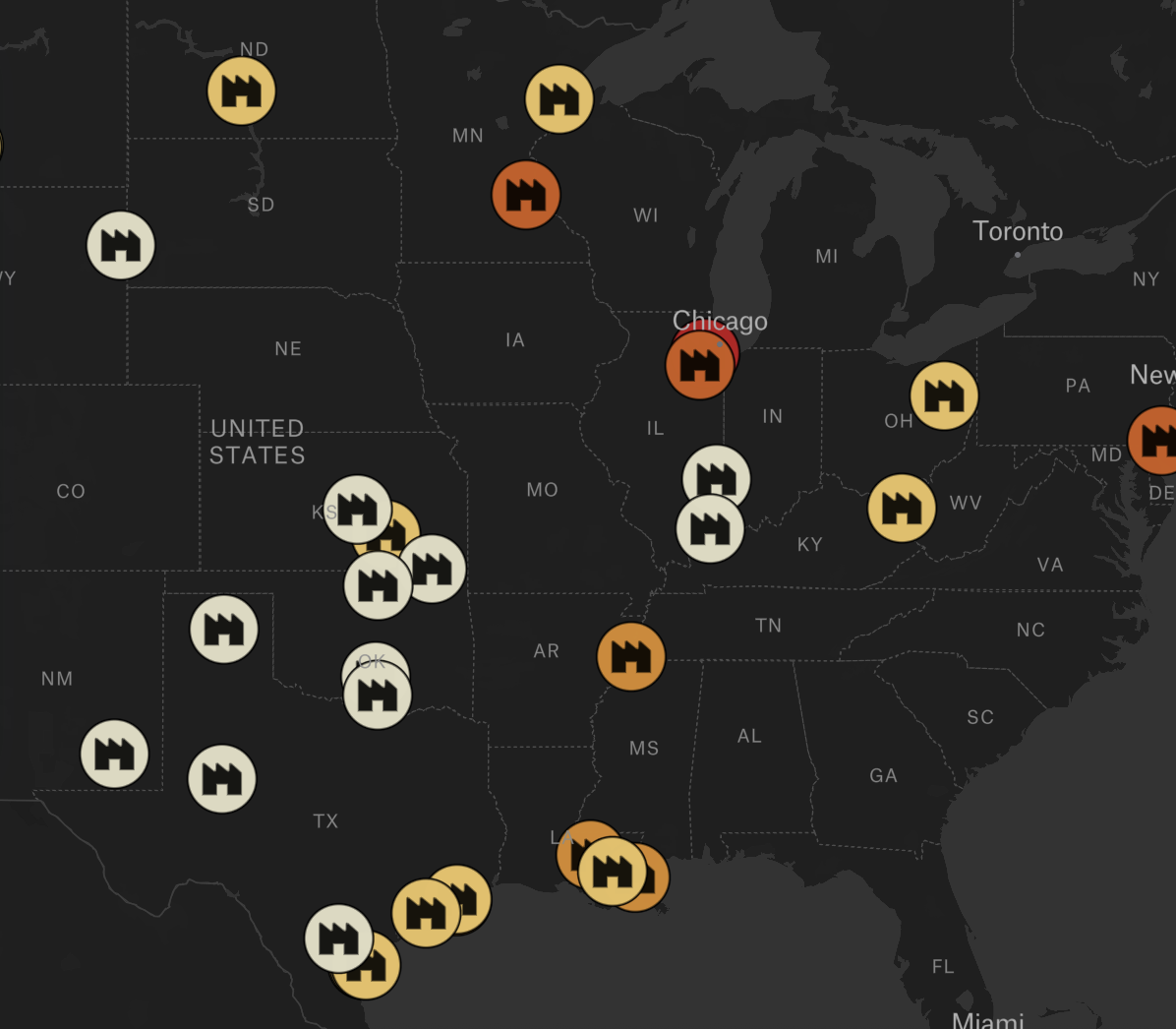
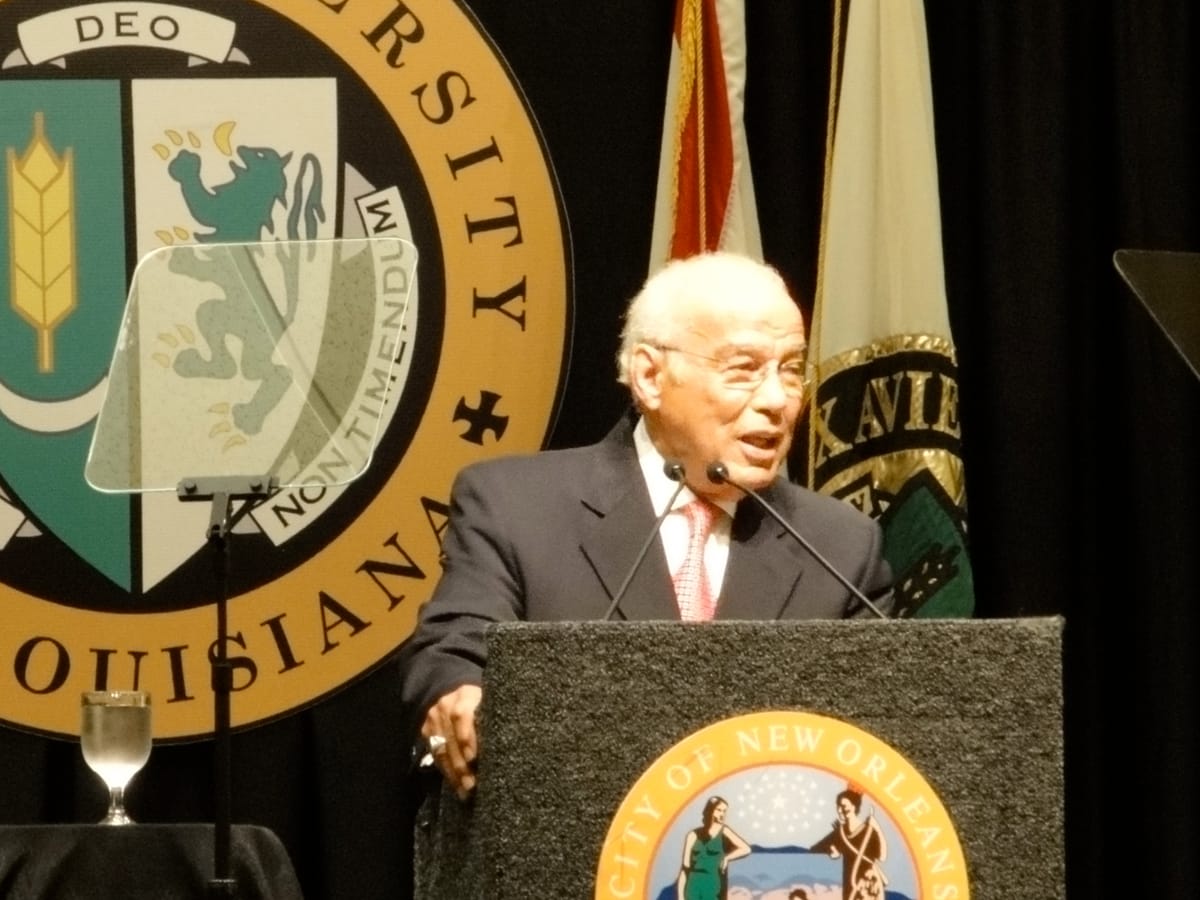
Norman C. Francis, who shaped Xavier and New Orleans, dies at 94
by Josie Abugov, Verite News New Orleans
February 18, 2026
Norman C. Francis, the stalwart city leader in civil rights, business and education who led Xavier University for nearly half a century, died early Wednesday morning (Feb. 18) at Oschner Hospital. He was 94 years old.
One of the most influential figures in New Orleans’ recent history, Francis played key roles in both integration efforts of the local civil rights movement and recovery efforts after Hurricane Katrina. Though Francis built his career and his life in New Orleans, he garnered national and global recognition for his civic work: He was the recipient of dozens of honorary degrees and the Presidential Medal of Freedom, and advised eight U.S. presidents on issues of education and civil rights.
His six children — Michael, Tim, David, Kathleen, Patrick and Christina — survive him, along with 11 grandchildren. (David Francis cofounded Verite News and was the executive director of Verite until retiring in late 2025.) His wife of 60 years, Blanche Francis, died in 2015.
"With heavy hearts filled with love and gratitude, our family announces the passing of our beloved father, Dr. Norman C. Francis, who entered eternal rest on Feb. 18," reads a statement sent to Verite News by the Francis family. "Above all else, he was a devoted husband, father, grandfather, brother, uncle, and friend whose love, wisdom, and steadfast faith shaped our family and touched everyone who knew him. His Catholic faith was the foundation of his life, guiding the way he loved, served, and cared for others. He taught us to lead with compassion, to stand for justice, and to trust in God’s grace in all things."
When Francis became the first Black and lay president of Xavier University in 1968, glass ceilings were nothing new to the 37-year-old, who had integrated Loyola University’s law school and represented, as a young lawyer, a civil rights case that rose to the Supreme Court.
The decision to elect a lay person for the presidency of the country’s only Catholic HBCU was highly unusual, said Sister Patricia Suchalski, a member of the Sisters of the Blessed Sacrament religious order and former Xavier board member. In 1925, the congregation’s founder St. Katharine Drexel, who dedicated her life and family fortune to educating Black and Indigenous populations, established the college. Until Francis assumed the presidency, all of Xavier’s previous leaders were white nuns.
“If we had not done that — given leadership to Dr. Francis — I’m sure Xavier would not be what it is today,” Suchalski said.
Under Francis’ presidency, the university grew from a nascent college without a core curriculum to a leader among HBCUs in preparing students for health care careers. Now, Xavier sends more Black graduates to medical school than almost any other college in the country. With the expansion of permanent dormitories and a pharmacy college, enrollment more than tripled during Francis’ tenure. Though Francis retired from Xavier in 2015, his leadership paved a path for the school’s continued expansion, such as a plan announced in 2023 for a new medical school aimed at building a pipeline of Black doctors into the nation’s health care system.
“When I look back at it…I spent at least my whole life in education,” Francis said in a December 2023 interview with Verite News.

Those closest to Francis described him as a courageous and visionary leader with a determined spirit, an outgoing personality and a deep respect for people from every walk of life.
“The most defining part of his character is he treats every human being with dignity and respect,” said former New Orleans Mayor Mitch Landrieu, a close family friend. “There is the promise of America that we’re all coming to the table of democracy as equals, and he’s the personification of it. What more can you say about a human being?”
As Francis expanded Xavier, he simultaneously shaped some of the city’s most prominent cultural and economic institutions. He was a founder of Liberty Bank, one of the country’s leading Black-owned financial institutions, and an early investor in the New Orleans Saints. Throughout his life, Francis also served as a confidant to members of two key New Orleans political families, the Landrieus and the Morials.
Following Hurricane Katrina, Francis was an integral figure in the city’s recovery. He chaired the Louisiana Recovery Authority, the group tasked with rebuilding the state in the aftermath of the storm. Francis also successfully re-opened Xavier on an expedited timeline, despite massive hurricane damage to the school’s campus.
An ability to make things happen
Francis was born in Lafayette on March 20, 1931 to Mabel Coco Francis and Joseph Abel Francis. Raised in a Catholic household as the fourth of five children, he spent his early days in his father’s barbershop. The Francises didn’t own a car, using bicycles to get around town instead. Joseph Francis milked the family’s cow every morning and tracked every cent he made at the barbershop.
His father, who had also worked at bus stations, railroad stations and hotels, stressed the value of hard, honest work to his children — including Norman, who began working at age 10, delivering lunches to a local railroad supervisor. In a 2002 interview for The HistoryMakers, a leading digital archive of Black oral histories, Norman Francis called his father “tough” and his mother an “angel.”
“We didn’t have what others had, but we didn’t long,” he said.
Mabel Bailey, Francis’ youngest sister, said her parents instilled in the siblings the importance of treating everyone with dignity and never believing they were above anyone else, a belief system Norman held tight to throughout his life.
“I deal with PhDs of every kind but I have not found any of them smarter than my mother or father who didn’t graduate high school,” Francis said in 2002.
After graduating as the valedictorian of his high school class, Francis received a scholarship to work at the Xavier library in exchange for tuition, room and board. He boarded a segregated railcar from his hometown to the city where he would soon make an indelible impact. He excelled at Xavier, where he was his class president each year until he became the student body president his senior year, graduating with a degree in math in 1952.
Francis then enrolled in Loyola University Law School as the school’s first Black student. On the morning before classes started, Francis arrived early to the library, where a few students introduced themselves. One of them was Moon Landrieu, a future mayor of New Orleans who would go on to champion desegregation of the city.
The lifelong friendship between Landrieu and Francis would shape the future of race relations in New Orleans. In law school, Landrieu’s time with Francis exposed him to the injustices of segregation that Francis already understood as a Black man raised in the Jim Crow South. In one instance, Francis, Landrieu and a few other white law students decided to go out for food following an evening study session. When a waiter refused to serve the group, Francis noted how “it had not dawned on them that segregation was a two-sided knife.”
Following a brief stint in the Army that ended in 1957, Francis ascended the administrative ranks at Xavier while dedicating himself to civil rights in New Orleans over the course of the next decade.
He had returned to New Orleans to help integrate federal agencies for the U.S. Attorney’s Office, while at the same time representing Xavier students Rudy Lombard and Oretha Castle Haley in a civil rights case over a lunch counter sit-in that rose to the U.S. Supreme Court. He also served as counsel for the Congress of Racial Equality (CORE), which sponsored the 1961 Freedom Rides, where groups of interracial activists rode on buses across the South to protest segregation. Francis’ childhood experiences in a small segregated town, where he witnessed the “inhumanity created by the law,” motivated him to do the work of eliminating the Jim Crow system, he said in his HistoryMakers interview.
Despite his legal training and accomplishments, Francis believed he could enact greater change as an educator than as a lawyer. He envisioned his work as an educator as having a ripple effect, he said.

Just five years after graduating from Xavier, Francis was tapped in 1957 to become the school’s dean of men. One of his defining moments in the role came four years later, when he agreed to house Freedom Riders who had been attacked by a segregationist mob in Alabama. Francis secretly allowed the group of activists to stay for a week in Xavier’s dorms, to protect the group from the bomb threats and other risks of violence.
The Sisters of the Blessed Sacrament, who led the university at the time, believed Francis would be the perfect person to usher Xavier into a new era in 1968, Suchalski said. Despite skepticism from the archbishop of New Orleans for promoting a lay person to the top post, the sisters saw Francis as a risk-taking, courageous leader with a hopeful vision for the school.
Decades later, Francis demonstrated that will and vision in his efforts to resume classes at Xavier after Katrina damaged nearly every structure of campus in 2005 and scattered students, faculty and staff across the country.
Kay Watkins, Francis’ longtime assistant at Xavier, recounted the “impossible return date” of January 17, 2006 that Francis set in the immediate aftermath of the storm. “I had my car and a few belongings and the furthest thing that I was thinking about was going back to work,” Watkins said. While sheltering in Houston, Watkins received a call. Francis needed her to come to Grand Coteau, a small town outside of Lafayette where Francis and some members of his family had evacuated, to help get the school back up and running. “Reluctantly, I agreed,” Watkins said.
Between storm damage and lost tuition and scholarship revenue, the school suffered over $90 million in losses, administrators estimated at the time. The school’s endowment wouldn’t have covered the costs, and though Francis tried to secure donations to prevent layoffs, he ultimately had to lay off or place on leave more than 300 faculty and staff members.
"If you bottled up all of the problems I've had in 38 years, it would only be half the bottle compared to what Katrina did," Francis said at the time.
Still, from his sister’s house in Grand Coteau, Francis buckled down and made the seemingly impossible — reopening a campus partially submerged in water up to eight feet deep — a reality. More than three-quarters of students returned to campus in January for the spring semester, even as FEMA trailers still lined school parking lots. The commencement speaker that year was a young Illinois senator named Barack Obama.
“It shows you his strength, his ability to make things happen,” said Alden McDonald, the CEO of Liberty Bank and a longtime friend and associate of Francis. “Even with the campus totally devastated, he knew he couldn’t let those kids not have their education.”
At the same time that Francis and trusted associates at Xavier were working tirelessly to reopen the school, he took on another mighty task: chairing the Louisiana Recovery Authority at the request of Gov. Kathleen Blanco after the region incurred billions of dollars in storm damage from Katrina and Rita. The agency oversaw the Road Home program, the largest housing recovery program in the nation’s history, responsible for ameliorating hundreds of thousands of destroyed homes and businesses and compensating homeowners in the New Orleans area for property damages.
But the organization he chaired was also flawed. A 2022 analysis found that the Road Home Program shortchanged people in poorer, Blacker neighborhoods while better compensating people in richer neighborhoods.
‘A village of people’
As the longest-sitting university president in the country, Francis developed a vision for Xavier rooted in equity, service and opportunity. He believed when institutions meaningfully supported young people who were disadvantaged, like Francis was himself when he arrived in New Orleans to attend Xavier, those students would excel.

Justin Augustine, who graduated Xavier in 1980 and now chairs its board, remembered Francis as an outgoing president who would regularly stop to chat with students in the quadrangle, and once helped resolve a dispute his friends had with a professor. Francis’ extroverted nature also strained his work-life balance, Watkins recalled. After a day of meetings and conversations with students, staff and faculty members, some scheduled and some impromptu, Francis would procrastinate his other tasks until late into the evening, writing speeches and finishing projects well past a typical work day.
While Norman Francis oversaw the university, regularly “burning the midnight oil” in his office, as Watkins put it, his wife Blanche Francis raised the family’s six children on Xavier’s campus. Kathleen Francis, their eldest daughter, recalled growing up surrounded by a village of people who “shared the interest in bettering lives.” That “privilege of exposure,” Kathleen said, was one of the greatest gifts her parents imparted on her and her siblings. The children knew people of all races, religions and socioeconomic statuses. It was just as common for Mr. Joe, a maintenance worker at Xavier, and Alex Haley, the author of “Roots” and collaborator on “The Autobiography of Malcolm X,” to be seated at the family dinner table, Kathleen said.
“We learned early on that these people were people like anyone else,” Kathleen Francis said. “We got to see that no one was more special than the next person.”

A community blossomed between the Francises and two of the city’s other notable families in the years after Francis, Moon Landrieu and Ernest “Dutch” Morial began running in the same circles as young men. After a close friendship throughout law school, Francis and Moon Landrieu happened to schedule their weddings on the same day. Around the same time, Morial, a classmate of Francis’ at Xavier, was integrating Louisiana State University’s law school. As the three men gained prominence within the city, their children — five Morials, six Francises and nine Landrieus — grew up together.
One of the Landrieu children, Mitch, followed in Moon’s footsteps as mayor. Mitch, who once called Francis his “second daddy,” often sought out Francis for advice as he navigated his political career. Mitch Landrieu commended Francis’ ability to keep the peace between his friends, including Dutch, known for his fiery personality. In a December 2023 interview with Verite News, Francis recalled that Sybil Morial, Dutch’s wife, would always instruct Francis to sit next to her husband at dinners, and hit him in the knee if he became “excitable.”
Francis also had a fun-loving attitude that Blanche, especially, brought out of him, Watkins remembered. He was an avid sports fan, encouraging the athletic prowess of all of his children, two of whom went on to play baseball in college. At family karaoke renditions over the holidays, he’d playfully rib his oldest grandchild, Jasmine Francis, about her poor singing voice, she recalled.
His former assistant also described Francis as a “chocoholic,” though the university president also loved Blanche’s crawfish étouffée and peanut butter sandwiches with strawberry jam. He relished eating fresh tomatoes and watermelon with salt sprinkled on top, Jasmine Francis remarked.
Angela Vallot, who serves on Xavier’s board and whose mother grew up with Francis in Lafayette, described him as “the epitome of New Orleans culture” with a superpower memory. Francis and her mother were classmates, working on the school newspaper together and graduating first and second in their high school class. Vallot lost her mother when she was ten years old, and in recent years, Francis was one of the few living contemporaries of her mother. As an adult, Vallot grew closer to the Francis family, describing Francis as being like an uncle. He would always find a way to bring her mother into conversations, sharing stories about his roots in Lafayette, Vallot recalled.
In 2020, after Francis’ retirement from Xavier, the New Orleans City Council voted to rename the street that runs along the university campus from Jefferson Davis Parkway to Norman C. Francis Parkway. The change marked the first renaming of a local street following protests in 2020 over police brutality and white supremacy. Francis cut the ribbon on the street himself.

"His legacy lives on not only through his accomplishments and leadership, but through the countless lives he inspired, the students and communities he uplifted, the public officials he advised, and the values he passed on to us. We will remember his gentle strength, his unwavering integrity, and his deep passion for equity," his family said in a statement to Verite News.
Reflecting on his legacy, Francis said in 2002 that he hoped he would be remembered as someone who “recruited and surrounded myself with people smarter than I was.”
“I had no ego — well, I had an ego — but I had no ego in the sense that I needed to get credit for what was done,” he said.


Josie Abugov reported and wrote this story before leaving Verite News in 2024.
This article first appeared on Verite News New Orleans and is republished here under a Creative Commons Attribution-NoDerivatives 4.0 International License.

Judge says federal court can’t rule on challenge to Orleans sheriff’s ‘sanctuary’ policy
by Bobbi-Jeanne Misick, Verite News New Orleans
February 23, 2026
A federal judge last week temporarily halted the state of Louisiana’s legal challenge to the Orleans Parish Sheriff’s Office’s longstanding immigration policy, which prohibits jail staff from honoring federal immigration detainer requests to hold local arrestees suspected of being in the country illegally past their release dates.
On Wednesday (Feb. 18), U.S. Magistrate Judge Janis van Meerveld ruled that the central question in the case — whether a recently enacted state ban on so-called “sanctuary policies” requires the Sheriff’s Office to dissolve its pre-existing policy — is a matter of state, not federal, law and should be decided by the Louisiana State Supreme Court.
In her ruling, van Meerveld wrote that of the legal questions now before the federal court in New Orleans, “Not one concerns a federal question. Not one question has been addressed by a Louisiana court, let alone the Louisiana Supreme Court.”
“Considering the posture of this case, the Louisiana Supreme Court is in the better position to address these questions,” she added.
In a statement, Louisiana Attorney General Liz Murrill, who first filed the state’s challenge to the Sheriff’s Office’s policy early last year, blasted the ruling, calling it “just another delay tactic by the judge to resolve a very easy matter.”
On Thursday, the state informed the court that it planned to appeal the ruling to the New Orleans-based U.S. Court of Appeals for the 5th Circuit.
The Sheriff’s Office’s policy, enacted in 2013, stems from a settlement in a federal civil rights lawsuit filed by two construction workers, Mario Cacho and Antonio Ocampo — who were arrested by New Orleans police on minor charges in 2009 and 2010 and were sentenced to jail time. The two men alleged that in response to a request from U.S. Immigration and Customs Enforcement, the sheriff at the time, Marlin Gusman, illegally held them inside his facility for months after their release dates, well beyond the two days that federal law authorizes for immigration detainers.
Under the settlement in the Cacho case, the policy is to remain in place “ absent a change in federal or state law applicable to immigration detainers.” Louisiana Attorney General Liz Murrill initiated the challenge to the policy a year ago, arguing that such a change had occurred with the passage of a state anti-sanctuary law. Act 314, which became effective in May 2024, prohibits policies that limit the extent to which local agencies can cooperate with federal immigration investigations and demands that local law enforcement comply with any detainer requests.
Murrill, whom van Meerveld has allowed to intervene as a party to the Cacho case, is demanding that the federal court order the policy dissolved, removing the primary barrier to state legal action against Sheriff Susan Hutson for declining to honor ICE’s requests. In his second term, President Donald Trump, who counts both Murrill and Gov. Jeff Landry as allies, has increasingly demanded that local governments assist with federal immigration investigations. And many local agencies in Louisiana — a deeply conservative state — have fallen in line.
That has been the case even in New Orleans. Following last year's dissolution of a long-running consent decree over the New Orleans Police Department — which demanded strict limits on local cops participating in federal immigration enforcement — city of New Orleans officials working with the state recently revoked a decade-old NOPD policy that restricted cooperation with agencies such as ICE and the U.S. Border Patrol.
A win for the state in the Cacho case could ultimately force deputies working in the Orleans Justice Center, one of the state’s largest and busiest jails, to assist in Trump’s immigration crackdown as well.
Van Meerveld, however, ruled on Wednesday that a federal court is not the proper venue for the decision on whether the policy should be thrown out. In her ruling, the judge said there are three questions that must first be resolved, all concerning state law: Can Act 314 be applied to a pre-existing legal agreement? Does the state law conflict with local autonomy granted in the state constitution to cities, such as New Orleans, that operate under a “home rule” charter? And, does Act 314 go against a provision in the Louisiana constitution that prohibits the state from imposing “unfunded mandates” on local agencies.
“If Act 314 is invalid then it is not a change in law,” van Meerveld said in her ruling, responding to the state’s argument that change in state law made the consent judgement in Cacho and the consistent OPSO policy obsolete. “And even if it is valid, if it was not intended to apply to this consent decree, then it cannot be interpreted as triggering the ‘change in law’ provision.”
The judge ordered the questions be put to the state Supreme Court. As of Friday, it was not clear when the state’s highest court would take them up.
In a statement Mary Yanik, co-director of the Tulane University Immigrants Rights Law Clinic and an attorney for Cacho and Ocampo, said she is “encouraged” that van Meerveld “acknowledged that we have raised important legal questions about the state law that no court has yet to answer.”
“This order confirms the [legal settlement] remains in place as the courts consider the State’s legal challenge,” Yanik said. “Sheriff Hutson has done exactly what she promised to voters and what her office requires: she is following the law.”
The Sheriff’s Office, which is also being sued by the U.S. Department of Homeland Security over its refusal to comply with demands from ICE, did not immediately respond to a request for comment.
This article first appeared on Verite News New Orleans and is republished here under a Creative Commons Attribution-NoDerivatives 4.0 International License.
South Carolina Hospitals Aren’t Required to Disclose Measles-Related Admissions. That Leaves Doctors in the Dark.
by Jennifer Berry Hawes February 20, 2026, 3:15 pm
In mid-January, an unassuming man in khakis and a button-down shirt walked to a wooden lectern at a school board meeting in Spartanburg County, South Carolina. Most chairs in the audience were empty. The man, Tim Smith, was the only person signed up to speak during public comments. He had five minutes.
“I trust that each one of you had a good Christmas and New Year’s,” he began. “Unfortunately, I can’t say the same thing.”
His wife is an assistant teacher at a public elementary school in the county, epicenter of the state’s historic measles outbreak, and shortly before winter break she’d received a notice that a child in her classroom had measles. Given his wife is fully vaccinated, he wasn’t worried.
Then, she began to get sick. And sicker. She got a measles test and, to their shock, it came back positive. She was apparently among the very rare breakthrough infections.
Frightened, they took her to the hospital that night. “My wife was throwing up,” Smith said at the meeting. “She had diarrhea. She couldn’t breathe. All for what? This is — it’s absolute insanity.”
Dr. Leigh Bragg, a pediatrician working a county away, wasn’t even aware that anyone in South Carolina had been hospitalized with measles-related illnesses until a short time later when she logged on to Facebook and saw someone relay the distraught husband’s comments.
Part of the reason Bragg didn’t know is that South Carolina doesn’t require hospitals to report admissions for measles, potentially obscuring the disease’s severity. In the absence of mandatory reporting rules, she and other doctors are often left to rely on rumors, their grapevines of colleagues, and the fragments of information the state public health agency is able to gather and willing to share.
With 973 reported cases, South Carolina’s measles outbreak has ballooned into the nation’s largest since the virus was declared eliminated in the U.S. 25 years ago. Yet, since state health officials first confirmed the outbreak on Oct. 2, the state’s hospitals have reported only 20 measles-related admissions, or about 2% of cases. Some infectious disease experts say that the true number is likely much higher.
Hospitalization rates can vary greatly by a measles outbreak’s location and who is getting infected. But the Centers for Disease Control and Prevention estimates about 20% of measles cases will result in admissions.
“A hospitalization rate at 2% is ludicrous,” said Dr. Paul Offit, director of the Vaccine Education Center and an infectious disease physician at Children’s Hospital of Philadelphia who served on the Centers for Disease Control and Prevention’s immunization advisory committee.
“It’s vast underreporting,” Offit said. “Measles makes you sick.”
Measles is among the most contagious of viruses. In 2026 so far, almost half of states have reported cases. Yet it’s left largely to each state to decide how much infectious disease reporting to require about it.
“We don’t think we are getting an accurate picture at all of how these illnesses are impacting our community,” Linda Bell, the South Carolina state epidemiologist, said at a briefing last month. “We’re just not getting a picture of that now with the small number of hospitalizations that are known to us.”
Bell said the state Department of Public Health is urging hospitals to report their measles-related admissions, and seven hospitals have done so. (There are at least a dozen acute care hospitals in the Upstate alone.) But the state cannot force them to do so. Bell also said that the agency, which sets infectious disease reporting requirements, hasn’t considered adding hospitalizations to the list because the primary purpose of public health surveillance is to understand disease transmission, frequency and distribution — not to track complications.
That leaves doctors like Bragg advising patients, including vaccine-resistant parents, without the benefit of confirmed, real-time data about how many South Carolinians have been hospitalized with measles. Severe complications include pneumonia, dehydration and a potentially life-threatening brain swelling called encephalitis.
“It’s a very big disservice to the public not reporting complications we are seeing in hospitals or even ERs,” Bragg said. “Measles isn’t just a cold.”
ProPublica contacted state health agencies across the South and found most do not require hospitals to report measles-related admissions. Alabama does. So does Virginia, although it doesn’t release that data to the public. Like South Carolina, North Carolina and Texas don’t require reporting of hospitalizations, but epidemiologists can identify them during case investigations.
During the Texas measles outbreak last year, 99 people were hospitalized out of 762 cases.
That’s a rate of about 13%. In South Carolina, the reported rate is 2%.
Real-time hospitalization data can show where to target resources and help hospitals prepare for an influx of patients. “As vaccine rates decrease, it could also really help us understand the changing epidemiology of measles in this current context,” said Gabriel Benavidez, an epidemiology professor at Baylor University in Texas.
When ProPublica asked hospitals across the Upstate, the northwest quadrant of South Carolina where the outbreak is concentrated, if they are reporting their measles-related admissions to the state and how many patients they had treated, few responded. Only Spartanburg Regional Healthcare System shared its total. (As of mid-February, the number was four.)
A spokesperson for Prisma Health, a Greenville-based nonprofit that owns eight acute-care hospitals in the Upstate, said its hospitals are “reporting everything we are supposed to report.” She wouldn’t say how many measles patients have been hospitalized at Prisma hospitals or how many the system has reported to the state.
Doctors in the Dark
Bragg, who is board certified in pediatrics and pediatric infectious disease, works in the region of South Carolina where the outbreak is concentrated. It’s a highly religious expanse with the state’s lowest student vaccination rates. She recently met with a parent questioning the recommended vaccines for a 1-year-old child, which includes a first dose of measles vaccine.
“We’re in the middle of a measles outbreak,” Bragg thought.
Then she began a 30-minute discussion of the vaccine’s extreme safety and 97% lifetime effectiveness when two doses are given. She explained that 95% of people in South Carolina who have gotten measles were unvaccinated. She rattled off historic risks of measles complications.
Yet Bragg couldn’t tell the parent just how severely ill their fellow South Carolinians were getting from the outbreak sickening people around them.
She had heard about pneumonia, ICU admissions — and even a case of encephalitis. But she hadn’t been able to confirm it, or find out if it was a child, much less how the patient fared. (Shortly after, Bell announced that the state health agency had learned of encephalitis cases in children, but she didn’t provide the numbers of patients or their outcomes.)
As president of the South Carolina chapter of the American Academy of Pediatrics, Dr. Martha Edwards is connected to physicians across the state. “All I’m hearing about are ‘complications of measles,’” which can mean a lot of different things, she said.
Communicating the risks of severe illness is all the more important because few of today’s parents have seen measles up close. Neither have most practicing doctors.
Early in his career, Dr. William Schaffner, a professor at Vanderbilt University who focuses on the prevention of infectious diseases, worked with the CDC to implement the measles vaccine. When he tells medical students today that in the 1960s, before the measles vaccine, 400 to 500 kids died of measles and its complications each year, “They’re stunned.”
“If the severity of the illness cannot be ascertained — if it can’t be determined — it can’t be appropriately communicated to the public,” Schaffner said. “And the public might get the false impression that measles is milder than it really is.”
At a briefing, Dr. Robin LaCroix, a Prisma pediatric infectious disease physician, said the organization’s physicians “have seen the whole gamut of acute and post-measles infections that have afflicted these children. They are sick.” Children have become listless and suffered blotchy rashes, coughing and coughing spasms, dehydration and secondary infections including pneumonias.
Measles infections are particularly dangerous for babies who cannot get vaccinated yet and young children who haven’t gotten the second dose. Infections during pregnancy also pose severe risks for mothers who are not vaccinated or immune, including miscarriage and a tenfold increase in death due to pneumonia. Mothers can pass on the virus to their babies, “which can be catastrophic,” said Dr. Kendreia Dickens-Carr, a Prisma OB-GYN.
More than 900 confirmed measles cases have been reported across the country already in 2026, compared with 2,281 in all of 2025. Most of this year’s cases are in South Carolina, but Florida has reported 63 cases and neighboring North Carolina 15, including one hospitalization.
“We really do need to think about the way in which we report these things, because viruses and bacteria don’t respect state lines,” said Dr. Annie Andrews, a pediatrician running as a Democrat for the U.S. Senate in South Carolina. “Public health professionals from one state to another should be comparing apples to apples and oranges to oranges.”
The most advanced pediatric care in the state is provided at the Medical University of South Carolina’s campus in Charleston, several hours away from the Upstate on the coast. So far, its children’s hospital hasn’t admitted any measles patients, doctors said.
Dr. Danielle Scheurer, the chief quality officer at MUSC, celebrated the state’s low hospitalization rate and said she doubted hospitals would object to required reporting of measles-related admissions if the state health agency were to change its rules.
“Transparency here is going to help other states,” Scheurer said. “The more transparent we are about all of our statistics, the better off any other state is going to be in preparing.”
Political Pressures
Across South Carolina, large health care systems have bought up local hospitals and doctors’ practices. With that control, they can exert influence over what those doctors and hospital employees say publicly, especially when it comes to potentially controversial topics like vaccines. At the same time, they face pressure from Republican lawmakers and a growing segment of vaccine-wary patients.
The result is often highly controlled information sharing, or a lack thereof.
“There’s this level of caution that wasn’t there before,” Edwards said. She understands that hospitals don’t want to offend patients who are dubious of vaccines. Bragg agreed but said given that 93% of the state’s students are vaccinated, she worries the hospitals are “pandering to a small group.”
A pending bill, sponsored by several of Spartanburg County’s state representatives, seeks to prevent hospitals and doctors from questioning or interfering “in any manner” with a patient’s right to refuse treatments or vaccines. During COVID-19, the bill contends, federal agencies collaborated with medical organizations and others “to orchestrate a coordinated and coercive propaganda campaign” to shame people who declined COVID-19 vaccines. Doctors and hospitals argue they must balance public health risks with individuals who decline to take vaccines.
The state’s Republican governor, Henry McMaster, and major GOP candidates to replace him have largely framed their responses to the measles outbreak around the concept of medical freedom, particularly when discussing vaccine mandates.
Andrews, the pediatrician running for the U.S. Senate, said she’s experienced the “chilling effect” the GOP’s “anti-science movements” have had on health care systems and individual physicians. “If you speak up, you are at risk of being censored,” Andrews said. “If you speak up, you are at risk of losing your job. So everyone is just trying to keep their head down and do what’s best for their patients.”
Bragg is among the declining ranks of doctors who run their own independent practices. She has the freedom to post what she wants to on social media and to wear pro-vaccine T-shirts that say things like, “Got polio? Me neither because I got the vaccine.”
But one recent day, her 10-year-old son asked why she insisted on wearing the T-shirts. “Even a 10-year-old can tell you how polarizing vaccines have become,” Bragg said. Despite that, she has continued to wear them.
Expert says UMMC could face ‘weeks to months’ of recovery after cyberattack
by Gwen Dilworth, Mississippi Today
February 24, 2026
University of Mississippi Medical Center clinics across the state will remain closed and elective procedures are canceled through Wednesday as officials respond to a cyberattack that targeted the state’s only academic medical center.
Patients across Mississippi have missed health care appointments and surgeries since the cyberattack, which occurred Feb. 19 and compromised the health care system’s IT network, forcing the shutdown of computer systems that hold patients’ electronic health records.
The medical center has released few details about when it expects to resume normal operations, how extensive the attack was, what the attacker has demanded or whether any data was compromised. Dr. LouAnn Woodward, vice chancellor for the medical center, confirmed the attacker has made financial demands in a Tuesday interview with SuperTalk.
“Our highest concern is getting our services back open to be able to take care of our patients,” Woodward said. “But very quickly right after that is the integrity of our patient data.”
Ransomware, or malicious software that holds computer systems or data hostage in demand for a payment, has increasingly targeted health care organizations with the aim of garnering large payouts by disrupting critical infrastructure, said Dr. Christian Dameff, an associate professor and co-director of the Center for Healthcare Cybersecurity at the University of California San Diego.
Recovering hospital computer systems is often a labor and time-intensive process that involves rebuilding infrastructure, patching security gaps and ensuring that infiltrators no longer have access to the system, Dameff said. He said the breach at UMMC appears similar to other sophisticated attacks, which typically take more time to rebuild.

“It's not uncommon to see a ransomware attack like this last weeks to months,” Dameff said. He added that the impact of a cyberattack can persist for years after the intrusion.
A 2020 cyberattack on the University of Vermont Medical Center resulted in the academic medical center losing access to its electronic medical record system for 28 days and cost the system about $65 million, according to Vermont Public. Like the attack on UMMC, it led to canceled health appointments and impeded residents' access to specialized care.
Ashly Thompson is a Forest resident with neurofibromatosis, a genetic disorder that causes benign tumors to grow on nerve endings. She underwent surgery at UMMC on Feb. 11 to remove tumors on her arms, legs, face and stomach, a procedure that required a skin graft.
Thompson was scheduled for follow-up appointments Feb. 19 — the first day of the cyberattack — and the following Wednesday, but both appointments were canceled. On Monday, she told Mississippi Today that her skin was growing over her stitches, a complication that has resulted in infection in the past, and that she had run out of pain medication.
She went to a separate, local emergency department Monday, but staff told her they could not remove the stitches and recommended she return to her surgeon, which she said caused her anxiety because she did not know when she would be able to have her stitches removed or pain medication refilled.
UMMC contacted Thompson Tuesday morning to inform her she is scheduled for a post-operative care appointment on Friday as a part of the medical center’s effort to schedule time-sensitive appointments.
The public hospital system is operating a triage line as of Monday to field calls from patients, such as requests for medication refills or postoperative care visits, according to a hospital social media post. The call line, which can be reached at 601-815-0000, will prioritize time-sensitive needs.
“Teams are working around the clock to restore full operations and help as many people as quickly as we possibly can,” said the hospital’s statement.
Large-scale attacks can also affect nearby hospitals that aren’t under attack, creating what Dameff called a cyberattack “blast radius.” His 2021 study of a month-long ransomware attack on a single San Diego hospital found that emergency rooms at two nearby hospitals saw higher patient volumes, longer wait times, more stroke patients and more instances where patients left the hospital without seeing a doctor.
This is not the first time a cyberattack has affected hospitals in Mississippi. In December, Singing River Health System on the Gulf Coast shut down some computer systems after identifying a “potential cyber incident.” In 2023, separate attacks affected Singing River Health System and OCH Regional Medical Center in Starkville.
There are few clear national standards for responding to cyberattacks on health care organizations, Dameff said. Plans for responding to the infiltrations are often not comprehensive enough or drilled in advance, and almost all hospitals struggle during the recovery process.
Some states have made efforts to increase hospital security against cybersecurity intrusions. In 2024, the New York State Department of Health imposed new cybersecurity regulations for all general hospitals. Maine lawmakers are currently considering legislation that would require hospitals to develop plans for cybersecurity attacks after cyberattacks last summer shut down several Maine hospitals, according to the Maine Wire.
A comprehensive plan to respond to cybersecurity attacks requires both preventive measures and preparation for the worst, Dameff said.
“We need to spend time and money trying to prevent these attacks,” he said. “But, we have to prepare for when we go down, because that is inevitable.”
Cyberattackers frequently employ “double extortion” tactics, meaning they demand payment not only to restore access to a hospital’s computer system but also to prevent the release of stolen data, Dameff said. Paying the ransom does not necessarily accelerate the recovery of computer systems, he said, yet organizations sometimes choose to pay in order to avert a potential data breach.
Federal agencies, including the FBI, the Department of Homeland Security and the Cybersecurity and Infrastructure Security Agency, have been assisting UMMC in the recovery process.
UMMC facilities include seven hospitals and 35 clinics statewide, and it operates the state’s only Level 1 trauma center. Roughly 10,000 people work for UMMC, making the health care provider one of the state’s largest employers, and UMMC’s annual budget amounts to about $2 billion.
Emergency departments at UMMC hospitals in Jackson, Grenada, Madison County and Holmes County remain open, according to a Saturday statement from the hospital.
The shutdown also disrupted county health departments, which rely on the same electronic health record system. Although the system was taken offline as a precaution, health departments continue to accept patients as usual, said Mississippi State Department of Health spokesperson Greg Flynn.
This article first appeared on Mississippi Today and is republished here under a Creative Commons Attribution-NoDerivatives 4.0 International License.

 TED CLIFFORD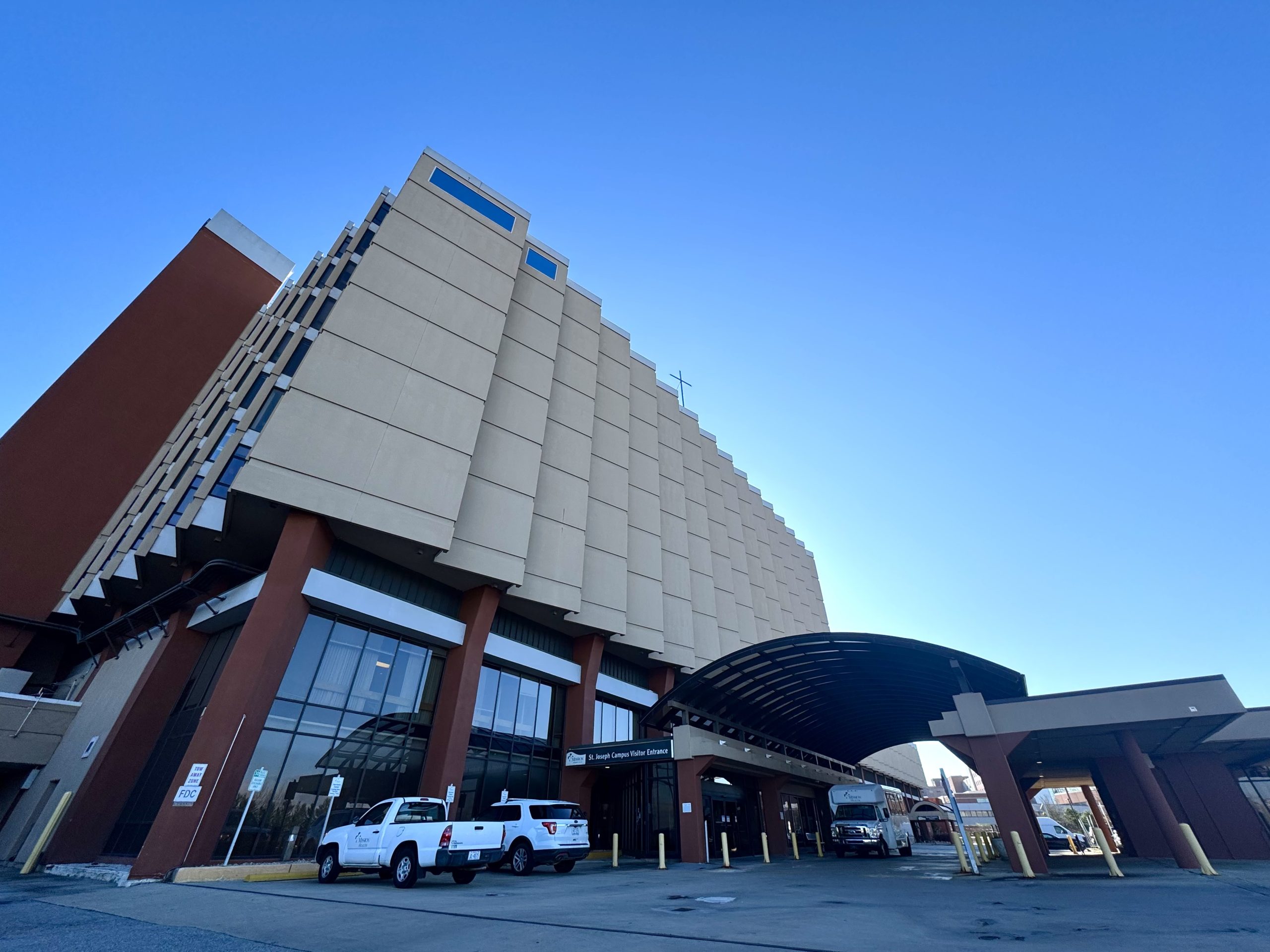
Demolition of Mission Hospital’s St. Joseph’s campus appears imminent
Corporate owner HCA Healthcare has applied for permits with the city of Asheville for a complete teardown of the facility
by TED CLIFFORD February 24, 2026
More than a year after Mission Hospital announced that it planned to demolish its St. Joseph’s Hospital, work is set to begin to tear down the century-old facility.
Permits have been filed and are pending with the city of Asheville, and staff have been told that they will no longer be able to park at the St. Joseph facility beginning Friday.
The permits call for a “complete demolition” of the facility, according to plans filed with the city.
Last week, Mission CEO Greg Lowe told staff in a message that the parking lot is being permanently closed as part of upcoming “remediation” plans.
St. Joseph’s Hospital was once one of the largest hospitals in western North Carolina, but its services have increasingly been phased out and parts of its campus have fallen into disrepair. Its problems only grew in the wake of Tropical Storm Helene, which devastated the region.
Mission Hospital did not respond to requests to comment on this story.
n December 2024, Mission spokesperson Nancy Lindell told Asheville Watchdog that Helene had “exacerbated” the deteriorating condition of the facility.
“The only real option for that campus is its eventual demolition,” Lindell told The Watchdog at the time.
The origins of Saint Joseph’s go back to Nov. 23, 1900, when a group of nuns from the Sisters of Mercy arrived in Asheville and opened an 18-bed tuberculosis sanitarium on the corner of French Broad and Patton avenues.
Almost 100 years later it had grown into a 338-bed facility. In 1996, Saint Joseph’s Hospital began an organizational partnership with Memorial Mission Medical Center to form Mission Hospital. Two years later, Mission bought Saint Joseph’s from the Sisters of Mercy for $90 million.
When Nashville-based HCA Healthcare purchased Mission Hospital in 2019, it agreed not to shut down any part of the Saint Joseph’s site for two years, according to the asset purchase agreement.
But the opening of Mission Hospital’s North Tower in 2019 was at least in part motivated by an awareness that Saint Joseph’s would have to be decommissioned in the near future.
Dr. Scott Joslin, former head of the Asheville Specialty Hospital, located on the St. Joseph’s campus, previously told The Watchdog that the facility had a range of problems including water leaks and electrical issues. As a result, the hospital was becoming too expensive to maintain and was reaching the end of its useful life, Joslin said.
What do the permits say?
Since the beginning of the year, Mission Hospital has applied for two permits with the city of Asheville for work on the Saint Joseph Hospital campus.
The city has approved a permit for the complete demolition of “all buildings and foundations” at the Saint Joseph Hospital complex located at 428 Biltmore Avenue.
The application also states that the hospital will perform “selective demolition” of the pedestrian bridge spanning Biltmore Avenue. The bridge currently connects the Saint Joseph campus with Mission Hospital’s medical offices.
The permit also states that the hospital intends to carry out selective demolition of some features including “paving, parking surfaces, hardscape, landscape and irrigation.”
While the city has approved the permit, it still needs additional approval from the Municipal Sewerage District, according to city spokesperson Kim Miller.
The second permit for commercial site works is on hold pending revision, Miller said.
In December, the city issued a permit for interior demolition at the Saint Joseph campus. That permit allowed for a “total stripout” of four floors of the building, including internal demolition of plumbing, electrical and asbestos removal. However, that permit needs to be closed out as the scope of the work has changed, Miller said.
While the new permit applications do not indicate when the demolition is set to begin, parking changes for staff will start almost immediately. Beginning Friday, staff will have access only to two levels of the five-story Biltmore parking deck, a surface lot and at the Dogwood lot located at Asheville-Buncombe Technical Community College.
Employees will need to take a shuttle from the Dogwood lot to the hospital. A new surface parking lot will be built on the Saint Joseph’s campus as part of the remediation, according to a Mission Hospital newsletter.
Asheville Watchdog welcomes thoughtful reader comments on this story, which has been republished on our Facebook page. Please submit your comments there.
Asheville Watchdog is a nonprofit news team producing stories that matter to Asheville and Buncombe County. Ted Clifford is The Watchdog’s investigative reporter focusing on healthcare. He can be reached via email at tclifford@avlwatchdog.org. The Watchdog’s local reporting is made possible by donations from the community. To show your support for this vital public service go to avlwatchdog.org/support-our-publication/.
This Ballad Hospital, Flooded by Hurricane Helene, Will Be Rebuilt for $44M in a Flood Plain
Brett Kelman February 9, 2026
A small Tennessee hospital that was destroyed by a surging river during Hurricane Helene will soon be rebuilt on low-lying farmland that could face several feet of flooding in a much smaller storm, risking another disaster if the new facility is not built to withstand extreme weather, according to a KFF Health News analysis.
Ballad Health announced in January that it would spend about $44 million to rebuild the 10-bed Unicoi County Hospital in a field behind a Walmart in Unicoi, Tennessee, about 7 miles from the shuttered hospital that was the site of catastrophic flooding and a daring helicopter rescue on Sept. 27, 2024.
But the new location also faces significant flood risk, according to a KFF Health News review of information from Fathom and First Street, two climate data companies whose flood modeling is considered more sophisticated than outdated flood maps published by the Federal Emergency Management Agency. Both Fathom and First Street estimate that a 100-year flood — a weather event more common and less intense than Helene — could cover much of the hospital site with more than 2 feet of water.
“The proposed site is so obviously a flood plain geomorphologically,” said Oliver Wing, chief scientific officer at Fathom. “You don’t need a model to see that.”
Wing said the new hospital site was actually more likely to flood than the old site and “very risky” for development due to a nearby creek and potential storm runoff from mountains to the west. But the flooding would be less powerful than at the old site, Wing said, and its impact could be lessened by elevating the hospital or building earthen embankments.
Ballad Health confirmed the new hospital location but did not respond to questions about flood risk or defenses planned for the site. In a brief written statement, spokesperson Molly Luton said Ballad was working with geotechnical professionals, Zurich Insurance Group, and a high-profile architecture firm in Nashville, Earl Swensson Associates, to “plan and build a safe hospital for the Unicoi County community.” Luton said Ballad is also working with FEMA, which is providing about $7.4 million for the rebuild.
FEMA has served as the nation’s de facto authority for estimating flood risk for half a century, and its flood maps generally determine which buildings must be designed to withstand a flood. But those maps are often incomplete and do not account for the impacts of climate change. FEMA’s flood maps of Unicoi, last updated in 2008, do not identify the new hospital site as a flood hazard zone.
Nationwide, FEMA maps don’t capture much of the flood risk identified by Fathom and First Street, which use sophisticated computer models and detailed terrain data to create flood simulations that are relied on by major developers, insurance companies, and government agencies. First Street publishes much of its modeling online, while Fathom shared data with KFF Health News through a data-use agreement.
Chad Berginnis, executive director of the Association of State Floodplain Managers, said that while the hilly terrain of northeastern Tennessee may limit Ballad’s options to rebuild, it should not ignore the data from Fathom and First Street or rely purely on FEMA’s maps, which suggest the hospital could be built with minimal flood protections.
If Ballad builds behind the Walmart, Berginnis said, it should follow the latest standards from the American Society of Civil Engineers, which recommend elevating hospitals enough to withstand a 1,000-year flood — like the one caused by Helene.
According to those standards and Google Earth elevation data, that could require earthwork to raise the ground of the Unicoi site by at least 8 feet and as much as 18 feet before construction.
“It’s going to require some elevation, and there is going to be some cost,” Berginnis said. “But, my God, you just lost your dang hospital.”
The destruction of Unicoi County Hospital in 2024 prompted a KFF Health News investigation into hospital flood risk, which used Fathom data to identify more than 170 hospitals across the nation that face the greatest risk of significant or dangerous flooding. Of those hospitals, at least 39 faced circumstances similar to Unicoi’s: Nearby rivers or creeks were predicted to swell beyond their banks and engulf the facility.
Ballad Health, which owns Unicoi and 19 other hospitals in Tennessee and Virginia, is the nation’s largest state-sanctioned hospital monopoly and the only option for hospital care for most residents in a 29-county region of Appalachia.
In a news release announcing the Unicoi reconstruction, Ballad said it was finalizing a land purchase for the new hospital site and expected construction to begin in the spring and last two years. Ballad Health Chief Operating Officer Eric Deaton said the reconstruction announcement was “a long-awaited step toward healing.”
“Rebuilding Unicoi County Hospital is about more than bricks and mortar,” Deaton said in the release. “It’s about keeping care close to home for people who have been through so much.”
Tennessee state Rep. Renea Jones, a Republican whose district includes both the old and new Unicoi hospital sites, praised the reconstruction plan in Ballad’s news release. The release did not mention that Ballad would buy about 15 acres of land for the new hospital from Jones’ family, which was first reported by local television station WJHL and later confirmed by Tennessee public records.
Jones did not agree to be interviewed about the sale of the property or its flood risk.
The destroyed Unicoi County Hospital, which cost $30 million, was built along a bend of the Nolichucky River even though FEMA had labeled that area a flood zone for decades. Mountain States Health Alliance began construction in 2017, then later became Ballad Health, which opened the hospital in 2018.
Alan Levine, who was the CEO of Mountain States and now leads Ballad, told KFF Health News in a 2024 interview that Mountain States was aware of the flood risk when Unicoi was built but believed levees could protect the facility.
“I feel like everything we did when we built it was done the right way,” Levine said.
Helene proved too much to handle. As the hurricane carved a deadly path across Southern states and into Appalachia, heavy rainfall caused the Nolichucky to overspill its banks and engulf the hospital in as much as 12 feet of water.
Floodwater pushed inside the hospital and cut the power, forcing patients and staff to evacuate to the roof in hopes of rescue. Ultimately, helicopters plucked 70 people from the roof and the rushing water, narrowly avoiding fatalities.
Angel Mitchell, a Unicoi survivor who was airlifted to safety with her ailing mother, said she was appalled that the hospital would be rebuilt in an area vulnerable to another flood.
But the worst part, Mitchell said, was that locals would have little choice but to tolerate the risk because of Ballad’s monopoly.
“It’s ridiculous,” Mitchell said. “We want to go somewhere to heal, not somewhere to worry.”
KFF Health News is a national newsroom that produces in-depth journalism about health issues and is one of the core operating programs at KFF—an independent source of health policy research, polling, and journalism. Learn more about KFF.
USE OUR CONTENT
This story can be republished for free (details).
KFF Health News is a national newsroom that produces in-depth journalism about health issues and is one of the core operating programs at KFF—an independent source of health policy research, polling, and journalism. Learn more about KFF.
Subscribe to KFF Health News' free Morning Briefing.
This article first appeared on KFF Health News and is republished here under a Creative Commons Attribution-NoDerivatives 4.0 International License.

Roadless areas of national forests could go away under proposed rule change
by Jack Igelman, Carolina Public Press
February 25, 2026
Last summer, Southeast director at the Center for Biological Diversity Will Harlan spotted an eastern hellbender through his fogged snorkeling mask during a river survey. “It’s magical to see them in the wild,” said Harlan of the elusive and threatened creatures which depend on clean water. The foot-long salamander was curled around a clutch of eggs beneath a rock in a streambed in the South Mills River watershed in the Pisgah National Forest, roughly 5 miles from Hendersonville. Portions of that watershed are within an Inventoried Roadless Area, or IRA, a designation intended to protect backcountry areas and watersheds within national forests. The federal designation restricts road building and logging in undeveloped portions of national forests, including tens of thousands of acres of IRAs in Western North Carolina.
That protection, however, may end later this year.
The US Department of Agriculture is weighing rescinding the 2001 Roadless Area Conservation Rule, commonly called the Roadless Rule, potentially opening tens of thousands of IRAs within the Pisgah and Nantahala National Forest to future road development.
[Subscribe for FREE to Carolina Public Press’ Daily, Weekend and Election 2026 newsletters.]
Rescinding the Roadless Rule is intended to return some land management decisions to local Forest Service officials.
Critics of the rule argue that in addition to limiting local control of federal land, it hinders wildfire management, restricts access to timber and complicates the active management of public forests.
Nick Smith of the American Forest Resource Council, who favors rescinding the rule, said the forest products industry wants public lands to stay in public hands. But easing or eliminating the rule “gives some flexibility to local public land managers to consider limited access where it's necessary for things like forest health, wildfire mitigation or emergency response,” he said.
Supporters of the Roadless Rule, however, such as Harlan, say it protects wildlife habitat, safeguards water quality, preserves scenic landscapes and supports the Western North Carolina outdoor recreation economy.
“Rescinding the rule would be the single largest evisceration of public lands in US history. It’s been around for 25 years and protects millions of acres” including some of the Southern Appalachian’s best hellbender habitat, Harlan said. “It’s now all on the chopping block.”
Environmental response
In 1999, the USDA Forest Service placed a moratorium on road construction within areas identified as roadless. The agency released a draft rule the following year for public review. Attorney Kristin Gendzier of the Southern Environmental Law Center said about 95% of the 1.6 million public comments supported it.
“It was just wildly, wildly popular,” she said. While a decade of litigation challenging the rule followed, a federal appeals court ruled in 2011 that the Forest Service legally adopted the Roadless Rule. The US Supreme Court declined to review the rule in 2012, upholding the regulation.
The Roadless Rule is straightforward, Gendzier said: “It's just a couple of paragraphs and it says, for the most part, don't build roads and log in these special areas.”
Josh Kelly, the resilient forests director of MountainTrue, said IRAs in Western North Carolina include some of the region’s best-known places such as Cheoah Bald near Bryson City, portions of the Black Mountains in Yancey County, the South Mills River watershed in Henderson County, Dobson Knob in McDowell County and upper Wilson Creek in Caldwell and Avery counties.
“One of the justifications for the Roadless Rule is that it covers places that perhaps shouldn't be wilderness, but also shouldn't be developed,” he said. “It's this middle ground of places where the Forest Service has the latitude to do controlled burns, thinning, manage insect and disease control” yet the designation is not as restrictive as federal wilderness.
Gendzier said rescinding the rule is unsound from both an environmental and economic standpoint. “They're roadless for a reason. These are areas that are rugged and steep. Cost effective timber is either gone or the forest service has already set it aside. So we're talking about a pretty small subset of timber that’s difficult to access in areas that are providing tremendous benefits.”
Forest industry responds
Smith of the AFRC supports a review of the Roadless Rule in order to better address severe wildfires, declining forest health, climate stress, and to expand access for the timber industry.
“Our industry is not as big as it was 20 or 30 years ago, but we're still here,” Smith said. “We recognize that federal lands aren’t industrial tree farms, but our members still depend on lumber and wood fiber from federal lands to keep their doors open and workers on the job.”
North Carolina has more than 18 million acres of timberland, much of which is privately owned. A labor force of roughly 70,000 work in forestry and logging operations, sawmills, furniture mills and pulp and paper industries across the state.
Rescinding the Roadless Rule doesn't mandate building new roads or logging, Smith said.
“The big picture is that we think the Forest Service is right to take a hard look at the rule, because in our opinion, it reflects an older way of thinking about forests as static landscapes which doesn't align with today's realities of severe disturbance” such as exotic pests and climate change, he said.
The Pisgah and Nantahala national forests contain nearly 152,000 acres of IRAs within their 1 million acres. Under the Pisgah–Nantahala Forest Plan, IRAs are managed primarily as “backcountry” or under more restrictive designations such as the Appalachian Trail Corridor, Heritage Corridors or designated Wilderness.
In an email response to Carolina Public Press, a USDA spokesperson said the intent to rescind the Roadless Rule is to return land management decisions to local authorities, such as district rangers.
Future land management decisions would still have to comply with existing forest plans, federal law and public review requirements. A land management plan for Pisgah and Nantahala was completed in 2023. Plans are revised every 10 to 30 years.
David Whitmire of the Fish and Wildlife Conservation Council, an organization advocating for more active forest management to improve wildlife habitat in the Pisgah and Nantahala national forests, said there “is no need to change the plan or management concerning roadless areas. The plan identified enough acres outside of IRAs to support active management. We can’t get the work done where we can go, so I don’t see the benefits of going into roadless areas.”
The USDA acknowledged that due to “steep terrain, remote locations and statutory limits, road construction in these areas is generally impractical, and the effect of rescinding the Roadless Rule on current management is expected to be minimal.”
The statement said repealing the Roadless Rule nationally “is more important than ever because 24.5 million acres of the wildland urban interface are within or near IRAs.” The wildland urban interface, or WUI, refers to places where the built environment intermingles with nature. North Carolina has more WUI acres than any other US state.
“Roads improve access for wildland firefighting when timing is critical and lives are at risk,” said the statement. According to the Forest Service, between 1984 and 2024, 13% of IRAs nationwide experienced high or moderate severity wildfire.
However, opening more roads, Harlan said, may instead increase wildfire risk.
“Wildfires are four times as likely in areas with roads than in roadless tracts, and 90% of all wildfires occur within half mile of a road,” he said, adding that road building in national forests is “reckless and dangerous. Roads are expensive to build and the Forest Service can’t maintain what we already have.”
Taxpayers for Common Sense, a nonpartisan watchdog group, said the USFS reported a $5.9 billion maintenance backlog for road maintenance in 2024 and recommends the agency focus limited funds on repairing necessary transportation infrastructure rather than build new roads.
“Rural economies have flourished because of recreation and tourism,” Harlan said. “Let's allow logging in places where it makes sense and protect the biologically and recreationally important places within IRAs.”
Roadless Rule repeal proposal part of pattern
Without the rule, forests could drop roadless protections either through a project-specific plan amendment or during the next forest management plan revision, Gendzier said.
“Don't worry ‘we have forest plans and that nothing changes’ is not true,” she said. “Forest management plans are no substitute for the Roadless Rule. In fact, plans that protect IRAs generally do so because the rule requires it.”
Gendzier also questioned whether the USDA’s stated push to rescind the rule is genuine.
“This isn’t about wildfire and it’s certainly not about a need for more roads,” she said. “The Forest Service already has over double the miles of our federal highway system. This proposal is another move to elevate the interests of extractive industries above those of the public when it comes to managing public land.”
Kelly of MountainTrue said he believes a nationwide effort is underway to push regulatory boundaries and pressure local rangers to implement a Project 2025 vision to roll back environmental rules and favor industry.
Project 2025 is a set of conservative policy recommendations for Trump’s second term. Among their recommendations was to update the “endangerment finding,” the scientific conclusion that greenhouse gases threaten public health and welfare. The Trump administration revoked the finding on Feb. 12.
“I would expect to see further envelope pushing locally from top down pressure from Washington,” Kelly said.
Gendzier also believes the proposed recision of the Roadless Rule is part of an across-the-board attack on public lands that includes the adoption of loopholes exempting national forest projects from environmental review and staffing reductions.
The Trump administration has taken steps to reduce environmental regulations and long-standing land protection rules to promote the active management of forests and increase timber sales. Among several actions, Trump has weakened the National Environmental Policy Act, considered the bedrock of environmental law, by reducing the scope of environmental reviews, shortening project approval timelines and limiting public participation.
“On its own, rescinding the Roadless Rule is a terrible idea that would do irreparable harm,” Gendzier said. “But in tandem with the other rollbacks, it’s mind-boggling.”
What’s next for Roadless Rule?
Changing a USDA administrative rule requires a formal, public process, usually initiated by submitting a petition for rulemaking and influenced by thousands of comments received during a 21-day comment period.
A proposal to rescind the Roadless Rule and a draft Environmental Impact Statement are expected in March 2026. Following another public comment period, a final decision is expected in late 2026.
“It's a big decision, and one that shouldn't happen quickly if done responsibly,” Gendzier said. “That is not the kind of stability and rational policy decisions that our public lands need and deserve.”
Gendzier urged the public to contact elected officials and submit comments opposing any proposal to rescind the Roadless Rule.
Congressional Democrats have also proposed legislation, the Roadless Rule Conservation Act, to cement the Roadless Rule in law.
Harlan supports a new law, but regardless of congressional action, he predicts that a deluge of public comments will win the day. “Roadless areas are far too valuable to the American public,” he said, pointing out that the rule has survived multiple repeal attempts over the last two decades because of overwhelming public support.
“Each time, the public and a few key leaders have stepped up to save it,” he said.
A Susquehanna Poll released on Feb. 2 surveyed attitudes and opinions toward the Roadless Rule regulation. It found that 72% oppose repeal. Opposition to repeal is broad-based, including 71% of Republicans, 73% of Democrats and Independents and 71% of Trump voters.
Despite strong public support for the rule, Smith of the AFRC said they will also continue to share their expertise about best forest practices they believe are necessary to improve forest health and support the timber industry.
“Everybody deserves a voice, whether it's AFRC or an environmental group. We're going to continue to speak our truth and we think it’s a good time to look at policies that are 20 or 30 years-old,” he said. “We represent an industry that has been in the forest for a long time and see ourselves as an important part of the equation when it comes to public lands.”
This article first appeared on Carolina Public Press and is republished here under a Creative Commons Attribution-NoDerivatives 4.0 International License.

Finding financial footing for Walthourville: One mayor’s journey
by Robin Kemp, The Current
February 12, 2026
Which bill to pay first — thousands of dollars to the county landfill? More to Georgia Power or Coastal Electric? Insurance? Sewer?
Last winter, Walthourville Mayor Sarah B. Hayes sat at the conference table with City Clerk Shana Moss, agonizing how to prioritize the debts facing their town of 4,000.
Founded by strongwilled local women wanting independence from unhelpful Liberty County leaders, Wathourvile had thrived on one source of revenue: an independent water system. The city had a budget surplus in 2017. But after Covid rocked the country and the economy, its finances went off the rails.
The city passed an unbalanced budget with no funding mechanism in 2023, and owed years of mandatory state financial audits and reports. Monthly cash flow didn’t cover bills. Meanwhile, others in the county, she was told, were hoping to annex Walthourville. City council members bickered with Hayes, blaming her for the city’s woes.
The depth of Walthourville’s financial problems mirrors those of hundreds of rural Georgia towns and the state’s rural counties. Most struggle with shrinking populations and ways to pay for vital services that authorities must provide to retain their charter.

Despite the hurdles, by the end of 2025, Hayes, a retired Army drill sergeant, had put her town on the path to financial solvency. Her victory amid small town rivalries illustrates how valuable strong public servants are to the fabric of Georgia communities.
“The military taught me organizational skills, how to work with people from all races and walks of life, and the concept of teamwork,” Hayes said. “And always do what is ethically and morally correct.”
An outsider ascends to power
Walthourville is a quiet town of modest single-family and mobile homes that has become a draw for retirees from Fort Stewart. The CSX railroad track runs past City Hall and the old train depot. Other than the train horn, nights are mostly quiet.
City leaders tout its economic potential: A bypass road 20 years in the making is expected to spark new mixed-used developments and bring new sales and property taxes.
Yet one of Walthourville’s assets is sometimes its Achilles heel. Five miles from Hinesville, its social and political life are intricately entwined with the rest of Liberty County, and strong family and social ties cross pollinate city and county politics.
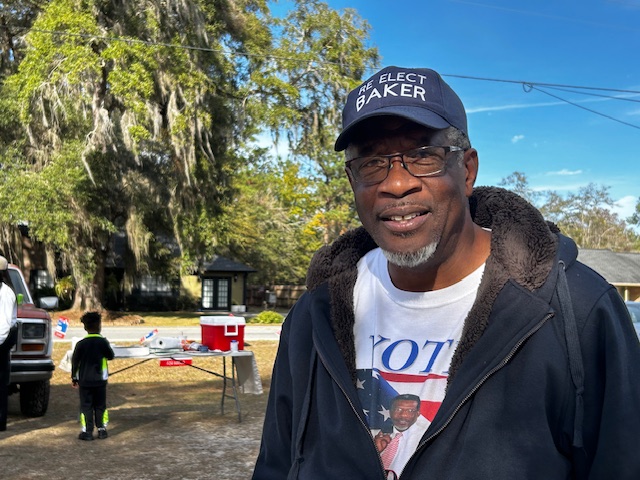
For example: Walthourville’s former mayor Larry Baker, who held that seat for four years after 12 years as councilman, served alongside his father, James Hendry, and his uncle, Charlie Anderson. Baker’s grandfather was former councilman, mayor, and civil rights pioneer Henry Frasier, Sr., uncle of Liberty County Commissioner Justin Frasier.
Such relationships are not uncommon in rural Georgia. At their best, family ties can offer closeness that can help build up a community. At their worst, they can work to shut out newcomers and new ideas.
Hayes, who is devoted to her church and the local seniors group, didn’t see her outsider status as a problem in 2011 when she ran for public office as another way to serve her adopted community. She won Baker’s vacated seat, served one term, lost reelection, then won again in 2019. When Covid struck, Hayes lost 11 relatives to the deadly virus. Yet she soldiered on.
For a brief time, city finances were buoyant — Walthourville received millions in federal funds to upgrade public safety and the water system.
But financial oversight slipped. The city’s former accountant, Matthew Caines, resigned after the council failed for four months to approve his pay. State-mandated financial audits for 2021, 2022, and 2023 were left unfinished. Yet the council also approved spending decisions that exacerbated cash flow problems.
In 2022, Baker appointed Hayes mayor pro tem. That role put her into conflict with him and other long-term council members, especially when Hayes started questioning city spending, including a new city vehicle for Baker.
Hayes complained that the council was prioritizing personal needs over public ones: “The city cannot move forward with this infighting. One member doesn’t like this member; therefore, they will not support what could be good for the city. That isn’t fair to citizens.”
The council also balked at the unpopular task of discussing whether to levy the city's first property tax. Walthourville needed a major sustainable revenue source. The county was set to collect almost $1 million annually on part of a large residential development inside the city limits straddling the Liberty-Long county line. Walthourville couldn’t afford to leave that kind of money on the table.
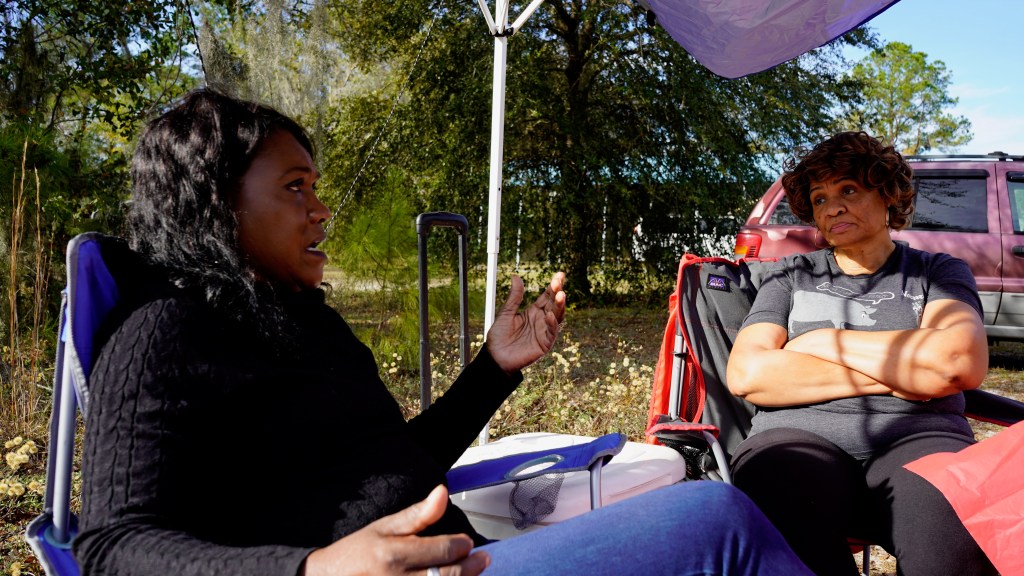
Such shortsightedness prompted Hayes to run for mayor in 2023 against Baker and win with a commanding 55% of the vote. The city, she thought, needed to make tough choices to stay solvent — a position backed by the city’s accountant.
Caines, at the end of 2023, warned the city lacked enough revenue to cover municipal salaries and public safety. The only solution, he said, was a millage rate — the formula to calculate property taxes — and a fee for fire services. A Georgia Municipal Association consultant agreed.
Yet Baker’s loss appeared to sharpen opposition to Hayes’ ideas among the former mayor’s relatives and allies.
Under fire
Georgia cities must provide at least three services like public safety, sanitation, and water to keep their charter.
As mayor, Hayes was one of four elected officials authorized to sign checks. In her first year in office, she gained in-depth knowledge of the city’s debts that threatened her ability to pay for city services.
One constant drain was a monthly loan payment of $20,000 to the U.S. Department of Agriculture dating back to 2011.
Without reliable city budgets to consult, Hayes and Moss tried to manage. City staff spent hours on the phone, negotiating payment arrangements from grumpy creditors, begging for goodwill and borrowing time.
As early as October 2023, Hayes said she wasn’t opposed to a millage rate but that citizens must be afforded the chance to give their input at public meetings.
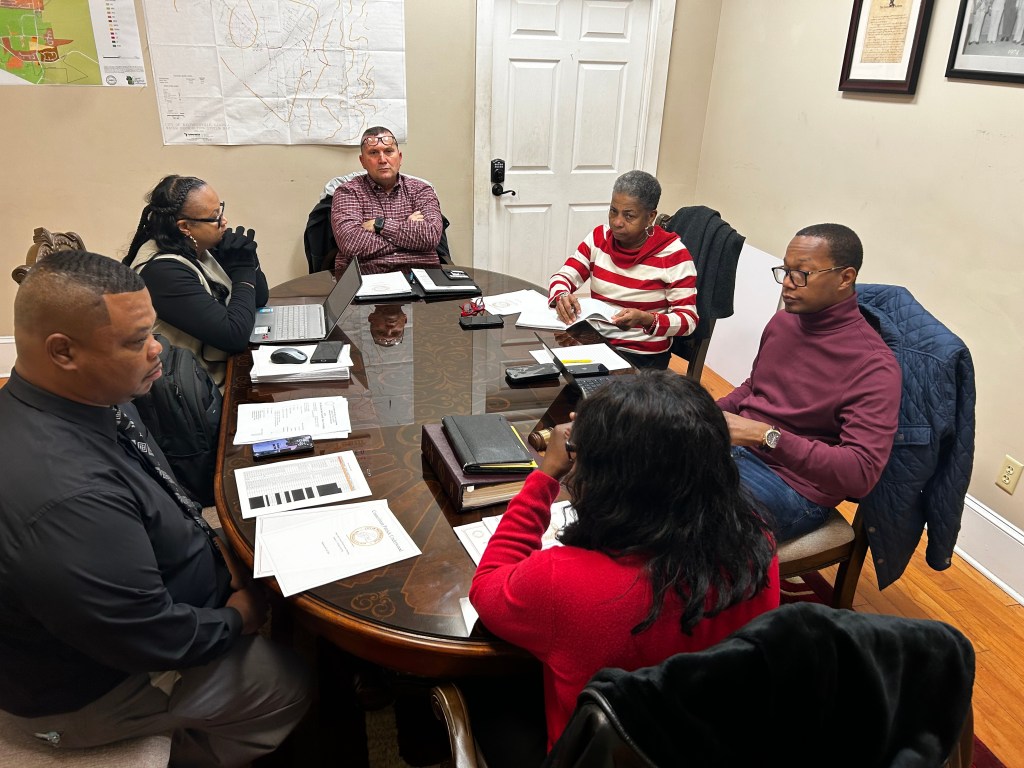
Council members agreed during their first work session to expedite millage rate hearings. Boston and Dodd also advocated privatizing city services. But the inability to pay for those services could put the city charter in peril if Walthourville were unable to bring and keep its bills current.
Instead of collaboration, Hayes faced whisper campaigns. Council members blamed her, alleging she had kept them in the dark about the financial woes. City records, however, show that council members knew, or should have known, the extent of the problems.
Two elected officials must sign every check: the mayor and one councilmember. Three councilmembers -- Boston, Bridgette Kelly, and Robert Dodd -- are authorized co-signers, a robust oversight for spending.
With financial problems mounting, Hayes perceived that some on council might have an ulterior motive against saving the town. Hinesville, she came to believe, wanted Walthourville to go bankrupt so it could annex the smaller city for its own gain.

Hayes appealed to civic pride when financial common sense had failed.
“I had a public official come to me and say, ‘I need to talk to you about annexing.’ I said, ‘You talking about Walthourville, it’s gonna be a short conversation. That ain’t happening.’” she told council members. “And I know y’all feel the same way.”
Rather than create camaraderie, Hayes’ actions spurred deeper conflict. Boston and Councilmember Patrick Underwood later told The Current GA they felt Hayes talked down to them.
Underwood began openly disrespecting Hayes during council meetings, sometimes even shouting her down.
Hayes kept to her strategy of taking the high road. “I learned you can’t approach everything the way a drill sergeant would,” she told The Current GA.
Through 2024, council arguments ranged from petty to monumental. For example, the council decided, over Hayes' objection, for taxpayers to fund their hotel rooms in Savannah for annual training.
The council then stopped attending pre-meeting work sessions, the time when policy discussions occur.

Boston, who ran for office on “growth and change,” kept pushing to privatize city services like sanitation, as well as ending employee health insurance coverage. That, he said, would erase the city’s growing annual deficit for basic operating expenses.
Boston had an ally in Dodd, and contacted two companies, Atlantic Waste Services and ABC Waste of Atlanta, ahead of any city council decision. To cover the city’s debts to the landfill, he suggested selling the city's recently-purchased $250,000 garbage truck.
In August 2024, the city held a public hearing for citizens to ask about Boston’s proposal to privatize sanitation services.
Some residents accused city officials of hiding information about the plan from the public — and Hayes lost momentum. Council members approved Boston’s idea, ignoring advice from the city accountant that it wouldn’t save money.
Cash flow woes
At the end of 2024, Hayes’ financial juggling act crashed. At a meeting to approve the 2025 budget, Hayes told the council a sewer emergency had put the city at risk of massive fines. The city’s private contractor refused to fix the problem because of a delinquent payment. Hayes said she transferred $300,000 from the city’s special transportation fund called TSPLOST to its water fund.
“I did not want the sewer backed up into citizens’ homes,” Hayes told the council.
The episode reflected a years-long practice by which city officials moved cash from dedicated budgets to pay bills for other services, Hayes said.
Although City Attorney Luke Moses told the council he was “certain” the transfer was legal, the council was skittish. They refused to pass the budget on time until Moses suggested they do so on the condition of amending it after the first of the year.
Begrudgingly, the council passed the budget, on time. At its next meeting, the council moved the money back to TSPLOST.
Another crisis erupted in the summer of 2025.
Atlantic Waste, the private sanitation contractor, demanded immediate payment of $116,086.80 in unpaid invoices within the week or it would cut all service to the city.
Hayes pleaded with council members to participate in a special-called meeting to handle the crisis. “You know our funds situation,” she wrote. “Not enough revenue to pay everything.”
Instead, three council members used the fragile financial situation as further ammunition against Hayes, accusing her again of financial mismanagement.
The city attorney has told The Current GA that, while Hayes’ maneuvers are not best practice, moving money between city funds in such a situation is not illegal.

News of the garbage crisis spread quickly, and angry residents mobbed the Aug. 22 council meeting. Minutes before it started, Hayes ensured pickup services by paying $38,000 of the outstanding bill.
But Hayes delivered other bad news: The city had not paid its portion of Liberty Transit bus service for two years and thus owed Hinesville over $42,000.
This sent the council over the edge.
The council censured Hayes at the August 25, 2025, council meeting. Boston accused Hayes of prioritizing city staff payroll over garbage pickup residents had paid for.
Underwood called for Hayes to resign: “You have not demonstrated transparency with the city council. As a mayor, you are expected to lead and manage day-to-day operations. But your actions continue to show a lack of accountability.”
Hayes said she was trying to be a good financial steward, while council members spread “lies and half truths” about her.
“I don’t understand all this hate,” she said. “I haven’t done anything to anybody”
Over the next few weeks, Hayes kept untangling the red tape and mopping up the red ink.
Meanwhile, political backlash against Hayes continued.
During the Oct. 14 council meeting, Kelly called a town hall meeting, in response to what she said were “many” citizens’ questions about the millage rate and fire fee.
Only three residents showed up, along with Kelly, Lovette, Boston, Underwood, and the fire chief.
Afterward, the four council members told The Current that their driving motivation to oppose the mayor was rooted in personal dislike.
“I think it’s personality,” Lovette said,
“I was going to say it was control,” Kelly added.
Boston agreed. “Yeah, definitely control.”
The bottom line for Kelly: “She’s not from here.”
But through the political theatrics, financial realities finally started to sink in.
The city’s new accountant, Eon van Wyk, told the council that while the fund transfers weren’t absolutely orthodox, he had not found any misuse of resources or fraud. “We have not come across any suspicious payments,” he said.
By November, Hayes seemed to have hit on an argument that would hold water with residents and her council members. The 12-mil tax rate, she said, could be a temporary measure until the city could get its financial house in order.
She told one citizen at the final budget hearing, “We have very high hopes for the future that these things will be taken care of, and with the income coming in we can pay down these bills, and hopefully roll back the millage rate. So don’t give up on us.”
On Nov. 11, Hayes called for a vote on the proposal to enact a 12-mil property tax measure, which is projected to raise just over $1 million.
The council was silent for several seconds until Moses prompted them for a motion.
Underwood took a gulp from a bottle of water and made the proposal.
“Is there a second?” Hayes asked.
After a long pause, Boston said, “Second,” then scooted his chair forward.
Hayes called for the vote. Silently, Boston, Kelly, Dodd, and Underwood raised their hands.
Lovette did not reply when asked what her vote was.
“Motion carries,” Hayes said.

One battle at a time
With that victory under her belt, Hayes pushed through the next challenge: a balanced budget.
Hayes, van Wyk and his accounting team guided council members through the cold, hard facts during six budget workshops between November and December. When they asked the accountants to show them different scenarios to test their own political priorities — ending the unpopular fire fee, privatizing more services — they could see what for years had been clear to Hayes.
The city would need all its fees to balance the budget until the first property tax payments arrive.
Hayes won over enough opponents to narrowly pass a $6 million balanced budget.
Lovette and Dodd voted against it, with Lovette saying she didn’t want to break her promise to voters that the fire fee would be temporary.

Hayes described the victory as bittersweet. “I had to balance the needs of the city with the needs of the citizens, to make sure that all our bases were covered and that we were really looking out to make sure the citizens and the City of Walthourville didn’t go under,” she said.
Moving into 2026, Hayes hoped to start a new cooperative chapter with her council members.
Over the Christmas holidays, Hayes paid out of her pocket to spruce up the council chambers, refreshing the brown 1970s-era wall paneling, replacing the stained carpet and painting the walls a warm, pale yellow, Even the old stacking chairs got a makeover with fresh seat covers.
The move channeled the spirit of Walthourville’s first mayor, Lyndol Anderson, who is revered, in part, for donating her salary to help fund the new city’s first annual budget.
Hayes says the move was “a statement. This city is making a fresh start.”
Bookkeepers are still working on four years of mandatory audits that Walthourville must file to be eligible for state and federal grants. At publication time, state records show related budget reports for 2020, 2021, 2022, and 2024 have been submitted. Reports for 2015, 2016, 2018, 2019, and 2023 are outstanding.
Meanwhile, Hayes’ political rivals have circled.
Boston, now mayor pro tem, is demanding more cuts to overworked city staff. He pushed through a $20,000 payment for consultants to update job descriptions and evaluate employee benefits packages. Boston has said he sees no reason for the city to pay for its employees’ healthcare when the state could pick up the tab.
Kelly, meanwhile, has announced another town hall at the Liberty County College and Career Academy to be held from 4 p.m. to 6 p.m. Saturday, Feb. 21. No agenda was available at publication.

Hayes said she plans to continue shepherding the flock so that the city can survive.
“My goal, my focus is, you know, to balance things where we’re getting the bills paid, but people can afford to live in Walthourville,” Hayes said. “And I think once we get through this transition period, it’ll be okay.”
This article first appeared on The Current and is republished here under a Creative Commons Attribution-NoDerivatives 4.0 International License.


