Report proposes halving FEMA
2 NC municipalities in Carteret and Hertford counties must redo elections; DHS adding funding in hopes of getting more local law enforcement agencies to work with ICE


It's Friday, December 19, 2025 and in this morning's issue we're covering: Disaster Survivors Denounce Proposed FEMA Downsizing, DHS to add funding in hopes of getting more local law enforcement agencies to work with ICE, The WalMart of public defense: How justice gets sold to the lowest bidder in rural California, Two NC towns must redo ’25 elections in March ’26, An ASU triathlete discovers the mental health crisis hidden in endurance sports.
Media outlets and others featured: Inside Climate News, The Daily Yonder, CalMatters, Carolina Public Press, Cronkite News.
Disaster Survivors Denounce Proposed FEMA Downsizing
A leaked report recommends halving the size of the nation’s disaster response agency, while holding states responsible for a much larger share of response and recovery costs.
By Anika Jane Beamer
December 15, 2025
This article originally appeared on Inside Climate News, a nonprofit, non-partisan news organization that covers climate, energy and the environment. Sign up for their newsletter here.
Flood, storm and fire survivors gathered in Washington, D.C., Monday to express their alarm over a leaked report from the FEMA Review Council that proposes halving the agency’s workforce and scaling back federal disaster assistance.
Holding images of the devastation wrought by disasters in their communities, more than 80 survivors from 10 states and Puerto Rico gathered at a press conference in the historic Russell Senate Office Building on Capitol Hill.
There, Brandy Gerstner tearfully recounted the flash floods that destroyed her home and family farm in Sandy Creek, Texas, in July. With little help from the county or state, Gerstner said she and her family were left to navigate the flood’s aftermath on their own. “From the very beginning, it was neighbors and volunteers who showed up. Official help was scarce,” she said.
It took search and rescue three days to arrive in Sandy Creek. “By that time, it was search and recovery,” said Gerstner.”
Weeks later, after being told that FEMA could help pay for costs not already covered by a small flood insurance payout, her application for federal assistance was denied.
In D.C., Gerstner was one of several survivors to condemn the Trump administration’s efforts to shrink FEMA’s scope. “We know what it feels like when emergency systems fall short. Proposals to weaken FEMA should further alarm every American,” said Gerstner.
Trump has repeatedly expressed his intention to shift FEMA’s responsibilities to states. In June, he told reporters assembled in the Oval Office that the administration wanted to “wean off of FEMA,” and move many of the agency’s responsibilities to the state level, “so the governors can handle it.”
Just weeks into his second term, Trump created the FEMA Review Council, calling for a “full-scale review” of the agency and citing “serious concerns of political bias in FEMA.”
Secretary of Homeland Security Kristi Noem and Secretary of Defense Pete Hegseth co-chair the council, which is composed almost entirely of Republican federal and state officials.
After nearly a year of deliberation, the committee was poised to vote on its final recommendations for the agency’s future at a meeting on Thursday in D.C. But the meeting was abruptly cancelled after a draft of the council’s report leaked to news outlets.
The White House has not yet set a date for a rescheduled meeting, but the leaked report, which calls for sweeping reductions to FEMA’s staff and scope, sparked immediate backlash from advocacy groups, disaster survivors and emergency management experts.
In addition to shifting greater responsibility for disaster response and recovery to the states, the report’s recommendations include cutting the FEMA workforce by 50 percent and moving employees out of Washington, D.C., over the next two to three years.
The report also outlines a block grant system that would streamline the delivery of disaster aid to states within 30 days of a major federal disaster declaration, expediting cash flow while requiring a higher cost share from states.
However, fewer disasters might qualify for such federal assistance in the reimagined FEMA. “Federal assistance should only be reserved for truly catastrophic events that exceed [State, Local, Tribal and Territorial] capacity and capability,” the report states, according to CNN.
Restricting federal aid could have dire consequences to states already struggling to support disaster victims, said Amanda Devecka-Rinear, executive director of the New Jersey Organizing Project and senior at Organizing Resilience, which hosted the Monday press conference. “‘Passing disaster management to the states’ is code-speak for letting people suffer and die,” said Devecka-Rinear in a statement.
This weekend, tens of thousands of residents in Washington state were ordered to evacuate their homes amidst historic rainfall and flooding. Gov. Bob Ferguson declared a statewide emergency and has announced meetings with FEMA to expedite a federal disaster designation and secure critical funding and resources.
If the current precedent holds, that may take weeks. On average, it’s taken more than a month to approve requests for federal disaster designations during Trump’s second term, the Associated Press found.
“‘Passing disaster management to the states’ is code-speak for letting people suffer and die.”— Amanda Devecka-Rinear, New Jersey Organizing Project
Even once a federal disaster designation is granted, there’s no guarantee of rapid response under the current agency administration, said Abby McIlraith, an emergency management specialist at FEMA.
McIlraith has been on administrative leave since August, when she, along with current and former agency employees, signed the Katrina Declaration, condemning FEMA practices interfering with disaster recovery, including Secretary Noem’s policy of personally reviewing and approving all expenses over $100,000.
“This is absolutely appalling, and it makes an already difficult disaster process even more arduous for the people it serves,” said McIlraith at the Monday press conference.
McIlraith, Gerstner and other survivors called for a fully independent FEMA not based within the Department of Homeland Security.
“Disasters don’t discriminate, but disaster recovery does,” said Michael McLemore, a St. Louis-based electoral justice organizer and survivor of a deadly May 16 tornado.
During the St. Louis tornado, sirens failed to sound across northern parts of the city. The tornado caused $1.6 billion in immediate damage, yet was not declared a major federal disaster until nearly a month later, said McLemore.
“You’re here today because this building and this government have failed you,” said New Jersey senator Andy Kim, speaking to the assembled survivors. “There should be accountability, there should be change, there should be real effort. What is more important for our government than to be there for our people in their time of great need?”
Editor's note: The following link is a Down Ballot article for more context about ICE agreements in South Carolina increasing between 2024-2025:
 Ben Ledbetter
DHS is Deputizing Local and State Police Forces to Enforce Immigration Law
by Anya Petrone Slepyan, The Daily Yonder
December 17, 2025
On September 2, 2025, the Department of Homeland Security (DHS) published a press release announcing a change that has the potential to transform law enforcement across the country, and especially in rural counties.
A new promise to reimburse salaries, benefits, and overtime pay for county and municipal law enforcement officers who partner with U.S. Immigration and Customs Enforcement (ICE) could prove a major incentive for cash-strapped rural counties.
DHS will use funding from the One Big Beautiful Bill Act, passed earlier this year, to reimburse local law enforcement agencies who partner with ICE under the Task Force model of the Section 287(g) program.
The Task Force model deputizes local and state law enforcement officers with many of the powers of federal immigration agents, including the ability to arrest, detain, and interrogate people who are suspected of being undocumented – all without a warrant.
These activities occur “while performing routine police duties,” according to the press release, including traffic stops and investigations of non-immigration-related incidents. In addition to reimbursing the costs of Task Force officer salaries and benefits, DHS will cover overtime costs up to 25% of the officer’s annual salary, and “quarterly monetary performance awards based on the successful location of illegal aliens.” DHS also covers the costs of the 40-hour training each officer undergoes to participate in the Task Force model.
“We encourage all state and local law enforcement agencies to sign a 287(g) agreement now,” said Madison Sheahan, ICE deputy director, in the press release. “By joining forces with ICE, you’re not just gaining access to these unprecedented reimbursement opportunities–you’re becoming part of a national effort to ensure the safety of every American family.”
But experts say these kinds of federal-local partnerships often face difficulties.
One question is the proper role and priorities of local law enforcement. Justin Smith served in county sheriffs’ departments in Kansas and Colorado for 36 years and is the incoming executive director for the National Sheriffs Association. He said that even finding enough time and manpower to send deputies to the 40-hour training could be a challenge for understaffed rural departments.
Smith said it’s also important to recognize that ICE and law enforcement have fundamentally different goals and responsibilities.
“When we got a 911 call, our primary focus was on helping that person who called for help. If your job is to protect people from domestic violence, from theft, from burglary, that’s where your focus is,” Smith told the Daily Yonder.
“An immigration agent’s job is to make sure immigration law is being upheld. That’s where those conversations come down to realistic expectations of what the role of local police is. And it’s not a black and white line, it’s different in every community.”

According to the American Immigration Council, Section 287(g) agreements “blur the line between community policing and federal immigration enforcement.” Studies have shown that the perception that local law enforcement officers are acting as immigration enforcers erodes public trust in police departments, especially among immigrant communities.
Nayna Gupta, policy director for the American Immigration Council, said that she's been hearing from sheriffs and police chiefs around the country who are concerned about a sharp decrease in crime reporting from communities who fear calling 911 will expose them to immigration enforcement.
This lack of trust makes communities less safe for everyone, she said.
"Asking local police to get entangled with federal immigration enforcement can really undermine their community ties," Gupta told the Daily Yonder. "In more rural areas, part of protecting public safety for local sheriffs is maintaining close personal relationships and familiarity and trust with stakeholders in a community, and a program like 287(g) can really put that at risk."
The Task Force model was discontinued by the Obama administration in 2012, after Department of Justice Investigations found that law enforcement agencies, including that of Sheriff Joe Arpaio in Maricopa County, Arizona, had engaged in illegal racial profiling and violated the rights of Latinos while participating in the Section 287(g) program.
But the model was revived by the Trump administration in January of 2025. As of December 15th, there are 669 state, county, and municipal law enforcement agencies participating in the Task Force model across 34 states, according to ICE.
According to Smith, just because law enforcement officers get trained under Section 287(g) does not mean they’ll prioritize immigration enforcement over their other duties.
“It doesn’t mean [immigration] is their primary focus. It’s just giving them another tool to keep in their chest.”
But in jurisdictions where the Task Force model is in actively enforced, even the most mundane activities can become dangerous for immigrants, according to Gupta.
"The Task Force model in particular means that just driving down the road and being pulled over for alleged speeding or alleged running of a stop sign could result in indefinite detention, and possible separation from family forever," Gupta explained.
As the program has expanded, a lack of publicly available information has made it difficult to gauge its efficacy. In 2025, ICE has published monthly encounter reports that provided “a sampling of criminal aliens recently identified by state or local law enforcement operating under the 287(g) program.” But even those reports, which provided a few dozen anecdotal cases per month rather than a comprehensive list, are published with delays of several months.
A spokesperson for ICE did not respond to the Daily Yonder’s request for up-to-date numbers of arrests and encounters under the Section 287(g) program.
But according to sources with knowledge of local law enforcement agencies, the program is still yielding far fewer results than DHS might have hoped. This is in part because many local law enforcement agencies have neither the resources nor the inclination to participate effectively.
“Local police have their hands full,” Smith said. “[Section 287(g)] doesn’t change their priorities. If you’re having other local crime issues in your community, that’s where you’re going to be focused.”
Theoretically, DHS’s reimbursement policy could help pay for new officers to fill these gaps. But many who have experienced previous federal reimbursement programs are approaching that funding with some skepticism. For one thing, Smith said, new federal funding is unlikely to overcome longstanding staffing challenges in law enforcement hiring and recruitment. But even when there are interested recruits, it can take the better part of a year for new officers to be processed, trained, and sworn in, according to Smith. And most importantly, the funding is subject to change, which means county sheriffs and police chiefs can’t rely on it to fund long-term positions.
“The question is, is it sustainable?” Smith said. “That kind of funding is often here today, gone tomorrow. So it doesn’t change the game for a lot of sheriff’s offices that are struggling to get their basic tasks done.”
But Gupta warned that the broad nature of the agreements, coupled with financial incentives, gives the federal government considerable leverage to support its agenda.
"It is a patchwork in terms of which local sheriffs and police departments are really leaning into this enforcement agenda and which aren't," Gupta said. "But by expanding these agreements, the White House and DHS are setting up an infrastructure where at any moment, they can easily lean in on these agreements to have a force multiplier for ICE. And that infrastructure is what's worrisome, given the kinds of abuses and overreach we've seen from the administration."
Not a New Idea
The Section 287(g) program was created in 1996 as part of the Illegal Immigration Reform and Immigrant Responsibility Act. For nearly thirty years, participation in the program has been voluntary, and relatively few law enforcement agencies have signed on. Currently, there are two other models in addition to the Task Force model. The Jail Enforcement Model (JEM) and Warrant Service Officer (WSO) programs apply only to undocumented immigrants who are already in custody for a criminal offense.
In 2022, there were just 117 active agreements between the JEM and WSO models, according to the DHS end-of-year report. Now, there are over 1,250 active agreements, including Task Force, WSO, and JEM models, across 40 states as of December 15th, according to ICE.
These numbers have been bolstered by laws passed by states like Texas and Florida, which require law enforcement agencies to sign on to Section 287(g) agreements.
In its most recent session, the Texas legislature passed a law requiring every county sheriff in a county that operates a jail, or contracts with a private entity to operate a jail, to apply for the Section 287(g) program by December 1, 2026.

This transformation from a voluntary program to a state mandate for the vast majority of Texas sheriffs troubles Kristin Etter, director of policy and legal services at the Texas Immigration Law Center.
“287(g) has been around in federal statute for years. If law enforcement at the local and state level wanted to enter into a 287(g) model, they’ve always been able to do that,” Etter said. “This requirement forcing counties to do this is a real slap in the face of law enforcement officers, because it essentially tells them that [legislators] don’t trust their own local law enforcement agencies to be making the best decisions to keep their communities safe, and instead requires them to submit to the federal government.”
This concern is founded in part by the language of the bill, which requires county sheriffs to sign on to Section 287(g) “or a similar federal program, that authorizes the official and the official’s officers, employees, and contractors to enforce federal immigration law.”
According to Etter, this language means that the federal government could change its interpretation of Section 287(g) models, or scrap 287(g) for an entirely new program, and sheriffs across Texas would be legally bound to participate regardless of any changes.
Though the original draft of the bill only applied to counties with a population above 100,000, the final version – which was supported by President Donald Trump – applies to nearly all Texas counties.
Community organizers and immigration advocates fear that this new law could put both documented and undocumented immigrants and their families at risk.
Sandra Fuentes is the co-chair of the Border Organization, a grassroots advocacy group centered in Del Rio, Texas, and neighboring communities in southwestern Texas. The Border Organization is part of a coalition called Texans United for Justice, which has been arranging meetings with county sheriffs to talk about their plans for implementing 287(g).
They hope to convince county sheriffs to implement the narrower Warrant Service Officer model of Section 287(g), as opposed to the more comprehensive and aggressive Task Force model. Organizers are also speaking with leaders of municipal police departments who are not currently obligated to participate under state law, but could be if the law is expanded to municipalities in the future.
The results of these efforts have been mixed. Some law enforcement officers have told Fuentes they won’t sign on to the Task Force model.
“They don’t have the manpower, they don’t have the inclination, they don’t have the money,” Fuentes told the Yonder.

Others, like Kinney County Sheriff Brad Coe, signed onto the Task Force model back in March. But as of November, the Kinney County sheriff's department had not yet begun training with ICE.
Kinney County is a rural county of around 3,100 people on the Texas-Mexico border. It has been on the front lines of Operation Lone Star, Texas’ immigration crackdown.
Before becoming sheriff, Coe spent 31 years as a border patrol agent in Kinney County. He was one of several county officials who declared that immigration trends amounted to “an invasion” of Kinney County in 2022, and has drawn scrutiny for his department’s collaboration with vigilante groups and treatment of migrants who were arrested on state trespassing charges.
But despite his evident enthusiasm for immigration enforcement, Coe doesn’t foresee Section 287(g) having much of an impact in his county.
In part this is because there is already such a heavy presence of federal agents in the border region.
“On paper we’ll be trained, but in reality I don’t expect to use it much because we already have the resources here with the federal government,” he told the Daily Yonder.
Instead, he feels that the implementation of Section 287(g) will bring more changes to the larger, more urban counties across Texas that have bigger jails and local law enforcement departments.
“In Abilene, Dallas, Fort Worth, Houston, the bigger metropolitan areas – even Lubbock and Amarillo – once [Section 287(g)] gets rolling in a bigger way, I think it’s going to have a huge impact.”
Justin Smith with the National Sheriff’s Association emphasized that it will be up to local communities to decide if, and how, Section 287(g) is implemented.
“We have 3,081 sheriffs around the country, and they each do things a little differently,” he said. “It’s going to take some time for all this to unfold.”
This article first appeared on The Daily Yonder and is republished here under a Creative Commons Attribution-NoDerivatives 4.0 International License.

The WalMart of public defense: How justice gets sold to the lowest bidder in rural California
By Anat Rubin, CalMatters

This story was originally published by CalMatters. Sign up for their newsletters.
For three years, the fate of poor people accused of crimes in San Benito County lay in the hands of attorneys who barely spoke with their clients and seldom filed legal motions on their behalf.
While defendants asked them to contest the prosecution’s evidence, to interview witnesses, to do anything, really, to challenge law enforcement’s narrative of the crime, they ushered almost all of them to plea deals instead, averaging just one jury trial for every 1,500 cases.
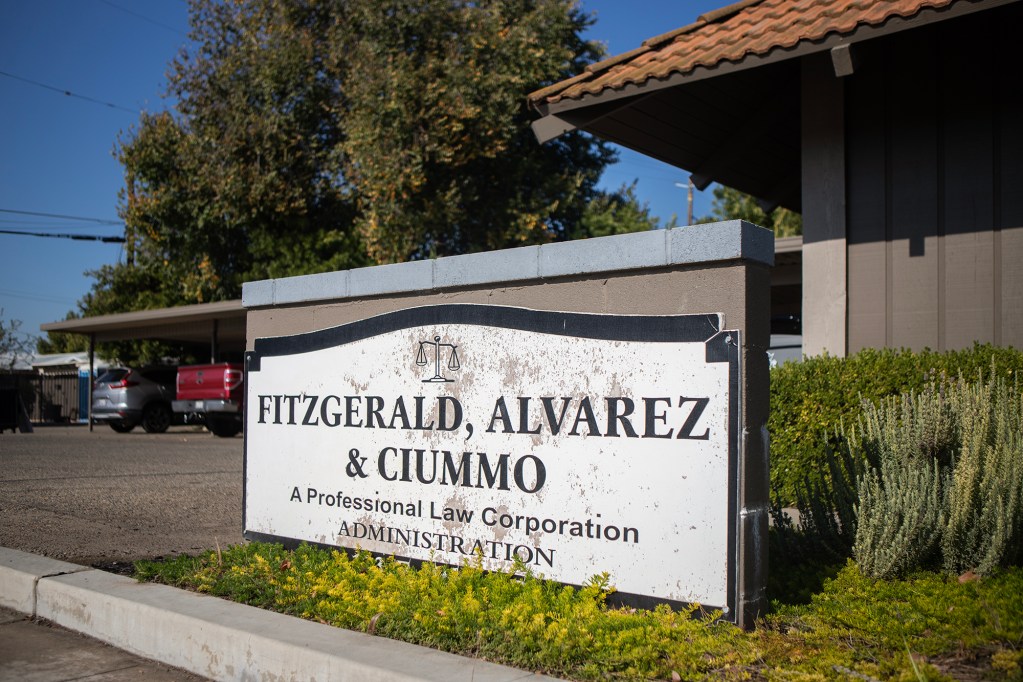
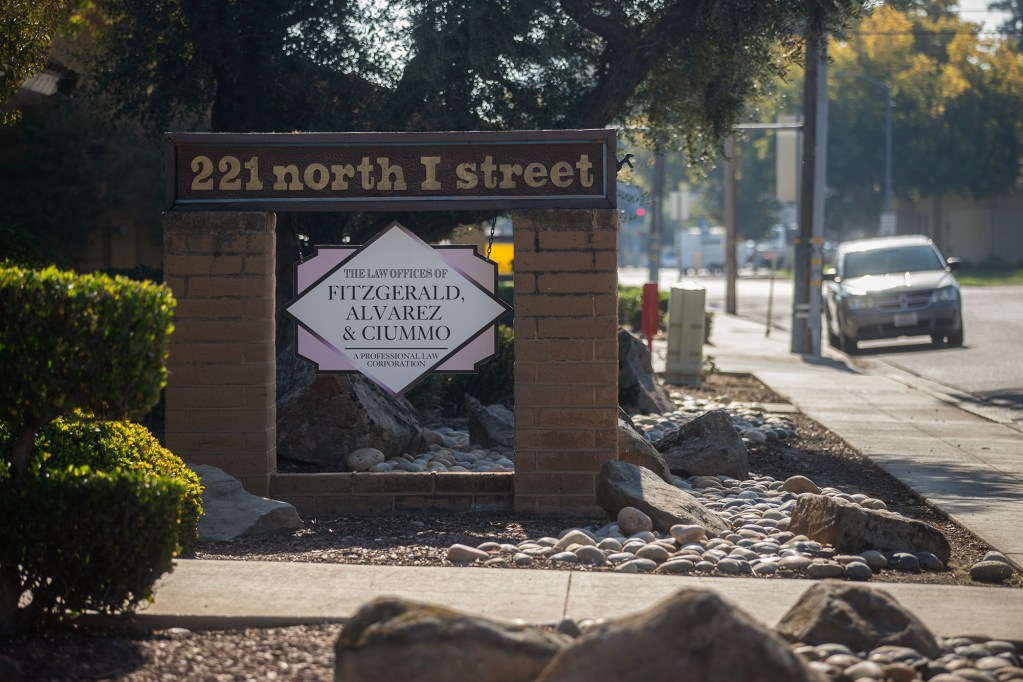
The attorneys worked for Fitzgerald, Alvarez and Ciummo, the firm that San Benito paid to provide public defense. According to a 2024 state evaluation, they were not doing a good job. Two of the attorneys had inappropriate relationships with clients, another struggled with addiction.
The situation had deteriorated so dramatically that the San Benito district attorney, Joel Buckingham, found himself worrying about the people his office was trying to send to prison. Their attorneys didn’t contest the evidence Buckingham’s prosecutors presented, no matter how it was obtained. Each year, they filed an average of just 10 motions to suppress evidence based on violations of constitutional rights — including unjustified stops and searches, illegal interrogations, and arrests without probable cause.
“Police officers must make mistakes sometimes,” Buckingham told a researcher conducting the evaluation.
The sheriff, Eric Taylor, was also alarmed. If his deputies were never challenged in court, how would they know when they had crossed a line? What would stop them from doing it again?
In Taylor’s previous job, in Santa Cruz County, the courthouse was often packed with law enforcement officers who had been called to defend their actions.
“If we’re doing our job correctly, then we prevail on those motions,” he told San Benito county supervisors last year. “And if we’ve made a mistake, and we’re doing our job incorrectly, we’re held accountable for that.”

Nearly half of California counties pay private lawyers and firms to represent poor people in criminal cases, and most of them, like San Benito, do it through what’s known as a “flat-fee” contract, meaning they pay a fixed amount, regardless of how many cases the attorneys handle or how much time they spend on each case.
It’s a far cheaper alternative — at least in the short run — to operating a public defender office with government lawyers, and it’s created a second-tier justice system in rural stretches of the state: Seven of the eight counties with the state’s highest jail and prison incarceration rates have flat-fee contracts.
These arrangements so clearly disincentivize investigating and litigating cases that they’ve been banned in other parts of the country. But they have flourished in California, which provides no funding or oversight of county-level public defense.
Fitzgerald, Alvarez and Ciummo, commonly known as the Ciummo firm, has become the face of this model. Old iterations of the firm’s website asked local politicians what they might do with all the money they could save on public defense: “Better schools? Better fire protection? More police? Improved roads? More parks?” The message was clear: Don’t waste county money helping people accused of crimes. Spend it on the things your constituents actually care about.
Over the past 30 years, the Ciummo firm has provided public defender services in nine California counties. Both its size and tactics have earned it a reputation as the Wal-Mart of public defense. “This is a high-volume, low-profit business for me,” Richard Ciummo told a reporter in 2007. “It’s more like a grocery store.”
The firm left San Benito last year, but it is still the primary public defender in Madera, Amador and Calaveras counties, and it handles cases in Fresno and Merced counties when the public defender’s office has a conflict.
CalMatters reviewed documents detailing the firm’s work in these counties and found that its lawyers were less likely than other defense attorneys to investigate their cases, challenge the prosecutors’ evidence in legal motions and push their cases to trial.
In Madera, the percentage of felonies the firm took to a jury trial between 2019 and 2024 was half the statewide average. During three of those years, the firm reported caseloads that were more than double even the most permissive standards for how many cases one attorney should be allowed to handle. Those numbers do not account for the fact that some of the firm’s attorneys simultaneously represent private clients.
Michael Fitzgerald, the firm’s senior partner, said his firm provides a more affordable, though no less effective, alternative to an institutional public defender’s office.
“Could we use more funding? Certainly,” he said. “But I think we do as good as anybody. I think we do better than public defenders’ offices.”
Fitzgerald said criticism of the contract system stems from longstanding bias and a romanticization of ardent public defenders — the true believers, he calls them — who push back against individual and systemic injustices.
The scenes playing out in criminal courts across the country have seldom resembled that ideal. Many institutional public defender offices are so severely outgunned that their lawyers are unable to put up a real fight.
In 2015, the American Civil Liberties Union settled a lawsuit with Fresno County over its failure to adequately fund its institutional office, where government lawyers carried caseloads three times the recommended limit. In Merced, the institutional public defender’s office has 15 staff attorneys and no full-time investigators — the worst ratio in the state, according to the most recent data from the California Department of Justice.
But the shortcomings that sometimes plague government offices are all but guaranteed in a for-profit, flat-fee system.
“For it to be worthwhile for this firm to do this, its partners and shareholders have to be taking in enough money to make it profitable for them,” said Eve Primus, a University of Michigan law professor. “And the only way to do that is to cut back on expenses that are required for effective representation. I just don’t know how the math works out otherwise.”
The nation’s first public defender office opened its doors in Los Angeles in 1913, the result of a decades-long advocacy effort led by Clara Shortridge Foltz, the first woman to be admitted to the bar in California. By the time the U.S. Supreme Court established a right to an attorney in state court criminal proceedings in 1963, more than a dozen California counties were operating their own public defender systems.
But as other states funneled money to government-run public defender offices, California left its system in the hands of the counties. Elected officials in many of those counties would eventually opt for the cheapest path — a flat-fee contract.
In 1984, only nine of California’s 58 counties relied on contractors for their primary public defense systems, according to a Bureau of Justice Statistics report published that year. Today, that number is 25.
If Foltz were to return, “she would find a criminal justice system that has broken faith with one of its fundamental underlying premises: the presumption of innocence,” wrote Larry Benner, a California Western School of Law professor, in a 2010 report examining the state’s public defender offices.
She would be alarmed to discover, Benner wrote, that across California, “justice is now up for sale to the lowest bidder.”
***
The Ciummo firm wasn’t built by people who saw themselves as protectors of the accused, but by people who had wanted to be on the other side of the courtroom, with the prosecutors.
The firm’s founder, John Barker, began his career in law enforcement. He was one of a dozen sheriff’s deputies indicted on charges of using excessive force during the 1969 People’s Park protests in Berkeley, and later served as police chief for the small town of Huron in Fresno County. He went to law school to become a prosecutor. Instead, he began working with a lawyer who had a contract with Madera County to provide public defense.
During an unsuccessful campaign for judge in 1986, he told a Fresno Bee reporter, “I don’t have a lot of sympathy for the criminals.”
Two years later, in 1988, he submitted the winning bid for Madera’s public defense contract. He hired Ciummo, who had recently been fired from the Fresno County District Attorney’s Office for practicing law after losing his license, and together they represented poor people accused of crimes in the county.
Barker was the face of the firm in those early years. He wore a cowboy hat and boots. He was the kind of guy you wanted to have a drink with, said Manuel Nieto, who was hired by the firm in 1994.
“He could charm the socks off anybody,” Nieto said. “But he wasn’t an advocate.”
California had just passed one of the nation’s first three-strikes laws, which ratcheted up punishments for repeat offenders. Suddenly, defendants were facing long prison sentences for crimes that would previously have landed them in jail or on probation.
Nieto said the firm didn’t have the capability — or the drive — to push back against these punitive measures. New attorneys didn’t get any training, he said. They had too many cases and too few resources. Investigations were rare. Nieto doesn’t remember ever using an expert.
"That was my first job out of law school and I was like, ‘Holy shit, this is not good,’” he said. He left after six months to join the Fresno public defender’s office.
Over the next two decades, the Ciummo firm expanded into other parts of the state, growing its business by underbidding the competition. In 1994, it offered to take over public defense services in Placer County for around half of what the existing contractor proposed.
County supervisors seemed eager to make the switch, but Placer’s judges objected.
A dozen years later, the county put the contract out for bid again. The local firm asked for $28 million over four years. The Ciummo firm offered to do the job for $15 million, and it won the contract.
In each new county, the firm encountered opposition. Local attorneys and community members wrote letters to elected officials, spoke at public hearings and talked to newspaper reporters to express their belief that the firm’s low-cost model would diminish the quality of legal services.
That process played out most recently in Merced in 2017, when prosecutors joined members of the local chapter of the NAACP in urging county officials to reject the firm’s proposal. At a hearing on the issue, a defense investigator who had worked for the previous contractor warned the supervisors that “you get what you pay for.”
Ciummo, seemingly accustomed to this kind of rhetoric, walked up to the podium to address the board.
“I am Mr. Ciummo,” he said. “I don’t have horns and a tail.”
***
On a hot, dry morning in late August, William Martinez was in the lobby of the Madera County Probation Department, waiting for someone to call his name. He had just been released from the local jail after posting bond, and his assault case was pending.
Martinez’s next court date was a few weeks away, and he would be represented by a Ciummo attorney. The firm had represented Martinez on a previous charge, in 2023, and he didn’t have high hopes for how his latest case would turn out.
“They go through the motions as though you’re being represented, but you’re not,” he said. “They’re representing Madera County.”

It’s a sentiment defendants repeated in San Benito County, where the Office of the State Public Defender surveyed the firm’s clients and their families as part of an audit it released in 2024.
Two-thirds of respondents who had been convicted of a felony said they spoke with their attorney for less than five minutes over the course of their case. Researchers found that the Ciummo lawyers working in the county had failed to add themselves to a list at the local jail that would allow them to have confidential calls with their clients.
“My brother feels like he’s going to lose his case because the public defender won’t answer his calls, won’t visit, won’t do any work for him,” one family member said.
Another said his brother’s attorney didn’t chase down evidence or interview witnesses. “They wouldn’t help him,” he said. “I had to go and be an investigator and get a statement.”
Many of the defendants felt they were being pushed to accept a guilty plea, and that the person who was supposed to be their voice in court was not interested in putting up a fight.
Shortly before the San Benito evaluation was published, Fitzgerald decided to pull his firm out of the county. He dismissed the report as biased.
“It was the typical, almost boilerplate report that the Office for the State Public Defender does, saying how contract public defenders are no good, and they should do away with them,” Fitzgerald said.
The Office of the State Public Defender, once tasked solely with death penalty appeals, expanded its work in response to the ACLU’s lawsuit in Fresno. It now provides training and support for county-based public defenders and periodically evaluates local systems. Its recommendations are not binding.
The San Benito contract, Fitzgerald said, had been problematic from the start. He said he had lowered his bid at the county’s insistence, agreeing to fewer lawyers than he needed.
“It was not a lucky county for us. So we got out of there,” he said. “San Benito had problems, but they weren't created by us.”
***
This year, the California Legislature considered a bill that would ban flat-fee contracts, requiring counties to compensate lawyers and firms based on the demands of their cases.
In a committee hearing, senators heard from Rudy Castillo, who had been sentenced to life without the possibility of parole in 2008 for his participation in a robbery that ended in murder.
Castillo had been represented by the Ciummo firm. He said his first attorney excused himself from his case because Castillo refused to accept a plea deal. “It was apparent that he didn’t want to waste his time trying to defend me,” he said.
The second attorney was unprepared for trial and seemed to lack “any motivation to argue my case,” Castillo said.
“This attorney never hired an investigator. He never submitted any motions to protect my constitutional rights and challenge the Miranda violations of my case, or hired any experts to challenge the DA’s arguments.”
When a change in the felony murder law gave Castillo an opportunity to petition the court, his family hired a private attorney to help him. He was released in 2021.
By the time Castillo addressed the committee, the California Association of Counties had already registered its opposition to the measure, calling it an unfunded mandate. California is one of just two states that don’t contribute any funding to trial-level public defense, and the bill’s requirements would force counties with contract systems to significantly increase their public defense budgets.
Josh Schwartz, a researcher with the Wren Collective, a nonprofit organization advocating for criminal justice reform and a supporter of the proposed legislation, said an increase in spending on public defense could save the counties money in the long run. The flat-fee model, he said, “creates needless incarceration. People are in jail longer pre-trial, they are convicted at higher rates, and sentenced to longer sentences.”
“Most counties spend between four and seven times their indigent defense budget on incarceration,” he said. Investing more funding in public defenders “can yield much bigger savings down the line.”
The legislation stalled in the Senate Appropriations Committee, where the chair, Sen. Anna Caballero, said she would “have a hard time supporting the bill.” Rural counties, she said, “just don’t have the money.” Caballero’s district includes parts of Madera, Fresno and Merced — three counties where the Ciummo firm has contracts. The bill was put on hold until next year.
***
Fitzgerald is soft-spoken and smiles often. Before becoming a lawyer, he was a police officer in New Jersey. Like Barker and Ciummo, he had gone to law school to become a prosecutor. He interviewed with six or seven district attorneys’ offices, he said, before giving up on that dream and responding to a job posting from the Ciummo firm in 1991.
He said the firm’s critics often fail to differentiate it from flat-fee systems in which individual private attorneys each contract directly with the county. These lawyers get to keep every dollar they don’t spend on investigations and experts. The Ciummo firm’s attorneys earn annual salaries and have access to staff investigators. When they hire forensic experts and other specialists, the county covers the cost from a separate fund.
Fitzgerald said the firm’s low trial rate in Madera is the result of prosecutors offering reduced punishments in plea deals, and not an indication that defense attorneys are avoiding taking cases to a jury.
“The attorneys in Madera, they’re aggressive,” he said. “They're not afraid to do trials.”
Their high caseloads, he said, do not prevent them from advocating for their clients. “Is it perfect? No. But our attorneys work very hard to make sure every client is adequately represented, no matter what the caseloads are.”
In his office in Madera, Fitzgerald keeps a framed illustration of all the characters from “The Godfather.” His favorite line from the movie belongs to Mafia boss Michael Corleone: “Keep your friends close, but your enemies closer.”
It’s what he pointed to when I asked him about the firm’s political contributions. For decades, it has donated to tough-on-crime candidates whose platforms seem at odds with the interests of the people the Ciummo lawyers represent in court.

The firm backed Frank Bigelow, a former Madera County supervisor, in his successful run for State Assembly and through several reelection campaigns. Bigelow co-authored a bill to increase punishments for petty theft and drug possession.
It also contributed to Anne Marie Schubert’s 2022 campaign for state attorney general, which was focused on repealing propositions 47 and 57, cornerstones of the criminal justice reform movement that reclassified certain drug and property crimes from felonies to misdemeanors and made it harder for prosecutors to charge juveniles in adult court. Schubert had previously pushed to expedite the time between conviction and execution in death penalty cases.
Fitzgerald called the donations “business decisions.”
“We donate mainly so if we make a phone call and we want to be heard about something, they’ll take our phone call,” he said. “Frank Bigelow was very good to us when he was on the Board of Supervisors here. He always voted for us, always supported our contracts.”
The firm has also donated to the campaigns of several area district attorneys.
“I think you should strive to get along with the opposition,” Fitzgerald said. “But when it gets between the lines, you fight tooth and nail for your client. I don’t think it compromises you at all because you get along with the DAs.”
Fitzgerald met Lisa Smittcamp, the Fresno district attorney, when she was a young prosecutor in Madera. The two had worked opposite each other and are still friends. He has donated to her campaigns and attends her fundraisers.
Smittcamp said she sees no difference in the quality of representation between Fresno’s institutional public defender’s office and the Ciummo firm.
“I have never heard somebody say that the Ciummo attorneys give cases away, or they’re not zealous advocates,” she said.
One of the firm’s partners, Antonio Alvarez, is widely praised as an effective attorney. A former client, John Diaz, said Alvarez frequently visited him in jail, investigated his case, and reached out to him years after he was convicted to let him know that a change in the law allowed him to petition the court for resentencing.
“He humanized me,” Diaz said.
Diaz had been assigned several other Ciummo attorneys before Alvarez, but said they “were just going through the motions.” He was in jail for years awaiting trial.
“If you got money here, you’re good. If you don’t have money, you’re flipping a coin,” he said.
***
Much of the effort to ban flat-fee contracts has focused on the ways in which the model discourages investigations, one of the most critical components of criminal defense.
Defense investigators review police reports, visit crime scenes, chase down video surveillance footage and interview witnesses — work that most attorneys are not trained to do. They often find evidence that challenges the prosecution’s case and affects the outcome of a trial or the terms of a plea deal.
A recent CalMatters investigation found that poor people accused of crimes in California are routinely sent to prison without anyone investigating the charges against them, significantly increasing the likelihood of wrongful convictions.
In Madera, where the Ciummo firm reported handling more than 6,000 cases last year, attorneys shared two full-time investigators. They were up against prosecutors who have 13 full-time investigators, in addition to the investigative powers of the Madera sheriff and two municipal police departments.
“A big part of the job of the public defender is to probe our investigation,” said Madera District Attorney Sally Moreno.
In April 2024, Moreno charged a 60-year-old man with the murder of his ex-girlfriend. After the man hired a private defense attorney from a neighboring county, the Madera prosecutors were overwhelmed by a barrage of legal motions.
“My lawyers were flabbergasted,” Moreno said. They were accustomed to dealing with the Ciummo attorneys.
“This is what defense lawyers do!” she told them.
The case confirmed Moreno’s suspicion that her younger lawyers were unprepared to handle an aggressive defense attorney. She said she had previously spoken to county officials about creating an institutional public defender office in Madera.
The defense investigator eventually found evidence that complicated the prosecution’s case, and Moreno dropped the charges. She said that’s how the system is supposed to work.
“Steel sharpens steel,” she said.
In Amador County, lawyers with the firm resolved more than 2,000 cases in 2023 and 2024. They used an investigator in nine of those cases, according to the firm’s case reports. That means the overwhelming majority of people convicted in Amador during that time never had an investigator test the evidence against them.
Defendants in those 2,000 cases frequently tried to fire their Ciummo attorneys by filing what’s known as a Marsden motion, arguing that their attorney was doing a bad job or had a conflict of interest. Most of these requests were denied, but their frequency is almost four times that of neighboring Tulare County, which has an institutional public defender office.
After CalMatters inquired about the apparent lack of investigations in Amador, Fitzgerald said the firm would hire an additional investigator to cover the area. But he also insisted the case reports were inaccurate, and that his attorneys had neglected to record the work of an investigator who currently splits her time between Amador and Calaveras counties.
“Any case that needs to be investigated is going to be investigated,” he said.
Early last year, Kristen Reid, a defense attorney and investigator, began working on the case of a Placer man who was convicted in 2009 of murdering his wife. Reid believed a new state law allowing people to contest convictions based on misleading or discredited forensic evidence could give him a second chance to prove his innocence.
When she opened the case files, she expected to find thousands of pages of police reports, witness testimonies and forensic records. But the defense attorneys in the case hadn’t asked for much of this evidence. As she made her way through the documents, she thought, “We have a much bigger problem with this case than junk science.”
It seemed to Reid that the two Ciummo attorneys representing the man “had been working for the DA, not the Public Defender,” she later wrote in a complaint to the California State Bar.
Court transcripts show that, in the months leading up to the trial, the judge repeatedly berated the lead attorney for failing to move forward with his investigation. He hadn’t interviewed key witnesses, filed basic motions or sent evidence for forensic testing.
More than a year after the Ciummo firm got the case, the lead attorney asked the court to postpone the trial. He said his investigator had a heavy workload and hadn’t been able to devote much time to the case. The judge refused. He had already pushed back the date multiple times at the urging of the defense attorneys, and they had failed to make much progress.
“This case should have been a priority for the public defender’s office,” he said.
The attorney told the judge he would show up to court but wouldn’t participate. “I will (in) no way respond or argue or offer evidence or any such thing,” he said, according to the court transcript.
During the trial, the defense attorneys missed multiple opportunities to discredit law enforcement’s theory of the crime, Reid said. She obtained records through discovery showing that, weeks before the jury found the man guilty, the prosecution’s key forensic witness emailed one of the Ciummo attorneys to thank him for “taking it easy on me” during cross-examination. “I owe you,” he wrote.
That lawyer has since been disbarred. The other, Reid discovered, had been charged with domestic violence just two weeks before the trial and had multiple DUI cases on his record.
Reid has received help from several different Innocence Projects in her efforts to overturn the man’s conviction, but the odds are stacked against her. The U.S. Supreme Court has made it almost impossible for appellate courts to overturn convictions because a defense lawyer didn’t do their job.
“Once the bad thing happens,” Reid said, “there’s just no way out of it.”
This article was originally published on CalMatters and was republished under the Creative Commons Attribution-NonCommercial-NoDerivatives license.
Do-over. Two NC towns must redo ’25 elections in March ’26.
by Sarah Michels, Carolina Public Press
December 18, 2025
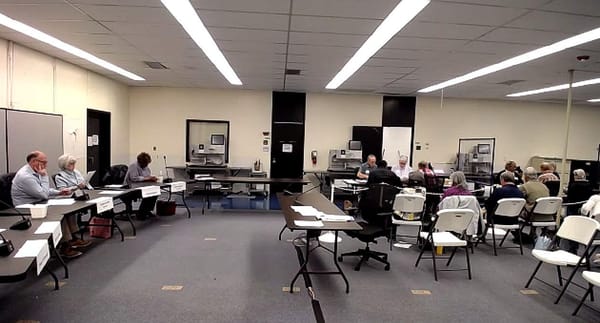
In two small North Carolina towns, March 2026 will be more than a midterm primary election. It will be a redo. The State Board of Elections ruled Wednesday that irregularities in the 2025 municipal election require Harrellsville and Morehead City to conduct new mayoral races next year. Harrellsville will also redo its Town Council contest.
Board members unanimously, but reluctantly, authorized the redo elections.
New elections don’t come often or easily. The last time the state elections board called for a new election was in 2022, after a Dobson commissioner race was accidentally tainted by a precinct official. One of the candidates in the contest, Sharon Gates-Hodges, died before Election Day, but after ballots were printed. Her name remained on the ballot.
[Subscribe for FREE to Carolina Public Press’ Daily, Weekend and Election 2026 newsletters.]
A Surry County precinct official attempted to help voters by pointing out her name on a sample ballot, but may have pointed to the wrong, very much alive candidates. That race was decided by eight votes, so it was close enough to redo, the board determined.
Perhaps most prominently, the state elections board redid the Ninth District congressional primary and general election in 2019, after Republican Mark Harris’ campaign consultant McCrae Dowless was caught in a voter fraud scheme.
Dowless collected voters’ absentee ballots and filled them out himself for Republican candidates, including Harris, in Bladen County. Election officials noticed the unusually wide margin between Harris and his Democratic opponent among absentee ballots, and launched an investigation that culminated in a redo election. While Harris, now a U.S. Representative, NC-8, did not run again, Republican Dan Bishop won the seat.
This year’s redo elections may not be quite so dramatic, but they are an acknowledgment of significant issues in the original contests.
“As much pain and suffering and expenses this is going to cost you … every vote matters, so we have to make sure every vote counts,” Republican Board Chair Francis De Luca said.
Harrellsville to redo mayor's race
Lori Nuss didn’t sign up to be mayor. But 10 of Harrellsville’s several dozen residents wrote her in to lead during November’s municipal elections.
There’s just one issue. Seven of the 25 voters may have been ineligible to vote in the contest. In municipal elections, ineligible voters often show up to the polls, not realizing they don’t actually live within town limits.
That was the case in Harrellsville. Poll workers did not properly check voters in or verify their eligibility before allowing them to vote.
Upon discovering the issue, the Hertford County Board of Elections declined to certify the mayor and Town Council elections.
Wednesday, the State Board agreed that there was no better option than to start over and try again. The new election is set for March 3, 2026, the same day as the 2026 primary election.
Hertford County Board of Elections Director Kawania Parker did not immediately respond to questions over what, if any, additional cost the county would incur due to the redo election.
Now, Nuss has a few more months to recruit someone else to take over her late husband’s role as mayor. But if push comes to shove, she’s willing to lead, she told Carolina Public Press.
“I guess I'll let them write my name down again,” she said. “Everybody here is so sweet. I mean, we all work together. We really do. It's not really the mayor, as much as it is the mayor and Town Council that work together.”
Morehead City to vote again
If you’re ever in doubt about the power of one vote, look no further than Morehead City, state elections board member Stacy “Four” Eggers said.
In November, Morehead City Mayor Jerry Jones lost his bid for reelection by one vote; he earned 761 votes to Lee Stile’s 762 votes.
However, after the official results were tallied, Jones filed an election protest. Anyone who is eligible to vote in a contest can file a protest if they can prove that there were election irregularities — unrelated to vote counting and tabulation — that may have impacted the outcome. County election boards take the first look at protests, and they may be referred or appealed to the state if necessary.
In Jones’ protest, he listed a number of voters who said they were turned away at the polls for various reasons. While several of the cases were explainable — voters were eligible for county contests, but not municipal contests, for example — in two cases presented to the state elections board Wednesday, poll workers failed to provide provisional ballots to voters with uncertain eligibility, as the law directs.
Provisional ballots are not automatically counted toward election totals; instead, county boards research them later to determine whether voters are eligible and consequently, whether their ballots should be counted. Poll workers are supposed to offer provisional ballots as a fail-safe to all voters, even those who may appear obviously ineligible.
One voter, Thomas Higgins III, presented a temporary North Carolina driver’s license to vote. That’s not an acceptable form of photo identification, so Higgins should have been provided a Photo ID Exception Form or a provisional ballot, so he could come back later with another form of identification. But Higgins alleged that he was not given that opportunity. Instead, he was turned away without casting a vote.
Another voter, Brady Rodgers, moved from one Morehead City precinct to another on Sept. 26. North Carolina law allows residents who moved over 30 days before Election Day to vote in their new precinct. Rodgers did not report his move to the county elections board, and so he was turned away at the polls. Under state law, he should have been given a provisional ballot, which he could use to update his address while voting.
The Carteret County Board of Elections found evidence of a violation of election law in these cases, and referred the matter to the State Board of Elections.
“These failures are not mere technicalities,” Jones’ attorney Chris Stalk said at the Wednesday meeting. “...In an election decided by a single vote, the improper denial of two eligible votes is not only significant, but it's outcome determinative and plainly sufficient to cast doubt on the apparent results.”
Phil Thomas, who also represented Jones, made an unusual request. He asked the state elections board to allow Higgins and Rodgers to cast a ballot now and add it to the count. As both had testified they intended to vote for Jones in the original election, this move would have almost certainly handed the election to Jones.
Hart Miles, who represented Stiles at the meeting, called it a “dangerous argument.” There was no way to identify which poll workers contributed to the issue, and election workers don’t keep records of who is turned away.
“Given that we have absolutely no idea how many people were wrongly turned away, I submit to this board that awarding this election to Mr. Jones would be tremendously unfair and establish a very dangerous new precedent,” Miles said.
The board unanimously sided with Miles. Eggers and Democratic board member Siobhan Millen emphasized the importance of proper poll worker training that included when to offer provisional ballots to voters.
Carteret County Election Director Caitlin Sabadish said there's a difference between the classroom setting of training and the “high-pressure environment of Election Day.”
“While our officials successfully manage thousands of voters without issue, these rare occasions of human error can occur even when the proper training has been provided,” she said.
Going forward, Sabadish said her team will expand training with more “real-world” training drills.
There's not much of an additional cost, since the redo election was set for the March 3, 2026 primary date, she added.
Other protests
It was a full house at the State Board of Elections meeting. In addition to the Harrellsville and Morehead City issues, the board took on four other election protests.
Murfreesboro Town Council candidate James Byerly raised issues with some students using their Chowan University mailing address as their residential address, even though they technically didn’t live within town limits.
Byerly missed a spot on the Town Council by one vote to James Futrelle Jr. Hertford County Board of Elections dismissed his protest on a technicality — when election protests only deal with voter eligibility issues, they are voter challenges, not election protests. Voter challenges can be considered up to 25 days before an election, but not after.
After some debate, the state elections board sided with the county board. However, they agreed that using mailing addresses as residential addresses is “problematic,” and vowed to figure out better guidance to county boards on the issue in the future.
Two election protests were filed in Kinston; one over the City Council race, and the other over the mayoral race.
In the City Council race, third-place candidate Quarla Blackwell alleged a series of issues with elections. Blackwell has been incarcerated multiple times, she said. When she was most recently released in 2024, the county board of elections told her she was eligible to vote, even though she was under active, supervised probation.
So when she ran for office the next year, she didn’t think anything of it. However, the law had changed by then due to updates in related litigation, and now, she was not eligible to run. Blackwell said she is facing several years in prison due to this issue. And yet, she is still listed as an active voter on North Carolina’s voter roll.
Blackwell said the voter database is “broken” and her experience casts doubt on whether other voters on probation after serving a felony sentence are being allowed to vote.
The State Board rejected her protest on technical grounds. Millen said her protest was not filed on time. Eggers said Blackwell did not prove that enough people were impacted by the issues she spoke of to potentially alter the election outcome.
For her part, Blackwell said she’s taking the issue to court.

In the Kinston mayor’s race, resident Maria President challenged presumptive winner Kareem Moore’s residency. President did not show up at the county elections board hearing, and the state elections board said they did not receive her appeal in time.
Since the burden of proof is on the protester, the board dismissed her protest without getting into the details.
“I'm mindful that it doesn't squarely address the issues, but the issues were not squarely presented to us,” Eggers said.
Finally, in Red Springs, second-place candidate Duron Burney alleged potential voter fraud in an assisted living home. Burney lost the mayoral race by two votes to Caroline Sumpter.
Burney raised concerns over staff at the assisted living home requesting and returning absentee ballots on behalf of residents. There was no way to be sure that the residents actually requested their help, he argued.
While a court order requires disabled voters to be able to request anyone’s help requesting absentee ballots — not just near relatives and legal guardians, as the law requires for everyone else — Burney remains concerned about potential coercion.
Sumpter attorney Eric Fletcher said previously issued State Board guidance detailing the court order makes it simple: a disabled voter who is a patient in a covered facility can receive help from anyone they like.
“That should be the beginning and end of this appeal,” he said.
The state elections board decided they didn’t have enough information. Therefore, they sent the case back to the county to figure out whether residents asked for help and whether the assisted living facility exhausted other options before having staff do the job themselves.
This article first appeared on Carolina Public Press and is republished here under a Creative Commons Attribution-NoDerivatives 4.0 International License.

Obsessed: An ASU triathlete discovers the mental health crisis hidden in endurance sports
by PaolaB, Cronkite News
December 11, 2025
TEMPE – Exactly 1,644 days. More than four and a half years. That’s how long it’s been since I took a real rest day.
Not because I didn’t want to rest. Because I couldn’t.
Rest didn’t feel like recovery. It felt like panic. The moment I stopped moving, my chest tightened, my thoughts buzzed and I felt this rising sense of dread, like I was losing control – something I couldn’t afford to lose.
I’ve been moving my whole life, from childhood training with my active family, to four years as a Division I runner at Duke and now competing in triathlon at Arizona State. My default was forward, always. Which is why, when pain hit, I treated it the same way I treated everything else: I kept going.
Two miles into a long run last year, my back snapped – a sudden, slicing pain that stole the air from my lungs. Any rational person would have turned around. Not me. I couldn’t. I still had 11 miles left, and the idea of turning around felt more dangerous than the pain running down my spine.
By the time I got home, I was crawling between positions on my bed, unable to sit, stand or walk without seizing. But the next morning, I still showed up for practice. Thirty seconds into the warm-up, the same pain ripped through me once again, only this time, the run ended with my face pressed against an athletic training table.
The doctors told me to rest. I agreed.
Then I drove straight to the pool.
I didn’t want to swim. But I had to.
I slid into the water and started pulling, each stroke sending a dull ache through my back. When I finally decided I’d done “enough,” I couldn’t hoist myself onto the deck like I usually did. I had to shuffle to the metal ladder – yes, the one typically reserved for older adults was now for me, too.
This wasn’t new. I’d run through several injuries before, pushing a body that had been warning me it was done long before I was willing to listen. But why? Why did stopping feel harder than hurting?
I didn’t have a name for it at first. For this constant urgency, this fear of stillness, this need to keep moving even when I knew it was doing more harm than good. But researchers do. It’s called “compulsive exercise.”
Scientific literature describes it as “rigid, rule-bound activity performed to prevent or reduce negative emotion” – a pattern of obsessive, anxiety-driven training that looks a lot like obsessive-compulsive disorder, only the ritual is movement. It’s not exercise addiction or simple overtraining. It’s an anxiety-driven movement – the inability to stop, even when you’re hurt, exhausted or fully aware you shouldn’t be training at all.
The line between commitment and compulsion is thinner than most athletes want to admit. You call it discipline. You call it drive. But when missing a workout feels like failure, and rest feels like guilt, you might not be training anymore – you might be chasing something else entirely.
Control: the illusion that keeps me chasing
For many endurance athletes, training isn’t just something we do – it’s the one thing we can control when everything else feels uncertain. Workouts come with clear rules and predictable outcomes: You run the miles, you hit the paces, you get better. Or at least, that’s what you tell yourself.
That illusion of control is powerful. It’s also one of the earliest signs that something deeper is happening.
When I was injured, the pain itself wasn’t what scared me. What scared me was not knowing what would happen to my fitness if I stopped – whether a week off would erase months of progress, whether someone else would gain ground while I sat still. Rest didn’t feel neutral; it felt dangerous. Moving meant control. Stopping meant losing it.
The paradox was impossible to ignore – the thing that made me feel in control was also the thing I had no control over.
Kim McNally, a senior lecturing fellow at Duke University with a doctorate in exercise science, said this is a telltale sign of compulsive exercise.
“For a lot of endurance athletes, movement becomes a way to stay in control,” she said. “It’s not about joy. It’s not even about training. It’s about managing the fear of what happens if you don’t.”
It’s a feedback loop that looks like discipline from the outside. But inside, it feels like holding yourself together by sheer force.
Avoidance: the fear that keeps me running
If control keeps athletes moving, anxiety is what chases them there. Compulsive exercise isn’t driven by ambition – it’s driven by avoidance. The workout becomes a way to outrun the panic that spikes the moment you stop.
McNally sees this pattern constantly in endurance athletes.
“A lot of compulsive exercise is anxiety reduction,” she said. “Movement becomes the quickest way to quiet the fear – whether that fear is losing fitness, losing identity or losing control.”
McNally explained that what separates healthy training from compulsive training isn’t how much you do, it’s why you do it.
“In addictive exercise, the motivation is to seek something positive, like joy or euphoria,” she said. “But compulsive exercise is about avoiding a negative. That might be guilt or shame or fears of gaining weight. It might even be physical irritability – the tension people feel when they don’t work out. Any pathological exercise someone does to avoid a negative falls into the compulsive category.”
Arizona State sports psychology counselor Halle Gydesen echoed that sentiment.
“When rest creates distress, athletes will do anything to avoid it,” she said. “The training isn’t the problem, it’s the purpose behind the training.”

This aligns with what researchers call a negative reinforcement loop. Instead of exercising to feel good, compulsive exercisers train to avoid feeling bad. A 2017 study in “Frontiers in Psychology” found that athletes with compulsive tendencies reported feelings of irritability, tension, anxiety and restlessness within hours of missing a workout. Exercise becomes the fastest way to shut down those sensations, which is why stopping feels impossible.
I recognized myself immediately in these descriptions. Rest didn’t feel restful. It felt like failure. The moment I tried to take a day off, my mind filled the silence with noise: You’re falling behind, you’re losing fitness, you’re weaker than yesterday.
And that was exactly it: The fear wasn’t about missing a workout. It was about what missing a workout said about me.
Worth: the pressure that keeps me proving
Endurance sports reward the people who refuse to stop – so I built my worth around never stopping. If I trained hard, I was legitimate. If I trained harder, I was valuable. If I trained through pain, I was the kind of athlete coaches respected.
Rest didn’t just threaten progress. It threatened identity.
Part of that came from the environment. In NCAA sports, worth is often measured by output. Coaches notice the athletes who show up early, stay late and push through things they shouldn’t. I learned quickly which behaviors earned approval – and which didn’t. So I pushed to stay on the right side of that line.
McNally sees this dynamic constantly.
“For a lot of athletes, their self-concept is so tightly tied to performance,” she said. “When your identity narrows like that, stopping feels like losing a part of yourself.”
That narrowing happened without me noticing. The more I pushed, the more pressure I felt to prove the push was justified – to myself, to the people watching, to the coaches who determined my opportunities. Every workout became evidence: either that I belonged, or that I was slipping.
Gydesen said this pressure shapes athletes long before they know to question it.
“When worth gets tied to output, athletes learn to overlook everything else,” she said. “You start chasing a standard that keeps moving, and your sense of self moves with it.”
That was me.
It wasn’t just fitness I was afraid of losing. It was the only version of myself I believed was worth anything – the disciplined one, the relentless one, the one who kept going no matter what.
The workouts weren’t just workouts. They were proof. Evidence. Receipts that I was still enough, still worthy, still the athlete I thought my coaches expected and the one I desperately wanted to be.
And that’s the danger. When worth is built on output, rest is no longer an option. But a body that never rests eventually breaks. Biology doesn’t negotiate forever.
Cost: the damage that keeps me breaking
Research on pathological exercise in endurance athletes links compulsive training to elevated injury risk, stress fractures, hormonal disruption, menstrual and testosterone suppression, impaired immune function and prolonged recovery. A review published in “Current Sports Medicine Reports” found that compulsive exercisers are significantly more likely to train through pain, delay treatment and experience recurring injuries – not in spite of their discipline, but because of it.
The psychology breaks down in parallel. Studies show that athletes in compulsive patterns often report distorted self-assessment, believing they are “undertrained” even as performance declines. A 2016 review in “Current Sports Medicine Reports” found that compulsive exercisers consistently misjudged fatigue, minimized pain signals and overestimated the consequences of rest.
McNally said she sees these patterns constantly in collegiate athletes.
“We call it the cliff,” she said. “There were always those people who will train more and more and look lighter and lighter, and they will be really running fast. And then, at some point, they just crash. They go over the cliff.”
I know that cliff all too well.
My body got weaker, not stronger. Paces faded, workouts that used to feel comfortable turned crushing. But instead of stopping, I doubled down. I kept thinking more would fix what more was breaking – that if I pushed just one level deeper, I’d finally get the result I was chasing. Even when I knew better, I kept trying anyway.
That belief that more is always better is exactly what Gydesen warned becomes dangerous.
“That mentality can get you to a high level,” she said. “But it also pushes athletes to downplay rest, relationships, even their own needs as a person. When 110% becomes the expectation every day, the body eventually breaks before the athlete’s will does.”
That is the cost. A body breaking, and a mind too afraid to slow it down.
Resistance: the fight that keeps me standing
I wish this were the part where I say I stopped. Where I learned balance. Where I chose rest over mileage and walked away better for it.
But recovery for me didn’t arrive as a breakthrough. It arrived as something more like resistance – shaky, inconsistent, but present.
I’m still wired the same way: to work, to push, to move. Compulsion doesn’t vanish when you name it. The fear still flares. The urge still persists. Rest still feels like surrender.
But something is changing.
Control used to mean pushing harder. Now I’m learning it might mean taking the power back from the thing that has been controlling me.
Avoidance used to mean running from anxiety. Now toughness means facing it head-on, realizing the bravest thing I can do is stop.
Worth used to be something I chased. Now I know that my value can’t be measured in pace, mileage or pain tolerance.
Cost used to be something I chose to ignore. Now I’m learning to listen, to stop before it catches up.
I like doing hard things. I always have. Maybe rest is just another version of that, one I never trained for.
Some days I still choose mileage over mercy. Some days I still let fear set the pace. Some days the old pattern wins. But some days – I resist.
Because hard isn’t running. Hard is stopping.
Maybe recovery doesn’t start with freedom. Maybe it starts with one interrupted urge. One morning where I don’t lace up, even when my chest tightens.
One day instead of 1,644.
This article first appeared on Cronkite News and is republished here under a Creative Commons Attribution-NoDerivatives 4.0 International License.