SC legislator tells story of son’s death in sextortion scheme
Rural Mississippi Counties Helped Deliver Democrat Scott Colom a Senate Victory, Cold-weather homeless program in Asheville, NC faces funding shortfall, increased demand; For people leaving prison, stable housing can be the foundation for a second chance

It's Friday November 20, 2026 and in this morning's issue we're covering: In his book, SC legislator tells story of son’s death in sextortion scheme, A rare request for clemency in Rhode Island could help 2 refugees fight deportation, Rural Mississippi Counties Helped Deliver Democrat Scott Colom a Senate Victory, As Charleroi’s Haitians retreat, the Mon Valley town wonders how it will rebound, Cold-weather homeless program faces funding shortfall, increased demand, For people leaving prison, stable housing can be the foundation for a second chance, Charter leaders say there’s still room for small schools in New Orleans.
Media outlets and others featured: South Carolina Daily Gazette, Rhode Island Current, The Daily Yonder, Pittsburgh's Public Source, Asheville Watchdog, North Carolina Health News, Verite News.
In his book, SC legislator tells story of son’s death in sextortion scheme
Rep. Brandon Guffey wrote 'Tomorrow Needs You' in the hopes of reaching parents, lawmakers and teenagers with his story.
By Skylar Laird (South Carolina Daily Gazette) Published: November 12, 2026
If you or someone you know needs help, call or text 988, the U.S. suicide and crisis lifeline, or access online chat at 988lifeline.org.
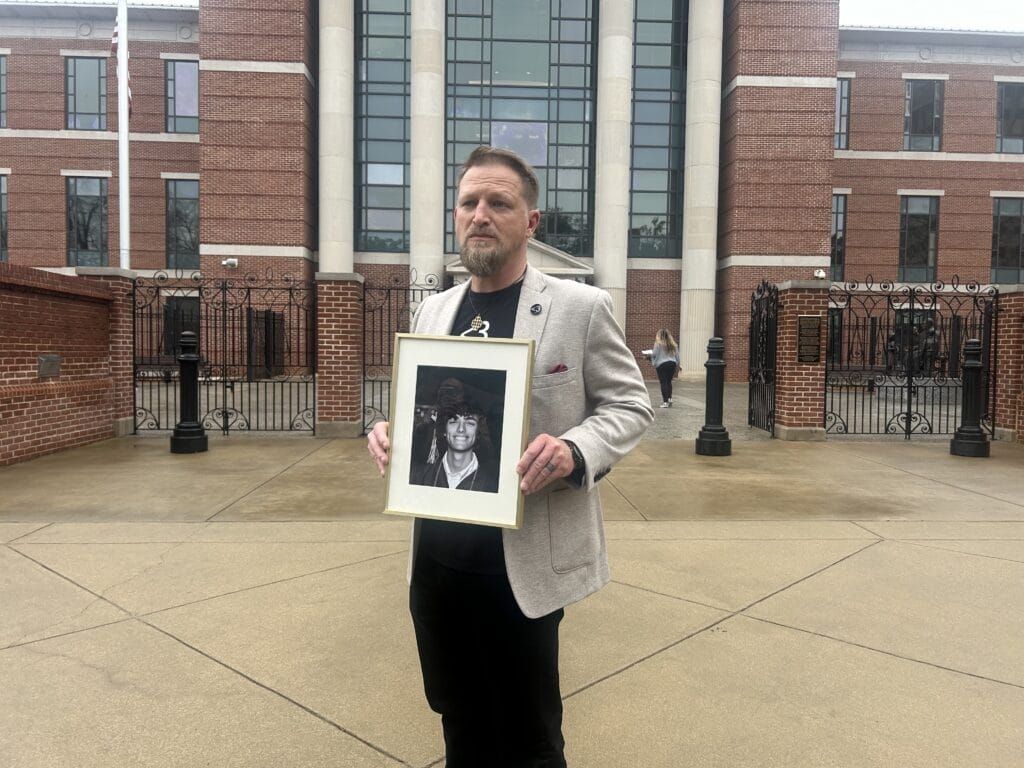
COLUMBIA — After Rep. Brandon Guffey’s son, Gavin, died by suicide following an online extortion scheme in 2022, Guffey didn’t know what to do next.
He turned to the internet for answers, typing in Google searches along the lines of, “My son just shot himself. What do I do?” But he found little actionable help there on how to move forward and deal with the grief he felt, he said.
Three years later, Guffey’s book, “Tomorrow Needs You,” tries to answer that question for other parents, while also trying to prevent them from ending up in that situation at all.
The book, which he started writing about a year ago, came out Oct. 21.
Along with Guffey’s personal story, his book includes practical advice about how to identify and protect children from sextortion schemes, how laws are passed to prevent similar tragedies, and coping mechanisms he found helpful in dealing with his grief.
Those were the sorts of answers Guffey was looking for in the aftermath of his son’s death, said the Rock Hill Republican.
“I hope that some of the things that I’ve learned are there for people that may not have made it there yet,” Guffey told the SC Daily Gazette. “It’s advice that they can follow. It’s something that resonates with them at a point in which it’s needed.”
Gavin’s story
When Gavin Guffey, a 17-year-old recent high school graduate, sent nude photos of himself over Instagram, he thought they were going to a college student in North Carolina.
But he’d been communicating with scammers, not a young woman. Once Guffey had sent the photos, those scammers threatened to share them widely unless Guffey paid them.
Sextortion schemes, as those scams are called, have grown in recent years with the popularity of social media and cellphones.
In 2022, the FBI was aware of more than 7,000 reports of sextortion targeting roughly 3,000 people, according to the most recent data available.
In more than a dozen of those cases, including Guffey’s, the person receiving the messages died by suicide, according to the FBI.
Nigerian man faces life in a US prison for sextortion that led to death of SC legislator’s son
Investigators arrested the man they believed scammed Guffey.
Hassanbunhussein Abolore Lawal, a 25-year-old from Nigeria, signed an agreement last week pleading guilty to producing child pornography by soliciting nude images of a minor, as well as cyberstalking resulting in death.
He is scheduled to officially plead guilty in front of a federal judge in Columbia next month. He faces up to life in prison.
Brandon Guffey would have liked to have had the end of the criminal case in the book as some sort of conclusion, he said. At the same time, though, he didn’t want to delay the release.
“Every day that I feel like we delay is a day that someone that might have needed it doesn’t have it,” he said.
Taking action
Since his son’s death, much of Guffey’s life has rested on a mantra he mentions in his book: “In order to change an emotion, you have to create motion.”
He learned that lesson at Gavin’s funeral, he said. The Guffey men have a tradition of always burying their own, heaping shovels of dirt onto their loved ones’ graves.
Guffey and his two younger sons, then-16-year-old Coen and 4-year-old Callahan, started the burial. Even after Guffey and Coen had passed off their shovels to other men in the family, Callahan kept working, tears cutting through the dirt that stuck to his face, Guffey said.
Guffey asked his son if he was alright.
“‘Yeah, Daddy,’” Guffey recalled his son replying. “‘It helped get the yucky out.’”
From then on, Guffey lived by the idea that work would help “get the yucky out.”
Guffey never struggled with his own mental health until his son died, but in the years since, he has had anxiety attacks and thoughts of suicide, he said. So, he tried to turn those feelings into actions.
His grief propelled him into action at the Statehouse and at a national level. Guffey won a seat in the House that November, having already become the Republican nominee, and immediately started fighting for Gavin’s Law to criminalize sextortion at a state level. That bill became law in 2023.
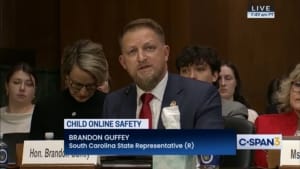
In the years since, Guffey has remained a staunch supporter of stricter laws around social media both in South Carolina and federally. He has co-sponsored bills to restrict social media use for children and gone to Washington, D.C., to call for Congress to pass similar measures.
Guffey also runs the nonprofit Less than 3, named after the last text message his son ever sent: “<3,” or a sideways heart. Through that nonprofit, Guffey speaks at schools and other events to raise awareness about sextortion and suicide.
The book is an extension of his advocacy, he said.
“My number one job, I feel like, is to stop the next Gavin from taking his life,” he said.
Working through the grief was difficult, Guffey said.
To keep himself moving, he thought about his next-oldest son, Coen. Guffey wondered what he would advise his son to do if he grew up and lost a child, then tried to follow that advice himself, he said.
“It’s tough to get forward and get moving, but if you want to enact change, you’ve got to get up and get moving,” Guffey said.
Telling the story
Guffey didn’t read the book in full until he started recording the audiobook version, he said.
He wrote one chapter at a time as a way of compartmentalizing, sometimes taking a week away from the page, sometimes several months. That way, he could focus on a single topic or moment, then move on when he finished, since the work was so emotional for him.
The book is a raw reflection of Guffey’s thoughts and feelings as he coped with his son’s death. Some parts use profanity because those were the only words strong enough to describe how Guffey felt at the time, he said.
“I was trying to describe every little detail, every feeling that I had, because I was so hyperaware during this entire process,” he said.
Guffey hopes parents pick up his book so they can learn more about sextortion and have difficult conversations with their children about what to do if they encounter someone trying to coerce them into sending nude photos or money. He wants lawmakers across the country to read it and push for stricter laws about social media use.
More than anything, he wants anyone struggling with their mental health to read the book and see they’re not alone, no matter the situation they’re facing, he said.
“My entire message is, tomorrow needs you,” Guffey said. “But in order to make it to tomorrow, we have to examine today, and I have to be able to look forward to tomorrow.”
Guffey won his re-election bid to the state House last week with 57% of the vote.
A rare request for clemency in Rhode Island could help 2 refugees fight deportation
By Christopher Shea (Rhode Island Current) Published: November 13, 2026
For two Cambodian refugees fighting to remain in the U.S., an extraordinary request made to Rhode Island Gov. Dan McKee could help them overcome criminal convictions that have put their ability to stay at risk.
They’re asking for pardons in a state where the power of clemency has largely gone unused for decades.
What the Rhode Island Constitution says
Article Seven, Section 4 of the first Rhode Island State Constitution in 1842 includes the power of clemency for the executive office: “He shall have power to grant reprieves after conviction, in all cases except those of impeachment, until the end of the next session of the General Assembly.”
Prior to that, researchers at the Rhode Island State Library say it appears the Royal Charter provided the “government of the people” (which included the Governor, Lieutenant Governor and General Assembly who shared a “common seal”) with the responsibilities “to alter, revoke, annul or pardon, under their common seal, other otherwise, such fines, mulcts, imprisonments, sentences, judgments and condemnations, as shall be thought fit.”
Chansareth Hong and Thorng Chann filed their requests Nov. 2 and 3, seeking relief from convictions dating back roughly 30 years. U.S. Immigration and Customs Enforcement (ICE) said in court filings it intends to deport Hong because of convictions in 1995 and 1997 for possession of heroin with intent to deliver. Chann is also facing deportation over convictions including 1995 possession of cannabis with intent to deliver and a 1997 assault with a dangerous weapon.
Hong came to the United States as an infant in 1976, and Chann arrived at the age of 7 in 1985 as hundreds of thousands fled the aftermath of the Khmer Rouge’s rule in Cambodia. Under the regime, an estimated 1.7 million people were killed through executions, forced labor, starvation and disease between 1975 and 1979. Hong and Chann have spent decades building lives in Providence.
Now their refugee status has been revoked and they face the prospect of being deported to a country they have never really known.
“I made some serious mistakes as a teen and young adult. Mistakes that resulted in my convictions,” Hong, 50, wrote in his appeal to the governor. “I never could have imagined being at immediate risk for deportation now 29 years later for those same convictions.”
Andrea Palagi, a spokesperson for McKee’s office, confirmed receipt of the pardon requests and told Rhode Island Current the governor’s legal counsel was reviewing them.
“As a reminder, unlike in many other states, granting a pardon in Rhode Island requires the advice and consent of the Senate, which means the Senate must be convened to consider and act on the matter,” Palagi wrote in an email.
Court documents show Hong was scheduled to be removed from the country by ICE by Thursday. But on Tuesday, a Rhode Island federal judge temporarily barred the government from deporting Hong while the court considers his request to reopen his immigration case.
An ICE spokesperson declined to comment on the ruling, citing pending litigation.
Federal immigration officers took Hong into custody during a July 22 check-in and transferred him to the Donald W. Wyatt Detention Facility. A federal judge ordered his release nearly two weeks later.
Chann, 49, said he has been advised that he faces an immediate risk of deportation ahead of an ICE check-in scheduled for Nov. 17.
A power rarely used
Rhode Island’s most recent pardon came in 2011, when then-Gov. Lincoln Chafee, an independent, granted clementy to John Gordon, who was hanged in 1845 for the murder of Amasa Sprague. Before that, the only successful pardon the State Library could identify in its review of Providence Journal archives was granted in 1956.
But Rhode Island governors once granted pardons with some regularity.
A State Archives ledger of state prison discharges records dozens of pardons between the 1860s and 1920, for offenses ranging from murder and manslaughter to obstructing railroads, passing counterfeit U.S. Treasury notes, “mingling poison with drink” and “sending obscene literature by mail.”
Records show at least one pardon request a year was considered by the Rhode Island Senate until around the late 1950s.
Steven Brown, executive director of the American Civil Liberties Union (ACLU) of Rhode Island, said the absence of a formal process for seeking a pardon may help explain why the state has granted so few in recent decades.
“It’s completely open-ended,” he said in an interview.
While the Rhode Island Constitution gives the governor exclusive authority to exercise pardoning power and requires the advice and consent of the Senate, it does not spell out how pardon requests should be evaluated or what standards should guide the decision.
Rep. Cherie Cruz, a Pawtucket Democrat, said she ran into uncertainty when she unsuccessfully tried to seek a pardon for herself around 2010 for a 1993 felony drug conviction.
She recalled being told to submit a letter of intent and supporting materials, such as letters of recommendation, but said she never received clear instructions on whom to contact or how to move the request forward.
“There was nothing,” Cruz said in an interview.
Which is why Cruz co-sponsored a 2024 bill that would have created a nine-member Commission on Pardons to oversee applications and recommend candidates for clemency to the governor. The commission would have been responsible for establishing eligibility standards, deciding what documents applicants needed to submit, setting timelines for decisions and creating an appeals process.
“We really need to work to get this process transparent and working because it’s not working now,” she said.
The 2024 proposal failed to advance out of committee during the legislative session. Cruz said she intends to reintroduce the bill after the 2027 legislative session begins in January.
Rhode Island once had a Senate committee devoted specifically to pardons. The standing Senate Committee on Pardons appeared in state government manuals from 1900 through 1968, according to the State Library — though staff found few records documenting its work or explaining why it became inactive.
One glimpse into the panel’s work comes from 1943, when the committee was asked to study ways to allow some people serving lengthy prison sentences to be released sooner. A Providence Journal editorial at the time criticized the proposal, arguing that people convicted of the most serious crimes should not be released after only a few years behind bars.
Sen. Sam Bell, a Providence Democrat who represents Hong’s district, said he hopes a resolution won’t be needed to get the governor to take action.
“I have every expectation the governor’s treating it seriously, giving appropriate vetting,” Bell said in an interview. “I think it’d be a great legacy move for him.”
McKee has already intervened once on Hong’s behalf, writing to ICE in July urging officials not to detain him at a scheduled check-in. Immigration officials detained him anyway.
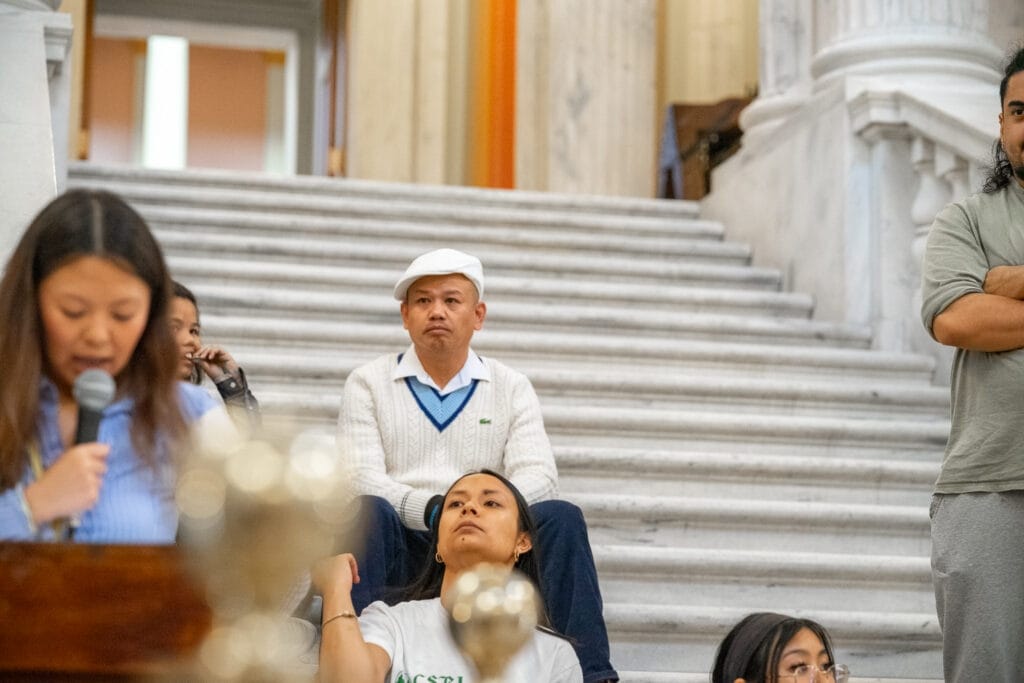
Hong and Chann both read their requests to the governor aloud inside the State House rotunda on Nov. 5.
Dozens of advocates organized by the Pardons for the People campaign joined the two refugees, chanting to the beat of a lone drum and urging state leaders to consider the clemency requests.
The campaign is led by Providence Youth Student Movement and supported by a coalition that includes the Immigration Coalition of Rhode Island, the Rhode Island Deportation Defense Network, Cambodian Society of Rhode Island, ARISE, Clean Slate Rhode Island and AMOR.
Speaking to advocates after a chamber floor session on Nov. 5, Senate President Valarie Lawson said the Senate was prepared to review the requests, but that the process had to begin with the governor’s office.
A pardon isn’t a shield
For Hong, deportation would mean leaving behind a son who is nonverbal and requires around-the-clock care, as well as his 79-year-old mother who depends on him for housing, transportation and financial support. Chann has four children with his wife and is the parent responsible for much of their daily transportation and activities.
“My family means everything to me,” Chann wrote in his pardon request to the governor. “I want to be there for my children, watch them grow, and support them. I want to give them a better life and be the father they need.”
A pardon would not automatically stop Hong and Chann’s deportations. But Amy Romero, chief legal counsel for the Lawyers’ Committee for Rhode Island, said it could give their attorneys another way to challenge the removal orders that have kept them at risk of being sent to Cambodia.
Romero said a pardon could provide grounds for asking an immigration court to reopen and vacate an order based on a criminal conviction that has since been pardoned.
“They were kind of complying with their order of supervision,” Romero said of Hong and Chann. “They were checking in, and they were allowed to remain here for decades. But now we have repatriation agreements, and we also have an administration that is very hell-bent on sending people to third countries.”
In New York, Gov. Kathy Hochul pardoned a Laotian refugee in July 2025 whose decades-old manslaughter conviction had left him facing deportation. His lawyers said the unconditional pardon blocked his removal and restored his lawful permanent resident status, according to The New York Times.
A different outcome followed in Minnesota. The state’s Board of Pardons unanimously granted a full pardon in June to Tou Lue Vang, a Laotian immigrant convicted of sexually abusing a 10-year-old girl. But federal authorities deported him the following month, despite the pardon.
Hong said in his request to the governor that a pardon could help him remain with his son and mother. If allowed to stay, he hopes to establish a nonprofit teaching young people electrical skills and other life skills to help them find work.
“I will always have remorse for my convictions, and I have spent the rest of my life trying to make it right — by working hard, taking care of my family, my neighborhood, and my community,” Hong wrote.
Chann said a pardon could improve his employment prospects and give his family a better chance of staying together. He wants to be here as his four children grow up and to provide them with the parental support he lacked as a child.
“I have learned from my mistakes,” Chann wrote. “I want to continue being a good father, a responsible person, and a positive part of my community.”
SUBSCRIBE: GET THE MORNING HEADLINES DELIVERED TO YOUR INBOX.
Rural Mississippi Counties Helped Deliver Democrat Scott Colom a Senate Victory
by Madeline de Figueiredo, The Daily Yonder
November 18, 2026
Rural Mississippi voters played a key role in Democratic Senator-elect Scott Colom’s victory this midterm cycle, according to a Daily Yonder analysis. While the rural share of the vote remained steady compared to 2024, political alignment shifted dramatically. Of the 18 Mississippi counties that flipped from Republican to Democratic in 2026, 13 were rural.
The scale of that shift is evident in the margins. In 2024, President Donald Trump carried rural Mississippi by nearly 26 points, winning 62.4% of the vote to Vice President Kamala Harris’s 36.6%. Two years later, Republican Senator Cindy Hyde-Smith’s lead over Colom in those same counties had narrowed to just over three points. Colom won 47.4% of the rural vote. The shift represents a nearly 23-point swing in the margin between the parties, with Democrats gaining almost 11 percentage points in rural vote share.
The swing did not come from rural voters disappearing from the electorate. Their share of statewide turnout held virtually unchanged around 54%. Instead, the results changed county by county, as Colom made inroads in places that had backed Trump just two years earlier. Those gains extended across both rural and metro Mississippi, but rural counties accounted for most of the Republican-to-Democratic flips.That shift carries particular significance in Mississippi, one of only four states where a majority of the population lives in nonmetropolitan counties. With rural residents making up such a large share of the state's population and electorate, changes in rural voting patterns can have a significant effect on statewide elections.
In 2024, Trump carried 15 of the state’s 17 metro counties. Colom won five of those counties in 2026, along with two that had voted for Harris, giving him seven metro counties overall and about 41% of the metro vote. In rural Mississippi, where Trump won 48 of 65 counties, Colom flipped 13. He carried 30 rural counties in all, garnering nearly half (46%) of the state’s total rural vote.
Colom's gains reached well beyond rural counties that were already competitive. Several counties he carried in 2026 had given Trump double-digit victories two years earlier. In rural Yalobusha and Montgomery counties, for example, Trump won by roughly 21 points in 2024. Colom narrowly carried both in 2026. He also won Lafayette County, where Trump had won by nearly 22 points, and Panola County, where Trump's margin had approached 15 points.
The shifts weren't confined to smaller rural communities. Lowndes County, which cast nearly 22,000 votes in the Senate race, flipped to Colom after backing Trump in 2024. Lafayette, Pike, and Panola counties also switched to the Democrat, each casting more than 11,000 votes. But the movement was far from uniform. Hyde-Smith continued to win some of the state's most heavily Republican rural counties, including George, Itawamba, Tishomingo, and Pearl River, where Trump had received more than 80% of the vote in 2024. Even there, however, Hyde-Smith's vote share fell from Trump's 2024 levels.
The results point to a broad but uneven shift across rural Mississippi, with Democrats making gains in counties that had recently given Republicans comfortable margins.
There is an important caveat: this Daily Yonder analysis isn't an apples-to-apples comparison. Since there was not a Senate race during the 2022 midterms, The Daily Yonder analysis looked at a presidential election in 2024 and a U.S. Senate election in 2026. The county-level shifts also don't necessarily mean individual voters changed their party preferences. Still, the scale and geographic reach of the movement are hard to overlook.
Rural Mississippi maintained its share of the electorate, but its voting patterns shifted substantially. With rural counties accounting for more than half of statewide turnout, these changes underscore the role rural Mississippi played in delivering Colom a victory.
This article first appeared on The Daily Yonder and is republished here under a Creative Commons Attribution-NoDerivatives 4.0 International License.

As Charleroi’s Haitians retreat, the Mon Valley town wonders how it will rebound
by Lucas Dufalla, Pittsburgh's Public Source
November 16, 2026
Two years ago, Anide Limage’s business was doing well.
She sold clothes in a small store in Charleroi, a borough along the Monongahela River that for years experienced population decline in line with other Mon Valley communities.
But a surge of immigrants, largely Haitian, put some life back into Charleroi’s business community, local business owners say, even as other communities hollowed out. That changed, residents say, after the 2024 election and the Trump administration’s decision to end the federal program that protected Charleroi’s immigrant community in July.
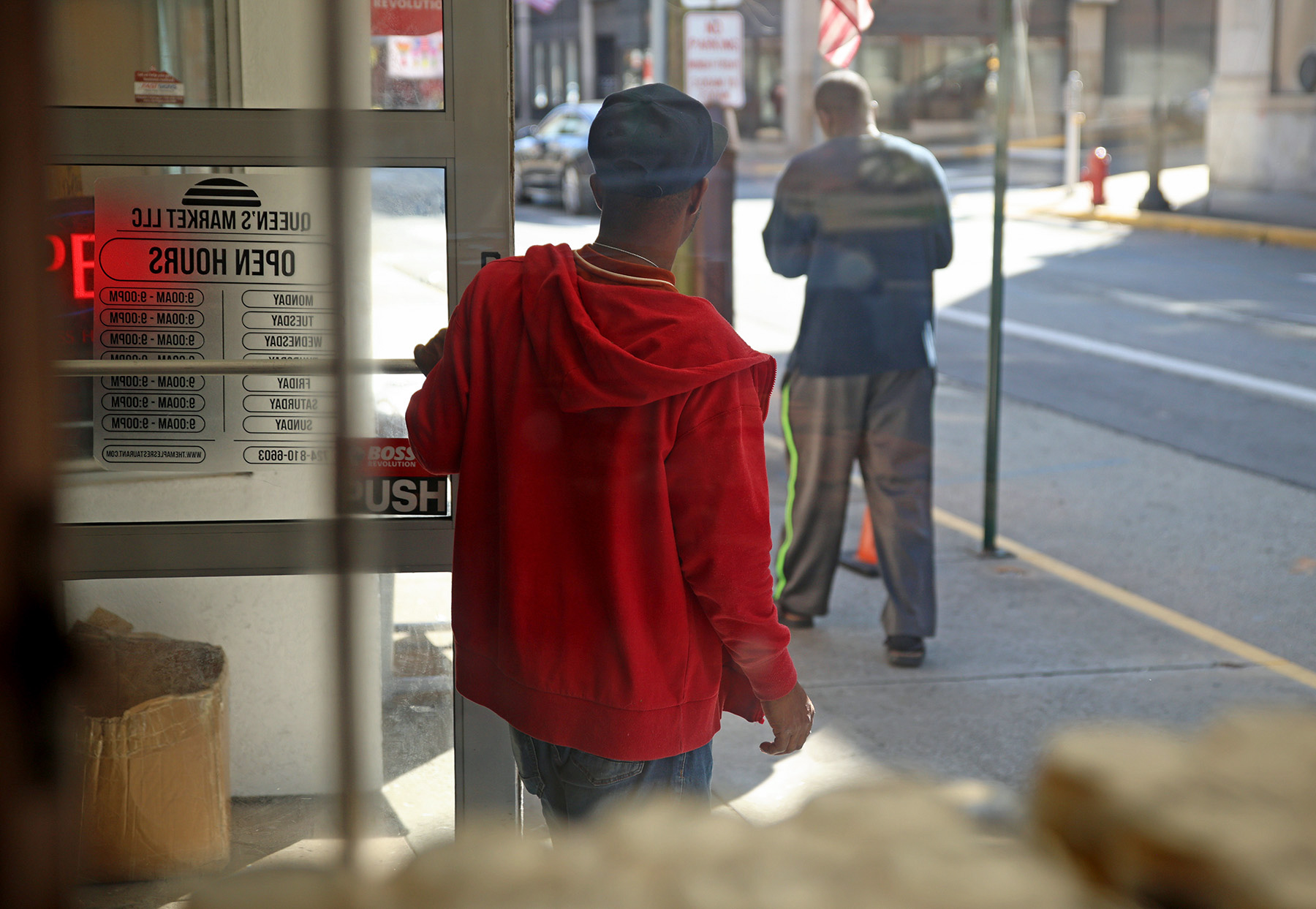
Residents and business owners say that many of the new Charleroi residents left and the Haitian community turned inward. The effects were almost immediate, with Limage saying she was forced to close her business in 2025 after her largely Haitian clientele stopped coming in.
“The city’s still down because so many people left,” Limage said.
As the borough grapples with the population loss, it is also grappling with a slew of factory closures from which it has yet to recover. Business owners and community leaders are hopeful for the future, even if they aren’t sure where the borough goes from here.

A glass boomtown faces a population decline
Founded in 1891 by Belgian immigrants, Charleroi was built up around what was then known as the Charleroi Plate Glass factory, which was later sold to the Pittsburgh Plate Glass company.
The glass boomtown’s population swelled to 11,200 in 1930.
Much of the town has a connection to the glass plant. Mon Valley Regional Chamber of Commerce Executive Director Leanna Spada’s husband, father-in-law and grandfather-in-law all worked there. Corning Glass Works, the manufacturer of Pyrex, bought the plant in 1936.
“Everybody knew somebody that worked (at the plant). It was just how it was here in the community,” said Spada. “No other plant made Pyrex. It only came from Charleroi. We were very proud of that fact.”
Charleroi Area Historical Society member Bill Hecklick, who lives in Robinson but frequently makes trips to the borough, was born in nearby Speers and grew up in Charleroi. Hecklick remembers childhood walks around Charleroi to go to arcades and eat candy with his friends. “If you can imagine a perfect small-town childhood, I mean that’s it.”
Hecklick recalled that when an underinsured restaurant was burned down in a fire in the 1960s, the community rallied together to raise $20,000.
“Every building you see in town that’s empty has a story in it,” he said.
Similar to other Mon Valley municipalities, Charleroi saw a precipitous population decline with the collapse of the steel industry. Pittsburgh Steel Corp.’s plant closure in nearby Monessen during the 1980s was a “hard hit” for the borough, said Spada.
Today, its population is 4,200, and a quarter of its housing is vacant.
Immigration ‘hooked up the paddles’
Charleroi saw a surge of immigration starting in 2018 and 2019, when a group of Liberian immigrants came to the borough. They were followed by other groups, including Jamaicans and Chinese immigrants.
Immigration “hooked up the paddles” to Charleroi, said Joseph Murphy, an attorney who has done work with Charleroi’s immigrant community.
Spada painted a picture of a town partially revived, with long-vacant houses newly filled with people. She pointed to the borough’s wage taxes, which grew by nearly half from 2021 to 2024, comprising almost a quarter of its tax revenue in 2024.
Kevin Kuzma, owner of Mon City Apparel on Fifth Avenue, said that the influx of new residents was a positive for his business, which had largely flat revenue since it started in 2015.

“It was great. There were more people, they were walking around. I used to deal with them almost daily,” Kuzma said.
At one point, over 44 nationalities lived in Charleroi, according to Spada.
None of the new Charleroi immigrant groups has been more visible than the Haitian community, thrust into the national spotlight after then-candidate Donald Trump’s comments at a September 2024 campaign rally, where he claimed that the community had drained local resources and was committing crimes.
Charleroi saw a surge of media attention. A local Facebook group saw an influx of posts, claiming that the Haitian community was causing crime in the borough.
Media “was making way too big of an issue. Way too much. There was no reason for it,” Kuzma said.
Many of the Haitian immigrants who came to Charleroi were under Temporary Protected Status, better known as TPS, a federal program that provides protection from deportation and work authorization for residents of 17 countries. Murphy estimated that there were around 2,000 beneficiaries of the program in Charleroi at one point.
The Charleroi Area School District, which covers Charleroi and its surrounding boroughs in Washington County, had 33 English Language Learner students enrolled during the 2022 to 2023 school year, of which six were native Haitian Creole speakers, according to Pennsylvania Department of Education Data.
For the 2024 to 2025 school year, that number climbed to 218 students, with 127 of those being Haitian Creole native speakers. After Trump’s election, it fell to 198.
No apple pie, and then no TPS
One of the new residents of Charleroi is Carmel Dorcely, who arrived in 2021 after stints in New Jersey and Florida. Originally from Haiti’s capital, Port-au-Prince, Dorcely said the United States was different from what she initially anticipated.
“As Haitians, we need to connect. We like to share, because in Haiti, it’s like that,” she said. “I was surprised when I came here. When you watch TV, you see that when you first come somewhere they greet you or welcome you with apple pie.”
“No neighbor offered me apple pie. Was it a lie?” said Dorcely, who wasn’t here on TPS.
Charleroi reminded her of Haiti’s countryside, where her parents grew up, she said. Dorcely found a job at a local food processing plant, Bakery Barn, and formed connections quickly through her church, which, at the time, was led by a Haitian priest.
“Sometimes I say, ‘I miss my country, I miss my mom’s place,’ but Charleroi is a lot like it,” she said, adding that some of her initial hesitancy faded when she saw the Haitian community out on the street.

Much of that changed when TPS ended, she said.
Early into his second term, President Trump terminated the program. After a yearlong court battle, the Supreme Court allowed it to end for Haitians on July 27. That put many members of Charleroi’s Haitian community in limbo.
TPS "was never intended to be a de facto amnesty program to allow foreigners to remain in the U.S. forever. We are ending this program that has been exploited and hurt American workers for years,” White House spokesperson Lauren Bis said in a statement.
“Streets used to be bustling and there were people around all the time. You just don’t see that now.”
Leanna Spada, Mon Valley Regional Chamber of Commerce
Dorcely said anti-immigrant sentiment is largely contained to online spaces like Facebook.
Murphy estimates that around half of the borough’s Haitian population has left. According to Dorcely and business owners, those that remained turned inward.
“The population as a whole has changed. The demeanor has changed,” Spada said. “Streets used to be bustling and there were people around all the time. You just don’t see that now.”
Arjun Rimal, a Nepalese immigrant who lives in Baldwin, owns a convenience store on the intersection of Fallowfield and Fifth avenues. Initially attracted to Charleroi because of the relatively cheap property values and active immigrant community, he said that after TPS ended he noticed less foot traffic coming into the store and some customers wearing ankle bracelets.
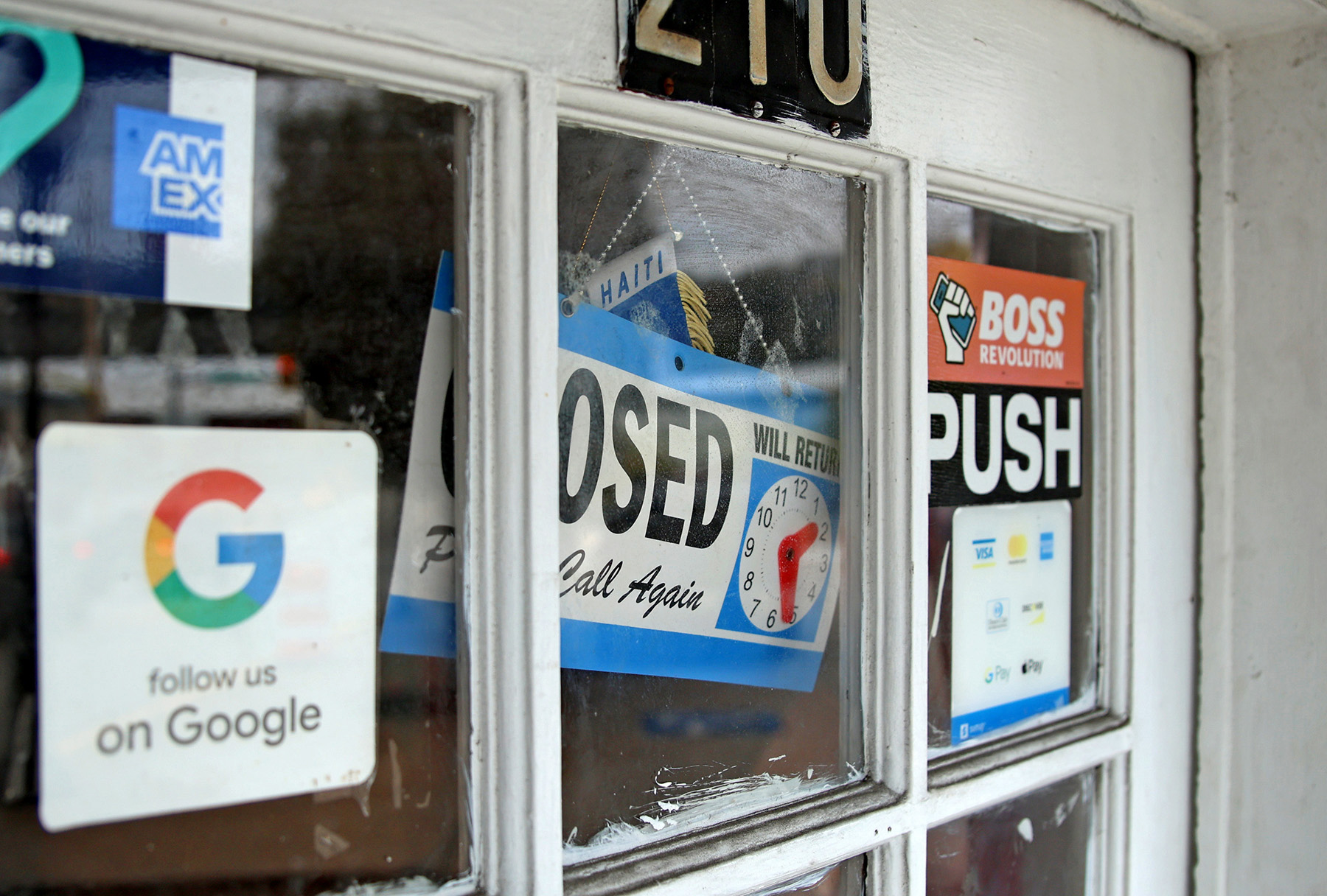
“If all these (immigrants) were to be out of here, it's done,” Rimal said. “Charleroi is going to be like a ghost town.”
Dorcely said that she’s managed to stay connected with those that remained through WhatsApp and the women’s group, Fanm Vanyan, which she leads along with Limage, a U.S. citizen.
Three factory closures, many questions
Coupled with the drop in spending by immigrants is a slew of factory closures, including the famous glass plant in April 2025. The glass factory closure alone took 300 jobs from the area.
“When it closed, it wasn’t just a normal closing. It affected generations of what we were raised on,” Spada said.
That same year, Fourth Street Barbeque, also known as Fourth Street Foods, a frozen food plant that employed over 200 people, shuttered. Both of those closures were preceded by the loss of a Quality Pasta Co. plant in the city’s downtown.
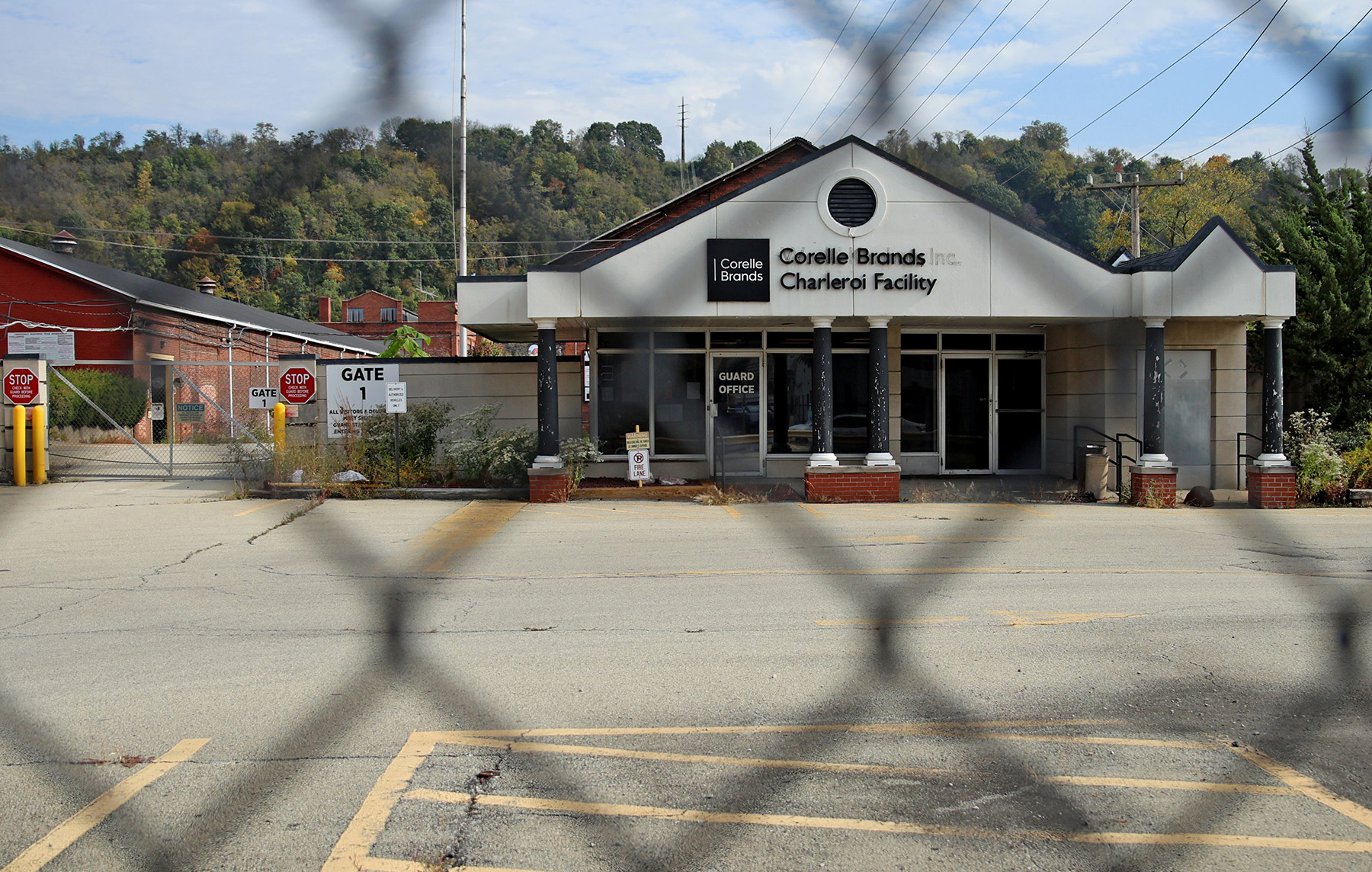
“It felt like we kept getting punched in the face over and over again and couldn’t get our gloves up to block it,” Hecklick said.
Today, Charleroi looks a lot like it did before the influx of immigration, said Spada. Streets are empty and storefronts are largely vacant. Many of those formerly employed at the glass plant, some of whom were a few years away from retirement, weren’t able to find jobs, Spada said.
Hecklick, who runs a tax preparation firm, said he spoke with clients about where their finances stood after the closure.
Residents and business owners are asking themselves where the borough goes from here. Almost all said that they are hopeful for the future, even if it’s unclear what that future is.
Augusta Goll, owner of Queen’s Market on Fallowfield, moved to Charleroi with the wave of Liberian immigrants in 2019. Similar to Rimal, she said the area’s business scene has changed significantly over the last few months, particularly in relation to foot traffic.
“Charleroi is a good place. They're going to bounce back,” she said.
But how?

Mon City Apparel’s Kuzma started a business association with the goal of unifying the borough’s business community. Its first event in October, a Halloween-themed vendor fair, did well, he said.
Spada said that she hopes another large employer will come into the glass plant site. This month, a portion of the glass plant property was sold to a New Eagle-based manufacturer, according to a report from the Observer-Reporter.
Hecklick, by contrast, said he is “adamantly a believer that chasing down ‘the big’ is not going to happen. We need to build from the ground up and start small.”
After closing her original business, Limage has started a new boutique on Fallowfield. Dorcely, after leaving her job at Bakery Barn, now runs her own cleaning business. One of her biggest clients is her church.
“A lot changed, but we’re living with hope now,” said Limage. “Things are going slowly, step by step … We keep trying.”
Lucas Dufalla is the Southern Communities Reporter at Pittsburgh’s Public Source and can be reached at lucas@publicsource.org.
This story was fact-checked by Octavia Liku.
Correction: The location of the buyer of part of the glass plant property was misidentified in an earlier version of this story.
This article first appeared on Pittsburgh's Public Source and is republished here under a Creative Commons Attribution-NoDerivatives 4.0 International License.

 DAN DeWITT
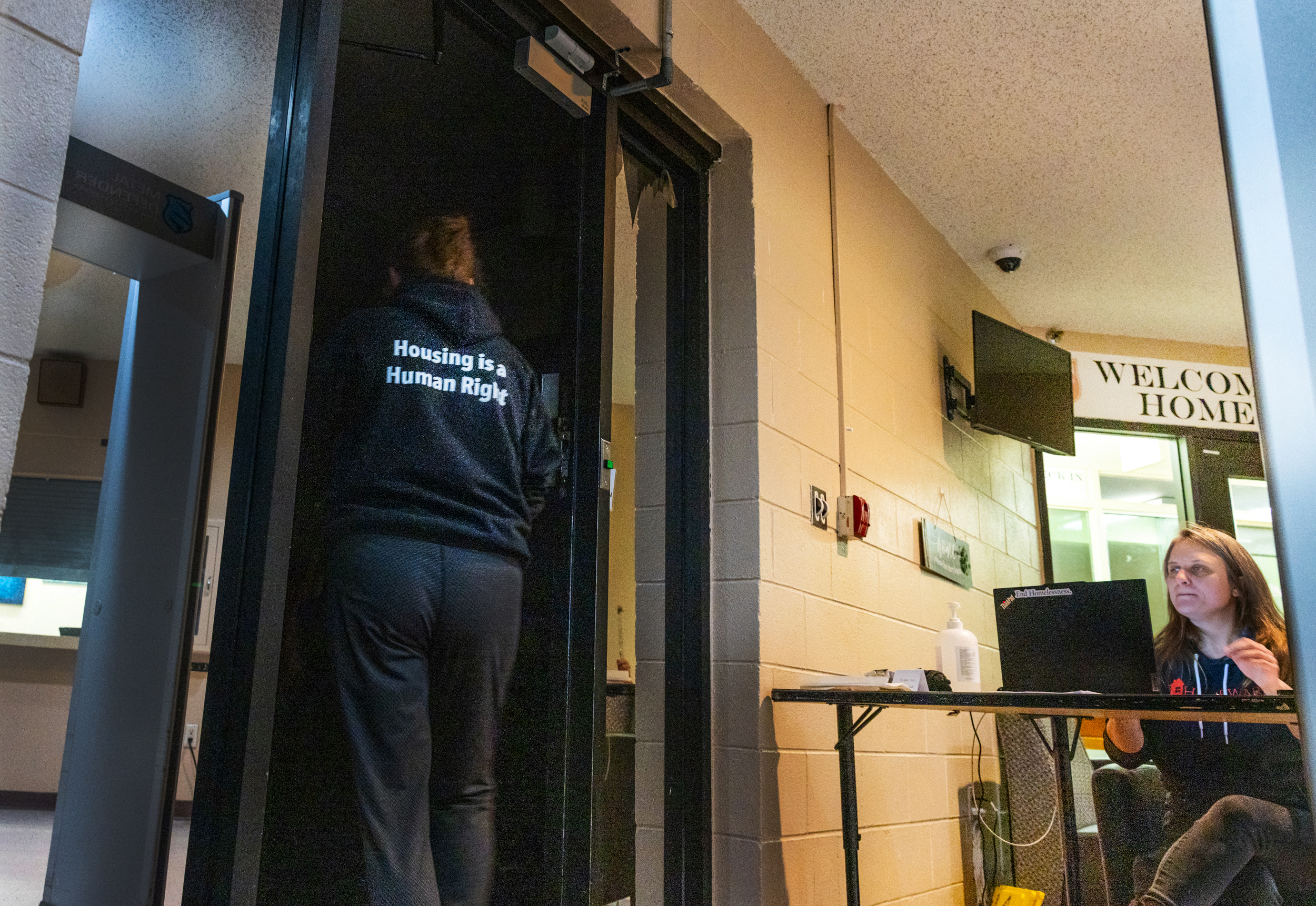
Code Red for Code Purple: Cold-weather homeless program faces funding shortfall, increased demand
Group seeks at least $222,000 to close program’s funding gap.
by DAN DeWITT November 17, 2026
Tim Cutshaw said that securing a bed at the Center of Hope Code Purple cold-weather shelter Friday night wasn’t just a matter of comfort but, potentially, life and death.
“What do they want people to do, freeze to death?” Cutshaw, 40, asked rhetorically while standing in frigid wind Friday, the first night of the season cold enough to trigger the opening of the emergency shelters.
Avoiding this worst-case outcome is, in fact, helping propel the effort to raise at least $222,000, which is needed to ensure Code Purple is funded throughout the cold-weather season, providers of homeless services said. The need is all the more urgent, they added, because demand will likely increase with the loss of more than 100 non-emergency shelter beds that were available last winter.
“We have an absolute need for shelter this winter so people don’t die,” said Emily Ball, manager of the city of Asheville’s Homeless Strategy Division and lead staffer of the Asheville-Buncombe Continuum of Care, which coordinates homelessness funding and services. “It’s all hands on deck.”
The need for Code Purple beds could be seen in the long line of bundled-up residents who waited outside the Center in downtown Asheville Friday evening — and who filled nearly all 90 of its available beds on Friday, Saturday and Sunday nights.
“We’re entering the [cold] season and starting services already knowing we don’t have the funding for the nights that we’re going to need for the year,” said Jessie Figueroa, resource development director for Homeward Bound WNC, which runs Center of Hope — formerly a permanent shelter operated by the Salvation Army — as a Code Purple facility.
“It feels uncertain as providers because we care about individuals’ safety and not having people freeze to death on the streets,” Figueroa said.
Code Purple shelters open during “extremely cold weather, defined as 32 degrees or below, including windchill, or 33-40 degrees with precipitation,” according to the continuum’s Code Purple Manual. Operating the 175-bed program for a predicted 80 nights from November through April will cost about $598,000, says one of the slides presented at a continuum board meeting last week. Available funding for the program, meanwhile, is about $376,000.
The resulting $222,000 gap is expected to grow, according to the meeting’s minutes, which said a leadership group formed to address the issue will start with “the assumption that the [fundraising goal] will increase.” Donations can be made here.
Along with seeking public and private sources for the needed money, the group will determine the precise amount of the need, which will depend on the demands of providers, primarily Homeward Bound and Asheville-Buncombe Community Christian Ministry, which operates a Code Purple shelter southwest of downtown near the Tanger Asheville mall.
This facility offers 35 beds, roughly half of which were occupied over the weekend, said Elizabeth Chapman, the Code Purple operations coordinator. Two other organizations may offer as many as 50 additional beds later in the season if needed, the meeting presentation shows.
The funding shortfall was created by a need for Code Purple to fully fund the cost of providing shelter beds, not a decrease in funding, Ball said. “Actually, we have more money than we’ve ever had for Code Purple.”
Both Asheville and Buncombe County have increased their budgeted contributions from $50,000 to $100,000 this year, Ball said. Mission Health is contributing nearly $85,000, including carry-over from last year’s total, while $91,000 — most of it from federal sources — was reserved from last year, Ball said.
During the 2025-26 cold weather season, Code Purple paid $39.15 nightly for each occupied bed. This required providers to cover the remaining costs, which these organizations can no longer do, Ball said.
“The funding landscape for these guys is bleak,” she said of the providers. “There are all kinds of reasons for that, but it’s very hard for a nonprofit to secure enough funding to have stable operations year after year.”
Proof of this is the history of Center of Hope, Ball said. It was operated as a permanent shelter for about 65 residents, making it the largest such facility in the city, until Salvation Army closed it earlier this year because of a loss of federal funding.
Homeward Bound, meanwhile, is facing the potential loss of two grants totalling nearly $400,000 next year due to shifting priorities of the U.S. Department of Housing and Urban Development, Figueroa said.
The loss of the permanent beds at the Center of Hope, which took as many as 20 additional occupants during Code Purple events, came on top of the closure of a winter facility operated by Safe Shelter, which housed about 50 residents throughout the last cold-weather season and was funded by Tropical Storm Helene recovery money and funds from the American Rescue Plan Act, said Christian Chambers, the organization’s executive director.
“Those are beds that are [now] not available to people who need them,” Ball said.
The number of local unsheltered residents — including those living on the street or in cars — has likely increased, Ball said, though she emphasized that an accurate tally won’t be available until the continuum completes its annual Point in Time Count early next year.
This year’s count found the total number of homeless residents had increased to 824 from 755 in 2025. The tally of unsheltered residents climbed to 334 from 328 in 2025 and from 219 in 2024, before the arrival of Helene.
Cutshaw is one of those unsheltered residents. He’s been living on the street for about eight years, he said Friday. So is Aiden Peardon, 20, who said on Friday he had been asked to leave a shelter about two weeks ago. He failed a drug test, he said, because he unwittingly shared a nicotine vape that also contained an illegal drug.
If not for the Center of Hope, he said, “I’d probably be under a bridge somewhere with a couple of blankets.”
Marco Martinez, 28, also talked about the essential service provided by Code Purple shelters. He wore a thin coat, didn’t have blankets or a sleeping bag and said Friday that if he wasn’t admitted to Center of Hope, his only option was to keep walking all night to keep warm.
He was near the front of the line shortly after 6 p.m. when Alanna Kinsella, Homeward Bound’s homeless services director, appeared at the doorway to announce that, though the shelter was rapidly filling, “we have 13 open beds.”
Martinez looked visibly relieved. “I’m very, very happy,” he said.
Asheville Watchdog welcomes thoughtful reader comments on this story, which has been republished on our Facebook, Instagram, TikTok, and YouTube pages. Please submit your comments there.
Asheville Watchdog is a nonprofit news team producing stories that matter to Asheville and Buncombe County. Dan DeWitt is the Watchdog’s deputy editor/senior reporter. You can reach him via email at ddewitt@avlwatchdog.org. The Watchdog’s reporting is made possible by donations from the community. To show your support for this vital public service go to avlwatchdog.org/support-our-publication/.

For people leaving prison, stable housing can be the foundation for a second chance
by Rachel Crumpler, North Carolina Health News
November 17, 2026
Key Takeaways:
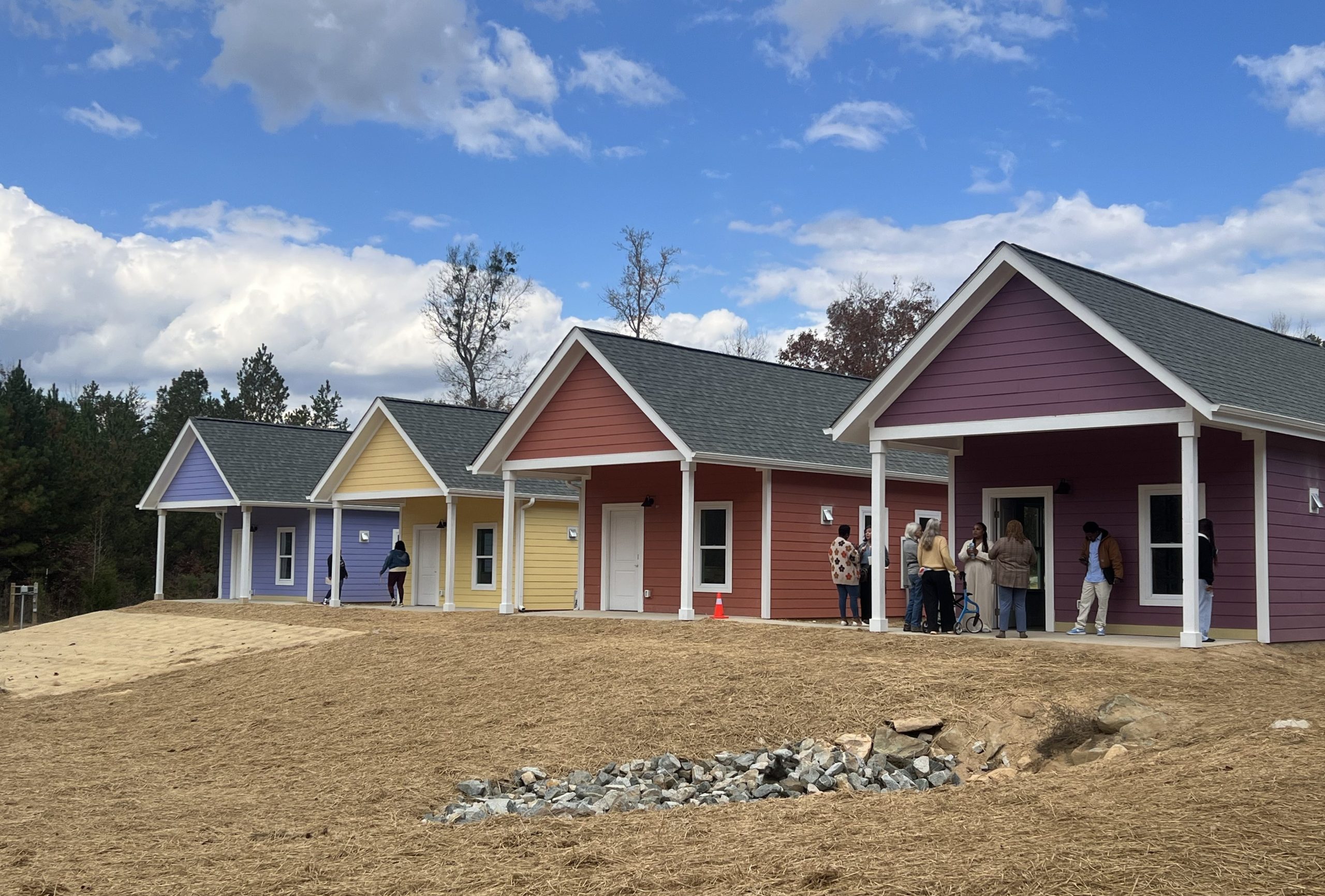
- Benevolence Farm has opened seven tiny homes for formerly incarcerated women and gender-expansive people.
- The homes are a bridge between communal transitional housing and permanent housing, giving residents space to practice living independently while still being part of a supportive community.
- More than 4,200 people left N.C. prisons without housing in fiscal year 2025, a 38 percent increase from the previous year.
By Rachel Crumpler
For Dominque, 34, safe and stable housing has been making all the difference as she rebuilds her life after incarceration.
In May, she earned her release from a North Carolina prison and landed at Benevolence Farm, a program in Alamance County that provides transitional housing and employment to women leaving incarceration.
For the past several months, she’s been living in a three-bedroom farmhouse with as many as five other women. Soon, though, someone will hand her keys to her own tiny home. There she can live independently and prepare for life beyond the farm.
Dominque, concerned about stigma related to her conviction, asked NC Health News to use only her first name. She spent a total of about 13 years incarcerated.
Her second stint in prison came because she failed to register an address as required by the sex offender registry. She hadn’t committed a new crime; she just had nowhere to live and therefore nowhere to register.
“If you don’t have anywhere to go, you can’t tell the sheriff’s office where you are, so that can automatically get you in trouble,” Dominque said.
Now, she’s about to become one of the first residents of North Carolina’s first tiny home community built specifically for formerly incarcerated women and gender-expansive people of all conviction histories.
The seven tiny homes represent a new approach to post-prison housing in a state where the need for a stable place to land when leaving prison outpaces available options by thousands of units.
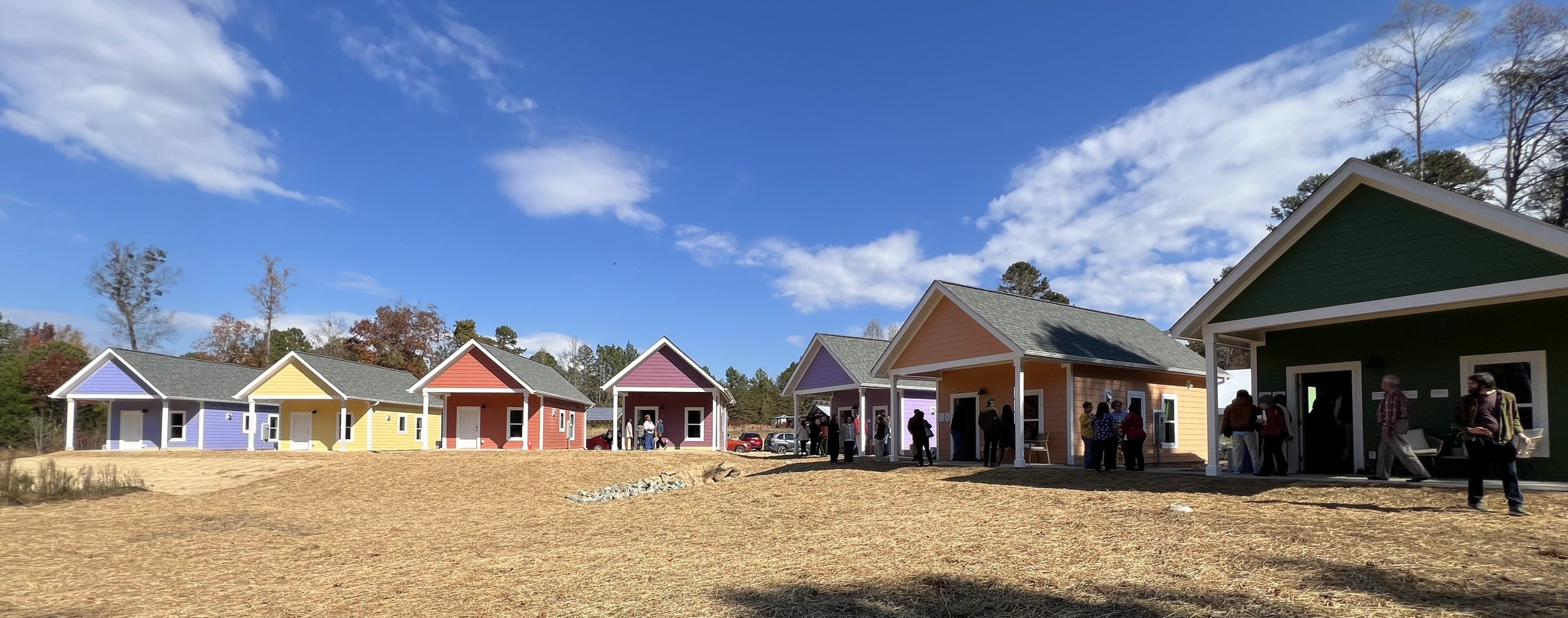
The addition doubles Benevolence Farm’s housing capacity on the property, which is a meaningful increase for a program that maintains a long waitlist.
“It’s really exciting because I’ve been very codependent for about eight years now, always having to depend on somebody on where I’m gonna go,” Dominque said. “This is going to give me my own home. It’s gonna teach me responsibility, how I need to budget myself. It teaches you things that you need to be prepared for when you do move off the farm and get your own place.”
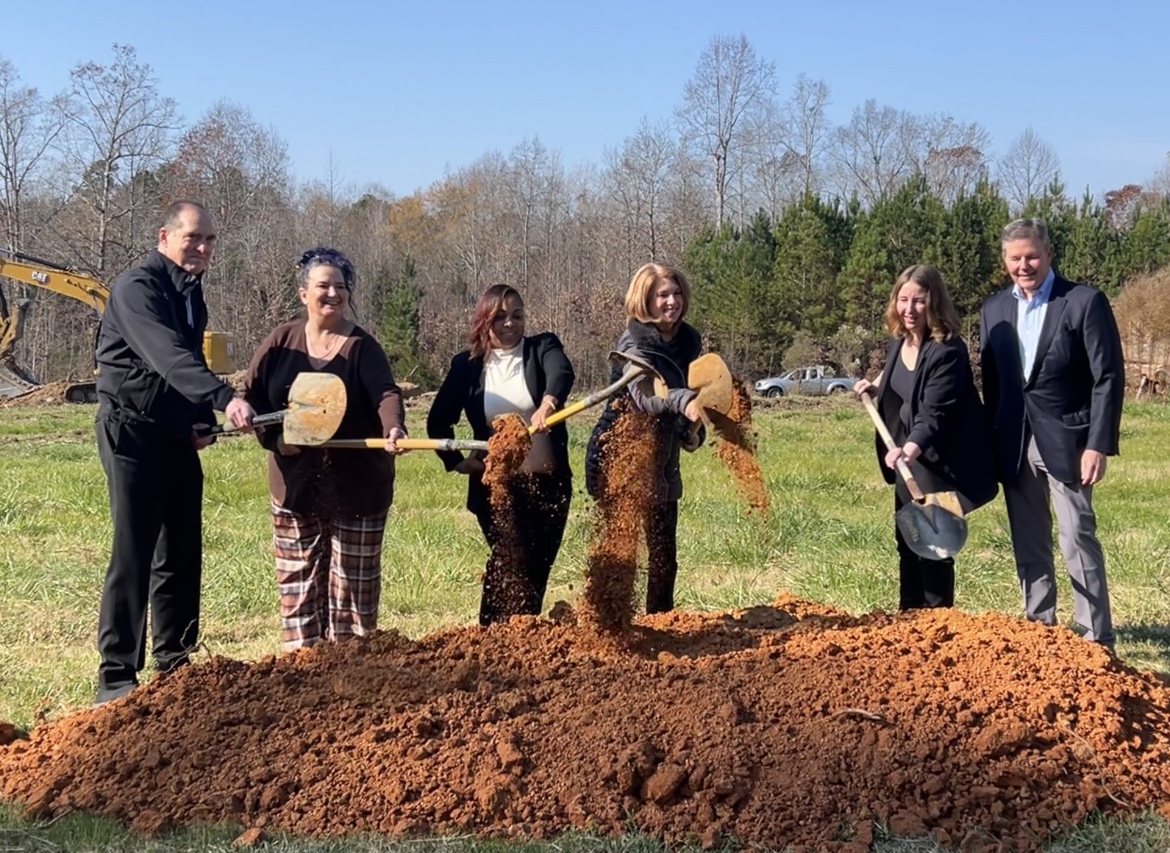
More than 100 people came to Benevolence Farm’s 13-acre property for a ribbon-cutting ceremony on Nov. 12 to mark the opening of the tiny home community, which cost about $1.8 million.
“These seven tiny homes have a huge impact for many years to come,” said Scott Farmer, executive director of the North Carolina Housing Finance Agency, which contributed $1.1 million toward the project. “It’s maybe small in size, but it certainly is not small in its impact.”
Seven years in the making
For Benevolence Farm — which welcomed its first resident in December 2016 — the tiny home community has been years in the making.
In 2019, a question from a resident who spent 27 years in prison shifted the organization’s thinking about reentry housing.
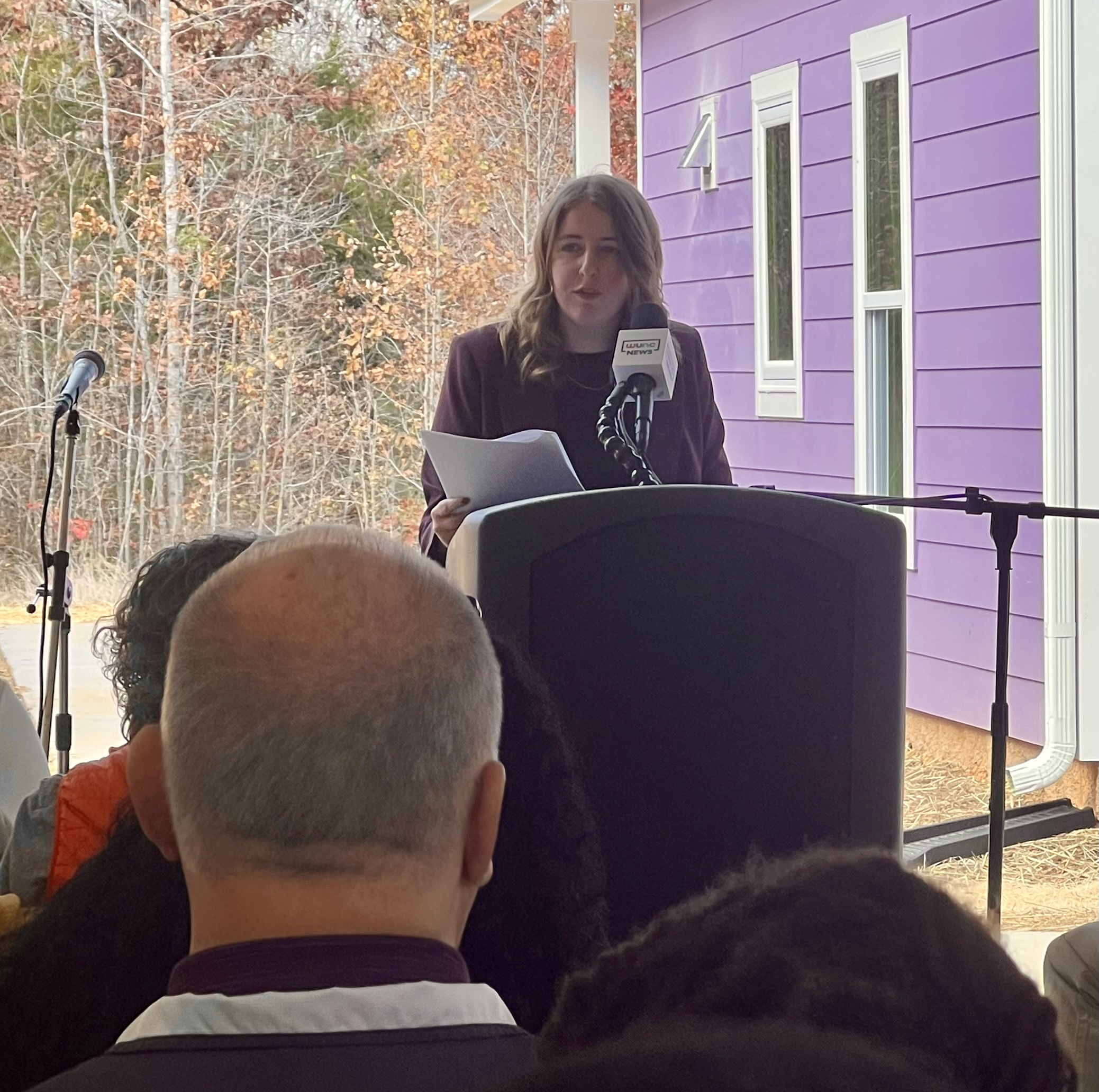
Benevolence Farm Executive Director Kristen Powers recalled a woman named Deb asking: “What would it look like to practice living free and independent amongst a community of people who get me?”
The tiny home community is one answer, Powers said. It’s a vision developed over years of planning, fundraising and gathering input from formerly incarcerated women.
When Deb was released in 2018 and came to live at the farm, she had a lot to adjust to. Powers said Deb had never seen a cell phone, let alone used a smartphone. The cost of living had soared since she was last free in 1994.
And even after spending time at Benevolence Farm, Deb was afraid to live alone, Powers said. Other women have similarly struggled with the transition from the shared farmhouse to their own apartments, unsure how to work with a landlord or budget for all their own expenses.
That led to plans for a next phase of housing — one that would give residents more independence, including their own space, while keeping them in a supportive community where they can get help navigating similar challenges.
“We’re trying to build the muscle to practice living by yourself and to have the opportunity to make mistakes without losing everything — whether it’s learning how to maintain a home, learning how to just live by yourself, or building that communication between different people,” Powers said.
Residents who come to Benevolence Farm will start out living in the shared farmhouse before moving into a tiny home when they feel ready. They can live at the farm for a total of two years across both types of housing.
“It will be more expensive living [in a tiny home] because you’re buying your own toilet paper, buying your own cleaning supplies,” Powers said. “We’re going to still try to make it as affordable as possible, but inevitably your monthly budget is going to go up by managing your own household, which is what we’re trying to mimic.”
More than a home
Mona Evans, a former Benevolence Farm resident who spent nearly five years incarcerated, provided input on the housing design. The end product exceeded her expectations.
“They did not feel tiny at all,” Evans said. “I was super overwhelmed in a joyful way.
“This is more than just a group of tiny homes for me. This is a community.”
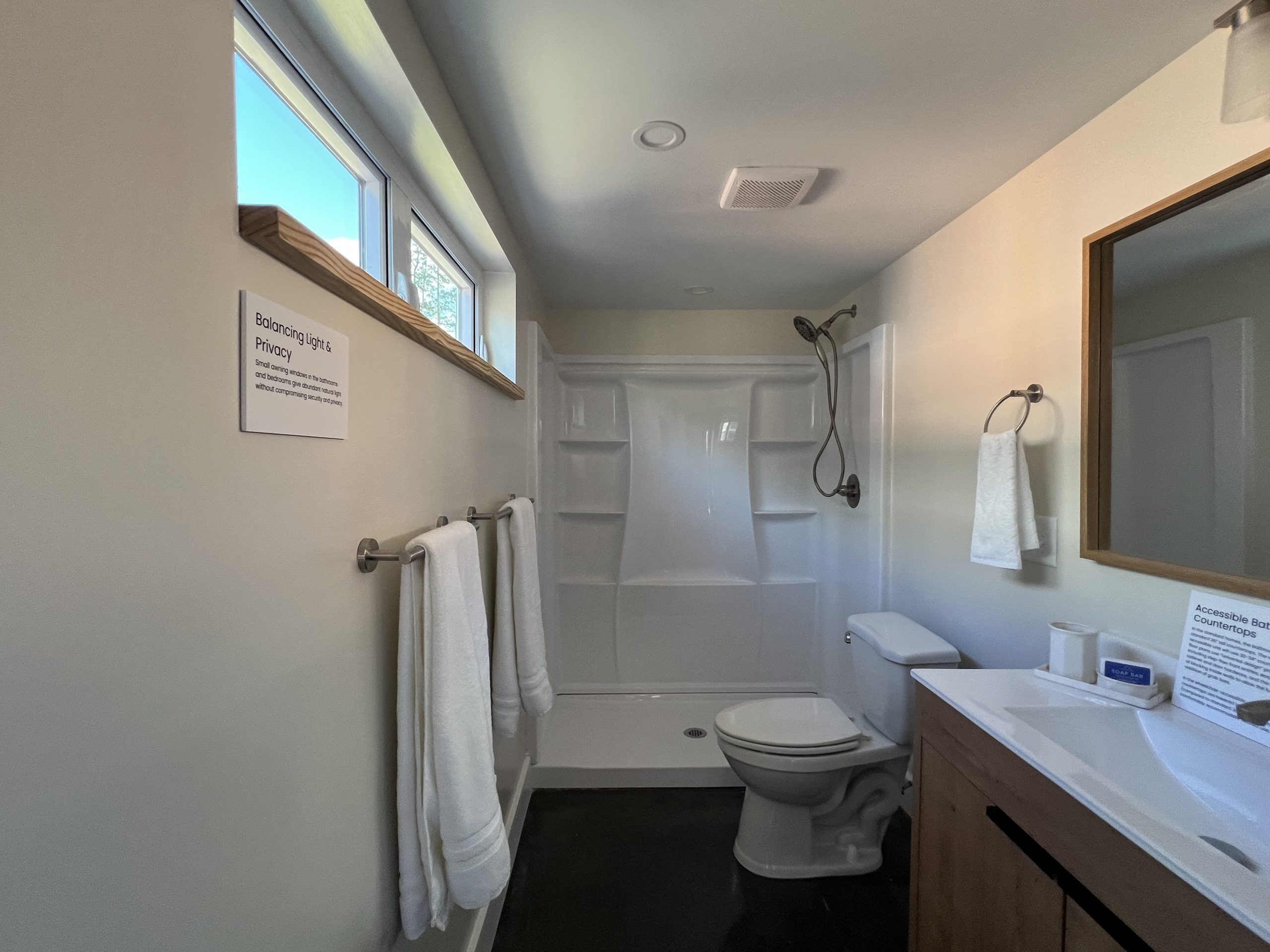
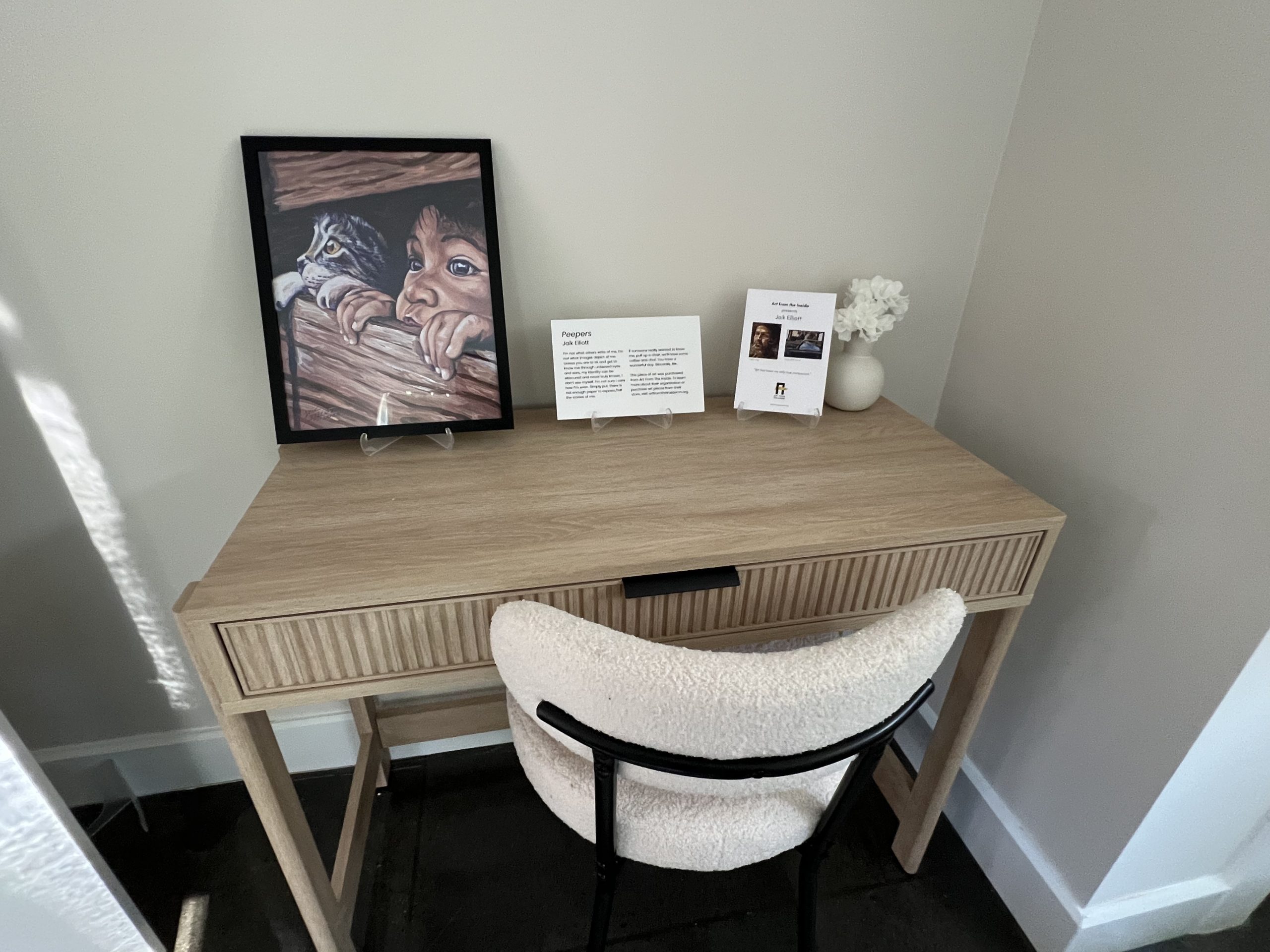
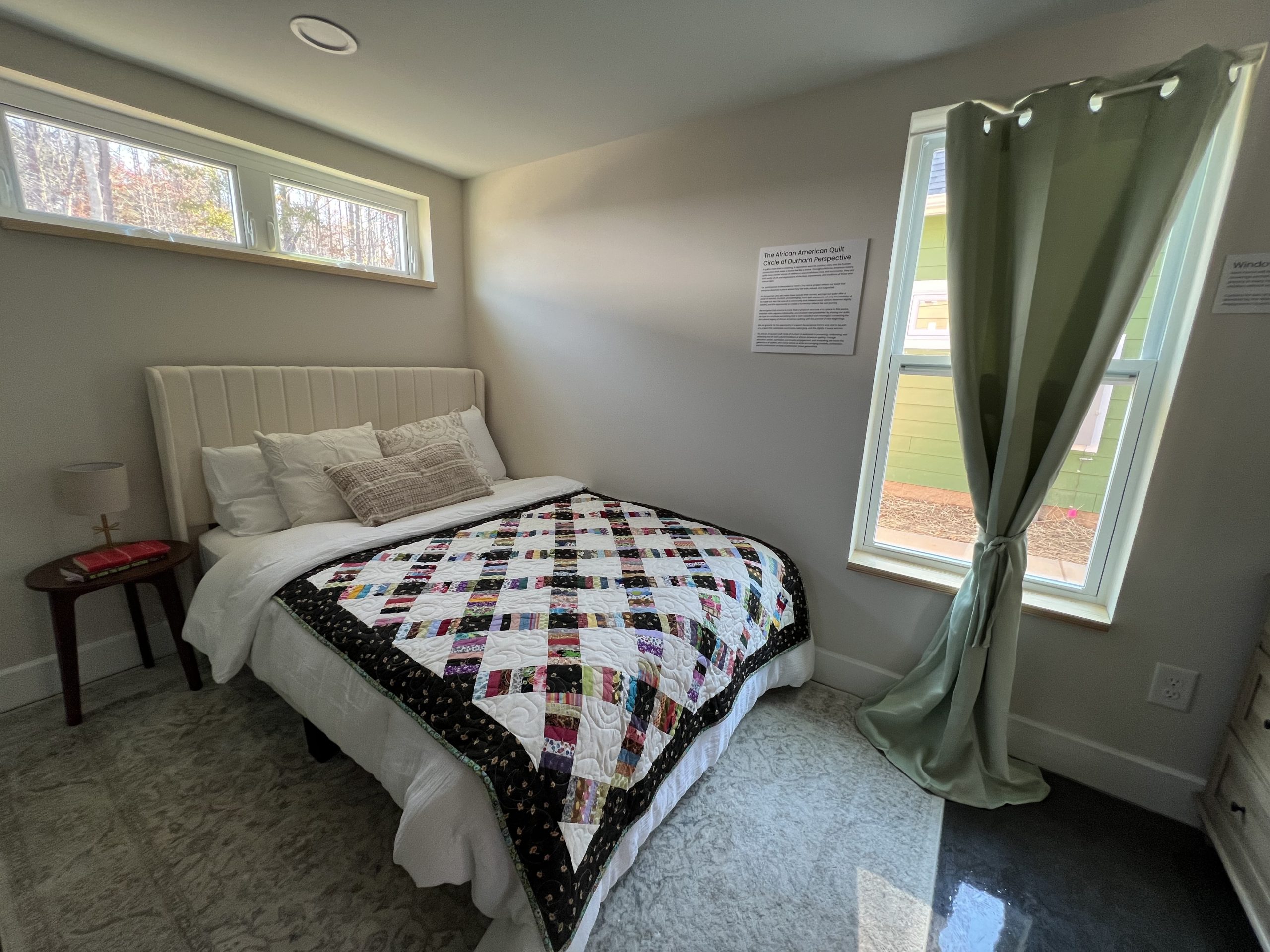
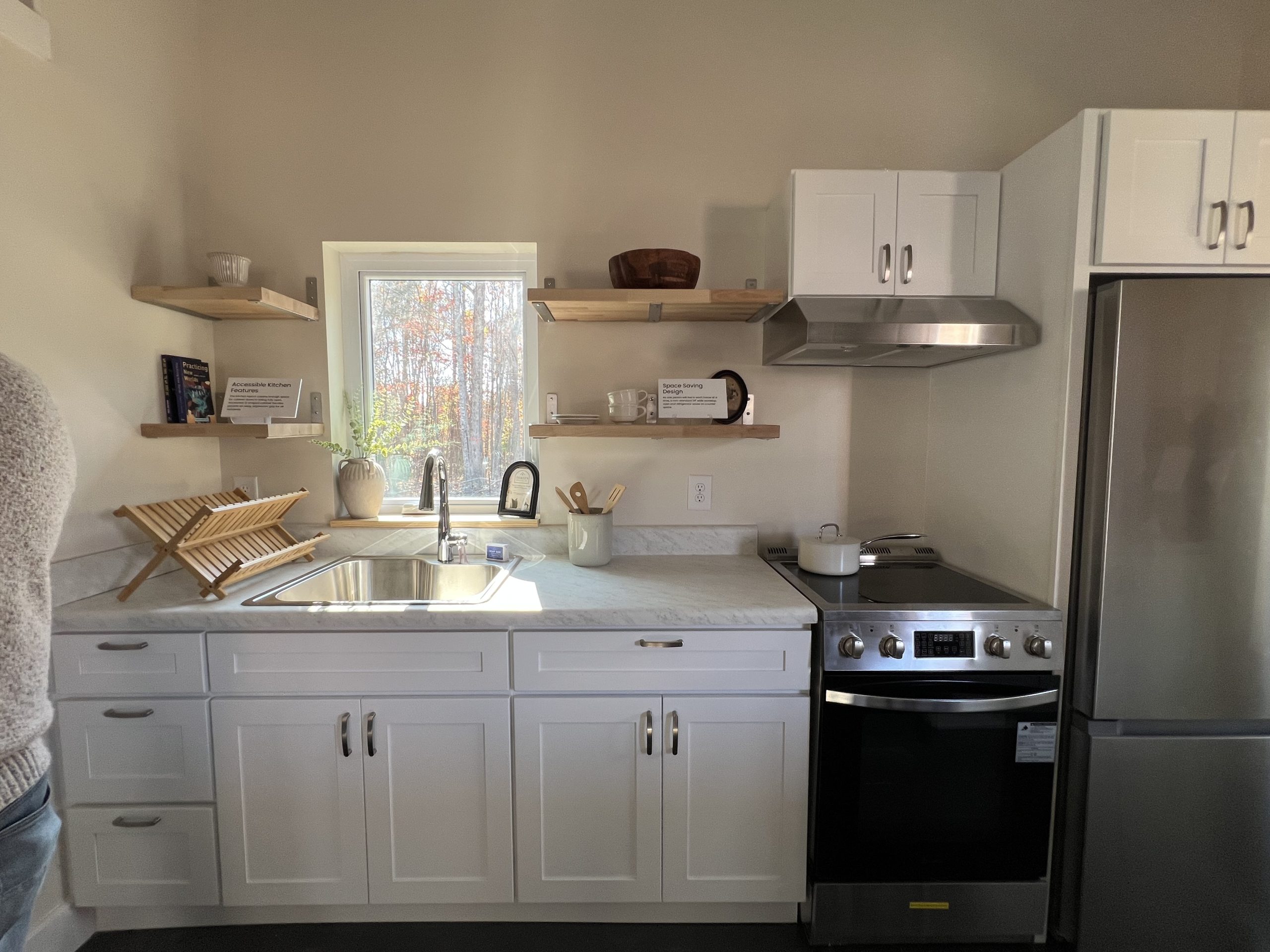
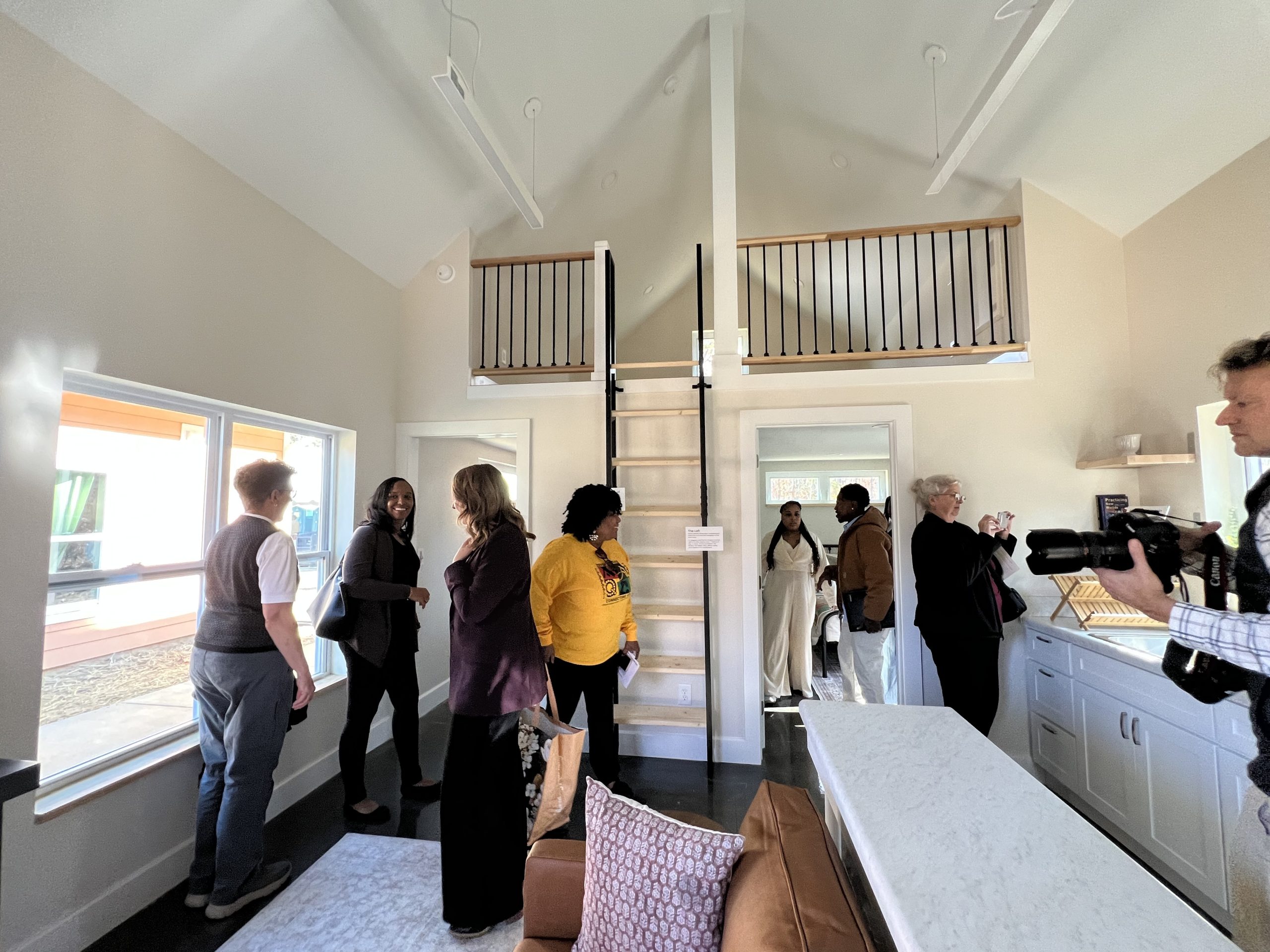
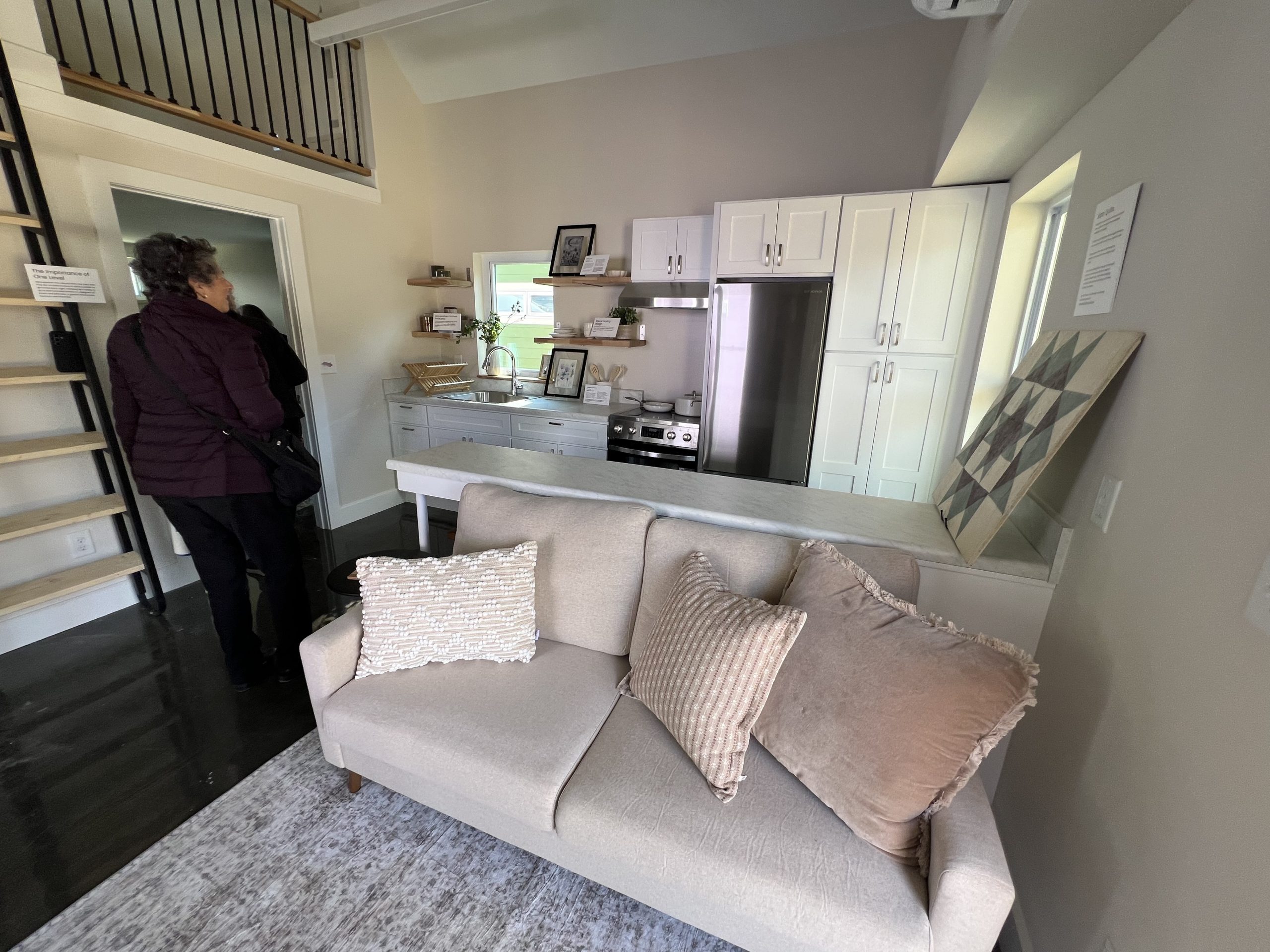
Each 420-square-foot tiny home has a bedroom with a full-size bed, a full bathroom, a kitchen, a living area and a washer and dryer.
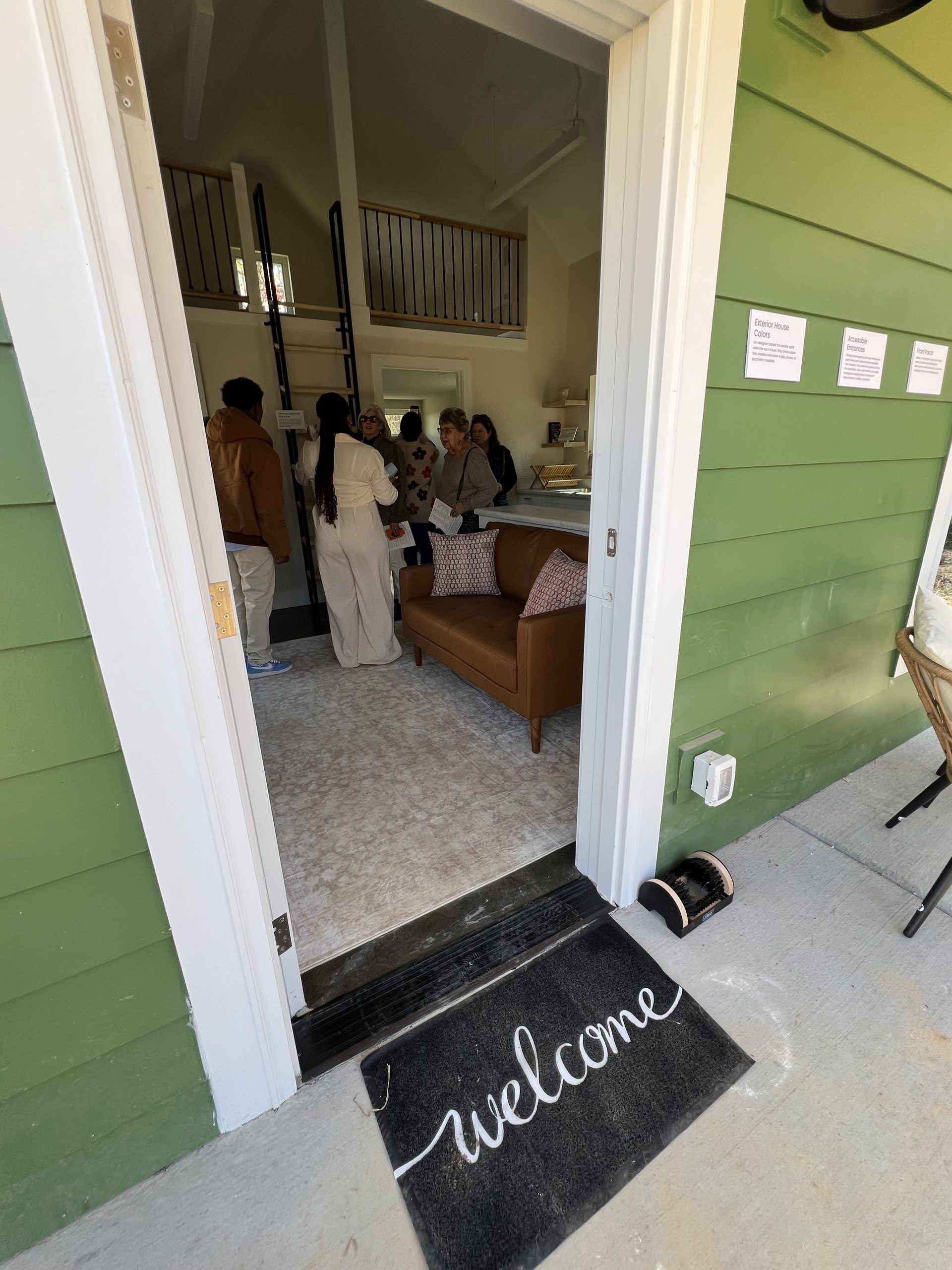
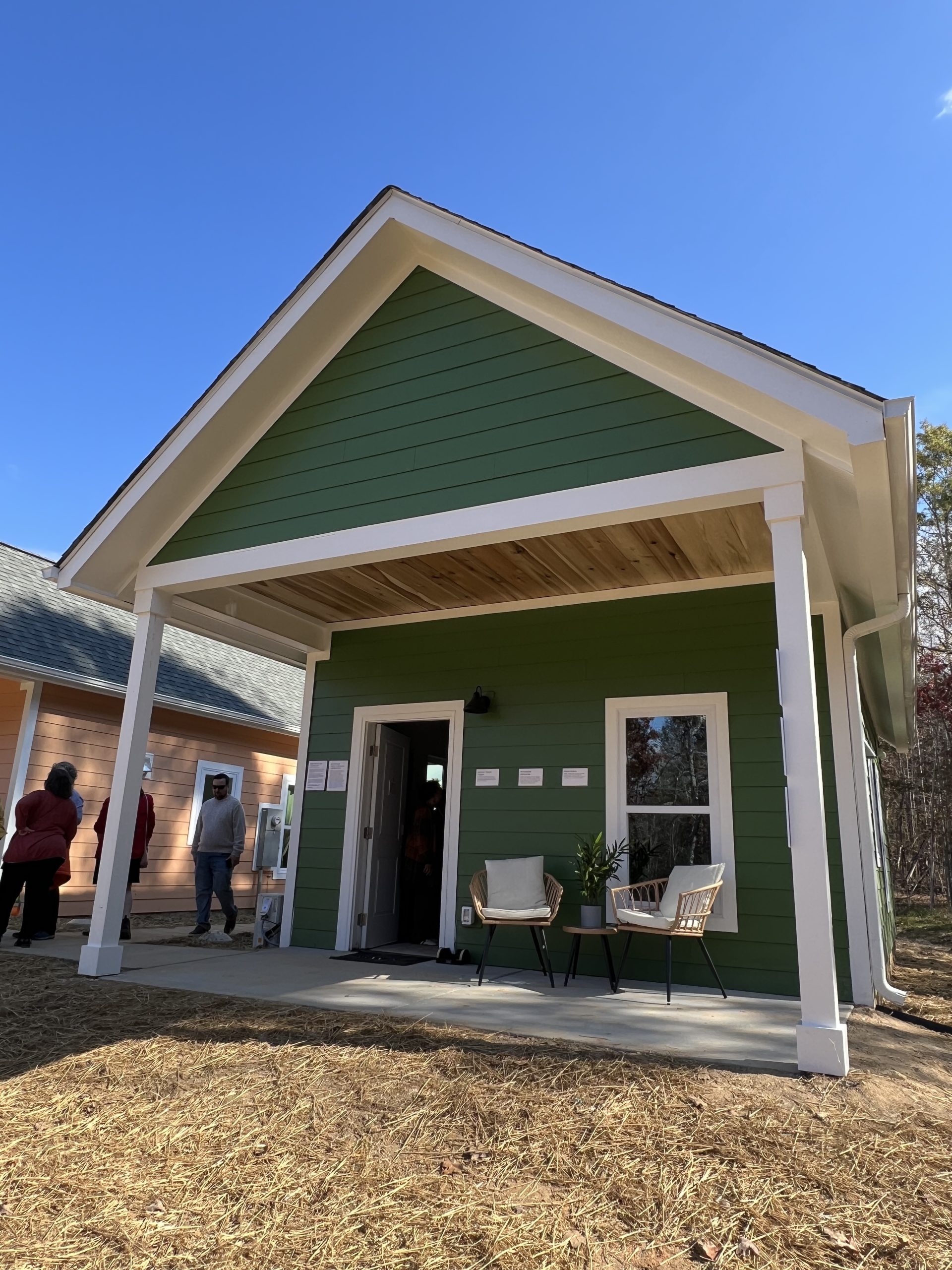
The homes face the woods, providing views of nature, and are painted an array of bright colors.
Every design choice was intentional and carefully considered, Powers said, and having formerly incarcerated people co-design the homes was crucial.
“The co-designers made sure the beds were on the ground floor, as bunked or lofted beds reminded them of prison,” Powers said. “They chose these joyful colors, making sure that none of them called back to what you might find in prisons, jails or psychiatric hospitals. The co-designers required that we center natural light, with the option to close out the world with curtains and blinds. They also chose doors that made them feel safe and secure.”
Take a virtual tour of the tiny homes
Evans said she wished she’d had the opportunity to stay in one of the tiny homes, but she’s glad they will be a stepping stone for other women.
“They give people the opportunity to live independently without judgment, room to make mistakes, room to feel safe and room to learn and grow,” Evans said. “They will learn how to manage these homes, communicate their needs, build relationships with neighbors, manage their responsibilities and develop the skills they need to eventually transition into permanent housing — all while being surrounded by a supportive community.”
Linda Cayton, a former Benevolence Farm resident who provided input on the design, got emotional as she described what the tiny homes meant to her.
“I cannot overstate the significance of this community because sometimes rebuilding a life begins with something as simple and profound as having a place to call your own,” Cayton said. “One home, one woman and one second chance at a time.”
Housing is foundational
Securing safe, stable housing is often the most immediate challenge that people leaving prison face. Without stable housing, people can struggle to comply with parole and post-release supervision, to get treatment and to find jobs.
“We can offer support to people all day long, but if they don’t have a stable home, it’s really maybe two steps forward and six steps back,” said David Crispell, co-founder and executive director of Jubilee Home, a reentry program in Durham that offers housing for men and women. “It’s just not sustainable.”
He attended the tiny home community ribbon cutting to celebrate the new reentry housing, which he said is desperately needed.
“We just need more of this across the state,” he said.
Benevolence Farm’s expansion comes amid a statewide push to expand housing opportunities for the state’s formerly incarcerated population.
Homelessness among people leaving prison is widespread, and data from the N.C. Department of Adult Correction shows the problem is growing worse.
Of the just over 20,000 people released from the state’s prisons in fiscal year 2025, 4,292 — or more than one in five — had nowhere to go, according to department data on the state’s Reentry 2030 dashboard. That was a 38 percent increase from fiscal year 2024, amounting to 1,190 more people facing homelessness at release.
Formerly incarcerated people and organizations that support them often say that limited housing options for people with criminal records are a major barrier to successful reentry.
Housing for people on the sex offender registry is especially limited, making their reentry even more complicated. By Benevolence Farm’s best estimates, there are only 32 reentry housing spaces for women on the sex offender registry in North Carolina. The tiny homes add seven more.
That’s significant because Powers said Benevolence Farm’s number one housing request is for people of all genders on the sex offender registry.
Need more housing
Data show unstable housing increases the risk of recidivism, which can be costly to the legal system, to the carceral system and to taxpayers. Housing one person in a North Carolina prison costs more than $54,000 per year.
Jubilee Home’s Crispell said that while building housing comes with a big price tag up front, he believes it is ultimately more cost-effective and humane than releasing people into homelessness.
“The up-front investment undermines so many downstream costs that we bear as a society — the emergency room visits, all of the different pieces of our social safety net that people have to rely on when they don’t have stable housing,” Crispell said.

His organization is brainstorming ways to expand housing options, Crispell said, particularly how to build more permanent housing for people with convictions. He said many Jubilee Home residents have difficulty finding landlords willing to rent to them.
Another women’s reentry organization, Arise Collective in Raleigh, is expanding. Chief Executive Officer Jennifer Jackson, who attended the tiny home ribbon cutting, said her organization bought almost one acre in South Raleigh in October with plans to build 10 affordable townhomes to serve formerly incarcerated women. The homes are expected to be completed in late 2027 or early 2028, she said.
Powers hopes Benevolence Farm’s tiny homes can serve as a model that can be replicated across the state — and that communities can come together to expand housing options to address the unmet need.
“The demand [for housing] has not gone away, and it will still continue even with seven more homes because there are hundreds of women who need housing… and there are not hundreds of places for people to return home to right now,” Powers said. “It’s going to continue to take a community effort.
“This is one of the models. Shared housing is a model, backyard housing is a model, having people rent out your room and/or in-law space is a model,” she said. “It is going to take a group effort.”
This article first appeared on North Carolina Health News and is republished here under a Creative Commons Attribution-NoDerivatives 4.0 International License.

Charter leaders say there’s still room for small schools in New Orleans
by Safura Syed, Verite News New Orleans
November 13, 2026
When Christy Ivie steps outside of Success at Thurgood Marshall’s Mid-City building to greet students at recess, almost everyone knows her.
That’s because unlike many other charter school leaders in New Orleans, who often oversee multiple campuses and thousands of students, Ivie is only responsible for this school building on this campus. Thurgood Marshall is one of a handful of “single-site” charter schools in the city — standalone schools that are not connected to a larger charter network such as KIPP New Orleans or InspireNOLA — easily allowing her to familiarize herself with each of its roughly 450 K-8 students.
“I can know every name,” Ivie said. “I can get to know every student. And the same for the rest of the leadership team, the front office staff, all the teachers in the building, and I think that goes a really long way in kids feeling seen and valued as part of a community.”
As school enrollment falls in New Orleans, leaders in the district face increasingly difficult choices: how to maximize the efficient use of resources by bringing more students into fewer buildings. But single-site schools, such as Thurgood Marshall, can’t rely on the cost-savings inherent to existing in a larger network, especially when it comes to necessary and often expensive services, such as transportation.
Two of three schools that have been flagged by the district for potential closure at the end of this school year are single-site schools. Fannie C. Williams in New Orleans East has already agreed to close at the end of the school year because of low academic performance, despite being almost fully enrolled. And Dr. Martin Luther King Charter School for Sci Tech meets neither the enrollment threshold nor academic performance standards outlined by the NOLA Public Schools district. Around one-third of New Orleans charter schools operating during the 2026-2027 year are single-sites.
Ivie said she’s more concerned about student experience than an efficient use of resources. She said she might consider consolidating costs with other schools in the future, such as through pooled transportation, but that it isn’t something the school has implemented yet. This year, Ivie said Thurgood Marshall is around 30 students short of its enrollment target, but that an enrollment dip for one year isn’t a cause for concern. According to a recent district report, the school isn’t underenrolled, despite having fewer than 675 students — a district benchmark for school enrollment.
Melanie Clark, the founder and CEO of single-site school Elan Academy in Algiers, said that small schools need to exist to offer families meaningful choice in New Orleans’ nearly all-charter system. At Elan, there are two adults in every classroom and Latin instruction begins in kindergarten. Clark said the school offers both community and instructional flexibility due to its small size.
“Efficiency matters, but efficiency without educational diversity comes at a cost to our families,” Clark said.
Elan Academy already consolidates some service costs with other schools. It is a part of the NOLA Public School district’s educational service agency, which provides equipment and staffing to support special education services. By relying on a system of pooled resources, those individual schools can save money. Clark thinks that the education sector has to think bigger about solutions beyond closure.
“I just think there's a bigger picture outside of just school closures and consolidations,” Clark said. “What else are we not thinking about that we could do to help alleviate some of what we're expecting with the lower enrollment across the district?”
‘There’s no more one-time money’
For years, New Orleans schools relied on federal and philanthropic funding that has mostly dried up. During a special school board meeting on Nov. 5, board member Carlos Zervigon said that funds received after Hurricane Katrina, the 2008 financial crash and the COVID-19 pandemic, helped increase educational outcomes for students.
“I don't want another disaster, that’s for sure, but the one-time money’s gone,” Zervigon said. “There’s no more one-time money.”
After the COVID-19 pandemic, Louisiana received a little over $4 billion in Elementary and Secondary School Emergency Relief funds, which amounted to around $6,000 in extra funding per student. Schools used the money to fund instructional changes and interventionists, allowing them to prop up tutoring and summer school programs.
As post-disaster funds dried up, the base rate of state per-pupil funding has increased once in the past ten years, by 1.36% in the 2019-2020 school year, even while costs have continued to rise. Without extra dollars to offset those costs, district officials say they have no choice but to close schools.
“If we are talking about the economic viability of small programs, what we should really be asking is like, why now for this conversation and what would happen if we increase that base per-pupil funding so that not only single sites and small networks, but everyone could benefit and serve the students that need us?” Ivie said.
Gov. Jeff Landry and members of the state Legislature have created a working group to replace or revise the state’s per-pupil funding model by Jan. 1. It isn’t yet clear if those changes would mean increased or decreased funding for schools.
Most school leaders acknowledge that they’re in a tighter financial position than they were in a few years ago. Meghan Raychaudhuri, the CEO of Plessy Community Schools, said she’s always thinking about the finances of enrollment. Plessy is a K-8 school that is split into two campuses. Raychaudhuri said the extra campus is an extra expense, but that the school prefers to keep its lower grades and upper grades separate.
Unlike many schools in the city, Plessy has seen enrollment growth — around 2% from last school year — that allows them to continue operating without cutting major programs.
“I think we're in a nice position that we're making hard decisions along with everybody else, but we have enough students that it's not dire,” Raychaudhuri said.
Programmatic offerings are important in New Orleans’ choice model, which replaced traditional attendance zones. Schools now compete with each other for students, and some single-site leaders, like Ivie and Clark, say that their strength lies in their small size, community feel and adaptability.
The problems at schools such as Fannie C. Williams and King don’t mean that single sites are at increased risk of closure under stricter district guidelines, Raychaudhuri said. She said the district is on the right path for right-sizing in a transparent manner.
“Single sites are no more likely to not be academically successful or not have demand,” Raychaudhuri said. “I think some of the highest demand and frankly some of the highest performing schools in the city are single sites. And so I don't think that there's anything unique to being a single site that would result in them not being able to be successful.”
This article first appeared on Verite News New Orleans and is republished here under a Creative Commons Attribution-NoDerivatives 4.0 International License.