States react to SNAP decision; Parents accuse Bonnabel High (in Jefferson Parish, La.) employees of hitting, humiliating special education student
No progress for poor areas despite years of NC tier system designed to spark growth; Family awaits results of independent autopsy on Delta State student Trey Reed


It's Friday, October 31, 2025 and in this morning's issue we're covering: 25 states sue to force USDA to fund SNAP food aid during shutdown, SNAP cutoff could hurt Texas grocers and the rest of the economy, experts say, SC activates disaster relief fund, State Guard to help food banks as federal aid run out, NC attorney general joins states suing current presidential administration to continue SNAP food aid, No progress for poor areas despite years of NC tier system designed to spark growth, Parents accuse Bonnabel High employees of hitting, humiliating special education student, Family awaits results of independent autopsy on Delta State student Trey Reed, Asheboro, North Carolina, Is Under Pressure to Control Discharges of a Toxic Chemical Into Drinking Water Supply.
Media outlets and others featured: Cronkite News, The Texas Tribune, South Carolina Daily Gazette, NC Newsline, Carolina Public Press, Verite News, Mississippi Today, Inside Climate News.
25 states sue to force USDA to fund SNAP food aid during shutdown
by Nick Karmia, Cronkite News
October 28, 2025
WASHINGTON – Arizona and 24 other states sued the U.S. Department of Agriculture on Tuesday, accusing the Trump administration of illegally freezing food aid for 42 million Americans during the government shutdown.
“This suspension of benefits doesn’t just take food off of family’s tables,” state Attorney General Kris Mayes said at a news conference in Phoenix. “It sucks a huge amount of money out of Arizona’s economy and it hurts everyone along the food supply chain.”
The USDA told states Friday that the funds would run out eight days later, on Nov. 1, despite a plan issued before the shutdown started Sept. 30 stating it would keep the Supplemental Nutrition Assistance Program running.
The 51-page complaint filed in federal court in Massachusetts argues that the USDA is unlawfully cutting off funds for SNAP, which is often referred to as food stamps.
The states say the department can and should tap its $6 billion contingency reserve to keep benefits flowing.
One in eight Americans rely on the program. Arizona follows the national average. In fiscal year 2024, the state issued just over $2 billion in SNAP benefits for 950,978 residents, including 401,455 children and 135,677 seniors, according to the lawsuit.
“SNAP benefits have never been interrupted by a lapse in appropriations,” the lawsuit says.
The Trump administration defended its decision to let SNAP come to a halt for the first time during a shutdown, blaming Democrats for the impending crisis for blocking the Republican budget.
Acknowledging that 42 million Americans "face hunger Nov. 1 without SNAP funding," Secretary of Agriculture Brooke Rollins posted on X that "Democrats are running out of excuses. OPEN. THE. GOVERNMENT."
States typically load SNAP funds onto recipients’ debit cards on the first day of the month. With that deadline four days away, the coalition of 25 states and the District of Columbia asked the court to order the USDA to immediately resume payments.
“Approved participants … will be unable to collect November benefits until federal funding is released to states,” the Arizona Department of Economic Security, which administers the program in the state, says on its website.

The USDA’s shutdown plan cited multi-year contingency funds “available to fund participant benefits in the event that a lapse occurs in the middle of the fiscal year.” Its Friday memo to states reversed that stance, asserting that contingency reserves are “not legally available” because Congress has yet to provide funding for the new fiscal year.
“We are approaching an inflection point for Senate Democrats,” the USDA said in a statement. “Continue to hold out for the Far-Left wing of the party or reopen the government so mothers, babies, and the most vulnerable among us can receive timely WIC and SNAP allotments.”
House Speaker Mike Johnson and other Republicans defend the refusal to tap emergency funds, given that the funding lapsed between fiscal years, not in the middle of one.
The Democratic attorneys general and governors who signed onto the lawsuit disagree.
They accuse the administration of going out of its way to find a legal pretext to halt SNAP payments, to ramp up pressure in the shutdown standoff.
Some states have announced that they will dip into state coffers to provide SNAP benefits in November.
On Friday, Arizona Gov. Katie Hobbs, a Democrat, said she won’t do that.
“I don’t have a pot of money just sitting there to fill these gaps,” she told reporters during an appearance in Phoenix.
Sens. Mark Kelly and Ruben Gallego joined other Democratic senators in pressing Rollins last week to release the contingency funds, warning that “Americans are already struggling with the rising cost of groceries and cannot afford a sudden lapse in grocery assistance.”
Mayes, implicitly criticizing the governor, pointed to the state’s $1.6 billion “rainy day fund” and said she is “underwhelmed” by the state response to an impending food security crisis.
Hobbs, she said, should deploy the National Guard to assist food banks, a move California Gov. Gavin Newsom has made. Mayes also said the governor should call a special session so the Legislature can authorize funding to keep SNAP going as the lawsuit plays out.
“We need to be doing everything that we can do, in addition to this lawsuit, to get ready for the tsunami of cruelty and chaos that is coming at our families in just a few days,” Mayes said.
Amy Schwabenlender, CEO of Keys for Change, which addresses homelessness in Maricopa County, said Monday that she’s worried that if food aid is frozen, people will be forced to choose between housing and hunger.
“We know people need SNAP” and other programs, she said, “and when one of those things are cut, it makes it more challenging,” adding that the uncertainty is maddening. “There’s so much need.”
On a corner near the Key Campus, an unhoused woman, Brandy Baker, said she gets about $60 a month through SNAP and it’s not nearly enough. If she loses that?
"I won’t have money for food,” she said.
The states’ lawsuit asserts that besides the contingency funds, the USDA could tap $23 billion in “Section 32” agricultural revenues.
In its memo to states Friday, the department said it can’t tap other accounts because that “would pull away funding for school meals and infant formula.” It also said it needs reserves in case of disasters such as Hurricane Melissa, the massive storm that hit Jamaica on Tuesday.
Mayes and other attorneys general called that argument a pretext. “They offer no evidence that contingency funds are not available,” the lawsuit says.
Cronkite News reporter Edward Nieman in Phoenix contributed to this report.
This article first appeared on Cronkite News and is republished here under a Creative Commons Attribution-NoDerivatives 4.0 International License.
SNAP cutoff could hurt Texas grocers and the rest of the economy, experts say
by Paul Cobler, The Texas Tribune
October 28, 2025
The cutoff of Supplemental Nutrition Assistance Program benefits to 3.5 million Texans that depend on the program could have ripple effects on the state economy beyond those directly affected.
Those who rely on SNAP to buy groceries for themselves and their families make up about 12% of all grocery sales nationwide, according to the National Grocers Association. Experts say the sudden loss of that income will mean SNAP recipients have less money to spend in Texas grocery stores.
“Once all those benefits are exhausted, it will be a significant impact on sales in the stores depending on the size of the store and the location of the store, then it will impact product, and then in the long term, it impacts employment,” said Gary Huddleston, the grocery industry consultant for the Texas Retailers Association, a trade association that represents retailers and grocery stores in the state.
The food assistance payments to the nation’s poorest citizens will come to a halt on Saturday as a result of the second-longest government shutdown in U.S. history. More than 40 million people nationwide use the program, including the 3.5 million Texans, 1.7 million of whom are children.
The U.S. Department of Agriculture notified states that if the shutdown did not end by Monday, SNAP benefits would be halted this Saturday.
“I think people are going to be faced with really difficult decisions and people will go hungry if the benefits are delayed,” said Celia Cole, CEO of Feeding Texas.
The start of each new month is when an average of $400 a month for qualified individuals is loaded on to a debit-like card that can then be used to purchase groceries. About $614 million flows into the state each month through the SNAP program.
Grocery retailers typically time larger shipments of goods to the start of the month to coincide with the reloading of those cards, Huddleston said. In the short term, simply the threat of a SNAP cutoff is creating headaches for grocers who stand to eat the cost of perishable products that are not purchased, Huddleston said.
Larger grocery companies like H-E-B and Kroger will be better equipped to handle disruptions to its regular delivery schedule, Huddleston said. However, smaller grocers and convenience stores, particularly those located in areas with high enrollment in the SNAP program, make up a majority of the stores that accept SNAP credits and they have less wiggle room to navigate the financial strain on their customer base, Huddleston said.
The economic pain will not be felt evenly throughout the state. Poorer urban areas, small towns in South Texas, southeast Texas and West Texas have high rates of residents enrolled in SNAP. An extended SNAP cutoff also risks worsening food deserts — areas with poor access to grocery stores — by straining the finances of the few grocery stores that serve those areas, particularly in smaller towns, Bradt said.
Grocers across the state are currently making “critical decisions on product” as the Saturday cutoff of benefits looms, Huddleston said. A drop in sales, particularly in smaller stores, could quickly snowball into layoffs, Huddleston added.
This sudden change in customers’ purchasing power is known as “demand shock” and could lead to increased costs for grocery retailers that get passed on to all customers, said Sandra Black, a professor of economics at the University of Texas at Austin.
Because food is essential, SNAP recipients are likely to reduce spending in other areas, like clothes and entertainment, to purchase groceries, said Jacob Bradt, an assistant professor of business, government and society at the University of Texas at Austin.
With millions of Texans relying on SNAP benefits, these individual purchasing decisions are likely to ripple out across the Texas economy, impacting sectors outside of retail, Bradt said.
With the economy already strained under the weight of tariffs and an unsteady labor market created by aggressive immigration enforcement, the loss of SNAP funding will be one more injection of uncertainty to an already unsteady economy, he added.
Huddleston and the economists agree, saying the longer the government shutdown lasts, the worse the effects of the SNAP funding cutoff will be for individuals, grocers and the state economy as a whole.
“For small retailers, they’ll have to make critical decisions within the first two weeks of November,” Huddleston said.
Disclosure: Feeding Texas, H-E-B, Texas Retailers Association and the University of Texas at Austin have been financial supporters of The Texas Tribune, a nonprofit, nonpartisan news organization that is funded in part by donations from members, foundations and corporate sponsors. Financial supporters play no role in the Tribune's journalism. Find a complete list of them here.
This article first appeared on The Texas Tribune.

SC activates disaster relief fund, State Guard to help food banks as federal aid run out
by Skylar Laird and Jessica Holdman, SC Daily Gazette
October 28, 2025
COLUMBIA — The state’s emergency relief fund is accepting donations to help stock food banks ahead of the impending halt of federal grocery assistance amid the ongoing federal government shutdown.
Benefits in the Supplemental Nutrition Assistance Program (SNAP), commonly called food stamps, will stop Nov. 1. More than 556,000 low-income people in South Carolina rely on the aid, uploaded to debit cards, to help them pay for groceries each month, according to the Department of Social Services.
If there’s any money remaining on SNAP debit cards from previous monthly allotments, the credit won’t disappear. People can continue to spend any unused money from October or earlier, according to DSS. But no money will show up for November unless Congress approves some sort of spending.
How to donate
Go to yourfoundation.org
Send checks to Central Carolina Community Foundation with a memo reading, One SC Fund: Food
Corporate or foundation gifts should email mimi@yourfoundation.org
Source: One SC Fund
Those who can’t afford groceries are turning to food banks, which are already struggling to keep up with the increased demand.
November and December are already busy months because of Thanksgiving and Christmas, the heads of two large food banks said Tuesday. Add to that the loss of SNAP and federal workers who are going without pay, and the food banks are hitting a crisis point, said the leaders of Harvest Hope in the Midlands and Lowcountry Food Bank along the coast.
Donations to the One SC Fund, a statewide philanthropic effort activated in response to disasters, will buy food to help pantries keep their shelves stocked.
The State Guard, a volunteer corps, will help volunteers unload truckloads of food, stock shelves and work with law enforcement to make sure everyone stays safe and orderly, said Leon Lott, the guard’s commander and the Richland County sheriff.
Officials acknowledged Tuesday that activating the fund and the State Guard will likely not be enough to feed everyone who uses SNAP. Without the federal money, the fund was the state’s best option to help, Gov. Henry McMaster said during a Tuesday news conference.
“There are very few mechanisms that we have other than the agencies that are already in place, but we have no agency that gives out food,” McMaster said. “That is what the SNAP program is there for.”
Around 70% of SNAP recipients are children or elderly, said DSS Director Tony Catone. No state-level program can fill the gap the program leaves, he said.
“There is nothing that substitutes for SNAP,” Catone said.
Every time One SC Fund is activated, it starts with nothing in the bank, said Georgia Mjartan, president of Central Carolina Community Foundation, which runs the effort. The statewide fund raised a record $6 million in the aftermath of Tropical Storm Helene. That’s a small portion of the $104 million SNAP pays to South Carolinians each month.
Major companies that donated following Helene may be stretched too thin to help out, making individual donations even more important, Mjartan said.
Find a food bank
South Carolina has four regional food pantries that cover the state:
Golden Harvest Food Bank
Harvest Hope Food Bank
Lowcountry Food Bank
Second Harvest Food Bank of Metrolina
To find a local food bank of the 900 options across the state, visit the Department of Environmental Services’ Food Access Map.
Source: Department of Social Services
The fund will not be an immediate fix. Food banks often require about two weeks to make and receive food orders. Bringing food directly to community members in need or churches that hand out free meals can help get food to people who need it, Mjartan said.
The One SC Fund is simply a way of coordinating that effort at a state level, she said.
Food banks overrun
On Monday, a line of hungry families started around 6 a.m. at the Harvest Hope food pantry in Columbia. But eight hours later, the pantry shelves on Shop Road were completely empty, and people were turned away, CEO Erinn Rowe told the SC Daily Gazette.
“When it’s gone, it’s gone,” Rowe said of the food.
Typically, the food bank serves between 150 and 175 families from its emergency food pantry, which is open daily. That number has grown to around 250 families per day over the past two weeks because of the federal shutdown, Rowe said.
The growing number of families needing food is not sustainable for the food bank, which typically feeds 687,000 people from 20 counties each year, Rowe said.
Last month, 266,350 households received food aid through SNAP.
The region served by Harvest Hope, the state’s largest food bank, includes counties with some of the highest need. In Richland County alone, more than 23,000 families received grocery aid through SNAP in September. That’s the most of any county statewide.
Harvest Hope doesn’t have the capacity to provide additional help to everyone receiving SNAP, Rowe said.
“There’s no way we can logistically cover SNAP,” Rowe said. “We’ve never been able to fully meet the need. There are still hungry people, and now it’s going to be 100 times worse.
“I don’t think people fully understand the impact this is going to have,” Rowe added. “It’s going to cause a health crisis.”
Harvest Hope, which typically relies on donations and overstock from local grocery stores, has ordered several extra tractor trailers full of food to replenish its now-sparse shelves, Rowe said. She expects those shipments to be gone as soon as they arrive, she added.
Nick Osborne, president of Lowcountry Food Bank, echoed Rowe’s concerns. For every single meal a food bank provides, SNAP benefits cover nine meals, he said.
“With robust support, food banks can provide only a fraction of the nutritional assistance that feeding programs like SNAP provide,” Osborne said Tuesday.
Other options
Without any promise of Congress stepping in to fund SNAP before the end of the week, South Carolina is among states evaluating their options to keep people from going hungry.
Getting state money to the people who typically use federal funds is not a simple fix, said Catone, the DSS director.
Although South Carolina has a surplus of tax collections, as well as reserves, it could potentially use to help fill in the gaps, the federal government would not reimburse the state for anything spent on SNAP, according to a Friday memo from the U.S. Department of Agriculture. That could put the state out about $104 million, according to DSS.
Virginia SNAP substitute to roll out weekly through November
Any sort of decision on funding must come from legislators, who are not scheduled to return to the Statehouse until January.
Sen. Deon Tedder, D-Charleston, sent McMaster a letter Monday asking him to call legislators back to the Statehouse to come up with a solution.
“There’s something that certainly we can do to figure out how to ensure that people don’t go hungry,” Tedder told the Gazette.
McMaster said it’s up to legislators to decide whether they will come back and have that debate. Even if legislators decided to come back early, any decisions they made would not offer an immediate fix, McMaster said.
“That is a long, tedious process that may produce nothing,” McMaster said.
Other states have questioned whether state agencies can even load money onto SNAP debit cards without the help of the federal government.
DSS, which administers the program for the state, does not touch SNAP funds, which go straight from the federal government’s coffers to cards distributed by a third-party vendor, Catone said. The USDA instructed states not to send any information about SNAP to those vendors for the month of November, which made officials question whether that applied to state funding as well.
Some states, including Alaska and New Mexico, have determined that directive meant no state money could go toward supplementing SNAP funds.
Rep. Hamilton Grant, D-Columbia, called on McMaster in a separate Monday letter to declare a state of emergency. Grant wanted to see the state Department of Agriculture send more money to food banks and deploy the National Guard at the state’s expense to distribute food in communities and allow state agencies to work with nonprofits to distribute food, according to the letter.
A state of emergency would not solve the monetary issue food banks are facing, McMaster said.
Activating the One SC Fund and the State Guard will give food banks what they need most: money and manpower, he said.
“We have a great network, but what we must have is volunteers and money,” McMaster said. “We must have those two things in order to help out. But I’m confident that we can do it.”
SC Daily Gazette is part of States Newsroom, a nonprofit news network supported by grants and a coalition of donors as a 501c(3) public charity. SC Daily Gazette maintains editorial independence. Contact Editor Seanna Adcox for questions: info@scdailygazette.com.
NC attorney general joins states suing Trump administration to continue SNAP food aid
by Galen Bacharier, NC Newsline
October 28, 2025
North Carolina Attorney General Jeff Jackson sued the Trump administration Tuesday, seeking to force continued funding for food assistance ahead of an expected pause in benefits Friday.
Jackson, a Democrat, filed suit in Massachusetts alongside a coalition of Democratic-led states against the U.S. Department of Agriculture and the Office of Management and Budget. Their suit argues that the Trump administration should dip into reserve funds to continue funding SNAP benefits, rather than pausing them — which Jackson called “unprecedented.”
USDA had initially planned to use its $6 billion contingency fund to continue sending out food assistance as the federal government shutdown drags toward one month. But it reversed course last week, informing states that it would not tap into that money.
In recent days, many state governments have sought to roll out funding or other emergency measures of their own ahead of the Friday pause. As of Tuesday afternoon, no such action has been taken in North Carolina, and neither Republican leaders nor the Democratic governor has offered any ideas.
SNAP helps feed about 1.4 million North Carolinians monthly. The state’s Department of Health and Human Services said Monday that November benefits would not arrive on schedule.
“The USDA must take immediate action to keep families from going hungry as it is required to do by law, and I thank Attorney General Jackson for standing up to secure these critical resources,” Gov. Josh Stein, a Democrat, said in a statement.
An unnamed USDA spokesperson released a statement criticizing U.S. Senate Democrats over the continued shutdown, calling it an “inflection point.”
“Continue to hold out for the far-left wing of the party or reopen the government so mothers, babies, and the most vulnerable among us can receive timely WIC and SNAP allotments,” the spokesperson said.
Jackson and Democratic states’ lawsuit alleges that the administration is violating federal law by pausing benefits, arguing that “USDA has historically funded SNAP benefits during prior lapses in appropriations.” The lawsuit is asking the court to act as quickly as possible to resume benefits, but it is not yet known if action will be taken before Friday.
Other states have begun moving to continue funding food assistance on their own as the pause approaches. In Louisiana, state leaders are using $150 million monthly to cover benefits. Nevada is funneling $38.8 million toward local food banks.
On Tuesday, Virginia announced a substitute program that will send money to EBT cards weekly. And South Carolina’s emergency fund is accepting donations to help stock food banks.
North Carolina does not appear poised to pursue a similar solution.
The offices of both General Assembly leaders — House Speaker Destin Hall (R-Caldwell) and Senate leader Phil Berger (R-Rockingham) — did not immediately respond to requests for comment.
In other states, governors have ordered the release of emergency funds. Stein on Monday issued a statement requesting USDA to release contingency funds, and is “exploring all available options to find relief and prevent hunger in our state,” a spokesperson for his office said Tuesday.
DHHS is not able to cover the gap in funding, said Jonathan Kappler, deputy secretary at the department.
“Unfortunately, the size and scope of this program is one that that avenue was not really available to us,” he told reporters Tuesday.
Even if the state were able to cover the gap, DHHS and the governor’s office “do not have authority to cover the cost of SNAP without legislative appropriation,” the department told NC Newsline.
The looming pause in food aid would have an outsized impact on families — over 580,000 children and 40,000 babies in North Carolina rely on SNAP. Similarly, rural counties would take a hit, with one in six residents in those counties depending on the program, according to Kappler. More than 80% of those on SNAP in North Carolina are currently working, according to state officials.
Food banks and nonprofits can provide some aid, but cannot come close to filling the gap that a pause in SNAP would create. For every nine meals provided through SNAP, food banks provide one, one food bank leader told NC Newsline on Monday.
The CEO of Interfaith Food Shuttle, Ron Pringle, joined Jackson on Tuesday and warned that nonprofits and food banks would be forced to make “tough choices” without the “safety net” of SNAP.
“Nobody wants to make a decision on whose child gets to eat,” Pringle said.
A group of North Carolina food banks called on elected leaders to reach an agreement to end the shutdown in a statement Tuesday. They said they had experienced high levels of need “even before the shutdown.”
“Shutdowns and short-term fixes are not strategy,” said Eric Aft, chair of Feeding the Carolinas and CEO of Second Harvest Food Bank of Northwest NC. “Continuing resolutions are not stability. Nutrition programs must be funded fully and predictably so that families, farmers, schools and health systems are not held hostage to gridlock.”
The federal nutrition program that helps pay for baby formula could also see a future pause.
State health officials said Monday that benefits for more than 262,000 women, infants and children will continue through early November, but did not give an exact end date. Wake County said WIC benefits will continue through Nov. 15.
“We are on guard against that,” Jackson said of a potential stoppage in WIC.
Updated at 4:50 p.m. on Tuesday, Oct. 28.
NC Newsline is part of States Newsroom, a nonprofit news network supported by grants and a coalition of donors as a 501c(3) public charity. NC Newsline maintains editorial independence. Contact Editor Laura Leslie for questions: info@ncnewsline.com.
No progress for poor areas despite years of NC tier system designed to spark growth
by Jane Winik Sartwell, Carolina Public Press
October 27, 2025
When economic developers from Anson County pitch their community to prospective businesses, they advertise its railroad access, its proximity to Charlotte, its airport and its available industrial sites. What they don’t mention is Anson County’s official tier designation as one of North Carolina’s most economically distressed counties — a cloud that’s been hanging over county officials' heads since 2007.
That label is intended to help the county. More often, it does the exact opposite.
[Subscribe for FREE to Carolina Public Press’ alerts and weekend roundup newsletters]
North Carolina’s attempt to promote economic growth in its poorest, most rural communities is rife with perversities like this one. In counties rich and poor across the state, officials wrestle with the state’s unique and inflexible approach to economic development.
North Carolina has been steadily adding both jobs and population for more than a decade, with the exception of during the COVID-19 pandemic. The problem, however, is that parts of the state are left out of that promising economic picture — with no way to join the fray.

This is the first article in Trapped By Tiers, a three-part Carolina Public Press investigative series examining North Carolina’s economic distress tiers, a system intended to promote economic mobility across the state. CPP analyzed state data and found that this system is ineffective, stagnant, and at times, counterproductive.
This article focuses on our findings and their consequences for North Carolina communities across the economic spectrum. The second article focuses on the root causes of the system’s failures, while the third article explores possible improvements and alternatives.
What are distress tiers?
State law requires North Carolina’s Department of Commerce to sort the state’s 100 counties into three tiers each year.
In theory, Tier 1 is home to the most distressed counties. Tier 2 represents medium distress, and Tier 3 the least distressed. But Department of Commerce officials apply just four criteria on a countywide basis to determine which counties are placed in which tier:
- Unemployment rate
- Population growth
- Median household income
- Property tax base per capita.
Each year, there must be 40 Tier 1 counties, 40 Tier 2 counties and 20 Tier 3 counties — regardless of overall progress or decline in the state or local economies. This is a central assumption from which many of the system’s issues stem.
The state uses the tiers in order to more prudently distribute its limited money to the counties that need it most. Or at least, that’s the idea.

The funding that is officially impacted by tier designations includes public infrastructure grants, competitive business incentive programs and building redevelopment funds. However, many more state programs now rely on the tier system — including several noneconomic programs. Some private foundations and nonprofit organizations use it to deal with counties as well.
Tier 1 counties are given preference in their economic development grant applications and often receive higher state matches for local dollars. The One North Carolina Fund, a job incentive program, divvies it up like this:
- In a Tier 1 county, the local government must provide no less than one dollar for every three dollars provided by One NC.
- In a Tier 2 county, the local government must provide no less than one dollar for every two dollars provided by One NC.
- In a Tier 3 county, the local government must provide no less than one dollar for every one dollar provided by One NC.
The idea is that Tier 1 counties, like Anson, need the money more but have less resources to compete for it. They need the extra help. In some counties, however, that one-to-three requirement may still be too steep of a challenge for the county to take advantage of the program.
Although annual tier designations are usually announced late in the year, late changes in the data cannot always be captured, so a lag occurs between tier designations and potentially major shifts. The 2025 tier designations were announced in late 2024 and did not account for the economic disruption of Tropical Storm Helene, which hit the state in late September. The 2026 tiers will likely be announced in early December.
Key findings
Carolina Public Press analyzed publicly available state economic records on distress tier assignments, economic indicators and demographic information between 2014 and 2025, finding that:
- 20 of the 40 Tier 1 counties have held that same status for more than a decade. Even though the system was originally intended to promote economic growth, it has failed to move the state’s most disadvantaged communities forward.
- 19 counties operate in a kind of permanent recession, posting unemployment rates 20 to 55% higher than the state average for decades.

- 13 of the 20 Tier 3 counties have held that same status for more than a decade. Many counties have become stuck, unable to progress to Tier 2, with Tier 3 completely out of reach for them.
- In Eastern North Carolina, two distinct clusters of counties have remained in the most distressed tier since the system’s inception, pointing to a regional economic issue that the system has been unable to address. The northeastern cluster maps onto the counties with the highest percentage of Black North Carolinians, revealing deep socioeconomic problems spurred by inequity and systemic disadvantages based on race, often with long historical roots. The tier system obscures these kinds of issues and has not led to economic progress for these counties.
- It is possible for a county to improve in nearly every indicator and still shift down to a more distressed tier. This happens because counties are judged against other counties, not on their own, and a fixed number of counties will always be in each tier.
- The system is not flexible enough to respond to economic crises in real time, such as a hurricane, factory closure or pandemic. The 2025 tiers, for example, did not address or represent the economic havoc wrought by Hurricane Helene in late 2024 in many mountain and Western Piedmont counties.

- Wealthy enclaves distort rankings by obscuring real poverty in adjacent communities within the same county. In Tier 3 Union County, for example, wealthy Charlotte suburbs in the west prevent heightened state attention to the eastern town of Marshville, where the poverty rate is 18%.
- The system, once designed to distribute a single tax credit, now is applied across state agencies, economic and not. In some cases, this punishes counties with a system that was intended to incentivize growth.
A lack of mobility
Since North Carolina implemented its three-tier system in 1987, the designations were meant to be dynamic. The ranking was intended to incentivize growth in struggling areas, eventually helping them move out of the most distressed tier and make room for other counties that needed special attention from the state.
That is not what happened.
CPP analysis showed that half of the 40 Tier 1 counties — or the most economically distressed — have held that same status for more than a decade. It reflects a kind of economic fatalism that’s becoming increasingly pervasive.
“There are parts of North Carolina that do not have anything, and may never have anything much,” Orange County economic development director Steven Brantley told CPP.
The pattern holds at the other end of the spectrum as well. More than half of the 20 Tier 3 spots have always been occupied by the same counties, CPP analysis showed. Think counties like Wake, home to Raleigh, and Mecklenburg, home to Charlotte.
The static tiers hide the fact that the poorest counties don't improve while the richest counties just get richer.
In Eastern North Carolina, two distinct clusters of counties have remained locked in the most distressed tier since the system’s inception. An economic issue plagues these counties that the tier system does not, and cannot, address.
The northeastern cluster of Tier 1 counties is aligned with the cluster of counties that are home to the highest percentage of Black North Carolinians. Some of the economic challenges in these counties are rooted in the history of racial economic disadvantage going deep into the region’s history. The tier system obscures these counties’ specific struggle into a broader category of distress.
One such northeastern county, Edgecombe, is currently tied with an adjacent county, Halifax, for highest unemployment rate in the state. It has been designated as Tier 1 for as long as the system has been around.
“I’m sick and tired of Edgecombe County being at the top of every bad list,” Edgecombe County Manager Eric Evans told Carolina Public Press.
“We’ve been able to capitalize on it and tap into resources that we otherwise might not have. But really changing the economic outlook for these counties takes a whole lot more than just a designation and first dibs at federal and state funding.”
Because of its tier designation, Edgecombe County received a job development grant and other incentives from the state that helped the county attract Natron Energy, an international industrial battery manufacturer. Natron planned to bring more than 1,000 jobs and an investment of $1.4 billion to Edgecombe County with a “gigafactory” at Kingsboro Business Park, midway between Rocky Mount and Tarboro.

Other companies had promised to come to the business park before — namely CSX and Triangle Tire — but pulled out at the last minute. Now, it's happening again.
“We just found out recently that (Natron) just couldn't make things work, and they pulled a plug on the project,” Evans said.
The state incentives are enough to get companies interested in North Carolina’s poorest areas, but not enough to ensure follow-through.
For all the bad PR that Tier 1 counties get, many don’t actually receive that much special treatment from the state. In the two years that Renee Perry has served as Vance County manager, she hasn’t seen any money or incentives come in as a result of Vance’s economically distressed status.
Halifax County Manager Dia Denton doesn’t think her county will ever ascend out of Tier 1, but she doesn’t necessarily see that as such a terrible thing — the system just fails to appreciate Halifax’s dominance in the agriculture sector, she says.
But that may not be of much help to workers in Halifax County who don’t happen to own farms. Like Edgecombe, Halifax has a perpetually high level of residents without jobs.
Challenges in every tier
Tier 1 counties aren’t the only ones with challenges.
Many wealthy, older North Carolinians own second homes in the mountains. Should that mean that the county receives less funding to repair buildings? What about counties whose populations are rapidly growing — should that mean they receive less funding to build new schools?
Logic would suggest not, but that’s the way it works under the current system.
For Tier 3 counties, their relative success can handicap parts of the county that aren’t as affluent as others.
Karen Howard is a county commissioner in Chatham County, which has been designated as non-distressed for upwards of a decade.
“In a community like Chatham, we certainly have condensed wealth and a lot of opportunity, but we also have deep pockets of poverty,” Howard said.

“The lack of access to some of the grant and funding opportunities in towns like Siler City and Goldston has been crippling. The model itself is the challenge. Towns that are distressed and unable to access or manage the funding opportunities because of where they are located are just at this permanent disadvantage. The system is unable to take in nuance.”
The same sentiment is felt by other Tier 3 counties, such as Iredell and Mecklenburg.
“Being a Tier 3 county excludes us from multiple revenue sources that are desperately needed,” Beth Milton, Iredell County manager, told CPP.
“It punishes a less vibrant area of a county because of another’s success.”
In the state’s largest city, Charlotte, the tier system breeds even more contradictions. Mecklenburg County Commissioner Arthur Griffin argues that Charlotte has many more poor people than sparsely populated, rural counties, but those people are excluded from the benefits of the tier system.
In North Carolina’s cities, economic success is accompanied by deep pockets of poverty. The system is designed to ignore those pockets, Griffin argued.
Officials from Tier 3 counties like Iredell feel they contribute more to the state economy, and are unfairly punished for it.
“In North Carolina, counties classified as Tier 1 and Tier 2 — accounting for 80 out of the 100 counties — receive a far greater share of state funds despite paying less than 20% of the state’s total taxes,” said Gene Houpe, an Iredell County commissioner.
“In contrast, Tier 3 counties like Iredell contribute the majority of the tax revenue yet receive little to no support back from the state. This disparity leads to severe reductions in state incentives for economic development, local grants, and much-needed capital funding for school projects.
“One of the most pressing issues we face in Iredell is the lack of adequate funding for school capital projects. Due to rapid growth, our county is required by law to build new schools to accommodate the increasing population. However, we do not receive enough funding from the state to meet these obligations, and the financial strain is becoming unsustainable.”
Growing uses for the tiers
The tier system was never intended to impact public school funding. Over the nearly 40 years the system has been in effect, its influence has grown beyond the purposes for which it was designed.
“The program was built in 1987 for one specific economic development incentive program,” explained Anson County Planning Director Nick Addison.
“Since then, the state has expanded this program to kind of be all-encompassing. Michelangelo didn't paint the Sistine Chapel in broad strokes.”
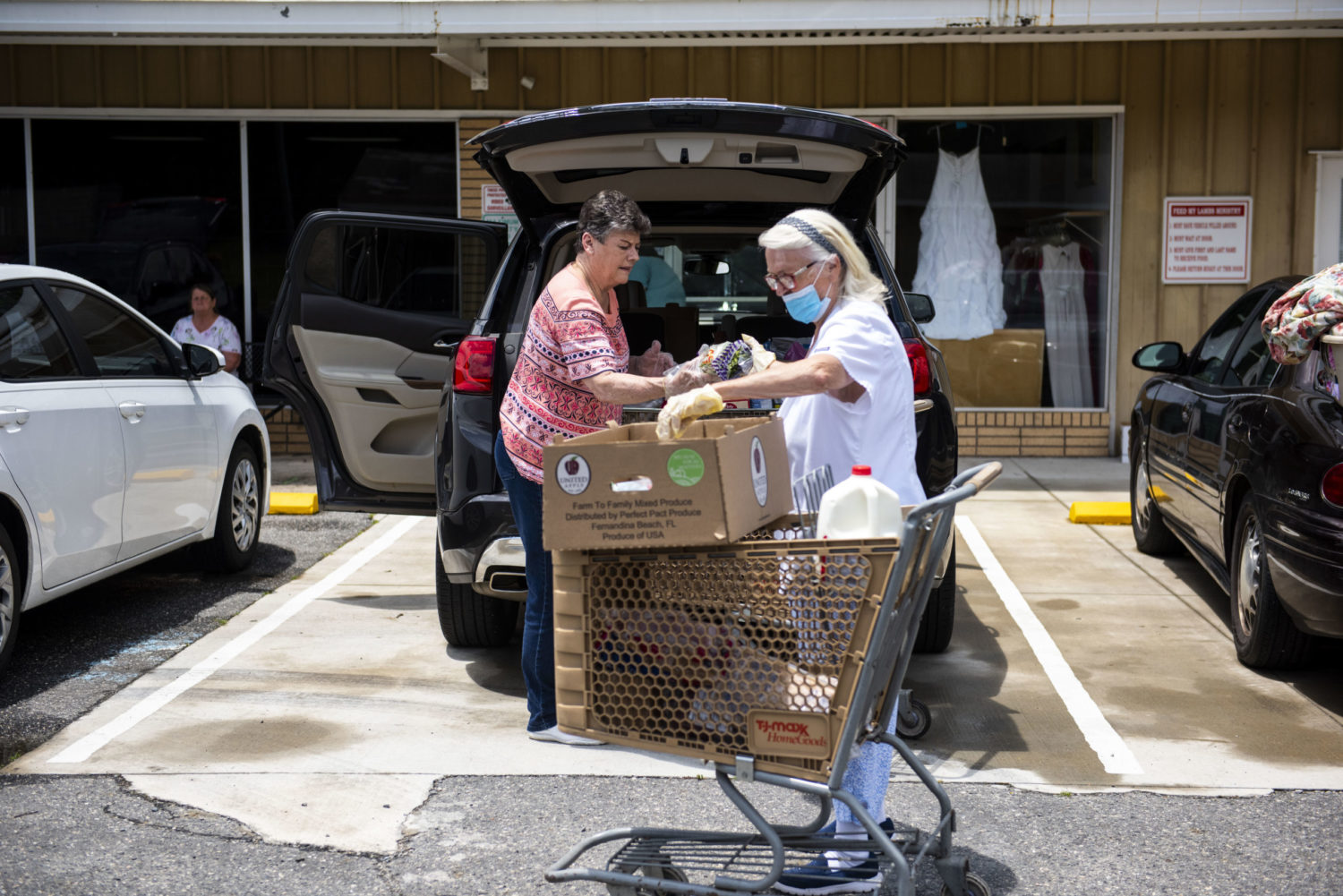
The tier system doesn’t just dictate which counties get which job creation incentives. It now impacts random county programs, like spay-and-neuter programs, farmland preservation programs, school construction, waste- and drinking-water reserve programs, community colleges, oral health preventative services and medication assistance programs.
The tier system has seeped into the grant-making decisions of nonprofits like the Golden Leaf Foundation, a major grantor for counties impacted by the decline of the tobacco industry. It can also affect federal funding streams, when those are operating normally.
The School of Government at UNC-Chapel Hill recently published a study examining the effectiveness of the tier system. One of the authors, Carolyn Fryberger, blames the increasing use of the tiers for many of the system’s unintended consequences.
“The goal of the system is now very unclear,” Fryberger said.
“It was originally created under this one very specific statute for a very specific use. It is now used in every program, across every department, in every issue area, in ways that it was not intended and was not designed.”
These tier designations, whose influence has grown to represent so much of counties’ identity, in many cases, are not all that meaningful.
Tier soup
The prescribed number for each tier results in a “musical chairs” effect where a county can improve or decline just because of another county’s unrelated performance.
Some counties wobble between tiers. The counties that hover near tier boundaries need not experience meaningful changes to switch. Caldwell County, for example, has switched between Tier 1 and Tier 2 six times in the last 10 years.

In the most recent rankings, Caldwell once again moved tiers, from medium distressed to most distressed — with hardly any meaningful, or negative, changes in its economic outlook.
Between 2024 and 2025, Caldwell County’s property tax base increased by $9,700. The median household income increased by $8,900. These are positive changes.
It experienced population growth at a rate of 1.32% between July 2020 and July 2023, which is faster than it had been growing in previous periods, but slow compared to the statewide growth rate of 3.95%.
The unemployment rate in Caldwell was 3.65%, exactly on par with North Carolina’s over the same period. It represented an increase in unemployment in Caldwell, but just by 0.3%. That tiny fraction amounted to a decline of 12 positions in the unemployment rate rank among North Carolina counties.
The county moved from Tier 2 to Tier 1, spurring bad PR and making it less attractive for potential businesses.
“Last year, when we moved down in the tier rankings, we saw improvements in three of the four categories,” Ashley Bolick, Caldwell County economic development director, told CPP.
“The only area that we saw a decline was in unemployment rate, and our unemployment rate was still the second-lowest unemployment rate we've reported since we've been keeping records. So it's hard to think of yourself as a Tier 1 community when all of your metrics are improving. People think we are going backwards, and that is not the case.”
In Surry County, the median household income dropped by just $2,300 between 2024 and 2025. That amounted to a drop of 30 positions in the median household income ranking, and Surry moved from Tier 2 to Tier 1. That marks the sixth time Surry County has shifted in 10 years, complicating the county’s economic planning.
The distress tiers system magnifies relatively insignificant changes like these while obscuring more meaningful changes. A Tier 1 county could improve dramatically without ever exiting its tier, and that improvement would be completely obscured by the system.
The tier system touches nearly every corner of North Carolina’s economy, from school construction to businesses recruitment to animal control. It has calcified into a static ranking that fails to capture economic reality and punishes counties at both ends of the economic spectrum. It resists the very changes it was intended to promote.
For North Carolina’s poorest counties, the system represents anything but a beacon of hope.
This article first appeared on Carolina Public Press and is republished here under a Creative Commons Attribution-NoDerivatives 4.0 International License.

Parents accuse Bonnabel High employees of hitting, humiliating special education student
by Safura Syed, Verite News New Orleans
October 28, 2025
Several employees at Alfred T. Bonnabel High School physically abused a severely disabled special education student, including by kicking him and tying him down, as well as subjecting him to humiliation in front of his peers, the boy’s parents allege in a civil rights lawsuit filed last month.
The Sept. 15 lawsuit was filed in New Orleans federal court by Reda Abdelaal and Rehan Mohamad, parents of the students, who chose to send him to Bonnabel because of its accommodations for children with special needs. The teenager, referred to only as “H.A.” in the suit to protect his identity, has “severe disabilities,” according to the complaint, including cerebral palsy, autism, a seizure disorder and is deaf with cochlear implants. H.A. also uses a wheelchair and wears diapers. The suit names the Jefferson Parish School Board, Jefferson Schools Superintendent James Gray, Bonnabel High School Principal Katrina Torrado and a number of Bonnabel employees as defendants.
The lawsuit, which is based in large part on classroom camera footage, comes just before schools across the state will be required to install video cameras in all special education classrooms. Under a new state law, passed earlier this year, cameras must be installed by February 2026. The law passed after state audits found hundreds of uses of seclusion and restraint against students with disabilities every year — and poor monitoring of the controversial practices by the state. It also included more stringent rules for seclusion and restraint.
Shortly after H.A. enrolled at Bonnabel for the 2024-2025 school year, his parents noticed bruising “consistent with the use of physical restraints,” the lawsuit says. Abdelaal and Mohamad knew that the special education classroom where he was assigned was equipped with two cameras, and they requested to view footage of the classroom.
School officials allowed them to view footage taken over two days in September 2024. According to the suit, the video evidence showed school employees using H.A.'s hand to hit himself, kicking him, tying him to his wheelchair and denying him food and making other special education students change his diaper.
At least four school employees allegedly participated in the abuse, the suit claims, and five others allegedly witnessed the incidents but failed to report anything to the Jefferson Parish school district, the police or the state Department of Children & Family Services. As teachers and paraprofessionals, all are mandatory reporters, meaning the law requires them to report suspected abuse to authorities.
In a statement to Verite News, a Jefferson Parish Schools spokesperson said the district “cannot comment on pending litigation, but [remains] firmly committed to the safety and well-being of every student.”
The alleged treatment left H.A. in the suit to protect his identity, traumatized and afraid to go out in public. His parents pulled him out of Bonnabel and are now homeschooling him.
“H.A. is now terrified to leave his home and is visibly frightened of school buses,” the complaint reads. “[His] mental state has deteriorated and he has been prescribed medication to treat his trauma.”
Gaps in monitoring for special education services have been a persistent issue statewide. Special education in New Orleans public schools has been under federal court supervision since 2015, following a legal settlement in a lawsuit parents filed against the state for allegedly failing to ensure that the city’s semi-autonomous charter schools were providing legally-required services to students with disabilities.
The court settlement in New Orleans requires frequent and stringent monitoring of special education in the city. And according to a May 2024 audit by the Louisiana Legislative Auditor, it may have drained resources from other districts around the state. The audit found that between the 2015-2016 school year and the 2021-2022 school year, state monitors conducted 262 reviews — either records reviews or on-site reviews — of special education services at Louisiana public schools. Of those, 166 — or 63% — were done in New Orleans schools, which accounted for just 7.2% of students with disabilities in the state.
A later audit, released in December 2024, found that amid this insufficient state monitoring, school districts reported nearly 1,200 instances of students with disabilities being put into seclusion or being physically restrained during the 2023-2024 school year. Under federal special education law, such practices should only be used as a last resort, when a student’s behavior threatens their own or others’ physical safety.
The Legislative Auditor’s Office recommended that the Department of Education tighten its monitoring, including by getting more cameras into classrooms. The law had already required school districts to install cameras in special education classrooms when a parent requested them, and the following year, the Department of Education allocated $8 million to 166 school districts to pay for them. But the audit found that, two years later, 100 of those districts had not yet installed any cameras. During this year’s legislative session, lawmakers responded by expanding the camera requirement to include all special education classrooms in the state, whether parents requested them or not.
Cameras can help document instances of abuse, and the new law requires administrators to review footage of reported incidents of restraint and seclusion. But they might not be able to be used as a supervisory tool. The law only requires that administrators review footage when schools report instances of seclusion or restraint.
According to the Bonnabel High lawsuit, however, a daily logbook maintained by H.A.’s teachers did not mention the alleged abuse, nor was it reported to school district officials.
Under Jefferson Parish’s camera policy, parents, the superintendent and the superintendent’s “designees” can request to view footage. But footage isn’t regularly monitored by supervisors because of district policy, the lawsuit claims. The presence of cameras gave H.A.’s parents a “false sense of security.”
After Abdelaal and Mohamad were allowed to review the footage last fall, administrators at Bonnabel held meetings with the accused employees, after which two were suspended and one was arrested by the Jefferson Parish Sheriff’s Office. It’s unclear from the complaint which employees named as defendants still work for the district.
The complaint says that the school didn’t immediately remove alleged abusers from the classroom or those who witnessed it but allegedly failed to report it. One employee said they lacked training in changing H.A.’s diaper specifically during the school’s investigation, the complaint says.
At least one of the defendants named in the complaint didn’t have special education certification. The defendant, Vijayshri Katyayani, has been under ongoing sanction from the Texas Education Agency, which oversees primary and secondary education in Texas, and had her education certificate revoked in 2017, according to the agency.
“Based on video evidence, several Employee Defendants lacked the necessary skills to work in the special education classroom beyond just the changing procedures, either due to the failure to train or because they lacked the necessary prerequisites at the time of hiring,” the complaint reads.
The suit accuses the Jefferson Parish School Board of violating the federal Americans with Disabilities Act and H.A.’s civil rights by failing to properly accommodate his needs and train Bonnabel staff. The named teachers and paraprofessionals are accused of assault and battery and illegally conspiring to cover up the alleged abuse, among other counts. H.A.’s parents, who declined to comment through their attorneys, are asking the court to award them damages after a jury trial.
Jefferson Parish Schools hasn’t yet filed a response to the complaint.
This article first appeared on Verite News New Orleans and is republished here under a Creative Commons Attribution-NoDerivatives 4.0 International License.

Embedded JavaScriptEmbedded JavaScript
Family awaits results of independent autopsy on Delta State student Trey Reed
by Leonardo Bevilacqua October 24, 2025
Wake up informed. Sign up for our free daily newsletter and join over 35,000 Mississippians who start their day with Mississippi Today.
CLEVELAND – An independent autopsy has yet to be released for Demartravion “Trey” Reed, the student who was found dead on the Delta State University campus in September, and speculation continues to swirl on campus and online.
The initial examination by the Bolivar County coroner and the autopsy completed by the Mississippi medical examiner’s office concluded the death of the 21-year-old Black man was a suicide, and no foul play occurred.
The independent autopsy, conducted later, was paid for by civil rights activist Colin Kaepernick, a former NFL quarterback.
Reed’s body was found hanging in a tree. Some members of his family and activists say they believe he was lynched, and they point to Mississippi’s racist history of lynchings of Black people.
Jeremy Marquell Bridges, an activist from Alabama, said he’s been in recent contact with Reed’s mother, Sophia, and Ben Crump, a nationally prominent attorney representing Reed’s family.
Bridges said this week that Crump needed more time to complete a reenactment as part of the independent investigation. Crump did not specify when that would be complete.
Bridges said the independent investigation revealed injuries sustained from a recent attack by white male students, but he did not provide any proof to Mississippi Today as of Friday.
Delta State University confirmed that Reed had listed his grandparents as his emergency contacts. His grandmother, Sharon Candy Tillman, told Mississippi Today she is waiting to see what the independent autopsy says about claims that others are making.
In an interview with The Chicago Crusader, Bridges said preliminary findings from the independent autopsy alleged that Reed lacked significant bruising around the neck consistent with a suicide by hanging. Bridges also claimed to Mississippi Today that the state crime lab was late supplying Reed’s organs and X-ray imagery to Nebraska pathologist Dr. Matthias Okoye, who the Reed family retained to conduct the independent autopsy.
On Oct. 16, Mississippi Today reached out to Bridges to ask for proof of these claims. Bridges had also claimed that Reed had defended a Black female student who was harassed by white students, and that the buckle was missing from the belt that hung him.
Bridges was unable to provide proof, but he and a member of the Reed family said they were expecting the independent autopsy last week.
Mississippi Department of Public Safety spokesperson Bailey Martin did not address Bridges’ claims that Reed’s organs were delivered late to Okyoe, but confirmed the funeral home had them as of Oct. 17, she wrote in an email to Mississippi Today.
Reed’s funeral was held at Abundant Life Assembly church in his hometown of Grenada on Sept. 27.
Reed’s mother joined members of the New Black Panthers Party at a protest Oct. 18 on the Delta State campus in Cleveland. They alleged that his death was the result of a lynching. They repeated claims that Reed suffered “blunt force trauma to the back of the head,” which was not found in the coroner’s examination or the autopsy completed by the Mississippi medical examiner’s office.
Rumors have swirled online in the weeks since Reed’s death with videos and posts on social media sites like TikTok and Instagram echoing the allegation that he was beaten before his hanging. Some garnered more than 130,000 likes.
One TikTok user with nearly 30,000 followers removed his September video echoing many of the allegations surrounding Reed’s case. He attributed his decision to a Facebook post by Tillman, Reed’s grandmother. She clarified that the second autopsy was not yet released – and the initial findings have not yet been substantiated.
“I don’t usually respond to social media, but I’m tired,” Tillman wrote in an Oct. 3 Facebook post.
Security footage from campus is still with law enforcement agencies and can’t be shared due to the active nature of the investigation, according to the university.
The medical examiner’s office received the results of the toxicology report on Sept. 26. Those results have been given to the family, but the Department of Public Safety has not publicly released them.
Clarification 10/25/2025: This story has been updated to clarify that Trey Reed had listed his grandparents as emergency contacts for the university.
Asheboro, North Carolina, Is Under Pressure to Control Discharges of a Toxic Chemical Into Drinking Water Supply
The EPA wants the city of 28,000 to rein in an industrial solvent, 1,4-Dioxane, from its wastewater discharges. So far, Asheboro has refused.
By Lisa Sorg
October 27, 2025
This article originally appeared on Inside Climate News, a nonprofit, non-partisan news organization that covers climate, energy and the environment. Sign up for their newsletter here.
ASHEBORO, N.C.—Some members of the public in attendance at the Environmental Protection Agency hearing last week called the City of Asheboro’s actions “despicable.” Others said they were “shameless.” And still another remarked that those who pollute the water—which data show Asheboro is doing—await “a special circle of hell.”
About 100 people gathered in a classroom at Randolph Community College where, despite the federal government shutdown, the EPA held the public hearing it deemed “mission critical” about Asheboro’s 1,4-Dioxane problem.
The problem, though, extends far beyond the city of 28,000 people in Randolph County. Studies from North Carolina State University show that North Carolina has some of the highest levels of 1,4-Dioxane, an industrial solvent and likely human carcinogen, in surface water in the country.
One of the hotspots is in the Upper Cape Fear River Basin, where Asheboro’s wastewater treatment plant has polluted the drinking water of 900,000 people living downstream with 1,4-Dioxane. Long-term exposure can damage the liver and kidneys.
The EPA has not established legally enforceable maximums for the chemical in drinking water, but did issue a lifetime exposure health advisory goal of 0.35 parts per billion.
In January, the Biden administration EPA, under Administrator Michael Regan, sent a letter to the N.C. Department of Environmental Quality objecting to Asheboro’s proposed wastewater permit because it didn’t require the city to limit its 1,4-Dioxane discharges. Such limits, the EPA wrote, “appear reasonable and consistent with the requirements [of the Clean Water Act] and may be included in the permit.”
If DEQ doesn’t include those limits in a revised permit, the letter reads, “exclusive authority to issue the permit passes to the EPA.”
Asheboro requested a public hearing on the EPA’s letter of objection, which is allowed under federal law.
How To Comment
The EPA is accepting public comment on its letter of objection sent to state environmental officials about City of Asheboro’s proposed discharge permit. The EPA determined the permit must contain limits on 1,4-Dioxane leaving the city’s wastewater treatment plant and entering the drinking water supply.
The proposed permit does not contain that provision.
Email written comments to R4NPDESComments@epa.gov
The deadline is Oct. 31.
The chemical originates at StarPet, a plastics manufacturer, and the Great Oak Landfill, which discharge or ship 1,4-Dioxane to Asheboro’s wastewater treatment plant. From there, it eludes conventional treatment systems and flows directly into Haskett Creek, which flows into the drinking water supply. Sanford, Pittsboro, Fayetteville, Brunswick County and Wilmington have all received slugs of the chemical at levels hundreds, even thousands, of times above the EPA’s health goal.
Other municipalities, including Greensboro and Burlington, sharply reduced their 1,4-Dioxane discharges by pressuring their industrial sources to pretreat their wastewater or to find alternatives to 1,4-Dioxane.
Asheboro could do the same, said Zoe Mehta, associate attorney at the Southern Environmental Law Center. “Asheboro can solve this problem. Its refusal is not fair to the rest of us who have to worry when we turn on the tap.”
StarPet did install a pretreatment system for 1,4-dioxane in November 2020 to reduce the amount flowing into the wastewater treatment plan, but it frequently fails and is shut down for maintenance, according to a lawsuit filed by the Southern Environmental Law Center.
The system has gone offline six times since 2021, and twice since the beginning of the year, court filings say.
“Our community has been and remains a target,” said Casey Dixon, a fourth-generation Sanford resident. “While this hearing might be one evening for you, it’s the rest of my life.” She mentioned her 2-year-old nephew, who drinks contaminated water from his Spider-Man Sippie Cup.
“Spider-Man can’t save him from 1,4-dioxane,” Dixon told EPA officials. “That’s your job.”
DEQ’s original permit to Asheboro did require the city to control its 1,4-Dioxane discharges, with limits that would have been phased in over five years. But in 2024 state Administrative Law Judge Donald van der Vaart— a former DEQ secretary under a Republican governor with a reputation for weakening environmental regulations—sided with Asheboro. He determined DEQ had exceeded its authority and voided 1,4-Dioxane limits in the permit.
Steven Bell, an attorney with Cranfill Summer who is representing Asheboro in the dispute, told the EPA the city is “committed to compliance with the Clean Water Act and state law.”
However, Bell said DEQ deviated from administrative law when it developed the discharge limits, and he noted that a court upheld Asheboro’s claim. The EPA should not intervene in the permit, but “respect state procedure,” Bell said.
Officials from downstream utilities urged the EPA to limit 1,4-Dioxane in Asheboro’s discharge.
Kenneth Waldroup, executive director of the Cape Fear Public Utility Authority, said once the chemical enters the Cape Fear River watershed, “it is persistent and travels far.” It is expensive to remove 1,4-Dioxane from drinking water. “These are not small investments and the financial burden falls on our ratepayers,” Waldroup said.
Mick Noland, who retired last from the Water Resources Division at the Fayetteville Public Works Commission, led the division as it spent $100 million on installing an advanced treatment system to remove PFAS. Unfortunately, that method, granular activated carbon, Noland said, “doesn’t touch 1,4-Dioxane. It’s irresponsible to expect Fayetteville to put in advanced oxidation” to remove the chemical and further hike ratepayers’ water bills.
Susie Scott, who grew up in Asheboro, told EPA officials at last week’s hearing that she was “embarrassed.”
“Please force the city I love to do the right thing,” she said.
The EPA Region 4 administrator will now decide whether to uphold DEQ’s permit issuance, ask for a revision or reject it altogether. Because of the government shutdown, the timeline for the decision is unclear. Another unknown: where President Donald Trump’s EPA administrator, Lee Zeldin, is on the issue.
In a separate court case, Union Carbide Corporation, a subsidiary of Dow Chemical, is contesting the EPA’s risk evaluation for 1,4-Dioxane. A judge for the Fifth Circuit Court of Appeals has stayed the case until the end of the year.