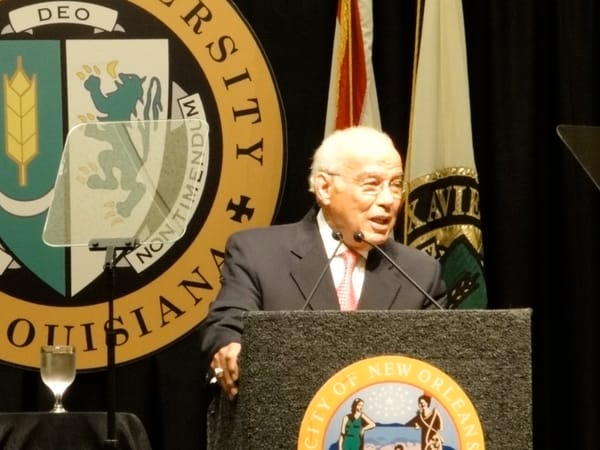
War puts Iran’s participation in World Cup, training plans in Tucson, Arizona in doubt
Voters push for change in closely watched NC primary contests


It's Friday, March 6, 2026 and in this morning's issue we're covering: War puts Iran’s participation in World Cup, training plans in Tucson in doubt, Voters push for change in closely watched NC primary contests, North Carolina Regulators Nix $1.2 Billion Federal Proposal to Dredge Wilmington Harbor, City of New Orleans might trash fully-funded residential recycling initiative, NC lawmakers consider options to force psychiatric treatment for people with severe mental illness, Medicaid fraud targeting Indigenous communities continues despite AHCCCS reforms, Opioid settlement applicants question ‘popularity contest’ grant review process as lawmakers weigh changes.
Media outlets and others featured: Cronkite News, Carolina Public Press, The Marshall Project, Inside Climate News, Verite News, North Carolina Health News, Arizona Center for Investigative Reporting, Mississippi Today.
Editor's note: MultiState looks at different approaches states are taking towards energy and tax issues with data centers:
 MultiState
War puts Iran’s participation in World Cup, training plans in Tucson in doubt
by Thomas Bonvehi, Cronkite News
March 2, 2026
PHOENIX – Ongoing conflict in the Middle East has put Iran’s participation in the FIFA World Cup – and its training schedule at Tucson’s Kino Sports Complex – in doubt.
Facility director Sarah Horvath said she has not heard if the country’s plans have changed but is hopeful for clarity soon.
“We see sports as a great unifier,” Horvath said. “Even when there’s all kinds of muck going on in the world, you have sports that unify us all. When it really breaks down to it, we are all a lot more alike than we are different.”
Iran's top soccer official Mehdi Taj, a vice president of the Asian Football Confederation, was less optimistic.
"What is certain is that after this attack, we cannot be expected to look forward to the World Cup with hope," he told ESPN.
In late February, Kino Sports Complex received confirmation that it would serve as a base camp at which the Iranian national team would train. Now, the city and complex are on hold.
“We really enjoy that aspect of our jobs that we get to focus on sports and not worry about the rest," Horvath said.
Güneş Murat Tezcür, a professor of political science and the director of the School of Politics and Global Studies at Arizona State, said banning Iran would be “extraordinary” but not unprecedented.
“There’s always a kind of element of connectivity when it comes to what countries get punished and what kind of countries are not punished,” he said. “Typically, the more powerful hegemonic actors are the ones who get to decide what norms should be enforced and what norms should not be enforced.
“Iran is a terrible dictatorship, but then again there are other terrible dictatorships in the world. At the same time, Iran did not start the war. It was being attacked and now it’s basically retaliating and then obviously attacking some other countries in the (Persian) Gulf.”
Tensions between Iran and its neighbors have been ongoing, including drone attacks on countries such as Saudi Arabia, which is hosting the World Cup in 2034.
The tensions reached a boiling point after a joint U.S.-Israeli airstrike that led to the death of Iran’s supreme leader, Ayatollah Ali Khamenei on Saturday.
FIFA has banned multiple countries from World Cup participation in the past. The most recent example was Russia. Hosts of the 2018 World Cup, FIFA banned the country from World Cup play since its invasion of Ukraine, and its clubs are not allowed to participate in UEFA competitions such as the Champions League or Europa League.
Iran, while not officially banned, could be next in line, whether it decides to boycott, is banned by FIFA or if President Donald Trump forces its hand.
In 2024, FIFA built a new office and headquarters in the United States to manage the World Cup, but a second office was built in Trump Tower in New York City in July of 2025.
FIFA also gave Trump the inaugural FIFA Peace Prize during the World Cup draw, presented by FIFA President Gianni Infantino.
“FIFA had always (been) very political and not very transparent,” Tezcür said. “How FIFA evolved over the years, I think it became a success, commercially, in addition to this kind of U.S. connection. I think this has been a trend for a while and now we basically see the escalation of that trend.”
If FIFA bans Iran or chooses not to play, the league's rulebook allows two options. One is to change the group from four teams to three teams, but the more likely approach will be to replace Iran with another team.
It’s unknown if that new team’s training would be located in Kino, but it would be a challenge regardless, as FIFA would need to pick a new team before the tournament starts in June, giving the team a maximum window of three months for preparation.
It could also leave Tucson officials out in the cold.
On Dec. 5. 2025, Iran was placed in a group with New Zealand, Egypt and Belgium during the World Cup draw. If Iran doesn't compete in the World Cup, the United Arab Emirates or Iraq are expected to replace them, depending on the World Cup playoffs that will be decided in late March, The Guardian reported.
If Iraq fails to qualify, it would likely be next in line to replace Iran. If Iraq qualifies, it would likely go to the UAE.
Nothing remains concrete yet, but recent and possible future events may force the hand of Iran’s federation in the next three months.
This article first appeared on Cronkite News and is republished here under a Creative Commons Attribution-NoDerivatives 4.0 International License.

Voters push for change in closely watched NC primary contests
by Sarah Michels, Carolina Public Press
March 4, 2026
He wasn’t on the ballot, but the biggest winner on primary Election Night may have been Democratic Gov. Josh Stein. The governor’s veto power just got quite a bit stronger, as several “swing” Democratic state legislators lost handily to challengers who have pledged party loyalty.
In northeastern North Carolina, Patricia Smith defeated Rep. Shelly Willingham, D-Edgecombe, by an 11-point margin, and Rep. Rodney Pierce, D-Halifax, kept his seat in a 2024 rematch against swing Democrat Michael Wray by 29 percentage points. In Charlotte, Veleria Levy ousted Rep. Nasif Majeed with 69% of the vote, and Rev. Rodney Sadler earned 70% of the vote against Rep. Carla Cunningham.
[Subscribe for FREE to Carolina Public Press’ Daily, Weekend and Election 2026 newsletters.]
While incumbents were backed by name recognition from years in the General Assembly and money from political action committees, it didn’t matter this time around.
Sitting at a table at Sofie’s Steakhouse, after his supporters went home, Sadler reflected on the sweep by Democratic challengers. Money doesn’t win elections, he said; people do, and they have spoken.

“There is a groundswell of change taking place, not just in North Carolina, but North Carolina has always been the litmus test for what takes place across the country,” Sadler said.
“The country is changing, and the country is waking up. This is the 250th anniversary of our democracy, and I think that the people are saying, we want to keep the democracy.”
Primary turnout
Precinct officials and electioneers across the state used one word repeatedly to describe Tuesday’s turnout: “steady.”

Following high levels of early voting that nearly exceeded the 2024 presidential primary, Election Day was a bit slower.
Overall, 19.5% of registered voters cast ballots in the primary election — about half voted early. That’s just shy of the 2022 midterm primary’s 19.8% turnout, and higher than the average midterm primary turnout.
Across the state, voters, election watchers and precinct officials credited local races for sheriff, county commissioner and a few high-profile state legislative races for much of the attention.

Election officials reported few issues Tuesday. Besides the usual confusion of voters who show up at the wrong precinct and have to be redirected to the right location, everything appeared to run smoothly.
Berger vs. Page
Rockingham County Sheriff Sam Page spent $51,736 on his primary campaign, not including outside spending by third-party political groups, according to State Board of Elections data.
Senate President Pro Tempore Phil Berger, who has led the state legislature for 15 years, spent $2.26 million.
After all votes were tallied election night, the two were separated by two votes, with Page leading.
The results are not final; during the period before the canvass on March 13, election officials will determine which provisional ballots should be counted in the race, and may have absentee votes received on Election Day left to count. However, the closeness of the race makes a recount nearly inevitable.

Fire station #28 in Gibsonville, N.C., is tucked between miles-long stretches of farmland where cows leisurely graze. Tuesday afternoon, one couple was inside, voting. Precinct judge Ann Hillman said they’d received 96 primary voters, with a goal of 125.
While the rural site was one of the “slower” voting places, Hillman said the residents haven’t escaped the all-consuming battle between Berger and Page. Both are mainstays in the community; Page, a 28-year sheriff, and Berger, a 26-year state legislator.
Hillman said she has been receiving about four flyers for Berger or Page a day.
In the Rockingham County town of Madison, the choice was on most voters’ minds. One voter, Sandy, said she’s tired of “nonstop” ads. She’s not sure ads are truthful, and would prefer politicians stop “picking on one another” so much.
She’s also skeptical of the district’s current representation. She said she prayed about it a lot before casting her primary ballot.
“We tend to get where we elect the same guys over and over again,” Sandy said. “They start out well, I feel like they are concerned with local situations and issues and stuff among people, and then the longer they’ve been in office, you tend to go, ‘Hmm, not so sure anymore.’”
Laura, a 25-year teacher, was on the same page.
“I haven't had a pay raise as a teacher in two years thanks to somebody,” she said, referring to Berger.
She wants someone to look after teachers, particularly veteran teachers, and thinks Page is the better man for the job.

On the other side, Rockingham County Commissioner Mark Richardson wants to keep the county’s “good track record” going.
“Mr. Berger is very important,” Richardson said. “And I know both folks personally. Berger is supremely competent, and it’s meant a whole lot to our county. He’s primarily responsible for our economic health, not just in this county, but throughout the state.”
Page, conversely, has overseen a jail which has experienced issues in recent years, including several officers accused of wrongdoing, deaths from drug overdoses, a loss of liability insurance and ongoing investigation by the State Bureau of Investigation, Richardson noted.
“I really think that's because our sheriff has not been here watching the pot,” Richardson said. “I've known him, and I've supported him every year since I've come back into this county, but not this time.”
While dissatisfaction with Page’s work as sheriff has been a key talking point among Berger’s supporters, Republican voters in Rockingham County seem not to have gotten that memo. The sheriff had a landslide victory in the home county for both veteran politicians with about 67% of the vote.
However, in the portions of adjacent Guilford County that are also part of the district, and where Page had a significant disadvantage in name recognition, Berger had about 68% of the vote, leading to the near tie in the final tally across both counties.
Congressional primary battles
One of the night’s first declared victories came from the expected U.S. Senate nominees: former Democratic Gov. Roy Cooper and former Republican National Committee chairman Michael Whatley, who both easily sailed to their respective party wins.
On the U.S. House of Representatives side, each of the 13 incumbents running kept their seats.
It was close for U.S. Rep. Valerie Foushee, who faced Nida Allam, a Muslim progressive Democrat who labeled herself as a more vocal opponent to President Donald Trump, Israel and artificial intelligence than Foushee. With all precincts reporting, Foushee led by just over 1,200 votes. Because that margin still represents less than 1% of the votes cast in that race, it could go to a recount, depending on how the margin changes with late-arriving absentee by-mail ballots and any provisional ballots.
At Durham’s South Regional Library, voter Graham Levy said the U.S. Congressional primary race between incumbent Foushee and challenger Allam was their primary motivation for voting Tuesday afternoon.
Levy told Carolina Public Press that they were concerned about the flow of millions of dollars of PAC money into that race, particularly Foushee’s campaign, and wanted to support Allam for that reason.
Foushee has historically been supported by PACs connected to Israel, and this year, by artificial intelligence groups.

Most Congressional races will officially be decided in November. In the 11th Congressional District, Democratic candidate Jamie Ager secured his party’s nomination in a crowded field.
He will face U.S. Rep. Chuck Edwards, who has been the subject of criticism over Hurricane Helene recovery. National Democrats put their support behind Ager as one of the candidates who may be able to flip national Republican seats, before the primary, which was a controversial move for some in the party.
On the Republican side, Laurie Buckhout defeated four opponents in her bid to run against Democratic U.S. Rep. Don Davis in November. Last year, state legislators redistricted Davis’ seat to give Republicans a better shot at winning. Asa Buck placed second and State. Sen. Bobby Hanig, R-Currituck, placed third in the contest.
Cunningham loses to Sadler
As the sun set over Mallard Creek Elementary, electioneers supporting Sadler and Cunningham huddled together in the cold.
The site got about 400 voters by 7 p.m., according to the precinct judge. One of those voters, Toye Watson, said voting against Cunningham was her primary motivation for showing up.
While she respects Cunningham as a person, she thinks the representative no longer aligns with the district’s beliefs. Watson referred to Cunningham’s controversial floor speech about immigration, during which she said “all cultures are not equal” and appeared to pit Black North Carolinians against immigrants.
“I feel like it's divisive in a way that does not propel society forward in any kind of way,” Watson said. “I don't think that what my ancestors did in any way is reduced by the immigrants’ presence. I think that we're all building on a foundation together.”

A bit later, another primary voter, Brian, expressed his support for Cunningham. He said he votes for people who are qualified for the position.
“I supported Carla Cunningham because I value the independent thought and the willingness to move away from her party in this election,” he said. “While there has been some controversy around her stance, I do appreciate the fact that she is not scared — that is something that is unique in elected officials today, because they typically follow the party line.”
Brian’s view of the race was clearly in the minority on Tuesday. Sadler defeated Cunningham with an overwhelming majority.
At his victory party, dozens of supporters donned in purple cheered him on and prayed with him after the results came out.
"The time of governance by fear, governance by hatred, governance by scapegoating, and governance by division is over. It's now time for new politics based upon love, based upon lifting up those who've been left out."
the Rev. Rodney Sadler of Charlotte, following his Democratic primary election victory for NC House
Lisa Hazirjian, with NC Sierra Club, said they were excited to have a candidate who didn’t just “talk the talk” on environmental issues.
“To have that contrast with someone who has been siding with Duke Energy, who doesn't care about the environment and doesn't care about affordability, was perfect.”
Mecklenburg County Commissioner Yvette Townsend-Ingram said Sadler is a man of purpose and action who has the power to bring the state Democratic caucus back together.
“Because in order to get anything done, even though we're in the minority, we still have to have consensus,” she said.
Sadler, for his part, doesn’t quite know how to feel after the primary victory. He was overwhelmed by the support.
He does know one thing, he said.
“The time of governance by fear, governance by hatred, governance by scapegoating, and governance by division is over,” he said. “It's now time for new politics based upon love, based upon lifting up those who've been left out.”
CPP reporter Lucas Thomae also contributed to this article.
This article first appeared on Carolina Public Press and is republished here under a Creative Commons Attribution-NoDerivatives 4.0 International License.

Challenges Await Mamdani as Hopes Rise for Closure of Notorious Rikers Island Jail Complex
For New York City’s mayor, the hard part isn’t deciding whether or not to shut down Rikers, but figuring out how to do it safely and in a timely way.
This article was first published by The Marshall Project, a nonprofit news organization covering the U.S. criminal justice system. Sign up for their newsletters, and follow them on Instagram, TikTok, Reddit and Facebook.
NEW YORK – Ever since Zohran Mamdani took office as New York City’s mayor in January, efforts to close the long-troubled Rikers Island jail complex have received renewed attention. The facilities — plagued for years by violence, overcrowding, neglect and poor medical care — are required by law to be closed by 2027, but are way behind schedule.
Mamdani — who had long wanted to shutter the facilities but opposed creating more jails to replace them — shifted his position during the mayoral campaign, saying he would follow the City Council plan to close Rikers, one of the world’s largest jail complexes, and move its occupants to four smaller jails to be built across the city.
Now in office, Mamdani faces the challenge of delivering on the plan: balancing public safety, working with a federal court-appointed overseer charged with improving conditions at Rikers, and navigating the expectations of activists upset over what they saw as stalling and obstruction by Mamdani’s predecessor, Mayor Eric Adams.
“I think they can be a historic administration in New York City and be the administration that oversees the closure of Rikers and the transformation of our jail system,” said Mary Lynne Werlwas, the director of The Legal Aid Society’s Prisoners’ Rights Project, which has been fighting to reform the city’s jails since the 1970s.
Since taking the helm, Mamdani has issued an executive order to develop a plan to stop using solitary confinement in jails, announced a housing project on a hospital campus for people returning from incarceration with chronic physical and mental health issues, and appointed a new jails commissioner, who was once formerly incarcerated at Rikers.
As construction continues on the replacement jails, the city is now contending with the possibility that the legally mandated 2027 closure will need to be pushed back again — potentially until 2032.
Here’s a look at where the effort to close Rikers stands:
What’s the latest at Rikers?
The jail complex, which sits on an island in the East River between the boroughs of Queens and the Bronx, has eight facilities in use. As of mid-February, the population of New York City jails stands at nearly 7,000, a return to levels seen before the pandemic. Many experts agree that this influx of people supercharges all the other issues plaguing the jail, resulting in tragic outcomes — such as in-custody deaths.
More than 30 people have died at Rikers since 2022, when the population first started to ratchet up after the end of the pandemic. At least 14 people died there last year, a decade since Rikers has been under federal oversight.
More significant oversight
In January, the judge overseeing the facilities, dismayed by the lack of progress in improving conditions, appointed an independent “remediation manager” named Nicholas Deml to take control of the jails to implement reforms. Deml has served as a CIA officer and as Vermont’s Department of Corrections commissioner.
Deml will have more power than the mayor when it comes to implementing changes to the city’s jails. Although former Mayor Adams did not want to lose control of lockups to the federal government, Mamdani has signaled that he is looking forward to collaborating with Deml.
City Council member Sandy Nurse, who organized protests against mass incarceration before she came to electoral politics, has faith in the new remediation manager. “You need an outside force with powers of the federal government that can do things a mayor cannot do,” including giving Mamdani cover to overcome political obstacles from potential budget constraints and opponents of Rikers’ closure, Nurse said.
Under construction
Although the city has closed some old facilities, it has failed to make the progress needed to shut down and replace Rikers by the 2027 deadline.
Nurse attributed some of the building delays to the COVID-19 pandemic. But she and the other criminal justice reform advocates whom The Marshall Project spoke with put most of the blame on Adams.
Although he initially backed the plan to close Rikers, Adams called to keep it open in 2025. Nurse said this flip was a failed bid to shore up his support during his reelection campaign with some Trump-supporting Republicans. She believes their objection to borough-based jails “comes from a place of anti-Blackness, racism and just wanting to throw people away and never see them again.”
Right now, estimates for the plan to close Rikers and replace it with new borough-based jails put its completion at 2032 — several years after the 2027 deadline.
“It seems far away, but it's very close,” Nurse said, noting that “there will be some kind of renegotiation to amend the legislation so that the city stays in compliance [with the law] and is forced to achieve benchmarks along the way.”
Are there people against this plan?
Some New Yorkers have objected to the replacement locations. One of the most outspoken groups is Neighborhoods United Below Canal (NUBC), a non-profit that represents business owners and residents in Manhattan’s Chinatown.
That densely populated neighborhood is slated to house the world’s tallest jail. At around 300 feet, the new facility will tower over the area’s historic low-rise and tenement buildings. Although construction of the new jail will be underway soon, the NUBC is hopeful that there is still time to repurpose the site for housing.
The site of this new megajail is where the notorious “Tombs” jail used to be. That jail was shut down for many years in the 1970s due to the same kinds of concerns that now plague Rikers.
“We do want to close Rikers,” one of NUBC’s leaders, Vic Lee, recently told TMP, “but it should not come at the harm of the Chinatown community.” NUBC is calling for the city to build its new jail at a defunct federal corrections facility in a nearby neighborhood.
Instead of a megajail, the NUBC wants Mamdani to build homes where the Tombs once stood. “This is a mayor that campaigned on housing, specifically affordable housing,” said Jan Lee, another NUBC leader, “There is no other site in Chinatown where we could build the amount of housing that we have the opportunity to do now.”
Does anyone want to keep Rikers open?
Although the closure of Rikers is broadly popular, Benny Boscio, the leader of the Correction Officers’ Benevolent Association, a union that represents 15,000 active and retired NYC corrections officers, has called out the plan to shut down Rikers as inherently “flawed,” because the new borough-based jails will have a much lower capacity than the number of people currently incarcerated on the Island.
The Marshall Project reached out to Boscio multiple times via email for an interview, but he has yet to respond.
Meanwhile, advocates who applaud the lower capacity of the plan as a step towards decarceration wonder if COBA just wants more beds to justify more corrections jobs.
Can the city afford to close Rikers?
The cost of the plan to replace Rikers has ballooned from the initial estimate of $8 billion to at least $15 billion. Nurse attributes the increase to the rising costs of construction and the demand for the limited number of contractors who specialize in building large jails.
At the same time, the Mamdani administration is facing a $7 billion gap in the city’s $116 billion budget.
Werlwas believes the wealthiest city in the world has a long history of dealing with these gaps and still finding ways to pay for the things it deems important. In that sense, it’s less about the budget shortfall, and more about the priorities of the new mayor.
Despite the increasing costs and potential budget gaps, the urgency to shutter Rikers remains. “The facilities on Rikers are falling apart, and the cost to fix them is more expensive than building the new jails,” she said.
Was Mamdani always in support of the closure of Rikers?
In 2019, Mamdani was actually against the city council’s plan for Rikers. It wasn’t that he wanted to see the jail complex stay open, it’s that he didn’t want to see the city replace it with new jails. But in last year’s mayoral election, his position shifted. He was the only candidate who vowed to follow through on closing Rikers, explaining it as a commitment to simply follow the law.
Although executing the Rikers plan isn’t as radical as abolishing jails, Werlwas of Legal Aid Society said Mamdani still has a historic opportunity with Rikers — if he can couple its closure with more investment in the people who used to be incarcerated there.
“It’s not enough to say don't invest in jail,” she said. “We need an affirmative investment in things that keep our communities safe, like supportive housing and mental health services. And it's absolutely essential that we find ways to take care of people, because incarceration is an expensive and dangerous way to do so.”
What has Mamdani done so far?
In addition to issuing the solitary confinement executive order, Mamdani appointed Stanley Richards, a man who was once incarcerated at Rikers, to lead the Department of Corrections. And now, Richards has the task of working with Deml, the federal remediation manager.
“Stanley is someone who has dedicated his life to reentry programs, programs inside the jails, healing practices, mentoring, and really focused on reducing recidivism,” Nurse said. “So that to me is a tone that was set that everything else will flow from.”
Mamdani has also introduced new initiatives focused on mental health and housing that the mayor and advocates hope could decrease the number of people the city incarcerates.
On Martin Luther King Day, he announced that he would support Just Home, a supportive housing project in the Bronx that creates 83 rent-controlled apartments with onsite services for formerly incarcerated people with medical needs.
Although the plan had been approved by the city council in 2024, Adams advocated against it during his mayoral campaign. After Mamdani’s election, he said: “My sincere belief is that soon Just Home will be seen as clear evidence of New York’s commitment to a new era where every one of our neighbors — even those who’ve made mistakes in their past — is entitled to dignity, safety, and a home they can call their own.”
What do people who were formerly incarcerated at Rikers think?
Darren Mack, a survivor of Rikers who witnessed brutality during his time there in the 1990s and who currently leads the decarceration advocacy group Freedom Agenda, said he’s pleased with what he’s seen of Mamdani so far, but he is not satisfied.
“We applaud it, but there is much more that needs to be done,” he said. “Rikers can't be fixed or reformed, and the only solution is closure.”
North Carolina Regulators Nix $1.2 Billion Federal Proposal to Dredge Wilmington Harbor
U.S. Army Corps of Engineers failed to explain how it would mitigate environmental harms, including PFAS contamination.
By Lisa Sorg
February 25, 2026
This article originally appeared on Inside Climate News, a nonprofit, non-partisan news organization that covers climate, energy and the environment. Sign up for their newsletter here.
The U.S. Army Corps of Engineers can’t dredge 28 miles of the Wilmington Harbor as planned, after North Carolina environmental regulators determined the billion-dollar proposal would be inconsistent with the state’s coastal management policies.
Tancred Miller, director of the Division of Coastal Management (DCM), sent a letter Feb. 24 to the Corps that listed reasons for the formal objection, including cumulative flooding impacts, sea level rise, PFAS contamination, the loss of freshwater wetlands and fisheries.
The Corps also failed to provide adequate information in its Draft Environmental Impact Statement about how it would mitigate many of the harms incurred by the project, according to the letter.
“The DEIS lacks rigorous analysis of net economic benefits and does not adequately evaluate potential economic losses associated with environmental degradation,” Miller wrote.
The Corps had proposed dredging the Lower Cape Fear River from Bald Head Island to the Port of Wilmington to accommodate larger ships. The dredging would have deepened the shipping channel to 47 feet, from its current depth of 42 feet, and widened some segments by as much as 500 feet—equivalent of one and a half football fields.
The dredging would have excavated 35 million cubic yards of silt and sand from the riverbed, half of which would have been placed on hundreds of acres of public beaches, bird-nesting islands and imperiled wetlands. The Cape Fear River is heavily contaminated with several types of PFAS, also known as forever chemicals; the dredged material would almost certainly have contained the toxic compounds.
The cost of the project is estimated at $1.2 billion, a quarter of which—$339 million—would have been paid by the state.
Kerri Allen, coastal management program director for the N.C. Coastal Federation, has been among the project’s critics.
“Seeing DCM take a close look at the potential impacts to our water quality, fisheries, and wetlands—and thoughtfully weigh those resource concerns in this decision—is a powerful reminder of what responsible stewardship looks like,” she said. “Our coast is more than projects and infrastructure; it’s the natural systems and livelihoods that depend on them. When those impacts are carefully considered and public voices are heard, we’re making progress toward protecting what makes our coast so special.”
The state issued the objection as part of the Federal Consistency Determination under the Coastal Zone Management Act. It authorizes DCM to review any proposed federal action within the state’s 20 coastal counties that could affect uses and resources in those areas. If DCM finds a proposal inconsistent with coastal policies, it can issue an objection.
States are authorized to object to a proposal if a federal agency fails to provide sufficient information.
“This objection is disappointing as we … felt we had been working hand in hand with all our state and federal partners and resource agencies since we began coordination regarding this project nearly three and a half years ago,” said Jed Cayton, an Army Corps of Engineers public affairs specialist, in a written statement.
The Corps had assembled a technical working group, which included state agencies, to resolve concerns about the proposal. “Given all the integration and engagement throughout this process, the objection provided at this late stage in the process is disconcerting,” Cayton said.
The State Ports Authority proposed the dredging project in 2020 and claimed it was essential for the viability of the port. However, federal reviewers criticized the findings, some of which they said were unfounded or downplayed the environmental harms.
Congress subsequently authorized more than $839 million for the project, but it wouldn’t release the funding until the problems with the State Port’s proposal were addressed, in this case, by the Corps.
Over the past three and a half years, environmental advocates, residents, state agencies and local governments submitted hundreds of written and verbal comments to the Corps and DCM opposing the project.
As part of the consistency review process, DCM told the Corps it was concerned about many aspects of the proposal, particularly regarding the lack of information about how the Corps would mitigate the many environmental harms.
Earlier this year, the Corps and the State Ports Authority requested DCM pause their deliberations on the consistency review while they tried to address those concerns. During the hiatus, Miller wrote, the Corps and DCM met to discuss possible resolutions that would allow state officials to find the project was consistent with coastal policy.
By Feb.16, the Corps hadn’t provided DCM the requested information, but asked the agency to restart the consistency review process and complete it by Feb. 24.
“This decision is welcome news for the people of Wilmington and beyond who cherish the lower Cape Fear River and its surrounding natural areas,” said Ramona McGee, senior attorney at the Southern Environmental Law Center, in a written statement. “The Lower Cape Fear is already threatened by sea-level rise and industrial pollution—we shouldn’t be further damaging this special place with an unnecessary and costly project. We are grateful that the Division of Coastal Management is standing up for North Carolina’s coastal resources and communities.”
The Corps could still enter mediation with the state environmental officials. Should that happen, DCM “is committed to working with the Corps to try to resolve the concerns detailed in this objection,” Miller wrote.
Cayton said the Corps “remains committed” to finishing documentation related to the project, including a final Environmental Impact Statement. The Corps and the State Ports Authority are also determining how to proceed, but it’s too early in the process to give a specific date for completion, he said.
City of New Orleans might trash fully-funded residential recycling initiative
by Katie Jane Fernelius, Verite News New Orleans
February 25, 2026
A city of New Orleans initiative to expand residential recycling citywide might be dead in the water — despite the fact that the city has more than $5 million in financial backing from the Environmental Protection Agency and a national nonprofit.
The fully-funded initiative, a partnership between the New Orleans Department of Sanitation and the Office of Resilience and Sustainability, would’ve provided recycling carts to all single and small multi-family residences across the city. It also would support the development of a 10-year Solid Waste Master Plan, along with a host of educational outreach programs.
A little less than half of all New Orleans residents currently opt into recycling. And the city has a very low diversion rate, the rate at which waste is diverted from landfills into recycling or composting facilities, compared to similarly sized cities.
The city has been working on the expanded recycling initiative since it was awarded the federal money in late 2023. But this month, the New Orleans City Council announced internally that it was pumping the brakes on the project.
The city was planning to purchase 83,000 recycling carts and educational materials from a contractor at a proposed maximum cost of $4.7 million, with $3.3 million of that reimbursable by the EPA. The other $1.4 million would have been provided by matching funds from The Recycling Partnership. But a proposed contract, with supplier Rehrig Pacific Company, would need council approval to move forward.
In internal communications obtained by Verite News, a staff member in Council President JP Morrell’s office emailed the heads of the Office of Resilience and Sustainability and the Department of Sanitation on Feb. 10, informing them that there would be no public hearing on a contract to purchase new recycling carts for the program.
“Due to the City’s current budget constraints, we cannot afford to move forward on the EPA grant,” wrote Julia Zuckerman, the legislative director for Morrell, in the email. “No matching funds can be allocated to this grant from the General Fund.”
However, according to people with knowledge of the federal grant, the program does not require any matching funds from the city, as all costs are covered by the pair of grants.
As for the cost of collection, expanded recycling will not affect the cost of servicing locations through sanitation contracts. According to the existing city trash and recycling contracts, waste haulers are currently paid to collect recycling based on all “eligible locations” in their service areas, rather than the actual number of households already opted into recycling.
The deadline for the grant is fast approaching, according to those with knowledge of the project, with money needing to be spent in the next few months. If the city does not spend the money, it will forfeit the millions of dollars in federal funds.
However, the city is facing cashflow issues that could make it difficult to front the money necessary for the project.
It’s not only the expansion of residential recycling that is at stake, it’s also residential curbside recycling itself. As the city stares down a more than $200 million budget deficit, city leadership has been weighing whether to cancel the service outright.
In a Feb. 11 interview with WWL-TV, Mayor Helena Moreno floated the possibility of raising the city sanitation fee — which has not been increased from $24 per month since 2011 — and potentially eliminating curbside recycling altogether, saying it could save the city approximately $12 million a year.
Universal recycling — as well as developing a solid waste master plan and increasing waste diversion from landfills — was listed as a key climate action priority in the city’s 2022 Climate Action Plan. The expansion of recycling also had broad political support. When the city applied for the grant from the EPA, it included letters of support from then-Gov.John Bel Edward, U.S. Sen. Bill Cassidy, U.S. Rep. Troy Carter and a slate of local environmental and economic organizations.
Representatives for Moreno, Morrell and the EPA did not immediately respond to requests for comment. The Recycling Partnership declined to comment.
This article first appeared on Verite News New Orleans and is republished here under a Creative Commons Attribution-NoDerivatives 4.0 International License.

NC lawmakers consider options to force psychiatric treatment for people with severe mental illness
by Taylor Knopf, North Carolina Health News
March 2, 2026
By Taylor Knopf
As North Carolina lawmakers grapple with how to keep people with serious mental illness out of jails and hospitals, one intervention that has piqued their interest is forcing people into treatment through involuntary outpatient commitment. It’s a court-ordered program that requires individuals with a severe and persistent mental illness to follow an intensive community-based treatment plan outside of a hospital.
Forced treatment is a divisive topic in the mental health community. After several high-profile crimes in North Carolina, some think there is a need to force people with severe mental illness to get treatment when they refuse to get help on their own.
Many believe it’s only necessary when someone is a danger to themselves or others — the standard that’s used to decide when a patient should be involuntarily committed to an inpatient psychiatric hospital.
There are others who think that if someone doesn’t meet criteria for involuntary commitment, but they do not fully recognize they have an illness and refuse mental health services, they should be forced to adhere to psychiatric treatment and medication in the community.
There are also many in the mental health community who have ethical concerns with coerced treatment because it ignores a person’s autonomy. Many people who themselves have had involuntary hospitalizations say they were further traumatized by forced treatment.
Some even say they are reluctant to seek future mental health services due to the fear of involuntary treatment.
North Carolina lawmakers on a recently formed committee tasked with examining the involuntary commitment process and public safety met in January and February to learn more about outpatient commitments and heard from experts and state officials on these issues. Missing from the lineup of presentations were people with mental health issues who have been through the system and those who advocate for the rights of people with psychiatric disabilities.
One thing committee members learned is that though North Carolina has had outpatient commitment law on the books for decades, there is no current data on how often it’s used. Meanwhile, the mental health infrastructure that supported outpatient commitments has deteriorated. Lawmakers heard from state officials about ways to make this controversial tool more effective.
Who is outpatient commitment for?
Committee members from the state House of Representatives say they’re looking for ways to address the revolving door of people with severe mental illness who cycle in and out of emergency departments, jail cells and psychiatric hospitals.
Since November, the House Committee on Involuntary Commitment and Public Safety has been meeting monthly to better understand the effects of Iryna’s Law, a bill passed hastily last year in response to the fatal stabbing of Iryna Zarutska, a passenger on a commuter train in Charlotte. The man accused in the crime has a history of mental health issues and involvement with the state’s judicial and carceral system.
During the hours-long monthly committee meetings, lawmakers have heard from experts and state officials about the problems plaguing the state’s intertwined mental health and criminal justice systems.
In a presentation to lawmakers in January, Carrie Brown, psychiatrist and chief medical officer at the N.C. Department of Health and Human Services, was careful to note that involuntary outpatient commitments are not appropriate for the vast majority of people with a mental illness.

The target population for involuntary outpatient treatment is narrow: people with severe psychotic disorders who lack insight into their own illness and, because of that, refuse treatment and medication. An additional criterion would be having a documented history of repeated hospitalization, incarceration or violence.
For these people, when their treatment breaks down in the community, Brown told lawmakers, the system has almost no mechanism to re-engage them before things deteriorate.
"We want to get upstream of that," Brown said. "We want to be able to prevent crisis episodes, rather than only intervene at the time of crisis."
Brown also stressed that better training for mental health examiners and judges is needed so they understand that outpatient commitment exists as an option for people who don't meet the threshold for inpatient care but who still can't safely manage themselves in the community without structure. She said the tool only works if it operates seamlessly alongside the rest of the mental health system.
That’s a tall order in North Carolina, where the behavioral health system has been in a state of near-continuous restructuring for nearly two decades. Many argue that the system has also been underfunded for years; it ranks near the bottom of all states in the U.S. in the amount of funding allocated to it.
North Carolina’s outpatient commitment law
North Carolina is one of 47 states that have outpatient commitment laws on the books. However, Marvin Swartz, psychiatrist and researcher at Duke University, told the committee there is no reliable data on if or how often it’s being used in North Carolina.
In 2001, Swartz conducted a study in North Carolina on outpatient commitments and found that these patients — when paired with intensive mental health services — were about a third less likely to be rehospitalized, had shorter hospital stays and showed less aggressive behaviors. People benefited the most when the orders lasted six months or longer.
However, he cautioned that the mental health system that existed when he conducted that study has eroded since the mental health reforms of the early 2000s. Swartz explained that when the state stripped counties of their responsibility to provide mental health care and shifted to privatized care, the responsibility for carrying out outpatient commitment orders became “very ambiguous.”
And much of the funding to support these patients disappeared.
“It sort of lost focus in that newly privatized system,” Swartz told the committee. “Privatizing the mental health system has been problematic. There's probably no going back.”
While the outpatient commitment law in North Carolina still exists, Swartz said there’s no system capable of making it work.
Swartz conducted a follow-up analysis in 2002 and found that people under outpatient commitments felt more coerced into treatment more often, particularly Black patients and those with longer periods of commitment.
Do court orders make a difference?
Some researchers argue the court-ordered treatment doesn’t really improve outcomes. Instead, they say, it’s the enhanced mental health services that people receive that lead to better outcomes.
Mental health researcher Nev Jones recently published an analysis and webinar series discussing three randomized control trials of outpatient commitment conducted worldwide, including Swartz’s study in North Carolina. She concluded that there is no clear evidence that a court order — separate from the intensive services that typically accompany it — produces better outcomes than voluntary treatment. She wrote that voluntary programs such as Assertive Community Treatment and supportive housing programs have a well-established evidence base for improving outcomes for people with serious mental illness without being forced.
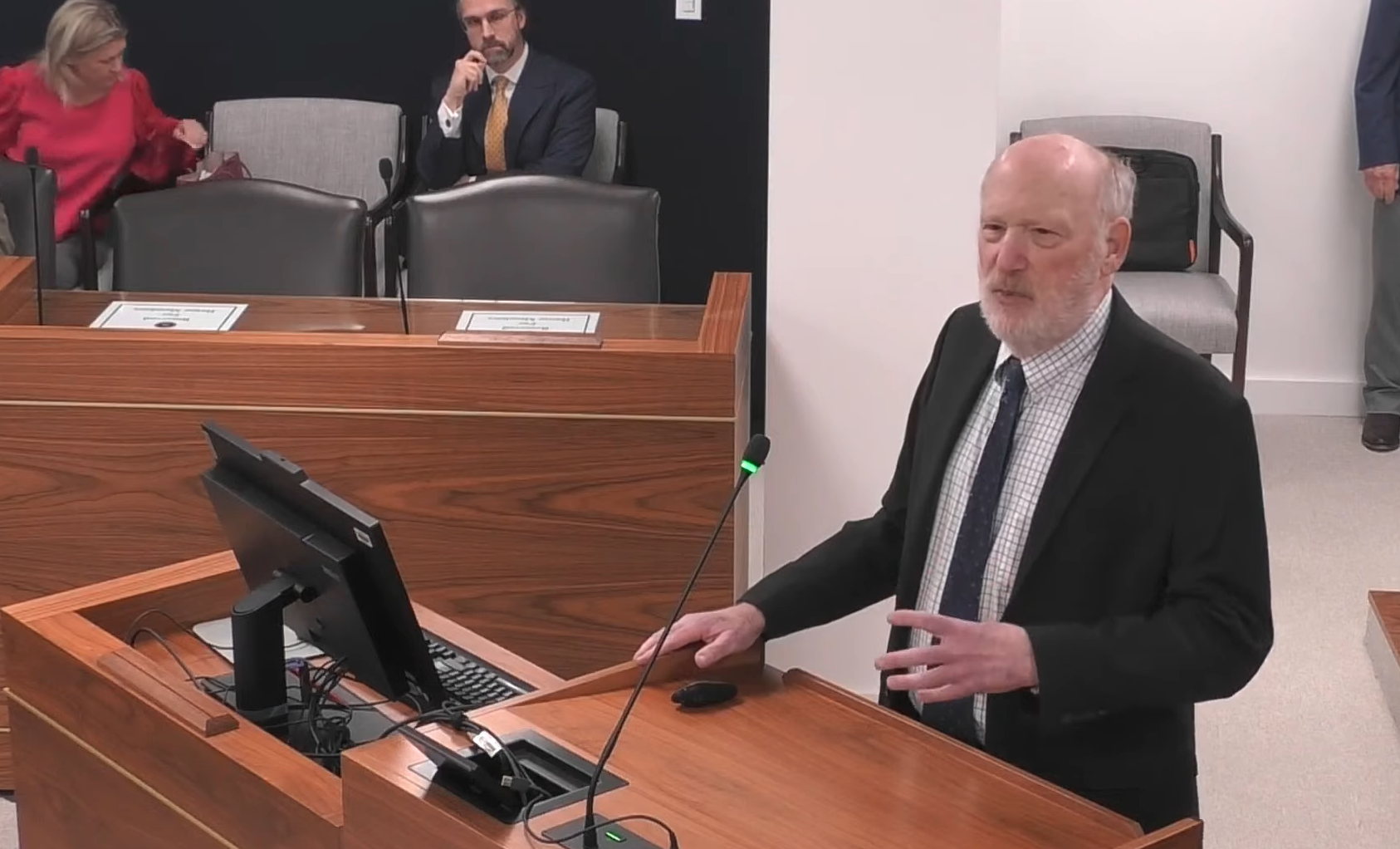
Jones wrote that policymakers considering outpatient commitment “should weigh whether the documented costs of legal coercion, in combination with serious ethical concerns, are justified given the absence of evidence that court orders add benefit beyond what these voluntary services achieve.”
For instance, California launched a program called CARE Court in 2022 in an attempt to get people with serious mental illness off the streets and compel them into treatment. Some families who had struggled for years to get their loved ones help hoped this would finally be the answer.
A couple years into the program, though, many are disappointed by the outcomes. Nonprofit newsroom CalMatters reported that over a two year period, 2,421 petitions for CARE Court were filed, 1,090 were thrown out, 514 voluntary agreements were reached and only 14 CARE plans were involuntarily enforced. That’s in a state with a population more than three times that of North Carolina.
Rep. Tim Reeder (R-Ayden), co-chair of the committee and emergency physician at ECU Health, said that from his perspective the idea of forced treatment is hard to navigate.
He made a comparison to a medical issue: “We have people who have heart attacks and strokes and they continue to smoke. When they do that, they're making bad health choices, but families don't go to the magistrate and take out papers and say they're not taking care of themselves,” he told NC Health News. “It's the balance of patient autonomy versus beneficence and trying to help people.”
The issue of forced medication in the outpatient setting came up during the committee discussion. Rep. Charles Smith (D-Fayetteville), who said he approached the issue from his background as an attorney, pressed Swartz on whether requiring medication compliance in an outpatient setting could be justified, given that the patients in question may lack the capacity to meaningfully consent to — or refuse — treatment in the first place.
Swartz acknowledged the tension but said the answer is as much political as clinical. Forced outpatient medication has been “a red line in every state,” he said.
Over the last 30 years, there has been a shift toward giving people with disabilities, including mental illness, more autonomy. The 1990 Americans with Disabilities Act dictates they cannot be discriminated against for their disability and must be included in community life. The 1999 Supreme Court decision Olmstead v. L.C. went a step further, mandating that people with disabilities live in the least restrictive settings possible. Meanwhile, disability rights advocates contend that North Carolina already overuses and misuses involuntary inpatient treatment in a way that violates patients’ rights and causes long-term harm.
In North Carolina, forced psychiatric medication can only happen under an involuntary inpatient commitment except in emergencies. Noncompliance with an outpatient order can trigger transport to a hospital for reevaluation of their mental state. A patient could be involuntarily admitted to a hospital if they meet the standard of danger to themselves or others, but that threshold requires more than refusing medication.
Proposed changes
As the committee moves to wrap up its work, lawmakers launched an online portal for public comment that will close on April 1.
The state Department of Health and Human Services has proposed a slate of changes to the committee to strengthen North Carolina’s outpatient commitment law. Under the department’s proposals:
- Any petition for outpatient commitment would need to document why it's the most appropriate option for that individual.
- Every court order would include a concrete treatment plan — specifying services, medications and a provider who has already agreed to accept the patient — so that expectations are clear from the start.
- Each patient would be assigned a navigator responsible for ongoing monitoring and care coordination. DHHS proposed extending the maximum commitment period from 90 days to 180 days to allow enough time for stabilization.
- The department proposed expansion and added accountability of intensive wraparound community services teams.
- DHHS also proposed that noncompliance with an outpatient order would result in admission to psychiatric hospital.
Whether lawmakers adopt these recommendations is only the first hurdle. The harder question is whether they can fund it. Any proposed reforms that emerge from this committee — scheduled to be released in a report this spring — will need to clear the legislature and come with real dollars attached. This could be a significant challenge given the budget constraints in Raleigh and in Washington, D.C.
This article first appeared on North Carolina Health News and is republished here under a Creative Commons Attribution-NoDerivatives 4.0 International License.

Medicaid fraud targeting Indigenous communities continues despite AHCCCS reforms
by Jasmine Demers, Arizona Center for Investigative Reporting
February 26, 2026
Nearly three years after Arizona uncovered an unprecedented $2.5 billion Medicaid fraud scandal that targeted Indigenous communities, sober living program operators are still recruiting vulnerable residents into sham treatment programs and billing the state for questionable behavioral health services.
Though Arizona Health Care Cost Containment System officials say the crisis has stabilized in response to ongoing investigations into providers, they acknowledge that fraudulent activity continues.
New behavioral health fraud investigations had dropped from about 1,400 at the scandal’s peak in 2023 to 270 as of August 2025, according to AHCCCS. The figures include both civil and criminal cases, with some providers facing multiple investigations. By comparison, just nine cases were opened statewide in 2019, before the scheme came to light. Agency leaders say that decline reflects new safeguards, tighter billing controls and aggressive enforcement.
But lawmakers, providers and tribal advocates contend the numbers tell only part of the story, as systemic oversight gaps persist and legitimate care for vulnerable patients is disrupted by payment freezes to address fraud. With investigations still open and AHCCCS undergoing its third leadership change since the crisis began, critics question whether the agency has effectively addressed the structural failures that allowed the fraud to flourish.
“Despite public exposure, investigations, lawsuits, media coverage and legislative attention, the same harmful practices remain active,” said Reva Stewart, a Diné activist who has become a central voice for Indigenous communities affected by the crisis. “The system has not been fixed. It has only adapted.”
Fraudulent providers continue to recruit people with American Indian Health Program coverage through social media and informal networks, steering them into unstable substance use treatment programs and billing arrangements designed to maximize Medicaid payments, Stewart said. Her nonprofit, Turtle Island Women Warriors, does on-the-ground outreach and works with victims and their families to report fraud.
“This recruitment is happening in plain sight. It is ongoing, it is organized, and it is being used to funnel people into unstable, unsafe and exploitative environments for financial gain,” she said. “Why is this still being allowed to happen when regulators have known about this practice for years?”
Previous investigations by the Arizona Center for Investigative Reporting and ProPublica found that at least 40 Indigenous residents of Phoenix-area sober living homes and treatment facilities died between 2022 and 2024, as state officials struggled to respond to mounting evidence of widespread fraud. AHCCCS has yet to account publicly for the number of deaths tied to the scheme.
Since August, lawmakers on the Senate’s Health and Human Services Committee have convened a series of oversight hearings to scrutinize AHCCCS’ fraud response and identify weaknesses. During the hearings, behavioral health providers testified that hundreds of thousands of dollars in claims had been delayed or withheld under heightened fraud controls, forcing them to reduce services, treat patients without reimbursement or consider shutting down altogether.
Aimee Graves, chief executive officer of The Haven, a substance use recovery center for women in Tucson, said AHCCCS owes her organization more than $375,000 for services provided to Native American members since October 2023. That shortfall forced the center to reduce the number of available beds last fall.
“There is a severe and persistent access to care (issue) for Native and Indigenous women that we have seen at the Haven,” Graves said. “We absolutely need to be paid in order to keep our doors open and to be able to continue providing these high quality care treatment and programming services.”
She said delays in approving services for Native American patients have continued, even after several one-on-one meetings with AHCCCS leaders.
Agency officials, however, have defended their response, saying AHCCCS is required by law to act when potential fraud is detected, including suspending providers and placing claims under prepayment review. They said the vast majority of claims are paid without delay, and that less than 1% of claims have to go through the review process.
“We know that we’re not completely out of the woods,” Marcus Johnson, AHCCCS deputy director of community engagement and regulatory affairs, said during a hearing. “But we have really gotten through the acute crisis phase of the sober living fraud.”
The fraud at the center of the scandal emerged between 2019 and 2023, when thousands of unlicensed sober living homes and behavioral health providers started exploiting gaps in Arizona’s Medicaid system—particularly within the American Indian Health Program. Operators recruited members of Indigenous communities with promises of treatment, housing and transportation, then billed AHCCCS for services that were never provided.
By the time the state publicly acknowledged the fraud in May 2023, the Medicaid system had already paid out billions of dollars in fraudulent claims. The federal Department of Health and Human Services has described it as the largest fraud scheme to have targeted a single demographic group in recent U.S. history.
In an effort to stem the losses, AHCCCS suspended hundreds of providers in 2023 and enacted policies that halted or substantially delayed payments to those still operating. Previous reporting by AZCIR and ProPublica showed the state’s aggressive response left hundreds of patients homeless and without treatment.
The agency struggled to rein in the crisis under several leaders. Records show that under former Director Jami Snyder, who stepped down in late 2022, AHCCCS failed to alert the public even after receiving warnings that patients were being harmed. Her successor, Carmen Heredia, resigned last May ahead of a confirmation hearing where she was expected to face questions from lawmakers about her handling of the fallout. Early this February, Director Virginia “Ginny” Rountree announced plans to leave after just four months in the role, citing health reasons.
Meanwhile, the Arizona Attorney General’s Office, which is leading the criminal investigations into fraudulent providers, has so far recovered less than 6% of the taxpayer funds lost to fraud. The attorney general is also representing the state in a class action lawsuit filed on behalf of thousands of victims.
According to lawmakers, the recent Senate oversight hearings have revealed not just past failures but ongoing structural problems at AHCCCS, setting the stage for a wave of legislation aimed at reshaping how the agency oversees behavioral health care and the American Indian Health Program.
Among the most consequential proposals is a bill that would require AHCCCS to contract with an outside entity to help administer AIHP. The agency would still oversee the program, but day-to-day administration and care coordination would shift to a managed care organization—like Mercy Care or UnitedHealthcare—starting in October 2027. Those organizations would have the opportunity to compete for the contract.
“AHCCCS’ testimony and written response to this committee confirms that the agency, in its dual role as Medicaid authority and the operational health plan for AIHP, is not adequately equipped to protect the safety of tribal members or the stability of the behavioral health system that serves them,” said Sen. Carine Werner, who introduced the bill. The Scottsdale Republican, who also chairs the oversight committee, said testimony from the hearings exposed deep breakdowns in the way AHCCCS operates the program.
“I do believe the system is so broken that there's no going back,” Werner said.
For Stewart, the Indigenous community advocate, the proposal to shift at least some management of AIHP to an external contractor is a welcome one, and a step she believes is necessary to get rid of bad actors for good.
“I really think that is a legitimate solution,” she said “We've been pushing this for the last three years and asking for something to happen.”
Tao Etpison, vice chairman of the San Carlos Apache Tribal Council, said during a committee meeting in February that the tribe supported the legislation in principle, but recommended several changes to the bill's language.
“Our goal is to ensure that the law is clear, that it honors tribal sovereignty and federal obligations, and that our members can continue to receive timely, culturally appropriate, effective care,” he said.
An AHCCCS spokesperson said agency officials are analyzing the bill and its potential impact, “including the likelihood of significant additional costs to the state.” They also expressed concern about the timeline of the bill’s implementation during the committee hearing, saying it’s not in alignment with federal requirements or their tribal consultation policy.
Werner has introduced several other AHCCCS-related bills this session, including efforts to roll back or limit prior authorization requirements for behavioral health services under AIHP, tighten claims review processes and prohibit agency employees from working from home.
“My hope, my prayer, is that the legislature will seize this moment,” Etpison said. “Close the loopholes, enforce real penalties, place tribes at the center of decision making and restore integrity to a system that must once again serve life and not exploit it.”
Proposed AHCCCS-Related Bills
Following months of oversight hearings scrutinizing the response to Arizona’s sober living fraud scandal, lawmakers this session have introduced multiple bills that would affect how the state’s Medicaid agency reviews claims, oversees behavioral health services and administers the American Indian Health Program.
SB1114: Appropriates $1 million in state funds specifically to combat patient brokering in behavioral health.
SB1115: Prohibits remote work for AHCCCS employees.
SB1116: Requires an individual with relevant clinical experience to review claims denied based on the medical necessity of a behavioral health service covered by the American Indian Health Plan.
SB1122: Prohibits AHCCCS from requiring 100% prepayment review for behavioral health services under the American Indian Health Program, unless a provider fails to comply with a corrective action plan.
SB1171: Requires AHCCCS to notify members also enrolled in federal health insurance marketplace plans about the potential risks, consequences and liabilities of dual enrollment.
SB1346: Reforms fee-for-service procedures and requires AHCCCS to notify providers of any claim deficiencies within 72 hours of submission.
SB1611: Requires AHCCCS to contract with a qualified external entity to handle administration, program integrity and care management for the American Indian Health Program, while retaining oversight authority. Builds in legislative review, including tribal and provider input, before contracts are issued.
This article first appeared on Arizona Center for Investigative Reporting and is republished here under a Creative Commons Attribution-NoDerivatives 4.0 International License.

Opioid settlement applicants question ‘popularity contest’ grant review process as lawmakers weigh changes
by Allen Siegler, Mississippi Today
February 26, 2026
Emilee Shell tried to reconcile two conflicting messages from the state Legislature as staff and clients from the Jackson women’s addiction recovery residence Grace House filled the Mississippi Capitol.

That January morning was Recovery Day, an event designed to connect politicians with those who have experienced substance use disorder in Mississippi. From the Senate floor, lawmakers clapped for Shell, Grace House’s director, and others in the gallery who were recovering from addiction, saying they were proud of everyone’s journeys.
But that recognition came a month-and-a-half after a council the Legislature had tasked with managing hundreds of millions of opioid settlement dollars submitted its recommendations for the first round of state spending. The council members ranked 127 applications last fall into tiers based on how highly they recommended funding projects that aim to address the opioid epidemic.
Grace House’s application was scored in the third of five tiers. That application, which asked for $600,000 to expand medical services for people who’ve completed intensive rehab and are starting to live independently, sat below some applications that proposed approaches experts said could be ineffective at preventing more overdoses.
Shell said the decision was both surprising and expected. She and the Grace House staff were confident its proposal, if funded, would help keep women from relapsing. But Shell saw that in the council’s initial scoring, the majority of money the body recommended in the top two tiers was to organizations with representatives on the council.
“When funding becomes available, it’s like a who’s who popularity contest,” Shell said on Recovery Day.

Across the state, applicant organizations that work to treat and prevent opioid addiction have told Mississippi Today they worry the council did not fairly consider their plans to prevent more overdoses. They pointed to the potential for council member conflicts of interest and how the subcommittee grading wasn’t standardized.
Because of that, Shell said she thinks the state could miss out on funding Grace House and other organizations run by people with decades of experience addressing Mississippi’s addiction crisis — organizations with ideas that could save lives.
“I feel like we were definitely overlooked,” she said.
Some lawmakers who helped create the advisory council also question the public body’s recommendations. House Public Health and Human Services Chairman Sam Creekmore, a Republican from New Albany, saw the advisory council process play out last fall as a non-voting committee member. As it did, he told Mississippi Today he saw both the amount of work council members put into reviewing the applications and the imperfections of the process.

Creekmore said he plans to spend time during the meeting of House Appropriations, the committee that is expected to review the applications and a body he’s a member of, revisiting lower-tier applications he thinks were scored incorrectly. A bill lawmakers passed last year allows the Legislature to accept or reject any of the advisory council’s recommendations, even those from the lower tiers.
“We can award some deserving people,” he said.
Mississippi Attorney General Lynn Fitch, the chair of the council, did not respond to an email asking for her thoughts on lawmakers changing the council’s recommendations. Last fall, her office said the council has some rules to prevent conflicts of interest from influencing committee decisions.
But this type of legislative intervention could signal that the advisory council process has gone awry, according to Tricia Christensen. An independent drug policy consultant in Tennessee, she said governments across the country task specialized committees with recommending how this lawsuit money should be spent.
Few, however, have looked to reclaim most of the decision-making for themselves when elected officials don’t get the recommendations they want.
“What’s the point of the process if the ultimate decision power is just going to come in and decide they want to fund this thing anyway?” Christensen asked.
‘We have the trust of our community’
When Jason McCarty was recovering from addiction in Mississippi, he didn’t initially know who could connect him with what he needed to stay sober, he said. For people in similar circumstances, access to safe housing, steady employment, support from those who’ve experienced addiction and other long-term resources help prevent relapse.
Now six years sober and the program development strategist at the United Way of the Capital Area, McCarty said that’s a big reason why the organization applied for about $1 million of opioid settlement funds. The proposal seeks to enhance the nonprofit’s 211 phone and text line, which helps connect people to resources like food banks, medical appointments and rental assistance.

United Way submitted a proposal to employ phone operators with experience addressing addiction and tailor resources specifically for those with opioid use disorder, in addition to expanding its efforts to prevent teen drug dependence.
The state advisory council ranked the application in the lowest of the five tiers. McCarty said he tried reaching out to a committee member about why it scored so low, and he never heard back.
He was disappointed that unlike some applicant organizations with representatives on the board, United Way didn’t get the opportunity to explain its proposal in front of the scorers.
“Some of the applications basically got to do question-and-answer in the middle of the session,” he said.
Each year since 2022, Mississippi has been paid tens of millions of opioid settlement dollars, money that is supposed to help respond to the overdose public health crisis. But 15% of those dollars — the money controlled by the state’s towns, cities and counties — is unrestricted and being spent with almost no public knowledge. Mississippi Today spent the summer finding out how almost every local government receiving money has been managing the money over the past three years.
Read The Series
At least one proposal from a smaller agency wasn’t even considered by the council. Leaders for the Corporation For Global Community Development, the nonprofit charity arm of the Jackson Revival Center Church in South Jackson, tried to submit an application requesting $250,000. It wanted to provide outreach, mental health services and other social services to people in underserved parts of Hinds County.
But the application never showed up on any of the public council drafts that were supposed to list all applicants. Mississippi Today reviewed an email chain that shows the nonprofit submitted its proposal two minutes after the council’s submission deadline. Fitch did not respond to an emailed question asking whether the council received the corporation’s application.
The council gave applicants only six weeks to finalize dozens of application pages, which smaller organizations said was difficult to accomplish. The committee itself missed a deadline codified in state law last year to appoint all its councilmembers by June 9, which it did about a week later.

Evelyn Edwards, the corporation’s executive director, said no one from the council ever told her or her staff why the committee members never listed the application. She said omitting the application will delay the organization’s work to reach people in Hinds County struggling with addiction, especially those who are distrustful of other medical systems.
“We have the human capacity,” Edwards said. “We have the trust of our community, that’s number one. They’ll come, they’ll participate in those things.”
Ruby Denson, a nurse practitioner who leads the organization’s current efforts to address addiction and mental illness, said she was also disappointed the advisory council ranked McComb-based clinic Healing Horizons in the third of five tiers. The application asked for $83,000 to make the best treatments for opioid addiction and overdose prevention tools more available in Pike County.
Denson said she’s worked with Laquana Daniels, the psychiatric nurse practitioner from McComb who runs Healing Horizons, and she thinks that organization is as well-equipped to address Pike County’s addiction crisis as any group could be. Denson said because of Daniels’ education and community involvement, Daniels could make a big public health impact with a relatively small amount of money.
“It would definitely benefit her community in that McComb area,” Denson said.
Making changes with those most impacted
Senate Appropriations Chairman Briggs Hopson, a Republican from Vicksburg, said he expects his committee to review the advisory council’s opioid settlement recommendations soon after it is finished working on agency budgets. Like Creekmore, he thinks his chamber will review the recommendations of the council to see which projects should be funded.

When making those decisions, Hopson said he’ll be looking for applications that will make strides toward stopping an epidemic that’s killed over 10,000 Mississippians since 2000.
Christensen, the drug policy consultant, said legislative leaders should also consider revisiting the advisory council process that led them to question that body’s decisions. Senators and representatives have taken steps to ensure they can continue adjusting Mississippi’s opioid settlement laws before the end of the regular session.
She thinks it would be worth using opioid settlement money, including the funds the Legislature and Fitch have designated for general purposes, to help improve that process. If lawmakers make those adjustments, Christensen said she thinks it’s important for lawmakers to get input from Mississippians most affected by the crisis.
While the state doesn’t have a formal process for Mississippians to testify about legislation, Christensen said it should be on lawmakers to include the voices of those most impacted by the opioid epidemic, who might have effective ideas for improving the advisory council.
“They shouldn’t just be making these decisions independently behind closed doors,” she said.
This article first appeared on Mississippi Today and is republished here under a Creative Commons Attribution-NoDerivatives 4.0 International License.