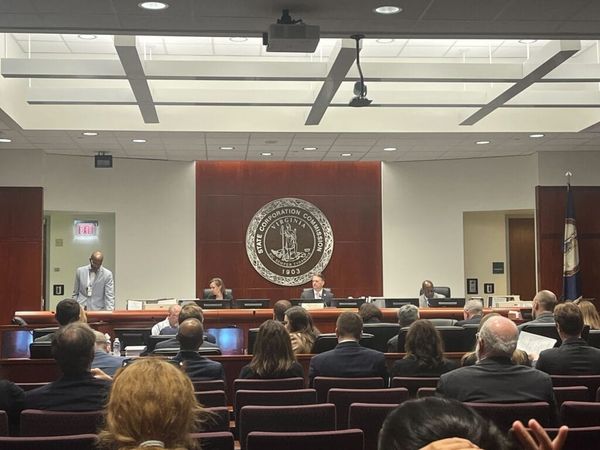
Alaska resident defends run for U.S. Senate against state investigation
They spent years in solitary confinement in Mississippi despite suicide risk; New Orleans public defender, deputy constable both out of a job after allegedly soliciting cash to fix traffic ticket.


It's Friday June 12, 2026 and in this morning's issue we're covering: Dan Sullivan of Petersburg defends run for Alaska’s U.S. Senate against state investigation, They spent years in solitary confinement in Mississippi despite suicide risk, Stringent FDA regulations made one of the most effective drugs for treatment-resistent schizophrenia difficult to access, North Carolina Sues Chemical Company for Polluting a Nearby Creek, Minnesota woman with large ovarian cyst released from ICE detention in El Paso, New Orleans public defender, deputy constable both out of a job after allegedly soliciting cash to fix traffic ticket.
Media outlets and others featured: Alaska Beacon, Mississippi Today and The Marshall Project, Arizona Center for Investigative Reporting, Inside Climate News, El Paso Matters, Verite News.
Dan Sullivan of Petersburg defends run for Alaska’s U.S. Senate against state investigation
By Corinne Smith (Alaska Beacon) Published: June 11, 2026
The Alaska lieutenant governor’s office, which oversees state elections, announced an investigation into the validity of a U.S. Senate candidate from Petersburg following complaints from Alaska’s incumbent senator with the same name, Dan Sullivan.
Dan J. Sullivan of Petersburg formally responded to the state’s challenge on Wednesday, calling it an affront to his rights. He maintains his candidacy for U.S. Senate is authentic, and said he’s running to challenge the Republican incumbent U.S. Sen. Dan S. Sullivan to represent Alaskans.
On Monday Lt. Gov. Nancy Dahlstrom, a Republican, announced the investigation into the candidacy of Sullivan of Petersburg and sent him a list of questions to answer under sworn affidavit. She noted that false statements carry the penalty of perjury. She said the results of the investigation would determine whether he may appear on the August 18 primary ballot.
Republican incumbent Sen. Sullivan has served two terms in the U.S. Senate. The two Sullivans are among 16 candidates for the U.S. Senate for a six-year term.
Sen. Sullivan has complained that Sullivan from Petersburg is a “sham candidate” and says his challenger is intentionally misleading voters to benefit a ranked-choice vote for Democratic candidate and former Alaska U.S. House Representative, Mary Peltola. The Alaska seat is the focus of both Republicans and Democrats nationally, as it could be key for Democrats to win back control of the U.S Senate this November.
In a prepared statement announcing the investigation, Dahlstrom questioned Sullivan’s candidacy and said there are “credible allegations” that the Petersburg Sullivan filed to run with the same name and party affiliation as the incumbent “with the deliberate intent to confuse voters.”
Dahlstrom said the Alaska Division of Elections has a responsibility to protect the integrity of elections. “Serious allegations have been raised concerning this filing in the race for U.S. Senate, and the people of Alaska deserve a thorough and transparent investigation to ensure that the election is carried out properly and without deception,” she wrote.
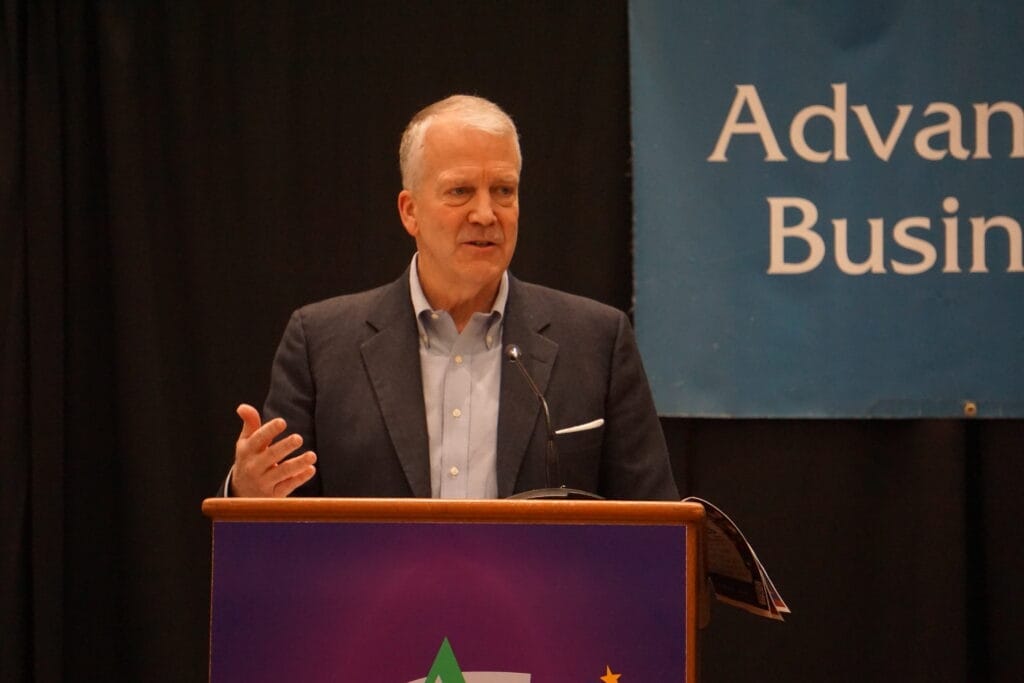
Dahlstrom and officials with her office declined interview requests on Tuesday and Wednesday. In response to a request that the lieutenant governor’s office explain the legal basis for Dahlstrom’s actions, her chief of staff said officials in the office were unable to comment because the issue remains under active investigation.
A spokesperson with the Alaska Division of Elections declined to comment, referring questions back to Dahlstrom’s office. A spokesperson for the state’s Department of Law declined to say which law Sullivan may have violated with his candidacy, citing the ongoing civil matter of the inquiry. The spokesperson pointed to Alaska criminal law regarding perjury — where the state must prove beyond a reasonable doubt that a person knowingly made a false sworn statement — which is a class B felony.
Dan J. Sullivan, a retired teacher and resident of Petersburg for nearly 50 years, announced his candidacy for the U.S. Senate on May 29, sparking national interest, questions, and criticism from the incumbent. He said he’s running to benefit Alaskans, that he was surprised at the incumbent’s criticisms and the state’s announcement, which he learned about via a text from a reporter on Monday evening.
“My name is my name. The ballot belongs to the people and not to the incumbent,” he said in an interview Tuesday.
SUBSCRIBE: GET THE MORNING HEADLINES DELIVERED TO YOUR INBOX.
“Our names would be listed on the ballot different, our websites — I don’t look like the senator, he doesn’t look like me — they’re not identical,” he said. “I’m not sure how that would fool someone. If you went to my website and thought that I was the senator, that would be rather absurd.”
Dahlstrom gave Sullivan a deadline of noon on Wednesday to respond to a series of questions regarding his affiliation with the Republican Party, names he has used to register to vote, design decisions on his campaign website and logo and whether he has coordinated with the Democratic Party.
Alaska Democratic Party executive director Jenny-Marie Stryker said by email Tuesday her organization “is in no way affiliated with either Dan Sullivan.” A spokesperson for the Peltola campaign did not respond to a request for comment.
Dahlstrom also asked Sullivan if he would object to his name appearing on the ballot at “Sullivan, Daniel James Jr. (non-incumbent)” and without a Republican party designation.
Sen. Sullivan’s campaign applauded the state’s action. “We welcome the Lieutenant Governor’s investigation and have full confidence the facts will speak for themselves. Alaskans deserve to know exactly how this candidacy came about — who recruited it, who’s paying for it, and who benefits from it. The answer to that last question is Mary Peltola,” said Sullivan’s campaign manager Billy Mackey, by email on Wednesday.
Sen. Sullivan and the National Republican Senatorial Committee, which works to elect Republicans to the U.S. Senate, have spoken out against the Petersburg Sullivan’s candidacy.
It isn’t clear why the lieutenant governor is investigating Sullivan of Petersburg. Candidates in other races have had similar iconography and names. In 2022, Republican state House candidate Forrest Wolfe used iconography and advertising similar to that used by Democratic U.S. House candidate Forrest Dunbar, drawing complaints from progressives.
Two years ago, Democrats in some legislative races said they believed candidates registered as Democratic under false pretenses in order to take votes away from coalition-minded Republicans. No investigations took place at that time.
It also isn’t clear why Dahlstrom is suggesting a different listing on the ballot for Sullivan Petersburg. State regulation already prescribes what should happen if two identically named candidates appear on the same ballot. “For example, under the ‘S’ placement, ‘Smith, John A.’ will appear before ‘Smith, Walter W.’ and ‘Smith, John A.’ will appear before ‘Smith, John L.’,” it states.
Sullivan, from Petersburg, said he will continue to defend his candidacy, and submitted a strongly-worded letter responding to the Lt. Gov. on Wednesday.
“The law forbids your office from denying me access to the ballot just because Senator Sullivan and the NRSC would prefer I not be allowed to run. This investigation by your office – and coordination of it with the press – is an unprecedented affront to my rights as a candidate and the rights of Alaska voters to select their own representation in the U.S. Senate,” he wrote.
In an interview Tuesday, he said he’s confident in Alaska voters, and doesn’t think the similar names will cause confusion.
“I would hope that everyone who enters the voting booth knows who’s running for office and knows why they want to vote for someone,” he said.
Sullivan said he was a life-long registered Independent, but since the Alaska Independence Party disbanded last year, he registered as a Republican. He said he considered himself a centrist, an old school Republican like his father and grandfather, and one who can work across party lines for the benefit of Alaskans, like U.S. Sen. Lisa Murkowksi.
Sullivan said he’s seen quality of life decline in his home town of Petersburg, with a lack of improvements in ferries, healthcare, housing, schools and cost of living rising — and decided to run to attempt to improve those things for Alaskans. He said his name gives him an “instant megaphone” and said Sen. Sullivan is part of the problems he sees at home.
“He’s been there 12 years, and what do we have to show for it? And if we elect him again, that’s for another six more years, 18 years of stagnation. So that’s where I thought the problem was, and that’s where I figured I might as well make my stand,” he said.
He said he’s disappointed in the senator’s response and had expected Sullivan to run his incumbent campaign based on his own record and merits.
“It’s really as simple as if there’s enough people out there that, you know, feel the same way as I do, they’re going to vote for me, and if there’re people who feel like the senator is doing a great job, then they’ll vote for him,” he said.
Mackey, campaign manager for Sen. Sullivan, said the candidate is entitled to his views.
“Senator Sullivan is happy to debate his record of delivering for Alaska: record infrastructure investment, energy projects, and support for our fisheries and military communities — against anyone, anywhere in the state,” he said. “What Alaskans won’t tolerate is a scheme designed to confuse voters and manipulate the outcome of a Senate election. If this candidacy is as authentic as he claims, the investigation should be welcome news to him too.”
Sullivan from Petersburg said he’ll comply with the state’s investigation and continue to defend his candidacy. He said if the state decides he’s not qualified he can go back to fishing, but he’s going to stick with it as long as he can.
“I think it’s really important, not even just for me, but for future elections that they don’t limit people just because an incumbent senator is concerned that I’m going to eat into his vote count, that’s really absurd,” he said. “It kind of boggles my mind, so you know, we’ll see where it goes.”
James Brooks contributed to this story from Juneau.
SUPPORT: YOU MAKE OUR WORK POSSIBLE
They spent years in solitary confinement in Mississippi despite suicide risk
by Mina Corpuz, Daja E. Henry, The Marshall Project and Grant McLaughlin, Mississippi Today
June 9, 2026
Danny Austin has been out of prison for over a decade. These days, he focuses on life with his wife in north Mississippi and his work as a commercial truck driver. It’s not often that he reflects on his incarceration — especially the four years he spent in solitary confinement.
That was a bleak time at the Wilkinson County Correctional Facility. He still remembers the view looking outside his single cell. The noises of other incarcerated menmates, sometimes in crisis, banging on their doors. The smell of cells that were hardly ever cleaned.
“I’'m not bitter about it anymore,” said the Corinth resident, who was released from prison after he left solitary.
Restrictive housing, as state corrections officials call it, exists across the Mississippi prison system, and the use of solitary confinement has persisted across multiple administrations for decades.
A 2024 investigation by the U.S. Department of Justice called the torturous conditions inside the state’s restrictive housing units “breeding grounds for suicide, self-inflicted injury, fires, and assaults.”
At least 47 people died by suicide while in restrictive housing in Mississippi prisons in the past decade, records from the Department of Corrections and the State Medical Examiner’s Office show. An investigation by Mississippi Today, The Marshall Project-Jackson and the Clarion Ledger found that a majority of the suicide deaths occurred in solitary confinement, despite evidence that it intensifies mental illness and heightens the risk of suicide.
READ MORE: Even on death row, not all things are equal
And despite calls to end solitary confinement, and the growing research about its negative effects and fatalities, the Department of Corrections regularly holds incarcerated people in isolation for weeks, months, and, in some cases, years at a time.
“I don’t think I should have been in that long, and I don’t think we should have been treated like that,” said Austin, who was incarcerated for home burglary.
Spokesperson Kate Head said MDOC uses restrictive housing in at least four prisons, but she did not indicate how long the practice has been going on. In a statement, she said it is used “as a last resort for housing an inmate who poses a threat to themselves, property, staff, other inmates, and/or the operation of the facility.”
The department did not comment on specific cases of suicide in solitary confinement, nor on the experiences of formerly and currently incarcerated men in solitary.
Developing suicidal thoughts years into incarceration
Quintez Hodges entered Unit 32 of the Mississippi State Penitentiary at Parchman in 2001, days before his 21st birthday. He was on death row, convicted of capital murder and kidnapping.
At the time, Unit 32 was a solitary confinement unit. More than 1,000 people were there, ranging from those on death row to those with mental illnesses and people with lesser charges who had gotten a disciplinary violation.
In 2002, the ACLU filed a lawsuit challenging the staggering conditions of that unit: People lived in profound isolation with malfunctioning toilets that exposed them to human waste from other cells, mosquito infestation, punishing summer heat that would raise the heat indexes in the cells to more than 130 degrees, all underscored by the constant screams of people with severe mental illnesses. "Suicides and attempted suicides occurred with alarming frequency," according to the suit.
As one judge described it, Unit 32 was “a tinderbox about to explode."
The ACLU’s lawsuit closed down Unit 32, and a majority of its inhabitants were reclassified and transferred from solitary confinement. Hodges was sent to Unit 29, where death row was housed until as recently as last year.
In 2010, a federal district court judge vacated Hodges’ death sentence based on poor legal representation and inaccurate testimony. He began looking forward to seeing and touching his family again, said Joesph Patri Brown, who has been on death row for more than 30 years and met Hodges there.
Things had started to look up. But, Brown said, in his view, the state still killed Hodges.
Just shy of 20 years in prison, Hodges died by hanging on Feb. 27, 2021. He was found in his cell with a bedsheet around his neck. His cause of death was ruled undetermined. Despite his change in status, he had remained in solitary confinement.
A winter storm had swept through Mississippi in the weeks leading up to Hodges’ death. Unit 29, which contained multiple buildings of restrictive housing, was without water and electricity. Incarcerated people and their families drew attention from the media. Soon after, officials turned the heat on in the unit.
Brown said he believes the heat was turned to the extreme in retaliation for drawing media attention. MDOC logs during the time period leading up to Hodges’ death showed the temperature reached a high of 145 degrees and averaged around 128 degrees.
“I had to chew on a pen cap to make saliva,” Brown said.
Hodges complained about the heat repeatedly. He had asthma, and it got to be unbearable, Brown said. According to the Justice Department’s investigation into Parchman, Hodges expressed suicidal thoughts for the first time in his 20-year incarceration. No suicide risk assessment was completed. Two weeks later, he was dead.
“This is not a f—ing suicide. They were killing this man,” Brown said in an interview. “Even though he may have put that rope around his neck, MDOC hung that man with that rope. All they had to do was turn that f—ing heat down.”
MDOC did not respond to findings about Hodges’s death in the DOJ report. In a statement, Head, the department spokesperson, said prison staff receive ongoing training for suicide prevention, including verbal cues, behavioral warning signs and environmental risk factors.
“Security staff will ensure that more frequent observations are conducted for suicidal inmates,” she said in the statement.
Limited ways to pass time in solitary
Austin, the formerly incarcerated man, entered the prison system about a year after Hodges, and not long into his sentence, he was in restrictive housing.

In 2004, he was sent to Parchman’s Unit 29 for 18 months because he got into a fight with other prisoners. Austin was released from solitary in 2006 and sent to the Marshall County Correctional Facility, but he wasn’t there long.
He stabbed another person during a brawl, and his punishment was a transfer into solitary confinement at the Wilkinson County prison, which is over 300 miles south.
Head, the MDOC spokesperson, said that before someone is placed in restrictive housing, medical staff employed by the department’s mental and medical healthcare provider evaluate them to ensure they're suitable for restrictive housing.
In the statement, she did not define what makes someone suitable for solitary confinement or the criteria that medical staff use to allow someone to be placed there.
On his own in solitary, Austin said he didn’t have much to do. His solution was to use blood pressure medication to help him sleep through most of the day. Other men would pass him the pills when they were on cleaning duty in the dorm.
“I slept most of the time because I couldn't read. I didn't have books and I didn't have a pen or paper, and I couldn't use the phone,” Austin said. “So, it was just like standing at the bars, listening and talking or sleeping and just thinking about, you know, going home.”
MDOC policies say Austin, who was released in 2010, should have been placed in solitary for a specified amount of time, but Austin said he was not told how long he would be in restricted housing.
He remained there four years until his release. MDOC policies also state that people are not supposed to be released from prison directly from restricted housing.
For the first two months and then at least every 30 days afterward, a classification committee or authorized staff group is supposed to evaluate anyone in solitary every seven days to determine whether the person should remain in restrictive housing, according to policy. But Austin said he didn’t receive an evaluation until two years into his isolation.
A lieutenant and two women he said he didn’t recognize asked him questions about why he did what he did to end up in restricted housing. They said they would see about getting him out, but Austin said nothing happened.
While Austin found a way to cope with the isolation, he said that not everyone did. He remembers seeing others call for the prison guards, yell and kick the doors. Some were shackled and taken somewhere else and returned calmer.
“Sometimes … they would leave, and you wouldn't see them (again),” Austin said.
He experienced similar problems as those in solitary confinement today, including limited time outside of his cell and outside in recreational areas. Austin also reported not receiving information about how long he was supposed to stay in restrictive housing and when his placement there would be reviewed.
“Everybody deserves to get a shower every day and eat regular meals and at least have some pen and paper or a book to read,” he said.
‘Mama, don’t worry about me. I’ll be okay'
Olander Dedeaux has been in solitary confinement at the Walnut Grove Correctional Facility Unit 1D since Dec. 18 and is expected to be there for months more, if not longer.
Having already spent more than a decade in prison, a third of his 30-year sentence, he found a routine to communicate with his family. That’s why his mother Laurie Saucier sensed something was wrong when he didn’t call on Christmas and New Year’s Day. She reached out to a prison advocate, and both women began their search for Dedeaux.
His family and supporters were able to find him through a victim services platform that listed a location change. Dedeaux was unable to tell them where he was because he was not allowed to use the phone during his first three weeks in solitary.
Saucier, who lives on the Gulf Coast, remembers seeing online posts about prison deaths around the time she lost contact with her son. She said her anxiety spiked and she prayed Dedeaux was alive.
Months later, she is able to speak with him, but Saucier has noticed how Dedeaux tries to shield her from what he’s experiencing in solitary confinement.

“He said, ‘Mama, don’t worry about me. I’ll be okay,” Saucier said. “... ‘Baby,’ I said, ‘No, I'm gonna always worry.’”
A spokesperson from MDOC did not respond to whether or not family members are informed when a loved one is moved into solitary confinement.
Dedeaux remains in a single-person cell for all but four hours a week, which is when he’s let out to shower. On those days, he exercises. The rest of his days are spent sleeping. Infrequently, he and other men are taken outside in cages to get some fresh air.
“It's almost unbearable when you’re awake,” his advocate, Nicole Montagano, said he told her.
Dedeaux, who was convicted of second-degree murder and possession of a controlled substance, says it’s hard to sleep in a unit where the lights are on for up to 23 hours a day.
Since arriving in solitary, he said his mental state has worsened and doctors have increased the anxiety medication his mother said he has been on since he was a child and taken more consistently since his incarceration.

“Whenever I see officers that have keys, my heart rate goes up. I don’t know if they’re coming for me again,” Dedeaux said in a recorded phone call with Montagano from March that she shared with the news team.
Montagano, executive director of Hope Dealers Prison Reform, said she can hear it in Dedeaux’s voice that he’s not doing well.
Head, the MDOC spokesperson, said inmates in restrictive housing receive additional screenings, behavioral health assessments from a qualified healthcare professional in line with their mental health needs. She added that medical services are available to those in restrictive housing on a scheduled and unscheduled basis, at the request of an inmate or staff member.
Dedeaux said being transferred across the state from north Mississippi was confusing, and he still questions how he ended up in solitary.
Once Dedeaux arrived at Walnut Grove, prison staff gave him paperwork showing he was in a “Security Threat Group management unit,” a 270-day program with three levels and 90-day stints. In order to leave restrictive housing, he will need to “satisfactorily complete” various educational courses, according to the paperwork shared with the reporting team.
Such management units are meant for people who pose a security threat and have security threat group status, which generally means gang affiliation. Commissioner Burl Cain has used Walnut Grove as a place to house gang leaders and prisoners with serious behavior issues, including extortion.
Prison officials said Dedeaux was relocated and placed in solitary confinement because of a rules violation accusing him of taking part in gang activity and acting as a gang leader.
A Rules Violation Report from Dec. 18 said Dedeaux held a state rank with the Gangster Disciples, which MDOC considers a security threat group. The violation came nearly a week after he went to his barber class at the Marshall County Correctional Facility, where prison investigators said Dedeaux worked with another inmate.
Video of the Dec. 12 barber class shared with Mississippi Today shows Dedeaux walk in and take a seat. As the class fills up, a prisoner named Robert Fisher sits next to him and occasionally they chat as others cut hair, have their hair cut or observe. People come in and out of the classroom for haircuts, including prison Superintendent Frank Caswell.
After his haircut, Fisher gets the superintendent's attention and briefly speaks with him. Occasionally, Dedeaux is seen looking in their direction or nodding his head. The superintendent leaves after the conversation is over.
No audio accompanies the video, but it was enough for both men to be issued a Rules Violation Report for “involvement in disruptive, assaultive or criminal gang activity.” Fisher and Dedeaux, ended up in solitary confinement at Walnut Grove.
A spokesperson for MDOC did not comment about Dedeaux’s placement in solitary and the alleged gang membership and activity that served as the basis of the rules violation report.
Dedeaux has denied being in a gang and coordinating with Fisher that day in barber class.
Fisher, who prison investigators have also accused of being a gang member, wrote in a March affidavit that Dedeaux and another man had nothing to do with his interaction with Caswell, which he described as asking a question.
Earlier in his incarceration, Dedeaux was in a gang, but Montagano said he has taken efforts to renounce affiliation. An October 2024 completion certification shared with the news team shows Dedeaux completed the Moral Compass Program, which is part of efforts by MDOC to reduce the gang population.
Dedeaux said he used to feel like he was working toward rehabilitation, and the barber class was a chance to learn a skill that could be useful once he left prison. Now he’s in restrictive housing where he only has access to courses he can complete on his own inside his cell.
“It’s supposed to be rehabilitation, but it’s all a trap,” Dedeaux said about solitary confinement. “And it’s more than me going through it.”
Montagano, Dedeaux’s advocate, questions whether the rules violation is valid.
Since January, she has reached out to prison officials requesting more information, including the justification for Dedeaux’s confinement. Montagano traded a few emails with the prison’s Office of Constituent Services, but no answers came.
Dedeaux gave Montagano power of attorney so she could talk with MDOC on his behalf, but the department won’t, citing medical information privacy protections.
“We appreciate your persistence,” MDOC’s constituent services office wrote in a Feb. 13 email to Montagano, three weeks after her first email.
“This office has no additional information to provide. Therefore, we will not be able to respond to further correspondence regarding this matter. We appreciate your understanding.”
By April, Montagano spoke with Caswell, the Marshall County prison superintendent. She explained that she wanted a better understanding about what happened with Dedeaux because the little information she and his mother had received was vague.
Caswell said he wished he could tell her more and reiterated that she doesn’t have the complete picture of the situation. Over the course of two calls he did not share additional information about why Dedeaux was still in solitary confinement.
Grant McLaughlin, who now works for Lagniappe Daily, has continued working on this project since he was a reporter at the Clarion Ledger.
This story was published in partnership with Mississippi Today, The Marshall Project - Jackson, a nonprofit news team covering Mississippi’s criminal justice systems, and the Clarion Ledger.
This article first appeared on Mississippi Today and is republished here under a Creative Commons Attribution-NoDerivatives 4.0 International License.

Treatment Interrupted
Stringent FDA regulations made one of the most effective drugs for treatment-resistent schizophrenia difficult to access. Despite reforms, clozapine remains out of reach for hundreds of thousands who could benefit.
by Alexandra Markovich, Arizona Center for Investigative Reporting
June 8, 2026
Panicked calls flooded the 911 dispatch center in Amarillo, Texas around 9 a.m. on March 21, 2023. Witnesses described a man in overalls and a green T-shirt pointing a rifle at motorists southwest of downtown.
Within minutes, dispatchers fielded more than a dozen calls from the scene, a commercial strip with fast food joints, dive bars and loan shops. Two patrol cars raced to the area. In front of a budget motel, police found Kevin Langemeier. He was white, balding and middle-aged, with a thick beard and a hulking physique. Despite the 49-degree weather, he was barefoot.
Police said Langemeier was aiming a weapon at a van pulling into the parking lot, and when ordered to drop it, he raised it at one of the officers instead. Police opened fire, killing him.
The man’s family released a lengthy statement in a local news outlet three days later. Langemeier had severe mental illness, they explained, and had been abruptly cut off from clozapine—the medication that kept his delusions in check—after his refill was denied because his lab results failed to reach the pharmacy. Within days, Langemeier spiraled into psychosis.
On the morning of his death, he left home on foot, clutching his brother’s BB gun.
If he hadn’t been denied his medication, his family believed, the man who loved Hot Wheels and making people laugh would still be alive.
“We don’t blame the police,” the family’s statement concluded. “We believe this story is primarily about the failing of the mental health system.”


Clozapine is widely considered the most effective treatment for patients with schizophrenia who do not respond to other drugs. But across the U.S., people repeatedly lost access to it because of a federal monitoring system that could block prescriptions over missed or delayed blood tests. Such interruptions can trigger rapid relapse into psychosis, sometimes with fatal consequences.
The system was meant to guard against a rare but dangerous drop in white blood cells called neutropenia. Federal regulators, however, have acknowledged they don’t know whether the clozapine Risk Evaluation and Mitigation Strategy program, known as REMS, worked as intended. Families, doctors and advocates have argued that the harms caused by the system outweighed its protections.
A few days after Langemeier’s story circulated online, a mental health activist named Rachel Streiff awoke around midnight in her Phoenix area home and reached for her phone. She’d been tagged in a social media post with an article about Langemeier and immediately recognized his circumstances.
Other mothers were already weighing in.
“This should never happen,” wrote one.
Another prayed Langemeier’s death would be “the catalyst to fast track the urgent change” needed.
“Why such a life-saving medication is not easier to access and available is just not acceptable,” added a third.
Streiff replied: “We are trying.”
For years, Streiff had organized with parents, patients and clinicians to expand access to the drug. She started by trading advice with caregivers on a clozapine support Facebook page, then helped found The Angry Moms, which focused on lobbying the FDA to end or at least modify the restrictive clozapine regulations. The members’ personal stories amplified concerns that researchers had raised for years.
Although persistent stigma and misconceptions about its safety persist, clozapine outperforms other medications in clinical trials for treatment-resistant schizophrenia. It remains the only FDA-approved medication for these patients, and for reducing suicidal behavior.
Today, the average dose of clozapine costs around $3 per day, but it’s prescribed to just 150,000 of the roughly 1 million people who could benefit from it, according to the FDA.
The blood monitoring system—and years of warnings about clozapine’s risks—helped deter psychiatrists from prescribing the drug, which already required careful dosage and monitoring for other serious side effects like heart inflammation and bowel obstructions. Advocates say the result is a legacy of confusion and caution that still limits access today.
For Streiff, Langemeier’s death was not an isolated tragedy. It was the predictable result of a system that, in trying to protect patients, was putting them in danger.
In late November 2024, Streiff and dozens of Angry Moms members converged on the leafy suburb of Silver Spring, Md., the day before an FDA advisory committee was scheduled to reconsider clozapine’s blood monitoring regulations. They were parents of children with severe schizophrenia, patients who had stabilized on the drug, and advocates who had spent years pressing regulators.
Streiff and two other moms from Arizona spent the day searching for an affordable group dinner spot and visiting four stores to buy red nail polish, part of the Angry Moms’ signature look. In the afternoon, Streiff sat at the dining table, extending her hand as another mom applied the first coat.
“These aren’t glossy enough,” Frances Musgrove complained, cocking her head in disapproval.
Musgrove lives for months at a time in Streiff’s spare bedroom in Tempe, while caring for her adult son with schizophrenia at a nearby psychiatric residential facility. He’d previously spent years living under freeway overpasses in Austin, Texas, and endured more than 70 psychiatric hospitalizations.
Streiff is green-eyed and brusque, with the intensity of a former collegiate athlete who meets emotion with action. Like most of the Angry Moms, Streiff became an advocate after a relative developed psychosis. When he got better, Streiff turned her attention outward, helping dozens of people get on clozapine and sharing information about it with hundreds more.
“There’s two things that help people with schizophrenia: doctors and lawyers,” she explains. “If you want to help your kid, you need to know medicine and the law.”
"There’s two things that help people with schizophrenia: doctors and lawyers. If you want to help your kid, you need to know medicine and the law."
Rachel Streiff
The activists gathered that evening in a corporate hotel meeting room, swapping stories over salad and flatbread. Some had lost children to the disease before finding clozapine. When the plates were nearly empty, Streiff stood and the room grew quiet.
For 35 years, she said, the FDA's “cruel, barbaric” monitoring system had allowed pharmacies to block patients from receiving a medication that often worked when nothing else did. Countries like Canada, Australia, New Zealand and China frequently prescribed clozapine, so why did so few people in the U.S. have access to it?
“So, tell me this. Why is some random mom who’s pissed off in Arizona bringing this up?” she demanded. “I mean, where has everyone been for 35 years? Why is it taking mothers to do anything?”
Around the room, heads nodded.
Streiff ceded the floor to Angela Brisbin, an activist from Missouri with soft eyes and big curly hair. Mothers closed their eyes as Brisbin offered a prayer.
“The FDA seems like this giant that cannot be conquered,” she said. “But, Lord, I know that, just as David killed Goliath with just a little pebble and a slingshot, that we can bring this mountain down with your help.”

The following morning, the Angry Moms arrived at FDA headquarters in matching red manicures and black T-shirts that read: “Clozapine is the safest antipsychotic in the world.” Streiff found a seat in the third row of an oversized conference hall as other mothers filled the chairs behind her.
By day’s end, the advisory committee members taking their seats would vote on a central question: Were the FDA’s blood monitoring requirements necessary for the safe use of clozapine?
Dr. Tiffany Farchione, the FDA’s silver-haired psychiatry chief, opened the meeting with a startling admission: The agency was not sure whether its blood testing program was actually effective in detecting severe neutropenia, the disorder it was designed to catch.
“We don’t know whether the REMS program is meeting its goal,” Farchione said. “We are also aware that there are concerns about the burden the REMS may have on stakeholders and patient access.”
A 2021 overhaul of the system had inadvertently disrupted clozapine access nationwide, prompting complaints from caregivers, criticism from Congress, at least one lawsuit from a psychiatrist and repeated calls for reform. Yet the monitoring framework remained largely intact.
Next up were pharmaceutical leaders and medical experts, who agreed clozapine had unique benefits and was underused. They differed, though, on how much they thought the monitoring program was to blame.
The afternoon was devoted to public comment. Ten mothers, four people with schizophrenia, and more than a dozen doctors and psychiatrists testified to the consequences of losing access to clozapine—or not having it at all.
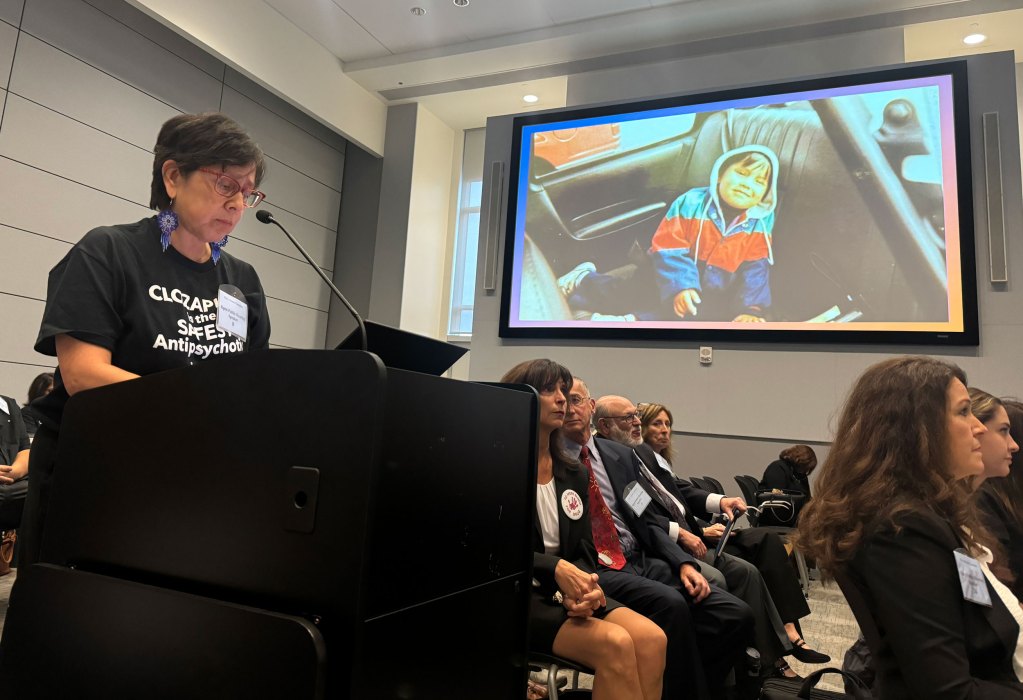
When it was Streiff's turn, she spoke of the thousands of patients who’d had their refills blocked by mistake during the REMS overhaul.
"Did anyone investigate those outcomes?" she asked. "Are they dead, jailed, institutionalized? How many completed suicide?"
Analisa Chase, a 32-year-old behavioral interventionist from Washington state, explained how missing a single blood draw led to a five-week psychiatric hospitalization. “I now live in fear that a logistical problem or misinformed pharmacist will block my clozapine prescription,” she said.
Another woman read a statement from her daughter, Joni Martin, who could not attend because she was still recovering from a clozapine interruption nearly three years earlier.
“For two decades, I was well, and now I’ve lost all of that,” Martin wrote. “One five-day loss of clozapine has ruined my life.”
"For two decades, I was well, and now I’ve lost all of that. One five-day loss of clozapine has ruined my life.”
Joni Martin, clozapine patient
Other speakers recounted repeated suicide attempts, years of homelessness and dozens of psychiatric hospitalizations. One woman said her son was stabilized on clozapine to stand trial, only to lose any chance of early release when the drug was discontinued in prison and his psychosis returned.
Many testimonies ended with the same refrain: “The greatest risk of clozapine is not getting clozapine.”
As committee members listened, several looked shaken, raising their eyebrows or wiping away tears.
One, a psychiatrist, said he had been persuaded to abolish the REMS program by the "intensity of suffering" described by patients and families. The meeting chairperson called the system "not tenable."
Then came the vote.
Within seconds, the tally appeared on the screen: 14 of 15 members thought the clozapine REMS was unnecessary. The lone dissenter, a psychiatry professor from California, said he preferred a scaled-back version of the program.
In the halls of the FDA, the Angry Moms hugged and posed for a group picture before heading into downtown Silver Springs to celebrate.
The FDA would spend the next few months deliberating in private, deciding whether to keep the monitoring program, modify it or abolish it.
Long before mothers took on the FDA, schizophrenia was considered untreatable.
Early therapies offered little more than gruesome trial and error. Patients were subjected to extreme medical interventions ranging from castration to the removal of other organs. In the 1940s and ‘50s, doctors performed lobotomies that left tens of thousands with permanent brain damage. Admissions to psychiatric hospitals swelled, with little hope for recovery.
A breakthrough came in 1952 with chlorpromazine, commonly known by its brand name Thorazine, the first drug to quiet psychosis. Though the new medication wasn’t a cure, it softened the intensity of delusions. Still, many were left with little relief.
Clozapine, introduced in the 1970s, was the first drug to control psychosis without causing the repetitive movements that had become part of the illness’s public face. Its emergence challenged the prevailing understanding of schizophrenia and raised the possibility of recovery for more patients.
But its promise vanished almost as quickly as it appeared. In 1975, a cluster of clozapine patients in southern Finland developed a rare blood disorder, and eight died from infections. Clozapine trials were immediately halted, and the drug was pulled from the market.

In the United States, a researcher named Gil Honigfeld shut down his clinical trial but kept a small number of the sickest patients on clozapine through a compassionate-use program. Years later, Honigfeld returned to the half-completed trial and found that clozapine had outperformed Thorazine—the first sign that anything could.
A landmark double-blind study followed, and in 1989, the FDA approved clozapine.
Now 91, Honigfeld still gets emotional about his work. In a public library near his home in Princeton, the “Godfather of Clozapine” took off his glasses and wiped away tears as he reflected on that landmark study.
“That was the one where we were apparently dead in the water,” he said. “As it turned out, we ended up in the resurrection business.”
FDA approval came with stringent protocols. Fearing a repeat of the Finnish fatalities, regulators required weekly blood monitoring and mandated a black box warning, the FDA’s strictest labeling.
Still, clozapine patients did remarkably well. They were less likely to be hospitalized or attempt suicide. In a disease where half of people with schizophrenia will make such an attempt in their lifetime, only 7% of those on clozapine did over two years.
The risk of severe neutropenia also turned out to be relatively rare. Only 12 of 100,000 people taking the drug over five years died of the disorder.
Despite its success, clozapine was never widely adopted. Newer antipsychotics were easier to prescribe and heavily marketed, even if they didn’t work as well for the sickest patients. Without a champion, clozapine remained a drug of last resort.

After the FDA hearing, Streiff returned to Psych ZenHealth, a small mental health clinic in midtown Phoenix where she helped clinicians a few hours a week to facilitate access to clozapine.
One afternoon in January 2025, in an office lit by fluorescent overhead lights, Streiff tightened a blood pressure cuff around the arm of a 14-year-old boy while his little sister, 9, swiveled in an office chair. Jimmy and Bella, a pair of adopted children, were the day’s first clozapine patients—and by far the youngest.
Jimmy was diagnosed with bipolar disorder with psychosis at age 5. He’d been talking to a “scary nurse,” then started begging his mother, Michelle Smet, for a gun and running into oncoming traffic. The family tried multiple medications over seven years that sedated him but failed to control his psychosis. A psychiatrist told Smet about clozapine—but refused to prescribe it.
When Smet contacted Psych ZenHealth, Streiff called back right away. Clozapine stopped Jimmy’s violent outbursts and broke his cycle of hospitalizations. He started playing with friends again and learned to read.
When Bella started having visual and auditory hallucinations at age 7, Smet “didn’t skip a beat.” She called Streiff and asked to put Bella on clozapine. “It’s the only thing that helped (Jimmy). I’m not having her lose her childhood over it.”
Streiff had built much of her work around cases like this, connecting desperate caregivers to treatment, fielding calls when prescriptions fell through and helping troubleshoot access. She quit her engineering job two years earlier to get finger-stick devices that test for the rare blood disorder into homes and clinics.
Soon, the next patient would arrive at the clinic. “I need more time. I need a clone,” Streiff said, before ushering Bella to her appointment. She has seen firsthand the burden placed on mothers when the mental health system fails.
“Mothers are the new asylums,” she often says.
Five weeks later, Streiff entered the PsychZen office and saw her phone light up with a message.
“Congrats,” the text read.
It was from Gordon Lavigne, the head of Schizophrenia & Psychosis Action Alliance, one of the nonprofits that helped lead the push to overhaul REMS alongside the National Alliance on Mental Illness.
Lavigne told her the FDA had made an announcement: The REMS program was eliminated. Streiff’s eyes welled with tears.
“It was kind of a speechless moment,” she recalled.
She opened the FDA website to see the announcement herself: “Although the risk of severe neutropenia with clozapine still exists, FDA has determined that the REMS program for clozapine is no longer necessary to ensure the benefits of the medicine outweigh that risk.” The change, the FDA said, aimed to increase access to the medication.
Streiff posted the announcement on the support Facebook page.
“Breaking,” she wrote. “FDA ends the Clozapine REMS.”
The page immediately lit up with celebration and thanks.
“Our voices are a powerful tool for change. This proves it,” one mother wrote.
“Goosebumps that won’t stop coming,” wrote another.
For a moment, they could dream about what else was possible: expanding clozapine access globally, developing a better schizophrenia drug without the side effects—maybe even finding a cure.
But right away, mothers began reporting that pharmacists didn’t understand the new rules, or weren’t complying.
“There’s been mass confusion at pharmacies,” Streiff said later. “It’s a typical, confusing FDA rollout.”
In April, Streiff got a call from a hospital whose pharmacy was refusing to dispense clozapine to a 32-year-old woman—Streiff’s legal ward—because they couldn’t find a blood test.
Exasperated, Streiff interrogated the pharmacist, explaining the FDA decision and threatening to file a grievance. She tracked down the missing blood test and complained to the Arizona Health Care Cost Containment System, the state’s Medicaid agency.
The woman missed just one dose.
“It’s still acceptable to torture a patient with schizophrenia by withholding their clozapine just for the sake of a routine blood test—still,” Streiff said.
By summer, reports of denials slowed. Pharmacies no longer had to register with the REMS, and more of them started stocking clozapine.
But with one barrier gone, another surfaced: Many doctors continued to mandate blood tests to get a prescription refill. The drug’s package insert still recommended the strict monitoring regimen REMS had required, leaving providers exposed to liability if they chose to deviate from it.
Others declined to prescribe the drug at all, deterred by complex dosing and side-effect management. No one had fixed the training gap that left as many as 40% of psychiatry residents uncomfortable with the drug in the first place.
“It’s not one thing,” said Deanna Kelly, a psychiatry professor specializing in clozapine research. “It’s lack of education. It’s lack of confidence in our patients getting their blood draws. It’s a system that's broken. It’s reimbursement rates that don’t help people get paid for complex care.”
Clozapine utilization rates haven’t budged since the REMS program ended, according to experts.
Kelly said she would like to see the U.S. develop treatment guidelines for clozapine—similar to what was issued in Europe last year—and a national training program for clinicians to increase prescription rates.
In the meantime, Streiff went back to work advocating for the drug and coaching mothers to educate providers about the FDA’s updated guidance.
“No one understands the risk-benefit math,” Streiff said. “Failing to use clozapine is so much more deadly than the risks of the drug itself.”

On the morning of Dec. 22, 2025, 10 months after the FDA’s decision, a deputy was responding to a vehicle collision in Mesa when he heard a woman screaming.
He drove toward the sound and stopped just north of a budget motel, where he found Gina Huskey crouched at the edge of a 5-foot drop to an overgrown drainage canal.
“He’s dead,” she shouted. “He’s dead.”
At the bottom of the canal lay Huskey’s son, Richard Valenzuela. He had closely cropped hair, a mustache and goatee, and wore socks with no shoes. His body was bent into a fetal position with an Arizona Cardinals hoodie beside him.
The medical examiner determined that Valenzuela, 30, died from an overdose of meth and fentanyl. Valenzuela, who went by Richy, had schizophrenia, and had used drugs to cope.
Months earlier, Valenzuela had been prescribed clozapine in a residential treatment program. His condition improved. After he was discharged, his grandmother thought he finally seemed happier, able to relax on the couch with the family’s two chihuahuas.
But his outpatient clinic, Copa Health, made him visit twice a week to get the pills. The rides the clinic coordinated were unreliable, Huskey said, and Valenzuela found it all too much to manage. He asked to be switched to a less burdensome medication. The provider agreed, and he deteriorated again.
Darwyn Chern, Copa Health’s chief medical officer, said he understood the frustration of families like Huskey’s.
He believes providers have a moral imperative to consider clozapine for treatment-resistant patients and supported ending the federal monitoring program to give the clinic more flexibility to skip blood draws. But he defended some level of monitoring as medically necessary.
“There’s risk in everything we do,” Chern said. “We have to somehow still learn how to negotiate and make acceptable compromises without endangering the patients’ lives. And listening to patients is also important.”
On the day her son went missing, Huskey texted Streiff for help.
“Hi my name is Gina—sorry it’s late,” she wrote. “Is there a special protocol to get the police to find my son?”
Streiff helped Huskey make a plan to call a crisis hotline and contact the clinic. Streiff would make a missing person poster.
The next morning, Huskey and her mother drove around the neighborhood looking for Valenzuela. Her mother spotted one of his sandals near the edge of the canal. By the time Streiff called Huskey that morning to check in, she had already found her son’s body.
“Anger is not even the right word,” Streiff said. “Rage. Outrage.”


In the days after Valenzuela’s death, Streiff helped draft Arizona Senate Bill 1716, also known as Richard’s Law, named after Valenzuela. The law would give patients the right to waive clozapine’s blood monitoring requirements and prohibit withholding the medication over a missing blood test.
Streiff hoped the bill would improve access for people in Arizona, where more than 21,000 of those insured by the state’s Medicaid agency had a schizophrenia diagnosis as of summer 2025. Among them, just 1,180 were prescribed clozapine.
She found a willing lawmaker in Sen. Lauren Kuby, a Democrat representing parts of Maricopa County. But Kuby’s bill failed to get a hearing, despite being assigned to multiple committees. Kuby said she intends to try again next session.
The clozapine revival Streiff had hoped for hardly felt any closer. On the Facebook page, mothers continued posting when doctors required a blood test or said they wouldn’t prescribe the medication.
“I keep going in between hope for the future and despair,” Streiff said. “Today, it’s despair.”
In Crisis?
National suicide prevention: call or text 988
National substance use and treatment hotline: 1-800-662-HELP (4357)
Arizona statewide crisis line: call 1-844-534-HOPE (4673) or text 4HOPE (44673)
Services available by county and tribal community
Support groups and advocacy organizations:
- Team Daniel on Facebook: advice and mutual aid about clozapine
- Arizona Mad Moms
- Angry Moms
- Schizophrenia & Psychosis Action Alliance: resources and peer support
- National Alliance for Mental Illness in Arizona
This article first appeared on Arizona Center for Investigative Reporting and is republished here under a Creative Commons Attribution-NoDerivatives 4.0 International License.

North Carolina Sues Chemical Company for Polluting a Nearby Creek
Since 2023, the city of Durham has fined Brenntag $157,000 for violations related to water contamination.
By Lisa Sorg
June 10, 2026
This article originally appeared on Inside Climate News, a nonprofit, non-partisan news organization that covers climate, energy and the environment. Sign up for their newsletter here.
DURHAM, N.C.—Acetone and ethanol, 1,4-dioxane and “mucilaginous goo.”
For decades, state regulatory documents show, a chemical repackaging and distribution company in Durham has discharged high levels of toxic chemicals, as well as other unknown substances, into a neighborhood creek that flows behind an elementary school, through a public park in a predominantly Black neighborhood, and into a major drinking water supply.
Now, the North Carolina attorney general is suing Brenntag Mid-South on behalf of state regulators over the alleged illegal releases, according to a complaint filed Monday in Durham Superior Court.
The complaint alleges that Brenntag is violating North Carolina’s water quality laws. The state is asking the court to require the company to submit a plan to eliminate the discharge and clean up previous contamination within 30 days.
“I’m thrilled that the attorney general is intervening in this longstanding environmental injustice in Durham,” said City Councilman Nate Baker. “The residents living around Burton Park and further downstream have suffered too long from the negligence of a large corporate neighbor, and it is time the harms rendered be repaired.”
A company spokesperson told Inside Climate News that Brenntag does not generally comment on ongoing litigation. Earlier this year the spokesperson provided a statement: “Brenntag Mid-South is committed to collaboration in this investigative process and continues to expend internal and external resources and expertise in coordination with local authorities.”
Brenntag Mid-South is a subsidiary of a global chemical company based in Germany. That company, Brenntag, reported $1 billion in gross profits in the first quarter of the year, according to public financial documents.
Brenntag purchased the Durham property and its corporate owner, Southchem, in 2001.
Over the last year the state Department of Environmental Quality, or DEQ, has repeatedly cited Brenntag for multiple violations related to water quality and reporting. Yet the company has failed to improve on both counts, according to the complaint. It has yet to file several required documents, including a plan to eliminate the discharge, the state said.
Instead, the company has asked for extensions and then blown those deadlines, the complaint said.
“Residents of Durham, and across this state, deserve clean water,” DEQ Secretary Reid Wilson said in a prepared statement. “It’s our job as the state environmental agency to ensure that companies are following the law, and today we take another step toward ensuring that for those living downstream of this facility.”
Based on testing data, state and city officials believe the groundwater is the source of the contamination, which then discharges into the creek through a pipe at the property line. Groundwater monitoring conducted in March by a Brenntag contractor showed that levels of more than a half-dozen chemicals exceeded state standards, including known carcinogens benzene and trichloroethene, also called TCE.
Brenntag has long known about groundwater contamination at the site. The property at 2000 E. Pettigrew St. is a former cotton mill, which operated from the late 1800s through the 1930s and had its own lagoon.
A Brenntag spokesperson told Inside Climate News last year that the issues affecting the creek “are complex and may be the result of multiple sources that are not yet known with certainty. Brenntag has taken numerous steps in close coordination with the City of Durham to help address these issues.”
Some of the polluting groundwater leaving the Brenntag site could originate from previous industrial processes. However, the plant has a long history of poor housekeeping: State records show inspectors have repeatedly found leaking and rusted barrels of chemicals, including as recently as November.
Regardless of the source, the company is still responsible for keeping contaminants from leaving the property. Since the city issued a no-discharge order in 2023, Brenntag has collected and shipped its water off-site and installed a remediation system to treat the groundwater. However, the company shut off the system two years ago without explanation, state records show.
“There is stuff buried under there,” Durham stormwater quality manager Michelle Woolfolk told the City Council last month. She said city officials had required Brenntag to test and identify a black material found in the creek, which the company had yet to do.
Since 2023, the city of Durham has fined Brenntag $157,000 for various violations but has yet to collect the penalties in hopes the company would fix the problem. But Brenntag hasn’t done so, according to Woolfolk’s presentation to the City Council last month.
“The contamination is getting worse,” Haw Riverkeeper Emily Sutton, who routinely samples the creek, told the City Council. “It’s an ongoing public health and environmental crisis. It’s time to collect the penalties and accrue new ones until the discharge stops.”
Testing conducted by Brenntag contractors in April showed levels of acetone at 19,400 parts per billion, nearly 10 times the state surface water standard. Concentrations of ethanol have ranged from 25,000 to 144,000 parts per billion—five to almost 30 times the maximum allowed in surface water.
The chemical 1,4-dioxane, which the Environmental Protection Agency concluded has the potential to cause cancer, consistently exceeded the agency’s health advisory goals.
“These are not historical readings,” Sutton said. “It’s what’s in the water right now.”
In August 2023, the city fenced off the creek after Brenntag contractors detected high levels of acetone, toluene and ethanol in water at its property edge a half-mile upstream. City officials also collected what Woolfolk described as a ropy, brown “mucilaginous goo” from the creek.
Since then, the creek, which runs through Durham’s oldest and largest public housing community, has been off-limits.
However, there are gaps in the plastic fencing, and it is easy to get into the creek.
“I played in creeks all the time growing up,” said City Councilwoman Javiera Caballero. “What are the kids in the neighborhood doing? It’s hot. People will play in the creek.”
The contamination problem has persisted since at least the mid-1990s, state records show, when high levels of at least a dozen chemicals were detected in the groundwater and in stormwater runoff at the property.
At times the creek has reeked so badly, a state environmental specialist wrote in 2004, that “Durham police have been called in to look for dead bodies.”
Brenntag owns two other facilities in North Carolina, in Greensboro and Charlotte.
The Greensboro plant has a groundwater remediation system, installed by a previous owner, to treat contamination caused by spills and leaks that occurred before Brenntag purchased the property as part of a merger in 2000.
DEQ has fined the Charlotte plant $83,000 since 2022 for improperly storing hazardous waste, failing to have an adequate evacuation plan and incomplete recordkeeping.
Minnesota woman with large ovarian cyst released from ICE detention in El Paso
by Robert Moore and Cindy Ramirez, El Paso Matters
June 4, 2026
After nearly four months in Immigration and Customs Enforcement detention in El Paso while in need of surgery for an ovarian cyst, a 23-year-old Minnesota woman originally from Guatemala has been released.
Andrea Pedro Francisco said ICE officials told her Wednesday that she would be freed, then released her later that day.
“It was a shock, it surprised me greatly. I was finishing eating when they told me I had to have a meeting. Suddenly, ICE told me that today I was going to be released, and I asked them, ‘Why, where am I going?’ They told me I was going home,” she said in a statement provided to El Paso Matters on Thursday by her attorney, Ruby Powers of Houston. “And I was just stunned because I truly did not know that yesterday I was going to be released. I didn't know what to do. I thought it was like a joke because I wasn't expecting it.
“Now that I know I'm going home, I think first of my family, of seeing my family again. And of my (musical) instruments, because they are like a part of my life. And also, since they told me I will need surgery, I am preparing myself for that."

Pedro Francisco, from Burnsville, a suburb in the Twin Cities, was arrested Feb. 5 during Operation Metro Surge – the sweeping ICE raids in Minnesota that saw more than 4,000 federal agents deployed and led to more than 3,000 arrests. She was immediately flown to El Paso for detention, where she was held until she was freed Wednesday, said Powers, who is representing Pedro Francisco in her asylum case.
The release was a surprise, Powers said, and she was still trying to piece together the conditions of the release.
“I think she was starting to lose hope, and I mean, the timing of this is …” the attorney said, and began sobbing.
“We really needed this right now, because her hearing was going to be moved until the end of July, and I wasn't really sure if she's going to make it,” Powers said in a phone interview with El Paso Matters. “I know she'll be emotionally sustained when she sees her family, and then I'm going to keep pushing her, like anyone who cares about someone, making sure she schedules her medical treatment.”
Sen. Tina Smith, D-Minnesota, reached out last week to a senior Trump administration official to request that she be released, said Smith’s spokesperson, Charlotte Hoffman. She wouldn’t publicly identify the administration official, but Hoffman said the senator was informed shortly before Pedro Francisco was released Wednesday that she was being freed.
A spokesperson for the Department of Homeland Security didn't respond to questions from El Paso Matters about why ICE had released Pedro Francisco after previously denying her requests. The spokesperson instead provided details of treatments and medication she was provided while in custody.
ICE had previously denied Pedro Francisco’s request for humanitarian parole, and an El Paso federal judge had denied her habeas corpus petition seeking release.
Minnesota officials who had sought Pedro Francisco’s release celebrated Thursday.

“Her ovarian cyst presents potentially life-threatening complications if left untreated, and she was in incredible pain,” said Sen. Tina Smith, D-Minnesota. “Now she will be able to get the lifesaving medical care she should have been able to receive back in February.”
Rep. Angie Craig, also a Minnesota Democrat, who visited Pedro Francisco in El Paso last month, said she was “beyond happy and relieved” to hear of her release.

“Andrea didn’t deserve to be detained in the first place, and she certainly didn’t deserve to be denied the care that she desperately needed for months,” Craig said in a statement. “Andrea’s perseverance and courage in the face of such inhumanity has inspired me — and so many in our community — to continue our work together to hold ICE accountable for their cruel and lawless enforcement operations in Minnesota. Her release is proof that when Minnesotans come together to resist this administration, we prevail.”
A donor has arranged for Pedro Francisco to fly home to Minnesota, Powers said, but she didn’t want to provide details to protect her client’s privacy.
She was sent Feb. 5 from Minnesota to ICE’s East Montana Detention Facility, known as Camp East Montana, and became ill two days later. She was hospitalized, and a doctor confirmed she needed surgery. She was prescribed pain medications but never received them, her attorneys have said. She was returned to Camp East Montana and later transferred to the ICE El Paso Service Processing Center near the airport.
Powers has described her client’s cyst as being the size of a tennis ball.
SEE ALSO: Nearly 180 ICE detainees quarantined at Camp East Montana for possible measles exposure
Pedro Francisco came to the United States with her mother at age 16 in 2019. They were fleeing violence and discrimination against Indigenous people in her native Guatemala, Powers has said. The two had been living in Minnesota, working as house cleaners, and were pursuing asylum claims.
She was denied humanitarian parole May 4.
Her case has garnered international attention with human rights groups such as Amnesty International calling for her release.
1 p.m. Friday, June 5: This story has been updated with information on the Department of Homeland Security's response to El Paso Matters' questions about why Immigration and Customs Enforcment decided to release Andrea Pedro Francisco.
An earlier version of this story incorrectly suggested that Andrea Pedro Francisco had ovarian cancer. She is being treated for an ovarian cyst.
This article first appeared on El Paso Matters and is republished here under a Creative Commons Attribution-NoDerivatives 4.0 International License.

New Orleans public defender, deputy constable both out of a job after allegedly soliciting cash to fix traffic ticket
by Katie Jane Fernelius, Verite News New Orleans
June 10, 2026
A New Orleans public defender and a deputy constable with New Orleans First City Court are both out of a job after alleged misconduct — brought to the offices’ attention by Verite News — involving a source who claimed that the lawyer, Lawrence J. Galle, and the deputy constable, Charles Culpepper, attempted to solicit payment from her in return for help in fixing a traffic ticket.
On Tuesday (June 9), Lauren Barron went to the New Orleans Municipal and Traffic Court in the hopes of contesting a speeding ticket she had gotten earlier this year. But when she entered the court building on South Broad Street, paper ticket in hand, a deputy constable — one of a pair working that day — approached her and asked to see her ticket.
According to Barron, the deputy constable then claimed that if she contested the ticket and lost, she could owe potentially as much as $1,600. He also suggested that her car insurance might increase if she simply paid the fine outright, costing her in the long-term.
She said that the deputy constable then offered to call his friend, a lawyer he referred to as “Galle,” who could get it taken off her record — for only $400.
Barron said she told the deputy constable she only had $300 in cash on her, which she had brought in case she needed to pay court fines or fees. The deputy constable told her that she could use Zelle or CashApp to pay the lawyer his fee, since she didn’t have the full amount on hand.
“I was like, ‘OK, like I want to be done with this,’” Barron said. “I wanted to contest it and show them my evidence and be done with it and stop having to miss work.”
About 15 minutes later, the lawyer appeared, Barron said. He took Barron’s speeding ticket, then said he would take care of the matter and get back in touch with her later that day so she could pay him.
“I left thinking, ‘That is not right, but I'm going to go ahead and leave,’” Barron said.
Barron left the court and went to work. When she recounted the story to her colleagues, they immediately raised alarm bells over the interaction, saying it sounded fishy. They urged her to go online and pay her speeding ticket there. When she went online, she saw that the total cost of the ticket was approximately $161, so she decided to pay it right then.
Later that day, she received a call from the deputy constable, who initially pretended to be the lawyer, Galle. Barron said she already paid her ticket — and that the deputy constable did not sound like Galle. The deputy constable then changed course and said that “his guy,” Galle, took care of the matter and would call her.
Shortly after that, Galle called Barron and said that he was responsible for the fact that her ticket ultimately cost so little. She said that he also told her that she had other citations on her record, which Barron was unaware of. He threatened to have her charges reinstated if she did not pay him. Barron said that if he provided paperwork, like a contract or proof that he had done what he said he had done, she would be happy to pay him. Galle then ended the call.
Barron shared the two phone numbers that called her with Verite News. One of them — the second number that called her — matched Galle’s listed phone number on the directories for the Louisiana State Bar Association and the Louisiana Attorney Disciplinary Board. It was also associated with a CashApp account under the name Lawrence Galle. The other phone number matched a CashApp account under the name Charles Culpepper.
Galle is listed on the Orleans Public Defenders website as a staff attorney for the Municipal and Traffic Court. Public defenders provide free legal service to low-income defendants facing criminal charges. Galle also is a member of the Alcoholic Beverage Control Board after being appointed last year.
When shown an image of Galle, retrieved from a 2025 City Council meeting where he was appointed to the Alcoholic Beverage Control Board, Barron confirmed that he strongly resembled the lawyer who approached her.
Culpepper is an employee of the First City Court Constable’s Office. The Constable’s Office provides security at the Municipal and Traffic Court.
“We are aware of the concerns,” said Lindsey Hortenstine, the communications director for the Orleans Public Defenders office, when contacted by Verite News. “Mr. Galle no longer works for OPD … as of today.”
After being contacted by Verite News and notified about the allegation, Lambert Boissiere Jr., the Constable of First City Court, initially said that Culpepper had been put on administrative leave and that his office would be investigating the matter. Bossiere confirmed that deputy constables are not allowed to engage in cash transactions at traffic court.
Boissierre later called Verite News to say that Culpepper had been "terminated for unethical behavior."
Monique Boissiere, the judicial administrator for the court, did not immediately respond to Verite News when contacted.
Culpepper and Galle also did not immediately respond to a request for comment when contacted by phone.
A Verite News reporter visited the court on Wednesday (June 10), the day after Barron’s encounter, and approached Culpepper, who was wearing a badge identifying himself. When asked about the allegations, he and another deputy initially denied knowing anything about the matter. Culpepper eventually said that he may occasionally give recommendations, when asked, for lawyers that people can use to contest traffic tickets.
A man who appeared to be Galle joined the conversation at one point. When asked by Verite News about the allegations, he denied that he was Galle, before briskly walking away.
In retrospect, Barron felt that Culpepper and Galle were targeting people who looked like they might have cash on hand. She observed other people — including a woman with a nice handbag — being approached by Culpepper.
“So often it feels like we accept the hand that’s been dealt us in New Orleans — like inexplicably high gas bills or corrupt courts,” Barron said. “This experience has shown me that people can expose wrongdoing and powerful people can be held accountable when we speak up. I hope this changes something for good and results in meaningful change for the people in this city.”
This story has been updated to reflect Charles Culpepper’s termination from the First City Court Constable’s Office.
If you have been solicited for money at New Orleans Municipal & Traffic Court in return for help with a ticket, we want to hear from you. Please contact reporter Katie Jane Fernelius at kfernelius@veritenews.org.
This article first appeared on Verite News New Orleans and is republished here under a Creative Commons Attribution-NoDerivatives 4.0 International License.