Louisiana communities are left in the dark on toxic air — and industry helped keep it that way
N.C. audit clears up one Rocky Mount utility headache, draws attention to another; How South Carolina Prisons Are Limiting Access to Books; WVU Health leadership failed to address painkiller thefts for years as opioids devastated West Virginia

It's Friday July 24, 2026 and in this morning's issue we're covering: Louisiana communities are left in the dark on toxic air — and industry helped keep it that way, Mark Sanford joins crowded race for US Senate with familiar warning on government overspending, State audit clears up one Rocky Mount utility headache, draws attention to another problem, How South Carolina Prisons Are Limiting Access to Books, OPINION: Rising health insurance exchange costs are bad news for Mississippi’s working poor, As college graduates fret over finding jobs, a record shortage of workers is projected, This Dane County community helped pioneer a national movement for aging together, WVU Health leadership failed to address painkiller thefts for years as opioids devastated West Virginia; Orleans DA’s office withholding critical case records from law firm reviewing wrongful convictions.
Media outlets and others featured: Floodlight, South Carolina Daily Gazette, Carolina Public Press, Prison Journalism Project, Mississippi Today, The Hechinger Report, Wisconsin Watch, Mountain State Spotlight, Verite News.
Lawmakers weakened community air monitoring as industry pushed back against greater scrutiny.
By Ames Alexander/Floodlight
This story is from Floodlight, a nonprofit newsroom that investigates the powers stalling climate action, in partnership with The Guardian and with contributions from The Louisiana Illuminator. Sign up for Floodlight’s newsletter here.
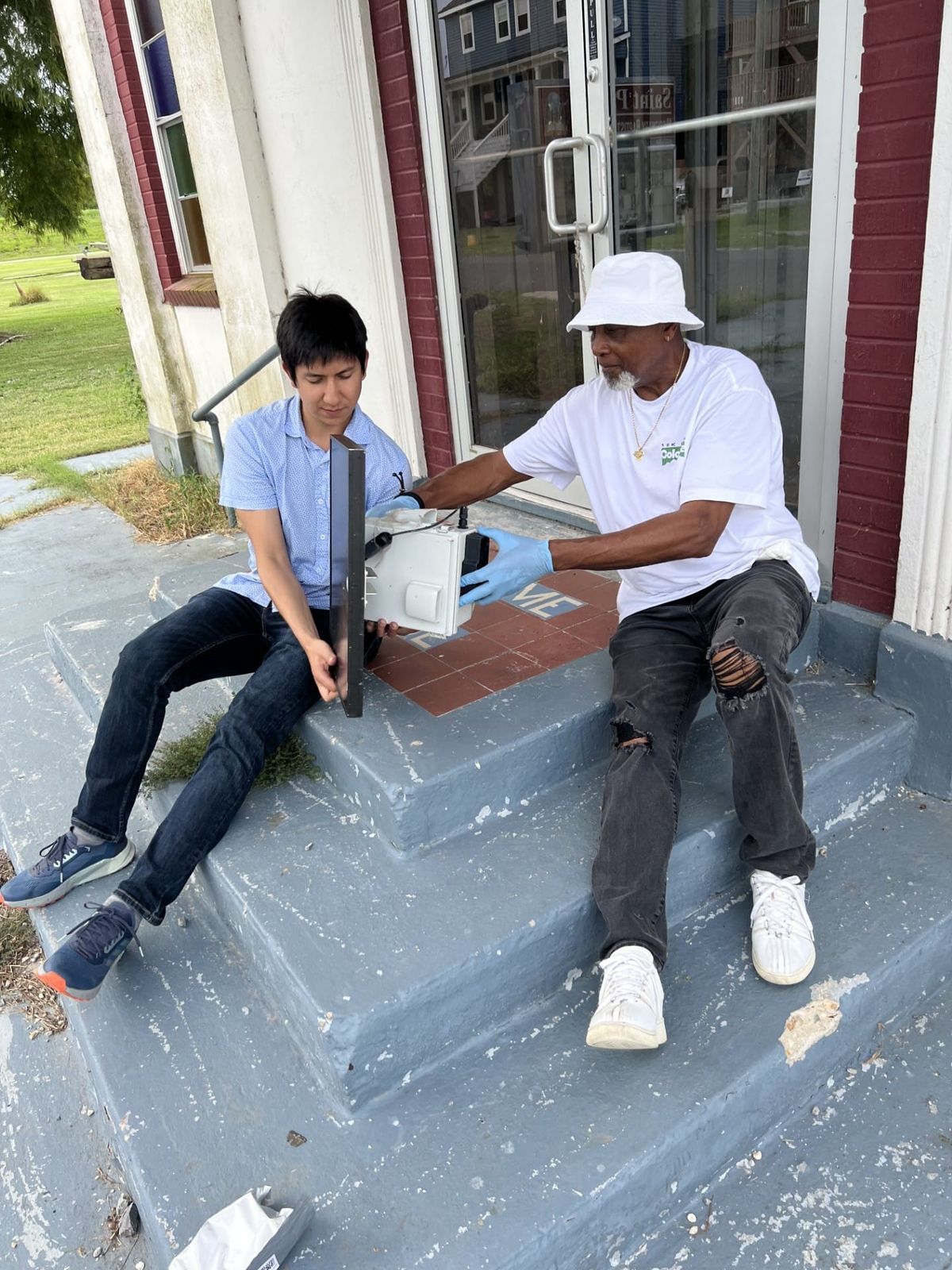
Kimbrelle Kyereh lives just a few hundred feet from the massive chemical storage tanks in St. Rose, in southeastern Louisiana. Oily fumes sometimes drift into her home, bringing headaches, nausea and insomnia. On one such night, she grabbed her son at 3 a.m. and fled to an all-night IHOP.
In 2023, after years of coping with the noxious odors, Kyereh began collecting air samples in her yard for a local environmental justice group. But soon after, Louisiana passed an industry-backed law that sharply restricted how that kind of data could be used.
So she stopped.
“I shut my mouth like they wanted me to,” Kyereh said.
Along the 85-mile corridor between Baton Rouge and New Orleans — where cancer rates from toxic air pollution are among the nation’s highest — many residents live in the shadows of heavy industry with no idea what they’re breathing.
Turns out, that’s by design.
A Floodlight analysis found that Louisiana’s public air monitors are often located miles from major industrial polluters and fail to test for some of the most dangerous chemicals.
The analysis identified the state’s top 25 industrial air polluters using emissions data that companies self-report to the EPA. Then we used state data to calculate each plant's distance to the nearest public air monitoring station — and to determine which pollutants those monitors actually test for. We found:
- Ten of Louisiana’s heaviest air-polluting facilities operate without a single public air monitor within five miles.
- Dow Chemical’s plastics factory in Plaquemine is one of Louisiana’s biggest air polluters, releasing an array of toxic pollutants including ethylene oxide, a known carcinogen. The nearest air monitoring station is about eight miles away and measures only ozone.
- No public monitors measure ammonia — despite CF Industries’ Donaldsonville plant emitting more than 7 million pounds of it in 2024, making it one of the nation’s top toxic polluters, according to EPA data.
- The three chemicals that researchers have concluded “together account for the large majority of total cancer risk” in the area — ethylene oxide, chloroprene and formaldehyde — aren't monitored by the state at all.
Industry groups have spent years fighting proposals that would require better monitoring around manufacturing plants. They also helped draft a 2024 law that sharply restricted how community air monitoring could be used in enforcement.
Lawmakers later introduced similar legislation in Kentucky, Ohio and West Virginia, suggesting Louisiana is one front in a broader fight over who gets to measure toxic air.
What the monitors missed
On Aug. 24, 2023, a leak at Marathon’s southeast Louisiana refinery exposed the limits of the state’s air monitoring system
At 6:50 p.m., the Coast Guard fielded a report that naphtha — a highly flammable liquid — was leaking at the Garyville facility. More than six hours passed before the Louisiana Department of Environmental Quality began monitoring the air.
Around 7 a.m., the leak ignited a massive fire, sending a plume of black smoke into the air. Two nearby schools opened anyway. Residents within two miles weren’t ordered to evacuate until 10:15 a.m. — more than 15 hours after the leak began.
Naphtha exposure can cause dizziness, headaches and nausea, and a Guardian investigation found at least 29 residents were later treated at area hospitals.
The nearest state air monitor measures ozone — but not the toluene and other toxic pollutants released in the fire — and the plant’s own monitors track just one chemical at its fenceline:
benzene. The company’s Los Angeles refinery, by contrast, continuously monitors more than 15 pollutants — as California regulations require.
Wilma Subra, a decorated environmental chemist from Louisiana who examined the fire’s emissions, said better air monitoring likely would have prompted faster school closures and evacuations.
The state’s monitoring network, she said, is “not adequate to protect the health of the community living in close proximity to these industrial facilities.”
‘Emergency waiting to occur’
Community advocates and environmental researchers have spent years pressing for expanded monitoring — especially in predominantly Black communities near industrial facilities.
Adrienne Katner, an associate professor at Louisiana State University and a former state environmental health scientist, concluded in 2022 that roughly 400 high-emission facilities in Louisiana had no public air monitoring. Communities only learn about toxic releases when there’s a shelter-in-place order or an evacuation, she said.
She called the situation “a public health emergency waiting to occur.”
Today, Katner says the lack of air monitoring data serves as a shield for polluters. “The theme is, if you don’t look for it, you won’t find it,” she told Floodlight.
Families living near polluting facilities bear the burden of that uncertainty, Katner said: “It’s taking years off their lives.”
The following year, researchers from Johns Hopkins University drove a mobile laboratory through Louisiana's industrial corridor to measure pollution firsthand. In 14 of the 15 locations they studied, cancer risks from toxic emissions exceeded EPA figures — in some areas by more than 11 times.
Peter DeCarlo, an atmospheric scientist at Johns Hopkins who co-authored the study, said regulators miss much of the region's pollution because too few air monitors measure too few chemicals.
“If large emissions from these facilities are happening far away from the air monitors, they're often going to go unnoticed,” DeCarlo said. “But that doesn't mean they're not gonna have an effect on the people who live there.”
Even the EPA has raised concerns.
In 2023, the federal agency urged state regulators to create a permanent monitoring station in New Orleans’ Irish Channel neighborhood. The area sits just across the Mississippi River from BWC Harvey, a 48-acre storage terminal that handles hot asphalt and other toxic chemicals and has drawn hundreds of resident complaints about noxious fumes.
A temporary state monitor there had previously recorded elevated levels of harmful particulate matter. But in 2022, Louisiana regulators shut it down.
The Irish Channel wasn’t the only community where the state retreated from monitoring. Louisiana’s 2022 monitoring plan included a section titled “Environmental Justice Considerations,” describing monitors in communities such as St. Rose and the Irish Channel. A year later, the section was gone, as was the St. Rose monitor.
When the EPA urged the state to keep considering environmental justice, LDEQ replied that such considerations were “beyond the scope” of the plan.
LDEQ operates 35 permanent air monitoring stations and says that it operates “a robust air monitoring network that meets and exceeds all regulatory requirements.” But the agency acknowledges that the network is not designed to monitor pollution in fenceline communities.
Jason Meyers, who oversees the agency’s 35-person air monitoring team, told Floodlight: “We run our sites well. We have good operators, and [the network] provides very high-quality data.”
The agency has two mobile monitoring vans that respond to incidents, monitor air quality in parts of the state without permanent stations, and fill in when major storms knock out power.
The department also measures toxic air pollutants at 19 sites around the state, but that equipment doesn’t monitor continuously. Most of those monitors sample every sixth day — on a fixed, publicly known schedule — meaning plant operators know when the air will be tested.
“Financial and technical constraints limit full monitoring coverage” of all toxic air pollutants, LDEQ acknowledged.
While community advocates have pushed for more air monitoring, Louisiana has moved in the opposite direction. Since 2020, the state has lost four air monitoring stations. Expenditures for the LDEQ division that oversees air monitoring fell nearly 15% between 2020 and 2026. Adjusted for inflation, spending dropped by more than one-third.
Louisiana’s challenges are not unique. Across the country, state monitoring agencies have faced years of stagnant federal support even as equipment and labor costs climbed. The number of operating air monitors nationwide fell by nearly half over the decade ending in 2021, the last year for which EPA has published figures.
“Your dollars are just not going nearly as far,” said Chet Wayland, who led EPA’s Air Quality Assessment division for 18 years. “The bottom line is that more money is desperately needed for monitoring.”
The EPA does monitor toxic air pollutants at 26 stations nationally — but none are in Louisiana or Texas, two of the states with the largest toxic emissions volumes.
How industry got its way
For years, former Louisiana Sen. Cleo Fields, a Democrat from Baton Rouge, returned to the Capitol with the same proposal: Require major industrial polluters to monitor toxic air emissions at their property lines and report what nearby communities were breathing.
Each time, the bill died.
“I got so frustrated because every year this was opposed by industry for no good reason,” Fields, now a member of Congress, told Floodlight. State regulators, he added, “were working totally in concert with industry … and the citizens just had no voice.”
Fields said he repeatedly heard from the petrochemical industry that his proposed bills would cost industry too much. “Well, what is it costing people?” he asked. “It’s costing them their lives.”
After Fields’ failed attempts, state Sen. Royce Duplessis tried again this year with a bill requiring perimeter monitors at facilities emitting toxic pollutants. That measure also failed.
The Louisiana Chemistry Association and other groups have repeatedly fought these efforts, helping to kill bill after bill in the state legislature. The powerful trade group represents 70 chemical industry companies that operate more than 100 sites across the state.
The association has found a legislative ally in Republican state Sen. Eddie Lambert, an attorney from Ascension Parish who chairs the state Senate environmental committee — the same committee that repeatedly killed the bills.
Campaign finance records show Lambert received more than $28,000 in political contributions from petrochemical, oil and gas and other polluting industries since 2020. He has also reported investing in major oil companies.
He told Floodlight that neither his investments nor campaign contributions from industry have influenced his decisions in the legislature. “I don't take that into consideration at all,” he said.
Lambert added that he was surprised oil and gas companies had donated to his campaigns because he consistently backed lawsuits filed by Louisiana parishes seeking to hold the industry accountable for coastal damage.
In opposing one fenceline monitoring bill in 2021, Lambert contended that “air moves around” and that pollution readings near industrial plants could be skewed by other sources — an argument also made by the chemical industry. An LCA staffer told a state Senate committee that year that requiring industries to conduct fenceline monitoring could “create unnecessary paranoia on the part of the public” and expose companies to lawsuits “based on false readings of air monitors.”
Air quality scientists, however, have found that properly designed fenceline monitoring systems can isolate a facility's emissions from other sources.
In 2024, Lambert sponsored the Community Air Monitoring Reliability Act (CAMRA), which prohibits the use of air pollution data for enforcement or regulatory actions unless it’s captured by EPA-approved monitors — equipment that typically costs tens of thousands of dollars, far beyond the reach of most community groups.
The LCA helped draft the bill, Daniel Bosch, an attorney representing the group, acknowledged at a state Senate committee hearing in 2024.
Speaking in favor of the CAMRA law, Brian Landry, the LCA’s vice president of political affairs, told the Senate committee that his group had noticed private and public funds flowing to community groups to do their own air monitoring.
Community air monitors can reveal pollution hotspots that distant government monitors miss. In some communities, the data have prompted regulators to investigate pollution complaints and helped residents push for stronger oversight.
CAMRA, Landry said, was intended to ensure that any community monitoring data given to LDEQ “for any future purpose is accurate and definitely correct.”
In a statement to Floodlight, LCA president David Cresson defended the law, saying it ensures “data used to enforce our state's environmental protection laws complies with minimum U.S. EPA standards” and doesn't stop residents from monitoring air quality for their own information — only from using unregulated methods for enforcement purposes.
A top EPA regional administrator at the time, however, called the bill “inconsistent with federal law.”
Despite the EPA’s letter and widespread community opposition, the state legislature passed the bill.
Critics say the law has stifled community air-quality reporting efforts, which typically rely on low-cost monitors. It’s what stopped Kyereh from her own monitoring efforts in St. Rose.
After CAMRA became law, legislators in Kentucky, Ohio and West Virginia introduced similar bills, also using arguments promoted by industry groups. That legislation failed in West Virginia but passed in Kentucky and Ohio.
CAMRA had been law for just two months when Lambert traveled to the Henderson Beach Resort in Destin, Fla., to speak at a conference hosted by the Louisiana Chemistry Association. The group paid his $450 hotel bill.
“I wouldn't consider that a big deal,” Lambert told Floodlight.
He said it isn’t reasonable to expect state senators —whose base salary is $16,800 a year plus a $6,000 expense allowance — to cover such costs themselves.
The Louisiana ethics code allows lawmakers to accept lodging and meals from industry groups, as long as they're tied to a public speech and the gifts are disclosed.
Asked whether Louisiana needs more public air monitoring stations, Lambert said industrial plants already collect emissions data.
“If we already get the information from the plants, why would we want to spend our resources there?” he asked.
Under EPA rules, however, some plants are allowed to report emission estimates rather than direct measurements — and those estimates can be wildly off base.
A 2025 ProPublica investigation found that when the EPA required temporary physical monitors at industrial sites, 97% of facilities were underreporting emissions. At a Dow Chemical facility in Plaquemine, for example, emissions of vinyl chloride — a carcinogen — were more than 150 times higher than the company’s estimates.
Left to wonder
Tish Taylor lives less than a mile from the Denka Performance Elastomer plant in St. John the Baptist Parish, which made neoprene, the synthetic rubber used in wetsuits.
After federal regulators determined the plant’s chloroprene emissions posed an “unacceptably high” cancer risk to surrounding communities, Denka suspended production in 2025. Chemical producer DuPont continues to operate on the same campus and has faced its own EPA penalties for emissions violations.
The two closest public monitors — each about five miles away — measure only lead and ozone.
Taylor loves working in her garden. But when the wind blows on a sunny day, she knows that there’s something toxic in it, she said.
“I just have to wonder how much.”
==
Mark Sanford joins crowded race for US Senate with familiar warning on government overspending
Former Gov. Mark Sanford is joining the race to replace U.S. Senate Lindsey Graham on a pledge to "get Washington's finances back in order."
By Seanna Adcox (South Carolina Daily Gazette) Published: July 23, 2026
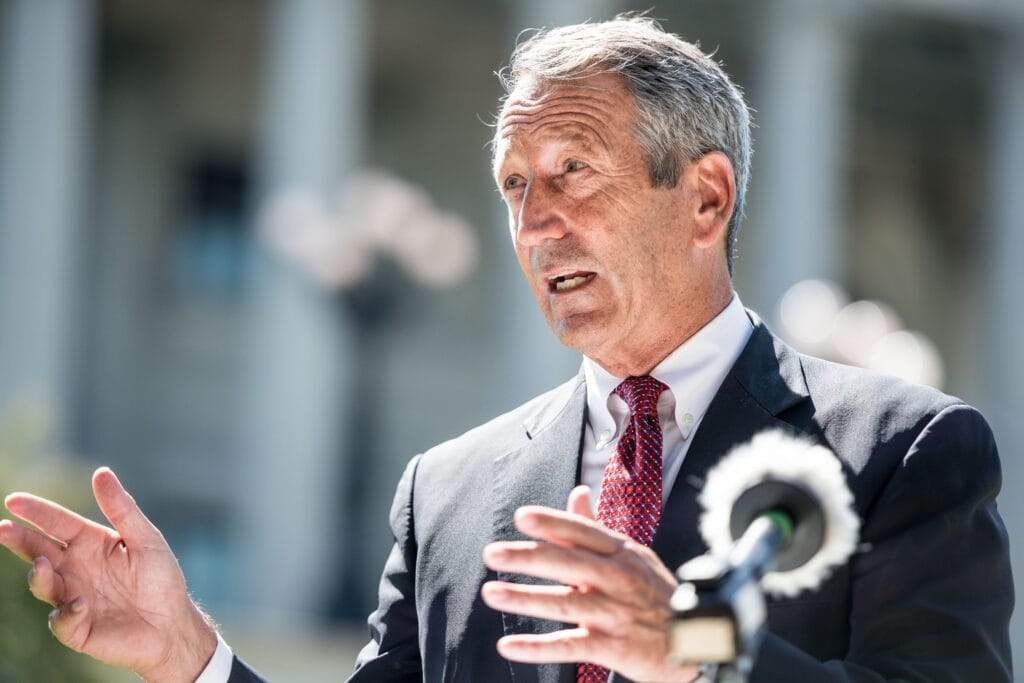
Former Gov. Mark Sanford announced Thursday he’s joining the race to replace U.S. Senate Lindsey Graham on a pledge to “get Washington’s finances back in order.”
It’s a familiar message for Sanford, who’s spent decades as a congressman, governor, and presidential candidate warning about the nation’s escalating debt.
According to the U.S. Treasury, that debt has climbed to nearly $39.7 trillion, up from $4.7 trillion when Sanford was first elected to the U.S. House in 1994.
“I’m worried for our children because for the first time, America’s borrowing from the future faster than we’re building it,” Sanford says in a video announcing his bid. “If left unaddressed, that debt will crush our economy. It will wipe out our savings, and it could even destroy our republic.”
Sanford is among a growing list of candidates seeking the GOP nomination in next month’s special primary following Graham’s death July 11 at age 71.
His death is a “reminder to all of us how short and precious life is,” Sanford says in the video’s opening, noting his father was diagnosed with Lou Gehrig’s disease when he was in high school. That diagnosis is what prompted Sanford’s family to move to the Beaufort County property where he spent summers growing up.
His entry into the U.S. Senate race follows announcements by U.S. Rep. Ralph Norman of the 5th District, U.S. Rep. Russell Fry of the 7th District, and Graham’s sister, Darline Graham, who was sworn in last week to fulfill the late senator’s term that ends in January.
2 SC congressmen launch bids for US Senate, as Darline Graham says ‘I’m in’
Candidate filing for the Aug. 11 primary began Tuesday and ends July 28. Five other candidates have turned in their paperwork to be on the ballot.
They include Upstate businessman Mark Lynch, who placed a distant second in the GOP primary Lindsey Graham won easily last month.
Others include Duke Bukner, a Walterboro attorney who’s twice unsuccessfully challenged U.S. Rep. Jim Clyburn in the heavily Democratic 6th District. One candidate doesn’t live in the state — yet. Clark Neilson filed Tuesday with a Charlotte address but plans to build a house on land he owns in Charleston County, The State newspaper reported.
Earlier this year, Sanford jumped into the open contest for the 1st District in an effort to win back the seat he’s held twice before. But he ended that bid less than a month later, saying he planned to form a nonprofit focused on bringing the debt down.
The two-term governor not only has statewide name recognition, but he could also stand out from the crowd as a candidate not touting an alignment with President Donald Trump.
In 2019, Sanford launched a bid to challenge Trump’s bid for a second term, hoping to spark a national debate about the mounting debt. But his short-lived presidential campaign never got traction. Even the South Carolina GOP refused to hold a 2020 presidential primary, which Sanford protested by traveling the state with a cardboard cutout of Trump.
Trump endorsed Darline Graham last Friday in a post encouraging her to run.
State audit clears up one Rocky Mount utility headache, draws attention to another problem
by Mackenzie Thomas, Carolina Public Press
July 20, 2026
A recent state audit has calmed concerns that Rocky Mount residents were double-billed for utilities, but also drew attention to more than $30,000 in total outstanding utility bills from two City Council members.
Rocky Mount provides utility services for more than 31,000 customers across the city as well as nearby areas of Nash, Edgecombe and Wilson counties. These services include electric, gas, water and sewer, the audit report said.
Some residents first raised questions about utilities in late 2025, when they received two bills within a month and thought they had been double-billed, the report said.
[Subscribe for FREE to Carolina Public Press’ Daily, Weekend and Election 2026 newsletters.]
While the audit found that residents were not double-billed, it revealed that two City Council members — Charles Roberson and T.J. Walker — had racked up more than $30,000 in total outstanding utility bills. Both council members have since paid off those balances.
This latest development comes as Rocky Mount has faced pressure from the state Local Government Commission to fix serious financial problems. While the city has made significant progress in its recovery efforts, the audit report emphasized the city still has “little margin for error,” calling into question the current council’s ability to lead the city through the remainder of its recovery.
Utility billing concerns
The misplaced concern over double-billing stemmed from a large gap between meter reading and billing dates, which the city’s Director of Business and Collections Services first discovered in December 2025 after staff layoffs, the report said.
The reason for the gap was “unauthorized and undetected modifications” to the meter reading and billing schedules, which led to meter readings occurring earlier and earlier each month, even though the city’s policy is to schedule these readings for roughly the same week each month, the report said.
Proper billing practices are outlined by the North Carolina Utilities Commission, which instructs utilities to bill customers within roughly five days of the meter reading. While Rocky Mount’s utilities technically don’t fall under the jurisdiction of the commission, the city still tries to abide by its guidelines, the report said.
However, Rocky Mount was billing customers seven to 14 days after meter readings, even 30 days afterward in some cases. These delays had been going on as far back as January 2025, the report said. City Manager Elton Daniels said these kinds of delays can cause “corresponding fluctuations in the amount due on a customer's invoice.”
To resolve the gap, the director decided to send an additional utility bill in either December 2025 or January 2026. The city made multiple efforts to help residents understand the reasoning for the additional bill including discussions at council meetings, meeting with customers in person and over the phone to discuss concerns, and posting information on the city website and social media pages, Daniels said.
Despite these efforts, some residents still thought they were being double-billed and went to the news media to share their concerns, the audit report said. When CPP asked how receptive residents seemed to be to the audit’s findings, Daniels said that while the situation “understandably created frustration and uncertainty for citizens,” the audit confirms no improper billing occurred.
City officials are still unsure who was responsible for making the schedule changes that caused the billing gap in the first place and reasons behind that change, the report said.
When CPP asked whether the city plans to investigate further who was behind the schedule changes that led to the gap and whether there are concerns it might happen again, Daniels said: “We will continue to implement improvements that strengthen our operations while maintaining our commitment to transparency, accountability, and quality customer service.”
Outstanding payments
The audit found that council members Roberson and Walker each had their own outstanding payments. Roberson had 30 utility accounts that had a total outstanding balance of more than $27,000 and hadn’t made a payment in more than six months, the report said.
Walker had an outstanding balance on one utility account of more than $3,000 and hadn’t made a payment since February, the report said.
After the billing gap was discovered in December, the city initiated a temporary pause on late fees and service disconnections for all utility customers due to potential financial difficulties from the additional bill, the report said. If any customers — including the council members — fell behind on payments, the pause meant they wouldn’t be penalized or have their service disconnected.
However, the billing gap was discovered in December 2025, and these council members continued to not pay their bills through April 2026, the report said.
When CPP reached out to Roberson and asked how it reached this point, he explained that he’s had multiple utility accounts for several years for city redevelopment projects which were on AutoPay. Before the billing problem, he removed his accounts from AutoPay because he couldn’t determine how payments were being applied across his accounts.
“My questions were never about avoiding payment,” Roberson told CPP. “They were about the accuracy, transparency and accountability of the city's billing system. My goal has always been to help build a utility system that is efficient, reliable and works fairly for every customer.”
Roberson also said he supported bringing in the state auditor to conduct an independent audit of the utility billing system.
The report argued that the lack of payments from council members suggested “they took advantage of this decision to further their own personal financial interests.”
Roberson, on the other hand, said he respectfully disagrees.
“The temporary suspension of late fees and utility disconnections was a citywide administrative policy that applied to every utility customer,” he said. “I did not vote to create that policy, I did not direct staff to implement it, and I received no preferential treatment, write-offs, or debt forgiveness.
“I believe the report establishes facts regarding account balances, but I do not believe it identifies evidence supporting conclusions about my personal intent or motivation. I have respectfully asked the Office of the State Auditor to reconsider that language during the review process.”
Council members did follow through on the auditor’s recommendation that they pay their outstanding bills. Letters from the city obtained by CPP showed that Roberson — whose outstanding balance had grown to more than $34,000 at that point — paid his bills and had a zero balance on his accounts as of June 9. Walker also paid his outstanding bills and had a zero balance as of June 16.
Carolina Public Press reached out to Walker’s office for comment, but he did not respond prior to publication.
Impact on financial recovery
This isn’t the first time a City Council member has been delinquent in their utility payments, according to a 2020 state audit.
Council member Andre Knight previously had an outstanding utility balance of more than $47,000 that accumulated over two decades, starting as far back as 1999. Previous city officials went against city policy by ensuring Knight’s services weren’t disconnected despite his lack of payment and ultimately wrote off the amount he owed, arguably giving him “preferential treatment,” the 2020 report said.
When the state auditor recently followed up on the status of Knight’s written off balance, it found there had been no change since 2020. Brianna Kraemer, deputy communications director for the state auditor, said that unlike the other two council members, Knight’s outstanding balance is not active since it was written off.
“That said, the Auditor's Office is not abandoning its accountability efforts in Rocky Mount, and Councilmember Knight should not be let off the hook,” Kraemer said.
More recently, Knight had more than $300 written off from two utility accounts last year, though he paid the original balances owed afterward, the report said.
CPP reached out to Knight’s office for comment, but he did not respond prior to publication.
Considering the recently discovered outstanding payments of the other council members, the auditor pointed to a “longstanding culture” among the City Council that “prioritized individual gain over the public interest,” the report said.
The findings couldn’t come at a worse time for the city, which is still recovering from a financial crisis first identified in a state audit earlier this year. As part of the city’s response to increase revenue, it hiked utility rates by 15%, the report said.
“While such measures are likely necessary, they can be unpopular with the public, and therefore it is incumbent on the governing body to reinforce the public understanding of the City’s commitment to its priority of sound management of public funds,” the report said.
“Thus, private actions that lend even an appearance contrary to that understanding put this priority at risk.”
After the revelations about City Council members, the auditor argued the council’s ability to lead the city through the remainder of its recovery is “diminished,” the report said.
However, Roberson said he’s as committed as ever to improving the city’s finances.
“For years before I got on the council, I have advocated for modernizing the utility billing system, improving transparency, strengthening internal controls, reducing unnecessary costs to utility customers, and ensuring that residents have confidence in the city's billing practices,” Roberson told CPP. “I intend to continue that work.”
The report indicated the city’s total operating budget is $279 million — making $30,000 merely a drop in the bucket. But its documented financial issues mean it’s already on thin ice. The message from the state auditor and the LGC since March has been clear: there’s very little room to mess up again.
“Rocky Mount continues to face financial and personnel issues that need to be addressed,” State Auditor Dave Boliek said in a press release.
“The State Auditor’s Office will not stop providing much-needed transparency to the people of Rocky Mount, so that they can make informed, educated decisions on what’s best for their community.”
In addition to paying off outstanding utility balances, the auditor recommended that the city automate its bill scheduling process, correct its meter reading and billing schedules, and protect these schedules from unauthorized changes, the report said.
The city affirmed the auditor’s findings and said it has made “good-faith efforts” to address the auditor’s recommendations, having already completed some actions while others are still underway.
“Collectively, they demonstrate the city's commitment to implementing meaningful corrective actions, strengthening governance and utility billing practices, enhancing internal controls, and ensuring compliance with applicable laws, policies, and industry best practices,” the city said in its response letter.
“The city believes that the actions already taken, along with those currently underway, will improve operational effectiveness, promote accountability, and support the continued restoration and enhancement of public confidence in City operations.”
This article first appeared on Carolina Public Press and is republished here under a Creative Commons Attribution-NoDerivatives 4.0 International License.

How South Carolina Prisons Are Limiting Access to Books
by Gary K. Farlow, Prison Journalism Project
July 14, 2026
In October, the South Carolina Department of Corrections began restricting the number of places from which prisoners can receive books, which has caused major disruptions for people in my facility.
The approved vendors include Hamilton Book, Books N Things Warehouse, Books to Inmates, SureShot Books Publishing and the online stores of Barnes & Noble and Books-A-Million. Noticeably absent from the list was Amazon and any of the nationwide free books-to-prisoners organizations. The list also did not include a single university or college.
Before October, there had only been restrictions on the subject matter of books, which still continue.
Incarcerated people at MacDougall Correctional Institution, where I’m detained, say the book policy has impacted their studies.
“The biggest obstacle we’re facing with correspondence college programs is that this new policy is being interpreted in its strictest sense,” said one person working on his master’s in substance abuse counseling from an accredited university. He added that he believed “even class assignments are being rejected as coming from unapproved vendors.”
Another man said that books he ordered and paid for before the policy change had also been rejected.
“My entire next semester’s texts were sent, but I received a notice telling me I couldn’t have them since it was not from an approved vendor,” said the man, in his second year of a bachelor’s program. “When I tried to explain that it was from a university and not a bookseller, it was like I was speaking Klingon or something.”
In such cases, prison staff have given people the choice of paying for return postage or simply having the “contraband books” destroyed.
Everyone I spoke to for this story requested anonymity out of fear of retaliation.
In an email to a Prison Journalism Project editor, Chrysti Shain, a spokeswoman for the South Carolina Department of Corrections said that the policy was created to help stop the flow of drugs into state prisons. Shain said SCDC had concerns about books being handled by people working at "unverified brick and mortar stores prior to shipment.”
“By requiring that all book orders come directly from established, nationally recognized online retailers, SCDC can ensure that materials are shipped securely from controlled commercial distribution centers — minimizing risks while still allowing for extensive access to reading material,” Shain said.
Shain denied that academic materials were being rejected on a widespread or regular basis, adding that the institution’s leadership was working with those who were taking correspondence courses to ensure they received their materials.
“If an inmate has had coursework denied, they have not communicated with staff about it. We know of no instance in which this is true,” Shain said.
Writers, poets and artists also say the policy has prevented them from receiving books and publications they were published in.
“My art was just released as part of an inmate collection by a publisher out in California,” one artist told me. “I was so excited when I got the letter telling me that my art was going to be published only to have the mailroom reject the anthology. I didn’t have the funds to mail it home, so I guess they just put it in the trash.”
According to Shain, the policy change coincided with a six-month investigation into a scheme in which a former employee and an incarcerated person mailed books with drug-laced pages to at least 20 incarcerated people across 14 prisons. Through the investigation, SCDC agents discovered 666 pages soaked in synthetic marijuana and 241 Suboxone strips in the packages. All of the shipments were disguised as being shipped from a bookstore.
Last fall, Shain said, 15 incarcerated people at McCormick Correctional Institution overdosed and two of them died from drugs that SCDC believes were paper soaked in fentanyl-tainted K2.
“The new policy allows inmates to receive books from reputable booksellers, and no one to be injured or killed by the contents,” Shain said. “It provides a level of safety that was not there before.”
One staffer I spoke to at my facility said the prison had previously intercepted books with illegal substances sprayed on paper and even books being mailed in from fabricated book vendors.
“Books have been received in revised Amazon boxes — that were not from Amazon — that contained controlled substances,” he said. “It’s often a real challenge to determine what’s authentic and what’s bogus.”
“We’re just following directives,” said another staff member. “We didn’t make this new policy, but we have no choice but to follow it.”
Both requested anonymity because they were not permitted to speak to the media.
Prior to the new policy, there was a daily list of prisoners called to the mailroom to sign for and receive books. Now, days go by when no one is called.
“It’s like it always is in prison — if one person messes up, everybody pays for it,” one old-timer told me. “I have been down near ’bout 30 years and I ain’t never seen it no different.”
“Typical knee-jerk response,” said another person. “Instead of punishing the ones responsible, they punish everyone.”
This article first appeared on Prison Journalism Project and is republished here under a Creative Commons Attribution-NoDerivatives 4.0 International License.

OPINION: Rising health insurance exchange costs are bad news for Mississippi’s working poor
by Bobby Harrison, Mississippi Today
July 19, 2026
Mississippi had one of the nation’s largest declines in the Affordable Care Act health insurance exchange enrollment based on early 2026 numbers, meaning that it has become even more difficult for the state’s working poor to garner medical care.
According to The Associated Press, Mississippi’s ACA health insurance exchange enrollment declined 26.4% from February 2025 to February 2026. It is likely that the enrollment will drop even more – perhaps significantly more – because of the higher cost to obtain a policy from the health insurance exchange based on decisions made by the administration of President Donald Trump.
It could be logically argued that the higher costs of the insurance policies obtained on the exchange impact Mississippi’s working poor more than any other group in the country. First of all, Mississippi’s working poor population is behind the proverbial healthcare eight ball because the state is one of 10 nationwide that has not expanded Medicaid, as is allowed under the Affordable Care Act with the federal government paying the bulk of the costs.

In the 40 states that have expanded Medicaid, many of their low income people do not have to depend on the healthcare exchange for coverage. They can sign up for expanded Medicaid to obtain healthcare. But in Mississippi, Medicaid expansion is not an option.
So, when the Joe Biden administration pushed through legislation to greatly enhance the already existing federal subsidies for exchange health insurance policies, the working poor in Mississippi – even extending to middle-class families – signed up en masse.
Mississippi had the second-highest increase in exchange enrollments – second only to Texas, which also had not expanded Medicaid. After the enhanced subsidies went into effect, Mississippi had a 242% increase to 338,159 people, according to KFF, a nationwide nonprofit that studies healthcare policy.
Of the 10 states with the recent highest declines in ACA enrollment after the enhanced subsidies ended, Mississippi and South Carolina were the only two that had not expanded Medicaid.
The enhanced subsidies ended in December 2025 after the Trump Administration and the Republican-led Congress refused to extend them. While multiple Republican lawmakers made efforts to pass legislation to extend the subsidies, U.S. Sens. Roger Wicker and Cindy Hyde-Smith and other Republican members of Mississippi’s congressional delegation made no visible efforts to reinstate the enhanced federal aid.
As a result of the enhanced subsidies ending, KFF estimated that a 40-year-old Jacksonian earning $30,000 per year would see his or her monthly insurance cost increase from $42 to $155 for a policy purchased on the exchange.
Based on that calculation, it should not be a surprise that Mississippians are dropping the health insurance exchange policies. After all, they are dealing with higher costs for groceries, gasoline and other necessities at the same time they are being hit with higher healthcare insurance costs.
They are making the decision to drop the health insurance policies and hoping they do not get sick and understanding that if they do face a major medical bill with no insurance, they will be unable to pay it. The medical bills they cannot pay place a burden not only on them and their families, but also on the overall state healthcare system that must absorb those unpaid costs.
In short, Mississippi's working poor have been hit with rising health insurance exchange costs and no Medicaid expansion, meaning they have less access to healthcare than most Americans.
But the fact that poor Mississippians, facing higher costs, cannot afford healthcare should not be a surprise.
Is it even news?
Like the old adage goes, it is not news when dog bites man. It is news when man bites dog or when a poor Mississippian actually has access to decent healthcare.
This article first appeared on Mississippi Today and is republished here under a Creative Commons Attribution-NoDerivatives 4.0 International License.

As college graduates fret over finding jobs, a record shortage of workers is projected
by Jon Marcus, The Hechinger Report
July 12, 2026
Even as job seekers fret about artificial intelligence and tech behemoths announce massive layoffs, Matt Walsh is finding it surprisingly hard to help technology companies hire certain kinds of workers.
That’s what Walsh’s recruiting firm, Blue Signal, does. And in specialties including semiconductor production, “the unemployment rate is probably negative 20 percent,” the CEO of the Phoenix-based search company said. “It’s ridiculous. There just aren’t enough people.”
College graduates booed commencement speakers who hyped AI, which has steadily reduced the number of entry-level jobs available, and Meta cited AI when laying off more than 8,000 workers in May.
But economists are sounding alarms that the AI talk is masking a different problem.
It’s not that there won’t be enough jobs, these experts say — it’s that the United States is already facing what's projected to be the biggest shortage of workers in its history.
The problem “could hobble the American economy for years to come,” predicts the Georgetown University Center on Education and the Workforce. “The largest labor shortage the country has ever seen,” the Lightcast labor market data company calls it. JPMorganChase warns of a national security risk from “a pervasive talent deficit that constrains the nation’s capacity to build, compete, and protect its interests.”
And it’s not only tech workers. There will be shortages in the tens of thousands to hundreds of thousands of nurses, physicians, teachers, engineers, pharmacists, mental health counselors, construction workers and airplane mechanics, both government and independent sources project. Most are jobs AI generally can’t do.
“All of these people who keep a society functioning are the very people we’re not going to have enough of,” said Ron Hetrick, Lightcast’s principal economist.
Among the trends that have been leading to this moment: a mismatch between the careers college graduates are pursuing and the kinds of jobs employers are struggling to fill. Far fewer students are majoring in health care fields than are needed to meet demand, for instance.
Related: Interested in innovations in higher education? Subscribe to our free biweekly higher education newsletter.
“We have pumped so many young people into business and finance” when what’s really in demand are graduates in other fields, Hetrick said. “It’s like a factory producing these workers like widgets, even though society is saying, ‘We really don’t need them.’ And the factory just keeps pumping them out.”
But the principal reason for the looming workforce shortages is much more basic. It’s that a protracted decline in the birthrate is coinciding with a record wave of retirements.
Between 2024 and 2032, when the last baby boomers sign up for Social Security, more than 18 million college-educated workers will leave the labor force while fewer than 14 million enter it, according to the Georgetown center. Meanwhile, even as the number of people with associate and bachelor’s degrees falls, the center forecasts, the number of jobs requiring them will grow.
That will leave a gap of 4.6 million fewer workers than are needed. Lightcast puts the deficit at an even higher 6 million.
These aren’t dystopian predictions. The shortages are already showing up, the U.S. Chamber of Commerce reports. In many industries, it says, even if every worker now unemployed were plugged into an open job, there would still be positions left unfilled.
“We have a crisis in front of us in not preparing people for the world that’s coming,” said Bill Haslam, the Republican former governor of Tennessee and co-chair with Democratic former Massachusetts Governor Deval Patrick of the Bipartisan Policy Center’s Commission on the American Workforce.
The effect of population shifts on the supply of talent, with or without degrees, has been compounded by a drop in the proportion of high school graduates choosing to go to college; a sharply reduced rate of immigration; and a growing number of Americans who have left the workforce altogether because of such things as lack of child care, early retirement, incarceration and substance addiction.
College and university enrollment is down by nearly two million students since its peak in 2010, the U.S. Department of Education reports. The low birthrate since around then means the number of college-age Americans is forecasted to decline by another 13 percent through 2041.
The Looming Workforce Cliff
Projected shortages of workers, 2024 to 2032
| Managers | 2,900,000 |
| Teachers | 611,000 |
| Driver/sales workers and truck drivers | 402,000 |
| Nurses | 362,000 |
| Engineers | 210,000 |
| Construction workers | 200,000 |
Projected shortages of health care workers by 2038
| Licensed practical nurses | 245,950 |
| Registered nurses | 108,960 |
| Mental health counselors | 99,780 |
| Addiction counselors | 77,050 |
| Primary care physicians | 70,610 |
| Physical therapists | 60,610 |
| Pharmacists | 30,400 |
| Pediatricians | 9,320 |
| OB-GYNs | 7,660 |
| Cardiologists | 7,270 |
Projected shortages of semiconductor industry workers by 2030
| Technicians | 26,400 |
| Engineers (master's or doctoral degrees) | 17,400 |
| Engineers (bachelor's degrees) | 9,900 |
SOURCES: Georgetown University Center on Education and the Workforce; U.S. Health Resources and Services Administration; Semiconductor Industry Association
Related: What it’s like to enter the job market in the middle of an AI revolution
Fewer than half as many people immigrated to the United States last year as the year before, the Census Bureau says; yet 41 percent of the home health aides who will be increasingly needed to care for the nation’s aging population have historically come from somewhere else, along with a fifth of nursing assistants, dentists, pharmacists and registered nurses.
“We’re doing a fantastic job of rolling up the welcome mat and saying, ‘We don’t want you,’ ” said Brad Hershbein, senior economist and deputy director of research at the W.E. Upjohn Institute for Employment Research.
Walsh, at Blue Signal, has a theory about why there seems to have been little attention to the looming labor shortage, outside of the industries affected. He uses the metaphor of frogs that will jump out of a pot of boiling water if they’re dropped into it but not if the water is brought to a boil gradually. In the same way, people are only slowly becoming aware of shortages, Walsh said.
Already, in his small Illinois hometown, he said, he’s noticed it takes six months for people to get a doctor’s appointment because there aren’t enough doctors.
“ ‘Everybody needs to hear this,’ ” Lightcast principal economist Ron Hetrick said an audience member implored him after he spoke at an event about the problem. But “some people really haven’t felt the pain enough to care as much as they should.”
Besides, said Allison Shrivastava, education and labor market economist at the college search and ratings platform Niche, attention has been focused on the shrinking supply of entry-level jobs in certain fields. “When people are having trouble getting into the labor market, it’s hard to say there are going to be labor shortages soon,” Shrivastava said.
Related: Faster, thinner: Colleges are swiftly trimming a B.A. degree to three years
The fact is, she said, that “we are going to be hard pressed to find a corner of the economy where labor shortages don’t have an impact.”
Shortages of workers have already begun to slow production lines at manufacturing facilities tied to the defense industry, according to JPMorganChase. Semiconductor plants are being built faster than they can be staffed. Too few electricians, line workers and technicians mean delays in the modernization of the energy grid.
The semiconductor industry payroll is projected to grow by nearly 115,000 jobs by 2030, which is 67,000 more than there are workers now or projected to be in the pipeline to become technicians and engineers, the Semiconductor Industry Association estimates.
“The semiconductor industry is not alone here,” however, said Erik Hadland, the association’s director of technology policy. “We’re a small part of a much larger issue.”
State governments, which are closest to the problem, have been scrambling to avert it. To get college graduates to come or stay and work, some will help them pay off their student loans. A bill under consideration in Minnesota would offer in-state tuition to most public colleges and universities for children of parents who take jobs in that state, waiving the previous requirement that students have graduated from a Minnesota high school after attending for a minimum of three years.
Several states have combined their higher education and workforce development agencies, including Missouri and Colorado. Connecticut has established both an Office of Workforce Strategy and a Career Pathways Commission. Illinois Governor JB Pritzker has formed a working group to review that state’s workforce development infrastructure and increase the number of college graduates.
Some states face shortages that appear more severe than others. South Dakota has just 41 workers for every 100 open jobs, for instance, while California and nine other states have more workers than jobs, the U.S. Chamber of Commerce finds.
In Pennsylvania, a study commissioned by the state Department of Education has projected that the state needs to increase the number of people with credentials beyond high school by more than 4 percent to fill a shortage of 218,000 such workers a year by 2032. That will be a significant challenge, considering that college enrollment there has generally been falling.
There are also shortages in industries whose workers don’t need college and university degrees. Fewer than half as many people are entering the construction trades as are needed, for example, according to Branka Minic, CEO of the Building Talent Foundation, which represents 3,600 employers who are trying to fill that gap.
Related: More than a quarter of private colleges are at risk of closing, new projection shows
“There’s plenty of jobs” in the skilled trades, she said, some starting at $50 an hour. “Show me what college graduates earn that kind of rate.” As for the prospect that AI can fill those largely physical roles, she told of seeing a poster plastered on an unfinished building. “Finish this, ChatGPT,” it said, mockingly.
That higher pay is an example of how the market will respond to shortages, said Hershbein, at the Upjohn Institute. In some industries, he said, “wages and compensation will adjust, people will find training, businesses will train people and there will be adaptations. Necessity is the mother of invention.”
Job seekers also need more current information about where the demand is greatest, said Cheryl Oldham, former vice president of education and workforce policy at the U.S. Chamber of Commerce and now executive vice president for human capital at the Bipartisan Policy Center.
“We’ve got to develop systems that can be much more nimble and responsive to the needs of the labor market, because the labor market is changing probably faster than it’s ever changed,” said Oldham, who also served in the George W. Bush administration.
Some savvy workers are figuring it out for themselves.
Seth Russell’s high school counselor nudged him toward college. Instead he learned welding and now works full-time as a fabricator.
“I got hired straight out of high school. I have no debt. I’m just making money, paying bills,” said Russell, now 22, who lives in Torrance, California. “There’s so many jobs out there.”
Contact writer Jon Marcus at 212-678-7556, jmarcus@hechingerreport.org or jpm.82 on Signal.
This story about shortages of workers was produced by The Hechinger Report, a nonprofit, independent news organization focused on inequality and innovation in education. Sign up for our higher education newsletter.
This article first appeared on The Hechinger Report and is republished here under a Creative Commons Attribution-NonCommercial-NoDerivatives 4.0 International License.

It takes a village: This Dane County community helped pioneer a national movement for aging together
by Addie Costello / Wisconsin Watch, Wisconsin Watch
July 14, 2026
Click here to read highlights from the story
- Village programs like SAIL help older adults stay independent by connecting them with volunteers, social activities and trusted service providers.
- Members both give and receive help, creating a neighbor-to-neighbor support network that reduces isolation and helps people age in their own homes.
- Dane County's SAIL is one of the nation's oldest village organizations, and similar programs are expanding as communities look for new ways to support an aging population.
Lush greenery and bright flowers surround John Short’s longtime Madison home. But the 83-year-old is not the one with a green thumb.
That belongs to a volunteer through Sharing Active Independent Lives (SAIL), who visits regularly to work in Short’s garden. It’s one benefit he receives as a member of SAIL, a nonprofit-run network that helps older adults in Dane County find community and stay independent.
While Short needs yardwork help, he can still drive. So he volunteers those skills, taking fellow members to appointments. Other members help with household chores while tech-savvy volunteers offer computer advice. One woman even volunteers by calling members on their birthdays.
The network of older adults helped pioneer the village model, a national movement that encourages neighbors to support each other as they age in the communities they choose. Dane County members ages 55 and older pay sliding-scale dues to access volunteer services, social activities and a list of vetted service providers.
SAIL launched in 2005 and is considered the country’s second-oldest village model. Now, there are 285 villages, including two others in Wisconsin, according to the Village to Village Network, which brings villages together to share best practices.
Short joined SAIL more than two years ago, becoming one of about 500 members. Aside from receiving help in his garden, he has used the village’s list of background-checked service providers to hire a handyman.
Short didn’t mind handing off some of the home maintenance after taking care of it for nearly three decades. He’s filled his extra time by reading more books and playing more bridge.
Members can also join regular social activities, including clubs for books and biking. Members ages 90 years and older get an additional perk: a special lunch twice each year.
Short has yet to qualify for that invitation. He finds connection through chats during volunteer driving shifts. While he typically refrains from asking passengers their ages, he recalls that the first woman he drove was 102.
The rides, often to doctor’s appointments, have “been kind of fun,” he said.
Such joy from volunteering doesn’t surprise Christine Klotz, president of the village’s operating council.
“You get more from SAIL when you give more,” she said.
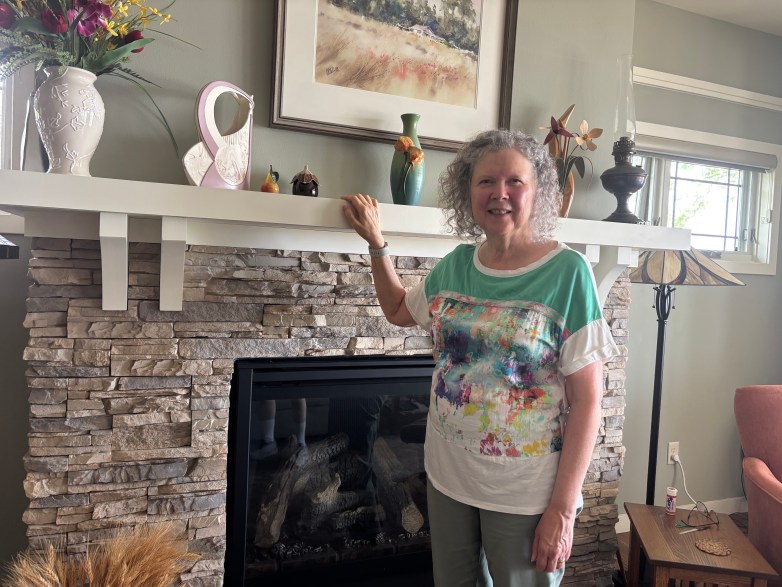
Klotz, 75, joined SAIL with her husband a decade ago, paying full membership dues for years despite not needing services beyond social connection.
“I just really believe in the model and believe in the concept of paying it forward,” Klotz said. “I want the organization to be strong when we need it.”
Unlike other aging resources, members design and direct SAIL, Klotz said. “You're joining a group of people who are committed to work together to help each other as we get older.”
Want to join a village?
Dane County residents can learn more about SAIL at sailtoday.org or by calling 608-230-4445.
Northern Door County residents can learn more about Do Good Door County at dogooddoorcounty.org/sail or 920-333-1083.
Felician Village, a senior living community in Manitowoc, coordinates Felician Village at Home. To learn more, visit felicianvillage.org or call 920-684-7171, ext. 425.
What if you don’t live near a village?
Check with your Aging and Disability Resource Center to learn about similar programs nearby, said Ann Albert, the executive director of AgeBetter, the nonprofit that runs SAIL.
Places of worship, libraries and local organizations that are actively recruiting volunteers can offer similar social benefits and a sense of connection found in the village model, said Shannon Guzman, the director of housing and livable communities with AARP Public Policy Institute.
Want to start a village? Contact the Village to Village Network for resources and guidance.
This article first appeared on Wisconsin Watch and is republished here under a Creative Commons Attribution-NoDerivatives 4.0 International License.

WVU Health leadership failed to address painkiller thefts for years as opioids devastated West Virginia
by Henry Culvyhouse, Mountain State Spotlight
July 17, 2026
WVU Health Systems knew for years that employees were stealing highly addictive drugs. A federal settlement shows the medical system didn’t take enough steps to report and stop the problem.
Between 2017 and 2024, drugs were disappearing inside the WVU Health System while the state was engulfed in a deadly and widespread opioid epidemic.
In 2022, the Drug Enforcement Administration launched an investigation. Federal officials found systemwide theft and lax record keeping, and said the state’s biggest hospital system failed to stop nurses and other staff from stealing controlled substances.
WVU Health Systems and the U.S. Attorney for the Northern District of West Virginia entered into a $4.1 million settlement this week, which mandates the hospital system adopt procedures to prevent thefts, and to report when they happen.
Details of the settlement show that as early as January 2017, the hospital system failed to report a suspicious order for Dilaudid, a powerful synthetic opiate the Mayo Clinic said is used as a last resort.
As early as 2018, hospital officials recognized there was a problem in the Morgantown area. That same year in February, a patient complained she did not receive her Percocet, a mild painkiller, according to the settlement. Records show the suspected thief, a medical provider, was seen nodding off at the nurse’s station.
In 2019, West Virginia University Hospital hired an outside expert to review procedures and issue a report.
“The report identified multiple, potential controlled substance diversion issues, such as not securely storing controlled substances,” the settlement noted. “Leadership at WVUH was aware of recommendations to prevent diversion of controlled substances, not all of which were implemented across the WVUHS facilities.”
During the first quarter of 2021, at least two medical providers admitted to stealing painkillers.
Federal officials found the hospital system did not report these thefts to the DEA.
The DEA launched its investigation into the issue in May 2022, after receiving reports that a nurse had stolen drugs, according to the settlement.
“During the course of the investigation, DEA investigators learned that various WVUHS facilities, at various times, systemwide, were aware of employees suspected of diverting controlled substances from WVUHS facilities and patients,” the settlement states.
Despite the incidents listed out over the years, and the systemic failures to prevent the theft of drugs detailed by the DEA, a hospital spokesperson in a statement downplayed the case as mainly a problem of paperwork.
“Importantly, this matter concerned regulatory compliance, recordkeeping, and documentation requirements. It did not involve findings that WVU Health System intentionally engaged in unlawful distribution of controlled substances or that patient care was compromised,” the spokesperson said.
The U.S. Attorney’s Office for the Northern District of West Virginia, which took the lead in the settlement, through a spokesperson declined to comment on the settlement.
As to where the drugs went, Kevin McWilliams, a DEA spokesman for the Louisville Field Office, which oversees West Virginia, said that the investigators concluded most were being abused by the medical providers who took them.
He said paperwork issues at the hospital made it very difficult to determine the quantity of drugs that had been stolen over the years.
Moving forward, WVU Health Systems has agreed to implement a systemwide invoice tracker for controlled substances, a dedicated team to investigate the theft of drugs, a database of employees who have been suspected of stealing drugs and an education program on controlled substances.
Additionally, WVU Health Systems will install more cameras and file any report of suspected theft to the DEA in a timely manner.
This article first appeared on Mountain State Spotlight and is republished here under a Creative Commons Attribution-NoDerivatives 4.0 International License.

Orleans DA’s office withholding critical case records from law firm reviewing wrongful convictions
by Robert Stewart, Verite News New Orleans
July 21, 2026
The Orleans Parish District Attorney’s office has repeatedly denied requests for public records from Innocence & Justice Louisiana, a nonprofit, pro bono law firm that has helped free dozens of wrongfully convicted prisoners.
Internal case records held by the DA’s office are critical to the firm’s investigative work, said Jee Park, executive director of Innocence & Justice Louisiana, which was previously known as Innocence Project New Orleans. The ongoing denials, which began earlier this year, could result in delays to appeals and post-conviction proceedings, running the risk that innocent people will continue to languish in prison unnecessarily.
“Most of our wrongfully convicted clients have been exonerated based on information contained in police and prosecution records,” Park said. “This has included evidence that another person committed the crime, that state witnesses had motives to lie to the jury, and that eyewitnesses were pressured to make a false identification of our client.”
Park said that Innocence & Justice routinely requests records for its clients, which can be challenging for incarcerated people to access particularly because of the costs associated with obtaining them.
“We rely on state actors to comply with Louisiana's public records laws in the interest of transparency, accountability, and revealing the truth,” Park said.
In January, Innocence & Justice Louisiana filed a lawsuit against the DA’s office on behalf of one of its former employees. Beginning in 2024, the employee — Alexandria Cahill — tried to obtain records related a murder case it was investigating. According to the suit, Cahill’s requests were repeatedly met with delays and denials from the DA’s office, allegedly in violation of state sunshine laws.

Since the suit was filed, the DA’s office has denied at least seven requests for access to additional records in its custody, according to communications between the law firm and the DA’s office, which Innocence & Justice provided to Verite News. In emails and court filings, the DA’s office has claimed that Innocence & Justice owes thousands of dollars for records it has already provided the group, saying it will not comply with records requests until that bill is settled. Innocence & Justice Louisiana disputes the fees.
In April, an Orleans Parish Civil District Court Judge ruled for the DA’s office, dismissing the suit. Innocence & Justice is appealing the ruling.
The DA’s office did not respond to multiple requests from Verite News for comment. Cahill, the former employee, could not be reached for comment.
The lawsuit marks a notable rift between Williams and the group, which the DA once counted among his allies. Williams, a former defense attorney who was elected in 2020 by campaigning as a progressive prosecutor, has a history of working with Innocence & Justice.
Beginning in 2002, Williams did pro bono work for the firm to help free wrongfully incarcerated people. In 2003, he worked with the firm to help free Greg Bright and Earl Truvia, who had spent more than 27 years in prison for a 1997 murder in New Orleans’ Calliope project that they did not commit. Williams also served for years on the organization’s board of directors, according to Williams’ 2020 campaign website.
After taking office in 2021, Williams hired former Innocence Project New Orleans Director Emily Maw to head his newly created civil rights division, which was tasked with reviewing potential wrongful convictions and excessive sentences under previous administrations. The work of the civil rights division led to hundreds of prisoners having their sentences reduced or being released.
Fight over fees
The fees that Williams’ office is saying Innocence & Justice owes can be traced to the post-conviction case of Raymond Laugand.
Laugand was convicted of second-degree murder for the 1996 shooting death of a 27-year-old man in New Orleans. After two trials — the first was overturned by the Louisiana Supreme Court after it found that Laugand’s legal counsel was not prepared for trial — he was sentenced to life in prison in 2002.
Innocence & Justice, then Innocence Project New Orleans, investigated his case and proved that the state withheld evidence that could have changed the outcome for Laugand. Williams’ civil rights division participated in a joint review of Laugand’s case together with the organization. And in 2023, the Orleans Parish District Attorney’s Office agreed that Laugand did not receive a fair trial. Laugand’s conviction was vacated in September, 2023.
But the Louisiana Attorney General’s office, which took over the murder case in 2024 after Williams recused himself from it, sought to re-prosecute Laugand for the murder. During discovery in Laugand’s new case, Innocence & Justice asked an Orleans Parish Criminal District Court judge to subpoena the DA to provide certain records pertaining to Laugand’s case. The DA’s office provided those records, sending the organization an invoice for roughly $5,400 for copying charges. A subsequent subpoena for additional records resulted in an invoice for about $3,900.
Louisiana’s public records law allows public bodies to charge fees for providing copies of public records. And it gives the custodian of the records the right to refuse providing additional public records if the requester has an unpaid balance.
But the law governing subpoenas in Louisiana says that when the court determines a criminal defendant seeking case records is determined to be indigent — or unable to pay — the custodian of the records should provide them without an advance fee. The fees should only take effect upon a conviction. In Cahill’s case, Innocence & Justice argues that Laugand was found to be indigent
But the DA’s office maintained its position that Innocence & Justice is not entitled to review or receive any public records until it pays the unpaid balance from the records obtained through subpoena for the Laugand case. In a legal filing, the office further said that the law firm’s request for records through subpoena is “a public records request in disguise.”

Robert Jones is a former client of Innocence & Justice Louisiana — he was incarcerated for more than 23 years for a murder and sexual assault conviction obtained through prosecutorial misconduct and the state’s withholding of evidence and sentenced to life in prison. Innocence & Justice helped him get exonerated for those crimes. He won his freedom in 2015 and later sat on the group’s board of directors at the same time as Williams.
In an interview, Jones said the indigent status of the client in question is key to understanding the situation. It would be different if the client were paying a law firm for representation, but the group represents its clients at no charge, as its clients often do not have the means to pay for complex investigations and post-conviction legal work.
“I think that maybe the courts and the DA’s office are actually missing that. They're missing that piece.” Jones said about the indigent status of the law firm’s client.
Jones said that while he was incarcerated he wrote to the Orleans Parish DA’s Office for years requesting his records, but was only able to get them in full when Innocence & Justice stepped in to represent him.
“The records can literally determine whether a person dies in prison or [is] released from prison. That’s the importance of the records,” Jones said.
This article first appeared on Verite News New Orleans and is republished here under a Creative Commons Attribution-NoDerivatives 4.0 International License.