FBI raids office of Virginia state senate president
California to share data on immigrant drivers nationally, NC county creates safety net for uninsured


It's Friday, May 8, 2026 and in this morning's issue we're covering: FBI raids Sen. Louise Lucas’ Portsmouth office, cannabis business, Clock ticking for Littleton. Town pushing to complete audits, stave off state takeover, Monsanto argues for lawsuit immunity in case before Supreme Court, Mardi Gras trash hits record high in New Orleans, despite push to cut waste, California to share data on immigrant drivers nationally, Mississippi House to debate redistricting in Old Capitol where Jim Crow, secession were passed, Lowell residents sue data center, state over air quality permit, Guilford County creates safety net for uninsured, Rural-Focused $42 Billion Broadband Equity, Access and Deployment Program Becomes Operational.
Media outlets and others featured: Virginia Mercury, Carolina Public Press, Investigate Midwest, Verite News, CalMatters, Mississippi Today, CommonWealth Beacon, North Carolina Health News, The Daily Yonder.
FBI raids Sen. Louise Lucas’ Portsmouth office, cannabis business
By Markus Schmidt (Virginia Mercury) Published: May 6, 2026
Federal agents on Wednesday morning raided the Portsmouth office of state Sen. Louise Lucas, one of Virginia’s most powerful Democratic lawmakers, a representative of the Federal Bureau of Investigations confirmed Wednesday, after multiple news outlets reported an extensive law enforcement operation that included FBI agents, SWAT teams and court-authorized searches tied to several locations across the commonwealth.
FBI spokeswoman Cassandra Temple told The Mercury at the scene: “We are conducting court-authorized law enforcement activity today.” She wouldn’t confirm or answer any other questions, including whether anyone had been arrested.
Fox News, who was first to report the news, said the FBI executed search warrants at several sites, including Lucas’ legislative office in Portsmouth. Staffers inside the building were ordered outside and were not allowed to re-enter as agents searched the premises. Witnesses saw federal agents carrying boxes out of the building.
Adjacent to Lucas’ office is The Cannabis Outlet, a hemp- and cannabis related retail business linked to the longtime state senator. Fox News reported that SWAT teams arrived there with weapons drawn and ordered everyone inside to exit the building with their hands up. At least three people were reportedly placed in handcuffs and taken into custody.
Lucas arrived at the scene shortly after the raid began. When asked by a reporter what the federal action was about, she replied that she had no idea.
Lucas did not immediately respond to a request for comment, but she later cast the raid as an act of political intimidation, saying the federal action was “about far more than one state senator” and reflected “a clear pattern from this administration.”
In a statement released on X, formerly Twitter, she tied the raid to last month’s redistricting referendum, saying Virginians had voted “to stop (President Donald) Trump’s scheme to manipulate the 2026 midterm elections.”
Lucas said she was grateful for the support she had received and vowed to keep fighting.
“I am not backing down, and I will keep fighting for the people of Portsmouth and the commonwealth of Virginia,” she said.
The scope of the investigation sent shockwaves through Virginia political circles because of Lucas’ outsized role in state government and Democratic politics.
U.S. Rep. Bobby Scott, D-Newport News, whose district includes Portsmouth, was among the first elected officials to publicly respond to the raid, arguing the federal action comes amid what he described as Trump’s attacks on political opponents.
“While we await the full facts of the investigation, it must be acknowledged that this FBI raid occurs in the broader context of President Trump’s repeated abuse of the Department of Justice to target his perceived political opponents,” Scott said in an emailed statement.
He also noted the raid came roughly two weeks after Lucas helped lead Virginia’s redistricting referendum effort, which Democrats hailed as a rejection of Trump-backed attempts to influence GOP states to redraw their congressional maps ahead of the 2026 midterm elections.
Scott added that “like all Americans, Senator Lucas has a right to due process and a presumption of innocence.”
House Speaker Don Scott, D-Portsmouth, urged caution as details about the federal investigation remained unclear. He too noted that Lucas had not been charged with a crime.
“Let’s start with this: Senator L. Louise Lucas has not been charged with anything,” Scott said in a statement. He added that, given what he described as the politicization of the Trump administration’s Justice Department and FBI, “people should take this with a grain of salt and allow the facts to come out before jumping to conclusions.”
Scott also questioned how Fox News appeared to be positioned at the scene early in the operation and said Virginians deserve more transparency about the raid.
“At this point we simply do not know what this ultimately means,” he said. “Right now, there is far more theatrics and speculation than actual information available to the public.”
The Virginia Legislative Black Caucus echoed those concerns, calling for transparency as details about the investigation remained scarce throughout Wednesday.
In a statement, the caucus said Lucas “has consistently and honorably served this commonwealth” and warned that Virginians expect “a justice system that is fair, unbiased and free from personal political persecution.”
The group added that Lucas deserves due process and that the public deserves “full transparency” about the investigation.
Virginia Attorney General Jay Jones also emphasized that there was not yet enough public information to draw conclusions about the FBI activity in Portsmouth.
Jones said previous actions by the U.S. Attorney’s Office for the Eastern District of Virginia had “undermined public confidence” in the office, citing failed prosecutions involving former FBI Director James Comey and New York Attorney General Letitia James.
“I urge everyone to exercise restraint in judgment until the relevant facts are known in this matter,” Jones said.
Gov. Abigail Spanberger declined to offer her take on the investigation Wednesday.
“Certainly I am aware of the law enforcement action that occurred in Portsmouth, and I am awaiting more details to become public before weighing in with any strong public comment,” Spanberger told reporters during a visit in Stafford County.
Lucas, 82, has served in the Virginia Senate since 1992 and currently serves as the chamber’s president pro tempore, making her one of the highest ranking members of the General Assembly. A Democrat from Portsmouth, she has long been one of the legislature’s most influential and combative political figures, particularly on budget and fiscal matters.
She also chairs the powerful Senate Finance and Appropriations Committee, placing her at the center of this year’s contentious intraparty budget negotiations.
In recent months, Lucas has pushed aggressively to end or scale back Virginia’s lucrative sales and use tax exemptions for data centers, arguing the incentives have become too costly for the state and place growing strain on Virginia’s electric grid and infrastructure.
House Democrats and Spanberger have resisted the effort, creating a major impasse that has delayed completion of the state budget.
Lucas has also played a leading role in Virginia’s controversial redistricting referendum approved by voters last month. She was among the key Democratic architects behind the constitutional amendment effort, which would allow Virginia to redraw congressional maps mid-decade under certain political conditions.
The amendment remains in legal limbo while under review by the Supreme Court of Virginia following a court challenge questioning whether lawmakers properly followed constitutional procedures before placing the measure on the ballot.
Beyond her legislative work, Lucas has also faced scrutiny tied to Virginia’s evolving cannabis laws. Virginia legalized simple possession of marijuana in 2021 through legislation Lucas co-sponsored.
But a 2022 Virginia Mercury investigation found that cannabis-related products sold at The Cannabis Outlet contained levels of THC inconsistent with labeling and were being sold in a largely unregulated retail environment that existed before Virginia established a legal recreational cannabis marketplace.
At the time, laboratory testing commissioned by The Mercury found some products sold at the store exceeded advertised THC concentrations. The story put a spotlight on concerns about Virginia’s loosely regulated hemp and cannabis market following legalization of marijuana possession but before creation of a fully regulated retail sales system, which is now before Spanberger.
As of Wednesday afternoon, federal authorities had not publicly indicated whether the raids were connected to Lucas’ cannabis business, her legislative activities or another matter entirely.
Virginia Mercury reporter Shannon Heckt and freelancer Roger Chesley contributed to this story.
SUPPORT: YOU MAKE OUR WORK POSSIBLE
Clock ticking for Littleton. Town pushing to complete audits, stave off state takeover.
by Mackenzie Thomas, Carolina Public Press
May 1, 2026
Five years behind on financial audits, the town of Littleton faces a potential takeover by the North Carolina Local Government Commission if the town fails to complete its fiscal year 2021 audit by Monday.
Littleton town officials attended the Local Government Commission’s meeting on April 1 to discuss the town’s current financial situation and their plan to submit the missing audits. The town, located in Halifax County with a population of roughly 550 residents, has missing audits that date back to fiscal year 2021. The audit for that fiscal year was due on Oct. 31, 2021, but is still in progress, according to a press release from the State Treasurer.
Denise Canada, secretary of the LGC, told Carolina Public Press that while Littleton is not the only town behind on audits, they are further behind than any other town in the state.
[Subscribe for FREE to Carolina Public Press’ Daily, Weekend and Election 2026 newsletters.]
Further action from the LGC could be prevented if the town hires a full-time finance officer, or at least provides evidence they’re making progress in hiring one. Until one is hired, the town has employed Clyde Johnston to serve in the position short-term. Additionally, the town has until the end of business on Monday, May 4, to submit its fiscal year 2020-2021 audit to the commission. Failure to complete these tasks risks a potential takeover by the LGC, according to the notice and warning.
Heidi Hogan, mayor of Littleton, told CPP that town officials are currently working on the 2021 audit and hope to finish it by the May 4 deadline, but have no other comment at this time.
Littleton 'downward spiral'
Littleton is a town of about 560 residents located about 80 miles northeast of Raleigh in western Halifax County, a short distance from the Virginia state line.
The town’s troubles began in 2020, when it started a “downward spiral of communication” with its bookkeeper, accountant and auditor, trying and failing multiple times to contact them, Hogan said in the meeting.
“We were only able to contact our auditor by going to the other members of the firm,” Hogan said in the meeting. “We received no calls back as much as we tried over the years.”
In their efforts to contact the auditors and bookkeepers, Hogan said in the meeting they were trying not to be “disruptive” or “annoy” them.

The town faced other challenges too, as discussed in the meeting. Littleton lost its longtime finance officer and had to find a new auditor following submission of the 2020 audit. The firm that the town ended up bringing in told town officials that the firm “would not be as able to be involved in the preparation of financial statements.” As a result, the town had to bring in a third-party accountant as well.
Canada sent a letter to Littleton outlining the town’s financial duties that were going unfulfilled, the most important one being completion of the annual audit. Despite staffing and communication issues, Canada told CPP that the responsibility ultimately lies with the elected officials of the town.
She asked officials in the letter to attend the LGC meeting on April 1 and to contact her at the email address provided at the end. The letter was sent to several email addresses and then certified mail, yet the commission never received a response from the town, Canada said.
Hogan said in the meeting that town officials weren’t aware they had to respond to the LGC’s letter, they believed they simply needed to show up to the April 1 meeting.
Why so many NC towns face financial woes
Littleton is not the only town in North Carolina struggling with similar issues. Other towns have fallen behind on financial audits, with 87 towns currently behind, said Dan Way, senior communications manager for the State Treasurer. Typically, the commission notifies towns when they’ve fallen behind at a certain point, and they submit appeal letters explaining the circumstances surrounding their lateness and why they shouldn’t be penalized, Canada said.
Sifting through more than 100 appeal letters from towns in her first year on the job, Canada said it was apparent that a lot of towns were facing the same issue: high turnover in finance positions. Other factors that play a role include a lack of audit firms in North Carolina that perform local government audits and changing standards for government auditing and accounting. But the staff turnover is very problematic, Canada said.
“It’s a large factor,” Canada said. “It’s not the only factor, but it’s a real problem, and I don’t see signs that it’s going to get better in the short term.”
When towns like Littleton have high turnover in these finance positions, it’s easy to get behind, she said.
“It’s very hard to keep the day to day business going when you bring someone in that’s having to be trained,” Canada said.
“We’re not talking generally about very large counties that have a lot of institutional knowledge around finance. In a lot of these units that are behind, if the finance officer leaves, they take almost all of the institutional knowledge about finance with them.”
Potential reasons for high turnover include less competitive salaries offered by smaller towns compared to larger ones, Canada said. Mayor Gil Wheeler of Elm City described the struggle to hire and retain qualified finance personnel as a widespread problem when discussing the financial woes of his own town, which were the subject of a state audit earlier this month.
Turnover in financial professionals
Not as many people are working in local government finance anymore, Canada said. The Government Finance Officers Association, a group representing public finance officials in the United States and Canada since 1906, released a report in September 2022 that touched on this issue.
“The supply-demand gap for state and local public finance workers is widening faster than the same gap for the finance sector overall, the public sector overall, and the economy overall,” the report said. “The gap is growing because, while state and local public finance is experiencing very strong demand for workers, it has seen net employment loss each year since 2019.”
Regarding standards for government auditing and accounting, the Governmental Accounting Standards Board sets these standards nationwide, and they have become “more complicated” over the past 15 years and harder to follow. Because of this, annual audits have increasingly required more time to complete, Canada said.
Given the increasing challenges towns like Littleton are facing in acquiring and keeping qualified finance personnel, Canada said she and Treasurer Brad Briner are interested in having the LGC support efforts to bring more people into the finance field.
“We can explain to people how satisfying this work can be and how much meaning you can find in serving your community,” Canada said. “I don’t think that it is hopeless, and I’m very interested in my time in this role of doing a few things that are broader initiatives, and one is trying to figure out how to bring more people into this work.”
While Canada said she’s only been in her current role for less than a year, she’s already made some efforts, including talking to the master’s of accounting students at UNC-Chapel Hill about their career options in the finance and accounting field. The programs emphasize becoming a certified public accountant, but Canada said she wants students to realize other certifications are just as valuable.
She also wants to provide the same support for undergraduate accounting students and those attending community colleges, she said.
“People seem to fall into government by happenstance, and it doesn’t have to be that way,” Canada said. “We can communicate much more clearly how many opportunities there are.”
While she doesn’t know whether Littleton will meet the May 4 deadline to submit the 2021 audit, Canada said she has definitely seen “significant progress” from them and can see they’re working “extremely hard” to complete it.
Littleton doesn’t have a plan yet for submitting the remaining audits after 2021, Canada said. The next LGC meeting is scheduled for May 5, and the preliminary meeting agenda shows Littleton town officials will be returning to give updates.
This article first appeared on Carolina Public Press and is republished here under a Creative Commons Attribution-NoDerivatives 4.0 International License.

Monsanto argues for lawsuit immunity in case before Supreme Court
by Ben Felder, Investigate Midwest, Investigate Midwest
April 27, 2026
Key takeaways
The case: Monsanto Company v. Durnell concerns a lawsuit brought by a Missouri man who claimed the herbicide Roundup caused his cancer. After a Missouri jury awarded him $1.25 million in damages, Monsanto (Bayer) asked the Supreme Court to rule EPA-approval of agrichemicals should trump state-level claims.
What’s at stake?: A win by Monsanto would essentially ban many lawsuits over cancer claims nationwide, despite the company already losing thousands of cases.
Next steps: The Supreme Court is expected to issue a ruling in July.
For Paul Clement, the Virginia-based attorney for Monsanto, his client's ability to sell its popular herbicide products without fear of lawsuits over cancer claims boils down to one simple premise.
“The agency has given us the green light,” Clement told the U.S. Supreme Court Monday.
He was referring to the U.S. Environmental Protection Agency’s conclusion that the herbicide Roundup and its active ingredient glyphosate are not likely to cause cancer.
Meanwhile, thousands of state juries and courts have awarded billions of dollars in damages to farmers and other users who say the popular herbicide has done just that.

Which is why Monsanto brought its case to the nation’s highest court, asking the justices to officially decide whether agrichemical companies are liable for damages at the state level when the EPA hasn’t ordered that their products carry any cancer warning labels as part of an every-15-years review process.
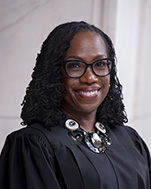
“But if new information comes out (showing a cancer link) … you would have a product that is misbranded, right?” asked Justice Ketanji Brown Jackson, one of the court’s three liberals, appearing to cast doubt on Monsanto’s claim.
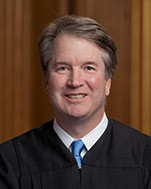
However, Justice Brett Kavanaugh appeared to side with Monsanto as he repeatedly brought up the issue of preemption, which says states can’t override a federal law. Kavanaugh also said that if new science arises, the EPA has a process for responding to it.
Ashley Keller, the attorney for the Missouri-based respondent, argued that states can ban the use of specific pesticide products, so why shouldn’t their own juries be able to award tort relief?
“The law of Missouri and the law of the United States can be the same … and the findings (about pesticide harm) can be different,” Keller said.
The court’s decision, expected in July, could significantly reshape the future of Bayer, the owner of Monsanto and one of the most powerful companies in the farming industry, whose monopoly of seeds and related herbicides has helped the nation’s heartland become a crop-producing power.
Over the last several decades, as the use of pesticides and herbicides has grown to fight insects, weeds and other pests, many farmers and gardeners have increasingly said the chemicals are causing cancer.
Multiple studies have claimed a connection between pesticides and cancer, including one comparing it to smoking and lung cancer.
A map of U.S. counties with the highest cancer rates often mirrors the regions with the highest pesticide use. Of the 500 counties with the highest pesticide use per square mile, 60% of those counties also had cancer rates higher than the national average of 460 cases per 100,000 people, according to an Investigate Midwest analysis of data from both the U.S. Geological Survey and the National Cancer Institute.
This case, “will have enormous consequences for environmental health litigation,” said Tarah Heinzen, legal director for Food & Water, an advocacy group that recently published its own research showing high cancer rates in high pesticide use communities. “This case threatens to close the courthouse doors to the many Americans harmed by pesticides.”
President Trump backs Monsanto
Outside the court building’s west entrance, Vani Deva Hari, author of a blog called the Food Babe, yelled to a crowd of more than 100 protestors that the future of health in America was at stake.
“Monsanto is arguing for the right to poison us and get away with it,” said Hari, who, like many in the crowd, has supported the Make America Healthy Again coalition.
Spearheaded by Secretary of Health and Human Services Robert F. Kennedy Jr., MAHA has pushed against widespread agrichemical use and has been an important base of support for President Trump.
Last year, Kennedy raised health concerns over pesticides in a report widely praised by MAHA leaders. Kennedy even predicted that Trump would stand up to major pesticide companies.

But this year, Trump signed an executive order declaring glyphosate — the important ingredient in Roundup — critical to national security. His administration also sent a lawyer to Monday’s hearing to argue alongside Monsanto.
“We wouldn't be here right now if President Trump didn’t sign that executive order … or (didn’t have an attorney) in that building arguing on Monsanto’s behalf,” Hari said.
Bayer and its supporters hope Trump’s support bolsters its position before the conservative-majority court, which has often sided with corporations over environmental regulations.
However, the court has also shown a willingness to limit the EPA’s authority in an effort to give states more control.
While more than a dozen environmental groups filed briefs opposing Monsanto, several local government organizations also weighed in.
“The statute allows the Environmental Protection Agency (EPA) to approve labels on pesticides that include warnings, but its authority to do so does not limit State and local governments in their authority to devise their own regulations, which can include outright bans on otherwise approved pesticides,” a group of local government advocates, including the Local Government Legal Center, wrote in a brief urging the court not to prevent state-level policies concerning pesticide use. “That authority is both necessary and prudent because a national standard cannot consider local soil, climate, population, and environmental conditions that might warrant different rules on the use of any particular pesticide.”
Siding with Monsanto has been a slate of crop associations and the American Farm Bureau.
While Monday’s hearing could have an impact on thousands of pending lawsuits, it originated with the case of John Durnell, a Missouri man who claimed Roundup caused his non-Hodgkin’s lymphoma.
A Missouri jury sided with Durnell, awarding him $1.25 million in damages. Last year, the Missouri Court of Appeals affirmed the judgment.
But Monsanto then asked the U.S. Supreme Court to take up the case, saying various state and federal courts have disagreed over the issue at the heart of Durnell’s lawsuit.
While Monsanto is pushing for a nationwide ban on lawsuits, it has also lobbied lawmakers in multiple states to enact such bans. Two states, North Dakota and Georgia, passed such laws last year.
States have the power to ban the use of a pesticide, but not enact additional labeling standards, Monsanto’s lawyer argued near the end of Monday’s hearing.
“But if states have the power to ban, why don’t they have the power to provide tort relief?” asked Justice Neil M. Gorsuch.
This article first appeared on Investigate Midwest and is republished here under a Creative Commons Attribution-NoDerivatives 4.0 International License.

Mardi Gras trash hits record high in New Orleans, despite push to cut waste
by Tristan Baurick, Verite News New Orleans
May 7, 2026
When cleaning crews dug deep into New Orleans’ clogged drains in 2018, they pulled up leaves, mud — and 46 tons of Mardi Gras beads.
The sheer magnitude of Carnival season waste that year — and its impact on the flood-prone city’s drainage system — shocked many residents and city officials.
"Once you hear a number like that, there's no going back," then-Public Works director Dani Galloway said at the time. "So we've got to do better."
But nearly a decade later, New Orleans is generating more Mardi Gras garbage than ever. During the roughly five weeks of this year’s Carnival season, crews collected 1,363 tons of beaded necklaces, beer cans, plastic cups and other refuse along the city’s parade routes — a 24% increase from the year before and the highest total on record. The trash tonnage is the equivalent of 741 cars, or roughly the weight of the Steamboat Natchez.
“To see the waste go up that much, it’s just absurd,” said Brett Davis, founder of Grounds Krewe, a nonprofit group trying to make Mardi Gras more sustainable through recycling and waste reduction efforts.
It’s a century-old tradition for riders on parade floats to shower crowds with beaded necklaces, toys, and other items—collectively known as “throws.” Most are cheap plastic trinkets. The beads are often laden with toxic chemicals, including unsafe levels of lead. Many throws are dropped moments after they’re caught, then crushed under feet and eventually swept up and hauled to landfills.

City officials initially blamed the rise in rubbish on the popularity of this year’s festivities, which ran from January 6 to February 17 and included more than 30 float parades. An estimated 2.2 million people visited downtown New Orleans during the Carnival season, about 10% more than in 2025, according to the Downtown Development District, which drew on data from location analytics company Placer.ai.
“The increase from last year was directly associated with the larger crowds,” Matt Torri, the city’s sanitation director, told the City Council in March. “Anybody who was out at this year’s parades definitely took note that there seemed to be more people enjoying the Carnival season, which is great for the city.”
But a Verite News analysis of annual attendance and city cleanup records shows no clear relationship between crowds and trash levels. Overall, Mardi Gras waste tonnage has trended upward over the past decade, regardless of the year-to-year changes in attendance.
The Mardi Gras season in 2020, for instance, drew more people — about 2.4 million — but produced roughly 241 fewer tons of garbage than in 2026. In the early 2010s, trash tonnage hovered around 880 tons. It spiked in 2017, surpassing 1,320 tons, and has not fallen below 1,000 tons since. The only exception was 2021, when no trash was recorded because the city canceled parades and most Carnival festivities due to the COVID-19 pandemic.
Since 2020, when the Downtown Development District began tracking visits in the Central Business and Warehouse districts, annual attendance has stayed within a relatively tight range, between 1.9 million and 2.4 million. Still, the trash tally has swung wildly, indicating that other factors are at play. The development district doesn’t track citywide visits, but its annual downtown tally is considered the most accurate indication of Carnival attendance.
The office of Mayor Helena Moreno and the city’s sanitation department did not respond to requests for comment.
Parade trash remains a problem for the city’s drainage system. After the infamous bead blockage of 2018, the city began installing temporary filter contraptions, known as "gutter buddies,” at catch basins along parade routes, but conservation groups say the outfalls still spew more litter into canals and Lake Pontchartrain during the Carnival season.
The upswing in trash is occurring alongside a seemingly contradictory trend of waste reduction. In recent years, many krewes have cut back on plastic beads and other “junk” throws. They’ve opted for higher-value items such as socks, baseball caps, wooden cooking spoons, and metal drinking cups.
Grounds Krewe and other groups have also expanded their recycling efforts. They set up stations to collect bottles, cans and reusable throws, and some volunteers even pick through the parade debris for recyclable items. This year, the groups diverted about 28 tons from landfills. That’s despite the city pulling back its support for recycling this year because of budget concerns. Even if the city government spent the $200,000 it initially earmarked for recycling, “it’s not going to reverse the 24% gain” in waste, Davis said.
There was some hope that the volume of throws would be curbed by rising prices for beads and other trinkets, a result of higher inflation and President Donald Trump's steep tariffs on imports from China, where most beads are made. Some parade goers said they noticed the change, taking to social media to complain about stingier krewes.
“We are really perplexed,” Davis said. “All that is happening, with people throwing fewer beads and a lot of krewes switching to higher-quality throws, but waste is still going upward.”
The swelling tonnage may have less to do with the throwers and more with the catchers. Davis and some city leaders say parade-goers are setting up earlier, staying longer, and bringing even more of the comforts of home: folding chairs, canopy tents, coolers, grills and wagonloads of food. They’re also chaining together walls of ladders, erecting scaffolding, installing portable toilets, and plunking down generators and old sofas. As the season ends, many of these items are broken, dirty, or too much of a hassle to haul home.
These abandoned items, which can range in weight from 5 pounds for a folding chair to 300 pounds for a couch, are an increasingly heavy lift for cleanup crews, City Council President JP Morrell said.

“The reality is that they get their use out of this stuff, and then it becomes a tremendous amount of debris that our workers have to deal with because these people had no intention of ever picking this stuff up,” he said. “It goes towards a sense of abject entitlement – that our entire city exists to serve other people's whims.”
Many of these gear-laden revelers are territorial, roping off patches of sidewalk or spreading tarps across grassy neutral grounds. These public-space appropriators have come to be known as the “Krewe of Chad,” after the name, spray-painted across a large patch of grass, went viral in 2013.
These “Chadders,” as Morrell calls them, appear emboldened by the recent ebb in the enforcement of the city’s parade rules. Officially, early birds aren’t supposed to set up until four hours before a parade starts, but this rule is regularly flaunted. In 2024, the list of banned items grew to include many of the things that have become commonplace — tents, tarps, and viewing platforms among them. A crackdown that year, which included the seizure of truckloads of encampment gear, appeared to briefly change behavior, Davis said.
But last year, the city announced it would scale back enforcement and prioritize security after a terror attack on New Year’s Day killed 14 people on Bourbon Street.
Enforcement was further scaled back by the city’s current budget crisis. Amid layoffs and other cutbacks aimed at reducing a $220 million deficit, Morrell admitted that efforts to clear Carnival encampments would be “spotty.”
“How are they going to enforce it? Well, to be honest, we’re hard up for cash,” Morrell said on an Instagram post in early February. He stressed that police and other city departments would “do their best,” but enforcement wouldn’t be as “robust as it could be.”
Torri, the sanitation director, said the city had the capacity to clear large items on just one day before the final cleanup on Fat Tuesday. “Mardi Gras Day was a major undertaking,” he told the City Council in March. Crews started working at 8 a.m. and didn’t finish until 1 a.m. “It's a full day of cleaning because of everything that people have brought. Tarps, ladders, tents, coolers, grills are left because they're disposable things that were only intended to last the weeks of Mardi Gras.”
Davis predicted the trend toward fewer but better throws will continue, and his organization will keep pushing for more reuse and recycling. But, he added, the policies meant to curb parade encampments – and the waste they leave behind – are only as effective as their enforcement.
“Having the krewes throw less is great, but what’s really heavy is a couch and all the stuff people brought out in wheelbarrows,” Davis said. “Unless we have police out there and the trucks to haul it away, this kind of behavior creeps back. And that’s what we’re seeing now.”
This article first appeared on Verite News New Orleans and is republished here under a Creative Commons Attribution-NoDerivatives 4.0 International License.

‘A betrayal:’ California to share data on immigrant drivers nationally
By Khari Johnson and Wendy Fry, CalMatters

This story was originally published by CalMatters. Sign up for their newsletters.
California is preparing to share with an outside organization detailed information about driver's license holders, including immigrants who do not have legal authorization to live in the U.S.
That breaks a promise the state made a decade ago when it began issuing licenses to unauthorized immigrants, advocates say, and it means more than 1 million people may face higher risk of deportation.
But if state officials don’t turn over the data, the Department of Homeland Security may refuse to accept California licenses and IDs at airports, the advocates believe, following a briefing with the California Department of Motor Vehicles and the office of Gov. Gavin Newsom earlier this month. State authorities confirmed they plan to share the data to comply with the Real ID Act of 2005, which set requirements for accepting state identification in federal facilities like airports.
Representatives from four advocacy groups who participated in the briefing told CalMatters the shared information will show whether a person has a Social Security number, meaning it could be used to identify people in the country without authorization.
The state plans to provide the information to the American Association of Motor Vehicle Administrators, a nonprofit organization whose governing board is made up of DMV officials from across the country.
The information given to the association will go into the group’s State-to-State Verification system and its platform, known as SPEXS, which allows DMVs and contractors that work with them to verify if someone has more than one license issued in their name. Sharing that data allows agencies that issue driver's licenses to verify that a person doesn’t have duplicate licenses in multiple states.
In the future, an ID database like the one the association maintains could be used to support mobile licenses people can use on their iPhones or online age verification for access to mature content or chatbots.
But advocates fear that federal immigration officials will try to gain bulk access to the data and use the fact that a person doesn’t have a Social Security number as a signal that they’re deportable.
The state received assurances from the association that safeguards will be added to prevent bulk searches for unauthorized immigrant license holders in the database and to prevent access by the Border Patrol and Immigration and Customs Enforcement, according to people who joined the briefing with the DMV and governor’s office. But they remain skeptical.
“Once this data is uploaded to AAMVA, it's out of California's control, no matter what California wants, no matter what protests we may make,” said Ed Hasbrouck with San Francisco civil liberties group The Identity Project, who was on the briefing call.
To carry out the plan to share data with the association the California Legislature will need to approve $55 million to cover the DMV’s costs. It may also need to amend existing law, which states that a Social Security number obtained by the DMV cannot be shared for any other purpose than to address unpaid taxes, parking tickets, or child support.
A spokesperson for the governor’s office declined to confirm details of the call or respond to specific concerns from advocates.
“California continues to lead in supporting immigrant families and protecting personal data from federal overreach,” the spokesperson, Diana Crofts-Pelayo, wrote in an email. “The state has taken the same approach to protect Californians' data during the Real ID implementation, while maintaining Real ID compliance for the benefit of all Californians.”
Ian Grossman, the chief executive of the American Association of Motor Vehicle Administrators, told CalMatters that participation in the verification system is voluntary and that only authorized state employees or contractors have access to the system, that bulk searches of the system are not currently allowed, and all searches must contain specific information about an individual like their name and date of birth.
Social security number ‘99999’
For more than a decade, California and 18 other states invited undocumented people to obtain driver's licenses in order to support public safety and the economy. Economists say that such laws improve economic activity, drive billions of dollars in taxes into state coffers, and benefit public safety because people who lack federal authorization to be in the country can feel more comfortable reporting criminal activity.
More than 1 million people have obtained driver's licenses in California under Assembly Bill 60, a law passed in 2013. The law prohibits the state from using information obtained in the licensure process to consider an individual’s citizenship.
But the multistate verification system can reveal whether a person is an undocumented immigrant. According to an association manual obtained by CalMatters, the database will include the last five digits of a person’s Social Security number, and if that person has no Social Security number, the association allows states to use the placeholder “99999.”
Advocates fear that federal immigration officials could gain access to information in the database, including on undocumented Californians, by asking local officials to make requests on their behalf.
That sort of end run would not be without precedent.
CalMatters reported on instances last year and this year where local law enforcement agencies broke state law and shared information gathered by automated license plate readers with ICE or Border Patrol agents.
The DMV and the governor’s office say the association will notify California of requests from any entity other than a participating state, including attempts to subpoena the database for information about California license holders, providing them with the opportunity to challenge subpoenas or intervene in other requests. But if a subpoena is accompanied by a gag order the association could not deliver any such notification. An agreement between the association and the California DMV obtained by CalMatters states that the association will inform California “if legally permitted” if it receives a subpoena “to release, disclose, discuss, or obtain access to S2S information.”
Hasbrouck believes the DMV and governor’s office “must have known” the reassurances they got from the association were “hollow given the possibility of gag orders.”
He also said that, as a private entity, the association has less protection from court orders or subpoenas than a government agency. Its data sharing is also more easily hidden, since the association is not subject to Freedom of Information Act requests or open meeting laws.
Advocates see ‘a direct betrayal’
Advocates who spoke with CalMatters said sharing the driver's license information with the association sells out immigrant license holders. The law that created the program prohibits the state from using information the program gathers to determine citizenship.
“It's unclear how extreme the danger people are being put into by this decision but there ’s no doubt we told people with AB 60 licenses this would never happen, but it’s happening, and that’s a direct betrayal,” said Tracy Rosenberg, head of advocacy at Oakland Privacy, who was on the call.
Linda Nguy, an associate director at the Western Center on Law and Poverty, compared the disclosure to a move last summer by Health and Human Services Secretary Robert F. Kennedy to share data about millions of non-citizens with federal immigration agencies. That was a violation of federal law, department officials concluded, according to a memo obtained by the Associated Press.
Pedro Rios, director of the U.S.-Mexico Border Program at the American Friends Service Committee, was not on the call, but echoed Rosenberg and Nguy, calling the data sharing plan “a betrayal of California’s commitment to protect and defend all its residents, especially those who have an AB 60 driver's license.”
Becca Cramer, who works with privacy and civil liberties groups, questioned why the governor’s office and DMV are in a rush to comply with the Real ID Act two decades after it passed at a time of increased pressure from the Trump administration.
“It just seems like we’re missing the bigger picture of this moment in time,” she said
The plan to share license information with the database depends on the state budget process because the DMV is requesting $55 million to move the data over to the association’s systems.
At a state Senate budget hearing last month to approve the funding, lawmakers questioned why the state should follow a timeline set by a private organization and share part of Californians’ Social Security numbers. They also asked the DMV to explore the reasoning behind a lawsuit filed by Oklahoma lawmakers in January to block data sharing with the association, in which they argued that sharing personal data collected for driver’s licenses violates state law there.
DMV director Steve Gordon told them that California unsuccessfully tried to convince the motor vehicle association to consider a unique identifier other than a social security number and “anybody who has a social security number that's sharing information of course would have a concern” but told lawmakers “we need to go. We need to go now.”
DMV spokesperson Jaime Garza said that Californians can submit a request to surrender or cancel a driver's license but that driving without a license is illegal.
Nick Miller, a spokesperson for Assembly Speaker Robert Rivas, told CalMatters lawmakers continue to work on the policy issue.
“Protecting immigrant communities from the Trump administration's relentless attacks — and ensuring Californians are empowered and defended — continues to be a top priority for the Speaker,” he said in an email.
Rosenberg with Oakland Privacy suggested that the state might be better off opting out of the Real ID system than sharing information about its license holders, noting that more than 60 percent of Californians already have passports.
“I just wonder what would happen if the state asked Californians to get a passport in order to fly for a couple of years in order to protect 1 million Californians with AB 60 licenses. Maybe we should give people that opportunity.”
This article was originally published on CalMatters and was republished under the Creative Commons Attribution-NonCommercial-NoDerivatives license.
Mississippi House to debate redistricting in Old Capitol where Jim Crow, secession were passed
by Taylor Vance, Mississippi Today
May 4, 2026
When House members meet this month for a special session to redraw state Supreme Court districts, they will convene in the Old Capitol building, where Mississippi lawmakers once implemented Jim Crow and voted to secede from the Union over slavery.
Black lawmakers told Mississippi Today that the decision to debate moving diluting Black voting power in a building where officials previously voted to systemically disenfranchise Black citizens are insulting and tone deaf or, at best, symbolic.
The House chamber in the current Capitol is undergoing renovations, so House leaders chose to move to the Old Capitol Museum for the special session. The Senate still plans to meet in the current Capitol building.
Gov. Tate Reeves has called lawmakers back to Jackson for a special legislative session on May 20 to debate redrawing Mississippi’s three state Supreme Court districts. It’s unclear how lawmakers will redraw the districts, but several legislators predict they will be redrawn to make them whiter and dilute Black voting strength.
Some lawmakers, and the Trump administration, are calling for the Mississippi Legislature to go further in the special session and redraw congressional districts in an attempt to thwart Mississippi's lone congressional Democrat, incumbent Rep. Bennie Thompson, even though primary elections have already been held for this year's midterms.
Rep. Kabir Karriem, a Democrat from Columbus who leads the Legislative Black Caucus, said it was a horrible decision to debate redistricting in the Old Capitol, given the sordid history of decisions on race and voting rights made there.
“It’s a slap in the face to the 1.2 million African Americans in this state to be meeting in the place that established the 1890 Constitution that disenfranchised African Americans,” Karriem said.
A federal judge ruled last year that the state violated federal law with its Supreme Court districts. She determined that Black votes were unlawfully diluted and allowed the Legislature to redraw the districts this session.
The Legislature declined, but after the U.S. Supreme Court last week dismantled federal Voting Rights Act protections for minority voters, Reeves ordered lawmakers to return to Jackson to redraw the districts.
President Donald Trump is also pressuring the governor to add congressional redistricting to the special session agenda and essentially collapse the majority-Black 2nd Congressional District that Thompson represents.
Lawmakers met in the Old Capitol building from 1839 to 1903, according to the Mississippi Department of Archives and History, which is the state agency that oversees the building. The state constructed a new Capitol in 1903, where lawmakers currently meet.
In the Old Capitol, legislators voted in 1861 to secede from the Union. During Reconstruction after the Civil War, the state’s first Black lawmakers served in that building and elected the nation's first Black people to serve in the U.S. Senate.
When Reconstruction ended, white supremacist delegates met in the building to craft the 1890 Constitution that stripped voting rights from Black citizens and imposed Jim Crow laws in the state. It wasn’t until Congress passed the Voting Rights Act of 1965 that the process of removing many of those provisions began. The U.S. Supreme Court has, in recent years, weakened the Voting Rights Act, and many observers say last week's decision in a Louisiana redistricting case has all but nullified it.
With the passage of Jim Crow laws, the state implemented voter suppression tactics such as poll taxes, literacy tests, and grandfather clauses that prevented Black people from voting or holding elected office. It also ushered in decades of racial violence aimed at intimidating Black citizens from registering to vote.
But some say the decision by state House leaders to move the proceedings to the Old Capitol does not appear to be malicious. The current House chamber is unavailable for use, and there are limited options for alternative spaces for the 122 House members to convene.
Rep. John Faulkner, a Democrat from Holly Springs, said he believes there is no malicious intent in moving the proceedings to the old building, but he also believes using the old building is emblematic of current redistricting efforts.
"It's ironic that it's happened at a time like this, when we're making decisions in this building that's a reminder of our old past," Faulkner said.
Rep. John Hines is a Democrat from Greenville and serves on the House Management Committee, which handles the logistics and business operations of the House. He said the committee had previously discussed meeting in another location for a special session.
To Hines, the location of the debate does not matter as much as the debate itself. If the House were to delay the renovations in the chamber or pay a private entity money to meet in another location, it would cost taxpayers more money, Hines said.
"We didn't get elected to debate locations," Hines said. "We got elected to make sure we take care of the rights of people. I'm more concerned about protecting the rights of historically marginalized people."
It’s not unprecedented for lawmakers to meet outside the current Capitol.
When the Capitol building underwent massive renovations in the 1980s, lawmakers met in the old Central High School building. They also opened the 2009 regular session of the Legislature in the Old Capitol to commemorate repairs to the building from damage from Hurricane Katrina.
This article first appeared on Mississippi Today and is republished here under a Creative Commons Attribution-NoDerivatives 4.0 International License.

Lowell residents sue data center, state over air quality permit
by Jordan Wolman, CommonWealth Beacon
May 1, 2026
A GROUP OF LOWELL RESIDENTS is suing state environmental regulators and the owner of a data center located in the city, a first-of-its-kind lawsuit in Massachusetts that comes amid a local backlash against the facility.
The lawsuit alleges that the state Department of Environmental Protection improperly approved the data center’s air quality permits over the objections of the Lowell residents — and that the state and data center owner struck an “undisclosed agreement” to “circumvent” the residents’ opposition.
“My right to equal participation was violated,” Mary Wambui, a Lowell resident and plaintiff in the lawsuit, said in an interview. “I just want to be treated as an equal partner in this whole issue. There should not have been a side deal that allowed a private company that has not been a good neighbor to Lowell residents to proceed.”
Neither MassDEP nor Markley, the data center owner, replied to a request for comment.
The legal challenge, filed in Middlesex County Superior Court, comes at a time of heightened scrutiny over data centers and their role in powering artificial intelligence both around the country and within the Bay State.
While opposition to the facilities spreads nationally, as polls show Americans are souring on them and entire states look to ban them, the politics around data centers are starting to shift even in Massachusetts, home to relatively few such sites. Data centers, which are large warehouses that store companies’ digital infrastructure, servers, and networks, guzzle water to cool the computers and could double their power consumption across the US by 2030, according to Pew Research Center, prompting concerns about the strain on communities despite their economic potential.
Gov. Maura Healey, who launched an AI Hub and has struck deals with Google and OpenAI in recent months, signed into law in 2024 a data center tax credit that has still not yet been finalized as environmental officials raise concerns over energy and water consumption. And earlier this year, Lowell enacted the first moratorium in the state on new data center construction or expansion after Markley submitted plans to expand its facility, which has operated in the city since 2015.
In the lawsuit, the group of 10 residents describes living in the shadow of the 14-acre data center situated in an already overburdened state-designated environmental justice community. They cite air pollution and odor issues from the diesel generators, increased traffic, and constant surveillance that disrupts neighbors’ sleep, privacy, and quality of life.
“With one decision after another, Markley has chosen to subject its neighbors to intrusion, disruption, and serious health dangers — all without transparency and meaningful community engagement, and with little oversight by State regulators charged with enforcing state air pollution control laws,” reads the lawsuit, which is backed by the Conservation Law Foundation, Yale Environmental Justice Law and Advocacy Clinic, and Boston-based Fitch Law Partners.
While Markley has slowly expanded its operations over the past decade, buying up neighboring properties in recent years, the litigation focuses on a 2025 Markley air permit application that sought to install eight new diesel generators — bringing its operations to a total of 27 such generators and 16 cooling towers. Despite objections from the plaintiffs, MassDEP approved the plan.
Those generators are intended to serve as a backup power source and are authorized to emit as much annual pollution as 749 US households from all electricity use, the lawsuit states.
But the residents argue in the legal challenge that state regulators rejected their right to pursue an appeal, invented “novel limitations” on what is subject to appeal, and improperly excluded evidence — all of which “thwarted” the residents’ concerns.
While the appeal played out, unbeknownst to them, state regulators had quietly given Markley permission to begin installing the eight new generators under dispute before the residents’ appeal was formally rejected this past March by Commissioner Bonnie Heiple, according to the lawsuit.
In January, residents began noticing construction on the property and requested more information from Markley. That’s when Markley responded with a copy of an administrative consent order from DEP dated September 29, 2025 — which is included in the lawsuit — authorizing the company to “proceed promptly” and install the generators without informing the plaintiffs despite their ongoing appeal of the air permits.
Now, the residents want the court to vacate DEP’s approval and find that the agency’s use of such consent orders exceeds its authority.
“I don’t want this to happen in any other community in the Commonwealth,” Wambui said.
This article first appeared on CommonWealth Beacon and is republished here under a Creative Commons Attribution-NoDerivatives 4.0 International License.

What is the Orange Card? Inside Guilford County’s health care safety net for the uninsured
by Jennifer Fernandez, North Carolina Health News
May 5, 2026
By Jennifer Fernandez
In Guilford County, having an orange card means an uninsured dad who breaks his hand working around the house can get medical care.
It means a self-employed mom who no longer qualifies for Medicaid and can’t afford other insurance can get a mammogram.
Having one of those orange cards means that someone who’s living in a tent can see a dentist about an abscessed tooth.
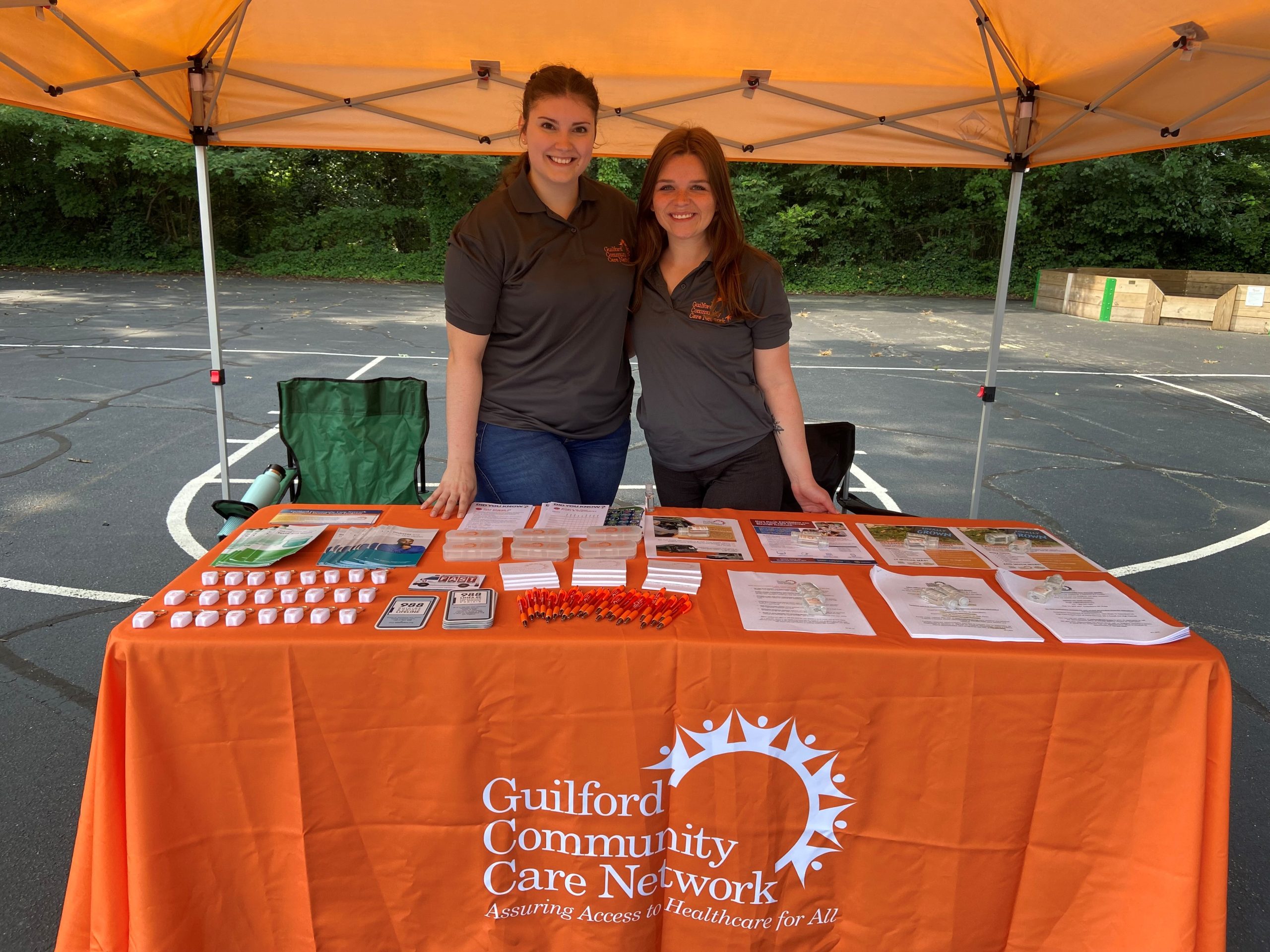
Since 2002, more than 62,000 people living in Guilford County have received one of those orange cards from the Guilford Community Care Network, allowing them to access health care, according to executive director Sarah Dison. Guilford County has more than 562,000 residents, according to the latest census data.
The “Orange Card” program is one of about 30 Access Health safety net systems across North Carolina and South Carolina. Some, like the Orange Card, serve just one county. Others serve multiple counties.
Under some of these medical safety net systems, providers work out of a central clinic. Under others, like the care network’s Orange Card, patients can show their card to get care at various locations. It’s similar to a health insurance card, although providers are donating their services and receive minimal or even no reimbursement.
When North Carolina expanded Medicaid to include hundreds of thousands of low-income working adults, the Guilford Community Care Network thought hundreds of people on the Orange Card might qualify for the federal health benefits, Dison said.
Only about 50 did.
“It really underscored that even though Medicaid expanded,” she added, “there's this need still growing for this population.”
Reaching the uninsured
About 10 percent of Guilford County’s adult population lacks health care coverage, according to the latest community needs assessment completed by Cone Health.
Not all of those people will qualify for the Orange Card, which requires participants to make no more than 200 percent of the federal poverty level. In 2026, that is $66,000 annually for a family of four.
The program is funded mostly by grants and individual donors — most of them local. Health care providers donate their time and services. There’s no state or federal government funding.
People ages 19 to 64 who don’t qualify for any other insurance program and meet the income guidelines can apply for the Orange Card, and they have to renew it every six months.
The network partners with providers throughout the county for primary care and specialty care. Some of that care is based in health systems, such as Cone Health, and some is with individual providers or clinics that donate their time and services.

Dental care became such a pressing need for the community that a dental program was added in 2005, Dison said. It is now their No. 1 referred service, she said, with 60 percent of Orange Card clients enrolled every year needing some dental care.
They also address social needs like food insecurity and access to transportation. Even though Guilford County is considered urban, there are large pockets that are more rural where transportation is an issue, Dison said. City buses don’t reach everywhere.
“Our clients report [transportation] is the biggest barrier as a whole for them,” she said.
Orange Card holders can use Uber Health, for example, to get to appointments and pick up medications.
The Orange Card doesn’t cover children. The expectation is that they would be covered by Medicaid, which covers all children up to just over 200 percent of the federal poverty level ($57,648 annual income for a family of three). But the program includes partners who will see children who don’t qualify for Medicaid. Those costs are on a sliding fee scale. That way, the entire family can be seen by one provider instead of being separated, Dison said.
Dison said they also work with some people older than 64 who don’t qualify for Medicare because they are undocumented.
Guilford County has a big immigrant population, driven in large part by its decades-long role as a refugee resettlement location.
Census estimates for 2020 through 2024 put Guilford County’s foreign-born population at 11.8 percent. That’s higher than the state’s foreign-born population of 9.1 percent during that same time period.
In Guilford County Schools, the third-largest school district in the state, students come from more than 142 cultural and ethnic groups and speak 118 languages — from Arabic and French to Spanish and Urdu.
Expansion in jeopardy
In January, more than 200 people applied for the Orange Card, one of the busiest months since Medicaid expansion went live in December 2023, Dison said.
Overall, expansion has added more than 720,000 people to the state’s Medicaid rolls. State data shows that 46,280 Guilford County residents gained coverage through Medicaid expansion.
However, a federal law passed in summer 2025 is expected to strip that expanded Medicaid coverage from tens of thousands of North Carolina residents.
Anywhere from 152,000 to 330,000 people in the state will lose coverage due to a combination of new work requirements and more frequent eligibility redeterminations to qualify for benefits, according to a new analysis by the Robert Wood Johnson Foundation and the policy think tank Urban Institute.
Starting in 2027, Medicaid expansion participants must prove they are working, volunteering or attending school for at least 80 hours a month to keep their benefits. They’ll also have to undergo those redeterminations every six months instead of once a year.
For Guilford County, under the best-case scenario, that translates to about 10,180 people who could lose health care coverage, according to a NC Health News analysis of state data.
Caseworkers with Guilford County Department of Social Services already refer people who don’t qualify for Medicaid to other programs, such as the Orange Card or Every Baby Guilford’s Adopt-A-Mom, which coordinates prenatal care for low- to medium-risk pregnant women.
Brittany Scott, an eligibility supervisor for Guilford County DSS, expects they’ll be sending more people to the Orange Card after the work requirement kicks in and people lose Medicaid for not meeting the hours.
Dison said her counselors are preparing for that as well.
“As they're going through the recertification cycle of six months, maybe we'll capture a large number of those individuals in the beginning as they're kind of understanding what it means to qualify now,” she said.
Orange Card recipients are already on a six-month recertification period, and they’re also getting checked for Medicaid eligibility by Orange Card application counselors, Dison said.

“If at any point in this process they become eligible for Medicaid, we can help facilitate that process,” she said.
Dison expects people who lose Medicaid expansion in Guilford County will find their way to the Orange Card — at least for a while.
As people get used to how the new Medicaid requirements work, there will likely be more churn, “until they are able to establish a rhythm,” she said.
“It's going to take some time to really figure out — what does that look like?” Dison said.
Cone Health, a longtime partner in the Orange Card, gathered stakeholders soon after the Medicaid changes were announced, Dison said. The hospital system wanted to know how to get the word out that the Orange Card is an option.
While the Orange Card has been available for decades, many people still don’t know about it, Dison said.
“If you're in Guilford County,” she said, “we are here for you.”
Community effort
Dison recently joined a group of community organizations in Guilford County that have been working on ways to tackle the impending Medicaid changes.
Led by Friends in Action, a subcommittee at New Garden Friends Meeting, one issue they’re exploring is how to streamline some of the data that groups are processing.
“What if we came together and created something that was an easy screening to let them know, ‘Hey, we already looked, they're not eligible for the Orange Card, but they are eligible for Medicaid or vice versa,’” Dison said. “So, [we’re] looking at the potential to partner and maybe share data in that type of way to help streamline the process, because it is a lot of information.”
Organizations are looking for areas of overlap.
Hospitals in Guilford County use software that shares data with the Guilford Community Care Network for anyone who goes to an emergency department and is flagged as uninsured or self-insured. Dison said the care network sends letters to those patients to let them know about the Orange Card — that it can provide them with a medical home, specialty care and dental care.
They’re working on updating those letters to include information about the Medicaid changes and how the care network can answer questions.
Friends in Action workgroups are looking at how to work with schools to help identify families who would qualify for exemptions from the new Medicaid requirements because their children have a disability. They’re working with local colleges to help students apply for benefits and looking at how to expand and coordinate food resources for people losing federal food benefits.
“We have a tremendous number of people who have retired from health care, nonprofit work, education — and we saw ways to knit those systems together in a way that might help with verification, outreach and whatnot,” said Jane Foy, a retired pediatrician who is part of Friends in Action. “We concentrated on the systems that we represented best within New Garden [Friends Meeting].”
Another key issue the workgroups are trying to address is logging volunteer hours. The Guilford Nonprofit Consortium and HandsOn NWNC are working on a volunteer database that would allow DSS caseworkers to easily track how many hours someone has accrued toward the new Medicaid work requirement.
“It's a great first step in helping just put out all the opportunity out there,” Dison said. “Because there is a lot of opportunity in terms of volunteering, which is just one small aspect of … what may qualify for the work required hours.”
About this series
NC Health News reporters, with support from Public Health Watch, reached out to about a dozen counties across the state to discuss the impact of the new Medicaid work requirements. We conducted multiple interviews and spent several hours with county social workers to find out how they are preparing for the changes.
Read the previous stories
Day 2: Looming Medicaid work rules bring big challenges to NC counties
This story is part of “Uninsured in America,” a project led by Public Health Watch, a nonprofit newsroom based in Texas. The project focuses on life in America’s health-coverage gaps and the impact of potential Medicaid and related cuts.
This article first appeared on North Carolina Health News and is republished here under a Creative Commons Attribution-NoDerivatives 4.0 International License.

Rural-Focused $42 Billion Broadband Equity, Access and Deployment Program Becomes Operational
by Jericho Casper, The Daily Yonder
April 30, 2026
After four years of planning, a change in presidential administration that revised program rules, and months of delays, most states have unlocked a portion of funding under a $42.45 billion rural broadband expansion program.
While the lead-up to implementing the Broadband Equity, Access, and Deployment (BEAD) program has been long, state officials and industry analysts say it pales in comparison to the work required to turn plans into functioning networks.
States have six months to finalize contracts with participating internet service providers and complete required environmental and historic reviews, before construction can begin. Some expect projects to break ground as early as the second half of this year.
Still, major questions remain, including how more than half the program’s funding will be used.
What Happens to the $22 Billion in Remaining Funds?
Trimmed from states’ initial deployment plans, the U.S. Commerce Department has set aside roughly $22 billion for so-called “non-deployment” uses. Some lawmakers referred to the reserve as federal “savings.” But the Commerce Department and its National Telecommunications and Information Administration (NTIA), which oversees the program, have since signaled that states will be allowed to access the funds.
But the exact process remains unclear.
For example, NTIA is nearly two months past its self-imposed March 11 deadline to issue guidance on the funds.
Lawmakers pressed Commerce Secretary Howard Lutnick on the delay on April 22 and April 23, but he offered few specifics, saying only that guidance would come within two months, and that states would be able to pursue “new and exciting things” with the money.
In the meantime, uncertainty is already affecting participation. State broadband offices in Colorado and New Mexico report that some providers who initially expressed interest may ultimately default on preliminary awards.
Rising costs are one factor: fiber suppliers say prices have jumped as much as 40% in recent weeks. A limited pool of skilled labor is another constraint, an issue the program’s non-deployment funds were meant to address through workforce development efforts.
‘Most Complicated Broadband Grant Program Ever’
Program complexity is also playing a role. Industry experts have described BEAD as the “most complicated broadband grant program ever,” with the program’s former administrator admitting he may have gone too far with certain program requirements.
BEAD grants layer many costs onto broadband projects that an Internet Service Provider (ISP) building a rural project independently would not incur. These include the environmental and historical preservation studies which many state offices are now developing, buy America requirements that increase material costs, and certain penalties for non-performance.
For some providers, particularly those serving remote areas, the administrative burden may outweigh the benefits. If recent federal broadband efforts are any guide, those risks are not hypothetical.
A federal program unfolding beside BEAD, the Rural Digital Opportunity Fund (RDOF), has seen more than one-third of providers default on awards. BEAD’s timeline is even more aggressive: While RDOF allows up to 10 years for full deployment, BEAD requires networks to be operational within four years of award.
That puts added pressure on internet service providers, which must navigate one of the biggest barriers to broadband construction before breaking ground: Permitting.
Upon accepting awards, providers have 30 days to certify that they will not take additional federal funds to complete BEAD-funded builds before they can begin to secure the necessary federal, state, and local permits required to initiate construction.
Permitting Legislation Impacting Broadband
As BEAD funding begins to flow, federal lawmakers are renewing efforts to speed that process. During the week of April 20, Congress considered three bills aimed at accelerating broadband permitting.
Two passed the House, targeting delays on federal lands, where projects are often held up the longest. However, a broader permitting omnibus bill, the American Broadband Deployment Act, was pulled from the agenda after strong opposition from local government groups.
Backed by industry groups representing major providers like AT&T and Verizon, the 100-page proposal combined language from what had been more than 20 separate bills, and was fiercely opposed by local governments.
The omnibus would create a shot clock from 60 to 150 days during which a state or local government must approve or deny a request for a permit to construct a wireless or wireline project. If the locality doesn’t respond in that time frame, the request is automatically assumed to be “deemed granted.”
The law would also restrict permitting fees to recover only actual costs, instead of the traditional standard of reasonable costs. Local governments argue that the restriction of using actual costs would mean they can’t charge enough to pay for the longer-term monitoring and management of granted rights-of-way. The local governments characterize the effort as a sweeping deregulatory push by an industry set to receive billions in federal funding.
Even under its revised framework, the Trump administration has maintained that BEAD will close the digital divide and characterized other federal broadband programs as “duplicative” and “wasteful.”
However, the program once billed as “Internet for All” is expected to reach fewer households and businesses under the revamped plan, and experts say closing the remaining gaps will require sustained investment.
This article was produced in collaboration with Broadband Breakfast, a news and events community focused on broadband infrastructure, investment, and impact.
This article first appeared on The Daily Yonder and is republished here under a Creative Commons Attribution-NoDerivatives 4.0 International License.