NJ allowing data center generators to run, NC town headed for dissolution
Native American tribes no longer want to join the Chesapeake Bay partnership; Nearby well owners still skeptical about NC Chemours deal while state leaders call it historic; Questions remain in Nolan Wells case in Mississippi


It's Friday September 25, 2026 and in this morning's issue we're covering: New Jersey says DataOne’s 62 generators are illegal. It’s letting them run for 45 more days, Helena tables decision about federal grant program with new immigration strings attached, Native American tribes wanted to join the Chesapeake Bay partnership. Not anymore, NC town appears headed for dissolution, NC leaders call Chemours deal historic, but nearby well owners are still skeptical, Childcare Is Key to Disaster Resilience, Nolan Wells may have drowned, but questions remain: How? And why?
Media outlets and others featured: Floodlight, The Daily Montanan, Maryland Matters, Carolina Public Press, North Carolina Health News, The Daily Yonder, Mississippi Today.
New Jersey says DataOne’s 62 generators are illegal. It’s letting them run for 45 more days.
The state's $1 million fine comes less than a month after Floodlight’s visual investigation publicly exposed the Vineland site’s generator fleet for the first time
By Evan Simon/Floodlight, Brad Racino/Floodlight
This story is from Floodlight, a nonprofit newsroom that investigates the powers stalling climate action. Sign up for Floodlight’s newsletter here. New Jersey regulators issued their largest-ever fine against a data center on Tuesday following a recent Floodlight investigation that found DataOne’s facility in Vineland operating at least 45 generators without a state permit.
The New Jersey Department of Environmental Protection’s $1.07 million fine against DataOne “sends a clear message that these facilities will not be constructed or operated with impunity in this state,” said Commissioner Ed Potosnak in a press release.
DataOne, a Microsoft-linked AI data center, has stirred controversy since it broke ground in 2025 due to consistent noise complaints, unpermitted construction and a combative zoning process. The site lies roughly 40 miles outside Philadelphia and is slated to provide AI computing power to Microsoft as part of a $17-billion deal with Nebius, a Dutch AI infrastructure giant.
The NJDEP’s press release says the tractor-trailer-sized machines “were not observed” during the agency’s previous site inspection in December — but they were this past July.
Last month, Floodlight flew a thermal drone alongside the facility and found the site operating 45 of the site’s 62 generators. NJDEP then confirmed to Floodlight that they’d never issued permits for the machines, which emit substantial amounts of health-harming air pollution linked to asthma, heart attacks and even premature death.
At the time, former Environmental Protection Agency Air Enforcement Chief Bruce Buckheit said that DataOne’s actions “violate federal law” and that the company should immediately stop operating the generators.
The state is mandating DataOne apply for and obtain the required permits or cease operations, but is giving the company 45 days to do so, according to a NJDEP spokesperson. During that time, regulators are allowing the facility to continue running the generators.
“I suspect the company is breathing a sigh of relief at being allowed to continue,” Buckheit told Floodlight after reviewing the order.
Environmental groups have questioned whether NJDEP’s actions go far enough.
“While the fine may be record setting for the DEP, $1M does not affect companies like DataOne,” said Matt Williams of Sustain SJ, an environmental advocacy group.
He added that “Ceasing operations immediately would be the appropriate response.”
A social media post co-authored by several New Jersey activist organizations said: “We also have to ask how a project this massive was able to install and operate dozens of generators before the state stepped in. The public only learned what was happening after an independent news outlet flew a drone over the facility.”
In response to questions about Tuesday’s fine, a DataOne spokesperson told Floodlight:
“We are transitioning to low-emission, quiet fuel cells as part of the site’s permanent power solution and have the necessary approvals in place for this solution. While we disagree with the temporary generator determination, we will apply for the air permits for the temporary generators and are in communication with the Department of Environmental Protection regarding its findings and the fuel cell transition timeline.”
The spokesperson did not say whether DataOne will appeal the state’s fine.
Floodlight is a nonprofit newsroom that investigates the powers stalling climate action.

Helena tables decision about federal grant program with new immigration strings attached
By Jordan Hansen (Daily Montanan) Published: September 21, 2026
A routine $53,000 grant for the city of Helena led to an uproar after citizens discovered new requirements to cooperate with federal immigration officials.
The grant would have funded cameras around city buildings with federal dollars administered through Montana Disaster and Emergency Services.
But the Helena City Commission tabled the contract last week after immigration advocates uncovered new provisions by the U.S. Department of Homeland Security.
“This appears to be an attempt to use federal funding to pressure our local government into participating in federal immigration enforcement,” said Valerie Hellerman, director of the Helena Area Refugee Resettlement Team and one of the city’s consistent voices for humane treatment of immigrants. “It seems to me this is an underhanded attempt to bring ICE further into our community through the back door.”
The contract is one of many similar agreements across the state.
Montana Disaster and Emergency Services has distributed more than $31 million to cities and towns through the Department of Homeland Security program since 2019.
Terms and conditions of the Helena contract obtained in a public records request by the Daily Montanan show significantly different requirements between a 2020 grant award and the most recent version.
A Helena city spokesperson said all grants have obligations, and they can change over time.
“It’s not unusual for grant terms and conditions to fluctuate cycle to cycle and change under different state or federal administrations,” said Helena spokesperson Amanda Opitz.
Program funds security upgrades
The State Homeland Security Program has been around since 2003 as an initiative to beef up security around possible targets in towns and cities throughout the country.
In the 2025 fiscal year, the program doled out about $373.5 million in federal funding to states, which could divide it as they saw fit, according to the Congressional record.
Cities across the country have long accepted the funds as a way to get needed upgrades using sources outside of normal municipal budgets.
Helena city officials discussed this during a meeting last week, pointing to worrisome trends in the city’s budget.
“These grants are super critical for us to be able to get various things done,” said Helena Mayor Emily Dean. “We really try to be aggressive in going after grant money so that we can allocate general fund dollars to other projects.”
But cities must agree to certain stipulations set forth by the federal government.
A 2020 version of the grant award referenced foundational American laws, including Title IX, the Age Discrimination Act, and the 1968 Civil Rights Act.
The current version of the grant award is more complex and adds provisions related to immigration and prohibitions on diversity, equity and inclusion.
It includes a stipulation that a city accepting the money from the Department of Homeland Security cannot be a “sanctuary city” and asks the city to agree that it will respect “prohibitions on harboring, concealing, or shielding from detection of (people living in the country without permission).”
Other compliance includes local law enforcement providing access to those who have been detained by local law enforcement, “such as when an immigration officer seeks to interview a person who might be a removable (person)” and also states cities cannot “leak or otherwise publicize the existence of an immigration enforcement operation.”
Another provision tells municipalities they must comply with every presidential executive order.
Multiple lawsuits have been filed against some of the grant award agreement terms that include a ban on diversity, equity and inclusion initiatives. These are specifically noted in the grant award Helena is considering.
One of those, a case playing out in Illinois including almost two dozen states, alleges the federal government is “holding critical emergency preparedness and response funding hostage unless states promise to devote their scarce criminal enforcement resources, and other state agency resources, to the federal government’s own task of civil immigration enforcement beyond what state law allows (in some states) or requires (in others).”
In other recent grant awards through Montana Disaster and Emergency Services to other municipalities, including one approved by the Missoula County Commission on Sept. 8, the grant award language is identical to the one tabled by Helena.
Residents react
Immigration discussions have been tense during the past year-and-a-half in Helena, as many members of the public have expressed to the commission they want as little to do with federal immigration enforcement as possible.
Helena citizens pushed back against federal immigration policies after the arrest last year of a resident who had tried to gain U.S. citizenship for years but whose identity was mistaken.
U.S. Immigration and Customs Enforcement called for the arrest.
“I honestly can’t believe we’re still here,” said Helena resident Ashley Fisher at a commission meeting last Monday about the grant. “You promised us no cooperation with ICE … and here you are stabbing us in the back.”
Meetings in Helena regarding immigration have drawn large crowds, and this week’s meeting did as well, with the commission chambers full and overflow rooms with TVs broadcasting the proceedings.
About 60 people spoke against Helena accepting the DHS money.
The city’s governing body eventually voted to table the decision on whether to accept the $53,000 as city commissioners questioned staff about the award.
But the tabled item can be brought back to the city commission.
At the meeting, city attorney Rebecca Dockter said citizen concerns about immigration compliance were unfounded in her legal opinion.
The agreement with DHS also requires local law enforcement help with immigration operations if asked to do so by federal officials, which already happens to some degree, unless local resources are not available.
“I think the legal argument is that this language does not apply,” Dockter said during the meeting. “Even if it does, we don’t have the resources to do the work that it’s requesting.”
A previous attempt to address ICE activities in Helena brought threats from the state attorney general and governor unless the city withdrew an immigration proclamation. With the threat of losing state funding, the city withdrew the proclamation.
Attorney and Helena resident Andres Haladay told the Daily Montanan there were serious concerns with the grant award, adding that it should be expected, at some point, that Helena comply with the terms if city officials sign the contract.
Haladay is with Upper Seven Law and has been working on a number of immigration cases but said he was not representing the firm with his remarks.
“You better assume you’re going to have to follow contract provisions,” Haladay said, pointing to his work with state contracts in the Department of Corrections. “Otherwise, you’re going to court at some point fighting over this.”
Dockter maintained, both in the meeting and in a memo circulated to city staff and commissioners, that some provisions in the contract canceled out others, specifically around language about coordination with homeland security and potential anti-DEI rules.
Dockter also wrote in her memo that she had reached that conclusion after conversation with state Disaster and Emergency Services. The city directed questions from the Daily Montanan about the legal conclusion to the state, which said it sends out the grant awards in accordance with federal law.
But some commissioners were not convinced.
“I have more questions than I have answers,” Commissioner Melinda Reed said. “And that makes me uncomfortable.”

Native American tribes wanted to join the Chesapeake Bay partnership. Not anymore.
By Christine Condon (Maryland Matters)
Seven federally recognized Native American tribes are ending their bid to formally join the Chesapeake Bay cleanup, saying they have been disappointed by the response from Bay Program leaders.
The Virginia-based tribes began their quest last January, hoping to be added as a single signatory — the status awarded to each of the state governments surrounding the bay — when elected officials in the Chesapeake Bay region approved a new agreement for restoring the bay in December.
Their effort fell short, but the state governors in the bay region commissioned a Chesapeake Bay Program committee to study the idea, approving a document that called Indigenous knowledge “vital to the health of the Chesapeake Bay.” Several chiefs were in the front row of the crowd as the governors approved the directive during a December convening at the National Aquarium in Baltimore.
But discussions reached an impasse earlier this month, according to a statement shared on Monday by the Indigenous Conservation Council of the Chesapeake Bay, a consortium of all seven tribes, at a Bay Program committee meeting.
Tribal leaders say the bay partnership proved unwilling to offer signatory status, a failure to recognize tribal sovereignty, said Melissa Ann Ehrenreich, executive director of the council.
“If people are not willing to create a seat at the table, why should you sit under the table?” Ehrenreich asked in an interview. “That was what they were suggesting: For tribes to sit under the table and catch crumbs.”
In its statement, the council said that it voted “to withdraw from all discussions and formal engagement with the Chesapeake Bay Program,” until tribal sovereignty is respected.
The Chesapeake Bay Program said in a statement Monday that it “remains committed to working with Tribes, to the extent that they would want to engage.”
“While the partnership did not extend an option for adding signatories, we remain committed to working together on the foundational elements of advancing and respecting Indigenous guardianship and Indigenous knowledge within watershed restoration planning and implementation,” read the statement.
Chief Anne Richardson of the Rappahannock Tribe said she walked out of a September meeting with Bay Program officials before its conclusion because of her frustrations.
That meeting was convened to prepare a formal resolution that the Bay Program could approve in December. Richardson said she and other tribal leaders believed the resolution would set the tribes on a path to signatory status.
But more than an hour into the meeting at the Upper Mattaponi Tribal Center in Virginia, Bay Program officials broke the bad news, Richardson said. To her, it felt like tribal leaders had been “led down a primrose path,” only for the door to be slammed in their faces more than a year later.
“It was insulting, and I thought it was very disrespectful to the tribal leaders,” Richardson said.
But the tribes got support Monday from organizations including the Chesapeake Bay Foundation, among the largest bay-focused nonprofit groups, along with the Choose Clean Water Coalition and the Nature Conservancy.
“It’s unacceptable that the Chesapeake Bay Partnership is not following through on promises to engage in good faith and meaningfully include tribes in the partnership,” Chesapeake Bay Foundation senior policy director Keisha Sedlacek said in a statement. “Enough delays. We urge decision-makers to make things right.”
If people are not willing to create a seat at the table, why should you sit under the table? That was what they were suggesting: For tribes to sit under the table and catch crumbs.
– Melissa Ann Ehrenreich, executive director of the Indigenous Conservation Council
During the Bay Program meeting Monday, the tribes also received support from Bill Dennison, provost and vice president for academic affairs at the University of Maryland Center for Environmental Science. Dennison, a longtime bay scientist, is an executive board member on the Chesapeake Bay Program’s Scientific and Technical Advisory Committee.
“To move forward, we’ve got to engage with all knowledge that we can integrate to restore this magnificent bay and watershed,” Dennison said during the public meeting.
In its statement, the Indigenous council wrote that tribal leaders were “stonewalled” when they tried to discern why the other states had decided not to allow the council to become a signatory, on a level playing field with the governors of Maryland, Delaware, Pennsylvania, New York, Virginia and West Virginia, and the mayor of Washington, D.C.
As a signatory, the council would be able to cast a vote in decisions about the bay clean-up effort. In addition to each of the states and Washington, D.C., the federal government and the Chesapeake Bay Commission —which represents legislators in the region — are also signatories with voting power.
The seven tribes, which all earned recognition from the federal government between 2015 and 2018, formed the Indigenous Conservation Council of the Chesapeake Bay in 2022. The council includes the Upper Mattaponi Indian Tribe, Rappahannock Tribe, Pamunkey Indian Tribe, Nansemond Indian Nation, Monacan Indian Nation, Chickahominy Indian Tribe and the Chickahominy Indian Tribe – Eastern Division.
Maryland officials grapple with ‘bizarre’ Trump executive order on Chesapeake Bay
The Chesapeake Bay Program decision is particularly “ironic,” Ehrenreich said, given that President Donald Trump (R) last week signed an executive order signaling a possible retreat from federal agencies involved in the bay cleanup, and railing against “rain taxes” collected by some bay jurisdictions in order to fund stormwater management programs.
“These are tough times for the Bay Program when it needs leadership,” Ehrenreich said. “And tribes are willing and ready to step up, when their tribal sovereignty is acknowledged and respected.”
If it changed course, the Chesapeake Bay partnership would not be the first clean water partnership to add Indigenous leadership. The Puget Sound Partnership, for example, includes several tribal representatives on its leadership board.
“When the Chesapeake Executive Council decides it is ready to uphold tribal sovereignty and provide space at the leadership table for us, then we will be happy to renew our conversations,” read Monday’s statement from the council.
But in the meantime, the tribes plan to continue their environmental projects in their homelands, Richardson said, including efforts to rebuild oyster and herring populations and restore shorelines and wetlands — projects that employ Indigenous knowledge and focus on adding to, rather than extracting from, the land.
“Western science didn’t need what we had,” Richardson said. “And so we’ll just keep doing what we’re doing.”
SUPPORT: YOU MAKE OUR WORK POSSIBLE
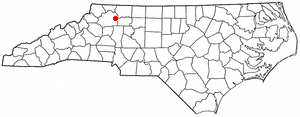
Ronda beyond help? NC town appears headed for dissolution.
by Mackenzie Thomas, Carolina Public Press
September 22, 2026
Ronda, a small town situated along the Yadkin River in Wilkes County, has been on the North Carolina Local Government Commission’s Unit Assistance List for just over a decade. In that time, the LGC has highlighted concerns including late audits, budget violations and deficits in the town’s water system, according to LGC records.
On Aug. 11, Kendra Boyle, the LGC’s director of fiscal management, warned officials during a town meeting that Ronda was facing “severe and immediate financial distress” if town leaders didn’t make some serious changes.
Town officials appeared at the latest LGC meeting on Sept. 1 and pleaded with commissioners for enough time to hold a vote that would let their citizens, rather than a state panel, decide the fate of the town.
[Subscribe for FREE to Carolina Public Press’ Daily, Weekend and Election 2026 newsletters.]
With the town already facing the possibility of not being able to meet payroll in a few months, the commission was already questioning its viability. It gave Ronda certain tasks to complete before returning in October, but a majority of town officials decided to heed the commission’s advice and move forward with dissolution.
State Treasurer Brad Briner, chair of the LGC, commended Ronda for its decision.
“We appreciate Ronda leaders’ willingness to do what is best for their citizens and taxpayers,” Briner said in an LGC statement.
“These elected leaders took the Town’s financial challenges seriously and our staff is ready to work with them, Wilkes County and other stakeholders to ensure a smooth transition.”
To ensure a smooth dissolution process, the LGC will continue to work with the town and help officials navigate these next steps. Moving forward, questions remain about what the future holds for the struggling community.
History of financial problems in Ronda
Ronda was founded in 1907. The vast majority of the roughly 436 people who live there spent their lives working at textile mills and furniture factories, making just above minimum wage. Most of its current residents are over the age of 65, with many of them living off limited Social Security, Acting Mayor Kevin Reece said.
Its history of financial troubles isn’t new. Over the past 15 years, the town’s water system has had one issue after another related to its aging infrastructure and has bled the town’s water and general funds dry, Reece said.
As a result, the town was spending more than what it had, which is a violation of state budget law, LGC Secretary Denise Canada said.
While Reece said he believed these issues would be fixed eventually thanks to millions of dollars in grant funding the town had received from the General Assembly, it wouldn’t be resolved anytime soon.
Since fiscal year 2021, the town has submitted audits to the LGC anywhere from roughly one and a half months to almost a year late. All of its audits are now up-to-date, but Canada said turning those audits in on time is paramount to ensuring financial stability.
“One thing that I’m often saying is it’s not submitting the audits for the sake of the audit,” Canada said.
“It’s so we can assess the condition of the finances, and this is a case where we have the audits and we can assess the condition of the finances, and the finances are concerning.”

Ronda Commissioner Bobby Munsey also attributed some of the town’s issues to a past financial consultant, James Michael Boaz. He was employed with the town for at least a decade, Reece said. A former town manager in nearby Pilot Mountain, Boaz was accused of embezzling town funds during his time there and was arrested in May. His next hearing is scheduled for Oct. 12, according to court records.
High turnover in the position of mayor didn’t help either, with the town having seen five different people in the position over the past two years, Munsey said.
The town is rich in history, just not much else.
“This town’s been there a long time,” Reece said. “A lot of history, just not a lot of money.”
Decision to dissolve Ronda
Despite the concerns voiced by the LGC at the latest meeting, Reece insisted that town officials didn’t have enough “clarity” yet to determine the next best step. While he said he recognized the authority of the LGC to take control if they deemed it necessary, he argued whatever action taken next should be decided by town citizens.
“They should be able to vote to decide their fate, and they should be able to vote with facts, knowing if we want to move forward with the town, our tax rates, our property taxes are probably going to triple,” Reece said.
“Then they determine if they can afford it and if it’s worth that to them to be a town.”
At its Aug. 11 meeting, the town board voted to ask the General Assembly to grant them a referendum on dissolution, which would present the question of dissolution to Ronda residents in a direct voting process.
However, Canada said, even if approved, the earliest a referendum could be held on the issue is November 2027, which would be far too late to address the issues at hand, according to a letter sent to legislators in August.
Town officials initially believed the wait would be worth it.
“I think we can get by long enough to put it on the ballot,” Reece said. “We got a couple hundred voters, right? We have a nice little town hall. We used to hold elections there. If it’s so important that this board and the members of the General Assembly believe that we should dissolve, I don’t know why we couldn’t have a special election.”
But it never got to that point. In a town board meeting on Sept. 8, Ronda commissioners voted 3-1 to initiate the dissolution process, which will be followed by a final vote at some point to make the dissolution official, WFMY News 2 reported.
The timing issue ended up being the deciding factor, once town officials realized a special election wouldn’t be possible, Reece said.
Joy Billings, a lifetime resident of Ronda, said that while she’s enjoyed living in Ronda and appreciates its small-town nature, she believes the dissolution has been a long time coming.
“The town should have dissolved years ago,” she said.
Billings told Carolina Public Press that she took issue with the way the water system was being run and a mysterious $3 surcharge that was just added on to her monthly bill. It went up from $52.24 to $55.24 a month, and it wasn’t addressed until the next town meeting she attended, she said.
“To me, that’s a lot of money, especially if somebody’s on a fixed income,” Billings said.
“I’m not, thankfully. I am still working, but there are some senior citizens around here that are retired.”
When asked about the surcharge, Reece said it was a recommendation from the League of Municipalities, which has been working with Ronda since it’s been on the UAL.
“With the resources that we have, we tried to share it as much as possible, and I personally tried to make sure people know about it,” he said.
Billings also pointed out that the town doesn’t have many businesses bringing in money in the first place: there’s a Dollar General, a restaurant, a convenience store, but not much else.
“There’s no money in Ronda,” she said.
However, Billings said she doesn’t think other residents necessarily feel the same way about dissolution.
“A lot of the people that live here still think that it’s a town, that’s a big deal,” Billings said. “It’s a big deal to have a town.”
Munsey is one of those people who doesn’t want to see the town go away, citing concerns about residents losing certain town services, how to continue maintaining its municipal park and cemetery and more. He voted against dissolution earlier this month.
Reece said he simply doesn’t see any other option than to dissolve.
“Financially, I don’t see how the town can afford to be a town. I don’t,” he said. “I think it’s a waste of the citizens’ money. I think it’s a waste of sales tax dollars.”
Even so, he’s still disappointed, he said.
“It bothers me that Ronda has so much history,” Reece said.
“It’s a proud community of hardworking people that’s been there since 1907, and to see it go away at no fault of the citizens is sad.”
More units in trouble
Ronda is not alone in its financial troubles and is not the only town to pursue dissolution within the past year. The town of Speed in Edgecombe County dissolved its charter in June after consistently failing to turn in audits on time, CPP previously reported.
CPP asked LGC staff whether submitting audits on time could’ve made a difference in Ronda’s case, but they said town leaders shouldn’t have to wait for an annual audit to know whether they’re operating in the black.
“LGC staff can identify concerns, provide guidance and technical assistance, and monitor units’ progress but it is ultimately the governing board's responsibility to make the necessary decisions and operate within the unit’s financial means,” LGC staff said in a statement.
“Timely audits can provide an important independent assessment, but a governing board should not have to wait for an annual audit or LGC intervention to know whether it's operating within its means.”
Based on fiscal year 2024’s audited financial statements, 145 units across the state were on the UAL last year. Roughly 154 units are anticipated to be on the next list based on fiscal year 2025 information, according to LGC staff.
As far as any other units that are in hot water financially, LGC staff noted there are others that they’re keeping a close eye on, three of them being issued a notice and warning — the highest level warning the commission can give — this year: Rowland, Littleton and Rocky Mount.
While a notice and warning doesn’t necessarily mean a unit is headed for dissolution like Ronda, it does mean the LGC has “serious concerns” about its financial management and other issues, LGC staff said.
What’s next?
Town officials will still return to the next LGC meeting on Oct. 1, except now they’ll be hammering out the details of the dissolution. At that meeting, the LGC will be expecting a written plan from the town that addresses the concerns from the notice and warning and will include the decision to dissolve, LGC staff said.
“Our office has been in communication with the town to offer assistance and support as the Town undertakes this process,” they said.
Under GS 160A‑825, the dissolution process consists of adopting a resolution of intent to dissolve, releasing a statement to residents, conducting multiple public hearings and coming up with a plan to distribute the town’s assets before adopting a final resolution, which must get the LGC’s stamp of approval.
At this point, Ronda is currently working on the wording of the resolution and waiting on a contact person from the LGC to be assigned to the town, Reece said.
Once all steps have been completed, Ronda will no longer be officially recognized as a town, which could be as early as June 30, 2027, Reece said. It will merge into the unincorporated area of Wilkes County, which is land that doesn’t fall under any specific municipality. Instead, it’s governed by the county government, LGC staff said.
Living outside of a designated municipality means that citizens will likely have to contract with private companies to receive certain services formerly provided to them by the town. One example of this is garbage collection, which is usually a service provided by a municipality. Other services like water and sewer can vary, with some counties providing it and others not. Statewide, 42% of North Carolinians live in unincorporated areas, LGC staff said.
In Ronda’s case, it has a water system that will continue to function even after the town dissolves, but its fate will depend on whether a new water association is formed, or if another comes and takes it over, Reece said.
Ronda will also still have bills to pay. It currently owes roughly $200,000 toward a loan to expand the lines for its water system, which would likely be paid off by 2032 if the town made payments of roughly $30,000 per year, Reece said.
However, Munsey said this is far from over. Even though the town is pursuing voluntary dissolution, the process can be so drawn out that the town could still turn things around financially and reverse the decision at a later date, before the dissolution is finalized.
“We’re working tirelessly to try to resolve all the issues we’ve had,” Munsey said.
“LGC’s been here, they’re helping us to get things resolved. It’s not a cut-and-dry deal.”
If and when those issues will be resolved remains to be seen.
Despite its troubles, Ronda and its residents remain a close-knit community.

“I had my house burned down eight months ago to the ground, and the town of Ronda, they just came out and supported us, helped us rebuild and everything,” one Ronda resident said during the LGC meeting.
“They’re just a great town of people out there. I never would have thought that in the years I’ve been alive, a small town like that would come together and help people that you really didn’t know.”
Reece said he believes it’s this spirit that will help carry the community through whatever challenge they face next.
“Growing up around there, riding my bicycle, walking through the community. I knew everybody. I've probably had a drink of water or soda or something to eat in about everybody's house when I was little,” he said.
“We were a wonderful community, and everybody helped everybody.”
This article first appeared on Carolina Public Press and is republished here under a Creative Commons Attribution-NoDerivatives 4.0 International License.

NC leaders call Chemours deal historic, but nearby well owners are still skeptical
by Will Atwater, North Carolina Health News
September 21, 2026
Takeaways
- A legal settlement will compel Dupont spinoff company Chemours to pay $590 million over long-term PFAS contamination.
- Some private-well owners distrust Chemours-installed filtration and still rely on bottled water.
- Expansion of public water lines to affected homes could help, but residents say they’re tired of promises.
Cedar Creek resident Vickie Mullins and her family have dealt with PFAS-contaminated water for years, and she doubts that a new $590 million agreement between the state, affected governments and the chemical companies will make any real difference.
That agreement, announced on Sept. 10 by N.C. Attorney General Jeff Jackson, involved Chemours, DuPont and Corteva and centered around air and water PFAS contamination tied to the Chemours Fayetteville Works plant.
“When I see some action and I have water coming out of my faucet that I can drink safely, I’ll believe it,” Mullins said. “Until then, I’m not getting my hopes up.”
Mullins said her daughter, Stephanie, died of liver cancer at age of 44 on Aug. 29, 2025. She also believes years of PFAS contamination may have contributed to multiple health problems she has seen in her community.
“For many decades, a chemical plant outside Fayetteville knowingly discharged PFAS, or forever chemicals, into the air and water,” Jackson told a crowd made up mostly of news media and public officials.The releases “led to downstream contamination of drinking water for over half a million people in our state.”
Mullins is among Lower Cape Fear residents who said the settlement brings renewed attention to contamination they have lived with for years. But the announcement does not resolve their questions about safe drinking water, enforcement of Chemours’ existing obligations or the potential health effects of PFAS exposure.
Lack of trust
Jackson was joined in making the announcement by N.C. Department of Environmental Quality Secretary Reid Wilson and Cumberland County officials at the site of the Gray’s Creek Water Project, which is intended to extend public-water service to residents whose private wells have been affected by PFAS contamination.
“Forever chemicals like PFAS, including GenX, pose serious harms to human health,” said Wilson, referring to the form of PFAS found predominantly in Chemours’ discharges. “Roughly 3.5 million North Carolinians currently drink water with PFAS levels above federal health standards in drinking water. That’s one out of every three people in this state. … These are people and families and communities.”
PFAS (per- and polyfluoroalkyl substances), which are called forever chemicals because of their persistence in the environment, are a class of thousands of identified synthetic compounds linked to cancer, reproductive harm and hormone disruption. Prized for their ability to resist water, grease and stains, the compounds are found in a host of products across multiple industries, including cosmetics, clothing and food packaging, even mascara and dental floss.

In 2017, reporting revealed that Chemours, a company spun off from chemical industry giant DuPont, had discharged GenX and other PFAS into the Cape Fear River from the Fayetteville Works plant near the Cumberland-Bladen county line. The companies’ PFAS releases also contaminated air, soil and groundwater in surrounding communities.
Although research has linked exposure to some PFAS with a number of health harms, it is difficult to draw a straight line from PFAS exposure to any individual illness.
After outlining the settlement’s payment structure, Jackson said, “There is nothing more important than ensuring that people have access to drinking water that is clean, and that these companies that polluted it are held accountable.”
Of the new settlement’s $455 million in guaranteed payments, $75 million will go to the state. The remaining $380 million will be divided among the 11 local governments that joined the agreement. Cumberland County will receive $161.5 million.
Residents were not impressed.
“Well, as far as the settlement announcement — it's a joke,” said Gray’s Creek resident Jamie White. “That should have been in the billions, not this little $500 million.”
Because of the harms they’ve experienced, some drinking well water owners don’t trust filtration systems that were installed by Chemours. Mullins said she only uses water from her well for laundry and washing dishes. Through the consent order, her family receives 36 gallons of bottled water every two weeks, she said.
Out of an abundance of caution, Mullin said her youngest grandson has never experienced what many take for granted each day.
“He doesn't know what it's like to drink water from a spigot,” she said. “That’s sad — and he’s not the only one, I know.”
Consent order was supposed to fix things
In February 2019, Chemours, the N.C. Department of Environmental Quality and Cape Fear River Watch entered into a court-enforceable consent order. It requires Chemours to sample private drinking-water wells, provide replacement drinking water to qualifying properties, reduce PFAS releases to the Cape Fear River, control air emissions and assess and remediate groundwater contamination.
Under the order and subsequent DEQ direction, a private well with GenX concentrations above 10 parts per trillion qualifies a household, business, school or public building for permanent replacement drinking water, usually through a public-water connection or whole-building filtration system. Chemours must offer bottled water while the permanent supply is arranged. Other properties can qualify for up to three under-sink reverse-osmosis systems when a well contains combined levels of certain listed PFAS above 70 ppt or an individual listed PFAS above 10 ppt.
Gray’s Creek Elementary and Alderman Road Elementary schools recently were connected to Fayetteville’s public-water system. Officials said the next phase is to expand water infrastructure so more homes and other properties in the district, including private-well owners, can connect to the system.
“For years, Cumberland County residents have lived with the consequences of contamination they did not create,” said Cumberland County Board of Commissioners Chairman Kirk deViere in a release.
Cedar Creek resident Mike Watters is one of those residents.
In 2019, a blood test showed Watters’ combined PFAS level was 29.2 nanograms per milliliter. That level was above the 20-nanograms-per-milliliter category in National Academies guidance, which associates PFAS blood levels above that amount with an increased risk of adverse health effects and recommends clinical follow-up. The guidance does not determine whether PFAS caused an individual illness.
Watters is being treated for polycythemia vera, a rare blood cancer.
A 2021 Pet and Equine PFAS Exposure Study found PFAS in the blood serum of Watters’ dogs.
Because of the consent order, Watters is among residents who have filtration systems installed on their wells.
The settlement comes even as the U.S. Environmental Protection Agency has withdrawn guidance that encouraged states and wastewater utilities to use existing Clean Water Act authority to curb PFAS pollution before it reaches rivers and drinking-water sources. The Southern Environmental Law Center said the move could make it harder for states and utilities to press industries to control PFAS at the source, though the group said withdrawing the guidance does not eliminate their underlying authority to do so.
Complaints aired at community meeting
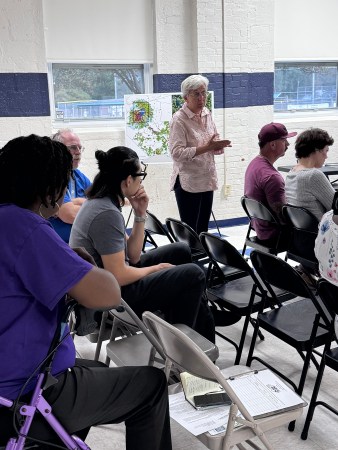
At a Sept. 17 meeting at the Stedman Recreation Center, representatives from the N.C. Department of Environmental Quality and the N.C. Department of Health and Human Services briefed local residents on the 2019 consent order with Chemours and its 2020 addendum. DEQ focused on Chemours’ obligations for well sampling, replacement water and PFAS controls at the Fayetteville Works plant, while DHHS discussed the potential health effects of PFAS exposure and how residents and their doctors can get guidance and testing resources.
At that meeting, Watters told officials there’s a problem with how some systems are installed.
According to Watters, many of the granular activated carbon installations did not meet the 2019-approved “Drinking Water Compliance Measures” design or later design updates outlined in the consent order.
He discussed how he solved iron buildup in his system by adding an iron softener and inspecting wells where other users had reported problems.
“I tested four different sites,” he said. “Out of the four different sites, three were horrendous. I would not use my water. I would not even take a bath because there was slime bacteria and all sorts of things.”
His neighbor Jamie White is one of the well owners who had Watters investigate her well. She described her well as technically working but unsafe and improperly plumbed, with bacterial contamination, chemical breakthrough and a configuration that may be sending contaminated water into the house.
“From the day they installed the granular activated carbon filter, I bought bottled water,” she said. “I don't trust it. We still have chemicals that leak through.” White said she spends as much as $50 per week on bottled water.
Turning of the spigot
The county has launched a project to “provide public water service to 218 existing homes, including 184 properties impacted by PFAS contamination,” according to information provided on the county’s website.
The remaining $135 million of the $590 million settlement is a reserve fund, financed by DuPont and its sister company Corteva, that the state could use if Chemours cannot meet its long-term obligations under the 2019 N.C. Department of Environmental Quality consent order. Those obligations include providing clean drinking water to families with PFAS-contaminated wells.
Toward the end of the September meeting, Cedar Creek resident Betty Melvin asked state officials, “what are you going to do for us?” She added, “My dog has cancer [...] the water is giving us rashes.”
Michael Scott, director of N.C. DEQ’s Division of Waste Management, told those gathered that the agency’s role is, in part, to enforce the consent order. “We're working to provide solutions for clean, PFAS-free drinking water. That's through the filters that we talked about tonight, through the granular activated carbon or the reverse osmosis.”
As part of its investigation into problems some well owners are facing, N.C. DEQ has shared its findings with Chemours. The agency told NC Health News that it is still awaiting a response.
This article first appeared on North Carolina Health News and is republished here under a Creative Commons Attribution-NoDerivatives 4.0 International License.

Childcare Is Key to Disaster Resilience
by Anne Vilen, The Daily Yonder
September 21, 2026
The day before Hurricane Helene blew into Western North Carolina, Jeneal Hensley, a licensed family child care provider, was taking care of five children in her Swannanoa home. She’d been in business as The Little People’s Place in her house by the river for more than a decade and had cared for dozens of the town’s preschool-age children, along with some of her own grandchildren. Hensley loved her child care routine, but that ordinary Thursday would turn out to be the last normal day she remembers.
Before dawn the next morning, her daughter who lived nearby called to urgently insist: “leave now.” The river was rising, and residents were evacuating. Jeneal and her husband drove out through nearly a foot of water, abandoning her home, belongings, a life-time of photographs, and her livelihood to a merciless flood that would take it all. “I was in a state of shock,” she says. “I made the comment, ‘oh, I guess it’s gonna take a couple of months to clean this up. My husband put his arm around me and he said, ‘Try a year.’ I thought, ‘No way I will be out of business for a year,' but it was actually more than 500 days.”
During that time while Hensley floundered, trying to sustain her own family while living in space donated by her church, filing for unemployment, and dealing with insurance agents and contractors who first gutted and then rebuilt her house from the ground up, the families who counted on Jeneal also faltered. Many child care programs were closed for weeks. Some parents also lost jobs to the storm or had damage to their own homes. Others were displaced and eventually moved their kids to other child care settings. Of the five she’d cared for before the storm, only one returned. “He was here the first day I reopened,” said Hensley. “Couldn’t wait to get back.”
For Hensley and her community, the return to normal after the disaster took much longer than anyone thought it would. Her recovery, and the survival of the entire early child care ecosystem that working families across the region depend on, relied heavily on local agencies, organizations, and individuals who gave money, resources, and time to sustain these small businesses.
A new documentary, created by Home Grown and a recent report from The Dogwood Health Trust which funds regional non-profits that support child care providers, provides a playbook for other communities where disaster may strike next.
Both stress what child care providers and families themselves have reported: Established relationships with the grassroots groups whose daily work is helping families are the lifeline for immediate response after a disaster and the nucleus where long-term recovery begins.
“Climate events lay bare the fragility that already exists,” in the child care ecosystem, says Joe Waters, the co-founder and CEO of Capita, a think tank that researches and recommends policies to support family health.
In Western North Carolina, like many rural areas, child care needs, especially for infants and toddlers, are often met by home-based child care providers–some operating licensed family child care homes and unregistered providers caring for the kids of family, friends, or neighbors (FFN’s). While many families prefer home-based care and depend on these providers in order to work, profit margins for licensed family child care homes are extremely slim and many struggled to stay afloat even before Hurricane Helene.
In Buncombe County, the bull's eye for Helene damage, for example, only 7% of infants and toddlers were enrolled in licensed child care (including centers) in 2025, according to a report from the Buncombe County Partnership for Children. A recent survey of parents in the county backs up the truism that working parents often leave the workforce if they are unable to afford child care. Others lean into a patchwork of part-time care provided by family, friends, neighbors, or nannies, often scheduled around a revolving door of shift work: one parent working, while the other cares for the kids, neither one getting much sleep.
After Helene, while the Buncombe County Partnership for Children “was instrumental in getting early childhood providers linked up with FEMA and the National Guard” according to assistant director Caroline Rodier, there were hiccups for family child care homes because they aren’t “non-profit” or “public.” Those on the city water line didn’t have running, potable water for several weeks. In the interim, they had to submit a re-opening plan that ensured they had clean water and hygienic procedures for making formula, washing hands, changing diapers, and toileting. Those plans had to be approved by the county health department, which further delayed reopening. “In the end the agencies agreed to help all centers and home-based programs because they felt it was a public good,” but the policy debates between agencies and absent or conflicting guidance frustrated care givers who just wanted to open their doors and take care of families.
Now, organizations and governments at the local and state level are culling the lessons learned from Helene to better prepare for the next emergency. The North Carolina Child Care Health and Safety Resource Center established guidance for agencies and organizations that support child care providers to prepare for the immediate aftermath of a disaster event. A Hurricane Helene State Child Care Task Force, headed by the North Carolina Partnership for Children, has generated a list of questions to ask following an emergency. But using these tools requires coordinated communication between state agencies and individual providers, including familiarity with the state’s disaster plan.
Eric Ager, state representative for North Carolina, and the patriarch of a fifth generation family farm in Western North Carolina, agrees. “We have not done enough at the state or at the federal level to understand how important [child care] is. . . . We’ve got to shift our thinking so that child care is infrastructure . . . not to see it as money we’re throwing at a problem, but to see it as an investment in our economy.”
Toward that end, Waters recommends a systems-level approach that improves the conditions for families with young children generally. For Western North Carolina and other rural regions, that means fully and specifically including home-based child care providers–both licensed and unregistered–who are caring for the majority of children.
“Home-based child care providers are resilient and motivated to help families and their communities,” said Waters. “I spoke with one provider who had lost the roof on her house, but she was eager to reopen because she had children in her care whose parents were EMTs, whose parents were in construction, whose parents were linemen with the internet company, and she had to open so that her community could rebound.”
Emergency workers like these often work nontraditional hours when most child care centers are closed. Home-based programs like Mama Freda’s Tiny Tots, operated by Arikco Watkins, are licensed for second shift and even overnight care. “My second shift families, they work in a factory,” said Watkins. “I have a nurse who works 12 hour shifts, sometimes from 6 in the evening till 6 in the morning.”
Another thing that local and state officials agree on is “the importance of community-driven responses, neighbors taking care of and looking out for one another,” said Rachael Sawyer, Buncombe County’s Director of Strategic Partnerships. “Certainly in the post-Helene days and weeks, when communication was limited and transportation from one place to another geographically was limited, it was those grassroots endeavors that helped people take care of each other and their kids.”
For home-based providers across Western North Carolina, mutual aid came from the Family Child Care Center and Enrichment Foundation (FCCEF), headquartered in Charlotte, a peer-led network of home-based child care providers that leads with both hearts and hands. Leaders at FCCEF already knew most of the family child care homes in the region and they recognized that what providers and families need most in the first days after disaster strikes is fast, flexible, cash.
After Helene, providers and families lost power, internet, phone service, even access to clean water. ATM machines were down. Roads were impassable. Gas stations that had gas couldn’t take credit cards. In that situation, cash was essential for purchasing groceries, gas, and other basic necessities.
The day after the storm, Alissa Rhodes, who had recently closed her own family child care home in Swannanoa to be the Foundation’s secretary and director of communications evacuated her own family to stay with her sister in Maryland. The next day, she started reaching out to check up on home-based providers in seven counties across the region to find out what they needed. The answer in many cases was simply cash.
She and president Vantoinette Savage then contacted Home Grown, a national collaborative of funders that advocates for home-based care givers, which had an already established model for direct cash assistance to family child care providers. Thus was born the Home-Based Child Care Emergency Fund for Severe Weather and National Disaster Response, which provided grants of $800 to $1500 to 89 caregivers across the region.
“Not having strings attached to the Home Grown funds was spectacular. . . they gave funds very quickly. You didn't have to get an estimate and then send that in and then or get it done first and then get reimbursed. You tell them what you needed, and then they just showed up with what you needed or gave you what you needed,” said Kanika Fox, who’s been running a child care business out of her rural Hendersonville home for 28 years.
Rhodes and Savage also provided critical emotional support, directing providers to other community resources and connecting them to other providers in similar situations through online gatherings and old-fashioned phone trees.
“Understanding that you’re not going through this alone, that there are caring community members and organizations, and having a local organization that can help you navigate the complex systems of disaster response” is really critical, according to Natalie Renew, Home Grown’s executive director. Home Grown’s Emergency Fund also supported home-based care givers in the disaster zone following wild fires in Los Angeles, California.
Renew argues that especially in rural areas where large child care centers are often inaccessible and unaffordable, investing in home-based child care is investing in essential infrastructure–as part of emergency response to a natural disaster and as preparation for future disasters.
“Home-based providers deserve to be elevated and invested in during these times of crisis, because they're not just standing back up their own business, they are essential infrastructure that shows up for children, for families, and for other care providers when they need it,” Renew said.
“They are highly motivated to resume childcare services so that families can get back to work, to ensure that essential workers have child care overnight or early morning. And we are all better for that resilience and commitment and leadership on good days, and especially on bad days when disaster strikes.”
This article first appeared on The Daily Yonder and is republished here under a Creative Commons Attribution-NoDerivatives 4.0 International License.

Nolan Wells may have drowned, but questions remain: How? And why?
by Mina Corpuz, Mississippi Today
September 22, 2026
The parents of Nolan Xavier Wells say they will continue to push for answers about his death, after a Jackson County grand jury concluded that he likely drowned and no one would face criminal charges.
Their attorney Ben Crump and the Rev. Al Sharpton said that the grand jury report doesn’t close the book on Wells’ death or answer lingering questions about what led to it or how the 18-year-old died.
His mother, Christine Wonsley, said she received a text message from Jackson County District Attorney Angel Myers McIlrath Monday evening, not long before McIlrath posted the grand jury’s redacted report and a video explaining its findings on Facebook.
Monday was Wonsley’s birthday.
“Last night was a reminder that our son’s life does not matter to those who hold positions that are supposed to serve and protect the public,” Christine Wonsley said Tuesday during an online news conference at New Birth Missionary Baptist Church in Georgia.

Wells, who was Black, traveled from Ocean Springs to Horn Island on the Fourth of July with friends. His body was found in the water off the Mississippi Gulf Coast barrier island two days later.
While the grand jury heard evidence that he likely drowned, both the state medical examiner and a pathologist who completed an independent autopsy ruled Wells’ death as undetermined. In a preliminary report, Dr. Roger Mitchell, the pathologist hired by the family, said all other causes must be ruled out to conclude a death was by drowning.
Mitchell also wrote that the record and examination doesn’t establish whether Wells entered the water on his own or was forced into it, and whether he was conscious when it happened.
Because of lingering questions and Mitchell’s findings, the family’s legal team called for the district attorney to keep the death investigation open and to look further into blunt force injuries documented on the back of Wells’ head and neck, including whether they contributed to his death.
Attorney Ben Crump, who represents Wells’ parents, released Mitchell’s final autopsy report Tuesday, which the pathologist was able to complete after traveling to Mississippi and gaining access to reports from the state medical examiner.
Mitchell concluded that two red discoloration marks were blood. The state examiner identified them as contusions early in the investigation, but did not explain where they came from, he wrote.
“That is not nothing,” attorney Liza Park, a member of the family’s legal team, said about Mitchell’s updated findings. “That is where we begin to begin to understand what happened to Nolan Wells.”
If new evidence is uncovered relating to his death, a grand jury can meet again to consider it and decide whether to charge anyone. Mississippi does not have a statute of limitations for murder charges.
The family’s legal team and the NAACP are calling for McIlrath’s office to release the state’s autopsy report and the investigative file. They also continue to ask the U.S. Department of
Justice to complete a federal review as requested by the Congressional Black Caucus in August.
Forensic experts are examining Wells’ cellphone, and Crump said they will talk about what they found in an upcoming news conference.
Crump asked the public not to attack Wells’ parents for continuing to seek answers.
The case gathered national attention and sparked discussion about Mississippi’s history of investigators not examining the deaths of Black people with the same rigor as the deaths of white people.
This summer, at least three out-of-state people have been charged with threatening to kill or hurt witnesses in the investigation, including Wells’ friends and their family members.
Friends of Wells have said they faced death threats from their names, pictures and personal information being shared online.
Attorney Russ Latino, who is representing a former teammate of Wells, sent a cease-and-desist letter to at least one content creator, the Sun Herald reported. Attorneys representing the three friends who traveled to Horn Island with Wells threatened to sue Sharpton, Mississippi Today has reported. This week, the same attorneys also said they would sue “The View” co-host Sunny Hostin for comments she made, the Clarion Ledger reported.
On Monday, attorneys representing the friends acknowledged the grand jury’s decision not to indict, including one who demanded that Crump apologize to three of Wells’ friends.
“We still have a First Amendment right here, and we still have the right to ask questions when our children are unalived in inexplicable ways,” Crump said at the Tuesday news conference. “We won’t stay silent, we won’t let it be swept under the rug and we won’t go quietly into the night because Nolan deserves better than that.”
This article first appeared on Mississippi Today and is republished here under a Creative Commons Attribution-NoDerivatives 4.0 International License.