Haiti jersey ban echoes campaign to discredit its revolution
New Orleans nonprofit can help you pay for medication, food, rent and more; A growing community of recovering gamblers lifts each other up as formal resources lag; Stepping back from brink of financial disaster in Rocky Mount


It's Friday June 26, 2026 and in this morning's issue we're covering: FIFA’s Haiti jersey ban echoes the long campaign to discredit and downplay the Haitian Revolution, Key NC Senate budget writer offers glimpse at Helene relief numbers in state budget, Rural Tennessee needs family doctors. Can $200,000 lure them to the state’s small towns?, Top court orders disclosures in NJ cops’ use of facial recognition technology, Federal judge blocks key pillars of current U.S. president's executive order restricting mail voting in 2026 election, A Pipeline Company Says It Will Protect the Environment in North Carolina. Its Record in Tennessee Says Otherwise, Reducing harm: This New Orleans nonprofit can help you pay for medication, food, rent and more, Stepping back from brink of financial disaster in Rocky Mount.
Media outlets and others featured: The Conversation, NC Newsline, Tennessee Lookout, New Jersey Monitor, Votebeat, Inside Climate News, Verite News, Capitol News Illinois, Carolina Public Press.

FIFA’s Haiti jersey ban echoes the long campaign to discredit and downplay the Haitian Revolution
The move is part of a longer history of obscuring and demonizing the Haitian Revolution and its leader, Jean-Jacques Dessalines.
By Julia Gaffield, William & Mary (The Conversation) Published: June 15, 2026
Ahead of its first match in the 2026 World Cup, the Haitian national soccer team was forced to make a last-minute change. But it didn’t have anything to do with its roster or travel plans. It was the team’s jersey.
FIFA, the sport’s global governing body, said the jersey design violated its rules, which ban political slogans or imagery.
FIFA didn’t elaborate on which components of the jersey were problematic. But the issue almost certainly stemmed from the small image of a group of people holding the Haitian flag that appeared on the right hip of the jersey. After the decision was made, a spokesperson for the team confirmed that the original jersey included “an image depicting the Battle of Vertières and some independence heroes raising the Haitian flag.”
The commemoration was doubly symbolic since Haiti officially qualified for the World Cup for just the second time in the men’s tournament’s history on Nov. 18, 2025, which also marked the 222nd anniversary of the famous 1803 battle that secured Haiti’s victory over France in its war for independence.
While the spokesperson for the team described the image as including “some independence heroes,” I think it’s safe to assume that Jean-Jacques Dessalines, who led the Haitian revolutionaries during the Battle of Vertières, is the central figure of the vignette.
The subject of my 2025 book, “I Have Avenged America,” Dessalines was the man who declared Haiti’s independence from France, and he was Haiti’s first head of state.
Read more: Jean-Jacques Dessalines: Reassessing the Haitian revolutionary leader’s legacy
But because of his radical and violent fight for freedom, Dessalines’ enemies often described him as ferocious and barbaric, both during his lifetime and in the centuries after his death. They sought to undermine his leadership and undermine Haiti as a country, depicting him as a figure whose sole purpose was violence for violence’s sake, rather than a revolutionary driven by any ideological or political commitments.
A successful slave revolution
In the late 17th century, France had colonized the western third of Hispaniola, the island that Haiti now shares with the Dominican Republic.
By forcing enslaved men, women and children to work on sugar and coffee plantations, the French turned the colony, which they called Saint-Domingue, into one of the wealthiest in the world.
In August 1791, enslaved men and women rose up in revolution. It was the world’s first and only successful slave revolution: Within two years, they forced the French to abolish slavery.
The Haitian Revolution – as the event is known today – became a war for independence only when the French tried to reinstitute slavery in 1802. Dessalines declared Haitian independence on Jan. 1, 1804, and Haiti became the first nation to permanently ban slavery.
The ‘silencing’ of the revolution
The effort to discredit the Haitian Revolution by targeting Dessalines began during the war for independence against the French. Criticism only intensified after the Declaration of Independence.
That year, French propagandist Louis Dubroca, a mouthpiece of the Napoleonic government, published a slanted, factually incorrect biography of Dessalines. Even though the book got some basic facts wrong, such as claiming that Dessalines was born in Africa, its impact has been indelible.
“Cunning and hypocritical,” Dubroca wrote, Dessalines “is also brutal, impetuous, and violently excessive. He inspires a kind of terror in all around him.”
An image that accompanied an 1806 Spanish translation of the book still haunts the memory of the Haitian Revolution: It depicts Dessalines hoisting a sword in one hand and holding the severed head of a white woman in the other
In the decades after the revolution, opponents of the young nation routinely claimed that Dessalines had massacred the entire white population on the island after declaring independence.
Yes, in the context of ongoing war with France, Dessalines executed some French citizens, including those who had participated in Napoleon Bonaparte’s bloody campaign from 1802 to 1803 to regain control over the colony and reintroduce slavery. After 1804, however, hundreds of white French people remained in Haiti and were naturalized as Haitian citizens, securing equal rights under Dessalines’ 1805 Haitian constitution.
But the facts didn’t matter. The hyperbolic narrative of unmitigated violence served to discredit and undermine the revolution’s successes.
Thomas Jefferson became so worried that enslaved people in the United States would be inspired by the Haitians that in his correspondence he frequently depicted the Haitian Revolution as a violent upheaval rather than a struggle for freedom. Jefferson went on to ban trade with Haiti in 1806, and the U.S. did not formally recognize Haiti’s independence until 1862.
The strategy of denying Haiti’s success became so effective that the Haitian anthropologist Michel-Rolph Trouillot called it the “silencing” of the Haitian Revolution.
A pattern emerges
The World Cup jersey ban marks Haiti’s second sartorial controversy of 2026.
In early 2026, the International Olympic Committee required Haiti’s Winter Olympics team to modify its opening ceremony outfit for similar reasons.
The garments, designed by Stella Jean, a Haitian Italian fashion designer, featured a painting of the Haitian revolutionary Toussaint Louverture, Dessalines’ fellow revolutionary.
Once again, the design was deemed political.
Dessalines and Louverture fought together throughout the revolution, but they are often portrayed as opposites. Louverture, in this framing, is strategic, diplomatic, rational and reasonable. In contrast, Dessalines is typically described as violent, unthinking, emotional and heartless.
But there’s a noteworthy distinction between the Olympic ban and the current one imposed by FIFA. For the Olympics opening ceremony, the banned outfits depicted a single, specific person: Louverture. In the case of the World Cup jerseys, the mere implication of Dessalines, standing alongside his fellow revolutionaries, was enough to elicit a backlash.
Ever since the Haitian revolutionaries first rebelled against the French in 1791, the proslavery and imperialist powers of Europe and the Americas had a special interest in ensuring that Haiti failed.
Both then and now, targeting revolutionaries like Dessalines has supported that goal. The irony is that more people may be learning about Haiti’s revolutionary history in the process. Saeta, the company that designed the controversial jersey, has announced on Instagram that it will restock it. The jersey has become a fan favorite.
This article is republished from The Conversation, a nonprofit, independent news organization bringing you facts and trustworthy analysis to help you make sense of our complex world. It was written by: Julia Gaffield, William & Mary
Read more:
- Haiti at the World Cup is more than an underdog tale – it is the story of global migration
- Meet Haiti’s founding father, whose black revolution was too radical for Thomas Jefferson
- For Iran’s diaspora, a tough World Cup call: To support the national team or protest – or both?
Julia Gaffield does not work for, consult, own shares in or receive funding from any company or organization that would benefit from this article, and has disclosed no relevant affiliations beyond their academic appointment.

Key NC Senate budget writer offers glimpse at Helene relief numbers in state budget
By Clayton Henkel (North Carolina Newsline) Published: June 22, 2026
For many residents of western North Carolina affected by Hurricane Helene, it’s been 20 long months of waiting and wondering — when will things get back to normal? And just how much more funding is coming from the government?
Sen. Ralph Hise (R-Mitchell) told members of the Governor’s Advisory Committee on Western North Carolina Recovery Monday that legislators are working to finalize the state budget, but the exact appropriation for Hurricane Helene relief has yet to be settled on.
“I have no idea if that’s going to be a separate bill or if that’s going to be built into the budget as we come out with that,” said Hise. “But the biggest portion of it is obviously the state match for the federal government. I think that’s about $450 million to this point.”
Hise, a co-chair on the Senate Appropriations Committee, calls that a “continuing number” that is likely to rise as more federal money comes in. The state is required to earmark a percentage of matching funds.
Hise said one of the biggest challenges for budget writers is trying to get their hands around FEMA’s funding process and which local issues and rebuilding projects will qualify for federal funding.
“The risk is when we’ve heard nothing from FEMA on a lot of these projects, even water and sewer and those kinds of things,” said Hise. “If you put state money towards them and they’re ultimately awarded in the FEMA process, FEMA will reduce whatever the state gets.”
Hise said in cases where local governments are assured a project may not meet federal guidelines and may be denied, legislators have been receptive to allowing them to request state funds to shorten the wait time on critical projects.
Sen. Kevin Corbin (R-Cherokee) says about $2.4 billion in state money has directly been spent on Helene recovery with an additional $2 billion redirected from state agencies to assist in rebuilding. Nonprofit and philanthropic partners have contributed $1.4 billion. The federal government has provided just over $9 billion in recovery funds.
Still, Corbin says more federal funding is critically needed. He traveled to Washington with Governor Josh Stein earlier this month to encourage the state’s congressional delegation to push for $10 billion in additional funding for western North Carolina. The bulk of the request — more than $3 billion — is needed to repair and rebuild damaged homes and recover lost housing stock.
The federal funding request also included $300 million for private roads and bridges to restore access to homes and emergency services. More than 3,000 eligible applications have been submitted to the state’s private roads and bridges program, overwhelming the pool of money that was initially set aside.
Helene recovery once again takes center stage as NC legislators return to Raleigh
“I think we’re possibly looking at putting another $100 million into private roads and bridges from state funding,” said Corbin.
That figure would match what Stein requested from the legislature back in March for the third phase of Hurricane Helene recovery funding.
Another critical part of the ongoing recovery is improving communication.
Major Kevin Owens with the North Carolina State Highway Patrol said Monday they are hoping the upcoming state budget will include funding for 31 additional towers for the Voice Interoperability Plan for Emergency Responders network, commonly called the VIPER system.
VIPER is North Carolina’s statewide public safety communications system that provides reliable and secure digital voice communications to first responders, law enforcement and partner agencies.
Owens says the VIPER network was the only way communication got through in the first few weeks after Helene.
Seventy-five percent of cell sites in the Helene-affected counties were out of service; 200,000 wire or land line subscribers were also left without a way to communicate. More than 1,700 miles of fiber were damaged or destroyed, according to the Land of Sky Regional Council.
Owen said the additional towers and planned upgrades to allow automatic data traffic rerouting would mean zero downtime on VIPER in a future emergency.
“The robustness of the network would be even greater in the readiness of any future natural disaster that we may experience,” said Owens.
The Governor’s Advisory Committee on Western North Carolina Recovery meets again July 17. Members are hoping by then they may have more clarity on the latest federal funding request, as well as what state legislators have agreed to fund.
Rural Tennessee needs family doctors. Can $200,000 lure them to the state’s small towns?
By Jamie McGee (Tennessee Lookout) Published: June 22, 2026
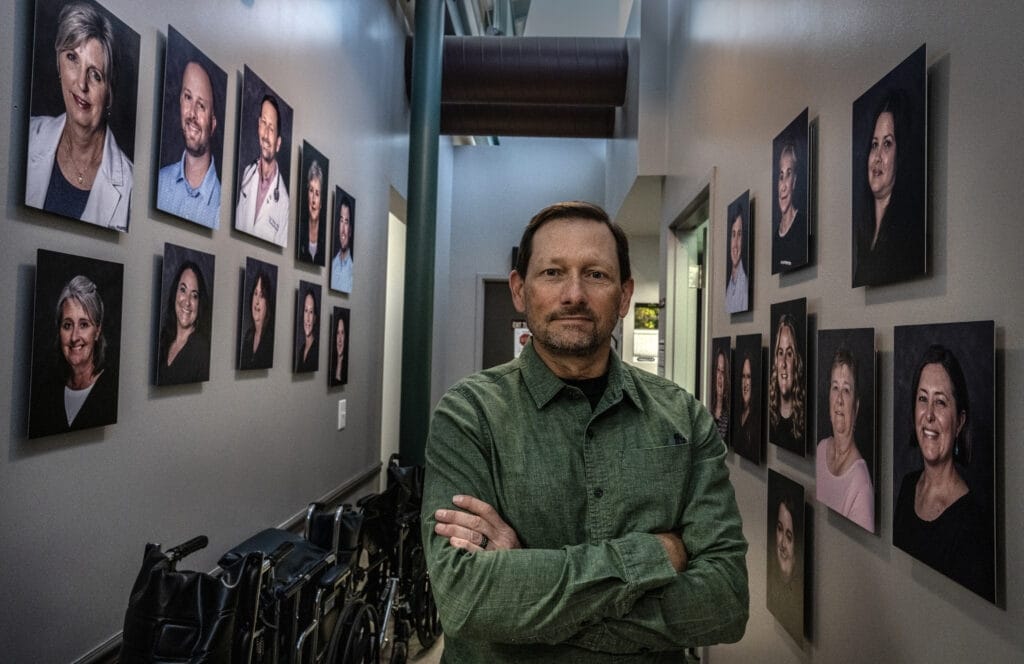
In a small clinic room in Sparta, Tenn., Dr. Ty Webb moved his chair near his 70-year-old patient and encouraged her progress with weight loss and smoking. His wife, Janet Webb, a pharmacist and scribe, helped consolidate more than a dozen medication bottles and discard those no longer needed. When his patient shared fears about her new heart condition, he offered tissues and assured her that she would be able to navigate the necessary care.
“Stress is going to make you feel like you can’t keep anything straight,” Webb said. Turning to the many pill containers, he added, “We’ll try to simplify.”
Webb explained next steps and upcoming blood tests, before moving on to his next patient down the hall, counseling once again on cigarettes and commending improved blood sugar levels.
It’s a familiar routine, one he has fulfilled for nearly three decades as a family physician, often serving the same families he met when he first moved to the town of 5,000. But as his retirement and those of other family physicians draw nearer, he carries with him concerns and questions about what that will mean for the rural communities they serve.
SUBSCRIBE: GET THE MORNING HEADLINES DELIVERED TO YOUR INBOX.
“Finding physicians to do what I do and take my place — I’ve been looking for 15 years and can’t find somebody,” Webb, 59, said. “There is no one coming in to replace the doctors like me out there and we are five to seven years from retirement. There is about to be a really big problem.”
Webb is among a shrinking pool of family medicine doctors in rural Tennessee. Young family doctors must navigate a more complicated medical landscape for independent practice than in previous decades, and aspiring physicians are often drawn to higher salaries in more specialized fields or to positions in urban areas. That leaves many rural counties in Tennessee with a shortage of doctors.
The number of family physicians in rural areas in the South fell by 14% in the seven years through 2023, according to a recent Annals of Family Medicine study. Tennessee’s urban counties, including Davidson, Williamson and Knox, have ratios of fewer than 1,100 residents to one primary care physician, while nearly 30 rural counties have ratios that exceed 4,000 to one, according to 2022 data from the University of Wisconsin Population Health Institute.
Tennessee has ranked among the least healthy states for decades. About one in three Tennesseans live in rural areas, where life expectancy and incomes are lower and reliance on public health insurance and health risks are higher, according to a 2025 state report.
“We have a dearth of physicians practicing in areas of our state that need it most,” said Dave Chaney, executive director of the Tennessee Academy of Family Physicians. “When family doctors are in communities, people live longer, are healthier and the overall cost of care goes down.”
To help address these rural health care needs, Tennessee lawmakers, led by Republican state Sen. Rusty Crowe of Johnson City, approved a loan repayment program in 2023 to encourage family physicians to work in underserved areas. The Tennessee Academy of Family Physicians Foundation, which developed the program, began selecting recipients this year who will receive as much as $200,000 in loan repayment dollars during five-year commitments.
The new family physician loan repayment program is part of a broader focus in Tennessee to boost health care outcomes in rural parts of the state. Gov. Bill Lee launched a rural health care taskforce in 2022 and the state was awarded $207 million in federal funds in 2025 to be allocated through a five-year Rural Health Transformation Program.
‘A degradation of care’
For Webb, moving to a town heavy in Bluegrass music, grain silos and cattle farms felt like a natural step for him after completing his medical residency. Sparta, located 90 miles east of Nashville, was a departure from his years studying medicine in Memphis and growing up in Indianapolis, but he knew he could use his broad medical specializations in a smaller town, he said.
He joined a practice with three other family medicine doctors, delivered babies, offered psychiatric care, performed colonoscopies and did rounds at the local hospital. He and Janet raised three kids on a 50-acre farm, where they now host grandchildren and care for their three dogs. His home, his clinic, his grocery store, his kids’ schools, his church and city hall are all within a short drive.
“It’s fabulous. The cost of living is low, people are great,” Webb said. “It’s just the pace of life is different. I enjoy the smaller community.”
Most of Webb’s patients live in White County, but some drive from two or three counties away, having built relationships with him and his team that now consists of three nurse practitioners and a physician assistant. He no longer sees hospital patients, but at his Sparta clinic and at a smaller office in Spencer, his team sees about 12,000 patients and he works 12- to 14-hour days to fit them all in. His clinic gets multiple calls a day from people seeking to establish primary care, openings that do not exist.
“We can’t accommodate that. We’re full,” Webb said.
Other rural Tennessee doctors describe similar demands. Dr. Katherine Hall, 47, is a family physician in Athens, Tenn., often with a two-month waiting period for new patients. She tries not to turn people away, but that makes it more difficult to see her existing patients when they are sick. On a typical morning, she has fed her horses and made hospital rounds before her clinic opens at 8 a.m.
“It is really hard to be available for acute needs when I’m spending all my time catching up and managing the refills and the labs and the other management of patients,” she said. “I see 24 to 27 in a day. You can’t really squeeze more in than that.”
Dr. Wm. Ryan Bartz, 47, who works in Selmer in West Tennessee, has a full clinic for 10 hours on weekdays, sees acute care patients and makes regular house calls. He has been compensated or thanked with plates of cookies, fresh chicken eggs and beef donations, even soup deliveries when he has been sick. “I love my job,” he said. “It’s not a clock-in, clock-out job.”
Rural Tennessee is bleeding independent physicians, new report finds
As an independent physician, Webb believes he is better positioned to care for patients than those working at hospitals, where longevity is also uncertain. Seventeen hospitals have closed in rural parts of Tennessee since 2012, and as of 2022, more than 20 rural hospitals were at risk of closure, according to annual state health reports.
But, being an independent family medicine doctor comes with its own bureaucratic and billing challenges, and Webb said he understands why young doctors are often discouraged from following course. Many seek more defined hours, which is hard to make work financially and to meet patients’ needs in a rural private practice, he said. Dealing with insurers reluctant to cover costs is increasingly adding to his work load, along with keeping up with ever-evolving regulation. Webb is less certain that he will be working into his 70s, as he had long envisioned.
“I love medicine. I would keep doing this for a very long time,” he said. “The problem is the bureaucracy of medicine and it’s killing me.”
More than half of non-metro doctors in Tennessee were older than 65 in 2022, compared to a third in metro areas, according to data from Rural Health Information Hub, illustrating the upcoming pressures on rural communities. Meanwhile, Tennessee lost 42 percent of independent physicians in rural areas in the five years through 2024, according to a Physicians Advocacy Institute report.
A further reduced physician presence in rural areas in the coming years will mean patients with less access to comprehensive, preventative care, Webb forecast. Patients will have to rely more on nurse practitioners and physician assistants, who are knowledgeable and skilled but whose training is meant to accompany doctors’ roles, he said. Patients will also likely turn more to urgent care clinics or to emergency centers farther away when heart disease, blood pressure or other issues reach crisis levels, adding more costs to the system and to patients.
“It’s going to be a degradation of care,” Webb said.
Financial pressures weigh on specialty and location decisions
For many in their residency, their looming medical school debt forces them to seek more lucrative specialties or positions in urban areas that include more patients relying on private insurers. Medical students graduating in 2025 with education debt owed on average more than $220,000, according to the Association of American Medical Colleges.
“The financial fear is real,” Webb said, adding car payments, house payments and childcare costs to the tally. “Their entire life has been put on hold until they can start work and they are starting that way behind the eight ball financially.”
The state’s new loan program helps alleviate at least the medical school debt pressures, which is significant, and Webb said he is hopeful it can draw more candidates to his practice and others facing similar staffing needs.
“There is still a hurdle there, but it is a much more achievable hurdle to overcome,” he said. “That’s going to be helpful.”
The Tennessee family physician group’s foundation awarded five recipients in April out of about 300 Tennessee family medicine resident doctors training at a dozen programs across the state. The annual cost to the state is forecast to reach $520,000.
While other existing loan repayment programs in the state target rural health practitioners more generally, the new initiative only goes toward family medicine doctors. The family medicine program also requires a longer time commitment and a greater repayment level, with the hope that doctors will develop stronger ties to the community and will be more likely to stay beyond the five-year period. Even placing two or three doctors through the loan repayment program can make a meaningful difference, Chaney said.
“No other type of doctor is equipped to go into one of these rural areas and provide the type of comprehensive care that these communities need,” he said. “Let’s invest in primary care on the front end, let’s keep people well, improve public health status and, in the long-run, reduce overall costs.”
SUPPORT: YOU MAKE OUR WORK POSSIBLE
Top court orders disclosures in NJ cops’ use of facial recognition technology
Critics of facial recognition technology say misidentifications can lead to wrongful arrests. To ensure fair trials, New Jersey's top court ordered more disclosure.
By Dana DiFilippo (New Jersey Monitor) Published: June 24, 2026
As police increasingly rely on a controversial investigative tool called facial recognition technology to identify crime suspects, New Jersey’s top court gave defense attorneys a win Wednesday, ordering prosecutors to more fully explain how they used the technology in a Jersey City murder case.
New Jersey Supreme Court Justice Douglas Fasciale, in a unanimous ruling, wrote that prosecutors were wrong to deny Tybear Miles’ discovery demand for details on what facial recognition software investigators relied on to arrest him for the June 2021 shooting death of Ahmad McPherson and how exactly they used it.
The technology is controversial because misidentifications have resulted in at least eight wrongful arrests nationally, with research showing it most often fails at identifying people of color, women, children, and elderly people. It also has gone largely unregulated both in New Jersey and nationally, alarming civil rights advocates.
Wednesday’s ruling builds upon a 2023 state appellate decision that required prosecutors to fork over 13 items related to the facial recognition software police used to charge Francisco Arteaga in a West New York armed robbery case.
Fasciale rejected any “mechanical application” of the Arteaga decision to other cases involving facial recognition technology, saying judges must decide such challenges based on case specifics.
Still, he said, fairness demands that defendants be able to scrutinize what tools police used to criminally charge them both to challenge the tools’ reliability and to determine how police identified them as a suspect, examine whether the investigation was thorough, and demonstrate the possibility of another culprit.
“Although we reject a rigid checklist for (facial recognition technology) discovery, we note that such basic information will, in most cases, constitute the minimum necessary to safeguard a defendant’s right to a fair trial,” Fasciale wrote.
Attorney Dillon Reisman, who had argued before the court on behalf of the American Civil Liberties Union of New Jersey, called the decision “a really big win against the use of secret, opaque technology by law enforcement.”
“It’s a really positive sign that our court takes really seriously that new technologies are subject to constitutional safeguards,” Reisman said.
Tamar Lerer, deputy of the state Office of the Public Defender’s forensic science unit, had argued the case in court too and also applauded the ruling.
“Facial recognition technology may be novel, but the ability of people accused of crimes to find out how and why they were investigated is not,” Lerer said.
In Miles’ case, none of the crime’s eyewitnesses identified him as the shooter or even placed him at the scene, according to the ruling.
Instead, police identified him as a suspect after showing a confidential informant footage that surveillance cameras caught of six Black men seen nearby. That informant, who wasn’t at the scene and didn’t see the slaying, identified Miles on the footage by his nickname (“Fat Daddy”) and Instagram handle, according to the ruling. Miles’ sister and ex-girlfriend also identified him as one of the men caught on camera.
Police then ran two facial recognition technology searches using Miles’ Instagram profile picture, according to the ruling. One search returned 10 possible matches and listed Miles as the eighth likeliest match, while another search also produced 10 possible matches, the first five of which pictured Miles, the decision says.
After defense attorneys demanded more details about the facial recognition technology investigators used, a trial judge ordered prosecutors to turn over the same 13 items the appellate panel in Arteaga’s case specified. Prosecutors appealed, a state appellate court denied their motion, and the Supreme Court agreed to consider the case.
Quotation
Facial recognition technology may be novel, but the ability of people accused of crimes to find out how and why they were investigated is not.
– Tamar Lerer, deputy of the state Office of the Public Defender's forensic science unit
Fasciale upheld most of the lower court rulings, ordering prosecutors to hand over “basic information,” including the name and manufacturer of the software police used to search for suspects and its performance metrics including error rates. He also directed prosecutors to provide “straightforward items” related to how investigators used the technology, including the original photograph police used as the “probe photograph,” edited copies of that probe photograph, and the photographs the technology identified as matches.
He reversed one particular part of the lower court rulings, though, rejecting the defense’s request for proprietary information including the software’s source code. Miles’ attorneys hadn’t proven a need for that information, Fasciale said. But if they do as the case progresses, the court can reconsider that request then, he added.
Lerer cheered that part of the ruling too, saying it recognizes that “commercial concerns must yield to constitutional rights.”
Reisman noted that New Jersey still has not regulated facial recognition technology more than four years since the Attorney General’s Office solicited public input as a first step toward shaping statewide policy on its use by law enforcement.
Former Attorney General Gurbir Grewal in 2020 barred agencies from using one specific facial recognition technology app, Clearview AI, but little is known about how many of the state’s 500-some law enforcement agencies use the technology and how.
Dan Prochilo, a spokesman for Attorney General Jen Davenport, called facial recognition technology “a valuable tool for investigating and solving crimes.”
“We welcome today’s Supreme Court ruling, which thoughtfully accounts for constitutional rights while confirming that defendants are not automatically entitled to unnecessarily burdensome, proprietary information that would short-circuit vital, well-conducted investigations and prosecutions that make New Jerseyans safer every day,” Prochilo said.
In Miles’ case, officers used a facial recognition system that’s part of a multiagency initiative to crack down on illegal drugs in New Jersey and New York. That effort, known as a high intensity drug trafficking area task force, involves officers from federal, state, county, and local agencies in New Jersey and New York.
Those multiple jurisdictions and diffused investigations have made it tough for people arrested through the task force’s efforts to understand how they became criminal defendants, Reisman said.
“We still don’t even really know what government agency is ultimately responsible for the facial recognition system,” he said. “We don’t know anything about it, and because of that, we can’t even hold it accountable.”
SUBSCRIBE: GET THE MORNING HEADLINES DELIVERED TO YOUR INBOX.
This article was originally published by Votebeat, a nonprofit news organization covering local election administration and voting access.
Federal judge blocks key pillars of Trump executive order restricting mail voting in 2026 election
Dion Nissenbaum, Votebeat
Jun 25, 2026 at 2:04pm EDT
Votebeat is a nonprofit news organization reporting on voting access and election administration across the U.S. Sign up for our free weekly newsletter to get the latest.
Update, June 25, 2:05 p.m.: This story has been updated to include comments responding to the ruling.
A federal judge on Thursday blocked key pillars of President Donald Trump’s efforts to overhaul the 2026 elections, declaring unconstitutional his attempts to create centralized lists of adult citizens and giving the U.S. Postal Service unprecedented authority over who can vote by mail.
The 37-page ruling by U.S. District Judge Indira Talwani concluded that the president did not have the constitutional authority to regulate state elections as he tried to do in a March executive order.
The executive order directed the U.S. Department of Homeland Security and Social Security Administration to create a nationwide list of verified U.S. citizens over 18, and thus presumably eligible to vote in federal elections. It also called on the U.S. Postal Service to create a system to handle and accept mail-in ballots only from voters on preapproved lists.
Talwani’s decision came one day after the head of the Postal Service said the agency would refuse to deliver mail-in ballots to voters that were not on lists approved by the federal government, making explicit what the agency’s proposed new rules had previously implied.
In her ruling, Talwani said that the federal government could not use the postal system to regulate who gets ballots.
“No law enacted by Congress delegates authority to control mail-in voting to USPS,” Talwani wrote.
Talwani issued an injunction specifically preventing the federal government from enforcing those provisions of the order against the 24 jurisdictions (23 states and the District of Columbia) whose attorneys general and governors brought the lawsuit. The list includes most Democratic-led and swing states, including Arizona, California, Michigan, Nevada, New York, North Carolina, Pennsylvania, and Wisconsin.
However, the injunction applies only to this year’s elections. Talwani granted the Trump administration’s motion to dismiss the plaintiffs’ legal challenges to the executive order as not yet ripe when it comes to future elections.
The White House implied that it would appeal the ruling. In a statement, Abigail Jackson, a spokeswoman, said the administration is “confident that we will ultimately prevail.” The U.S. Postal Service didn’t immediately respond to a request for comment.
Some Democratic secretaries of state who brought the case hailed the ruling as a major victory for voters.
“Trump will not be able to use the Postal Service to control which voters receive a mail ballot, and cannot use the DOJ to intimidate election officials into following his unlawful order,” said Colorado Secretary of State Jena Griswold. “The Constitution is clear: States run elections, not Trump. This is a major victory for American democracy.”
The ruling is the latest in a series of judicial rebukes to Trump’s efforts to impose federal control over American elections, something that the Constitution leaves to Congress and the states.
The executive order is the second election-related one issued by Trump. The first one, issued in March 2025, sought to require prospective voters to prove their citizenship when registering to vote in federal elections and impose restrictions on states accepting mail-in ballots after Election Day. Federal courts have so far blocked major portions of the first executive order, including the effort to require documented proof of citizenship when registering to vote.
During the hearing in the case over the second order, in early June, Talwani expressed concerns about the executive order.
“What’s the harm if I say no one can use this list for the November election?” Talwani asked.
The Trump administration has cast the president’s efforts as an attempt to compel federal agencies to enforce existing laws barring noncitizens from voting in elections.
Trump has consistently targeted America’s electoral system and, without evidence, accused Democrats across the nation of “rigging” elections.
The president has repeatedly claimed that he was cheated out of the presidency in 2020 when he lost to Democrat Joe Biden, even though federal judges, state elections officials, and independent investigations have repeatedly debunked those allegations.
Before Thursday’s ruling, the Trump administration had been forging ahead with implementing the executive order.
A different federal judge declined in late May to block major parts of the executive order, arguing that the issue was premature because the U.S. Postal Service had yet to take any steps to set up the new system. The following day, the Postal Service unveiled its proposed rules, which would give the agency the power to block delivery of mail-in ballots to Americans across the nation unless they were on a verified list of voters.
And in early June, the Trump administration said that it was taking steps to create a new nationwide mechanism aimed at verifying voter citizenship, per the executive order.
Dion Nissenbaum is Votebeat’s senior national reporter and is based in Houston. Contact Dion at dnissenbaum@votebeat.org.
Votebeat is a nonprofit news organization covering local election integrity and voting access. Sign up for their newsletters here.
A Pipeline Company Says It Will Protect the Environment in North Carolina. Its Record in Tennessee Says Otherwise.
Damaged wetlands and streams, spills of drilling mud and a federal stop-work order have plagued the Ridgeline Expansion Project in Tennessee.
By Lisa Sorg
June 25, 2026
This article originally appeared on Inside Climate News, a nonprofit, non-partisan news organization that covers climate, energy and the environment. Sign up for their newsletter here.
PITTSBORO, N.C.— An 85-year-old widow stood before a panel of Enbridge Gas representatives perched above her on a stage at the Chatham County Agriculture & Conference Center. She had fire in her eyes.
“I’m usually a courteous person but you bring out the worst in me,” she said. “I’m going to fight you to the death.”
In mid-June she and hundreds of Chatham County residents attended two community meetings, hosted by Enbridge, to voice their opposition to a proposed 28-mile natural gas pipeline that would stretch from Siler City to Moncure in southern Chatham County.
Construction could begin as soon as fall 2027, with a service date of spring 2028.
Enbridge has not announced the final route, but as company surveyors begin canvassing private properties along the general corridor, residents are analyzing maps that show the pipeline could not only rob them of land through eminent domain, but also cut through forests, wetlands, streams, rivers and a historic Black cemetery.
Company documents maintain that Enbridge has a “proven safety track record” and is “committed to being a good steward of natural resources, selecting a route that reduces potential impacts on the environment and following all permit specifications.” But federal records show Chatham residents’ concerns about Enbridge’s environmental performance are valid. Over the past seven months, an Enbridge subsidiary has amassed a dozen non-compliance events related to its Ridgeline Expansion Project in central Tennessee, according to the Federal Energy Regulatory Commission (FERC).
Enbridge’s East Tennessee Natural Gas is building the 122-mile Ridgeline project to supply natural gas to the Tennessee Valley Authority’s Kingston Gas plant, scheduled to open late next year.
Kingston, which is west of Knoxville and 115 miles west of the Tennessee-North Carolina line, currently burns coal. It’s the same plant where, in 2008, a containment wall breached and dumped 1 billion gallons of coal ash sludge into the Clinch and Emory rivers.
During the pipeline construction, East Tennessee Natural Gas contractors damaged wetlands and streams after driving heavy equipment across stream beds and outside a “designated travel lane,” FERC found.
They encroached on private property. Contractors spilled more than 3,000 gallons of drilling mud, known as an “inadvertent return,” while boring beneath waterways, FERC records show.
Erosion controls repeatedly failed after heavy rains, sending dirt into wetlands and the Little Emory River. In another instance, contractors pushed heavily sediment-laden water from a large puddle over the erosion controls and into the stream, according to FERC records.
East Tennessee Natural Gas told FERC it has corrected the violations and, in some cases, required contractors to undergo additional training, according to federal documents.
The Southern Environmental Law Center asked FERC on May 13 to suspend work on the entire project. “Impacts already documented can have long-lasting adverse effects on the local environment,” SELC said.
FERC did not respond to the letter, an SELC spokesperson said.
Yet a week after the SELC’s letter, East Tennessee Natural Gas incurred its most serious known violation since construction began.
On May 20, federally designated biologists arrived at a site along the Emory River to conduct mussel surveys and to relocate endangered and threatened species before East Tennessee Natural Gas built an equipment bridge.
But East Tennessee Natural Gas contractors had already built the bridge, according to a letter from FERC to the company. By installing bridge supports in the river, the contractors jeopardized endangered species habitat in that segment of the project and violated a legal agreement with the U.S. Fish and Wildlife Service, FERC said.
On May 29, FERC’s compliance monitor issued a stop-work order for the project. The commission also required East Tennessee Natural Gas to provide extensive documentation about the decision to prematurely build the bridge.
The company attributed the violation to “a communication and interpretation gap on the requirements,” according to company correspondence with FERC dated June 18. Since then, East Tennessee Natural Gas has retrained workers, installed additional signage and fencing and implemented a communication plan.
The stop-work order is still in effect, but only at that one location while Enbridge complies with federal requirements, said Enbridge spokesperson Michael Barnes.
The Emory River incident is the second time East Tennessee Natural Gas has violated its federal agreements. The company acknowledged to FERC in June that in a review of other sensitive areas, it found a “similar situation occurred at Hurricane Creek” in February.
East Tennessee Natural Gas is investigating the incident, the letter said.
As for the less-serious incidents, “East Tennessee Natural Gas is cooperating with the applicable state and federal officials,” Barnes wrote in an email to Inside Climate News. “We have taken appropriate actions to avoid further impact. Internally, we are reviewing our processes to reinforce the protocols at these and any sensitive resource areas.”
He added, “We remain committed to protecting both people and the environment during the construction of this important energy project.”
The Chatham County corridor in North Carolina includes the Rocky River Subbasin, where, like the sensitive habitats along the Tennessee pipeline route, many endangered, threatened and other species of concern live.
“It’s considered a globally significant aquatic diversity hotspot,” wrote John Alderman, a retired endangered species and conservation biologist, in a letter to Democratic Gov. Josh Stein., There are 200 sites in the subbasin where many endangered, threatened and other species have been found, according to state wildlife data.
The pipeline corridor runs through rugged terrain, where the construction would be more complex. Many residents noted at the Agriculture & Conference Center meeting that Enbridge’s proposed corridor circumvents land owned by Tim Sweeney, the billionaire founder and CEO of Epic Games, which developed Fortnite, one of the world’s most popular video games.
Sweeney is a land conservationist who has donated tens of thousands of acres in North Carolina to nonprofits and the Fish and Wildlife Service to protect sensitive habitats.
He owns more than 270 parcels in Chatham County, which he’s placed into conservation.
When a utility company tried to run high-voltage power lines through the Box Creek Wilderness Area in the North Carolina mountains, Sweeney bought the property for $15 million, won a court case and donated the conservation easement to the Fish and Wildlife Service to prevent the new line from going through.
But Sweeney isn’t trying to dodge the Enbridge pipeline, according to his attorney.
He and his attorney have been advocating “for a route that minimizes new disturbance by following existing utility easements wherever possible.”
“I’m happy to provide easements through my [Chatham County] land following the large power transmission corridor that goes through my conservation land for several miles,” Sweeney told Inside Climate News in an email, “which seems like an ideal route for many reasons.”
Enbridge spokesperson Persida Montanez told Inside Climate News that when practical, the company considers routing new pipelines alongside existing rights-of-way to minimize environmental impacts.
However, that’s not feasible for the Chatham County project, Montanez wrote in an email.
First, Enbridge doesn’t have its own existing right-of-way in the area that could be used for the project, she said.
And second, “Following the existing electric transmission easement in its entirety would have impacted more landowners and disturbed additional environmentally sensitive areas not otherwise presently affected,” Montanez wrote in the email.
Alderman, who has mapped the potentially affected properties—including his own—said some landowners with existing transmission easements could lose as much as 40 percent of their land if Enbridge builds alongside those rights-of-way.
“For people who have only a few acres, the power line easement is a true burden,” Alderman said.
Reducing harm: This New Orleans nonprofit can help you pay for medication, food, rent and more
by Halle Parker, Verite News New Orleans
June 22, 2026
Sitting on blankets near Bayou St. John, eight volunteers packaged blue tourniquets, cookers, antibacterial wipes and tiny cotton balls into “work kits” aimed at making intravenous drug use safer.
They work with Below Sea Level Aid, a nonprofit organization focused on providing mutual aid and reducing harm to some of Southeast Louisiana’s most vulnerable.
The group was surrounded by boxes filled with other medical and hygiene products to make other kits.
“ I don't care if people use drugs, but I do care that they use it safely, and they know what they're using,” said Jack Waguespack-Slooijer, 26, who founded the New Orleans-based nonprofit.


The volunteers packed Narcan to prevent overdose, test strips to make sure drugs aren’t contaminated, condoms for safe sex and mini shampoos for bathing, among other items. They hand out the kits on the street and in response to calls for mutual aid.
The organization started from humble beginnings. In 2023, Slooijer, who uses they/them pronouns, started handing out meals and clothing to people without housing under the city’s overpasses and posting on Instagram. After six months, people started volunteering to help. After a year, Slooijer was awarded their first grant.
“It snowballed so quickly,” they said.
Slooijer realized they had a knack for grantwriting, and the money kept coming. But no one on the nonprofit’s 8-person staff receives a salary. All the grant money, aside from some small stipends, goes into buying supplies, providing aid and hosting events.
On top of distributing kits, the nonprofit runs several other initiatives. Its latest — a medication assistance program — launched in May.

Slooijer works as a patient navigator at a clinic in New Orleans. They noticed their patients often had to pay out of pocket for their medications at the pharmacy.
“ I knew that a lot of them, because they couldn't afford, they just weren't gonna take their meds,” said Slooijer.
With the new medication assistance program, patients like Slooijer’s can be referred by a clinician to receive money to offset the cost. Some clinics, such as Crescent Care, St. Thomas Community Health Center and Ochsner Health Center, have in-house pharmacies that can directly partner with the group and bill directly to a business card. Otherwise, patients can ask their providers, case managers or pharmacists to fill out a referral.
Slooijer said they want the program to be easy to access and they keep the patients anonymous by not requiring the referrals to include names. Instead, the group requests the recipients’ demographics to help them receive more grant money. Currently, the program is funded in part by AIDS United and the New Moon Network.
The program provides $20 toward each medication, though Slooijer said they make exceptions depending on the need. In one case, a patient’s insurance didn’t cover Suboxone, a medicine that eases opioid withdrawal symptoms and can cost hundreds of dollars out of pocket. Without the medicine, a person trying to abstain from opioids could turn back to the substance or to the black market for relief.
“ I'd rather us pay for it than you try and get it off the street,” Slooijer said.

In addition, Below Sea Level Aid provides a wide range of other programs. It provides direct cash from their mutual aid fund to help pay for other needs, including rent, utilities, food, gas and health insurance. They’ll also organize crowdfunding for specific needs that require more than $250, such as a full month’s rent. It also has a specific fund for sex workers from the city or surrounding parishes.
“ I really like getting into St. Bernard and St. Charles and Plaquemines where these services are a lot less accessible,” Slooijer said.
Twice a month, the nonprofit hosts rapid testing events for HIV and other sexually transmitted infections where they can connect people to medication that drastically reduces the risk of contracting HIV.
Though the group has roots in serving people without housing and those who use substances, the mission has evolved to use mutual aid to reach as many people as possible. Slooijer said they provide school supplies, help incarcerated people with re-entry and operate a mutual aid hotline.

Although the term harm reduction is often associated with substance use, Slooijer has adopted the broader definition of the public health philosophy. Harm reduction practices date back to the 1960s, but the rise of modern movement is attributed to the response to the HIV epidemic in the 1980s to reduce transmission through syringe exchanges provided without stigma. The aim isn’t to completely stop the risky behavior but reduce the harm associated with it.
Since then, some health care professionals, like Slooijer, have adopted that principle to apply to other behaviors beyond substance use, from safe sex education to promoting bike helmets, as part of preventative care.
“ Harm reduction is not just substances. Harm reduction is even just wearing your seatbelt when you're driving. It's reducing harm in any way, so whether that's food insecurity, housing or mental health,” said Slooijer.
Residents across the Greater New Orleans area can call Below Sea Level Aid’s mutual aid hotline at (504) 408-1888 for help.
This article first appeared on Verite News New Orleans and is republished here under a Creative Commons Attribution-NoDerivatives 4.0 International License.

A growing community of recovering gamblers lifts each other up as formal resources lag
How a podcast and 12-step network are doing the work the state can’t, and where it falls short
by Maggie Dougherty and Casey Toner, Capitol News Illinois
June 24, 2026
This story is a collaboration between Capitol News Illinois and Illinois Answers Project.
Editor’s note: Some individuals in this story are identified only by first name and last initial at their request to allow them to speak openly about their addiction without fear of reprisal for actions taken when gambling.
At his worst, Jimmy M. was a rough-and-tumble bar fighter. But he can also be a major mama’s boy. He’s got an easy, warm Little Italy charm that lent itself well to manipulating people just long enough to finance his gambling. Like most gamblers, he grapples with an ego that can make him feel invincible. He’s a softy, a quick crier, a man of big emotions.
And now, though only 45, he’s considered one of the tough-love “elders” in Chicago’s Gamblers Anonymous rooms, an image he says he’s tried to reform with a gentler tone in recent years.
Gamblers Anonymous, or GA, is a 12-step program founded in the 1950s, following in the footsteps of Alcoholics Anonymous.
And for many, talking with other people addicted to gambling at GA helps them keep from stumbling back into their addiction.
It can also serve as a much-needed source of light, especially for those early in their recovery.
“A lot of people are looking for hope … they feel helpless,” said recovering gambler Dave K., a resident of Chicago’s West Loop neighborhood. “I see people coming in the room who are suicidal, who are on the verge of divorce or getting divorced, about to be evicted. You see that happen to a lot of people and then it’s amazing to see, if people stick with the program for a year, two years, just how different a person they are, and how different their lives are.”
Becoming the resource
In 2021, Jimmy began looking for additional gambling recovery resources to supplement his GA attendance.
“Whenever I would even type in the word gambling, you would see all these podcasts come up about the other side of it, which is how to win in gambling,” Jimmy said. The few podcasts he found devoted to prevention released episodes only sporadically.
So, he decided he’d do it himself. In February 2025, Jimmy launched the podcast, “Gambling Recovery: Taking Back Your Life” with Sam Sherman, an internationally-certified gambling counselor who edits the podcast in his free time.
On the show, which airs every other week, Jimmy interviews compulsive gamblers in recovery, gamblers’ family members, addiction counselors, journalists and lawmakers including Massachusetts state Sen. John F. Keenan. The target audience is anyone in recovery or looking to better understand gambling addiction.
The podcast, which generates over 2,000 monthly downloads, is in many ways a project by and for the Chicagoland GA community, featuring interviews with many local compulsive gamblers. Before the podcast began, Jimmy only expected friends, family, and GA community members to listen. He now has listeners in 90 countries and receives messages from strangers thanking him.
Some of those messages are from people contemplating self-harm or suicide, reaching out to say the podcast had made them hopeful.
Jaime L., a local GA member who requested to be identified using an alias due to outstanding legal concerns, spends much of the day in her car driving to work. When gambling, she would duck into a gas station or liquor store to purchase Lottery scratch offs and spend hours scratching tickets in her car.
She found Jimmy’s podcast early on in her recovery and says it saved her life. Now, whenever temptation strikes while she’s driving, Jaime now hits play on Jimmy’s podcast instead. Unlike gambling, Jaime said there’s no chance for bad odds when she tunes in to the show.
“You’re not playing Russian roulette with the podcast; you’re playing Wheel of Fortune,” she said.
GA deserts
For all its good, most members recognize GA as only one piece in a larger puzzle of recovery resources.
The 3 to 5 minutes of speaking time allotted to each member per meeting, called “therapies,” is not always enough to address their individual challenges.
Many GA members supplement group meetings with individual counseling, though gambling-certified therapists in the state are limited, and insurance does not cover most treatment without the compulsive gambler having an alcohol or drug use disorder, too.
While an AA meeting may be found nearly every hour of the day somewhere in Chicago, there is at most one GA meeting a day within city limits, except on Wednesdays when there are two. Major swaths of the city don’t have GA meetings nearby, especially in poor South and West side neighborhoods.
Part of the problem is a lack of awareness about gambling addiction, much less the existence of GA as a resource to treat it, according to counselors in the communities where it’s missing.
“Gambling is sort of a social norm with a certain segment of the Black community, and it’s not viewed as an addiction. It’s viewed as a way to make money, perhaps hit a jackpot and really, enhance one’s financial standing,” said Kenneth Smith, a certified alcohol and drug counselor who has worked in several South Side neighborhoods. “It’s at crisis level with some people as far as being an addiction, but it’s not viewed that way by the people who play it on a regular basis.”
Often, some of the poorest areas spend the most on gambling.
For example, The Chicago Reporter found nearly two decades ago that players in the South Side’s 60619 zip code area spent more on lottery tickets than any other ZIP code in the state, purchasing more than $23 million worth of tickets.
The population in the 60619 area, which includes much of the predominantly Black neighborhoods of Chatham, Avalon Park, Burnside and Calumet Park, declined by over 15% between 2000 and 2020, but ticket sales have not slowed.
According to Illinois Lottery data, players there purchased the most tickets of any ZIP code in the state last year, totaling over $35 million in sales for a population where one in four people live below the poverty line, according to U.S. Census data.
In some communities, gambling is part of the culture, and tackling gambling addiction can face off against a stigma that’s hard to overcome.
For example, in Chicago’s Chinatown where mahjong reigns — a tile-based game originating in China — going to the casino provides a place for older residents to socialize and carries the promise of providing for their family, according to Mimi Tsang, who oversees substance use and gambling prevention programs at the Midwest Asian Health Association.
“It also kind of goes into the hustle culture of, ‘I need to make money in order for my family to survive back home, or for me to bring them here, so then they can have a better life,’” Tsang said.
Casinos have targeted the city’s Asian population with expressway billboards in written Chinese characters and by chartering more than 10,000 bus shuttles a year between Chinatown and Bally’s Casino and another 2,000 between Chinatown and Wind Creek Casino in East Hazel Crest.
But there are no GA meetings in Chinatown.
Meetings outside the Chicagoland area are even harder to come by. Beyond the small clusters of meetings around major cities, compulsive gamblers in much of the state are lucky if they have one meeting a week within an hour’s drive.
Zoom meetings offer a virtual outlet, but many GA members say it doesn’t fully replicate meeting in person.
Though compulsive gamblers almost universally agree that recovery is a lifelong and difficult road, gambling addiction counselors say effective treatment is possible with the right tools, and GA members swear by the program’s tenets and the role of community support.
“After doing this for so long … I don’t feel like I’m ever 100% in the safe zone,” Jimmy said. But, he added, “it does get easier over time.”
If you or someone you know is struggling with gambling, help is available. Contact the Illinois helpline by calling 1-800-GAMBLER or texting "GAMB" to 833234.
Read more: Addicted to gambling in Illinois: ‘Someone has decided they can make money off you’
COVER IMAGE: Jimmy M., a compulsive gambler in recovery, hosts a podcast where he interviews other compulsive gamblers, their family members, addiction counselors and lawmakers. (Credit: Victor Hilitski for Illinois Answers Project)
This article first appeared on Capitol News Illinois and is republished here under a Creative Commons Attribution-NoDerivatives 4.0 International License.

Stepping back from brink of financial disaster in Rocky Mount
by Mackenzie Thomas, Carolina Public Press
June 23, 2026
While not out of the woods yet, the city of Rocky Mount has reported making “steady” progress on getting its finances back on track at a NC Local Government Commission meeting this month.
The city has been in hot water since a scathing report from State Auditor Dave Boliek was released in March, detailing a lack of oversight that arguably led to the mismanagement of millions of dollars in city funds.
The LGC warned the city in April that no further budget slip-ups would be tolerated, or else the city would risk a financial takeover.
[Subscribe for FREE to Carolina Public Press’ Daily, Weekend and Election 2026 newsletters.]
Since the audit, Rocky Mount has been working diligently to rectify its finances. At the city’s latest LGC meeting appearance on June 9, city officials said they recently submitted their fiscal year 2025 audit and drafted a budget for fiscal year 2027, which was just awaiting a vote. While the outcome on Monday night was close, the council approved the budget 4-3.
Cornelius Jordan, assistant city manager and public information officer for the city of Rocky Mount, told Carolina Public Press that the city has made “significant progress” in stabilizing its finances, though keeping that momentum will require “continued focus, discipline and sound financial management.”
The city’s work has not gone unnoticed by LGC members, who said during their meeting that the city’s progress is “tracking and trending in the right direction.”
Denise Canada, secretary of the LGC and deputy treasurer of the State and Local Government Finance Division, said she hopes Rocky Mount can serve as an example to other struggling municipalities working to remedy their financial situations.
Progress made in Rocky Mount
The city recently submitted its fiscal year 2025 audit on May 22, according to LGC audit submission records.
In May, city officials announced during the LGC meeting that coming out of April, they were reconciled and up-to-date on all of their accounts, putting their summer month projections at $1.7 million. In June, they reported having exceeded their own expectations, finding themselves $8 million above their projections at the close of May.
Elton Daniels, city manager for Rocky Mount, said in May that while the city’s biggest issue is still cash flow, and its accounts need to continue being closely monitored, the fiscal year 2027 budget is looking promising.
Once passed, the fiscal year 2027 budget would reduce spending by roughly $16 million compared to last year’s revised fiscal budget, Jordan said last month, prior to the budget’s passage this week.
Daniels had previously described the city as taking an “all-hands-on-deck” approach to solving the city’s financial troubles, saying all ideas were being considered no matter who or where they came from, CPP previously reported.
Kimberly Leonard, the city’s new chief budget and strategy officer hired in April, has played a crucial role in helping the city get back on its feet. Her input on the city’s finances has been valuable, Jordan said.
“Since joining the City, her impact has been particularly valuable in strengthening revenue forecasting, which is critical to aligning expenditures with anticipated revenues, identifying potential financial challenges early, and supporting informed budget decisions,” Jordan said.
“Her extensive experience in local government budgeting and operational performance has provided additional expertise as the city continues implementing corrective actions and building a more sustainable financial foundation.”
Help also came from the North Carolina League of Municipalities, which Jordan said has provided training opportunities for staff and city officials at next to no cost or no cost at all.
At one point the city had been expected to run out of money as early as next month, but due to measures including less spending, operational adjustments and more oversight, projections show that finances will stay afloat through the end of the calendar year, Jordan said.
“Just as important, the city has shifted its focus toward aligning recurring expenditures with sustainable revenues and rebuilding a stronger financial foundation for the future,” Jordan said.
In addition to regular updates to the LGC, all of these efforts have been instrumental in stabilizing the city’s financial footing and improving its long-term financial management, Jordan said.
Canada said the LGC is “pleased” that current city staff have recognized the challenges that were carried over from the former administration and noted the city’s cash position has also improved since March.
Difficult decisions
Getting to this point hasn’t been easy though. Difficult decisions have been made to help get the city back on track, including getting rid of “nonessential” programs, one of which was a summer camp for community kids, Daniels said in this month’s meeting.
“From a financial standpoint and operating standpoint, it was just money that we were not seeing the best return on with regard to a balance sheet, things that are very important to the community,” he said. “But you all charged us with making difficult decisions, and so that’s some of the difficult decisions that we had to do.”
Other difficult choices included getting rid of and freezing vacant positions, suspending certain employee benefits, reducing travel and operational expenses and more, Jordan said. However, Daniels told the LGC in May that the city has been able to avoid pay cuts for employees.
While Daniels didn’t recommend any pay raises in the new budget, he said in May that he’d like to resume the city’s merit program for employees at some point, which rewards them with pay increases based on an annual performance review.
“I don’t want to go too many years without reimplementing that program, as well as some type of form of longevity, because you have to reward employees, because the inflationary costs around us continue to go up,” Daniels said.
“Even if we remain static, if prices outside go up, in essence, we are losing money.”
Despite the reduction in the workforce, the city is still providing its core services. But maintaining the same level of service as before has meant longer working hours for the city’s remaining employees, which Daniels said they think is “something we have to do before we start adding back.”
Remaining issues for Rocky Mount
One remaining issue that was brought up in May and in this month’s LGC meeting was the negative balance in the transit fund, which city officials reported as having a $3 million deficit in May. But the city has plans to address that issue, Daniels said.
“We are looking at multiple ways to offer that service, possibly change routes, reduce in some areas, but because federal funds are tied to those, we can’t make those decisions unilaterally,” Daniels said.
“We have to reach out to the federal government and our state partners, but we’re also looking at adjusting rates and fees as well, so a combination of different things, but we do plan to address that in the near future.”
Daniels pointed out that transit isn’t really profitable anywhere.
“It’s one of those quality-of-life things that you deal with,” Daniels said. “It’s so similar to parks and recreation, it’s something that you put in and you don’t expect to have a full return.”
Even so, Jordan said the city is not considering getting rid of transit services, since many residents rely on them.
Another possible challenge is Senate Bill 1076, which has the potential to restrict the city’s financial flexibility when it comes to transfers between the city’s electric and general funds, Jordan said. The measure would apply to just two cities, Rocky Mount and Louisburg.
Sandy Roberson, mayor of Rocky Mount, said during this month’s meeting that the bill has passed the Senate and is currently waiting in the House, though it could also face a veto from the governor.
If it became law, the new legislation would essentially prevent the city from transferring funds from its electric and gas funds to other municipal funds “as a reasonable return on the city’s investment in these utility operations,” even though these kinds of transfers are currently allowed under state law and other municipalities do them, Jordan said.
These restrictions would make the city’s recovery efforts more challenging as they take away a “critical financial management tool,” and would be like “pouring salt into an open wound,” Jordan said.
“The city supports accountability, transparency, and responsible utility management. However, major policy decisions affecting local governments should be based on complete financial analysis, operational realities, and direct engagement with local leadership,” Jordan said.
“The city remains concerned that the legislation does not fully recognize the corrective actions already underway and could create unintended consequences for long-term planning, infrastructure investment, and municipal services.”
The city stopped electric fund transfers after December and the new budget doesn’t rely on them for any general fund operations, Jordan said.
Next steps
One of the city’s top priorities is implementing its fiscal year 2027 budget once it passes. While reductions in spending and other operational adjustments have been worked in, other changes by the City Council are possible during the review process, Jordan said.
The city’s fiscal year 2026 audit is still in the “early stages,” with the end of the fiscal year coming up on June 30. After that date, the city will proceed with its year-end financial closing process and other preparations, as the audit will be due on Dec. 31, Jordan said.
The LGC previously told CPP that the city is in its current predicament partly due to overspending. When CPP asked how the city would ensure this doesn’t happen again moving forward, Jordan said certain measures are already underway.
“These efforts include enhanced financial reporting, operational efficiency initiatives, strengthened budget development practices, increased management review of expenditures, and continued focus on aligning recurring expenditures with sustainable revenues,” Jordan said.
“The city has also expanded financial leadership capacity, and established reporting practices that provide greater visibility into the city’s financial position. These measures are intended to support better decision-making and long-term financial stability.”
In May, Daniels told the LGC that it would likely be months before the city could move out of crisis mode. Once the new budget was adopted, he could give a better timeline, he said at that time.
“I do feel like from a financial standpoint, it’ll be years before we can build back the amount of fund balance that we previously had, because I think we were north of $80 million, so we can’t do that over the course of one or two fiscal years,” Daniels told the LGC. “But I think that the path that we are on, we will be out of crisis mode within the next … 24 months, even sooner depending on the next couple of months.”
City officials have been asked to return in July to update the LGC on city finances and what the budget for fiscal year 2026-2027 looks like, Canada said. She and the rest of the commission wanted to see that it’s “balanced without any use of fund balance in any fund” and “has reduced many of the revenue budgets that historically had been budgeted unrealistically high.”
Canada said she hopes that the lesson other local governments take away from Rocky Mount’s situation is that financial crises “are almost always fixable.”
“Although we’ve received many requests from citizens that we take over Rocky Mount’s finances, the LGC assuming financial control is rarely warranted,” Canada said.
“The same tools that are available to us are available to local leaders. Locals just need to be willing to make the hard choices necessary to right the ship.”
This article first appeared on Carolina Public Press and is republished here under a Creative Commons Attribution-NoDerivatives 4.0 International License.